Introduction: The Street Food That Became My Obsession
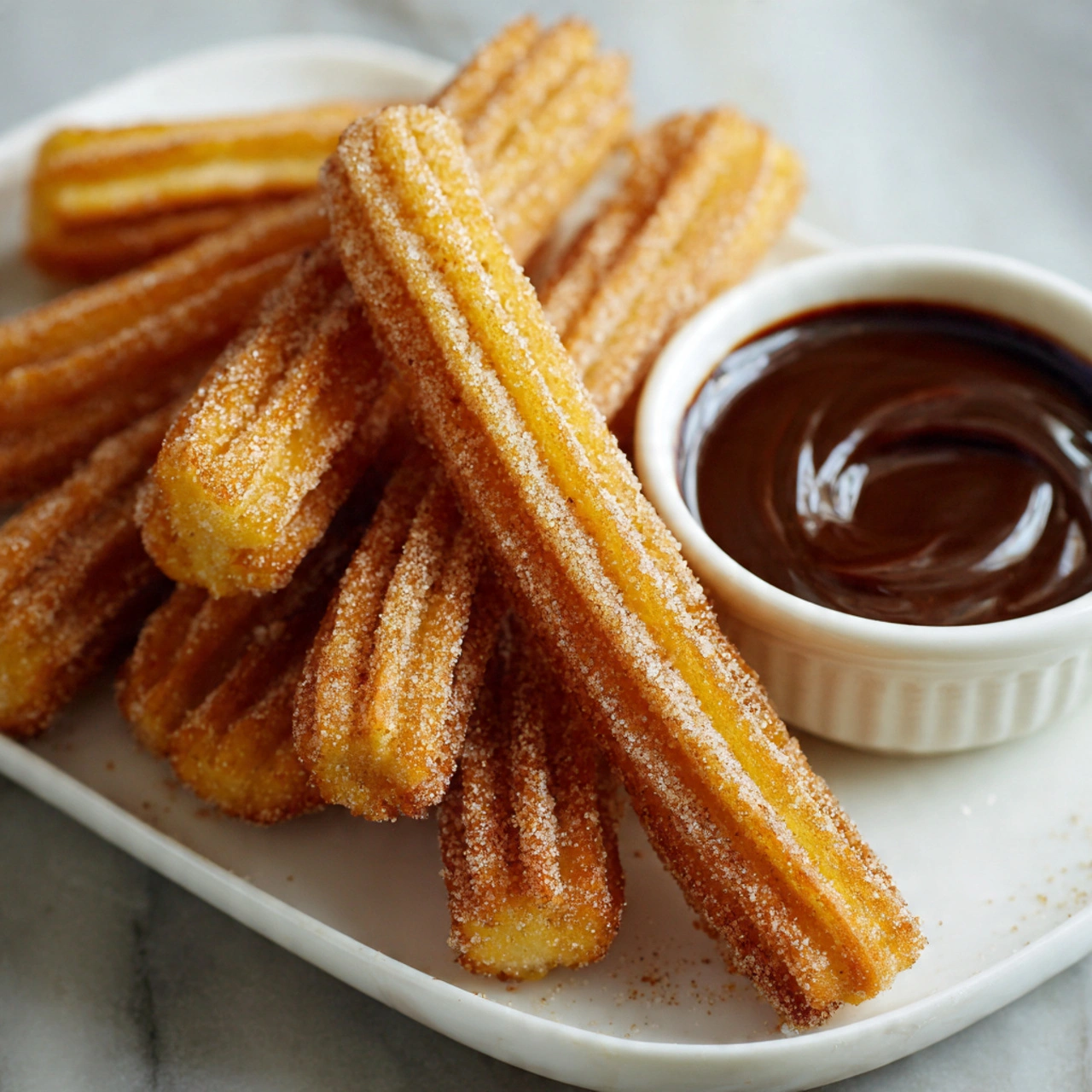
Mexican Churros are the fried pastry that changed everything I thought I knew about dessert. Eight years ago, during my first trip to Mexico City, I bought a paper cone of freshly made churros from a street vendor near the Zócalo. Still hot from the fryer, coated in cinnamon sugar that stuck to my fingers, these churros were nothing like the dense, chewy versions I’d encountered at theme parks back home.
That experience haunted me in the best possible way. I returned home determined to recreate those perfect churros in my own kitchen. What followed was months of experimentation, dozens of batches, and countless adjustments to technique, temperature, and timing.
What makes authentic Mexican Churros so special isn’t just the taste—though that combination of crispy exterior, tender interior, and sweet cinnamon coating is indeed magical. It’s the texture contrast that makes them transcendent. When executed properly, churros have an almost ethereal quality: crunchy and substantial, yet somehow light and airy.
I’ve since made these Mexican Churros hundreds of times. I’ve served them at dinner parties where they disappeared before I could finish frying the last batch. made them for my kids’ birthday parties, where they became the most requested item.
The beautiful secret about churros is that they’re far more achievable than most people realize. You don’t need specialized equipment beyond a piping bag with a star tip. You don’t need advanced pastry skills. What you need is an understanding of a few key techniques and the confidence to work with hot oil.
In this comprehensive guide, I’ll share everything I’ve learned about making authentic Mexican Churros. From achieving that perfect crispy-yet-tender texture to mastering the frying temperature to creating that addictive cinnamon-sugar coating.
Ingredients: Building Your Perfect Mexican Churros
The ingredient list is refreshingly simple, but each component plays a crucial role in the final result.
For the Churro Dough:
- 1 cup water (filtered or tap water both work)
- ½ cup unsalted butter (1 stick; don’t substitute margarine)
- 1 tablespoon granulated sugar (for the dough, not the coating)
- ¼ teaspoon salt (fine sea salt or table salt)
- 1 cup all-purpose flour (spooned and leveled, not packed)
- 2 large eggs (room temperature works best)
- 1 teaspoon vanilla extract (pure, not imitation)
For Frying:
- Vegetable oil or canola oil (about 2-3 quarts; enough for 2-3 inches depth in your pot)
- Some people use peanut oil for higher smoke point and neutral flavor
Cinnamon-Sugar Coating:
- 1 cup granulated sugar (superfine sugar creates a finer coating)
- 2 tablespoons ground cinnamon (use quality cinnamon; Mexican canela if you can find it)
- Pinch of salt (optional but enhances sweetness)
For Serving (Optional):
- Chocolate sauce (melted chocolate ganache is traditional)
- Dulce de leche (thick caramel sauce)
- Whipped cream (lightly sweetened)
- Cajeta (Mexican goat’s milk caramel)
Equipment You’ll Need:
- Medium saucepan with heavy bottom
- Wooden spoon or heat-resistant spatula
- Large piping bag (16-18 inch)
- Large star tip (Ateco #828 or #846 are ideal; you want prominent ridges)
- Deep, heavy-bottomed pot or Dutch oven for frying
- Deep-fry or candy thermometer
- Tongs or chopsticks for turning
- Paper towel-lined plates or baking sheets
- Shallow dish for cinnamon-sugar coating
- Kitchen scissors
Understanding Churro Dough
Churro dough is essentially a choux pastry (pâte à choux)—the same dough used for cream puffs and éclairs. When you add eggs to the cooked butter-water-flour mixture, you create a dough that puffs dramatically when fried, creating that characteristic hollow interior.
The key is cooking the flour mixture long enough to develop structure but not so long that you evaporate too much moisture. You want a thick, smooth paste that pulls away from the sides of the pan.
Oil Selection Matters
Vegetable oil and canola oil are my top choices because they have neutral flavor, appropriate smoke points (around 400°F), and are economical when you need several cups. Peanut oil works beautifully if you want something with a slightly higher smoke point, though it adds a subtle nutty flavor.
Avoid olive oil (too low a smoke point and too strong a flavor) and coconut oil (wrong flavor profile and solidifies at low temps).
Cinnamon Quality
Not all cinnamon is created equal. Mexican canela (Ceylon cinnamon) is softer and sweeter than the more common cassia cinnamon found in most supermarkets. If you can find Mexican canela, use it—the flavor difference is noticeable. Otherwise, use the freshest cinnamon you have. Old, stale cinnamon tastes like sawdust.
Step-by-Step Instructions: Creating Perfect Mexican Churros
Follow these steps precisely for churros that rival any Mexican street vendor.
Step 1: Make the Dough
In a medium saucepan, combine the water, butter, sugar, and salt. Heat over medium-high heat, stirring occasionally, until the butter melts completely and the mixture comes to a full rolling boil. This should take about 3-4 minutes.
The moment the mixture reaches a vigorous boil, remove the pan from heat and immediately add all the flour at once. Stir vigorously with a wooden spoon, working quickly. The mixture will look shaggy at first, then come together into a thick ball of dough.
Return the pan to medium-low heat and cook, stirring constantly, for about 1-2 minutes. You’ll know it’s ready when the dough pulls away from the sides of the pan cleanly and a thin film forms on the bottom of the pan. This cooking step is crucial—it removes excess moisture and develops structure.
Step 2: Cool and Add Eggs
Transfer the hot dough to a bowl (or keep it in the pan if it’s heat-resistant enough for mixing). Let it cool for about 5 minutes—you want it warm but not scalding hot, or the eggs will cook when you add them.
Add the vanilla extract and stir to combine. Then add the eggs one at a time, beating vigorously after each addition. The dough will look separated and curdled at first—this is normal. Keep stirring and it will come together into a smooth, glossy, thick paste.
The finished dough should be smooth, pipeable, and thick enough to hold its shape when piped but not so stiff that it’s difficult to squeeze through the piping bag. If it seems too thick, you can add a teaspoon of water; if too thin, you can add a tablespoon of flour, but ideally you won’t need to adjust.
Step 3: Prepare for Piping
Fit your large piping bag with the star tip. The star shape is essential—it creates the ridges that make churros crispy. A round tip will create smooth churros that don’t have the right texture.
Transfer the dough to the piping bag. I find it easier to put the piping bag in a tall glass or pitcher, fold down the top like a cuff, then spoon the dough in. This prevents mess and gives you better control.
Twist the top of the bag to close it and push the dough down toward the tip, eliminating air pockets. Set aside while you heat the oil.
Step 4: Heat the Oil
Pour oil into your deep pot to a depth of 2-3 inches. You need enough depth that churros can float and have room to expand. Attach your thermometer to the side of the pot.
Heat the oil over medium-high heat to 375°F (190°C). This is the ideal temperature—hot enough for immediate sizzle and quick cooking, but not so hot that the outside burns before the inside cooks.
Getting the oil to temperature takes about 10-15 minutes. Be patient. While waiting, prepare your cinnamon-sugar coating by mixing the sugar, cinnamon, and salt (if using) in a shallow dish.
Step 5: Pipe and Fry
This is where technique matters. Once your oil reaches 375°F, reduce heat slightly to maintain temperature. Working in small batches (3-4 churros at a time; don’t crowd the pot), pipe the dough directly over the hot oil.
Squeeze the piping bag with steady pressure, moving in a straight line to create a churro about 5-6 inches long. Use kitchen scissors to snip the dough at the desired length, letting the churro drop into the oil.
The churros will sink initially, then float to the surface. This is normal. Fry for about 2 minutes per side, flipping once with tongs, until deep golden brown all over. They should be uniformly dark golden—pale churros won’t have the right crispy texture.
Step 6: Drain and Coat
Using tongs, transfer fried churros to a paper towel-lined plate to drain excess oil for about 30 seconds. While still hot (this is crucial), roll them in the cinnamon-sugar mixture, coating all sides generously.
The heat causes the sugar to stick and partially melt, creating that irresistible sweet crust. If you wait until churros cool, the coating won’t adhere properly.
Step 7: Serve Immediately
Mexican Churros are at their absolute best served warm, within 15-20 minutes of frying. The exterior is crispiest, the interior is tender, and the cinnamon-sugar coating is at peak deliciousness.
Arrange on a serving platter with dipping sauces on the side if desired. Warn your guests that they’re hot—people tend to grab them immediately because they smell so good!
Pro Tips for Perfect Mexican Churros
These insider secrets come from years of churro-making experience and learning from Mexican street vendors.
1. Maintain Consistent Oil Temperature
This is the single most important factor. If oil is too cool (below 360°F), churros absorb oil and become greasy. If too hot (above 385°F), they brown too quickly on the outside while staying raw inside. Keep a thermometer clipped to your pot and adjust heat as needed.
2. Don’t Crowd the Pan
Frying too many churros at once drops the oil temperature significantly, resulting in soggy churros. Fry in small batches of 3-4 at a time, allowing oil to return to temperature between batches.
3. Pipe Directly Over Oil
Some recipes suggest piping churros onto parchment and then transferring to oil, but I find piping directly over the oil gives better control and prevents misshapen churros. Practice your piping motion with the oil off if you’re nervous.
4. Use Fresh Oil
Old oil that’s been used multiple times has a lower smoke point and can impart off-flavors. For the best-tasting churros, use fresh oil or oil that’s only been used once before.
5. Double-Fry for Extra Crispiness
For ultra-crispy churros, try the double-fry method: fry at 350°F for 1 minute (they’ll be pale), remove and let rest 5 minutes, then fry again at 375°F until golden. This creates incredible crunch.
6. Add Extra Flavor to the Dough
Try adding ½ teaspoon of cinnamon to the dough itself, or a tablespoon of cocoa powder for chocolate churros. Orange zest is another delicious variation.
7. Make Churro Loops
Instead of straight churros, pipe the dough in circles or figure-eights for a fun presentation variation. These “churro wheels” are traditional in some regions of Spain.
8. Keep Dough Warm
If your dough cools too much while frying batches, it becomes stiff and hard to pipe. Keep the piping bag wrapped in a warm damp towel between batches, or briefly microwave for 10-15 seconds.
9. Prepare Your Station
Set up an assembly line before you start frying: oil and thermometer ready, piping bag filled, scissors within reach, paper towels laid out, cinnamon-sugar mixture prepared. Once you start frying, you don’t want to be scrambling.
10. Try Filled Churros
After frying and cooling slightly, use a piping tip to inject dulce de leche or chocolate filling into the center of each churro. This is less traditional but absolutely delicious.
11. Use a Spider Strainer
A spider strainer (that Asian wire mesh scoop) makes turning and removing churros much easier than tongs, which can crush the delicate pastry.
12. Test Your First Churro
The first churro is your test batch. It tells you if your oil temperature is right, if your piping technique works, and how the dough behaves. Don’t be discouraged if it’s not perfect—adjust and continue.
13. Season Oil First (Optional)
Some vendors add a small piece of cinnamon stick to the oil while heating. This infuses subtle cinnamon flavor into the churros themselves. Remove before frying.
Common Mistakes to Avoid with Mexican Churros
Even experienced cooks make errors with churros. Here’s what to watch for.
Mistake #1: Not Cooking the Flour Mixture Long Enough
If you don’t cook the butter-water-flour mixture adequately on the stove before adding eggs, the dough will be too wet and won’t have enough structure. Cook until it pulls cleanly from the pan sides and you see a film on the bottom.
Mistake #2: Adding Eggs to Hot Dough
If the dough is too hot when you add eggs, they’ll cook and scramble instead of incorporating smoothly. Let the dough cool for 5 minutes after cooking before adding eggs.
Mistake #3: Using the Wrong Piping Tip
A round tip or small star tip won’t create the deep ridges necessary for crispy texture. You need a large star tip (at least ½ inch diameter) with prominent points. This isn’t optional—the ridges are what make churros crispy.
Mistake #4: Inconsistent Churro Thickness
Piping with uneven pressure creates churros that cook unevenly—thin parts burn while thick parts stay raw. Practice steady, even pressure when piping.
Mistake #5: Overcrowding the Oil
I see this constantly. Too many churros in the pot at once drops the temperature dramatically, and they steam instead of fry, becoming greasy and soggy. Be patient and fry in small batches.
Mistake #6: Not Coating While Hot
If churros cool before you coat them in cinnamon-sugar, the coating slides right off instead of forming that delicious crust. Coat them within 30 seconds of coming out of the oil while they’re still very hot.
Mistake #7: Frying at the Wrong Temperature
This ruins more batches than anything else. Too cool = greasy, pale churros. Too hot = burnt outside, raw inside. Use a thermometer and maintain 375°F consistently.
Mistake #8: Making Churros Too Long
Extra-long churros (8+ inches) are hard to flip, cook unevenly, and often break when you try to turn them. Stick to 5-6 inches for optimal results.
Storage and Serving Suggestions for Mexican Churros
Churros are best fresh, but here’s how to handle leftovers and plan ahead.
Immediate Serving (Best Option)
Mexican Churros are at their absolute peak served within 15-20 minutes of frying. The exterior is maximally crispy, the interior is tender and warm, and the cinnamon-sugar coating is perfect. If you’re entertaining, consider frying in batches throughout the event rather than all at once.
Short-Term Storage (Same Day)
If you need to make churros a few hours ahead, store them at room temperature in a paper bag or loosely covered container. Don’t use plastic—it traps moisture and makes them soggy.
To refresh: Place in a 350°F oven for 3-5 minutes to re-crisp. They won’t be quite as good as fresh, but this method brings back significant crunch.
Freezing Raw Dough
You can pipe unbaked churro dough onto parchment-lined baking sheets, freeze until solid, then transfer to freezer bags. Store for up to 2 months. Fry directly from frozen—they’ll need an extra minute or two in the oil.
This is my preferred make-ahead method since freshly fried always tastes better than reheated.
Freezing Cooked Churros (Not Ideal)
Cooked churros can be frozen for up to 1 month, but they lose significant texture quality. To reheat, place frozen churros on a baking sheet and bake at 375°F for 8-10 minutes. They’ll never be as crispy as fresh, but they’re better than nothing.
Next-Day Churros
If you have leftover churros (rare, but it happens), store in a paper bag at room temperature. Reheat in a 350°F oven for 5 minutes. Alternatively, break them into pieces and use as a topping for ice cream or pudding—they’re delicious even when not crispy.
Serving Suggestions
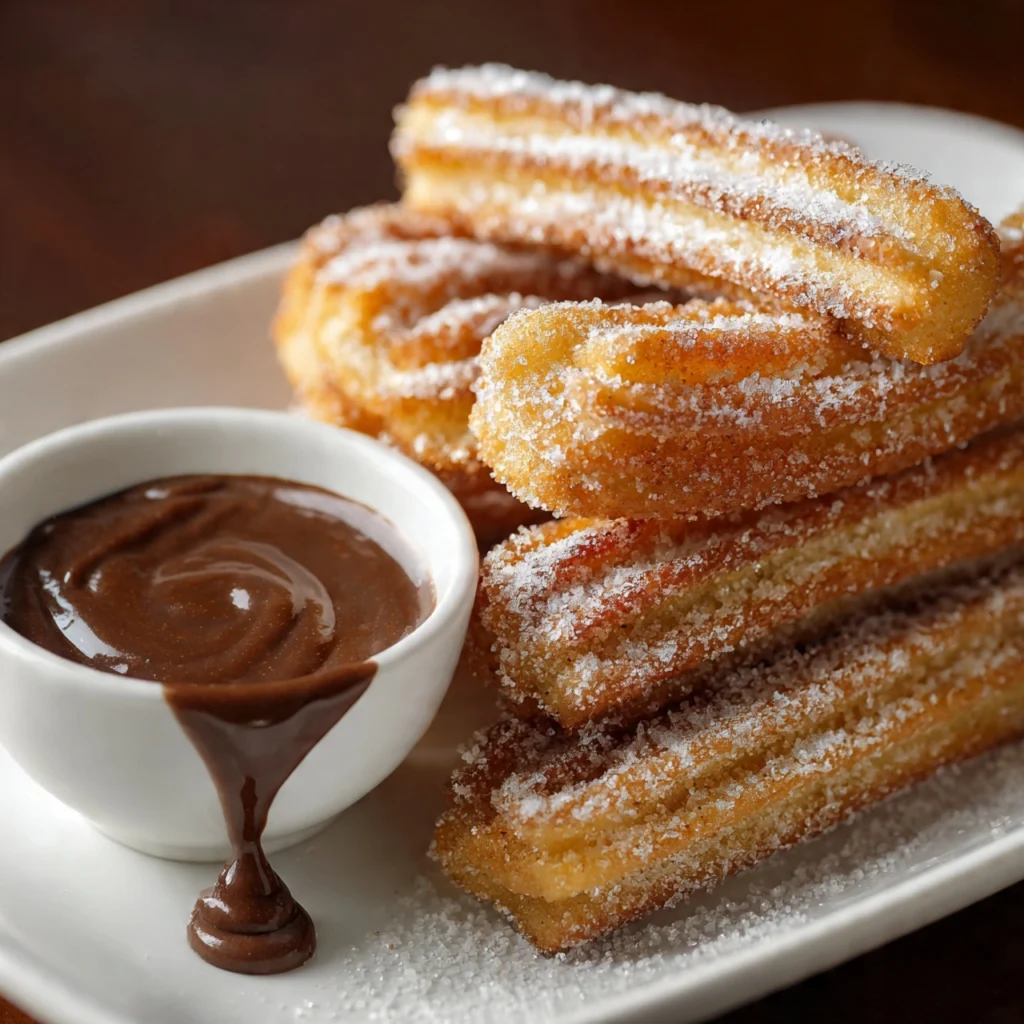
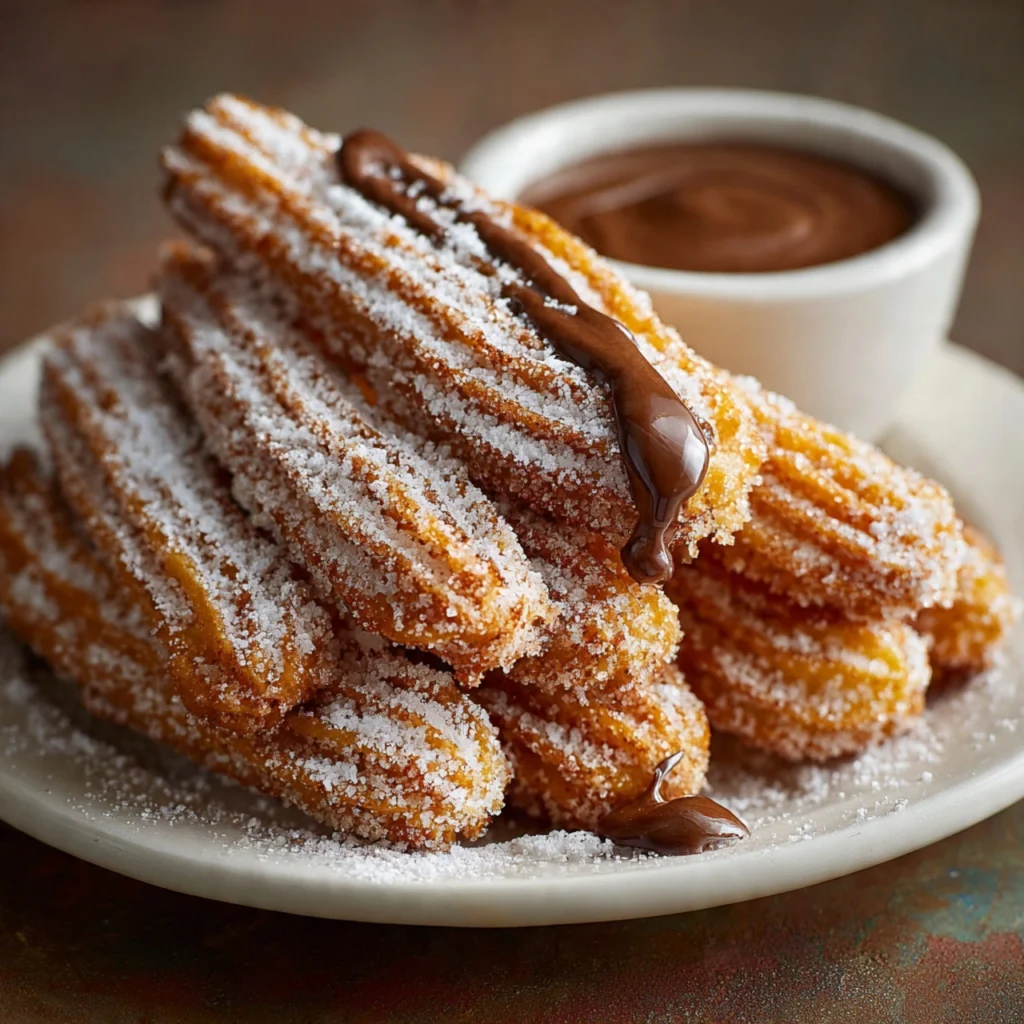
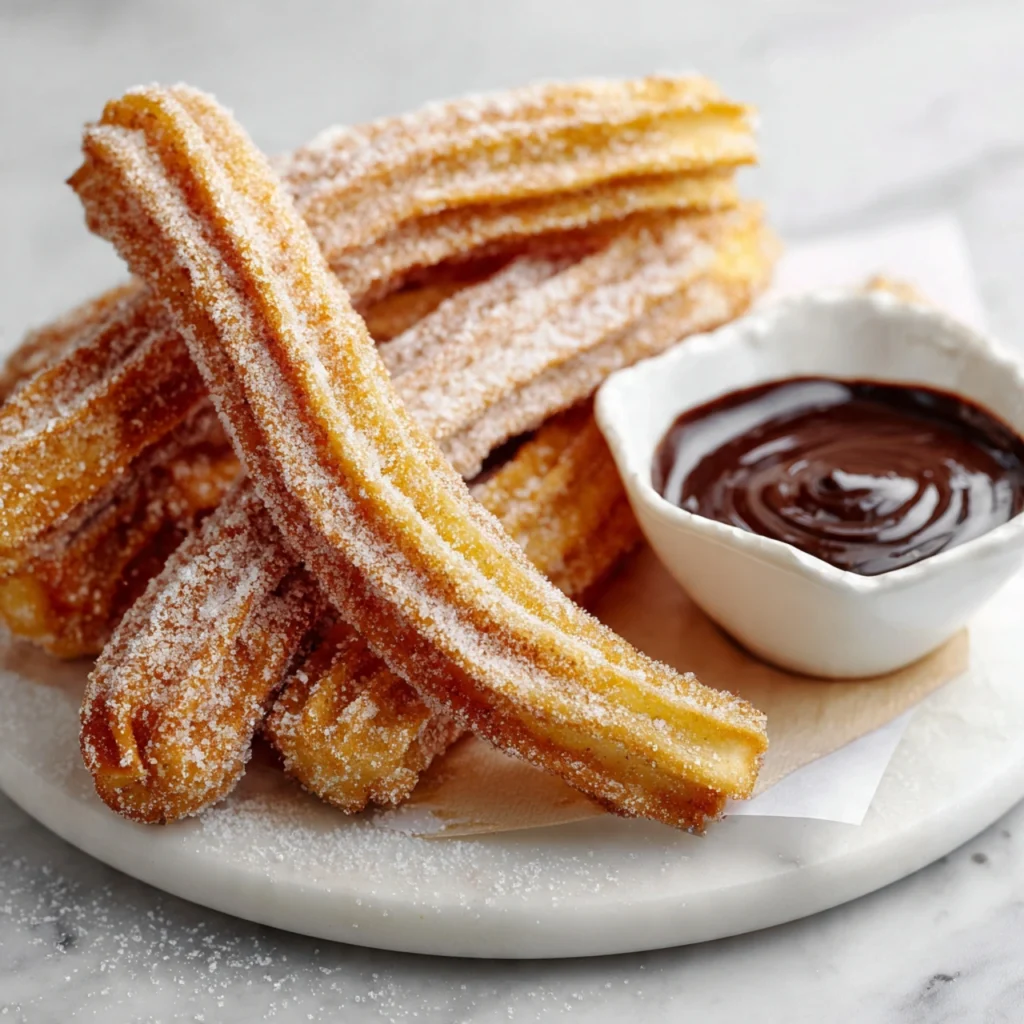
Traditional Mexican Style: Serve with thick hot chocolate for dipping. The combination is classic for a reason—rich chocolate complements the cinnamon perfectly.
With Dulce de Leche: Warm dulce de leche makes an incredible dipping sauce. The caramel notes pair beautifully with cinnamon.
Ice Cream Topping: Serve warm churros alongside vanilla or cinnamon ice cream. The temperature and texture contrast is phenomenal.
Chocolate Ganache: Make a simple ganache by heating heavy cream and pouring over chopped chocolate. Let it sit, then stir until smooth. Perfect for dipping.
Cajeta (Goat’s Milk Caramel): This Mexican specialty is similar to dulce de leche but made with goat’s milk. It’s tangier and pairs wonderfully with churros.
Coffee or Champurrado: In Mexico, churros are often enjoyed with coffee or champurrado (a thick Mexican hot chocolate drink). Either makes a perfect pairing.
Dessert Platter: Arrange churros on a platter with small bowls of various dipping sauces—chocolate, caramel, fruit coulis—and let guests choose their adventure.
Frequently Asked Questions About Mexican Churros
1. Can I bake churros instead of frying them?
You can, but they won’t be authentic Mexican churros. Baked versions lack the crispy exterior and characteristic texture that frying creates. If you want to bake them, pipe onto parchment, brush with melted butter, and bake at 425°F for 15-20 minutes, but manage your expectations—they’ll be more like churro-flavored breadsticks.
2. Why are my churros hollow inside?
That’s actually correct! Authentic Mexican churros should be hollow or have a very light, airy interior. The choux pastry puffs during frying, creating a crispy shell with minimal interior. If they’re completely solid and dense, your oil temperature was too low or you didn’t cook the flour mixture enough.
3. Can I make churros ahead of time?
Your best bet is to pipe the raw dough onto parchment, freeze it, and then fry from frozen when you’re ready to serve. Alternatively, make the dough ahead and keep it refrigerated for up to 24 hours—bring to room temperature and transfer to a piping bag when ready to fry.
4. What’s the difference between Mexican churros and Spanish churros?
Mexican churros are typically longer, thinner, and crispier with a hollow interior. Spanish churros (especially the famous “porras”) are often thicker, denser, and sometimes served for breakfast with thick hot chocolate. Mexican churros almost always have cinnamon-sugar coating, while Spanish versions sometimes don’t.
5. Why did my churros explode or break apart while frying?
This usually happens when oil temperature is too high, causing the exterior to cook and harden too quickly while the interior expands. Maintain 375°F and don’t exceed 385°F. It can also happen if you have air pockets in your dough—make sure to push out air when filling the piping bag.
6. Can I make churros without a piping bag?
Technically yes, using a sturdy zip-top freezer bag with the corner snipped off, but it’s much harder to control and the bag can burst. For occasional churro making, inexpensive disposable piping bags with plastic tips work fine. For regular use, invest in a proper piping bag and metal star tip.
7. How do I know when churros are done frying?
They should be deep golden brown all over—not pale gold, but dark golden. They’ll float to the surface and the sizzling will reduce. If you’re unsure, sacrifice one: cut it open and check that the interior is cooked through with no raw dough.
8. Can I make gluten-free churros?
Gluten-free churros are challenging because choux pastry relies on gluten development for structure. Some people have had success with gluten-free flour blends designed for baking, but the texture won’t be identical. Expect them to be more fragile and less crispy.
Nutrition Information (Per Churro, Recipe Makes About 16 Churros)
Please note these are approximate values and will vary based on exact size and frying time:
- Calories: 145
- Total Fat: 9g
- Saturated Fat:** 3g
- Trans Fat:** 0g
- Cholesterol: 30mg
- Sodium: 45mg
- Total Carbohydrates: 14g
- Dietary Fiber:** 0.5g
- Sugars:** 7g
- Protein: 2g
- Calcium: 1% DV
- Iron: 3% DV
Dietary Information:
- Vegetarian (contains eggs and dairy)
- Not Vegan (contains butter and eggs; difficult to adapt successfully)
- Not Gluten-Free (contains wheat flour)
- Not Dairy-Free (contains butter; can substitute with vegan butter)
- Not Low Calorie (fried dessert)
- Not Low Fat (fried in oil)
- Kosher (if using kosher ingredients)
- Halal (if using halal ingredients)
Note: Nutrition values are for churros only, not including optional dipping sauces. Values will vary based on oil absorption, which depends on frying temperature and time.
Final Thoughts: Why Mexican Churros Will Become Your Signature Dessert
After more than twenty years of cooking and recipe development, I can tell you that certain recipes possess a kind of magic that goes beyond mere ingredients and technique. Mexican Churros are one of those rare creations. They’re the dessert that makes people stop talking, that creates genuine excitement, that turns casual gatherings into memorable events.
What I love most about churros is how they democratize the joy of exceptional dessert-making. You don’t need a fancy kitchen, expensive equipment, or years of pastry training. You need a pot, some oil, a piping bag, and the willingness to try something new.
I’ve taught this recipe to countless people over the years—nervous home cooks who’d never deep-fried anything, parents looking to make special treats for their kids, food enthusiasts wanting to expand their repertoire.
The versatility of churros is another reason they’ve become such a staple in my dessert rotation. Serve them plain with cinnamon-sugar for a simple treat. Pair them with chocolate sauce for a classic combination. Fill them with dulce de leche for special occasions.
My final advice: don’t overthink this. Yes, there are techniques to learn—proper oil temperature, correct piping method, appropriate coating timing. But none of these is particularly difficult. Make your first batch following the instructions carefully.
And when you pull those first golden churros from the hot oil, coat them in cinnamon-sugar, and bite into that perfect combination of crispy exterior and tender interior? When you taste that sweet cinnamon crust giving way to light, airy pastry? When you realize you’ve created something that rivals the best churros you’ve ever had anywhere?
Welcome to the wonderful world of homemade Mexican Churros. Your kitchen is about to smell incredible, and your reputation as a dessert maker is about to skyrocket.
PrintMexican Churros: The Crispy, Cinnamon-Sugar Heaven You Can Make at Home
These authentic Mexican Churros are the real deal—crispy, golden fried pastries with deep ridges, coated in cinnamon-sugar while still hot from the oil. Made from choux pastry (the same dough used for cream puffs), they puff when fried to create a crispy exterior shell with a light, almost hollow interior. The cinnamon-sugar coating forms an irresistible sweet crust that crackles with every bite. Far superior to anything you’ll find at theme parks or frozen in stores, these homemade churros rival the best street food in Mexico City. They’re surprisingly easy to make—the dough comes together in one pot in minutes, and with a piping bag and hot oil, you’re minutes away from fresh churros.
- Prep Time: 15 minutes
- Cook Time: 20 minutes (frying in batches)
- Total Time: 35 minutes
- Yield: About 16 churros (5-6 inches each)
- Category: Dessert / Street Food / Fried Pastry / Mexican Dessert
- Method: Frying / Choux Pastry
- Cuisine: Mexican / Spanish
- Diet: Vegetarian
Ingredients
For the Churro Dough:
- 1 cup water
- ½ cup (1 stick) unsalted butter
- 1 tablespoon granulated sugar
- ¼ teaspoon salt
- 1 cup all-purpose flour
- 2 large eggs
- 1 teaspoon vanilla extract
For Frying:
- Vegetable oil or canola oil (2-3 quarts for frying)
For Coating:
- 1 cup granulated sugar
- 2 tablespoons ground cinnamon
- Pinch of salt (optional)
For Serving (Optional):
- Chocolate sauce, dulce de leche, or cajeta
Instructions
- Make dough: In medium saucepan, combine water, butter, sugar, and salt. Bring to full rolling boil over medium-high heat. Remove from heat and immediately add all flour at once. Stir vigorously until mixture forms a ball.
- Cook flour: Return pan to medium-low heat. Cook, stirring constantly, for 1-2 minutes until dough pulls away from pan sides and thin film forms on bottom.
- Add eggs: Transfer dough to bowl and cool 5 minutes. Stir in vanilla. Add eggs one at a time, beating vigorously after each addition until smooth and glossy.
- Prepare piping bag: Transfer dough to large piping bag fitted with large star tip (Ateco #828 or similar). Twist top to close and push out air pockets.
- Heat oil: Pour oil into deep pot to 2-3 inch depth. Heat to 375°F, using a thermometer to monitor temperature.
- Prepare coating: Mix sugar, cinnamon, and salt in shallow dish.
- Pipe and fry: Working in batches of 3-4, pipe dough directly over hot oil in 5-6 inch lengths, using scissors to cut. Fry 2 minutes per side until deep golden brown, flipping once.
- Coat: Drain on paper towels for 30 seconds, then immediately roll in cinnamon-sugar mixture while still hot.
- Serve: Serve warm within 15-20 minutes for best texture. Provide dipping sauces if desired.
Notes
- Large star piping tip is essential—creates ridges for crispy texture
- Maintain oil temperature at 375°F consistently
- Don’t crowd pan—fry 3-4 churros at a time maximum
- Coat in cinnamon-sugar while hot so coating adheres
- Best served fresh and warm within 20 minutes
- Can freeze piped raw dough and fry from frozen
- Room temperature eggs incorporate more smoothly
- Don’t let dough get too hot before adding eggs or they’ll scramble
- First churro is your test—adjust temperature as needed
- For filled churros, inject dulce de leche or chocolate after frying