Introduction: The Sushi Revolution That Started in a Muffin Tin
Baked Chipotle Salmon Sushi Cups are the recipe that made me completely rethink what sushi could be. Five years ago, I was intimidating by traditional sushi-making—the precise rolling, the perfect rice, the specialized equipment. Then one evening, while staring at leftover sushi rice and a beautiful salmon fillet, I had what I can only describe as a culinary epiphany: what if I built sushi upward instead of rolling it?
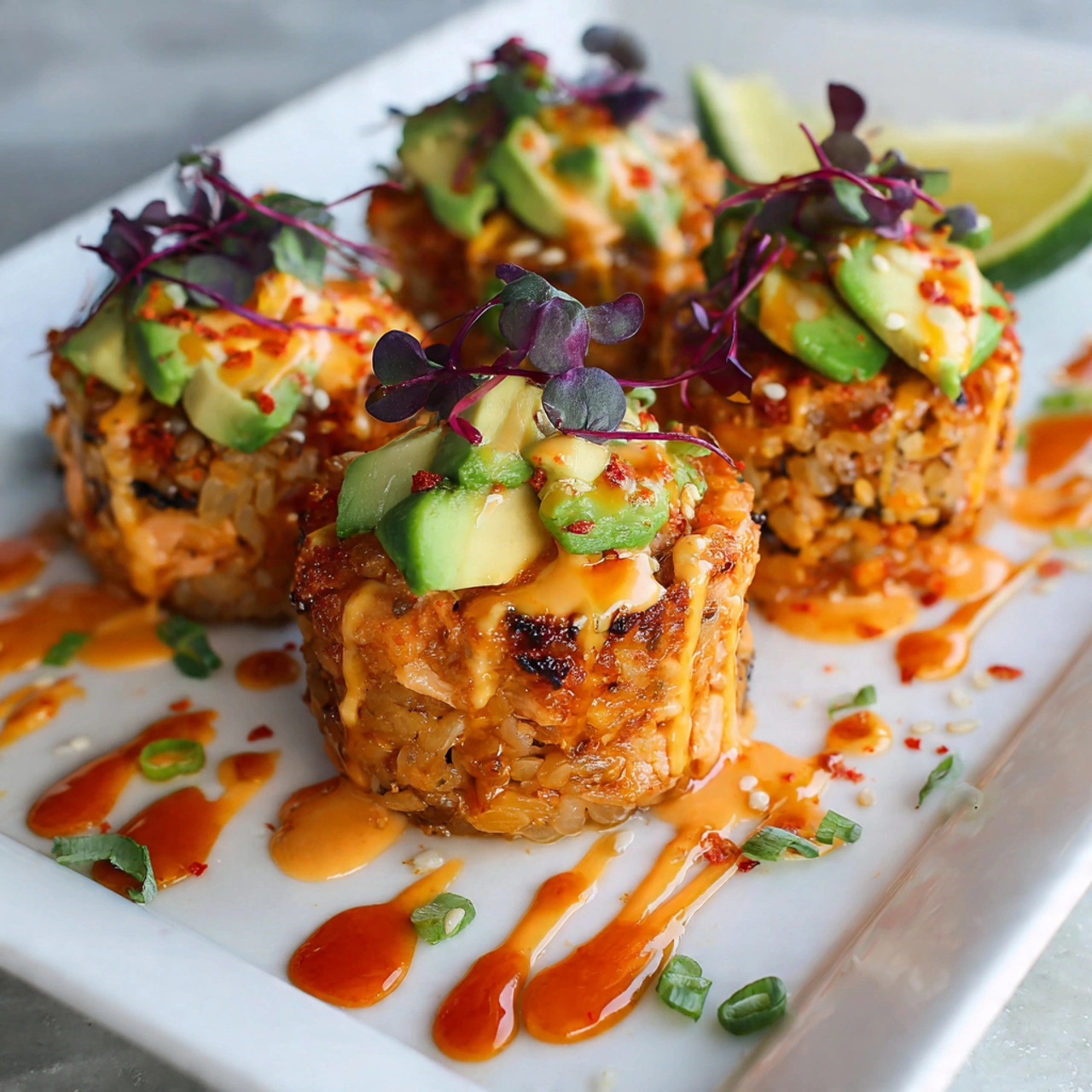
That night, I pressed seasoned sushi rice into a muffin tin, topped it with chipotle-glazed salmon, and baked the whole thing until the edges crisped up and the salmon became beautifully caramelized. When I pulled those cups from the oven and topped them with avocado, cucumber, and a drizzle of spicy mayo, I knew I’d created something special.
What makes these Baked Chipotle Salmon Sushi Cups so brilliant is how they solve the biggest hurdles of homemade sushi. No rolling mat required. No struggling to keep everything tightly wrapped and No pieces falling apart when you try to slice them.
The flavor combination is what really sets these apart. The smoky heat from chipotle peppers adds a Mexican-inspired twist to traditional Japanese ingredients, creating that magical fusion cuisine that’s become so popular in modern restaurants.
Since creating this recipe, I’ve made these Baked Chipotle Salmon Sushi Cups for countless occasions: cocktail parties where they disappear in minutes, casual dinners where they serve as an impressive main course, meal prep sessions where they become my lunch for days.
In this comprehensive guide, I’ll walk you through everything you need to know to make these stunning sushi cups at home. From cooking perfectBaked Chipotle Salmon Sushi Cups to achieving that gorgeous caramelized salmon to building each cup with restaurant-quality presentation.
Ingredients: Building Your Baked Chipotle Salmon Sushi Cups
The ingredient list combines traditional Japanese components with bold fusion elements. Quality matters here, especially for the salmon.
For the Sushi Rice:
- 2 cups sushi rice (short-grain Japanese rice; don’t substitute regular rice)
- 2½ cups water (for cooking the rice)
- ⅓ cup rice vinegar (unseasoned)
- 3 tablespoons granulated sugar (or coconut sugar)
- 1 teaspoon fine salt (sea salt or table salt)
For the Chipotle Salmon:
- 1 pound fresh salmon fillet (skin removed; sushi-grade if eating less cooked)
- 2 chipotle peppers in adobo sauce (plus 1 tablespoon of the adobo sauce)
- 2 tablespoons honey (or maple syrup for refined sugar-free)
- 1 tablespoon soy sauce (or tamari for gluten-free)
- 2 cloves garlic (minced)
- 1 tablespoon fresh lime juice (about ½ lime)
- ½ teaspoon smoked paprika (enhances the smoky flavor)
- ¼ teaspoon salt
Assembly and Toppings:
- 1 ripe avocado (sliced or diced)
- 1 small cucumber (julienned or thinly sliced)
- 2 green onions (thinly sliced)
- 1 tablespoon sesame seeds (black and white mix looks beautiful)
- Nori sheets (optional; cut into small strips for garnish)
- Pickled ginger (optional; for serving)
- Wasabi (optional; for serving)
For the Spicy Mayo:
- ⅓ cup mayonnaise (Japanese Kewpie mayo is fantastic but regular works)
- 1-2 teaspoons sriracha (adjust to heat preference)
- ½ teaspoon sesame oil (adds nutty depth)
- ½ teaspoon lime juice (brightens the sauce)
Equipment You’ll Need:
- Rice cooker or medium pot with tight-fitting lid
- Standard 12-cup muffin tin
- Cooking spray or oil for greasing
- Small saucepan for the rice vinegar mixture
- Mixing bowls
- Baking sheet
- Pastry brush
- Small squeeze bottle or zip-top bag (for drizzling spicy mayo)
Understanding Sushi Rice
Sushi rice is short-grain Japanese rice that becomes sticky when cooked, which is essential for holding these cups together. Regular long-grain rice won’t work—it doesn’t have the right starch content. Look for rice labeled “sushi rice,” “Japanese rice,” or brands like Nishiki or Kokuho Rose.
The seasoning mixture (rice vinegar, sugar, and salt) is what transforms plain rice into sushi rice. This adds the characteristic subtle sweetness and tang that makes sushi rice special.
Selecting Salmon
For this Baked Chipotle Salmon Sushi Cups recipe, you want fresh, high-quality salmon. I prefer wild-caught salmon for its superior flavor and firmer texture, though farmed Atlantic salmon works fine. The salmon will be cooked through (not served raw), so you don’t need sushi-grade fish, but fresher is always better.
Avoid pre-frozen salmon if possible—fresh salmon has better texture and flavor. Look for bright, vibrant color (pink to deep orange depending on variety), firm flesh that springs back when pressed, and a fresh ocean smell, not fishy.
Chipotle Peppers Decoded
Chipotle peppers are smoked jalapeños packed in a tangy-sweet adobo sauce. You’ll find them in small cans in the Mexican foods aisle. Two peppers give a noticeable smoky heat without being overwhelming. If you’re sensitive to spice, start with one pepper; if you love heat, use three.
Since you probably won’t use the whole can, transfer leftover chipotles to a glass container and refrigerate for up to 2 weeks, or freeze in ice cube trays for longer storage.
Step-by-Step Instructions: Crafting Perfect Baked Chipotle Salmon Sushi Cups
Follow these steps carefully and you’ll create sushi cups that rival anything from a specialty restaurant.
Step 1: Cook the Sushi Rice
Rinse your sushi rice under cold water in a fine-mesh strainer, swirling and massaging it with your hands until the water runs clear. This removes excess starch and prevents gummy rice. It takes about 2-3 minutes of rinsing—don’t skip this step.
If using a rice cooker: Add rinsed rice and 2½ cups water. Cook according to your rice cooker’s instructions.
If using the stovetop: Combine rinsed rice and 2½ cups water in a medium pot. Bring to a boil over high heat, then immediately reduce to the lowest heat setting, cover tightly, and cook for 15 minutes without lifting the lid. After 15 minutes, remove from heat and let stand, still covered, for 10 minutes.
While the rice cooks, make the seasoning: In a small saucepan, combine rice vinegar, sugar, and salt. Heat over medium, stirring constantly, just until the sugar dissolves completely. Don’t boil. Remove from heat and let cool slightly.
Transfer the hot cooked rice to a large, shallow bowl (traditionally a wooden sushi bowl, but any large bowl works). Pour the vinegar mixture over the rice. Using a rice paddle or wooden spoon, gently fold the seasoning into the rice using a cutting and folding motion—don’t stir or mash, which makes the rice mushy. Fan the rice as you mix to cool it quickly and give it that characteristic glossy sheen.
Let the seasoned sushi rice cool to room temperature before using.
Step 2: Prepare the Chipotle Glaze
In a blender or food processor, combine the chipotle peppers, adobo sauce, honey, soy sauce, garlic, lime juice, smoked paprika, and salt. Blend until completely smooth—you should have a thick, reddish-brown sauce with no chunks.
Taste the glaze. It should be smoky, sweet, spicy, and tangy all at once. If it’s too spicy, add another half tablespoon of honey. If it’s too thick, thin it with a bit of water.
Step 3: Prepare the Salmon
Preheat your oven to 375°F (190°C).
Pat the salmon fillet completely dry with paper towels—this helps the glaze adhere better. Check for pin bones by running your fingers along the fillet; remove any you find with tweezers or pliers.
Cut the salmon into 12 roughly equal pieces. They don’t need to be perfectly uniform since they’ll be sitting on top of rice cups, but aim for approximately 1.5-inch cubes.
Brush each piece of salmon generously with the chipotle glaze, coating all sides. Reserve about 2 tablespoons of glaze for basting during baking.
Step 4: Form the Rice Cups
Generously spray a 12-cup muffin tin with cooking spray or brush with neutral oil. This is crucial—unseasoned sushi rice will stick terribly without proper greasing.
Wet your hands with water (keep a bowl of water nearby). This prevents the rice from sticking to your hands. Scoop about ⅓ cup of seasoned sushi rice and press it firmly into the bottom and partially up the sides of each muffin cup. You want a well or cup shape with rice forming the bottom and walls, leaving room in the center for the salmon.
Press firmly—the rice needs to compact to hold its shape. Create a little indent in the center of each rice cup where the salmon will sit.
Step 5: Add the Salmon and Bake
Place one piece of glazed salmon in the center of each rice cup, pressing it gently into the rice.
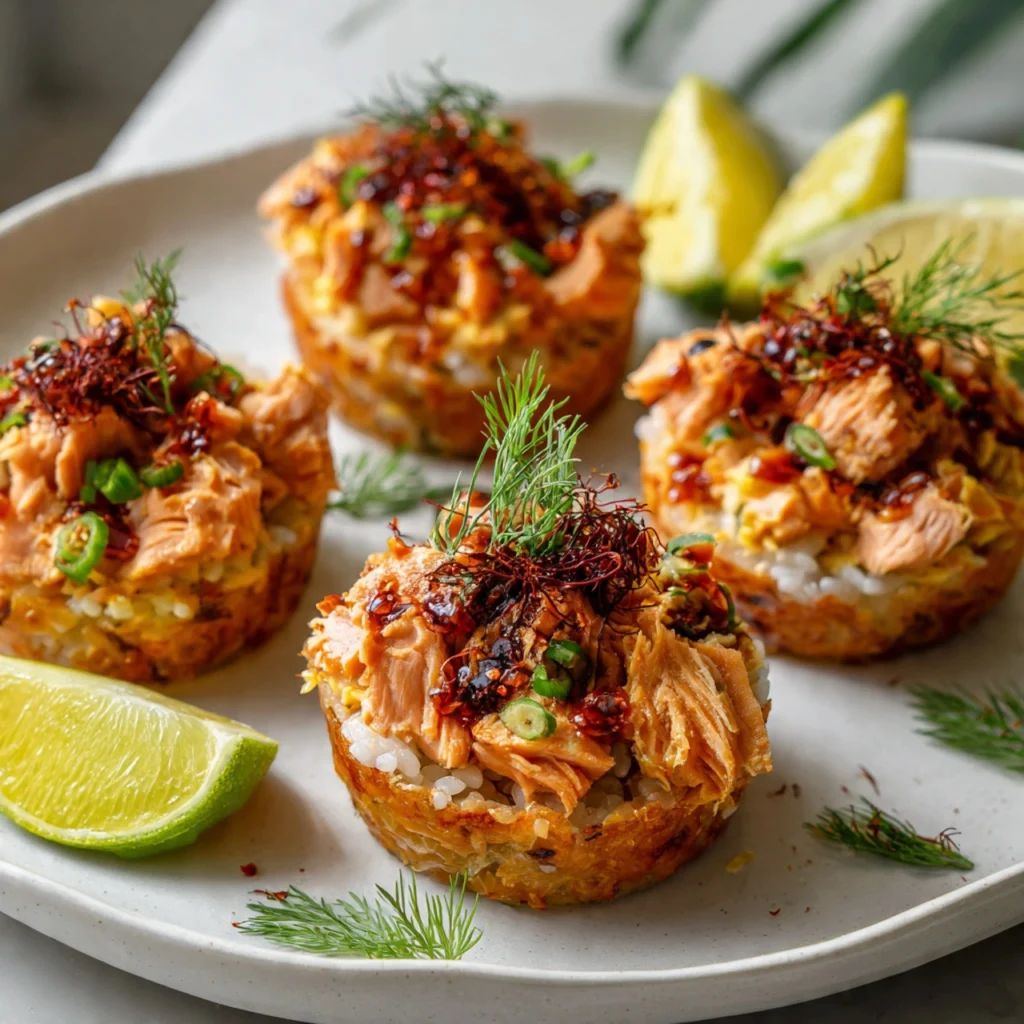
Bake for 18-22 minutes, until the salmon is cooked through (internal temperature of 145°F) and the rice edges are beginning to crisp and turn golden. About halfway through baking, brush the salmon pieces with the reserved glaze.
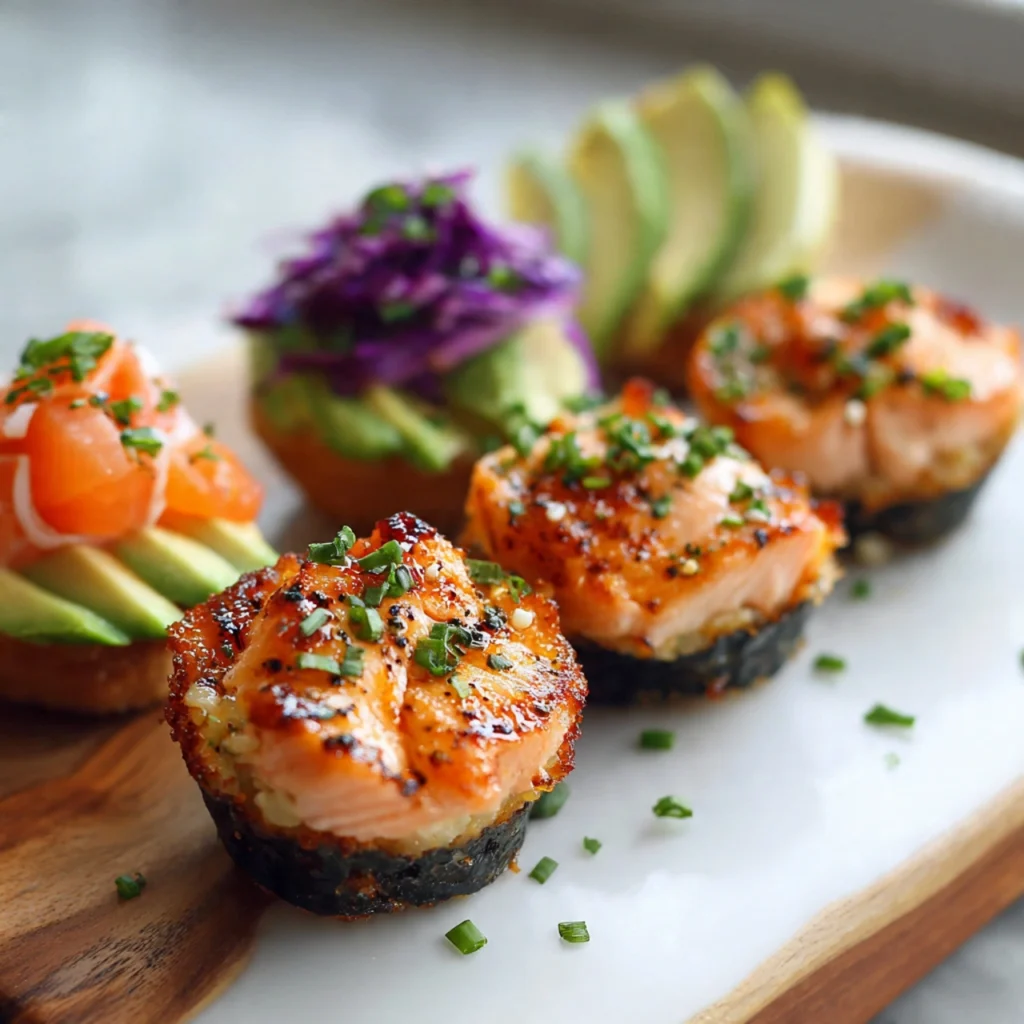
The salmon should be opaque and flake easily with a fork. The rice edges might develop some crispy, caramelized spots—this is desirable and adds great texture.
Step 6: Make the Spicy Mayo
While the sushi cups bake, prepare your toppings. In a small bowl, whisk together the mayonnaise, sriracha, sesame oil, and lime juice until smooth. Transfer to a squeeze bottle or a zip-top bag (you’ll cut a tiny corner off for drizzling).
Prepare your other toppings: slice the avocado, julienne the cucumber into thin matchsticks, slice the green onions, and have your sesame seeds ready.
Step 7: Assemble and Serve
Let the baked sushi cups cool in the muffin tin for 5 minutes—this makes them easier to remove. Run a small offset spatula or butter knife around the edges, then gently lift out each cup.
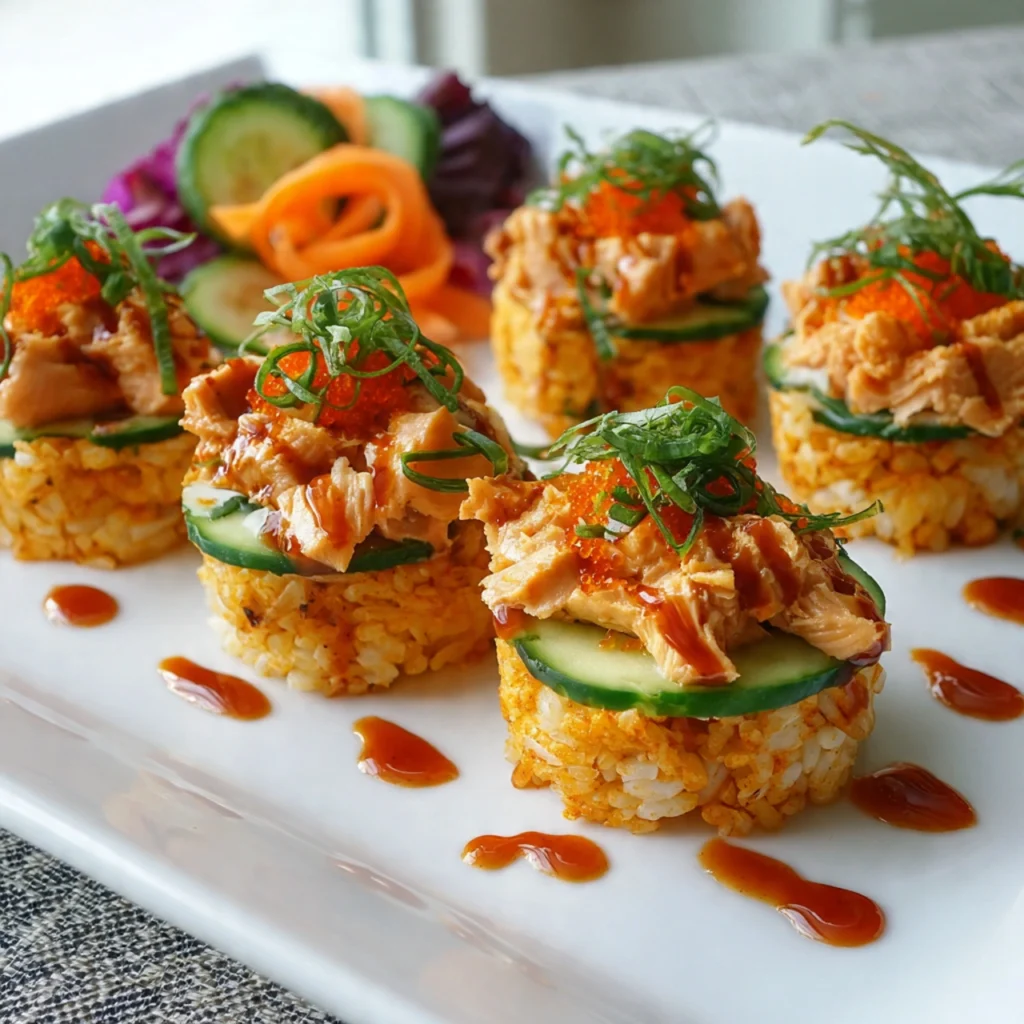
Arrange the sushi cups on a serving platter. Top each one with avocado slices, cucumber, and green onions. Drizzle with spicy mayo in a decorative pattern. Sprinkle with sesame seeds and add small strips of nori if desired.
Serve immediately while still warm, with pickled ginger and wasabi on the side if desired.
Pro Tips for Perfect Baked Chipotle Salmon Sushi Cups
These insider secrets come from years of making and perfecting this recipe.
1. Season Your Rice While It’s Hot
The rice vinegar mixture must be added to hot rice. The warmth helps the rice absorb the seasoning and develop that glossy sheen. Cold rice won’t absorb the seasoning properly and you’ll end up with unevenly flavored rice.
2. Don’t Overcook the Salmon
Salmon continues cooking after you remove it from the oven (carryover cooking). Pull the cups when the salmon is just barely cooked through—around 145°F. It’ll finish cooking as it rests, resulting in perfectly moist salmon rather than dry, chalky fish.
3. Press Rice Firmly
The number one reason sushi cups fall apart is insufficiently packed rice. Really press and compact that rice into the muffin cups. Wet hands make this easier and prevent sticking. Don’t be gentle—firm pressure creates sturdy cups.
4. Use Fresh Avocado at Serving Time
Don’t top the cups with avocado until you’re ready to serve. Pre-topped avocado will oxidize and turn brown. If you need to prep ahead, toss sliced avocado with a bit of lime juice to slow browning, and store it separately.
5. Control the Heat Level
The chipotle glaze can be adjusted to your spice tolerance. One chipotle pepper gives mild heat; two provide moderate spice; three make it quite spicy. You can also control heat by removing the seeds from the peppers before blending.
6. Make Perfect Spicy Mayo
The key to great spicy mayo is balance. Start with less sriracha than you think you need—you can always add more. The sesame oil is optional but highly recommended—it adds an authentic Asian flavor that ties everything together.
7. Try Different Salmon Preparations
While I love the chipotle glaze, you can adapt this. Try teriyaki glazed salmon, miso-glazed, or even simple sesame-soy. The sushi cup format is versatile enough to handle many flavor profiles.
8. Keep Rice at the Right Temperature
Work with room-temperature seasoned sushi rice. If it’s too hot, it’ll continue cooking the salmon. If it’s too cold, it won’t press and mold properly. Room temperature is the sweet spot.
9. Grease Generously
Seriously, don’t skimp on the cooking spray or oil. Sushi rice is incredibly sticky, and undertreated muffin cups will make removal frustrating. I go heavy on the spray and have never had sticking issues.
10. Customize Your Toppings
These sushi cups are a canvas for creativity. Try edamame, thinly sliced radishes, microgreens, crispy fried shallots, or even mango for a sweet element. The base recipe is solid enough to handle various toppings.
11. Serve at the Right Temperature
These are best served warm or at room temperature, not piping hot or cold from the fridge. The warm rice, warm salmon, and cool toppings create a nice temperature contrast that’s very appealing.
Common Mistakes to Avoid with Baked Chipotle Salmon Sushi Cups
Learn from others’ errors so you don’t repeat them. Here are the most common pitfalls.
Mistake #1: Using Regular Rice Instead of Sushi Rice
I cannot stress this enough: you need actual short-grain sushi rice. Regular long-grain rice doesn’t have the starch content to become sticky and hold its shape. Basmati, jasmine, and regular white rice will not work. The cups will fall apart.
Mistake #2: Not Rinsing the Rice
Skipping the rinse leaves too much surface starch, creating gummy, mushy rice rather than distinct, glossy grains. Rinse until the water runs clear—this is non-negotiable for good sushi rice.
Mistake #3: Overpacking the Muffin Cups
Resist the urge to stuff too much rice into each cup. You want a cup shape, not a solid rice puck with salmon on top. Leave room for the salmon to nestle into the rice. Overstuffed cups won’t bake evenly and are harder to eat.
Mistake #4: Using Low-Quality Salmon
Sushi is all about simple, quality ingredients. Dry, old, or previously frozen-and-thawed salmon will taste fishy and have poor texture. Spring for fresh, high-quality fish—it makes a world of difference in the final result.
Mistake #5: Baking at Too High Temperature
Temperatures above 400°F can cause the rice to burn before the salmon cooks through. Stick to 375°F. It might seem like slow cooking, but this moderate temperature ensures even cooking and prevents dried-out salmon.
Mistake #6: Skipping the Cooling Time After Baking
If you try to remove the cups immediately after baking, they’ll fall apart. The 5-minute rest allows the rice to firm up slightly and makes removal much easier. Patience is your friend here.
Mistake #7: Not Drying the Salmon
Wet salmon won’t hold the glaze—it’ll just slide off. Pat the fish completely dry before applying the chipotle mixture. This seems minor but makes a noticeable difference in how well the glaze adheres and caramelizes.
Mistake #8: Making the Glaze Too Thick or Too Thin
The chipotle glaze should be thick enough to coat a spoon but still brushable. Too thick and it won’t spread; too thin and it’ll pool in the muffin cups instead of coating the salmon. Adjust consistency with small amounts of water or honey.
Storage and Serving Suggestions for Baked Chipotle Salmon Sushi Cups
These sushi cups are best fresh, but you can prep components ahead and store leftovers successfully.
Make-Ahead Strategy
Sushi Rice: Cook and season the rice up to 1 day ahead. Store in an airtight container at room temperature (don’t refrigerate—it makes rice hard). Bring to room temperature before using.
Chipotle Glaze: Make up to 3 days ahead and refrigerate in an airtight container. Bring to room temperature before using.
Prepared Cups: You can form the rice cups in the muffin tin, cover with plastic wrap, and refrigerate for up to 4 hours before adding salmon and baking. Let them come to room temperature (about 30 minutes) before baking.
Storing Leftovers
Refrigerator: Store baked sushi cups without the fresh toppings (avocado, cucumber, etc.) in an airtight container for up to 2 days. The rice will harden in the fridge, but reheating restores texture.
Freezing: Not recommended. The rice texture deteriorates significantly when frozen and thawed. Salmon also doesn’t freeze well after baking.
Toppings: Store prepared spicy mayo, sliced vegetables, and other toppings separately in small containers. This keeps them fresh and prevents the cups from getting soggy.
Baked Chipotle Salmon Sushi Cups Reheating
To revive refrigerated sushi cups: Preheat oven to 350°F. Place cups on a baking sheet and heat for 8-10 minutes until warmed through. Alternatively, microwave individual cups for 30-45 seconds on medium power.
Add fresh toppings only after reheating.
Baked Chipotle Salmon Sushi Cups Serving Suggestions
As Appetizers: Serve 2-3 cups per person as part of an appetizer spread. They pair beautifully with edamame, seaweed salad, and miso soup.
As a Main Course: Serve 3-4 cups per person with sides like Asian slaw, steamed bok choy, or a simple cucumber salad. Add a bowl of miso soup to make it a complete meal.
For Parties: Arrange on a large platter with all the toppings visible. Provide small plates and chopsticks. These are fantastic finger food—easy to eat while standing and mingling.
Bento Box Style: Pack 2 cups in a bento box with edamame, pickled vegetables, and fruit for an impressive lunch.
Wine Pairing: These pair wonderfully with crisp white wines like Sauvignon Blanc or dry Riesling, or try a light Pinot Noir if you prefer red.
Beer Pairing: Japanese lager, wheat beer, or IPA all work well with the smoky, spicy flavors.
Frequently Asked Questions About Baked Chipotle Salmon Sushi Cups
1. Can I make these without raw fish?
Yes! This Baked Chipotle Salmon Sushi Cups recipe actually uses fully cooked salmon, not raw. The salmon bakes in the oven until cooked through, so there’s no raw fish involved. If you’re still concerned, you can also substitute canned salmon (drained well), cooked shrimp, or even tofu for a vegetarian version.
2. What if I don’t have a muffin tin?
You can use a silicone muffin mold, which makes removal even easier. In a pinch, you could form the rice into patties on a parchment-lined baking sheet and top with salmon—they won’t have the cup shape, but they’ll still taste great. Mini ramekins or oven-safe small bowls also work.
3. Can I make these gluten-free?
Absolutely! Use tamari instead of regular soy sauce, and verify that your chipotle peppers in adobo are gluten-free (some brands add wheat). Everything else is naturally gluten-free. Just double-check that your rice vinegar doesn’t contain any gluten-containing additives.
4. How spicy are these sushi cups?
With two chipotle peppers, they have a moderate, noticeable heat—not overwhelming, but definitely present. The honey in the glaze balances the spice, and the creamy toppings (avocado and spicy mayo) further temper the heat. You can control spiciness by using fewer peppers or removing seeds.
5. Can I use frozen salmon?
Fresh salmon is ideal, but if using frozen, thaw it completely in the refrigerator (never at room temperature), pat it very dry, and proceed with the recipe. The texture won’t be quite as good as fresh, but it’ll still work. Avoid refrozen salmon—if it’s been frozen, thawed, and frozen again, the texture will be poor.
6. What can I substitute for chipotle peppers?
If you can’t find chipotle peppers, try this alternative glaze: mix 2 tablespoons sriracha, 2 tablespoons honey, 1 tablespoon soy sauce, 1 teaspoon smoked paprika, and minced garlic. You’ll lose the distinctive chipotle flavor but still have a spicy-sweet glaze.
7. How do I know when the salmon is properly cooked?
Salmon is fully cooked at an internal temperature of 145°F. Visually, it should be opaque throughout and flake easily when pressed with a fork. The flesh should have changed from translucent to an opaque pink/orange. When in doubt, use a digital thermometer.
8. Can I make vegetarian sushi cups?
Yes! Substitute marinated and baked tofu for the salmon. Press extra-firm tofu, cube it, marinate in the chipotle glaze, and bake at 400°F for 20-25 minutes until slightly crispy. You could also use roasted vegetables like sweet potato or mushrooms.
Nutrition Information (Per Sushi Cup, Recipe Makes 12)
Please note these are approximate values and will vary based on exact ingredients and portion sizes:
- Calories: 215
- Total Fat: 8g
- Saturated Fat: 1.5g
- Trans Fat: 0g
- Cholesterol: 30mg
- Sodium: 420mg
- Total Carbohydrates: 24g
- Dietary Fiber: 2g
- Sugars: 5g
- Protein: 12g
- Vitamin A: 6% DV
- Vitamin C: 8% DV
- Calcium: 3% DV
- Iron: 8% DV
- Omega-3 Fatty Acids: High (from salmon)
Dietary Information:
- Can be Gluten-Free (use tamari instead of soy sauce)
- Can be Dairy-Free (most versions already are)
- Not suitable for Vegan (contains fish; can adapt with tofu)
- Not Low Calorie (moderate calories)
- Not Low Fat (contains healthy fats from salmon and avocado)
- Not Low Salt (contains soy sauce and rice seasoning)
- Pescatarian-friendly
- Rich in Omega-3 fatty acids
- Good source of protein
Health Benefits:
- Salmon provides heart-healthy omega-3 fatty acids
- Avocado offers healthy monounsaturated fats
- Rice provides energy from complex carbohydrates
- Vegetables add fiber and micronutrients
Final Thoughts: Why These Sushi Cups Will Transform Your Sushi Game
After more than two decades in recipe development, I can confidently say that some recipes are true game-changers. These Baked Chipotle Salmon Sushi Cups fall into that rare category. They take something that seems intimidating—homemade sushi—and make it accessible, fun, and actually easier than the traditional method.
What I love most about this Baked Chipotle Salmon Sushi Cups recipe is how it challenges assumptions about what sushi “should” be. Yes, purists might raise eyebrows at baked sushi in muffin tins with Mexican-inspired flavors. But one bite usually converts the skeptics.
These sushi cups have become my secret weapon for entertaining. They look incredibly impressive arranged on a platter with all their colorful toppings, yet they’re surprisingly straightforward to make.
Beyond special occasions, I’ve found these cups to be fantastic for meal prep. I’ll make a double batch on Sunday, store the baked cups without toppings, and have elegant lunches ready all week. Just reheat, add fresh vegetables and sauce, and I’ve got a restaurant-quality meal in minutes.
The versatility of this base Baked Chipotle Salmon Sushi Cups recipe is another reason I return to it again and again. Once you master the technique of forming rice cups and baking them, you can experiment endlessly. Try different fish, various glazes, alternative toppings.
I hope this comprehensive guide gives you the confidence to try these Baked Chipotle Salmon Sushi Cups in your own kitchen. Don’t be intimidated by the multiple components—each step is simple.
And when your family or guests take that first bite and their eyes light up with surprise and delight? That’s when you’ll understand why this recipe has become one of my most-requested, most-loved creations.
Welcome to the wonderful world of fusion sushi cups. Your muffin tin is about to become your favorite sushi-making tool.
PrintBaked Chipotle Salmon Sushi Cups: A Fusion Masterpiece You’ll Make on Repeat
These Baked Chipotle Salmon Sushi Cups are a stunning fusion of Japanese sushi and Mexican-inspired flavors. Perfectly seasoned sushi rice is pressed into muffin tins to form edible cups, then topped with salmon glazed in a sweet-spicy chipotle sauce and baked until caramelized. The result is a deconstructed sushi experience that’s easier to make than traditional rolls but just as impressive. Topped with creamy avocado, crisp cucumber, and a drizzle of spicy mayo, these cups deliver restaurant-quality flavor and presentation right from your home kitchen. Perfect for parties, meal prep, or when you’re craving sushi but don’t want to deal with rolling. The smoky chipotle adds an unexpected twist that elevates these beyond ordinary sushi!
- Prep Time: 25 minutes
- Cook Time: 35 minutes (includes rice cooking)
- Total Time: 1 hour
- Yield: 12 sushi cups (serves 4-6 as appetizer, 3-4 as main)
- Category: Appetizer / Main Course / Fusion / Sushi / Seafood
- Method: Baking / Rice Cooking
- Cuisine: Japanese-Mexican Fusion / Asian Fusion
- Diet: Gluten Free
Ingredients
For the Sushi Rice:
- 2 cups sushi rice (short-grain Japanese rice)
- 2½ cups water
- ⅓ cup rice vinegar
- 3 tablespoons granulated sugar
- 1 teaspoon fine salt
For the Chipotle Salmon:
- 1 pound fresh salmon fillet, skin removed
- 2 chipotle peppers in adobo sauce, plus 1 tablespoon adobo sauce
- 2 tablespoons honey
- 1 tablespoon soy sauce (or tamari for gluten-free)
- 2 cloves garlic, minced
- 1 tablespoon fresh lime juice
- ½ teaspoon smoked paprika
- ¼ teaspoon salt
For Assembly:
- 1 ripe avocado, sliced
- 1 small cucumber, julienned
- 2 green onions, thinly sliced
- 1 tablespoon sesame seeds
- Nori strips (optional)
For Spicy Mayo:
- ⅓ cup mayonnaise
- 1-2 teaspoons sriracha
- ½ teaspoon sesame oil
- ½ teaspoon lime juice
Instructions
- Cook sushi rice: Rinse rice until water runs clear. Cook rice with 2½ cups water according to rice cooker instructions or stovetop method. While rice cooks, heat rice vinegar, sugar, and salt in a small pan until sugar dissolves. When rice is done, transfer to large bowl, pour vinegar mixture over, and gently fold while fanning to cool. Let cool to room temperature.
- Make chipotle glaze: Blend chipotle peppers, adobo sauce, honey, soy sauce, garlic, lime juice, smoked paprika, and salt until smooth. Set aside.
- Prepare salmon: Preheat oven to 375°F. Pat salmon dry and cut into 12 roughly equal pieces. Brush generously with chipotle glaze, reserving 2 tablespoons for basting.
- Form rice cups: Generously grease a 12-cup muffin tin. With wet hands, press about ⅓ cup rice firmly into each cup, creating a well in the center.
- Add salmon and bake: Place one piece of glazed salmon in the center of each rice cup. Bake 18-22 minutes until salmon reaches 145°F internal temperature. Brush with reserved glaze halfway through baking.
- Make spicy mayo: Whisk together mayonnaise, sriracha, sesame oil, and lime juice.
- Assemble and serve: Let cups cool 5 minutes in tin, then remove carefully. Top with avocado, cucumber, green onions, and sesame seeds. Drizzle with spicy mayo. Serve immediately.
Notes
- Must use short-grain sushi rice—regular rice won’t hold shape
- Rinse rice thoroughly until water runs clear
- Season rice while hot for best absorption
- Press rice firmly into muffin cups to prevent falling apart
- Don’t overcook salmon—it continues cooking after removing from oven
- Grease muffin tin generously to prevent sticking
- Adjust spice level by using 1-3 chipotle peppers
- Add fresh toppings just before serving to prevent browning
- Can make rice and glaze 1 day ahead
- Store leftovers without toppings for up to 2 days