Introduction: When Italian Meets German in the Most Delicious Way
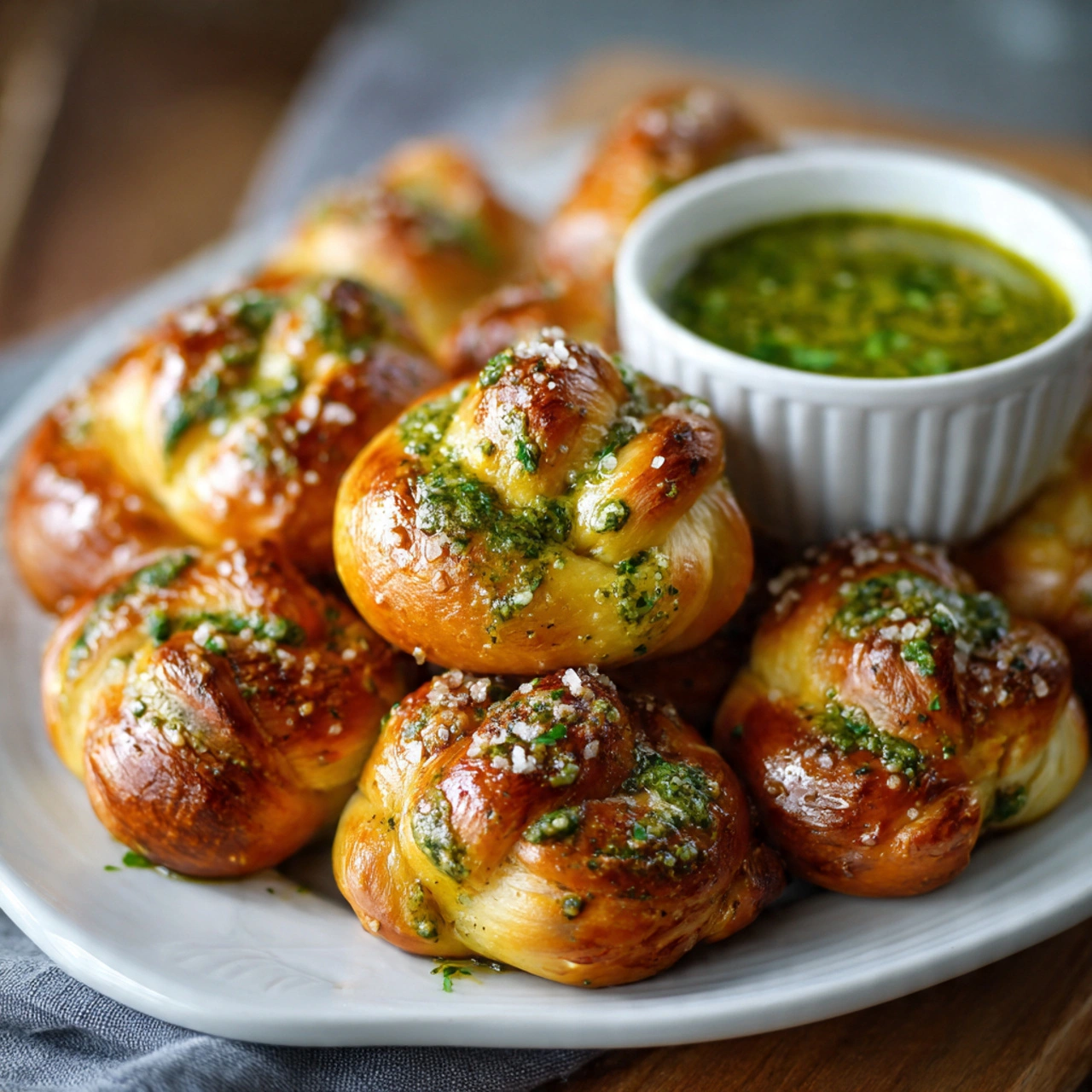
Pesto Garlic Butter Soft Pretzel Knots are the kind of recipe that makes people stop mid-conversation and ask, “Wait, did you actually make these from scratch?” I created this mashup four years ago during a Super Bowl party planning panic when I couldn’t decide between making traditional soft pretzels or garlic knots. In a moment of either brilliance or desperation, I combined both concepts and added a generous swipe of basil pesto to the garlic butter. The result? Pure magic.
That first batch disappeared in under fifteen minutes. Friends who claimed they were “just here for the game” suddenly became very interested in my kitchen activities. One guest—a self-proclaimed pretzel purist—actually asked for the recipe before halftime.
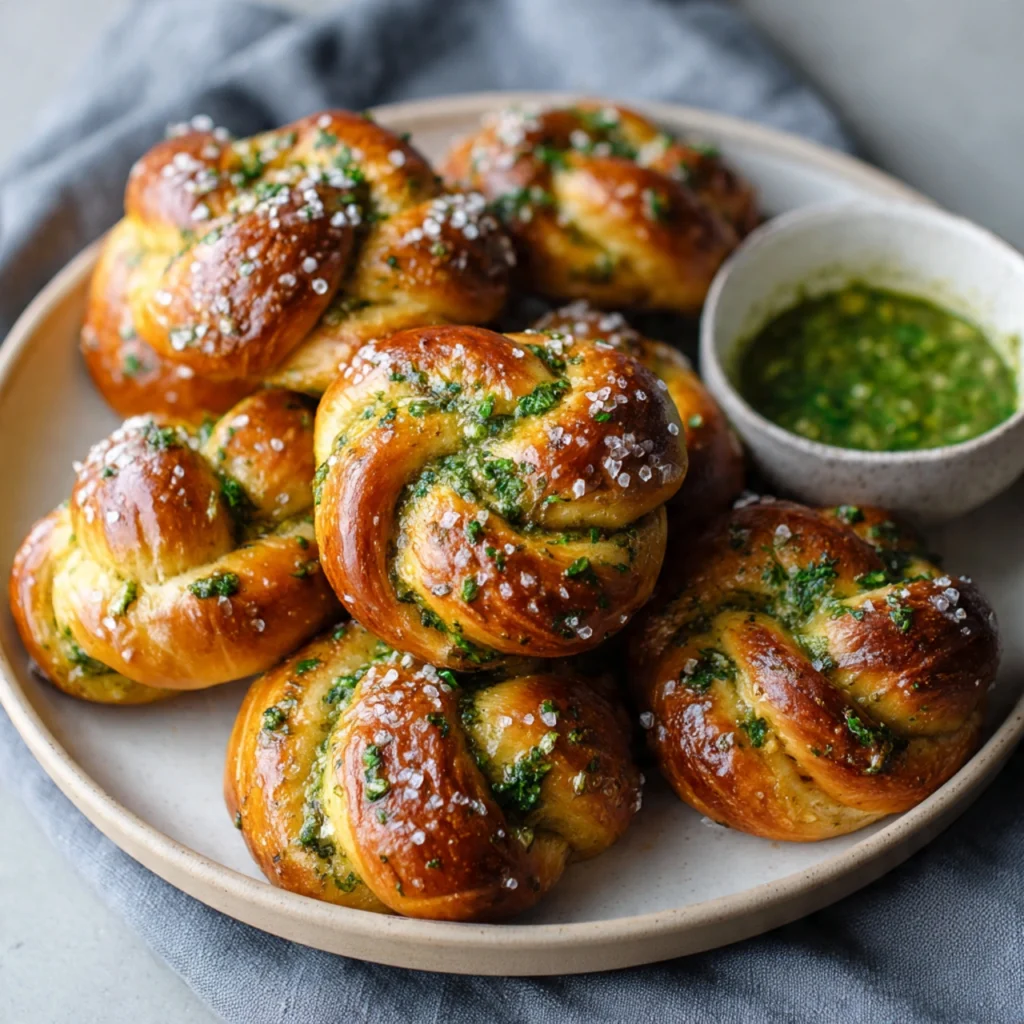
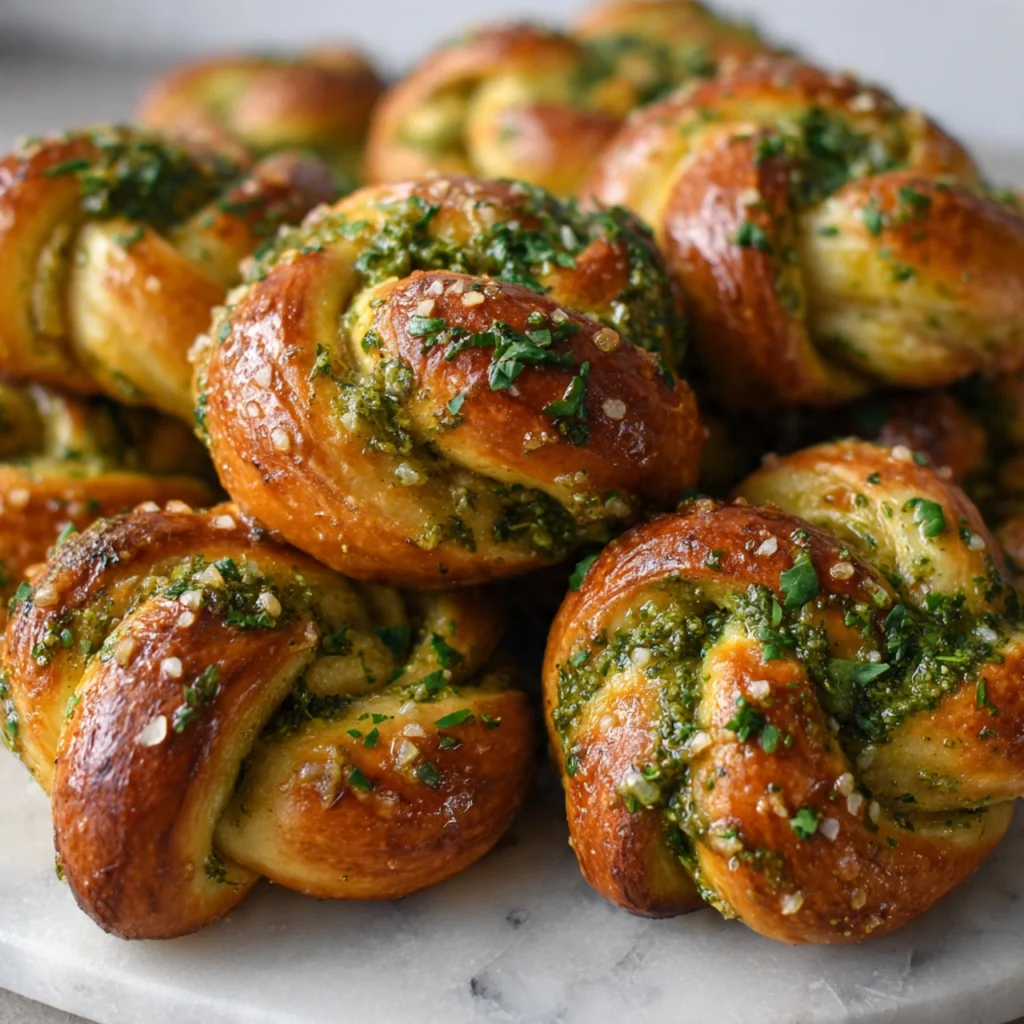
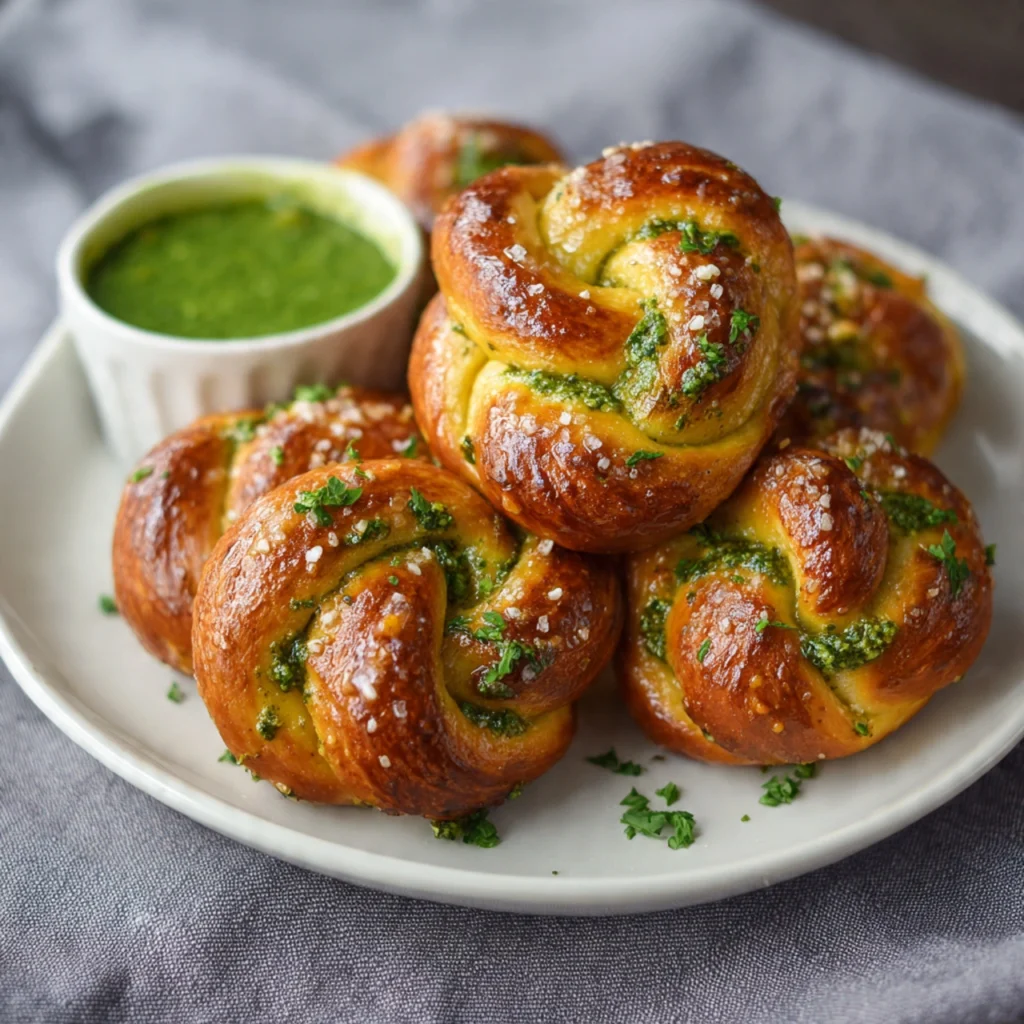
What makes these Pesto Garlic Butter Soft Pretzel Knots so irresistible is the way they balance contrasts. The exterior is deep golden brown with that characteristic pretzel sheen, achieved through the traditional baking soda bath.
I’ve refined this recipe through dozens of batches, testing every variable: different flours, various proofing times, alternative baking soda ratios, and countless pesto-to-butter proportions. I’ve made these knots for birthday parties, office potlucks, holiday gatherings, and lazy Saturday afternoons when I just wanted to make something special.
The best part about these pretzel knots isn’t just how they taste—though that alone would be enough. It’s how achievable they are for home bakers. Yes, there are a few steps involved, but none are particularly difficult.
In this comprehensive guide, I’ll walk you through everything you need to know to make perfect Pesto Garlic Butter Soft Pretzel Knots in your own kitchen. We’ll cover the science behind great pretzel dough, the importance of the baking soda bath, how to achieve that perfect Pesto Garlic Butter Soft Pretzel Knots.
Ingredients: Building Your Pesto Garlic Butter Soft Pretzel Knots
The ingredient list is straightforward, but quality matters significantly. Here’s what you’ll need.
For the Pretzel Dough:
- 4 cups bread flour (all-purpose works but bread flour gives better texture)
- 1 tablespoon granulated sugar (feeds the yeast and adds subtle sweetness)
- 2 teaspoons instant yeast (or 2¼ teaspoons active dry yeast)
- 2 teaspoons fine salt (table salt or fine sea salt)
- 1½ cups warm water (110-115°F; too hot kills yeast, too cold slows it down)
- 2 tablespoons unsalted butter (melted and slightly cooled)
For the Baking Soda Bath:
- 8 cups water (for boiling)
- ½ cup baking soda (not baking powder; this is crucial)
Pesto Garlic Butter:
- 6 tablespoons unsalted butter (softened to room temperature)
- 3 tablespoons basil pesto (store-bought or homemade)
- 4 cloves garlic (minced or pressed; fresh is essential)
- ¼ teaspoon red pepper flakes (optional; adds subtle heat)
- 2 tablespoons freshly grated Parmesan cheese (plus more for sprinkling)
For Finishing:
- Coarse sea salt or pretzel salt (for sprinkling)
- Fresh basil leaves (for garnish; optional but pretty)
Equipment You’ll Need:
- Stand mixer with dough hook (or strong arms for hand kneading)
- Large mixing bowl
- Large pot for boiling water
- Slotted spoon or spider strainer
- Baking sheets (2-3 sheets)
- Parchment paper or silicone baking mats
- Pastry brush
- Kitchen scale (optional but helpful for portioning)
Understanding Flour Choice
Bread flour contains more protein (12-14%) than all-purpose flour (10-12%), which creates more gluten development. This gives pretzel knots their characteristic chew while maintaining a soft interior. If you only have all-purpose flour, the Pesto Garlic Butter Soft Pretzel Knots recipe will still work—your pretzels will just be slightly less chewy and more tender. Not necessarily worse, just different.
The Baking Soda Bath: Why It Matters
The baking soda bath is what makes a pretzel a pretzel. This alkaline solution (pH around 9) does several things: it creates that distinctive brown, shiny crust through a process called the Maillard reaction, it contributes to that unique pretzel flavor, and it sets the outside of the dough quickly so the inside stays soft while baking. Don’t skip this step or substitute it—without the bath, you’ll just have breadsticks, not pretzels.
Pesto Considerations
You can use store-bought pesto or make your own. If using store-bought, look for brands that list basil as the first ingredient and have a bright green color. Jarred pesto that’s been sitting on shelves too long can taste flat and oily. If making homemade, traditional basil pesto works best, though you could experiment with other variations like kale pesto or arugula pesto.
Step-by-Step Instructions: Crafting Perfect Pesto Garlic Butter Soft Pretzel Knots
Follow these steps carefully and you’ll create pretzel knots that rival any artisan bakery.
Step 1: Make the Pretzel Dough
In the bowl of a stand mixer fitted with the dough hook attachment, combine the bread flour, sugar, yeast, and salt. Give it a quick stir to distribute everything evenly.
Add the warm water and melted butter. Mix on low speed until the ingredients come together into a shaggy dough, about 1-2 minutes. Increase the speed to medium and knead for 6-8 minutes. The dough should pull away from the sides of the bowl and become smooth and elastic. It should be slightly tacky to the touch but not sticky. If it’s too wet and sticking to everything, add flour one tablespoon at a time. If it’s dry and crumbly, add water one tablespoon at a time.
To test if you’ve kneaded enough, perform the “windowpane test”: pinch off a small piece of dough and stretch it gently between your fingers. If you can stretch it thin enough to see light through it without it tearing, the gluten is properly developed. it tears easily, knead for another 2-3 minutes.
If kneading by hand: Turn the dough onto a lightly floured surface and knead for 10-12 minutes. It’s a workout, but it’s doable and honestly quite therapeutic.
Step 2: First Rise
Shape the kneaded dough into a smooth ball by folding the edges underneath. Place it in a lightly greased bowl, turning once to coat all sides with oil. Cover with a damp kitchen towel or plastic wrap.
Let the dough rise in a warm, draft-free place for 45-60 minutes, until doubled in size. I like to put mine in the oven (turned OFF) with the oven light on—the bulb provides just enough warmth for perfect rising. Alternatively, a sunny windowsill works great, or just leave it on your counter if your kitchen is warm.
The dough is ready when you press two fingers into it and the indentations remain rather than springing back.
Step 3: Shape the Knots
Once risen, punch down the dough to release the gas bubbles. Turn it out onto a lightly floured surface and divide it into 12 equal pieces. I use a kitchen scale for this (about 80-85 grams each), but you can eyeball it.
Here’s how to shape the knots: Take one piece of dough and roll it between your palms and the counter into a rope about 10-12 inches long. The ends should be slightly tapered, and the middle should be about the thickness of your thumb.
To tie the knot, form the rope into a U shape. Cross the two ends over each other twice (like tying your shoes), then bring both ends down through the bottom loop. Pull gently to tighten, creating a knot shape. Don’t worry about perfection—rustic, slightly irregular knots have more character anyway.
Place shaped knots on a parchment-lined baking sheet, leaving about 2 inches between each one. Cover loosely with a kitchen towel and let them rest for 15 minutes while you prepare the baking soda bath.
Step 4: Prepare the Baking Soda Bath
Preheat your oven to 425°F (220°C). Line 2-3 baking sheets with parchment paper or silicone mats.
In a large, wide pot, bring 8 cups of water to a rolling boil. Once boiling, add the baking soda carefully—it will foam up dramatically, so add it gradually while stirring. Reduce the heat slightly to maintain a gentle boil.
Step 5: Boil the Pretzel Knots
Working in batches of 3-4 knots at a time (don’t crowd the pot), carefully lower the pretzel knots into the boiling water using a slotted spoon or spider strainer. Boil for 30 seconds, flip them over, and boil for another 30 seconds.
The knots will puff up slightly and develop a slightly shiny appearance. Using your slotted spoon, remove them from the water, letting excess water drain back into the pot. Place the boiled knots on your prepared baking sheets.
This is messy work—your pretzels will be wet and a bit slippery. Work confidently but carefully. It’s okay if they lose a bit of their perfect shape; they’ll puff up beautifully in the oven.
Step 6: Season and Bake
Once all knots are boiled and on baking sheets, immediately sprinkle them generously with coarse salt while they’re still wet—the moisture helps the salt stick.
Bake for 12-15 minutes, until deep golden brown. The pretzel knots should sound hollow when you tap the bottom, and the internal temperature should be around 200°F if you have an instant-read thermometer.
Don’t underbake—pale pretzels lack that characteristic pretzel flavor and texture. You want them properly browned.
Step 7: Make the Pesto Garlic Butter
While the pretzels bake, prepare your topping. In a small bowl, combine the softened butter, pesto, minced garlic, red pepper flakes (if using), and Parmesan cheese. Mix thoroughly until everything is well incorporated and you have a vibrant green butter.
Taste and adjust—you might want more garlic, more pesto, or more cheese. This is where personal preference comes in.
Step 8: Brush and Serve
The moment your pretzel knots come out of the oven, while they’re still piping hot, brush them generously with the pesto garlic butter. Don’t be shy—use all of it. The hot pretzels will absorb the butter, infusing them with flavor.
Sprinkle with additional Parmesan cheese if desired, and garnish with fresh basil leaves for a pop of color.
Serve immediately while warm, or keep them in a low oven (200°F) for up to 30 minutes before serving.
Pro Tips for Perfect Pesto Garlic Butter Soft Pretzel Knots
These insider secrets come from years of pretzel-making experience and plenty of trial and error.
1. Temperature Matters for Yeast
Water that’s too hot (above 120°F) will kill your yeast. Too cold (below 100°F) and it won’t activate properly. Aim for 110-115°F—it should feel like a warm bath on your wrist. If you don’t have a thermometer, err on the side of cooler rather than hotter.
2. Don’t Skip the Knead
Proper gluten development is crucial for that perfect chewy texture. Whether using a mixer or kneading by hand, take the full time. Underkneaded dough produces dense, tough pretzels. The windowpane test doesn’t lie.
3. Make Uniform Ropes
When rolling your dough ropes, apply even pressure and use both hands. Roll from the center outward to create consistent thickness. Uneven ropes create knots that bake unevenly—thick parts stay doughy while thin parts overcook.
4. Work Quickly with the Baking Soda Bath
Once you start boiling, work efficiently. The dough continues to rise slightly even after shaping, so prolonged waiting between boiling and baking can make your pretzels overproof. Boil, drain, arrange, and get them in the oven.
5. Use Parchment Paper, Not Greased Pans
The baking soda bath makes the pretzel dough quite alkaline. On a greased pan, this can create sticking issues and strange flavors. Parchment paper or silicone mats prevent sticking without any flavor interference.
6. Double Butter for Extra Indulgence
Want even more decadent pretzel knots? Brush them with plain melted butter right when they come out of the oven, then brush again with the pesto garlic butter. The first coat soaks in; the second creates a flavorful coating.
7. Salt Immediately After Boiling
The pretzel knots are wet from the baking soda bath—this is the perfect time to add coarse salt. It sticks perfectly to the wet surface. If you wait until after baking, the salt won’t adhere well.
8. Watch Your Oven Temperature
Every oven is different. If your pretzels are browning too quickly on the outside while staying pale on the bottom, your oven runs hot—reduce temperature by 25°F. If they’re taking forever to brown, increase by 25°F.
9. Make the Dough Ahead
You can make the pretzel dough up to 24 hours in advance. After the first rise, punch it down, wrap tightly in plastic wrap, and refrigerate. When ready to use, let it come to room temperature for about 30 minutes before shaping.
10. Freeze Unbaked Knots
Shape your knots, arrange them on a baking sheet, and freeze until solid. Transfer to a freezer bag. When ready to bake, boil them straight from frozen (add 15-20 seconds to the boiling time), then bake as directed. This is perfect for parties—prep days ahead, bake fresh when guests arrive.
11. Experiment with Pesto Varieties
While basil pesto is classic, try sun-dried tomato pesto, spinach pesto, or even a combination. Just make sure whatever pesto you use has enough flavor to stand up to the bold pretzel taste.
12. Revive Day-Old Pretzels
If you have leftover pretzel knots that have gotten a bit stale, sprinkle them lightly with water and reheat in a 350°F oven for 5-7 minutes. They’ll soften up and taste freshly baked. Brush with a bit more butter after reheating.
Common Mistakes to Avoid with Pesto Garlic Butter Soft Pretzel Knots
Even experienced bakers can stumble with pretzels. Here’s what to watch out for.
Mistake #1: Using Baking Powder Instead of Baking Soda
I’ve seen this confusion more times than I can count. Baking powder and baking soda are NOT interchangeable in this recipe and Baking soda creates the alkaline bath that gives pretzels their characteristic color, flavor, and texture. Baking powder won’t work at all. Always use baking soda.
Mistake #2: Overcrowding the Pot During Boiling
When you put too many pretzel knots in the boiling water at once, the temperature drops significantly, and they won’t develop that shiny, brown crust properly. Boil in small batches—3 or 4 at a time maximum. Yes, it takes longer, but the results are worth it.
Mistake #3: Under-Proofing or Over-Proofing
Under-proofed dough (hasn’t risen enough) produces dense, tough pretzels. Over-proofed dough (risen too long) creates pretzels that deflate in the oven and have a yeasty, sour flavor. The dough should exactly double in size—not triple, not barely increase. Set a timer and check it.
Mistake #4: Making Ropes Too Thick
Thick ropes create giant pretzel knots that look impressive but don’t bake properly—the outside overcooks while the inside stays doughy. Aim for ropes about thumb-thickness. They’ll puff up in the oven, creating a perfect ratio of crust to soft interior.
Mistake #5: Skipping the Salt
I know some people are watching sodium intake, but pretzels without coarse salt aren’t really pretzels. The salt is part of the essential flavor profile. If you must reduce it, use less, but don’t eliminate it entirely. You can always brush off excess before eating.
Mistake #6: Brushing Cold Butter on Hot Pretzels
Cold or even room-temperature butter won’t absorb into hot pretzels—it’ll just sit on the surface and then drip off. Your pesto garlic butter needs to be softened (not melted, but spreadable). This way it combines easily with the pesto and brushes on smoothly, soaking into the hot pretzels.
Mistake #7: Not Preheating the Oven Fully
Put those pretzel knots into a properly preheated oven. If the oven isn’t hot enough, they’ll spread and lose their shape before the crust sets. Wait until your oven truly reaches 425°F, then bake. Most ovens take 15-20 minutes to preheat properly.
Mistake #8: Storing While Still Hot
If you pile warm pretzel knots into an airtight container, the trapped steam makes them soggy and gummy. Always let them cool to room temperature before storing. The one exception is if you’re serving them within an hour—then you can keep them loosely covered in a low oven.
Storage and Serving Suggestions for Pesto Garlic Butter Soft Pretzel Knots
Proper storage keeps these delicious Pesto Garlic Butter Soft Pretzel Knots, though they’re truly best enjoyed the day they’re made.
Room Temperature Storage
Store cooled pretzel knots in an airtight container or zip-top bag at room temperature for up to 2 days. They’ll lose some of their freshness and the crust will soften, but they’re still delicious Pesto Garlic Butter Soft Pretzel Knots. Before serving, refresh them in a 350°F oven for 5 minutes.
Pesto Garlic Butter Soft Pretzel Knots Refrigerator Storage
You can refrigerate pretzel knots for up to 5 days in an airtight container. The cold temperature will make them firm and slightly stale-tasting. Always reheat before serving—sprinkle with a tiny bit of water and warm in a 350°F oven for 5-7 minutes.
Freezer Storage
These freeze beautifully! Let the pretzel knots cool completely, then wrap individually in plastic wrap or aluminum foil. Place wrapped knots in a freezer-safe bag or container. They’ll keep for up to 3 months.
To serve frozen pretzel knots: Thaw at room temperature for about an hour, then reheat in a 350°F oven for 8-10 minutes. You can also reheat from frozen—just add a few extra minutes. Brush with a bit of fresh melted butter when they come out for renewed freshness.
Pesto Garlic Butter Soft Pretzel Knots Serving Suggestions
For Game Day: Arrange warm pretzel knots on a large platter around bowls of mustard (spicy brown, honey mustard, or Dijon), marinara sauce for dipping, and perhaps a beer cheese dip. The variety lets everyone customize their experience.
As an Appetizer: Serve 2-3 knots per person alongside a simple green salad. The richness of the pesto butter makes them filling enough to tide people over until the main course.
For Parties: Set up a “pretzel knot bar” with various dips and toppings: different mustards, cheese sauces, extra pesto, garlic butter, pizza sauce, ranch dressing. Let guests build their own flavor combinations.
With Soup: These pretzel knots are phenomenal alongside tomato soup, minestrone, or any Italian-style soup. The Italian flavors complement beautifully, and the pretzels are perfect for dunking.
Breakfast or Brunch: Yes, really! Serve warm pretzel knots with scrambled eggs and fruit for a unique brunch spread. The pesto adds an unexpected savory element that works surprisingly well in the morning.
Pesto Garlic Butter Soft Pretzel Knots Reheating Tips
The best reheating method is in a moderate oven (350°F) for 5-7 minutes. Microwaving works in a pinch (15-20 seconds on high), but it makes the exterior soggy rather than crisp. For the best texture, always oven-reheat when possible.
If the pretzel knots seem dry after storage, brush them lightly with melted butter or olive oil before reheating.
Frequently Asked Questions About Pesto Garlic Butter Soft Pretzel Knots
1. Can I make these without a stand mixer?
Absolutely! Mix the dough ingredients in a large bowl with a wooden spoon until combined, then turn onto a floured surface and knead by hand for 10-12 minutes. It’s more work, but totally doable. The key is developing the gluten properly—use the windowpane test to know when you’re done.
2. What can I substitute for the pesto?
If you don’t have or don’t like pesto, try tapenade (olive spread), sun-dried tomato paste, or even just lots of fresh herbs mixed into the garlic butter. You could also go a completely different direction with cinnamon sugar butter or everything bagel seasoning. The pretzel knot itself is versatile enough to handle many flavor profiles.
3. Why did my pretzels come out dense and tough?
Several possible causes: under-kneading (gluten didn’t develop enough), using too much flour (makes dough dry and stiff), or not letting the dough rise sufficiently. Make sure you’re kneading for the full time, measuring flour correctly (spoon and level, don’t pack), and allowing the full rise time until the dough truly doubles.
4. Can I make these gluten-free?
Gluten-free pretzel knots are challenging because gluten provides the essential structure and chew. However, some bakers have had success using high-quality gluten-free bread flour blends designed for yeast breads (like King Arthur or Bob’s Red Mill). The texture will be different—less chewy, more crumbly—but still tasty. You’ll also need to add xanthan gum if it’s not in your flour blend.
5. How far in advance can I make these?
You can prep at several stages: make the dough and refrigerate overnight before shaping; shape the knots and freeze them unbaked (boil and bake when ready); or bake them completely and freeze, then reheat. For maximum freshness, I recommend baking them the day you plan to serve, but freezing unbaked shaped knots is a great make-ahead option.
6. My pretzels aren’t getting brown enough. What’s wrong?
This usually means your baking soda bath isn’t strong enough, your oven temperature is too low, or you’re underbaking. Make sure you’re using the full ½ cup of baking soda, verify your oven temperature with an oven thermometer, and bake until the pretzels are deep golden brown—pale pretzels lack that characteristic pretzel flavor.
7. Can I use active dry yeast instead of instant yeast?
Yes, but you need to activate it first. Dissolve the active dry yeast in the warm water with a pinch of sugar and let it sit for 5-10 minutes until foamy. Then proceed with the recipe. Instant yeast can be mixed directly with the dry ingredients, which is why I prefer it for convenience.
8. What’s the best way to tie the knots?
Think of tying your shoes. Make a U-shape with your dough rope, cross the two ends over each other twice, then pull them down through the bottom of the U and through the loop. Pull gently to create a knot shape. They don’t need to be perfect—even slightly messy knots look charming and rustic.
Nutrition Information
Please note these are approximate values and will vary based on exact ingredients used:
- Calories: 245
- Total Fat: 9g
- Saturated Fat: 5g
- Trans Fat: 0g
- Cholesterol: 20mg
- Sodium: 850mg
- Total Carbohydrates: 35g
- Dietary Fiber: 1.5g
- Sugars: 2g
- Protein: 6g
- Vitamin A: 6% DV
- Vitamin C: 2% DV
- Calcium: 4% DV
- Iron: 15% DV
Dietary Information:
- Vegetarian
- Not Vegan
- Not Gluten-Free
- Can be made Kosher
- High in sodium due to pretzel salt and baking soda bath
Note: To reduce calories and fat, you can use less butter in the topping or substitute some with olive oil.
Final Thoughts: Why These Pesto Garlic Butter Soft Pretzel Knots Will Become Your Signature Recipe
Some recipes just have that special “it” factor—and these Pesto Garlic Butter Soft Pretzel Knots are one of them. They look impressive, taste incredible, and are much easier to make than you’d expect.
What makes this Pesto Garlic Butter Soft Pretzel Knots recipe stand out is its simplicity. While there are a few steps, each one is straightforward: make the dough, let it rise, shape, boil, bake, and finish with flavorful butter. Anyone can do it with a bit of patience and a timer.
Beyond technique, these pretzel knots bring real joy—from shaping the dough to the irresistible smell of garlic and herbs filling your kitchen. And once they hit the table, they disappear fast.
They’re perfect for any occasion, whether it’s a casual dinner, a party, or just a baking day at home. Don’t let the detailed instructions intimidate you—they’re there to help you succeed.
Try them once, and you’ll see why they quickly become a favorite. And once you’ve mastered them, feel free to get creative with flavors and toppings.
Homemade pretzels just hit different—and these might become your new go-to.
PrintPesto Garlic Butter Soft Pretzel Knots: The Ultimate Game Day Appetizer
These Pesto Garlic Butter Soft Pretzel Knots are the perfect fusion of classic German soft pretzels and Italian garlic knots. Featuring soft, chewy pretzel dough twisted into elegant knots, boiled in a traditional baking soda bath for that signature pretzel flavor and color, then brushed with a vibrant mixture of basil pesto, roasted garlic, and rich butter. The result is an irresistible appetizer or snack that’s perfect for game day parties, family gatherings, or any time you want to impress with homemade baked goods. Each bite delivers the satisfying chew of a perfect pretzel with the herbaceous, garlicky goodness of Italian flavors. They’re showstopping, surprisingly easy to make, and absolutely addictive!
- Prep Time: 30 minutes
- Cook Time: 15 minutes
- Total Time: 1 hour 45 minutes
- Yield: 12 pretzel knots
- Category: Appetizer / Snack / Bread / Party Food
- Method: Baking / Boiling / Kneading
- Cuisine: German-Italian Fusion / American
- Diet: Vegetarian
Ingredients
For the Pretzel Dough:
- 4 cups bread flour
- 1 tablespoon granulated sugar
- 2 teaspoons instant yeast
- 2 teaspoons fine salt
- 1½ cups warm water (110-115°F)
- 2 tablespoons unsalted butter, melted
For the Baking Soda Bath:
- 8 cups water
- ½ cup baking soda
For the Pesto Garlic Butter:
- 6 tablespoons unsalted butter, softened
- 3 tablespoons basil pesto
- 4 cloves garlic, minced
- ¼ teaspoon red pepper flakes (optional)
- 2 tablespoons freshly grated Parmesan cheese
For Finishing:
- Coarse sea salt or pretzel salt
- Additional Parmesan cheese (optional)
- Fresh basil leaves (optional garnish)
Instructions
- Make the dough: In a stand mixer bowl with dough hook, combine flour, sugar, yeast, and salt. Add warm water and melted butter. Mix on low until combined, then knead on medium speed for 6-8 minutes until smooth and elastic. Dough should pass the windowpane test.
- First rise: Shape dough into a ball, place in a greased bowl, cover, and let rise in a warm place for 45-60 minutes until doubled in size.
- Shape knots: Punch down dough and divide into 12 equal pieces. Roll each piece into a 10-12 inch rope. Tie each rope into a knot shape (form U, cross ends twice, pull through loop). Place on parchment-lined baking sheets. Cover and rest 15 minutes.
- Prepare baking soda bath: Preheat oven to 425°F. Bring 8 cups water to a boil, then carefully add baking soda (it will foam). Reduce to a gentle boil.
- Boil pretzels: Working in batches of 3-4, boil knots for 30 seconds, flip, and boil another 30 seconds. Remove with slotted spoon and place on prepared baking sheets.
- Season and bake: Immediately sprinkle wet knots generously with coarse salt. Bake 12-15 minutes until deep golden brown.
- Make pesto garlic butter: While pretzels bake, combine softened butter, pesto, garlic, red pepper flakes, and Parmesan. Mix well.
- Finish: Brush hot pretzels generously with pesto garlic butter. Sprinkle with additional Parmesan and garnish with basil if desired. Serve warm.
Notes
- Water temperature is critical for yeast—110-115°F is ideal
- Use bread flour for best texture; all-purpose works but gives less chew
- Don’t skip the baking soda bath—it’s what makes pretzels taste like pretzels
- Work quickly once you start the boiling process
- Pretzels should be deep golden brown, not pale
- Brush butter on while pretzels are hot so it absorbs
- Can freeze unbaked shaped knots and bake from frozen
- Store-bought or homemade pesto both work
- Best served fresh but can be reheated successfully