Introduction: The Spicy Honey Balsamic Salmon Bowls That Will Change Your Meal Prep Game
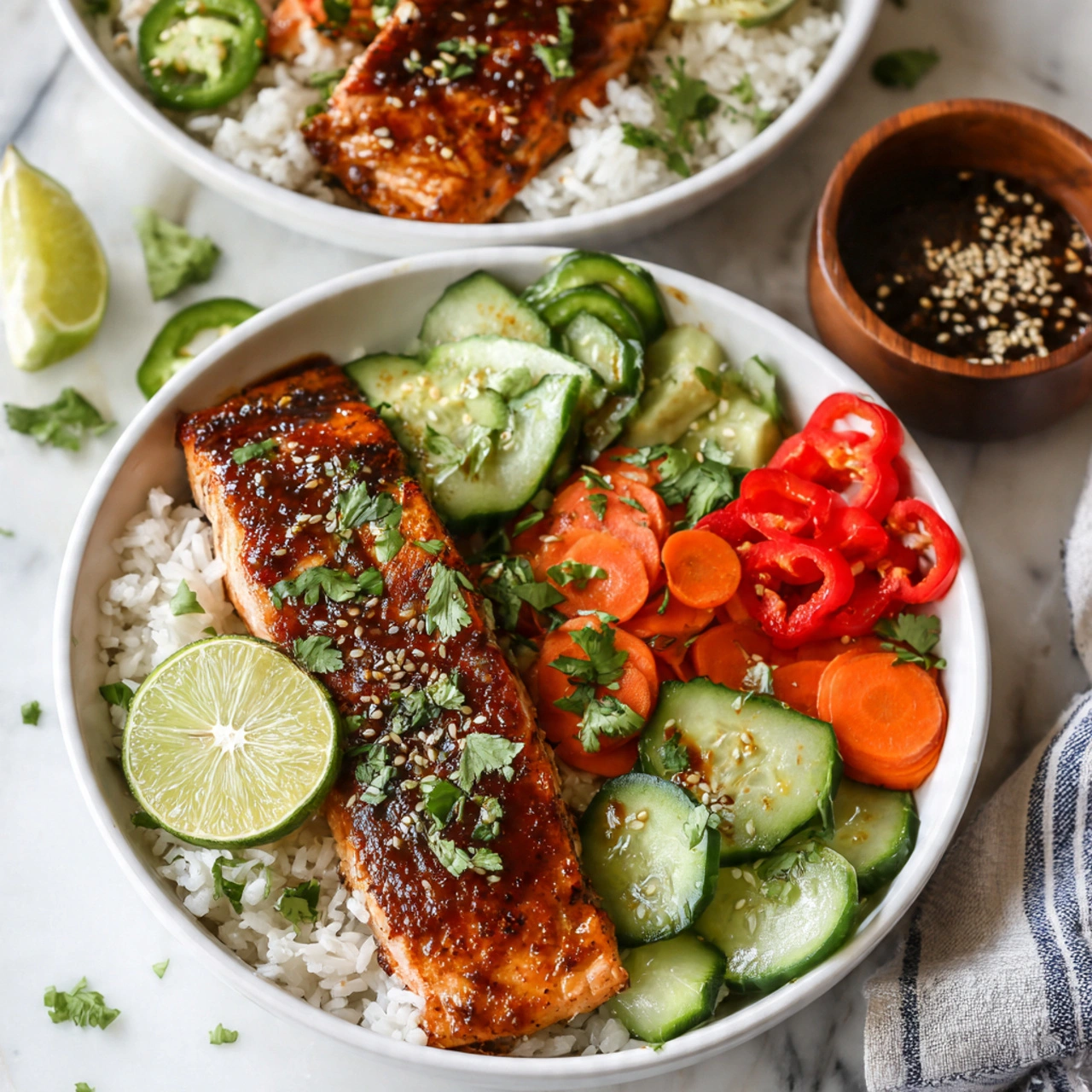
These Spicy Honey Balsamic Salmon Bowls are about to revolutionize your approach to healthy eating, and I’m not being dramatic when I say this recipe has single-handedly made meal prep something I actually look forward to rather than dread. With perfectly caramelized salmon glazed in a sweet-spicy-tangy sauce, crispy roasted vegetables, fluffy rice, and optional toppings that add crunch and freshness, these bowls deliver restaurant-quality flavor while being surprisingly simple to prepare at home.
I discovered the magic of these salmon bowls about three years ago when I was desperately trying to break out of my dinner rut. I’d fallen into the trap of rotating between the same five boring meals, and my family was starting to stage subtle rebellions.
The first time I made these bowls, I knew I’d stumbled onto something special. The glaze is where the magic happens—honey provides sweetness and helps the salmon caramelize beautifully, balsamic vinegar adds depth and tanginess, and a kick of heat from red pepper flakes or sriracha creates this incredible balance that keeps you coming back for another bite.
What makes these bowls particularly brilliant is their incredible versatility. The basic formula—glazed protein + grain + roasted vegetables + sauce + toppings—can be endlessly customized based on what you have in your refrigerator, what’s in season, or what dietary preferences you’re accommodating.
Beyond the flexibility, these bowls check all the boxes for what I consider the perfect weeknight meal: they’re ready in about 30 minutes from start to finish, they’re packed with nutrition, they look stunning, they’re meal-prep friendly, and—this is crucial—they actually taste so good that you’ll crave them rather than feeling like you’re choking down “health food.”
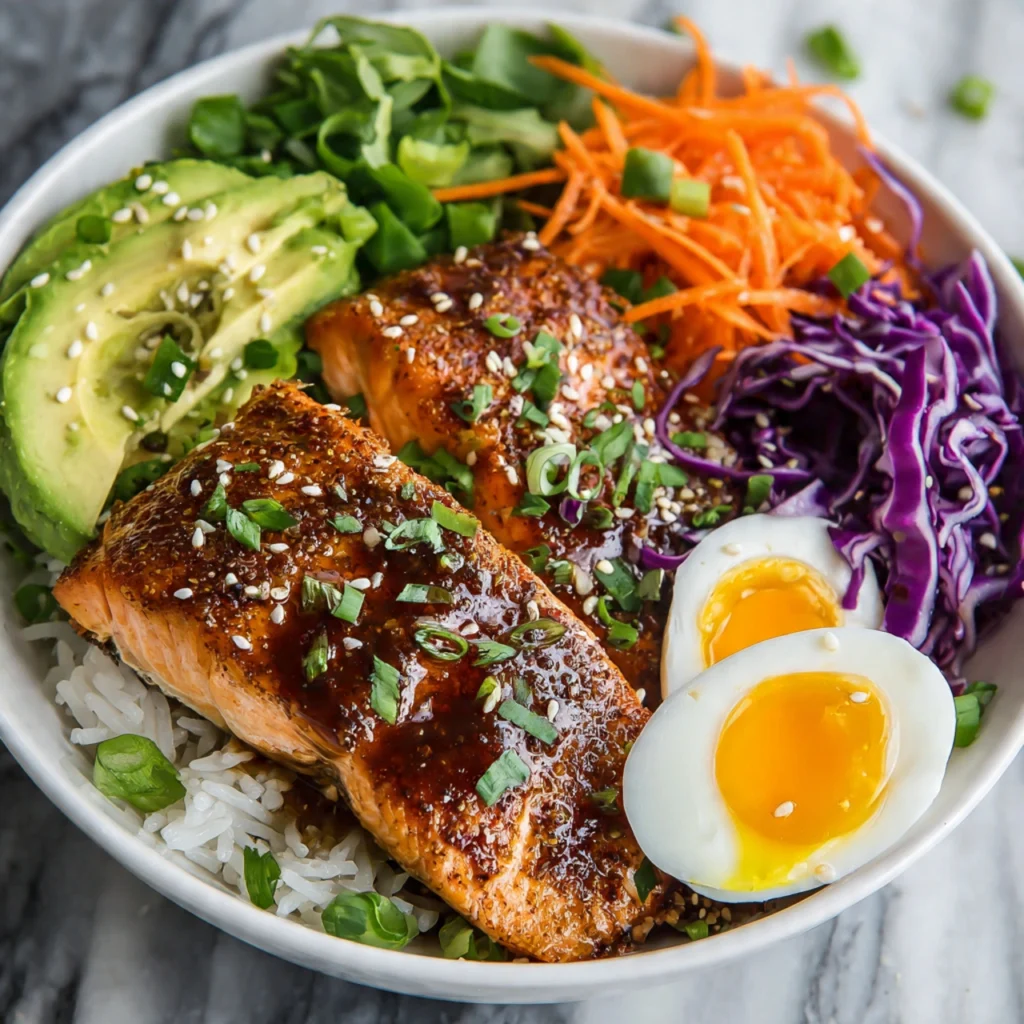
Understanding What Makes Great Salmon Bowls
Before we dive into the Spicy Honey Balsamic Salmon Bowls recipe, let’s talk about what elevates a grain bowl from “fine, I guess” to “I’m genuinely excited to eat this.”
The Protein Foundation: Salmon is the star here, and for good reason. It’s rich in omega-3 fatty acids, high-quality protein, vitamin D, and B vitamins. When glazed properly, it develops a caramelized exterior while remaining moist and tender inside. The sweet-spicy-tangy glaze we’re using creates complex flavor that makes you forget you’re eating something healthy.
The Grain Base: Rice, quinoa, farro, or whatever grain you choose provides substance, fiber, and a neutral backdrop that allows the other flavors to shine. It also soaks up the delicious glaze and any sauce you drizzle over the bowl.
The Vegetables: Roasted vegetables add nutrition, texture, color, and their own caramelized flavor. The high heat concentrates their natural sugars and creates those crispy, golden edges that make vegetables actually crave-worthy.
The Sauce: A good sauce ties everything together. Our honey balsamic glaze does double duty as both the salmon marinade and the bowl drizzle, creating flavor harmony throughout the dish.
The Toppings: This is where you add personality—creamy avocado, crunchy sesame seeds, fresh herbs, pickled vegetables, or whatever speaks to you. Toppings provide textural contrast and fresh flavors that prevent the bowl from feeling one-dimensional.
When these five elements come together thoughtfully, you get a bowl that’s nutritionally complete, satisfying, and genuinely delicious Spicy Honey Balsamic Salmon Bowls—the kind of meal that makes you feel good both while eating it and afterward.
Ingredients for Perfect Spicy Honey Balsamic Salmon Bowls
This recipe serves 4 people generously, with components that can easily be scaled up for meal prep.
For the Honey Balsamic Glaze:
- 1/3 cup balsamic vinegar (good quality makes a difference)
- 1/4 cup honey (use pure honey, not imitation)
- 2 tablespoons soy sauce (or tamari for gluten-free)
- 1 tablespoon Dijon mustard
- 1-2 teaspoons sriracha or red pepper flakes (adjust to your heat preference)
- 3 cloves garlic, minced
- 1 tablespoon fresh grated ginger (or 1 teaspoon ground)
- 1 tablespoon olive oil
- 1/4 teaspoon black pepper
For the Salmon:
- 4 salmon fillets (6 ounces each, skin-on or skinless)
- 1 tablespoon olive oil
- 1/2 teaspoon salt
- 1/4 teaspoon black pepper
Roasted Vegetables:
- 2 cups broccoli florets
- 2 medium carrots, sliced into coins or sticks
- 1 red bell pepper, cut into 1-inch pieces
- 1 cup snap peas or green beans
- 2 tablespoons olive oil
- 1/2 teaspoon salt
- 1/4 teaspoon garlic powder
- 1/4 teaspoon black pepper
For the Bowls:
- 3 cups cooked rice (white, brown, jasmine, or your preference)
- 1 cup edamame, cooked and shelled (optional but recommended)
- 1 avocado, sliced
- 2 tablespoons sesame seeds (white, black, or a mix)
- 2 green onions, thinly sliced
- Fresh cilantro or parsley for garnish
- Lime wedges for serving
Optional Add-Ins and Variations:
- Purple cabbage, thinly sliced for crunch and color
- Cucumber, diced
- Pickled ginger for a tangy bite
- Spicy mayo (mix mayo with sriracha)
- Seaweed strips (nori)
- Crispy fried onions or shallots
- Microgreens for elegance
Spicy Honey Balsamic Salmon Bowls Ingredient Deep Dive
Salmon: Look for wild-caught salmon if possible—it has better flavor and higher omega-3 content. Sockeye, coho, and king salmon all work beautifully. The fillets should be bright in color, smell fresh (like the ocean, not fishy), and have firm flesh. Skin-on salmon is easier to cook without it falling apart, but skinless works too if you prefer.
Balsamic Vinegar: Quality matters here. Cheap balsamic can be harsh and one-dimensional. Look for “balsamic vinegar of Modena” for good balance of sweetness and acidity. The vinegar should be thick and syrupy, not watery.
Honey: Pure, raw honey provides the best flavor and natural sweetness. Avoid honey-flavored syrup or processed honey. Different honey varieties (wildflower, clover, orange blossom) will subtly change the flavor profile.
Soy Sauce: Regular soy sauce works perfectly. For gluten-free, use tamari. For lower sodium, use reduced-sodium soy sauce. Coconut aminos work for soy-free diets, though the flavor is slightly different.
Vegetables: Choose vegetables that roast well—firm vegetables that caramelize beautifully at high heat. Broccoli, carrots, bell peppers, snap peas, Brussels sprouts, asparagus, and green beans are all excellent. Avoid watery vegetables like zucchini or tomatoes, which can become mushy.
Rice: Any rice works—white jasmine rice for a lighter, fluffy texture; brown rice for more fiber and nuttiness; sushi rice for stickiness; or basmati for aromatic fragrance. Quinoa, farro, or cauliflower rice also work as substitutes.
Step-by-Step Instructions: Creating Your Spicy Honey Balsamic Salmon Bowls
1: Prepare the Honey Balsamic Glaze (5 minutes)
- In a small bowl or measuring cup, whisk together the balsamic vinegar, honey, soy sauce, Dijon mustard, sriracha (or red pepper flakes), minced garlic, grated ginger, olive oil, and black pepper.
- Whisk vigorously until everything is fully combined and emulsified. The mixture should be smooth and slightly thick from the honey.
- Taste and adjust: This is your chance to customize the flavor. Want it sweeter? Add more honey. Like more heat? Increase the sriracha. Prefer a tangier profile? Add a splash more balsamic.
- Divide the glaze: Pour about half of the glaze into a separate small bowl or container. This portion will be used for drizzling over the finished bowls. The remaining half will be used to glaze the salmon. Important: Keep these separate to avoid cross-contamination with raw salmon.
2: Prepare and Marinate the Salmon (10 minutes inactive time)
- Pat the salmon fillets completely dry with paper towels. This is crucial for getting a good sear and helping the glaze adhere. Moisture is the enemy of browning.
- Season both sides of the salmon with salt and black pepper.
- Place salmon in a shallow dish or large zip-top bag. Pour the salmon portion of the glaze over the fillets, turning to coat all sides.
- Marinate for at least 10 minutes at room temperature, or up to 2 hours in the refrigerator if you’re prepping ahead. While the salmon marinates, you can prepare the vegetables and cook the rice.
3: Cook the Rice (15-20 minutes, depending on type)
- Cook your rice according to package directions. For 3 cups cooked rice, you’ll need about 1 cup uncooked rice.
- For extra flavor, cook the rice in vegetable or chicken broth instead of water, or add a pinch of salt and a teaspoon of butter or oil to the cooking water.
- Keep warm until ready to assemble bowls, fluffing with a fork before serving.
4: Roast the Vegetables (20 minutes)
- Preheat your oven to 425°F (220°C). Line a large baking sheet with parchment paper or a silicone mat. High heat is essential for caramelization.
- Prepare the vegetables: Cut all vegetables into similar-sized pieces so they roast evenly. Spread them on the prepared baking sheet in a single layer—overcrowding causes steaming instead of roasting.
- Toss with olive oil and seasonings: Drizzle the vegetables with olive oil, then sprinkle with salt, garlic powder, and black pepper. Use your hands to toss everything together, ensuring even coating.
- Roast for 18-22 minutes, stirring halfway through, until vegetables are tender with golden, slightly crispy edges. Broccoli should have some charred florets, and carrots should be tender-crisp.
- Remove from oven and set aside while you cook the salmon.
5: Cook the Salmon (10-12 minutes)
- Heat a large oven-safe skillet (cast iron works beautifully) over medium-high heat. Add 1 tablespoon of olive oil and let it heat until shimmering.
- Remove salmon from marinade, letting excess drip off. Reserve the marinade.
- Place salmon in the hot skillet, skin-side up if using skin-on salmon. Don’t move it—let it sear undisturbed for 4-5 minutes. You should hear a good sizzle. This creates that gorgeous golden crust.
- Flip the salmon carefully using a thin spatula. The first side should be deeply golden and caramelized.
- Brush the top with reserved marinade, then transfer the entire skillet to the 425°F oven (the same temperature you used for vegetables).
- Bake for 5-7 minutes until the salmon reaches an internal temperature of 145°F (63°C) for fully cooked, or 125°F (52°C) if you prefer medium-rare in the center. The salmon should flake easily with a fork and be opaque throughout.
- Remove from oven and brush with a bit more of the reserved glaze. Let rest for 2-3 minutes before serving.
Alternative Cooking Method – Sheet Pan: You can roast the salmon alongside the vegetables. Place marinated salmon on the same sheet pan as the vegetables (or a separate one) during the last 12-15 minutes of vegetable roasting time. Brush with glaze halfway through.
6: Assemble the Bowls (5 minutes)
- Start with the rice base: Divide the cooked rice among 4 bowls, creating a generous bed.
- Add the roasted vegetables: Arrange the vegetables in sections around the bowl for visual appeal, or mix them in—your choice.
- Place the salmon: Set one salmon fillet on top of each bowl. If you prefer, you can flake the salmon into large chunks for easier eating.
- Add the extras: Scatter edamame over the bowls, arrange avocado slices artfully, and sprinkle with sesame seeds and sliced green onions.
- Drizzle with reserved glaze: Use the portion of glaze you set aside (that hasn’t touched raw salmon) to drizzle over each bowl.
- Garnish and serve: Add fresh cilantro or parsley, and serve with lime wedges on the side for squeezing over the bowl.
Pro Tips for Perfect Spicy Honey Balsamic Salmon Bowls
After making these bowls dozens of times, I’ve learned some tricks that consistently produce exceptional results.
Achieving Perfectly Cooked Salmon
The difference between dry, overcooked salmon and tender, flaky perfection is just a few minutes:
- Don’t overcook: Salmon continues cooking after you remove it from heat. Pull it when it’s almost done, and it will finish cooking while it rests.
- Use a thermometer: The most reliable way to ensure perfect salmon is using an instant-read thermometer. Aim for 145°F for USDA-recommended doneness, or 125°F for medium-rare (my preference).
- Let it sear undisturbed: Resist the urge to flip or move the salmon during the first sear. This creates that beautiful crust and prevents sticking.
- Pat it dry: Cannot emphasize this enough. Wet salmon won’t brown properly and will steam instead of sear.
Maximizing Glaze Flavor
The glaze is what makes these bowls special:
- Reduce it for intensity: If you want a thicker, more concentrated glaze, simmer the sauce portion (not the salmon marinade) in a small saucepan for 5-7 minutes until it reduces and thickens.
- Brush multiple times: For maximum caramelization, brush the salmon with glaze before cooking, halfway through, and immediately after removing from heat.
- Don’t waste the marinade: After removing the salmon, you can bring the marinade to a boil for 2-3 minutes to kill any bacteria, then use it as additional sauce (though I prefer using the reserved portion that never touched raw fish).
Perfectly Roasted Vegetables
Soggy vegetables ruin a good bowl:
- Don’t overcrowd the pan: Vegetables need space for air circulation. Use two baking sheets if necessary.
- High heat is essential: 425°F creates caramelization. Lower temperatures steam the vegetables.
- Cut uniformly: Similar-sized pieces ensure even cooking.
- Different vegetables, different timing: If using vegetables with varying cooking times, start the longer-cooking ones first (carrots, sweet potatoes) and add quicker-cooking ones (broccoli, snap peas) partway through.
Spicy Honey Balsamic Salmon Bowls Meal Prep Strategies
These bowls are meal-prep champions:
- Prep components separately: Cook rice, roast vegetables, and cook salmon. Store each component separately in airtight containers for up to 4 days.
- Keep it fresh: Don’t add avocado, herbs, or greens until serving time.
- Reheat properly: Microwave rice and vegetables together, but reheat salmon separately at 50% power to prevent drying out. Or enjoy the salmon cold—it’s delicious both ways.
- Make extra glaze: Double the glaze recipe and keep extra in the refrigerator for quick weeknight bowls with any protein.
Customization Ideas
Make these bowls your own:
- Different proteins: Try this glaze on chicken thighs, shrimp, tofu, or tempeh.
- Grain swaps: Quinoa, farro, cauliflower rice, rice noodles, or even zucchini noodles work.
- Seasonal vegetables: Spring asparagus, summer zucchini, fall Brussels sprouts, winter sweet potatoes.
- Asian-inspired toppings: Kimchi, pickled radishes, wasabi, furikake, or crispy wonton strips.
- Different heat levels: Make it mild by omitting the sriracha, or amp it up with fresh chili slices.
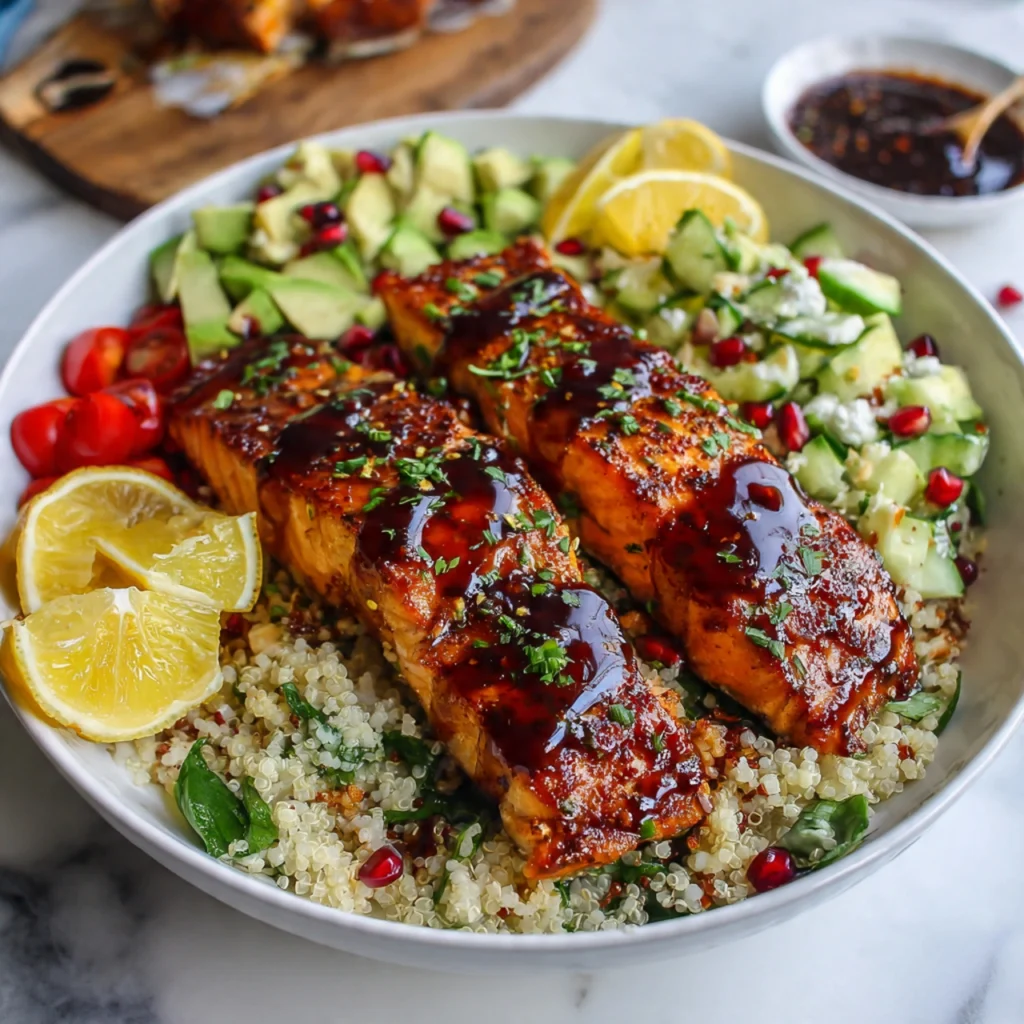
Common Mistakes to Avoid For Spicy Honey Balsamic Salmon Bowls
Understanding what can go wrong helps you prevent these issues and troubleshoot in the moment.
Overcooking the Salmon
This is the number one mistake that ruins otherwise perfect salmon:
- The problem: Dry, chalky salmon that’s unpleasant to eat
- The cause: Cooking past 145°F or using too high heat
- The fix: Use a thermometer, watch timing carefully, and remember that salmon continues cooking after removal from heat
Prevention: Err on the side of slightly underdone. Salmon can always be cooked more, but you can’t reverse overcooking.
Watery, Steamed Vegetables
Nobody wants sad, soggy vegetables:
- The problem: Vegetables that are soft and pale instead of caramelized and crispy
- The cause: Overcrowding the pan, too-low temperature, or vegetables with too much moisture
- The fix: Use high heat, spread vegetables in a single layer with space between, and pat them dry before roasting
Glaze That Won’t Stick
If the glaze slides off the salmon instead of creating a beautiful coating:
- The problem: Thin, runny glaze that pools instead of clinging
- The cause: Too much liquid, not enough reduction, or wet salmon
- The fix: Reduce the glaze by simmering until thickened, and always pat salmon completely dry
Bland Rice
Plain rice is boring:
- The problem: Rice that tastes like nothing and doesn’t contribute to the overall flavor
- The cause: Cooking in plain water without seasoning
- The fix: Cook rice in broth, add salt, or season with rice vinegar and a touch of sugar (for sushi-style rice)
Cross-Contamination with Glaze
Food safety matters:
- The problem: Using the same glaze on raw and cooked salmon
- The cause: Not separating the glaze portions
- The fix: Always divide the glaze before using—one portion for raw salmon, one for drizzling on finished bowls
Unbalanced Bowls
A good bowl needs balance:
- The problem: Too much of one component, not enough variety
- The cause: Not planning proportions
- The fix: Follow the general formula: 1/3 grain, 1/3 protein, 1/3 vegetables, plus toppings for texture and freshness
Spicy Honey Balsamic Salmon Bowls Storage and Serving Suggestions
Proper storage preserves quality, while thoughtful serving transforms a simple meal into something special.
How to Store Spicy Honey Balsamic Salmon Bowls
Refrigerator – Components Separated (Recommended):
- Cooked salmon: Store in an airtight container for up to 3 days
- Cooked rice: Refrigerate in an airtight container for up to 5 days
- Roasted vegetables: Store in an airtight container for up to 4 days
- Glaze/sauce: Refrigerate in a sealed jar or container for up to 1 week
- Fresh toppings: Keep avocado uncut, store herbs in damp paper towels, keep edamame separate
Refrigerator – Fully Assembled Bowls: You can assemble complete bowls and refrigerate for up to 3 days, but:
- Wait to add avocado, fresh herbs, and lime until serving
- The textures won’t be quite as good as freshly assembled
- Keep a small amount of extra glaze for refreshing before eating
Freezer:
- Cooked salmon: Freeze for up to 2 months in freezer-safe containers. Thaw overnight in refrigerator.
- Cooked rice: Freezes beautifully for up to 3 months. Reheat from frozen in the microwave.
- Roasted vegetables: Can be frozen but texture suffers. If freezing, slightly undercook them.
- Glaze: Freeze in ice cube trays, then transfer cubes to a freezer bag. Thaw and use as needed.
Reheating Tips:
- Microwave: Best for rice and vegetables. Heat in 1-minute intervals, stirring between.
- Stovetop: Gently warm salmon in a skillet over low heat with a splash of water or glaze.
- Oven: Reheat assembled bowls (without avocado) at 350°F for 10-15 minutes.
- Cold option: These bowls are delicious cold, especially in summer. The salmon is excellent at room temperature.
Spicy Honey Balsamic Salmon Bowls Serving Suggestions
As a Complete Meal: These bowls are nutritionally balanced and need nothing else, but you could add:
- Miso soup as a starter
- Asian-inspired cucumber salad
- Seaweed salad for extra vegetables
- Spring rolls or gyoza as appetizers
For Different Occasions:
- Weeknight dinner: Simple assembly, minimal toppings
- Meal prep: Make components on Sunday, assemble throughout the week
- Entertaining: Create a “build-your-own bowl” bar with various toppings
- Lunch: Pack components separately, assemble at work, enjoy cold or reheated
Presentation Ideas:
- Use wide, shallow bowls to showcase all components
- Arrange ingredients in sections rather than mixing for visual appeal
- Garnish generously with fresh herbs and sesame seeds
- Serve lime wedges on the side in a small dish
Portion Guidance:
- Light meal: 1 small salmon fillet (4 oz), 3/4 cup rice, 1 cup vegetables
- Standard meal: 1 medium fillet (6 oz), 1 cup rice, 1.5 cups vegetables
- Hearty meal: 1 large fillet (8 oz), 1.5 cups rice, 2 cups vegetables
Spicy Honey Balsamic Salmon Bowls Pairing Suggestions
Beverages:
- Crisp white wine (Sauvignon Blanc, Pinot Grigio)
- Light beer or wheat beer
- Green tea or jasmine tea
- Sparkling water with lime
- Ginger kombucha
Side Dishes (if desired):
- Miso soup
- Edamame with sea salt
- Asian slaw
- Seaweed salad
- Gyoza or potstickers
FAQ About Spicy Honey Balsamic Salmon Bowls
Can I use frozen salmon for this recipe?
Yes, frozen salmon works perfectly well. Thaw it completely in the refrigerator overnight (never at room temperature) and pat it very dry before marinating. Frozen salmon that’s been properly handled and thawed is often just as good as fresh, sometimes better if “fresh” salmon has been sitting at the fish counter for days. Look for individually vacuum-sealed portions for best quality. If you’re using previously frozen salmon that was thawed at the store, don’t refreeze it after cooking.
What’s the best substitute for salmon?
Several proteins work beautifully with this glaze:
- Chicken thighs: More forgiving than breasts, stay moist, cook for 25-30 minutes at 425°F
- Shrimp: Quick-cooking, use large shrimp, cook for just 8-10 minutes
- Tofu: Press extra-firm tofu, cube it, marinate, then bake at 425°F for 25-30 minutes, flipping halfway
- Chicken breast: Works but dries out easily; I prefer thighs
- Cod or halibut: Other fish that work with this glaze The cooking times will vary, but the glaze works on almost any protein.
Can I make this recipe gluten-free?
Absolutely! Just use tamari or coconut aminos instead of regular soy sauce—that’s the only ingredient containing gluten. Everything else (salmon, vegetables, rice, honey, balsamic vinegar, spices) is naturally gluten-free. Double-check your balsamic vinegar label to ensure it doesn’t contain any additives with gluten. If you want to get fancy with toppings, avoid crispy wonton strips or tempura flakes, and make sure any packaged sauces you add are certified gluten-free.
How do I know when the salmon is perfectly cooked?
The most reliable method is using an instant-read thermometer. Insert it into the thickest part of the fillet:
- 145°F (63°C): USDA-recommended, fully cooked, opaque throughout
- 125-130°F (52-54°C): Medium-rare, slightly translucent in the center (my preference)
- 135°F (57°C): Medium, good middle ground
Without a thermometer, look for these visual cues:
- The salmon should flake easily with a fork
- It should be opaque (not translucent) throughout
- The flesh should have changed from dark pink/red to light pink/orange
- It should feel firm but not hard when pressed gently
Remember that salmon continues cooking after you remove it from heat, so pull it slightly before your target temperature.
Can I meal prep these bowls for the whole week?
Yes, with some caveats. These bowls meal prep beautifully for 3-4 days. Here’s my recommended approach:
- Sunday: Cook all components, store separately in airtight containers
- Monday-Thursday: Assemble bowls each morning or evening, adding fresh toppings just before eating
- Don’t prep: Avocado (browns quickly), fresh herbs (wilt), or anything crispy (gets soggy)
For 5-7 days, I’d recommend:
- Meal prep half a week’s worth on Sunday
- Prep the second half on Wednesday or Thursday
- Or prep components and freeze half for the following week
The salmon quality declines after 3 days, though it’s still safe to eat for up to 4 days when properly refrigerated.
What vegetables work best in these bowls?
The best vegetables are those that roast well and maintain texture:
Excellent choices:
- Broccoli (gets crispy edges)
- Brussels sprouts (halved)
- Carrots (cut into sticks or coins)
- Bell peppers (any color)
- Snap peas or snow peas
- Green beans
- Asparagus (in season)
- Cauliflower
- Sweet potato (cubed small)
Avoid:
- Zucchini (too watery, gets mushy)
- Tomatoes (break down too much)
- Leafy greens like spinach (add fresh instead)
- Mushrooms (better sautéed separately)
Choose 3-4 vegetables for good variety in color, texture, and nutrition.
Can I make this dairy-free?
Yes! This recipe is naturally dairy-free as written. There’s no butter, cheese, cream, or any dairy products in the salmon, glaze, vegetables, or rice. The only dairy might come from optional toppings like spicy mayo (if made with regular mayo) or if you add cheese as an optional topping. For dairy-free mayo, use vegan mayo made from soy or aquafaba. This makes the recipe suitable for lactose-intolerant individuals and those following dairy-free diets.
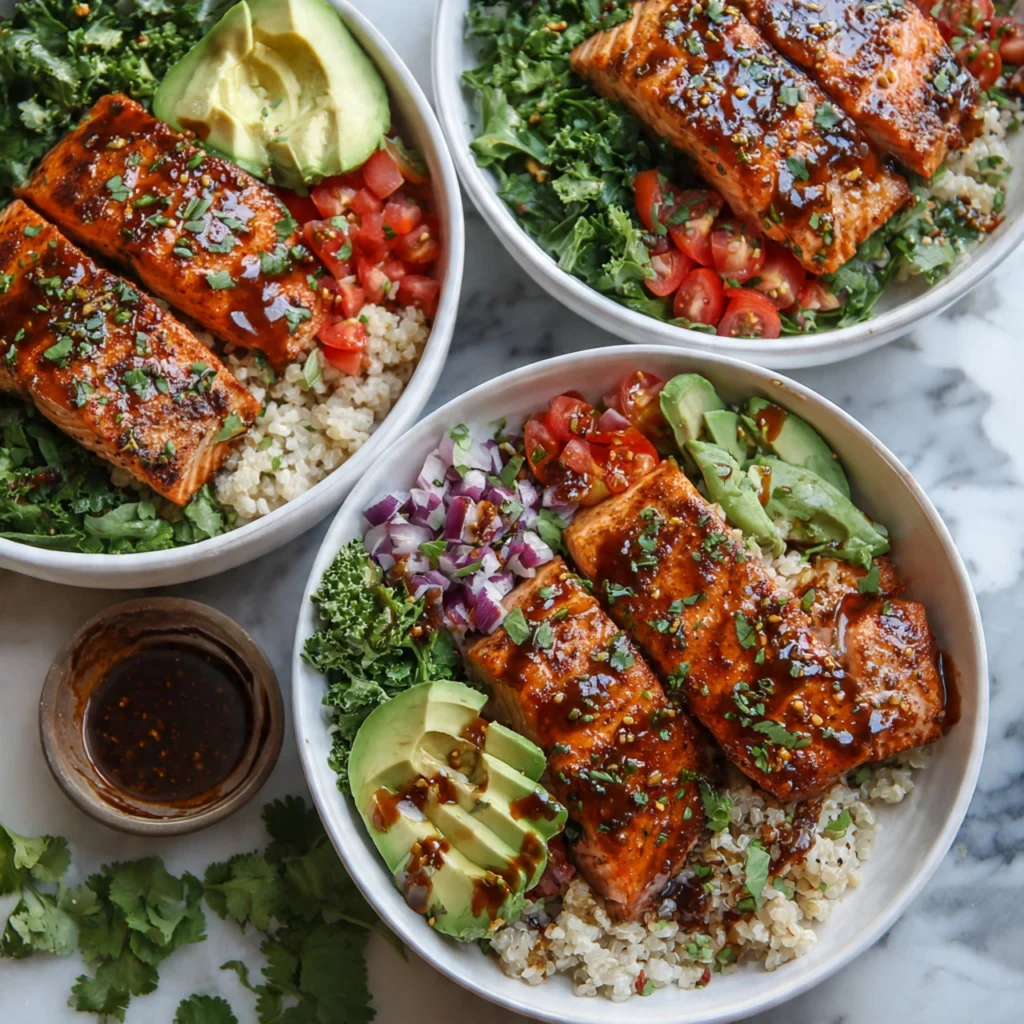
Nutrition Information (Spicy Honey Balsamic Salmon Bowls)
Based on 4 servings as written, including all components.
Serving Size: 1 complete bowl (approximately 450-500g)
- Calories: 580-650
- Total Fat: 22-26g
- Saturated Fat: 3-4g
- Omega-3 Fatty Acids: 2.5-3g
- Cholesterol: 80-95mg
- Sodium: 720-850mg
- Total Carbohydrates: 58-64g
- Dietary Fiber**: 6-8g
- Sugars: 18-22g (from honey and vegetables)
- Protein: 42-48g
- Vitamin A: 80-100% Daily Value
- Vitamin C: 110-140% Daily Value
- Vitamin D: 120% Daily Value (from salmon)
- Calcium: 8-10% Daily Value
- Iron: 15-20% Daily Value
- Potassium: 25-30% Daily Value
Nutritional Highlights
This bowl is exceptionally nutritious:
Salmon provides:
- High-quality complete protein
- Omega-3 fatty acids (EPA and DHA) for heart and brain health
- Vitamin D (rare in foods)
- B vitamins, especially B12
- Selenium and other minerals
Vegetables contribute:
- Fiber for digestive health
- Antioxidants and phytonutrients
- Vitamins A, C, and K
- Minerals like potassium and magnesium
Rice offers:
- Complex carbohydrates for energy
- B vitamins
- Manganese and selenium
To make it lighter:
- Use cauliflower rice instead of regular rice (saves 150-180 calories)
- Use 4-ounce salmon portions instead of 6 ounces (saves about 100 calories)
- Reduce honey in the glaze to 2 tablespoons (saves about 30 calories per serving)
To boost protein further:
- Add extra edamame (adds 8g protein per 1/2 cup)
- Use quinoa instead of rice (adds 2-3g protein per serving)
- Add a soft-boiled egg (adds 6g protein)
This is a well-balanced meal with good macronutrient distribution: approximately 45-50% carbohydrates, 25-30% protein, and 25-30% fat—ideal for most balanced diets.
Conclusion: Your New Favorite Healthy Meal
These Spicy Honey Balsamic Salmon Bowls represent everything I believe healthy eating should be—delicious, satisfying, visually appealing, nutritionally complete, and realistic enough to actually make on a regular basis. They’re proof that “healthy” and “crave-worthy” aren’t mutually exclusive terms.
The magic of this Spicy Honey Balsamic Salmon Bowls recipe lies in its perfect balance. The sweet-spicy-tangy glaze elevates the salmon from simple to spectacular, the roasted vegetables add nutrition without feeling like an obligation, and the grain base provides comfort and satisfaction. Together, these elements create something greater than the sum of their parts—a meal that genuinely excites you rather than feeling like virtuous drudgery.
Beyond the incredible flavor, what makes these bowls truly special is their versatility and meal-prep friendliness. Whether you’re cooking for one, feeding a family, or prepping lunches for the week, this Spicy Honey Balsamic Salmon Bowls recipe adapts beautifully. The component-based approach means you can customize based on preferences, dietary needs, or what’s in your refrigerator.
I hope this comprehensive guide gives you everything you need to make spicy honey balsamic salmon bowls a regular part of your dinner rotation. The first time you pull that beautifully caramelized salmon from the oven, arrange those colorful vegetables in a bowl, and take that first bite with all the flavors and textures coming together, you’ll understand why these bowls have become my go-to answer for “what’s for dinner?”
So grab that salmon, fire up your oven, and get ready to transform your approach to healthy eating. Your taste buds and your body will thank you!
PrintSpicy Honey Balsamic Salmon Bowls: The Ultimate Healthy Meal (Ready in 30 Minutes!)
Healthy, flavorful bowls featuring caramelized salmon with sweet-spicy-tangy glaze, crispy roasted vegetables, fluffy rice, and fresh toppings. Perfect for meal prep or weeknight dinners. Restaurant-quality flavor in 30 minutes!
- Prep Time: 15 minutes
- Cook Time: 15 minutes
- Total Time: 30 minutes
- Yield: 4 servings
- Category: Main Course, Dinner, Meal Prep, Bowl
- Method: Roasted, Seared, Glazed
- Cuisine: Asian-Inspired, Fusion
- Diet: Low Lactose
Ingredients
Glaze:
- 1/3 cup balsamic vinegar
- 1/4 cup honey
- 2 tbsp soy sauce
- 1 tbsp Dijon mustard
- 1-2 tsp sriracha
- 3 cloves garlic, minced
- 1 tbsp fresh ginger, grated
- 1 tbsp olive oil
- 1/4 tsp black pepper
Salmon:
- 4 salmon fillets (6 oz each)
- 1 tbsp olive oil
- 1/2 tsp salt
- 1/4 tsp black pepper
Vegetables:
- 2 cups broccoli florets
- 2 carrots, sliced
- 1 red bell pepper, chopped
- 1 cup snap peas
- 2 tbsp olive oil
- 1/2 tsp salt
- 1/4 tsp garlic powder
Bowls:
- 3 cups cooked rice
- 1 cup edamame
- 1 avocado, sliced
- 2 tbsp sesame seeds
- 2 green onions, sliced
- Fresh cilantro
- Lime wedges
Instructions
- Whisk together all glaze ingredients; divide in half
- Pat salmon dry, season with salt and pepper
- Marinate salmon in half the glaze for 10+ minutes
- Cook rice according to package directions
- Preheat oven to 425°F
- Toss vegetables with olive oil and seasonings
- Roast vegetables 18-22 minutes until golden and tender
- Heat skillet over medium-high heat with olive oil
- Sear salmon 4-5 minutes first side
- Flip, brush with glaze, transfer to oven
- Bake 5-7 minutes until salmon reaches 145°F
- Assemble bowls: rice base, vegetables, salmon
- Top with edamame, avocado, sesame seeds, green onions
- Drizzle with reserved glaze and serve with lime
Notes
- Divide glaze before using to avoid cross-contamination
- Pat salmon very dry for best sear
- Don’t overcrowd vegetables on pan
- Salmon can be enjoyed at any temperature
- Store components separately for best meal prep results
- Glaze works on chicken, shrimp, or tofu too