Introduction: Your New Favorite Weeknight Dinner
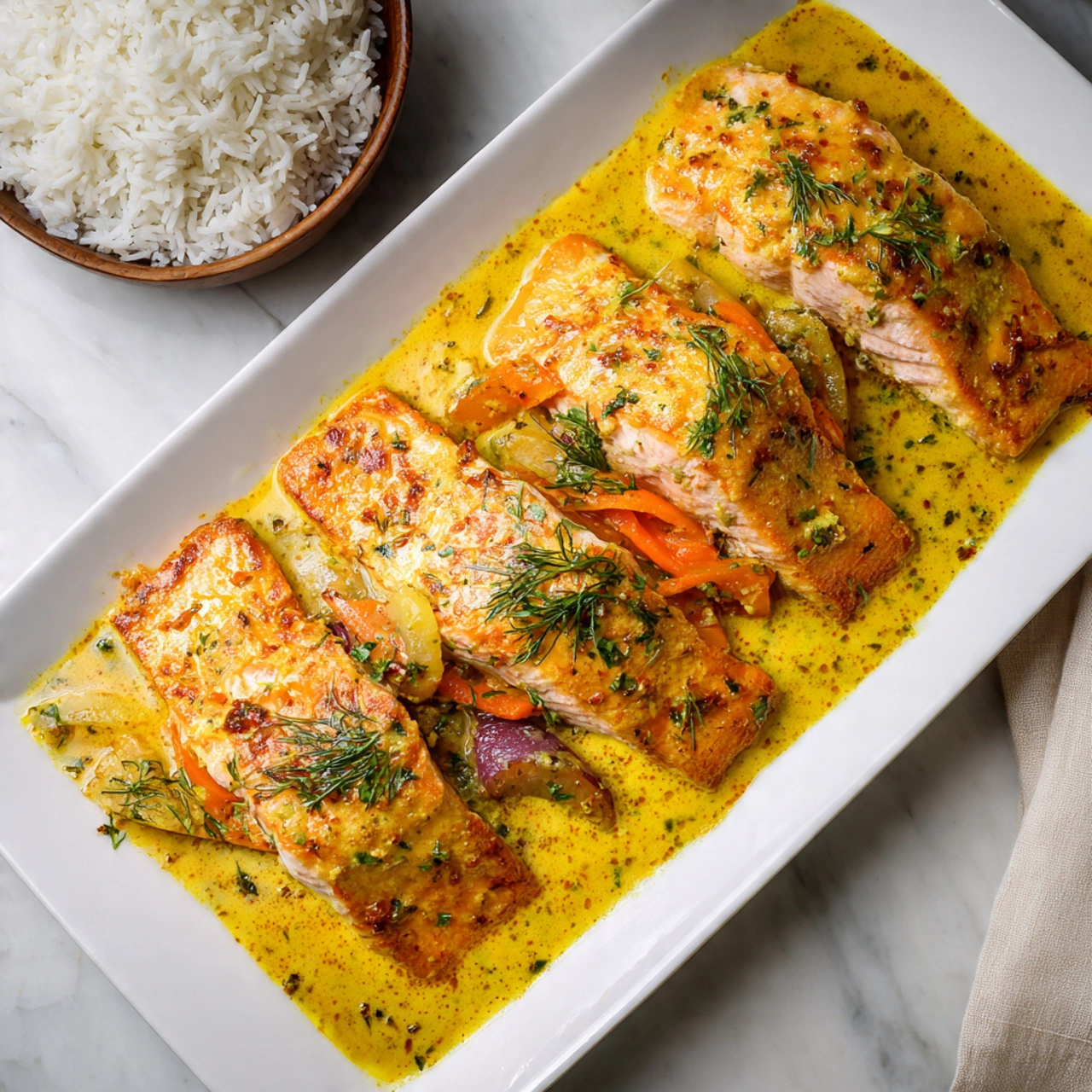
Baked Coconut Curry Salmon is the answer to every home cook’s prayer for a dish that’s simultaneously impressive, healthy, and ridiculously easy to make. Picture this: tender, flaky salmon fillets bathed in a luscious coconut curry sauce that’s aromatic, slightly sweet, and perfectly spiced. The best part? This restaurant-quality meal comes together in just 25 minutes with minimal cleanup.
I’ll never forget the first time I made this Baked Coconut Curry Salmon. It was a rainy Tuesday evening, and I was tired of the same old lemon-pepper routine. I had a can of coconut milk sitting in my pantry, some curry powder in the spice drawer, and a beautiful piece of salmon in the fridge. What happened next changed my weeknight dinner game forever. The intoxicating aroma of ginger, garlic, and curry powder mingling with creamy coconut milk filled my kitchen, and when I took that first bite, I knew I’d stumbled onto something special.
This recipe combines the richness of coconut milk with the warming spices of curry, creating a sauce that’s both comforting and exotic. The salmon stays incredibly moist thanks to the gentle baking method, and the flavors penetrate every flaky layer of fish. Whether you’re cooking for your family, meal prepping for the week, or trying to impress dinner guests without breaking a sweat, this Baked Coconut Curry Salmon delivers every single time.
What makes this recipe truly special is its versatility. You can adjust the spice level to suit your preferences, swap in different vegetables, or even use the leftover sauce over rice, quinoa, or cauliflower rice. It’s a forgiving recipe that welcomes experimentation while remaining foolproof enough for novice cooks.
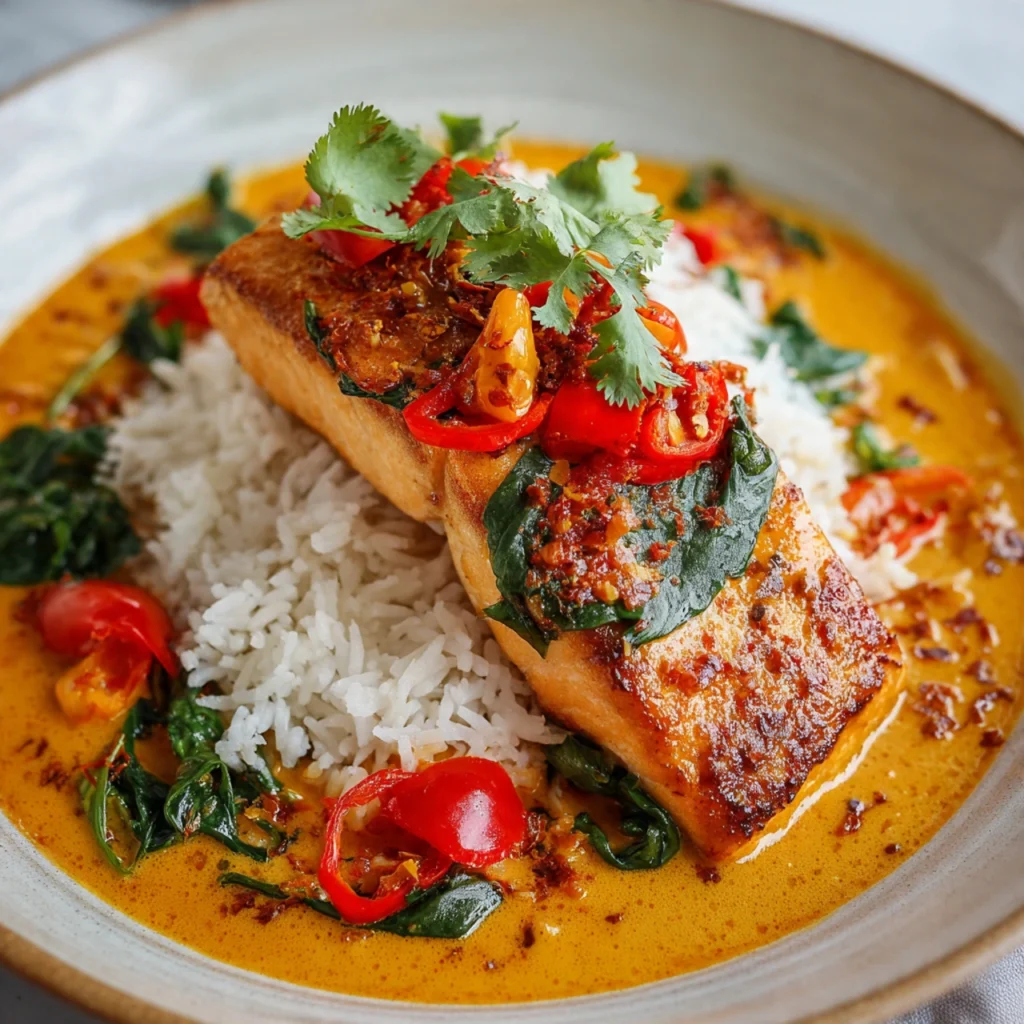
Ingredients For Baked Coconut Curry Salmon
For the Salmon:
- 4 salmon fillets (6 oz each, preferably wild-caught, skin-on or skinless)
- 1 tablespoon olive oil or coconut oil
- ½ teaspoon salt
- ¼ teaspoon black pepper
- 1 teaspoon paprika
Coconut Curry Sauce:
- 1 can (14 oz) full-fat coconut milk
- 2 tablespoons curry powder (mild, medium, or hot based on preference)
- 3 cloves garlic, minced
- 1 tablespoon fresh ginger, grated
- 1 tablespoon fish sauce (or soy sauce for a different flavor profile)
- 1 tablespoon lime juice (freshly squeezed)
- 1 tablespoon honey or maple syrup
- 1 teaspoon turmeric powder
- ½ teaspoon ground cumin
- ¼ teaspoon red pepper flakes (optional, for heat)
- 1 small onion, finely diced
- 1 red bell pepper, sliced
- 1 cup cherry tomatoes, halved
For Garnish:
- Fresh cilantro, chopped
- Lime wedges
- Toasted coconut flakes (optional)
- Sliced green onions
Step-by-Step Instructions
Step 1: Prepare Your Ingredients (5 minutes)
Begin by preheating your oven to 375°F (190°C). This moderate temperature ensures the salmon cooks evenly without drying out. While the oven heats, pat your salmon fillets completely dry with paper towels. This crucial step helps achieve better browning and allows the seasonings to adhere properly. Season both sides of each fillet with salt, pepper, and paprika.
Gather all your sauce ingredients and have them measured and ready. This mise en place approach—having everything in its place—makes the cooking process smooth and stress-free, especially important when working with a dish that comes together quickly.
Step 2: Build the Curry Sauce Base (8 minutes)
Heat one tablespoon of oil in a large oven-safe skillet over medium heat. If you don’t have an oven-safe skillet, you can build the sauce in a regular pan and transfer everything to a baking dish later—just know you’ll have an extra dish to wash.
Add the diced onion to the skillet and sauté for 3-4 minutes until it becomes translucent and fragrant. The onion creates the foundational sweetness that balances the curry spices beautifully. Next, add the minced garlic and grated ginger, stirring constantly for about 30 seconds until aromatic. Be careful not to burn the garlic—it turns bitter quickly.
Now comes the magic moment. Add the curry powder, turmeric, and cumin to the aromatic base, stirring for about 30 seconds. This technique, called blooming the spices, awakens their essential oils and intensifies their flavors dramatically. Your kitchen should smell absolutely incredible right now.
Step 3: Create the Creamy Coconut Sauce (3 minutes)
Pour in the full-fat coconut milk, stirring to combine with the spices. Make sure to shake the can well before opening, or whisk the contents thoroughly, as coconut milk often separates. Add the fish sauce, lime juice, honey, and red pepper flakes (if using). Stir everything together and let the sauce simmer for 2-3 minutes until it thickens slightly.
Taste the sauce at this point and adjust the seasonings. Want more heat? Add another pinch of red pepper flakes. Prefer it sweeter? Add a touch more honey. This is your opportunity to customize the flavor profile to your exact preferences.
Add the sliced bell pepper and halved cherry tomatoes to the sauce, stirring gently to coat them in the creamy curry mixture. These vegetables will soften during baking while adding texture, color, and nutritional value to your dish.
Step 4: Nestle the Salmon and Bake (12-15 minutes)
Carefully place the seasoned salmon fillets into the skillet, nestling them into the coconut curry sauce. Spoon some of the sauce over the top of each fillet, ensuring they’re well-coated. This basting step keeps the salmon moist and allows the flavors to penetrate the fish.
Transfer the skillet to your preheated oven and bake for 12-15 minutes. The exact time depends on the thickness of your fillets. A general rule: bake for 4-6 minutes per half-inch of thickness. The salmon is done when it flakes easily with a fork and reaches an internal temperature of 145°F (63°C). Don’t overcook—slightly undercooked salmon is far superior to dry, overcooked fish.
Step 5: Rest and Garnish (2 minutes)
Remove the skillet from the oven (remember, the handle is HOT!) and let it rest for 2 minutes. This resting period allows the juices to redistribute throughout the salmon, ensuring every bite is moist and flavorful.
Garnish generously with fresh cilantro, green onions, and toasted coconut flakes if desired. Serve with lime wedges on the side—that fresh squeeze of citrus right before eating brightens the entire dish.
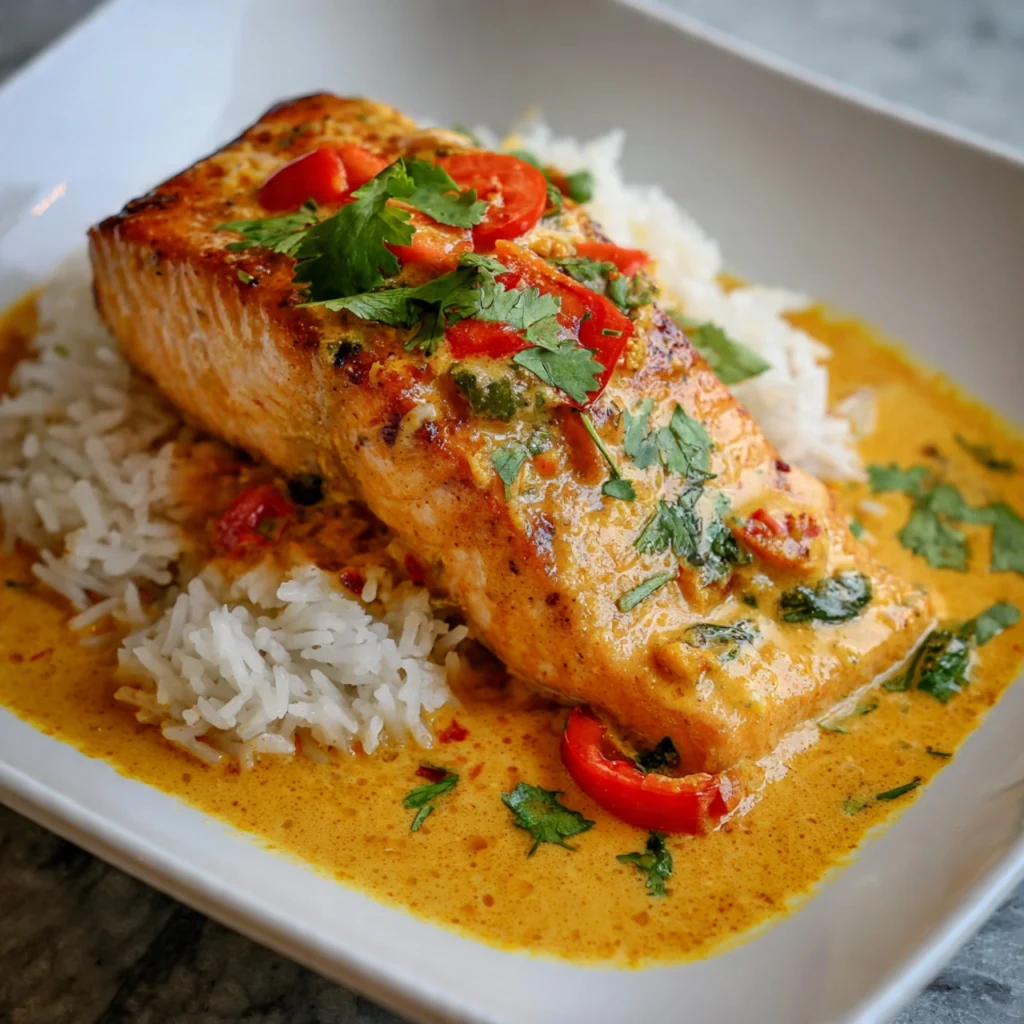
Pro Tips for the Perfect Baked Coconut Curry Salmon
1. Choose Quality Salmon
Wild-caught salmon typically has better flavor and texture than farmed, though it’s more expensive. Look for fillets that are firm, bright in color, and smell fresh like the ocean—not fishy. If using frozen salmon, thaw it completely in the refrigerator overnight and pat it bone-dry before seasoning.
2. Don’t Skip the Full-Fat Coconut Milk
Light coconut milk simply won’t give you the rich, velvety sauce that makes this dish special. The fat content is essential for both flavor and texture. If your coconut milk has separated in the can, whisk it vigorously or blend it briefly before using.
3. Bloom Your Spices
That 30-second step of cooking the spices in hot oil before adding liquids isn’t optional—it’s transformative. This technique releases aromatic compounds that remain trapped in dry spices, multiplying the flavor intensity of your curry sauce.
4. Use an Instant-Read Thermometer
The difference between perfectly cooked and overcooked salmon is mere minutes. An instant-read thermometer takes the guesswork out completely. Remove the salmon from the oven when it reaches 140°F; carryover cooking will bring it to the perfect 145°F.
5. Customize Your Vegetables
While bell peppers and cherry tomatoes are fantastic, this recipe is incredibly flexible. Try adding baby spinach (stir it in during the last 2 minutes of baking), snap peas, zucchini, or even cubed butternut squash. Just ensure harder vegetables are cut small enough to cook through in the baking time.
6. Make It Your Own Spice-Wise
Curry powders vary wildly in heat level and flavor profile. Start with less than the recipe calls for if you’re unsure, taste the sauce, and add more as needed. You can always add heat, but you can’t take it away.
7. Prep Ahead for Weeknight Ease
Mix the curry sauce completely (through Step 3) up to 2 days ahead and refrigerate. When ready to cook, simply reheat the sauce, add the vegetables and salmon, and bake. This advance prep makes this dish even more weeknight-friendly.
Common Mistakes to Avoid
1. Overcooking the Salmon
This is the number one killer of salmon dishes everywhere. Overcooked salmon becomes dry, chalky, and loses its beautiful, buttery texture. Remember, salmon continues cooking after you remove it from heat. Err on the side of slight undercooking—the residual heat will finish the job perfectly.
2. Using a Cold Pan for the Aromatics
Adding garlic and ginger to a cold pan means they’ll cook unevenly and may burn before the onions soften. Always heat your oil first, cook the onions, then add the more delicate aromatics.
3. Skipping the Pat-Dry Step
Wet salmon won’t brown properly and will dilute your carefully crafted sauce. Those extra 30 seconds of patting the fillets dry pays dividends in flavor and texture.
4. Overcrowding the Pan
If your salmon fillets are touching or overlapping, they won’t cook evenly and the sauce won’t circulate properly. Use a larger pan if needed, or cook in two batches. Space matters.
5. Forgetting to Shake the Coconut Milk
Separated coconut milk creates an oily, watery sauce instead of the creamy dream you’re after. Always shake the can vigorously before opening, or transfer to a bowl and whisk until smooth.
6. Not Tasting as You Go
Your curry powder, your coconut milk brand, your personal spice tolerance—all these variables mean you need to taste and adjust. Don’t blindly follow measurements without using your palate as a guide.
7. Using the Wrong Baking Vessel
Non-oven-safe skillets will ruin your day (and potentially your cookware). If you’re unsure, check for an oven-safe symbol on the bottom of your pan or use a proper baking dish instead.
Storage and Serving Suggestions
Baked Coconut Curry Salmon Storage:
Refrigerator: Store leftover Baked Coconut Curry Salmon in an airtight container in the refrigerator for up to 3 days. Keep the salmon and sauce together to maintain moisture. The flavors actually deepen and meld beautifully overnight, making leftovers arguably even better than the original meal.
Freezer: While fresh is always best, you can freeze this dish for up to 2 months. Portion it into individual servings in freezer-safe containers, leaving some space at the top for expansion. Thaw overnight in the refrigerator before reheating. Note that the texture of the salmon will be slightly different after freezing, but it’s still delicious Baked Coconut Curry Salmon .
Reheating Tips: Reheat gently in a covered skillet over low heat with a splash of coconut milk or water to prevent drying out. You can also microwave individual portions at 50% power in 30-second intervals, stirring between each, until heated through. Avoid high heat, which will toughen the salmon.
Baked Coconut Curry Salmon Serving Suggestions:
Classic Pairings:
- Jasmine Rice: The fragrant, slightly sticky texture of jasmine rice is perfect for soaking up the coconut curry sauce
- Basmati Rice: A lighter alternative that won’t compete with the dish’s flavors
- Coconut Rice: Double down on coconut flavor by cooking rice in coconut milk
- Cauliflower Rice: For a low-carb option that still provides that satisfying base
- Quinoa: Adds protein and a nutty flavor that complements the curry beautifully
Vegetable Sides:
- Steamed Bok Choy: Simple and clean, letting the salmon shine
- Sautéed Green Beans: With garlic and a touch of sesame oil
- Cucumber Salad: Cool and refreshing to balance the warm, rich curry
- Roasted Asparagus: Adds elegance to your plate presentation
Bread Options:
- Naan: Perfect for scooping up every last drop of sauce
- Crusty Baguette: Slice and toast for a French-Asian fusion approach
- Coconut Flatbread: If you’re feeling adventurous and want to make everything from scratch
Complete Meal Ideas: Serve this Baked Coconut Curry Salmon over a bed of jasmine rice with steamed broccolini on the side and garnish with fresh cilantro, lime wedges, and a sprinkle of toasted sesame seeds. Add a glass of chilled Riesling or a crisp lager to complete the experience.
FAQ (Frequently Asked Questions)
1. Can I use a different type of fish instead of salmon?
Absolutely! While salmon works beautifully because of its rich, fatty texture that stands up to the bold curry flavors, you can substitute other firm fish. Try cod, halibut, mahi-mahi, or sea bass. Adjust cooking time based on thickness—delicate fish like tilapia will cook faster (8-10 minutes), while thicker cuts like halibut may need the full 15 minutes. The key is choosing fish that won’t fall apart during baking.
2. Is this recipe spicy, and how can I adjust the heat level?
The base recipe is mildly spiced and aromatic rather than intensely hot. The heat level depends entirely on your curry powder and whether you include the red pepper flakes. To make it milder, use a mild curry powder and skip the pepper flakes entirely. For more heat, add extra red pepper flakes, a diced jalapeño, or a teaspoon of sriracha to the sauce. You can also serve hot sauce on the side so each person can customize their spice level.
3. Can I make this dairy-free and gluten-free?
Great news—this Baked Coconut Curry Salmon is naturally dairy-free since it uses coconut milk instead of cream! For gluten-free preparation, simply ensure your curry powder and fish sauce are certified gluten-free (most are, but always check labels). If you’re avoiding fish sauce, substitute with gluten-free tamari or coconut aminos for a similar umami depth.
4. What’s the best way to know when salmon is perfectly cooked?
The most reliable method is using an instant-read thermometer inserted into the thickest part of the fillet—you’re looking for 145°F (63°C). Visually, perfectly cooked salmon will be opaque on the outside with a slightly translucent center, and it should flake easily when gently pressed with a fork. The flesh should look moist, not dry or chalky. Remember, salmon will continue cooking for a minute or two after removal from the oven due to residual heat.
5. Can I prep this recipe ahead of time?
Yes! This is an excellent make-ahead dish. You can prepare the coconut curry sauce completely (through Step 3) up to 2 days in advance and store it refrigerated in an airtight container. When ready to cook, bring the sauce to a simmer, add your vegetables and fresh salmon, and proceed with baking. You can also season your salmon fillets in advance and keep them refrigerated. However, don’t combine raw salmon with the sauce ahead of time—only do this right before baking for food safety and best texture.
6. What can I do with leftover coconut curry sauce?
Lucky you—that sauce is liquid gold! Use it as a base for soup by adding chicken or vegetable broth and more vegetables. Toss it with pasta or noodles for a quick curry noodle bowl. Use it as a sauce for chicken, shrimp, or tofu. Mix it into scrambled eggs for a breakfast twist. Or simply serve it over steamed vegetables and rice for a vegetarian meal. The sauce keeps refrigerated for up to 5 days and freezes beautifully for up to 3 months.
7. My coconut milk is separated and lumpy—is it still good to use?
Yes! Coconut milk naturally separates, with the cream rising to the top and the water settling at the bottom. This is completely normal and doesn’t mean it’s spoiled. Before opening the can, shake it vigorously for 30 seconds, or scoop all the contents into a bowl and whisk until smooth. Some brands separate more than others; if you want ultra-smooth sauce every time, look for brands that include stabilizers, or briefly blend your coconut milk before using.
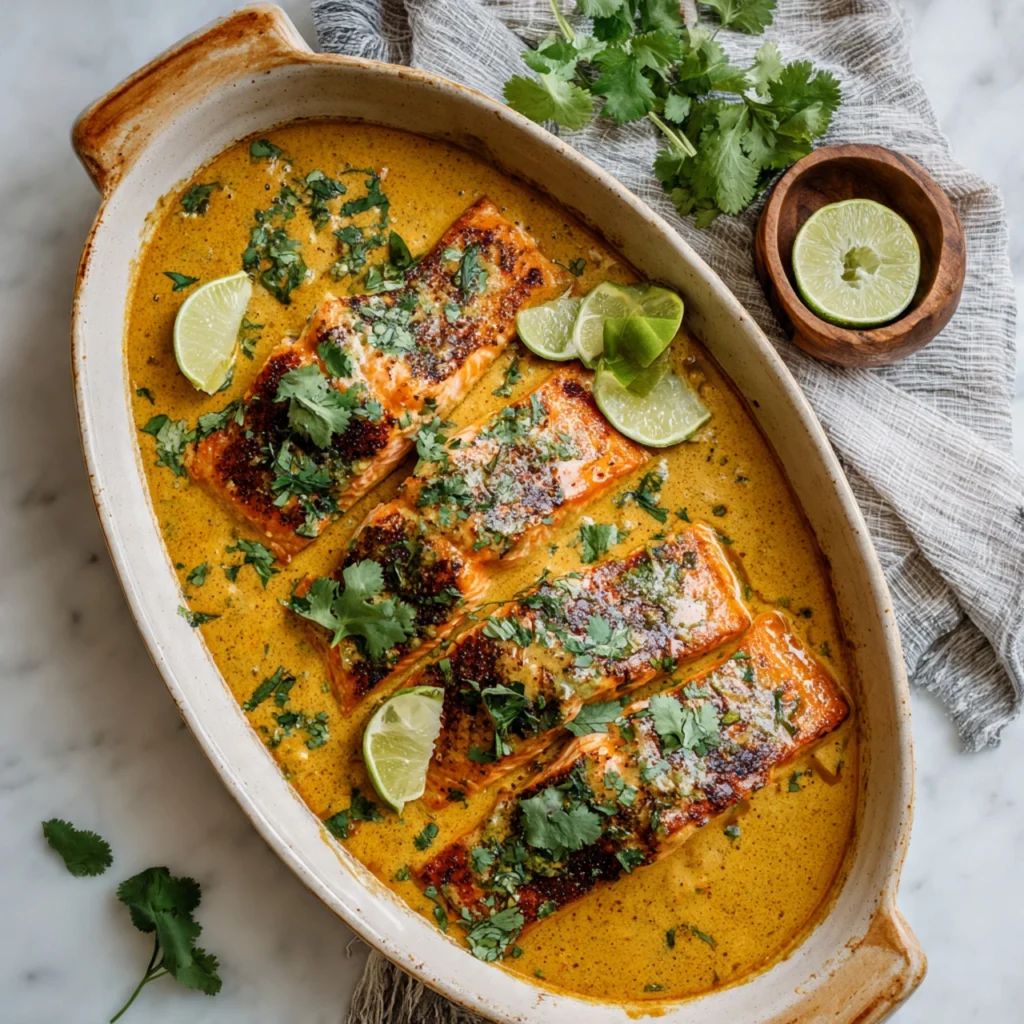
Nutrition Information (Approximate Values Per Serving)
Serving Size: 1 salmon fillet with ¾ cup sauce and vegetables
Servings: 4
- Calories: 485
- Total Fat: 32g
- Saturated Fat: 18g
- Trans Fat: 0g
- Cholesterol: 95mg
- Sodium: 680mg
- Total Carbohydrates: 15g
- Dietary Fiber: 3g
- Sugars: 7g
- Protein: 38g
- Vitamin D: 12.8mcg (64% DV)
- Calcium: 65mg (5% DV)
- Iron: 3.2mg (18% DV)
- Potassium: 975mg (21% DV)
- Vitamin A: 1250 IU (25% DV)
- Vitamin C: 48mg (53% DV)
- Omega-3 Fatty Acids: 2.2g
Note: Nutrition values are estimates and will vary based on specific ingredients used, portion sizes, and preparation methods. Salmon is an excellent source of high-quality protein, omega-3 fatty acids, B vitamins, and selenium. The coconut milk provides healthy fats, while the vegetables contribute fiber, vitamins, and antioxidants.
Conclusion: Your Kitchen, Your Restaurant
This Baked Coconut Curry Salmon proves that restaurant-quality meals don’t require professional training, exotic equipment, or hours of your time. With a handful of pantry staples, fresh salmon, and just 25 minutes, you can create a dish that looks stunning, tastes incredible, and nourishes your body with healthy fats, lean protein, and vegetables.
The beauty of this recipe lies in its perfect balance—rich yet fresh, complex yet simple, impressive yet accessible. It’s the kind of dish that works equally well for a quiet Tuesday dinner at home or a Saturday night gathering with friends. The aromatic curry spices, creamy coconut sauce, and perfectly cooked salmon create a flavor experience that transports you straight to a Thai beachside restaurant, all from the comfort of your own kitchen.
Don’t be surprised when this becomes your most-requested dinner. The combination of ease, health, and absolutely delicious flavor makes it a natural weeknight staple. Plus, those leftovers (if you have any) are genuinely exciting to eat the next day.
So grab that salmon, shake that can of coconut milk, and get ready to fall in love with a recipe that will serve you well for years to come. Your perfect Baked Coconut Curry Salmon is just 25 minutes away.
Happy cooking!
PrintBaked Coconut Curry Salmon: A Flavorful Journey to Restaurant-Quality Fish at Home
Tender, flaky salmon fillets baked in a luscious coconut curry sauce with aromatic spices, creamy coconut milk, and vibrant vegetables. This restaurant-quality dish comes together in just 25 minutes and delivers bold Thai-inspired flavors with minimal effort.
- Prep Time: 10 minutes
- Cook Time: 15 minutes
- Total Time: 25 minutes
- Yield: 4 servings
- Category: Main Dish, Dinner, Seafood
- Method: Baking
- Cuisine: Thai-Inspired, Asian Fusion
- Diet: Gluten Free
Ingredients
- 4 salmon fillets (6 oz each)
- 1 tablespoon oil
- Salt, pepper, paprika to taste
- 1 can (14 oz) full-fat coconut milk
- 2 tablespoons curry powder
- 3 cloves garlic, minced
- 1 tablespoon fresh ginger, grated
- 1 tablespoon fish sauce
- 1 tablespoon lime juice
- 1 tablespoon honey
- 1 teaspoon turmeric
- ½ teaspoon cumin
- ¼ teaspoon red pepper flakes (optional)
- 1 small onion, diced
- 1 red bell pepper, sliced
- 1 cup cherry tomatoes, halved
- Fresh cilantro and lime wedges for garnish
Instructions
- Preheat oven to 375°F (190°C)
- Season salmon with salt, pepper, and paprika
- Sauté onion until translucent, add garlic and ginger
- Add spices and bloom for 30 seconds
- Pour in coconut milk, fish sauce, lime juice, and honey
- Simmer for 2-3 minutes, add vegetables
- Nestle salmon into sauce
- Bake 12-15 minutes until salmon reaches 145°F
- Garnish with cilantro and serve with lime wedges
Notes
- Use full-fat coconut milk for best results
- Don’t overcook salmon—it continues cooking after removal from oven
- Adjust spice level by choosing mild, medium, or hot curry powder
- Recipe works with other firm fish like cod or halibut
- Sauce can be made 2 days ahead and refrigerated