Introduction
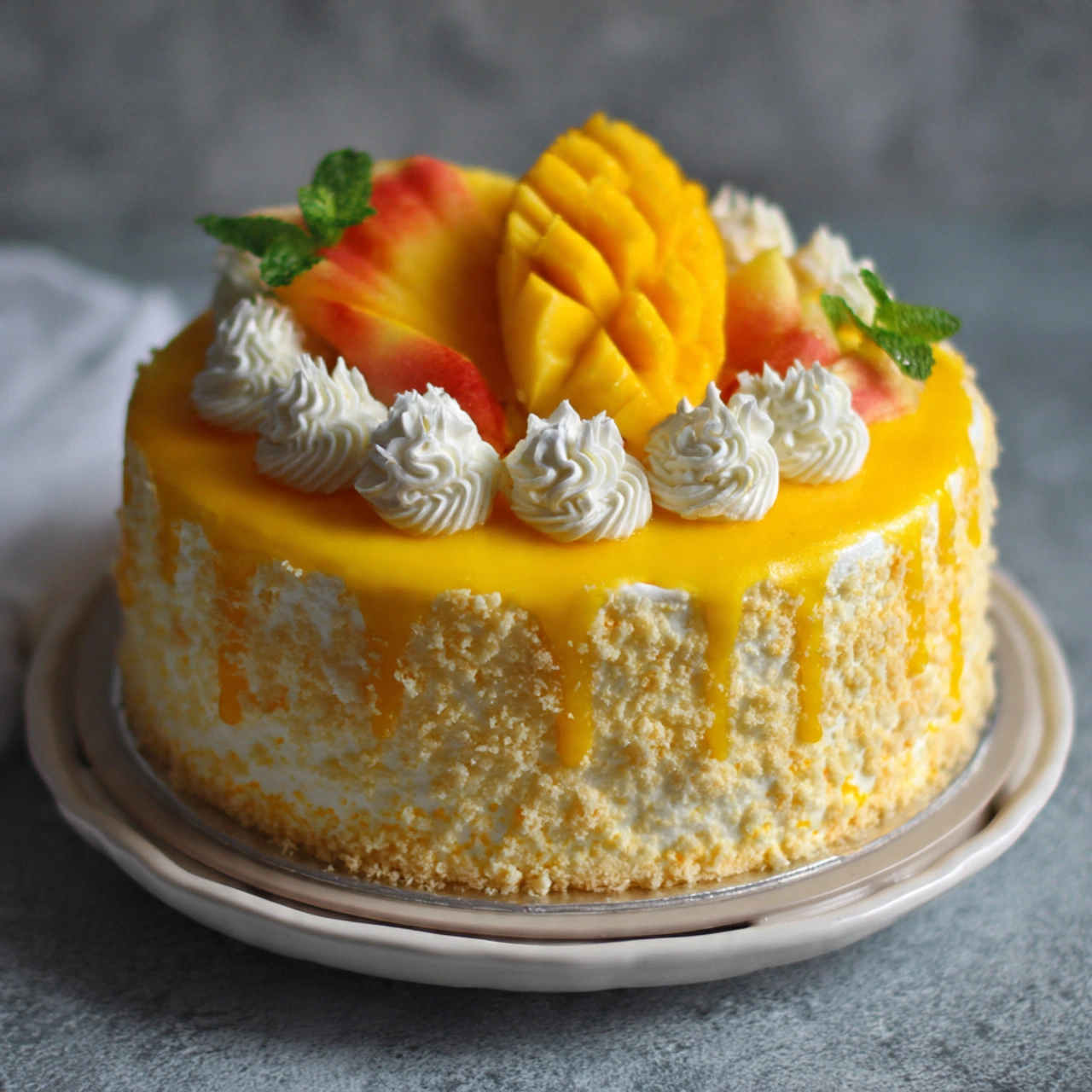
Mango Sponge Cake is the epitome of elegance in tropical baking—an impossibly light, cloud-like cake infused with the sweet perfume of ripe mangoes, with a texture so delicate it practically melts on your tongue, yet sturdy enough to support layers of whipped cream and fresh fruit for stunning celebration cakes.
My journey with Mango Sponge Cake began at a friend’s wedding in Mumbai, where the centerpiece dessert was a towering mango cream cake that looked like it belonged in a high-end patisserie. When I took my first bite, I was stunned by how different it was from American-style butter cakes.
I immediately asked the baker how she achieved such an otherworldly texture. She smiled and explained that proper sponge cake technique is all about incorporating maximum air into the eggs, folding the flour with the gentlest possible touch, and baking at precisely the right temperature.
Since that revelation, I’ve spent years perfecting my Mango Sponge Cake technique. I’ve learned the precise feel of properly whipped eggs, the exact folding motion that preserves airiness, and the subtle indicators that tell you when the cake is perfectly baked.
What makes this cake exceptional is its versatility wrapped in simplicity. Serve it plain with tea for an elegant afternoon treat. Layer it with mango mousse and fresh fruit for a showstopping birthday cake. Fill it with whipped cream and passion fruit for a tropical celebration.
This recipe will teach you not just how to make a mango cake, but how to master the art of sponge cake baking—a technique that, once learned, opens the door to countless elegant desserts.
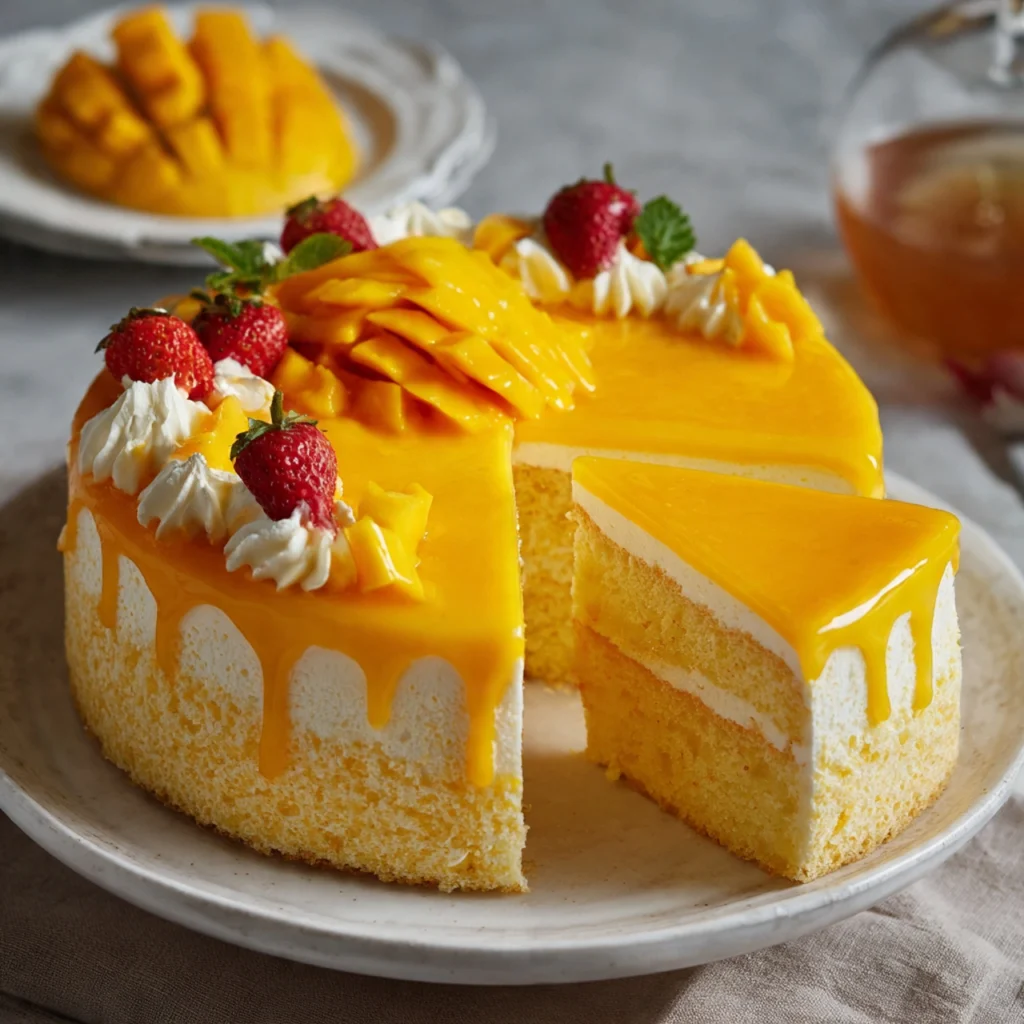
Ingredients For Mango Sponge Cake
For the Mango Sponge Cake (8-inch round cake):
Wet Ingredients:
- 6 large eggs (at room temperature, separated) – provides structure and lift
- ¾ cup granulated sugar (divided: ½ cup for yolks, ¼ cup for whites) – sweetens and stabilizes
- ½ cup mango puree (reduced, see instructions) – from about 1 large ripe mango
- 2 tablespoons milk (whole milk preferred) – adds moisture
- 1 teaspoon vanilla extract – enhances flavor
- ¼ teaspoon cream of tartar – stabilizes egg whites
Dry Ingredients:
- 1 cup cake flour (or all-purpose flour, see notes) – creates tender crumb
- ½ teaspoon baking powder – provides slight additional lift
- ¼ teaspoon salt – balances sweetness
Optional Flavoring:
- Zest of 1 lime – brightens mango flavor
- ¼ teaspoon cardamom – traditional Indian pairing
- 1 tablespoon rum or orange liqueur – adult version
For Mango Reduction:
Start with 1 cup fresh mango puree (from about 1½ large mangoes). Simmer in a saucepan over medium-low heat for 10-15 minutes, stirring frequently, until reduced to ½ cup. This concentrates the flavor and removes excess moisture. Cool completely before using.
Mango Selection:
Best varieties:
- Alphonso (Hapus) – intensely aromatic, perfect for baking
- Ataulfo (Honey) – smooth, sweet, minimal fiber
- Kesar – fragrant and flavorful
- Kent – sweet with good body
Ripeness: Use very ripe, aromatic mangoes. They should be soft, fragrant, and sweet. Underripe mangoes lack flavor intensity needed for this cake.
Equipment Needed:
- Stand mixer or hand mixer (essential for proper egg whipping)
- 8-inch round cake pan (or two 6-inch pans)
- Parchment paper
- Large mixing bowls (for egg whites and yolks)
- Rubber spatula (for gentle folding)
- Wire cooling rack
Mango Sponge Cake Step-by-Step Instructions
Step 1: Prepare Mango Reduction (20 minutes)
Peel and cube ripe mangoes. Puree in a blender until completely smooth. Measure out 1 cup of puree and pour into a small saucepan. Cook over medium-low heat, stirring frequently to prevent scorching, until reduced to ½ cup. This takes 10-15 minutes.
The puree should be noticeably thicker, darker in color, and intensely flavored. Set aside to cool completely—using warm puree will deflate your egg whites.
Why reduce? Fresh mango puree contains too much water, which weighs down the delicate sponge structure. Reduction concentrates flavor while removing moisture.
Step 2: Prepare Pan and Preheat Oven (5 minutes)
Preheat oven to 325°F (163°C). This lower temperature allows the cake to rise slowly and evenly without forming a tough crust.
Line the bottom of an 8-inch round cake pan with parchment paper. Do NOT grease the sides—the cake needs to grip the sides as it rises. For sponge cakes, an ungreased pan is crucial.
Pan preparation is critical: Greased pans cause sponge cakes to slip down and lose height during cooling.
Step 3: Separate Eggs and Bring to Room Temperature (5 minutes)
Separate eggs carefully—even a tiny bit of yolk in the whites will prevent them from whipping properly. Place whites in the bowl of your stand mixer (or a large mixing bowl if using hand mixer). Place yolks in a separate large bowl.
Temperature matters: Room temperature eggs whip to greater volume. If eggs are cold, place them (whole, in shells) in warm water for 5 minutes.
Step 4: Whip Egg Yolks with Sugar (5 minutes)
Add ½ cup sugar to the egg yolks. Using a hand mixer or whisk, beat on medium-high speed for 3-5 minutes until the mixture is pale yellow, thick, and forms ribbons when you lift the beaters. The mixture should triple in volume.
Add the cooled mango reduction, milk, and vanilla. Mix on low speed just until combined. The mixture will be smooth and vibrant orange-yellow.
The ribbon test: When you lift the beaters, the mixture should fall in a thick ribbon that holds its shape on the surface for a few seconds before dissolving.
Step 5: Sift Dry Ingredients
Sift together the cake flour, baking powder, and salt twice. Sifting twice ensures no lumps remain and aerates the flour, which helps create a lighter cake.
Set the sifted flour mixture aside. Do not add it to the wet ingredients yet.
Step 6: Whip Egg Whites to Stiff Peaks (8-10 minutes)
This is the most crucial step for a perfect sponge cake. Add cream of tartar to the egg whites. Begin beating on medium-low speed until foamy (about 1 minute).
Gradually increase to medium-high speed. When soft peaks form (peaks curl over when you lift the beater), slowly add the remaining ¼ cup sugar, one tablespoon at a time, while continuing to beat.
Continue beating until stiff, glossy peaks form. The whites should stand straight up when you lift the beater, and the bowl can be tipped upside down without the whites moving. Do not overbeat—overwhipped whites become grainy and won’t incorporate smoothly.
Stiff peak test: The egg whites should be smooth, glossy, and hold their shape completely. They should look like shaving cream.
Step 7: Fold Flour into Yolk Mixture (2 minutes)
Sift the flour mixture over the egg yolk-mango mixture in three additions. After each addition, use a rubber spatula to fold gently using broad, sweeping motions from the bottom of the bowl up and over.
Use as few strokes as possible—about 8-10 folds per addition. The mixture should be just combined with no visible flour streaks, but don’t overmix. Some small lumps are okay.
Folding technique: Cut down through the center, sweep along the bottom, and bring the spatula up along the side, turning the bowl slightly with each fold.
Step 8: Fold in Egg Whites (3-5 minutes)
Add about ⅓ of the whipped egg whites to the yolk-flour mixture. Fold gently but thoroughly to lighten the batter—this makes it easier to incorporate the remaining whites.
Add the remaining egg whites in two additions, folding very gently after each. The goal is to incorporate the whites while deflating them as little as possible. Use broad, gentle folding motions.
Stop folding as soon as no white streaks remain. The batter should be light, airy, and uniform in color—a beautiful peachy-orange. Overfolding will deflate the whites and create a dense cake.
Visual cue: The batter should look voluminous and cloud-like, not flat or liquid.
Step 9: Pour into Pan and Tap Out Bubbles (1 minute)
Pour the batter into the prepared pan from a low height. Smooth the top gently with a spatula.
Tap the pan firmly on the counter 2-3 times to release any large air bubbles that could create holes in the finished cake.
Don’t delay: Get the cake into the oven quickly after mixing. The longer it sits, the more air escapes.
Step 10: Bake (35-40 minutes)
Bake at 325°F for 35-40 minutes. The cake is done when it springs back when lightly touched, pulls away slightly from the pan edges, and a toothpick inserted in the center comes out clean or with just a few moist crumbs.
Do NOT open the oven door during the first 30 minutes—temperature fluctuations can cause the cake to collapse.
Visual cues: The top should be golden and slightly domed, and the cake should smell fragrant.
Step 11: Cool Upside Down (1 hour)
Immediately upon removing from the oven, invert the cake pan onto a wire rack or the neck of a wine bottle. Let it hang upside down until completely cool (about 1 hour).
This prevents the delicate structure from collapsing under its own weight as it cools.
Why upside down? Gravity helps maintain the cake’s height and prevents it from deflating.
Step 12: Remove from Pan
Once completely cool, run a thin knife around the edge of the pan to loosen. Gently turn out onto a serving plate. Peel off parchment paper.
The cake is now ready to serve plain, dusted with powdered sugar, or filled and frosted as desired.
Pro Tips for the Perfect Mango Sponge Cake
Mastering Egg White Technique
Perfect egg whites are the foundation of excellent sponge cake. Use a completely clean, grease-free bowl (glass or metal, not plastic which retains oils). Even a tiny amount of fat prevents whites from whipping properly.
Ensure no yolk gets into the whites during separation. Add cream of tartar before whipping—it stabilizes the foam and allows you to whip to greater volume without overbeating.
Whip on medium-high speed, not full speed. Too-fast whipping creates large, unstable bubbles. Gradually increasing speed creates fine, stable foam.
The perfect consistency: Stiff peaks that are smooth and glossy, not grainy or separated. When you turn the bowl upside down, the whites should stay put.
The Art of Folding
Folding is what separates amateur from professional sponge cakes. Use a large rubber spatula and broad, confident strokes—tentative stirring deflates the batter.
Cut straight down through the center of the mixture, sweep along the bottom, and bring the spatula up along the side, gently turning over the batter. Rotate the bowl a quarter turn and repeat.
Work quickly but gently. Each fold should incorporate ingredients while deflating as little air as possible. Stop as soon as ingredients are combined—a few small streaks are preferable to overfolding.
Practice makes perfect: Your first few attempts may not be perfect. With experience, you’ll develop a feel for the right motion and pressure.
Mango Flavor Optimization
Use the ripest, most aromatic mangoes you can find. The reduction step is non-negotiable—it concentrates flavor and removes moisture that would make the cake dense and wet.
For even more intense mango flavor, you can replace 1 tablespoon of the milk with mango liqueur or reduce the puree even further (to ⅓ cup), though this makes the batter slightly thicker.
Lime zest brightens the mango flavor beautifully without being identifiable. A tiny pinch of cardamom adds complexity.
Achieving Even Rise and Texture
Ensure your oven temperature is accurate—use an oven thermometer to verify. Temperature that’s too high creates a dome or cracks; too low causes poor rise.
Don’t open the oven door during the first 30 minutes—the temperature drop can cause collapse.
Use cake flour if possible—its lower protein content creates a more tender crumb. If using all-purpose flour, remove 2 tablespoons per cup and replace with cornstarch.
Preventing Common Texture Issues
Dense, heavy cake: Usually from overfolding (deflated egg whites), underwhipped whites, or too much liquid.
Tough, rubbery texture: From overmixing after adding flour (developed gluten).
Large holes or tunnels: From inadequate tapping to remove bubbles, or oven temperature too high.
Collapsed cake: From opening oven too early, pan being greased (cake can’t grip sides), or not inverting during cooling.
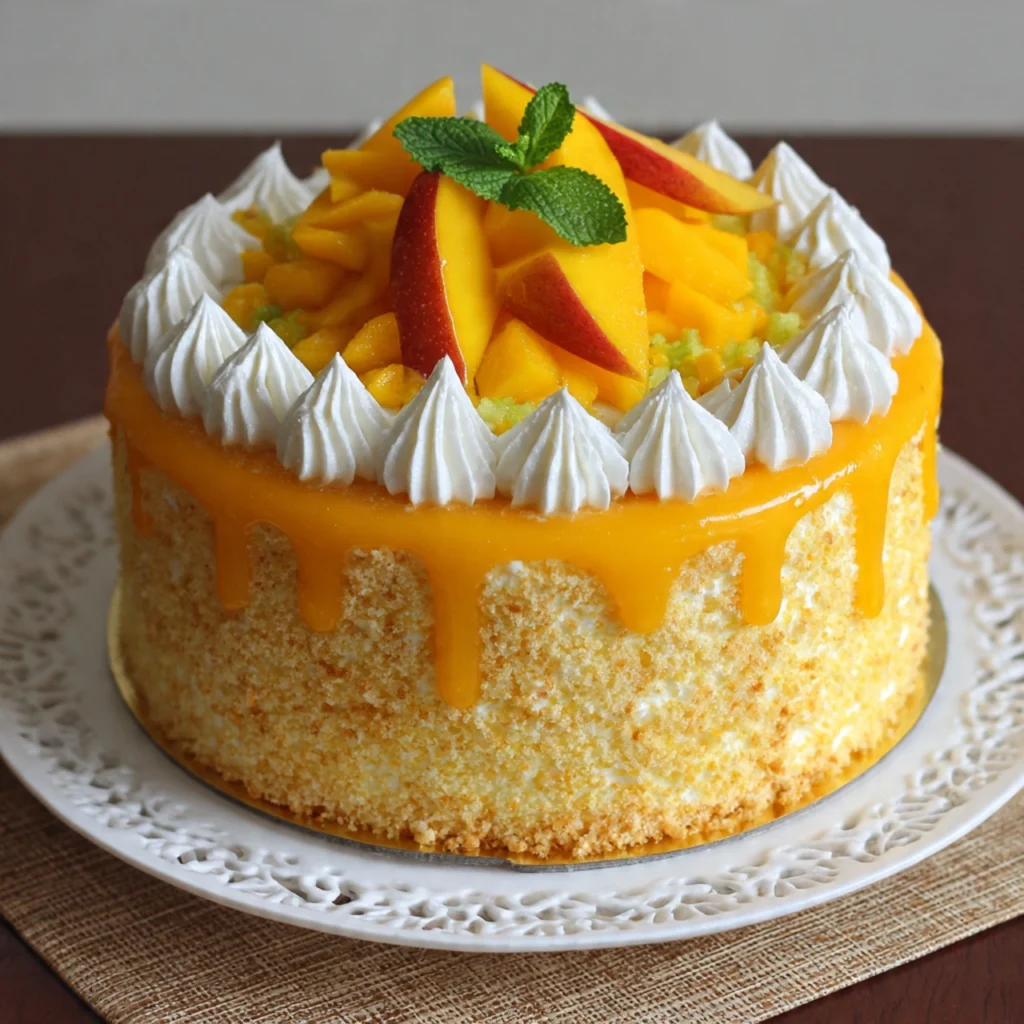
Mango Sponge Cake Common Mistakes to Avoid
Mistake #1: Using Unreduced Mango Puree
Adding fresh, unreduced mango puree seems easier, but the excess moisture weighs down the delicate egg foam, creating a dense, wet cake that doesn’t rise properly.
The fix: Always reduce the puree to concentrate flavor and remove moisture. This step is essential, not optional.
Mistake #2: Greasing the Pan Sides
Greased pans allow the cake to slip down as it cools, losing precious height. Sponge cakes need to grip the pan sides as they rise.
The fix: Line only the bottom with parchment. Leave sides ungreased. The cake will release easily after cooling when you run a knife around the edge.
Mistake #3: Underwhipping or Overwhipping Egg Whites
Underwhipped whites (soft peaks) won’t provide enough structure—the cake will be dense. Overwhipped whites (grainy, separated) won’t fold in smoothly and create a tough texture.
The fix: Whip to stiff, glossy peaks that stand straight up. Stop immediately when you reach this stage.
Mistake #4: Overmixing After Adding Flour
Stirring or mixing vigorously after adding flour develops gluten, creating a tough, chewy cake instead of tender sponge.
The fix: Fold gently and minimally—just until no flour streaks remain. Use broad, gentle folding motions, not stirring.
Mistake #5: Not Inverting During Cooling
Allowing the cake to cool right-side up in the pan causes it to collapse under its own weight while still fragile and hot.
The fix: Immediately invert onto a rack or bottle neck. Let hang upside down until completely cool (about 1 hour).
Mistake #6: Opening Oven Door Too Early
Opening the oven before the cake has set (first 30 minutes) causes temperature drop and structural collapse.
The fix: Resist temptation. Check only after 30 minutes, and then only quickly if necessary.
Mistake #7: Using Cold Eggs
Cold eggs don’t whip to the same volume as room temperature eggs, resulting in a denser cake with less height.
The fix: Bring eggs to room temperature before baking. Quick method: place whole eggs in warm water for 5 minutes.
Storage and Serving Suggestions For Mango Sponge Cake
Serving Ideas
Simple elegance: Dust with powdered sugar and serve with fresh mango slices and whipped cream.
Layered cake: Slice horizontally into 2-3 layers. Fill with mango mousse, whipped cream, or mango curd. Frost with whipped cream and fresh mango.
Tropical trifle: Cube the cake and layer with mango chunks, whipped cream, and passion fruit.
Asian-style: Serve with fresh whipped cream and seasonal fruit (strawberries, kiwi, mango).
Tea cake: Serve plain or with a light glaze as an afternoon treat with tea or coffee.
Mango Sponge Cake Room Temperature Storage (2 Days)
Unfilled, unfrosted Mango Sponge Cake can be stored at room temperature for up to 2 days. Wrap tightly in plastic wrap to prevent drying. Store in a cool, dry place away from direct sunlight.
The texture is actually best on day 2—the crumb settles slightly and slices more cleanly.
Refrigerator Storage (5 Days)
If filled or frosted with whipped cream or other perishable fillings, store in the refrigerator. Cover loosely with plastic wrap or place in a cake dome.
Refrigeration dries out sponge cake, so consume within 5 days for best texture. Bring to room temperature before serving for best flavor.
Freezer Storage (3 Months)
Unfilled sponge cake freezes beautifully. Wrap tightly in plastic wrap, then aluminum foil. Freeze for up to 3 months.
Thaw overnight in refrigerator, still wrapped. Bring to room temperature before serving or filling.
Pro tip: Freeze individual slices wrapped separately for quick single servings.
Make-Ahead Strategy
Sponge cake is perfect for advance preparation:
- Bake cake 1-2 days ahead, wrap well, store at room temperature
- Freeze up to 3 months for long-term planning
- Fill and frost the day before serving (if using stable filling)
- Add fresh fruit garnishes just before serving to maintain freshness
FAQ (Frequently Asked Questions)
1. Why did my Mango Sponge Cake collapse after baking?
Cake collapse has several possible causes. Most commonly, the egg whites were underwhipped (didn’t provide enough structure), the batter was overmixed after folding (deflated air), the oven door was opened too early (temperature drop), or the cake wasn’t inverted during cooling (collapsed under its own weight). Less common causes include oven temperature too high (rises too fast then collapses), too much liquid (from unreduced mango puree), or expired baking powder. To prevent collapse: whip whites to true stiff peaks, fold very gently, don’t open oven for first 30 minutes, immediately invert pan after baking, and always reduce the mango puree to remove excess moisture.
2. Can I make this cake without a stand mixer?
Yes, but it’s significantly more challenging and requires good arm strength! You’ll need a hand mixer (not just a whisk) to whip the egg whites to stiff peaks—this is nearly impossible by hand. Use the hand mixer for both the yolk mixture and the egg whites. The yolks are easy, but the whites require 8-10 minutes of continuous beating. Make sure your hand mixer is powerful enough (at least 200 watts). A stand mixer is truly worth the investment if you plan to make sponge cakes regularly, as it provides consistent, powerful whipping that creates better volume and structure.
3. What’s the difference between sponge cake and regular cake?
Traditional sponge cake relies on whipped eggs (whole or separated) for structure and rise, contains little to no butter or oil, and has a characteristic light, airy, slightly dry texture. Regular butter cakes (like American layer cakes) use creamed butter and sugar for structure, contain significant amounts of fat, rely primarily on chemical leaveners (baking powder/soda), and have a moister, denser, more tender crumb. Sponge cakes are less sweet, have a more delicate flavor, and are designed to be filled and frosted. They’re also more technically challenging because proper egg whipping and folding technique are critical.
4. Can I make this cake gluten-free?
Gluten-free sponge cake is extremely challenging because gluten provides structure that’s critical when you’re working with such a delicate, egg-based batter. However, you can attempt it using a 1:1 gluten-free flour blend designed for cakes (not just all-purpose), adding ¼ teaspoon xanthan gum for structure, and potentially adding 1-2 extra tablespoons of sugar to improve texture. The result will be more delicate and potentially more crumbly than traditional sponge cake, but it can work. Alternatively, consider using this recipe as inspiration but follow a dedicated gluten-free sponge cake recipe that’s been specifically developed for GF flour properties.
5. Why is my cake dense instead of light and fluffy?
Dense texture typically results from insufficient air incorporation or losing the air during mixing. Specific causes include: egg whites not whipped to stiff peaks (most common issue), overfolding the batter after adding whites (deflated the air), using cold eggs (don’t whip to full volume), adding unreduced mango puree (too much moisture weighs down the structure), overmixing after adding flour (developed gluten), or baking at too low a temperature (doesn’t set the structure quickly enough). To ensure lightness: whip whites until they hold stiff peaks and don’t move when bowl is inverted, fold with large, gentle motions using as few strokes as possible, use room temperature eggs, always reduce the mango puree, and fold flour gently without stirring.
6. Can I use this Mango Sponge Cake recipe to make cupcakes?
Sponge cake doesn’t adapt well to cupcakes because it needs to hang upside down while cooling to maintain its height and structure—obviously impossible with individual cupcakes. When baked in cupcake form, sponge cake tends to sink and become dense. If you want individual portions, consider baking the cake in a sheet pan, then cutting into individual squares or using cookie cutters for shapes. These can still be filled and decorated like cupcakes but maintain the proper texture. Alternatively, look for a chiffon cake recipe (similar but includes oil for more stability) which adapts better to cupcake format.
7. How do I prevent the cake from sticking to the pan?
Proper pan preparation is crucial for sponge cakes but different from regular cakes. Line only the bottom with parchment paper—do not grease the sides. The ungreased sides allow the cake to grip and climb as it rises. After cooling completely (while inverted), run a thin, sharp knife around the edge of the pan between the cake and the pan. This releases the cake cleanly. If you greased the sides, the cake will slip down during cooling and lose height. If cake still sticks after proper preparation, your pan may have a damaged coating—consider replacing it or using a different pan.
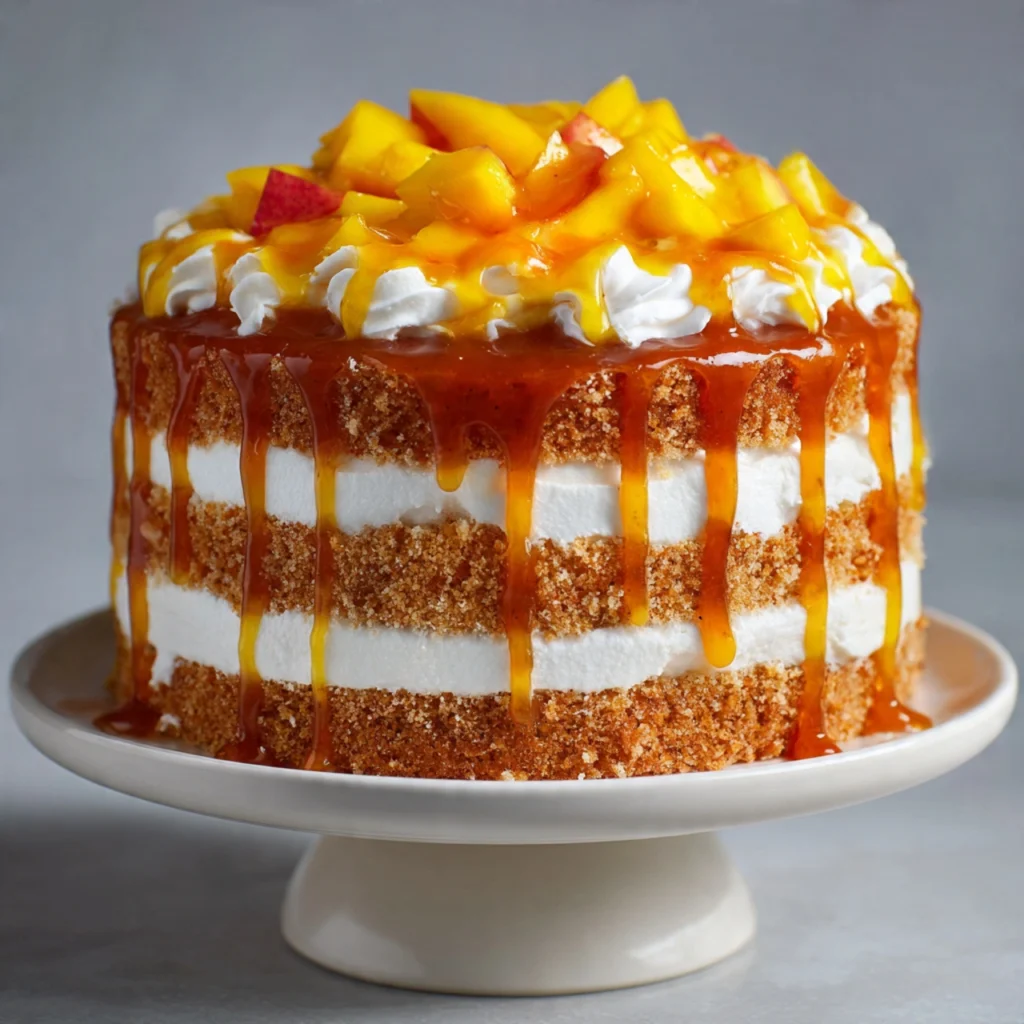
Nutrition Information (Approximate Values)
Serving Size: 1 slice (⅛ of 8-inch cake)
Servings Per Recipe: 8
Calories: 160-180 kcal
Total Fat: 4g
- Saturated Fat: 1.5g
- Trans Fat: 0g
Cholesterol: 140mg
Sodium: 120mg
Total Carbohydrates: 27g
- Dietary Fiber: 0.5g
- Sugars: 19g
- Added Sugars: 18g
Protein: 5g
Vitamin A: 45mcg (5% DV)
Vitamin C: 12mg (13% DV)
Calcium: 35mg (3% DV)
Iron: 1mg (6% DV)
Notes on Nutrition:
- Values are for plain, unfilled, unfrosted cake
- Low in fat compared to butter-based cakes
- Protein from eggs
- Adding whipped cream, frosting, or fillings significantly increases calories and fat
- Natural vitamins from mango
- Relatively low in sodium
- Contains cholesterol from eggs
Final Thoughts
This Mango Sponge Cake represents the beautiful intersection of technique and flavor—where mastering a classic European baking method allows you to showcase a beloved tropical fruit in its most elegant form. What I love most about this cake is how it proves that restraint and lightness can be just as impressive as richness and decadence.
The journey of learning to make proper sponge cakes teaches you skills that translate across countless other recipes. The patience to properly whip eggs. The delicate touch needed for folding. The understanding that sometimes less mixing creates better results. These lessons make you a better baker overall, even when you return to simpler Mango Sponge Cake recipes.
Sharing this cake at celebrations has brought me tremendous joy over the years. Watching guests’ surprised faces when they bite into something so impossibly light. Hearing compliments about the pure, clean mango flavor. Receiving requests for “that amazing tropical Mango Sponge Cake” for upcoming birthdays and weddings.
Whether you’re an experienced baker looking to expand your repertoire or a confident home cook ready to tackle a more technical recipe, this Mango Sponge Cake will reward your effort with something truly special.
Whip with patience, fold with care, bake with precision, and enjoy every cloud-like, mango-scented, absolutely divine slice!
PrintMango Sponge Cake: Light & Airy Tropical Dessert (8 Ingredients, 50 Minutes)
Mango Sponge Cake is an incredibly light, airy cake with intense tropical mango flavor. This classic Asian-style sponge cake uses whipped eggs for structure and reduced mango puree for moisture and flavor, creating a delicate, cloud-like texture that melts in your mouth. Perfect as a base for layered celebration cakes or elegant served plain with fresh fruit. The key is properly whipping the eggs and folding gently to preserve maximum airiness.
- Prep Time: 30 minutes (includes mango reduction)
- Cook Time: 40 minutes
- Total Time: 1 hour 10 minutes (plus cooling)
- Yield: 1 (8-inch) cake, serves 8
- Category: Dessert, Cake, Celebration Cake
- Method: Baking, Whipping
- Cuisine: Asian, Fusion, Chinese bakery-style
- Diet: Vegetarian
Ingredients
For Mango Reduction:
- 1 cup mango puree (to be reduced to ½ cup)
Cake:
- 6 large eggs, separated, room temperature
- ¾ cup granulated sugar (divided)
- ½ cup reduced mango puree (cooled)
- 2 tablespoons whole milk
- 1 teaspoon vanilla extract
- 1 cup cake flour
- ½ teaspoon baking powder
- ¼ teaspoon salt
- ¼ teaspoon cream of tartar
Instructions
- Reduce mango: Simmer 1 cup puree until reduced to ½ cup (10-15 min). Cool completely.
- Prep: Preheat oven to 325°F. Line 8-inch pan bottom with parchment (don’t grease sides).
- Yolk mixture: Beat yolks with ½ cup sugar until thick ribbons form (3-5 min). Mix in cooled mango, milk, vanilla.
- Sift dry: Sift flour, baking powder, salt twice. Set aside.
- Whip whites: Beat whites with cream of tartar to soft peaks. Gradually add ¼ cup sugar, beat to stiff glossy peaks.
- Fold flour: Sift flour over yolk mixture in 3 additions, folding gently after each.
- Fold whites: Add ⅓ whites to lighten batter, then fold in remaining whites gently in 2 additions.
- Bake: Pour into pan, tap out bubbles. Bake 35-40 min until golden and springy.
- Cool inverted: Immediately invert pan onto rack/bottle. Cool completely upside down (1 hour).
- Release: Run knife around edge, turn out onto plate.
Notes
- Room temp eggs essential for maximum volume
- Don’t grease pan sides—cake needs to grip while rising
- Reduce mango puree—critical for proper texture
- Fold gently—overmixing deflates air
- Invert while cooling—prevents collapse
- Use cake flour for lightest texture
- Can be made 2 days ahead, wrapped well
- Freezes beautifully for 3 months