Introduction: Why Colcannon Is Ireland’s Ultimate Comfort Food
Colcannon is the kind of traditional Irish dish that makes you understand why simple peasant food has survived for centuries—creamy, buttery mashed potatoes studded with tender cabbage or kale create something that’s simultaneously humble and luxurious, satisfying and sophisticated, proving that the best comfort food doesn’t need fancy ingredients or complicated techniques.
What makes Colcannon genuinely special is how it transforms two of Ireland’s most abundant, affordable ingredients—potatoes and cabbage—into a dish that’s rich enough for celebrations but economical enough for everyday meals. The potatoes provide creamy, starchy comfort, the cabbage or kale adds subtle sweetness and textural interest, and the generous amounts of butter and cream create richness that makes this feel indulgent despite being primarily vegetables.
Beyond tasting incredible, colcannon holds deep cultural significance in Ireland. Traditionally served on Halloween (Samhain), families would hide charms in the dish—finding a ring meant marriage, a coin meant wealth. The dish also appears in Irish folklore and traditional songs, cementing its place in Irish identity. Making colcannon connects you to centuries of Irish tradition, bringing a taste of authentic Irish cooking into your own kitchen.
I’ve made countless batches of colcannon for St. Patrick’s Day celebrations, weeknight dinners, and as the ultimate side dish for roasted meats or sausages. It’s equally at home at formal holiday dinners and casual family meals. The recipe is remarkably forgiving—difficult to mess up even for beginners—while offering opportunities for personalization through different greens, dairy choices, and additions like scallions or bacon.
The cooking process is straightforward: boil potatoes, cook cabbage, mash everything together with plenty of butter and cream. No special equipment needed, no complicated techniques, just simple preparation that produces something genuinely delicious.
Ready to make Colcannon that’ll transport you straight to an Irish farmhouse kitchen?
Ingredients: What You’ll Need for Perfect Colcannon
Core Ingredients (Serves 6-8)
- 3 pounds russet or Yukon Gold potatoes – Starchy potatoes make the creamiest mash
- ½ head green cabbage (about 1 pound), shredded – Or use kale for traditional variation
- 1 cup milk or heavy cream – Warm, for creamiest results
- ½ cup butter (1 stick), plus more for serving – Essential richness
- 6 green onions (scallions), thinly sliced – Traditional flavoring
- Salt and white pepper to taste – Essential seasoning
Optional Traditional Additions
- 4 slices bacon, cooked and crumbled – Not traditional but delicious
- Fresh parsley, chopped – Color and freshness
- Pinch of nutmeg – Subtle warmth
- Extra butter for serving – Create a butter well in each serving
- Chives – Alternative to green onions
Dairy Alternatives for Different Versions
- Buttermilk – Tangy variation
- Sour cream – Rich and tangy
- Cream cheese – Ultra-creamy version
- Half-and-half – Balance between milk and cream
Equipment Needed
- Large pot for boiling potatoes
- Medium pot for cooking cabbage
- Potato masher or ricer
- Colander
- Large mixing bowl
- Sharp knife and cutting board
Step-by-Step Instructions: Creating Perfect Colcannon
Step 1: Prepare and Cook the Potatoes (25 minutes)
Peel the potatoes and cut them into evenly-sized chunks—about 2 inches each. Uniform size ensures even cooking. Place in a large pot and cover with cold, well-salted water by about 2 inches.
Bring to a boil over high heat, then reduce to a steady simmer. Cook for 15-20 minutes until the potatoes are completely tender when pierced with a fork—they should almost fall apart. You want them very soft for the smoothest mash.
Drain the potatoes in a colander and let them steam for 2-3 minutes. This evaporates excess moisture, preventing watery mashed potatoes. Return the potatoes to the hot pot to keep them warm.
Step 2: Cook the Cabbage (10 minutes)
While the potatoes cook, prepare the cabbage. Remove the core and shred the cabbage into thin strips—about ¼ inch wide. Finely shredded cabbage incorporates better into the potatoes and creates better texture.
Bring a medium pot of salted water to a boil. Add the shredded cabbage and cook for 6-8 minutes until tender but still with a bit of bite. You don’t want it mushy—it should maintain some texture.
Drain the cabbage thoroughly in a colander, pressing gently to remove excess water. Wet cabbage dilutes the potatoes and makes the dish watery. Set aside.
If using kale instead of cabbage, remove tough stems, chop leaves, and cook for 3-4 minutes until tender. Kale cooks faster than cabbage.
Step 3: Warm the Milk and Butter (3 minutes)
In a small saucepan or microwave-safe container, warm the milk or cream and butter together until the butter melts and the mixture is hot but not boiling. Warm dairy incorporates smoothly into potatoes without cooling them down, creating fluffier mash.
Cold milk added to hot potatoes can make them gluey and dense. Always warm your dairy first.
Step 4: Mash the Potatoes (5 minutes)
While the potatoes are still hot, mash them using a potato masher or push them through a ricer for the smoothest texture. Mash until no lumps remain, but don’t overmix—overworked potatoes become gummy.
Gradually add the warm milk and butter mixture, stirring gently after each addition, until you reach your desired consistency. The potatoes should be creamy and smooth, able to hold their shape but not stiff or dry.
Season generously with salt and white pepper. White pepper is traditional because it doesn’t create visible black specks, maintaining the dish’s creamy white appearance. Taste and adjust seasoning—potatoes need generous salt to taste good.
Step 5: Cook the Green Onions (3 minutes)
In a small skillet, melt 2 tablespoons of butter over medium heat. Add the sliced green onions and cook for 2-3 minutes until softened and fragrant but not browned. This gentle cooking mellows their sharp bite while maintaining their flavor.
Some traditional recipes skip this step and add raw green onions, which works but gives a sharper onion flavor. Cooked green onions are milder and more integrated.
Step 6: Combine Everything (5 minutes)
Add the cooked, drained cabbage to the mashed potatoes along with the cooked green onions (including the butter they cooked in). Using a large spoon or spatula, fold everything together gently but thoroughly until the cabbage and onions are evenly distributed throughout the potatoes.
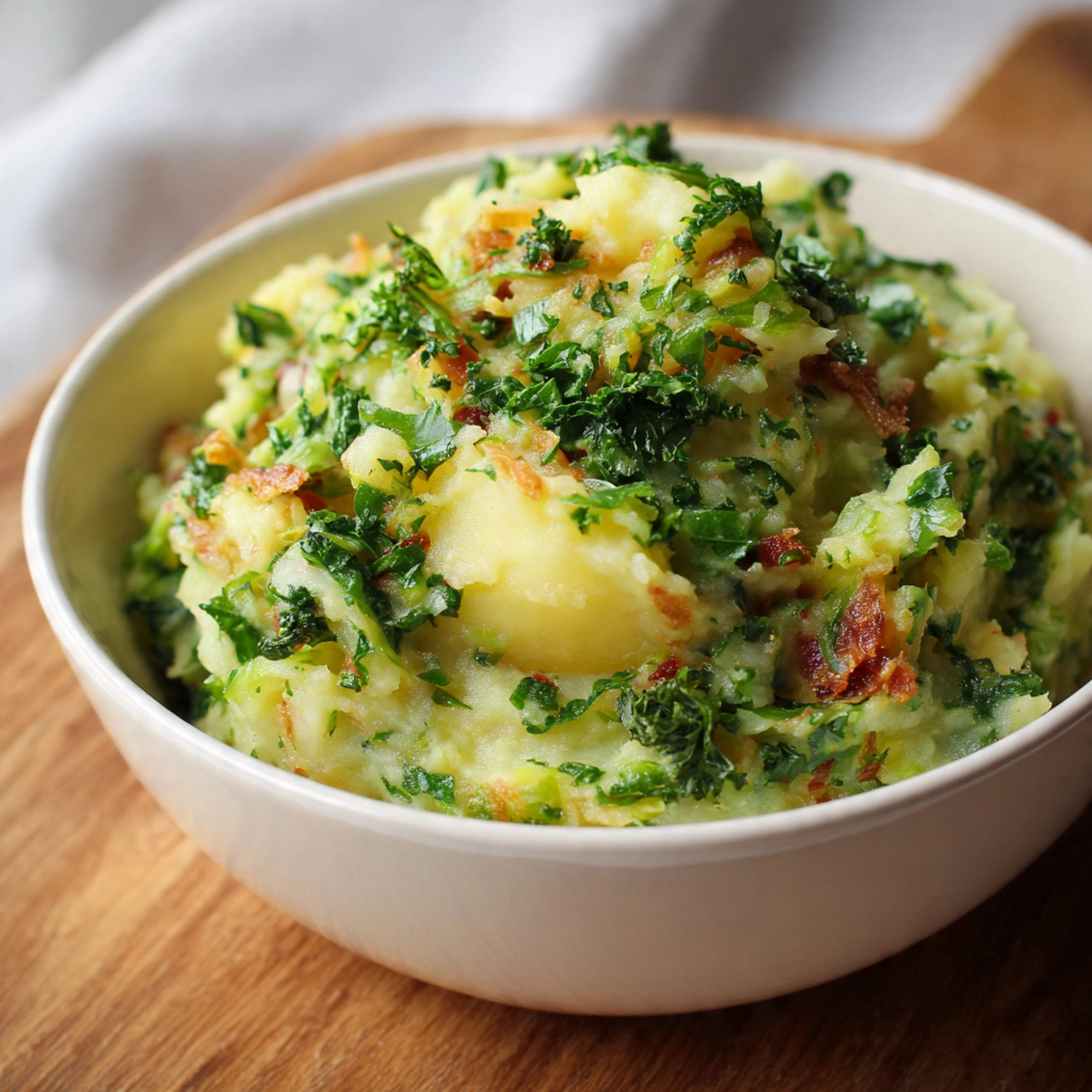
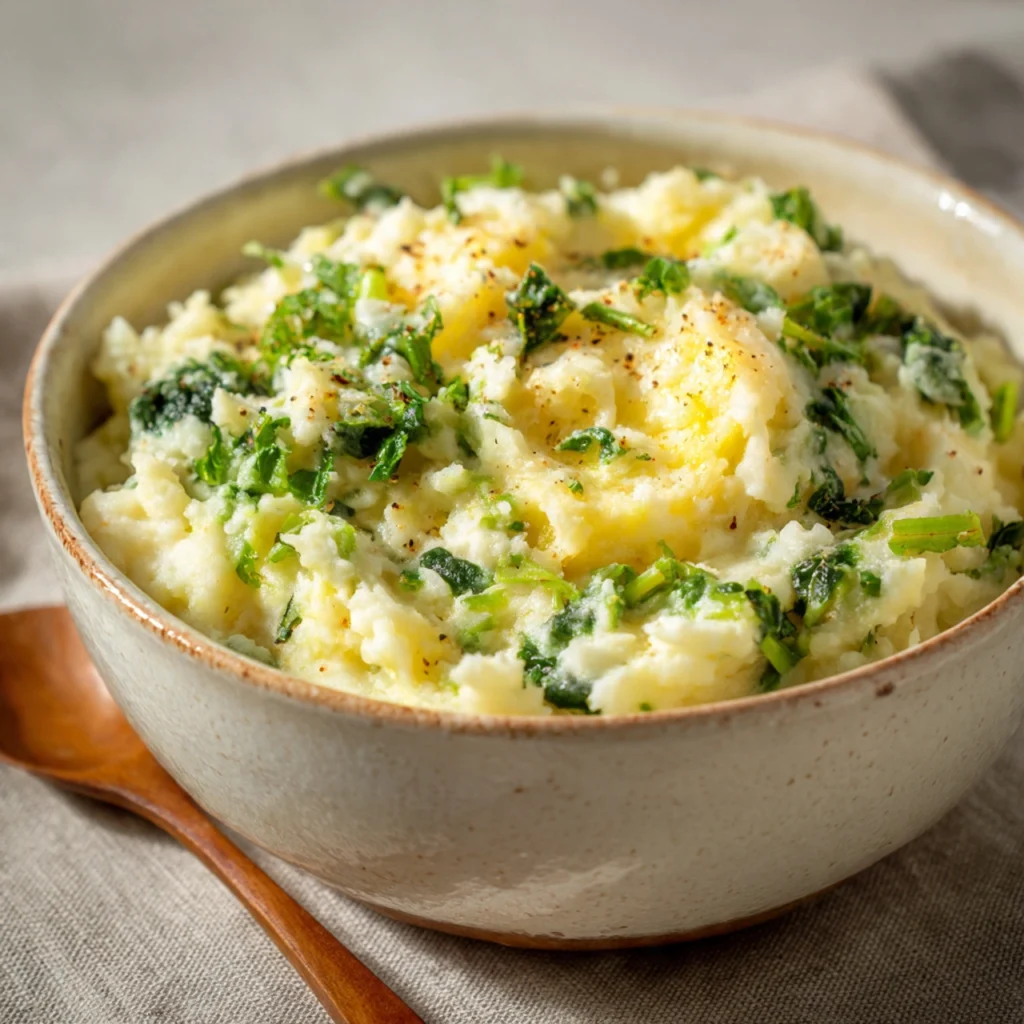
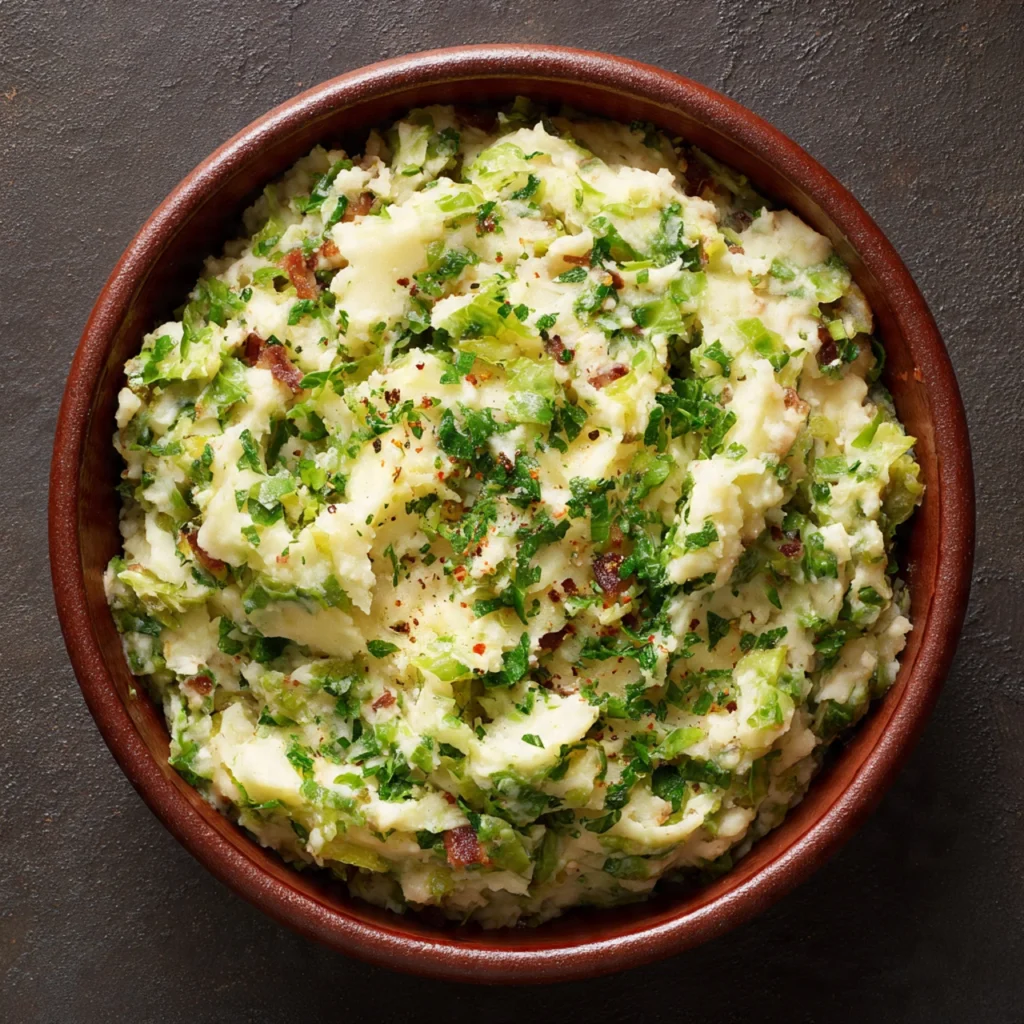
The mixture should be creamy, fluffy, and flecked with green from the cabbage and onions. Don’t overmix—you want to maintain the light, fluffy texture of the mashed potatoes.
Taste and adjust seasoning one final time. Colcannon should be well-seasoned with clearly pronounced salt and subtle pepper.
Step 7: Serve Traditionally (2 minutes)
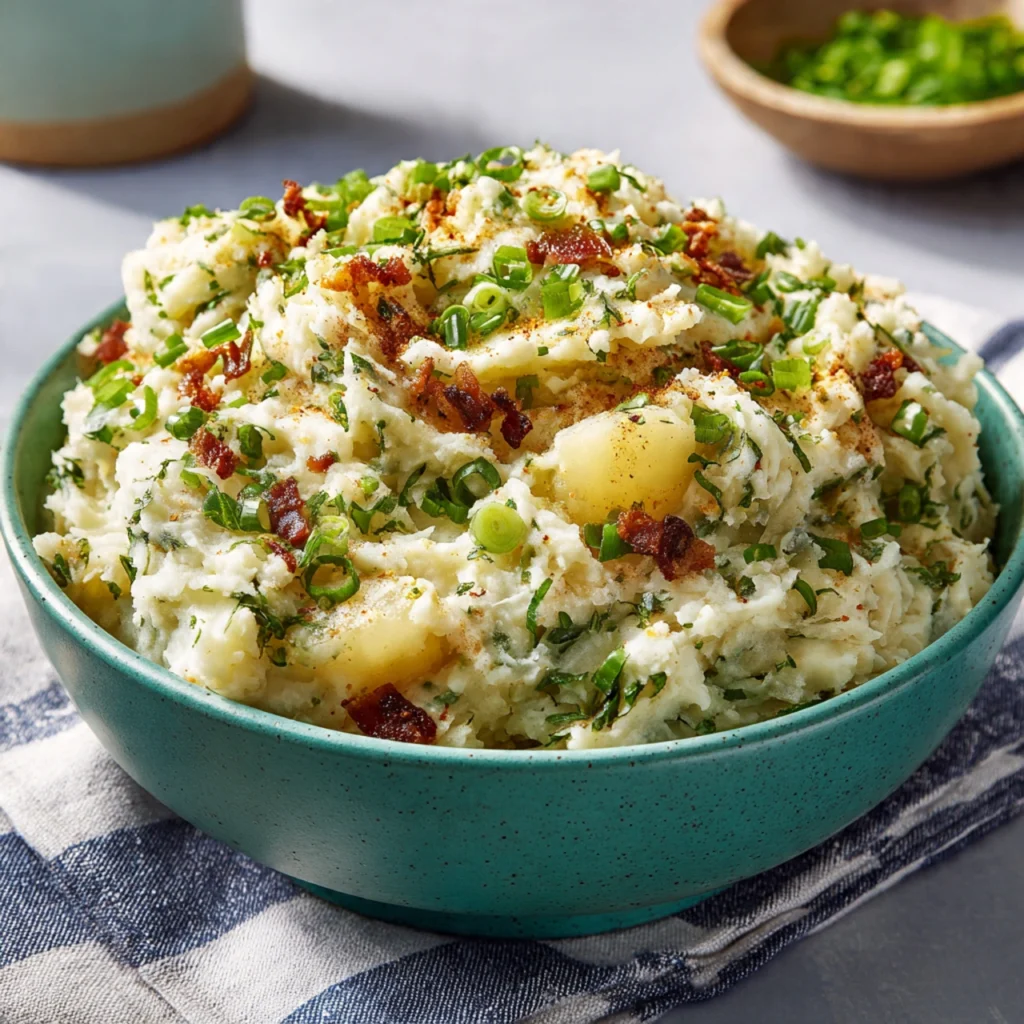
Transfer the colcannon to a large serving bowl or individual bowls. Make a well in the center of each serving and place a generous pat of butter in it. As the butter melts, diners mix it into their portion, creating pockets of rich, buttery goodness throughout.
This butter well is traditional and essential—it’s not just for looks, it’s how colcannon is meant to be eaten. Each forkful should get some of that melted butter.
Garnish with extra chopped green onions or fresh parsley if desired. Serve immediately while hot.
Pro Tips for the Perfect Colcannon
Tip 1: Use Starchy Potatoes for the Fluffiest Mash
Russet potatoes (Idaho potatoes) are highest in starch and lowest in moisture, creating the fluffiest, most absorbent mashed potatoes. Yukon Golds work well too with a slightly creamier, buttery flavor. Avoid waxy potatoes like red potatoes which become gluey when mashed.
Tip 2: Don’t Oversalt the Cooking Water
While you want to salt the potato cooking water, don’t go overboard—the final dish gets seasoned after mashing. About 1 tablespoon of salt per gallon of water is sufficient. You can always add more salt to the finished dish, but you can’t remove excess.
Tip 3: Drain Everything Thoroughly
Both potatoes and cabbage must be very well drained. Excess water creates thin, soupy colcannon instead of creamy, fluffy comfort. Let the potatoes steam after draining, and press the cabbage firmly to remove all excess moisture.
Tip 4: Warm Your Dairy and Add Gradually
Cold milk creates lumpy, gluey potatoes. Always warm the milk and butter together before adding, and add gradually while stirring. This creates the creamiest, smoothest texture possible.
Tip 5: Don’t Overmix After Adding Dairy
Once you add the warm milk and butter, stir just until combined. Overworking mashed potatoes after adding liquid develops excess gluten, creating gummy, gluey texture instead of light and fluffy. Mix until smooth, then stop.
Tip 6: Traditional Means Generous with Butter
Authentic colcannon is not a diet food—it’s rich, buttery comfort. Don’t skimp on the butter thinking you’re being healthy. The butter is what makes this dish special. If you want lighter, make a different dish.
Tip 7: The Butter Well is Essential
That butter well in the center isn’t just decorative—it’s traditional and functional. As the butter melts, diners stir it into their portion, creating varying richness throughout. Some bites are butterier, some are purer potato-and-cabbage. This variation is part of the experience.
Tip 8: Make It Your Own
While traditional colcannon is simple, feel free to personalize. Add crispy bacon, swap cabbage for kale, use leeks instead of green onions, stir in some cheese. The basic technique supports countless variations while maintaining that essential creamy-potato-with-greens character.
Common Mistakes to Avoid When Making Colcannon
Mistake 1: Using Waxy Potatoes
Red potatoes, new potatoes, or other waxy varieties contain less starch and more moisture. When mashed, they become gluey and gummy instead of fluffy and light. Always use starchy potatoes—russets or Yukon Golds—for proper texture.
Mistake 2: Not Draining Vegetables Thoroughly
Inadequately drained potatoes or cabbage makes the entire dish watery and thin instead of creamy and thick. Take the extra time to drain thoroughly and let potatoes steam dry. Press cabbage firmly to remove all excess water.
Mistake 3: Adding Cold Milk or Cream
Cold dairy added to hot potatoes causes them to seize up and become lumpy or gluey. Always warm your milk and butter together before adding to the mashed potatoes. This simple step makes a dramatic difference in texture.
Mistake 4: Overcooking the Cabbage
Mushy, overcooked cabbage turns unpleasantly soft and develops a sulfurous smell. Cook just until tender with a slight bite remaining—about 6-8 minutes. The cabbage should still have some textural presence in the finished dish.
Mistake 5: Under-Seasoning
Bland colcannon is the most common error. Potatoes and cabbage both need generous seasoning to taste good. Don’t be timid with salt—taste frequently and add more until the flavor is vibrant and the potatoes taste properly seasoned.
Mistake 6: Skipping the Butter Well
Serving colcannon without the traditional butter well misses the point of the dish. That pool of melting butter that each diner mixes into their portion is essential to the authentic experience. Don’t skip this traditional presentation.
Mistake 7: Overmixing the Potatoes
Excessive mashing or stirring, especially after adding liquid, develops too much gluten and creates gluey, gummy potatoes. Mash just until smooth, add liquid and stir just until incorporated, then stop immediately.
Mistake 8: Not Keeping Everything Hot
Colcannon must be served hot—warm colcannon loses its appeal significantly. Work efficiently, keep components hot as you prepare them, and serve immediately. If necessary, keep the finished dish covered in a warm oven (200°F) until serving.
Storage and Serving Suggestions for Colcannon
How to Store
Refrigerator: Store cooled colcannon in an airtight container for up to 3 days. The texture changes slightly upon refrigeration—it becomes denser and less fluffy. Reheat gently with a splash of milk or cream to restore some creaminess.
Freezer: While you can freeze colcannon for up to 2 months, the texture suffers significantly. The potatoes become grainy and the cabbage can become mushy. Fresh is best, but freezing works for using in other dishes like potato cakes.
Reheating: Reheat gently in a covered pot over low heat, stirring frequently and adding a bit of milk or cream to restore moisture. Microwave works but can create uneven heating—stir well halfway through. Oven reheating (covered at 325°F) works well for larger portions.
Serving Suggestions
Traditional Irish Meal: Serve alongside corned beef, Irish stew, bangers (sausages), or roasted lamb. Colcannon is the classic accompaniment to traditional Irish main courses.
With Poached Eggs: Top with poached or fried eggs for a hearty breakfast or brunch. The runny yolk enriches the potatoes beautifully.
As a Main Course: Vegetarians can enjoy colcannon as a main dish. Add extra butter, cheese, or a fried egg on top for a complete meal.
Colcannon Cakes: Form leftover colcannon into patties and pan-fry in butter until crispy on both sides. These potato cakes are traditional and delicious.
With Bacon: Add crispy bacon bits throughout or on top for extra richness and smoky flavor.
Soup Base: Use leftover colcannon as the base for potato soup—thin with broth, add extra vegetables, and you have hearty soup.
Shepherd’s Pie Topping: Use colcannon instead of plain mashed potatoes as the topping for shepherd’s pie or cottage pie.
Traditional Irish Customs
Halloween Tradition: Traditionally served on Halloween with charms hidden inside—a ring meant marriage, a coin meant wealth, a button meant bachelorhood.
The Butter Well: Always create a well of melting butter in the center—this is traditional and essential to the authentic experience.
With Bacon: While not in the original recipe, adding bacon is now common in Irish homes and adds wonderful smoky richness.
Vegetarian Version: Traditional colcannon is vegetarian, making it accessible to those who don’t eat meat while maintaining Irish authenticity.
Frequently Asked Questions (FAQ)
1. What’s the difference between colcannon and champ?
Both are Irish mashed potato dishes with greens. Colcannon traditionally uses cabbage or kale, while champ uses only green onions (scallions). Colcannon is associated with Halloween, while champ is associated with St. Patrick’s Day. Both are delicious comfort foods.
2. Can I use kale instead of cabbage?
Yes! Kale is actually traditional in some regions of Ireland. Remove tough stems, chop the leaves, and cook for 3-4 minutes until tender. Kale creates a slightly earthier flavor and darker color than cabbage but is equally authentic.
3. Can I make Colcannon vegan?
Absolutely! Use plant-based butter (vegan butter) and non-dairy milk (oat milk or soy milk work well—avoid almond milk which is too thin). The technique remains the same. The texture will be slightly different but still delicious.
4. Why are my mashed potatoes gluey?
Gluey potatoes result from using waxy potatoes instead of starchy ones, adding cold milk, or overmixing after adding liquid. Use russet or Yukon Gold potatoes, always warm your milk, and mix just until combined—no more.
5. Can I make Colcannon ahead of time?
You can make it a few hours ahead and keep it warm in a covered pot or slow cooker on low. However, it’s best made fresh and served immediately. The texture deteriorates somewhat when refrigerated and reheated, becoming denser and less fluffy.
6. What should I serve with Colcannon?
Traditional pairings include corned beef, Irish stew, sausages (bangers), roasted lamb, or any hearty meat dish. It’s also excellent as a vegetarian main course topped with a fried egg, or as a side dish for roasted chicken or pork.
7. Can I add cheese to Colcannon?
While not traditional, adding sharp cheddar or Irish cheese creates a delicious variation. Stir in 1 cup of shredded cheese while the potatoes are hot. This isn’t authentic but is tasty and has become common in modern Irish cooking.
8. How do I prevent lumpy mashed potatoes?
Ensure potatoes are completely tender before mashing—they should almost fall apart. Mash while hot (cold potatoes don’t mash smoothly), and use a ricer for the smoothest texture. Add warm—not cold—liquid gradually while stirring gently.
Nutrition Information (Per Serving, Based on 8 Servings)
Calories: 285 kcal
Total Fat: 14g
- Saturated Fat: 9g
- Trans Fat: 0g
Cholesterol: 38mg
Sodium: 180mg
Total Carbohydrates: 36g
- Dietary Fiber: 4g
- Sugars: 4g
Protein: 5g
Vitamin A: 10% DV
Vitamin C: 45% DV
Calcium: 8% DV
Iron: 8% DV
Potassium: 720mg
Note: Nutrition information is approximate and based on using whole milk and butter. Using cream increases calories and fat. This is traditional comfort food meant to be enjoyed as part of a balanced meal, typically as a side dish.
Conclusion: Your Colcannon Journey Starts Now
Colcannon proves that the best comfort food doesn’t require expensive ingredients or complicated techniques—just honest vegetables, generous butter, and simple preparation create something that’s nourished Irish families for centuries and continues to satisfy anyone seeking real, soul-warming food.
What I treasure most about this recipe is how it connects us to tradition and history while remaining completely relevant and delicious for modern meals. Every bite of colcannon links you to generations of Irish cooks who created something special from the most humble ingredients available, proving that great cooking is about technique and care, not fancy components.
Since mastering colcannon, it’s become my automatic choice for St. Patrick’s Day and a regular appearance whenever I need comforting side dishes. The simplicity means it’s easy enough for weeknights, while the rich flavor and cultural significance make it special enough for celebrations.
The beauty is in how this dish honors its roots while welcoming personalization. Make it exactly as Irish grandmothers did for centuries, or adapt it with bacon, cheese, or kale. The fundamental combination of creamy potatoes and tender greens bound with butter remains satisfying regardless of variations.
So grab those potatoes, shred that cabbage, and prepare to discover why Colcannon has remained Ireland’s beloved comfort food for generations. Your journey to authentic Irish cooking starts now.
Sláinte! (Cheers!)
PrintColcannon: The Traditional Irish Comfort Food That’s Pure Heaven
This traditional Irish Colcannon combines creamy mashed potatoes with tender cabbage, butter, and green onions for the ultimate comfort food. Rich, satisfying, and authentically Irish, it’s perfect for St. Patrick’s Day or any dinner. The traditional butter well in the center creates pockets of melting richness throughout!
- Prep Time: 15 minutes
- Cook Time: 30 minutes
- Total Time: 45 minutes
- Yield: 6-8 servings
- Category: Side Dish, Irish Cuisine
- Method: Boiling, Mashing
- Cuisine: Irish
- Diet: Vegetarian
Ingredients
- 3 lbs russet or Yukon Gold potatoes, peeled and cubed
- ½ head green cabbage (1 lb), shredded
- 1 cup milk or heavy cream, warmed
- ½ cup butter (1 stick), plus more for serving
- 6 green onions, thinly sliced
- Salt and white pepper to taste
Optional: bacon bits, fresh parsley, nutmeg
Instructions
- Cook potatoes: Boil potato chunks in salted water 15-20 minutes until very tender. Drain, steam dry 2-3 minutes, return to pot.
- Cook cabbage: While potatoes cook, boil shredded cabbage in salted water 6-8 minutes until tender with slight bite. Drain thoroughly, pressing to remove excess water.
- Warm dairy: Heat milk and ½ cup butter together until butter melts and mixture is hot.
- Mash potatoes: Mash potatoes until smooth. Gradually add warm milk-butter mixture, stirring gently until creamy. Season generously with salt and white pepper.
- Cook onions: Melt 2 tbsp butter in skillet. Cook green onions 2-3 minutes until softened.
- Combine: Fold drained cabbage and cooked green onions (with butter) into mashed potatoes until evenly distributed.
- Serve: Transfer to serving bowl. Make well in center, place generous pat of butter in well. Serve immediately while hot.
Notes
- Use starchy potatoes (russets or Yukon Golds) for fluffiest mash
- Drain potatoes and cabbage very thoroughly
- Always warm milk and butter before adding to potatoes
- Don’t overmix—creates gluey texture
- Season generously—potatoes need plenty of salt
- Butter well is traditional and essential
- Serve immediately while hot for best texture
- Can substitute kale for cabbage
- Add bacon for non-traditional but delicious variation
- Stores 3 days refrigerated, texture changes when reheated