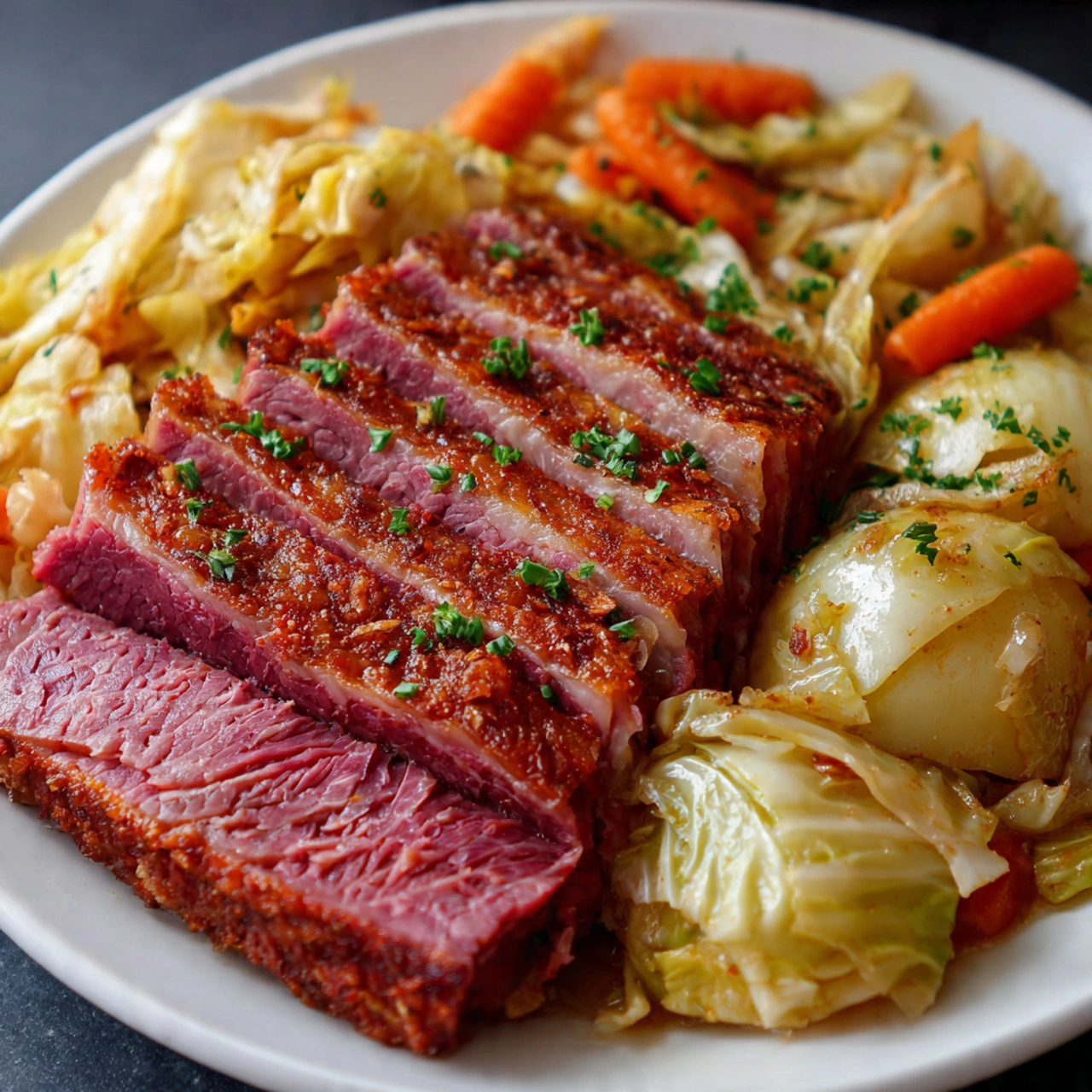
Introduction: Why Corned Beef and Cabbage Remains a Beloved Tradition
Corned Beef and Cabbage is a soul-warming comfort meal that connects tradition and nostalgia in every bite. Fork-tender, slightly salty beef pairs perfectly with sweet, buttery cabbage and hearty root vegetables, creating a dish that tastes like celebration and home. Despite its impressive flavor, it’s one of the most forgiving recipes—simply simmer everything in one pot and enjoy a feast with minimal hands-on effort.
What makes Corned Beef and Cabbage special is how slow, gentle cooking transforms a simple cut of beef into something tender and flavorful. The brisket, cured in spiced brine, simmers until fork-tender, while the vegetables cook in the same savory broth, absorbing rich flavor and becoming far more delicious than plain boiled vegetables.
Beyond its incredible flavor, this meal is perfect for feeding a crowd. Everything cooks in one pot—meat and vegetables together—making it ideal for St. Patrick’s Day or family dinners. Even better, the leftovers shine in corned beef hash or sandwiches, and the mostly hands-off cooking lets you focus on other things while it simmers.
I’ve made Corned Beef and Cabbage countless times for St. Patrick’s Day, Sunday dinners, and even random weeknights when I needed comfort food. Every time, it’s surprisingly easy with impressive results. The warm aroma of spices, savory beef, and sweet vegetables filling the house makes it worth cooking—even if you’re not celebrating the holiday.
The technique is straightforward enough for beginners while offering opportunities for refinement that experienced cooks appreciate. Master the basics, and you’ll have a reliable crowd-pleaser that requires minimal effort while delivering maximum satisfaction.
Ready to make Corned Beef and Cabbage that’ll have everyone asking for seconds?
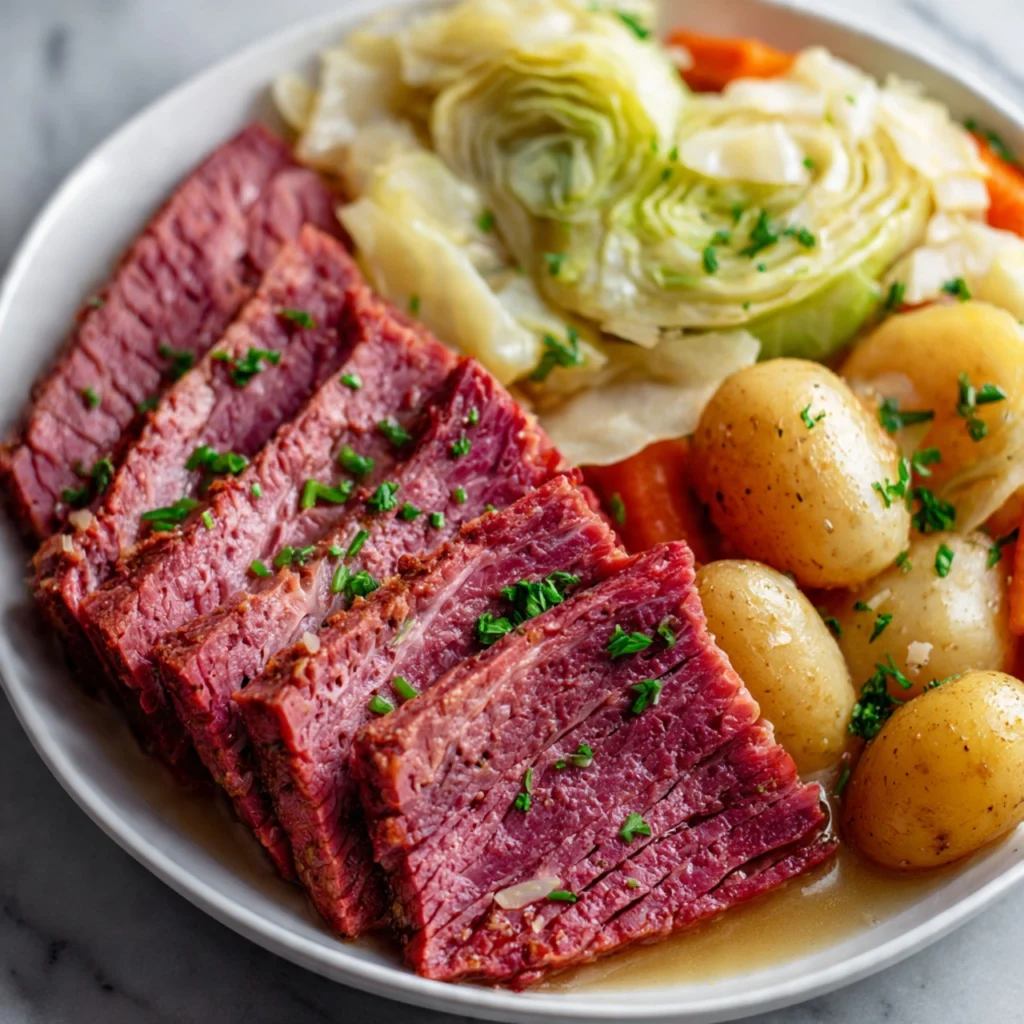
Ingredients: What You’ll Need for Perfect Corned Beef and Cabbage
Core Ingredients (Serves 6-8)
- 3-4 pound corned beef brisket – With spice packet included
- 10 cups water – Or enough to cover the beef by 1 inch
- 1 large head green cabbage – Cut into wedges
- 1½ pounds baby potatoes – Or larger potatoes quartered
- 1 pound carrots – Peeled and cut into 3-inch pieces
- 2-3 parsnips (optional) – Peeled and cut into chunks
- 1 large onion – Peeled and quartered
- 4 cloves garlic – Peeled and smashed
- 2 bay leaves – Aromatic depth
- 1 teaspoon black peppercorns – Subtle heat
Optional Flavor Enhancers
- 2 tablespoons brown sugar – Balances saltiness
- 1 bottle (12 oz) dark beer – Replaces some water for depth
- 2 tablespoons apple cider vinegar – Brightens flavors
- Fresh thyme sprigs – Herbal note
- Whole cloves – Additional spice
For Serving
- Spicy brown mustard – Classic condiment
- Horseradish cream – Sharp, spicy pairing
- Melted butter – For drizzling over vegetables
- Fresh parsley – Garnish
- Crusty bread – For soaking up juices
Equipment Needed
- Large pot or Dutch oven (at least 8 quarts)
- Tongs
- Sharp knife
- Cutting board
- Meat thermometer (optional but helpful)
- Slotted spoon
Step-by-Step Instructions: Creating Perfect Corned Beef and Cabbage
Step 1: Prepare the Corned Beef (5 minutes)
Remove the corned beef from its packaging and rinse it thoroughly under cold running water. This removes excess salt from the surface—corned beef is quite salty from the curing process. Pat dry with paper towels.
Look for the spice packet that comes with most packaged corned beef. Set this aside—you’ll add it to the cooking liquid. If your corned beef didn’t come with a spice packet, you can make your own with the peppercorns, bay leaves, and optional spices listed.
Place the corned beef in your large pot, fat side up. The fat will render during cooking and baste the meat, keeping it moist and adding flavor.
Step 2: Start the Simmer (10 minutes plus 3 hours cooking time)
Add enough water to cover the corned beef by at least 1 inch—usually about 10 cups. If using beer, replace 1-2 cups of water with beer for extra depth of flavor.
Add the contents of the spice packet, the quartered onion, smashed garlic cloves, bay leaves, and peppercorns. If using brown sugar, add it now—it helps balance the saltiness of the corned beef.
Bring the pot to a boil over high heat. Once boiling, reduce the heat to maintain a very gentle simmer—you should see small bubbles breaking the surface occasionally, but not a rolling boil. Cover the pot with a lid.
Simmer for about 3 hours, or 50 minutes per pound of beef. The corned beef is done when it’s fork-tender—a fork should slide in and out easily with no resistance. If it’s still tough, keep cooking and check every 30 minutes.
Step 3: Add the Root Vegetables (10 minutes plus 45 minutes cooking time)
After the corned beef has simmered for 3 hours and is nearly tender, add the potatoes, carrots, and parsnips if using. These vegetables need substantial cooking time to become tender in the flavorful broth.
Make sure the vegetables are submerged in the cooking liquid. If necessary, add a bit more water or rearrange vegetables so they’re mostly covered.
Continue simmering, covered, for about 45 minutes until the vegetables are tender when pierced with a fork but not falling apart.
Step 4: Add the Cabbage (5 minutes plus 15 minutes cooking time)
Cut the cabbage into 6-8 wedges, leaving the core intact on each wedge—this helps the wedges hold together during cooking.
Add the cabbage wedges to the pot, arranging them on top of the other ingredients. Cabbage doesn’t need to be fully submerged—the steam will cook the upper portions.
Cover and simmer for 15-20 minutes until the cabbage is tender but still has some texture. Overcooked cabbage becomes mushy and develops an unpleasant sulfur smell, so don’t let it cook too long.
Step 5: Rest the Meat (10 minutes)
Once everything is cooked through and tender, carefully remove the corned beef from the pot using tongs and place it on a cutting board. Tent loosely with aluminum foil and let it rest for 10-15 minutes. This resting period allows the juices to redistribute throughout the meat, making it juicier when sliced.
Use a slotted spoon to remove the vegetables from the cooking liquid and arrange them on a serving platter. Cover with foil to keep warm while the meat rests.
Step 6: Slice and Serve (5 minutes)
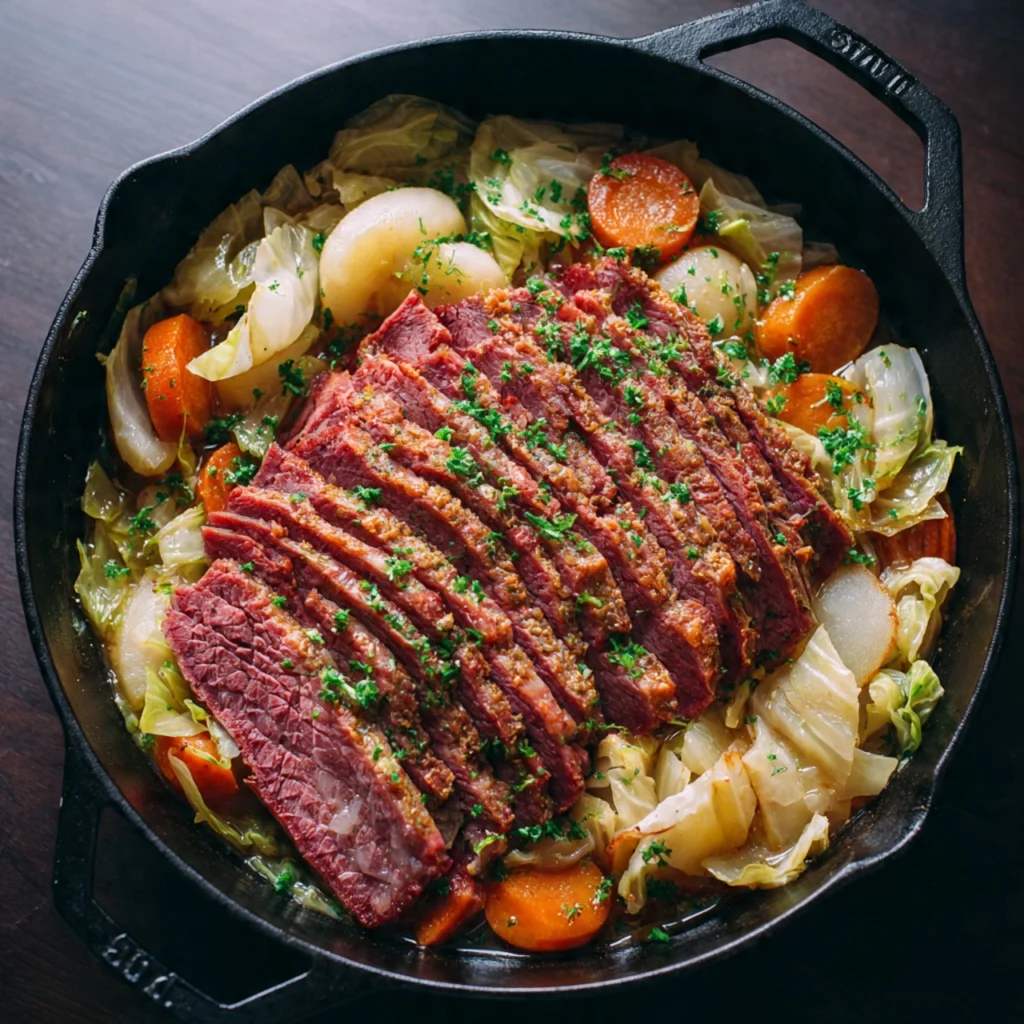
Corned beef has a visible grain—lines running through the meat. To ensure tender slices, you must slice AGAINST the grain. Look at the meat and identify which direction the lines run, then slice perpendicular to those lines.
Slice the corned beef about ¼-inch thick. If you slice with the grain (in the same direction as the lines), the meat will be tough and stringy. Against the grain creates tender, easy-to-chew slices.
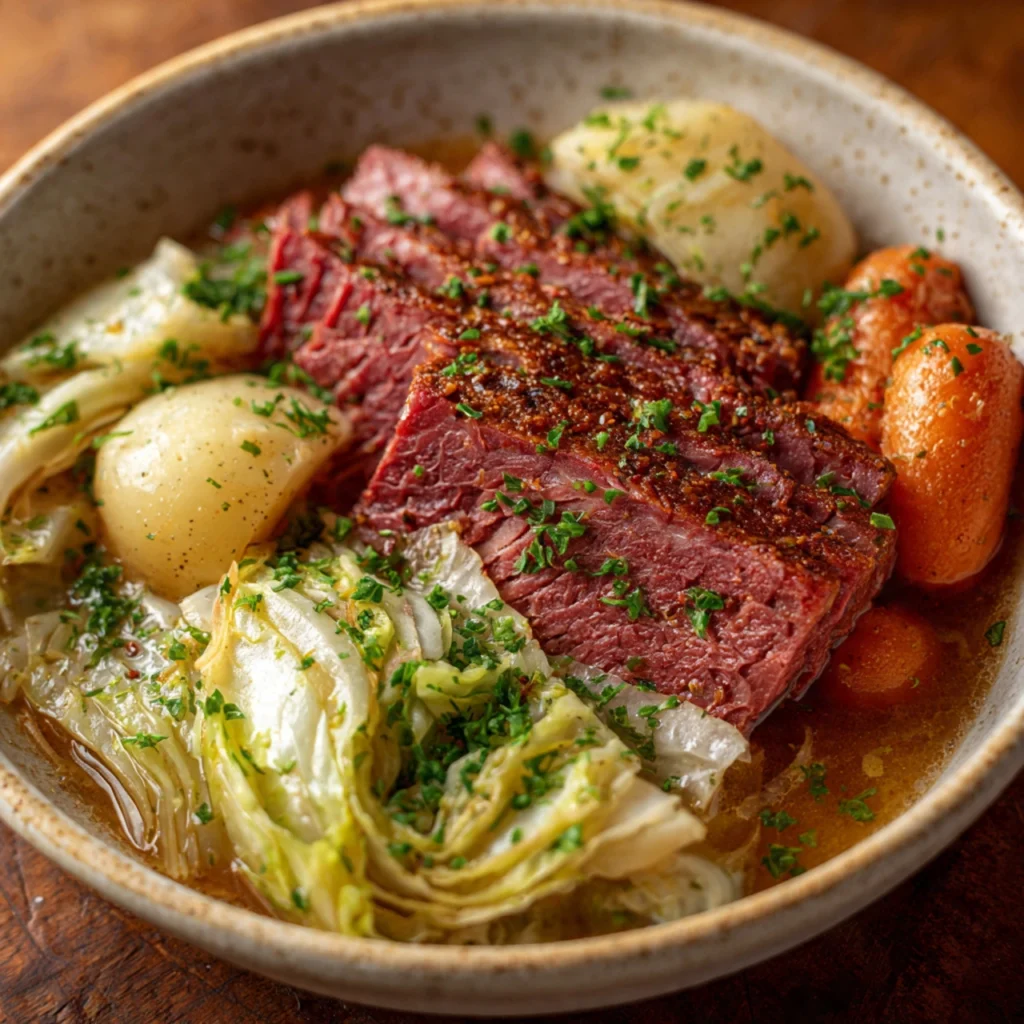
Arrange the sliced corned beef on the platter with the vegetables. Drizzle everything with a bit of the cooking liquid (it’s full of flavor), add a pat of butter over the vegetables if desired, garnish with fresh parsley, and serve immediately with mustard and horseradish on the side.
Pro Tips for the Perfect Corned Beef and Cabbage
Tip 1: Don’t Boil—Simmer Gently
A hard, rolling boil makes corned beef tough and stringy. Keep the heat low enough that you see just occasional gentle bubbles breaking the surface. This slow, gentle cooking is what transforms tough brisket into fork-tender meat.
Tip 2: Patience is Essential
You cannot rush corned beef. It needs those full 3 hours (or 50 minutes per pound) to become tender. Trying to speed it up with higher heat creates tough, chewy meat. Plan ahead and give it the time it needs—your patience will be rewarded.
Tip 3: Add Vegetables in Stages
Don’t add all vegetables at once. Root vegetables need 45 minutes, while cabbage only needs 15-20. Adding everything at the right time ensures perfectly cooked vegetables rather than mushy, overcooked ones alongside raw ones.
Tip 4: Always Slice Against the Grain
This cannot be emphasized enough. Slicing with the grain creates tough, stringy, difficult-to-chew meat. Slicing against the grain shortens the muscle fibers, creating tender slices that practically melt in your mouth. Identify the grain direction before you start slicing.
Tip 5: Save That Cooking Liquid
The cooking liquid (called “pot liquor” in Southern cooking) is intensely flavorful. Use it to moisten the meat and vegetables when serving, save it for making incredible soup, or use it for cooking grains or braising other vegetables. Don’t pour it down the drain!
Tip 6: Use a Slow Cooker If You Prefer
Corned beef adapts beautifully to slow cooking. Place everything in a slow cooker (meat on bottom, onions and garlic, then vegetables on top). Cook on low for 8-10 hours or high for 4-5 hours. Add cabbage for the final hour.
Tip 7: Test for Doneness with a Fork
The best test for done corned beef is the fork test: insert a fork into the thickest part of the meat and twist gently. If the meat falls apart easily, it’s done. If there’s significant resistance, keep cooking.
Tip 8: Make It a Day Ahead
Corned beef is actually better when made ahead. Cook completely, refrigerate overnight in the cooking liquid (keeps it moist), then slice cold and reheat gently in the liquid before serving. The flavor deepens overnight.
Common Mistakes to Avoid When Making Corned Beef and Cabbage
Mistake 1: Boiling Too Vigorously
High, rolling boils make the meat tough and dry instead of tender and juicy. Always maintain a gentle simmer—just a few lazy bubbles breaking the surface occasionally. Low and slow is the secret to tender corned beef.
Mistake 2: Not Rinsing the Corned Beef
Corned beef is very salty from the curing brine. Skipping the rinse means excessively salty meat and cooking liquid. Always rinse thoroughly under cold water before cooking to remove surface salt.
Mistake 3: Slicing With the Grain
This is the cardinal sin that ruins perfectly cooked corned beef. Slicing with the grain creates tough, stringy, chewy meat that’s unpleasant to eat. Always identify the grain direction and slice perpendicular to it for tender slices.
Mistake 4: Adding All Vegetables at Once
Different vegetables have different cooking times. Adding potatoes and cabbage together means either mushy potatoes and perfect cabbage, or perfect potatoes and raw cabbage. Add root vegetables 45 minutes before done, cabbage for just the final 15-20 minutes.
Mistake 5: Not Using Enough Water
The corned beef must stay submerged during cooking or the exposed portions will be tough and dry. Make sure there’s enough water to cover the meat by at least 1 inch, adding more during cooking if needed.
Mistake 6: Overcooking the Cabbage
Cabbage only needs 15-20 minutes to become tender. Longer cooking makes it mushy and develops an unpleasant sulfur smell. Add it last and watch the time carefully.
Mistake 7: Not Letting the Meat Rest
Cutting into corned beef immediately after cooking causes all the juices to run out, leaving dry meat. Let it rest 10-15 minutes so juices redistribute, creating moister, more flavorful slices.
Mistake 8: Throwing Away the Cooking Liquid
That flavorful liquid is liquid gold! Use it to moisten leftovers, make soup, cook grains, or braise vegetables. Freeze it for future use if you don’t need it immediately. It’s too flavorful to waste.
Storage and Serving Suggestions for Corned Beef and Cabbage
How to Store
Refrigerator: Store leftover corned beef in the cooking liquid in an airtight container for up to 4 days. The liquid keeps the meat moist. Store vegetables separately in their own container.
Freezer: Corned beef freezes well for up to 3 months. Slice before freezing for convenience. Wrap tightly in plastic wrap, then aluminum foil. Thaw overnight in refrigerator. Vegetables don’t freeze well—they become mushy.
Reheating: Reheat sliced corned beef gently in a bit of the cooking liquid in a covered pan over low heat, or wrap in foil and warm in a 300°F oven for 20 minutes. Don’t microwave—it makes the meat tough.
Serving Suggestions
Traditional Plate: Arrange sliced corned beef with cabbage wedges, potatoes, and carrots on a platter. Drizzle with cooking liquid and melted butter. Serve with mustard and horseradish.
Reuben Sandwich: Layer sliced corned beef, sauerkraut, Swiss cheese, and Russian dressing on rye bread. Grill until crispy and cheese melts.
Corned Beef Hash: Dice leftover corned beef and potatoes. Pan-fry in butter until crispy. Top with fried eggs for breakfast.
Soup: Chop leftover corned beef and vegetables. Add to the cooking liquid with barley or potatoes for hearty soup.
Salad: Dice cold corned beef and toss with cabbage, carrots, and Russian dressing for a deconstructed version.
On Rye: Simple sliced corned beef sandwiches on rye bread with mustard—a classic deli lunch.
With Fried Eggs: Breakfast plate with corned beef, fried eggs, and hash browns.
Traditional Accompaniments
Irish Soda Bread: Serve warm slices alongside for soaking up juices
Colcannon: Irish mashed potatoes with cabbage and butter
Guinness: Traditional pairing with dark Irish stout
Pickles: Dill pickles cut the richness beautifully
Whole Grain Mustard: Sharp, tangy complement to salty beef
Horseradish Cream: Mix prepared horseradish with sour cream for spicy kick
Frequently Asked Questions (FAQ)
1. Do I need to soak corned beef before cooking?
Soaking isn’t necessary for most modern corned beef, but if you’re concerned about saltiness, you can soak it in cold water for 1-2 hours, changing the water once. Rinsing thoroughly before cooking is usually sufficient to remove excess surface salt.
2. Can I cook Corned Beef and Cabbage in a pressure cooker or Instant Pot?
Yes! Place corned beef, water, and spices in the pressure cooker. Cook on high pressure for 90 minutes for a 3-pound brisket. Natural release for 15 minutes. Add vegetables, cook on high pressure for 4 minutes. Quick release. Add cabbage, cook on high pressure for 3 minutes. This reduces total time to about 2 hours.
3. Why is my corned beef tough?
Tough corned beef means it wasn’t cooked long enough. Corned beef needs 3+ hours of gentle simmering to become tender—there’s no shortcut. If tough, return it to the pot and continue cooking until fork-tender. Also ensure you’re simmering gently, not boiling hard.
4. What’s the difference between corned beef brisket flat and point?
The flat is leaner and slices more uniformly—better for serving sliced. The point is fattier and more flavorful—better for shredding. Either works for this recipe, though the flat is more common. The point will be more tender due to higher fat content.
5. Can I make this without cabbage?
Absolutely! While cabbage is traditional, you can use all root vegetables, add turnips or rutabaga, include Brussels sprouts, or skip vegetables entirely and just make perfect corned beef. The cooking method remains the same.
6. Is Corned Beef and Cabbage actually Irish?
It’s Irish-American rather than authentically Irish. In Ireland, the traditional meal was bacon (pork) and cabbage. Irish immigrants in America substituted corned beef (which was cheaper and more available) and the tradition was born. It’s now associated with Irish-American culture and St. Patrick’s Day.
7. How do I know when corned beef is done?
The fork test is most reliable: insert a fork into the thickest part and twist gently. The meat should fall apart easily with minimal resistance. Internal temperature should reach 190-205°F. If using a thermometer, aim for at least 190°F for tender, sliceable meat.
8. Can I add other vegetables?
Yes! Turnips, rutabaga, Brussels sprouts, leeks, or celery all work well. Just remember to add harder vegetables earlier and softer ones later. Most root vegetables need 30-45 minutes, while delicate vegetables like Brussels sprouts only need 15-20 minutes.
Nutrition Information (Per Serving, Based on 8 Servings)
Calories: 485 kcal
Total Fat: 28g
- Saturated Fat: 9g
- Trans Fat: 0g
Cholesterol: 105mg
Sodium: 1850mg
Total Carbohydrates: 28g
- Dietary Fiber: 6g
- Sugars: 8g
Protein: 32g
Vitamin A: 120% DV
Vitamin C: 85% DV
Calcium: 8% DV
Iron: 20% DV
Potassium: 980mg
Note: Nutrition information is approximate and based on one serving including meat and vegetables. Corned beef is naturally high in sodium due to the curing process. This is a hearty, traditional meal meant to be enjoyed occasionally as part of a balanced diet.
Conclusion: Your Corned Beef and Cabbage Tradition Starts Now
Corned Beef and Cabbage represents everything wonderful about traditional comfort food—it connects us to heritage and celebration while being remarkably simple to prepare, feeds a crowd affordably, and creates the kind of satisfying meal that makes everyone at the table happy. This isn’t complicated restaurant cooking; it’s honest, straightforward home cooking that rewards patience with genuinely delicious results.
What I treasure most about this dish is how it makes special occasions feel special without requiring culinary expertise or expensive ingredients. One humble brisket and some vegetables transform into a feast through nothing more complicated than time and gentle heat. That accessibility combined with impressive results makes this genuinely valuable for home cooks.
Since mastering this recipe, it’s become my automatic St. Patrick’s Day tradition and a regular winter meal when I need something warming and substantial. The leftovers provide days of amazing meals—sandwiches, hash, soup—making the initial effort pay dividends throughout the week.
The beauty is in the simplicity. No fancy techniques, no special equipment, just meat, vegetables, water, and time creating something that tastes like home, celebration, and tradition. That’s the kind of cooking that endures across generations.
So grab that corned beef, fill your pot with water, and prepare to create the Corned Beef and Cabbage that’ll make you the hero of your St. Patrick’s Day celebration (or any dinner, really). Your journey to fork-tender perfection starts now.
Happy cooking!
PrintCorned Beef and Cabbage: The Traditional Irish-American Classic Made Easy
This traditional Corned Beef and Cabbage features fork-tender, flavorful corned beef brisket simmered with potatoes, carrots, and cabbage in aromatic spiced broth. Perfect for St. Patrick’s Day or any time you crave hearty, comforting food. The simple one-pot method makes feeding a crowd easy!
- Prep Time: 15 minutes
- Cook Time: 4 hours
- Total Time: 4 hours 15 minutes
- Yield: 6-8 servings
- Category: Main Dish, Holiday Meal
- Method: Simmering, Braising
- Cuisine: Irish-American
- Diet: Gluten Free
Ingredients
- 3-4 lb corned beef brisket with spice packet
- 10 cups water
- 1 large head cabbage, cut into wedges
- 1½ lbs baby potatoes
- 1 lb carrots, cut into chunks
- 2-3 parsnips (optional), cut into chunks
- 1 large onion, quartered
- 4 cloves garlic, smashed
- 2 bay leaves
- 1 teaspoon black peppercorns
- Mustard and horseradish for serving
Instructions
- Prep beef: Rinse corned beef under cold water. Pat dry. Place in large pot fat-side up.
- Simmer beef: Add water to cover by 1 inch. Add spice packet, onion, garlic, bay leaves, and peppercorns. Bring to boil, reduce to gentle simmer. Cover and cook 3 hours (or 50 min per pound) until fork-tender.
- Add root vegetables: Add potatoes, carrots, and parsnips. Simmer covered 45 minutes until tender.
- Add cabbage: Add cabbage wedges on top. Cover and simmer 15-20 minutes until tender.
- Rest meat: Remove beef to cutting board, tent with foil. Rest 10-15 minutes. Remove vegetables to serving platter with slotted spoon.
- Slice and serve: Slice beef ¼-inch thick AGAINST the grain. Arrange on platter with vegetables. Drizzle with cooking liquid. Serve with mustard and horseradish
Notes
- Rinse beef to remove excess salt
- Simmer gently—don’t boil vigorously
- Add vegetables in stages for proper cooking
- ALWAYS slice against the grain for tender meat
- Save cooking liquid for soup or reheating
- Beef is done when fork-tender (190-205°F internal)
- Let meat rest before slicing to retain juices
- Cabbage only needs 15-20 min—don’t overcook
- Make ahead and reheat for better flavor
- Stores 4 days refrigerated, freezes 3 months