
Introduction: The Carrot Cake That Changed Everything
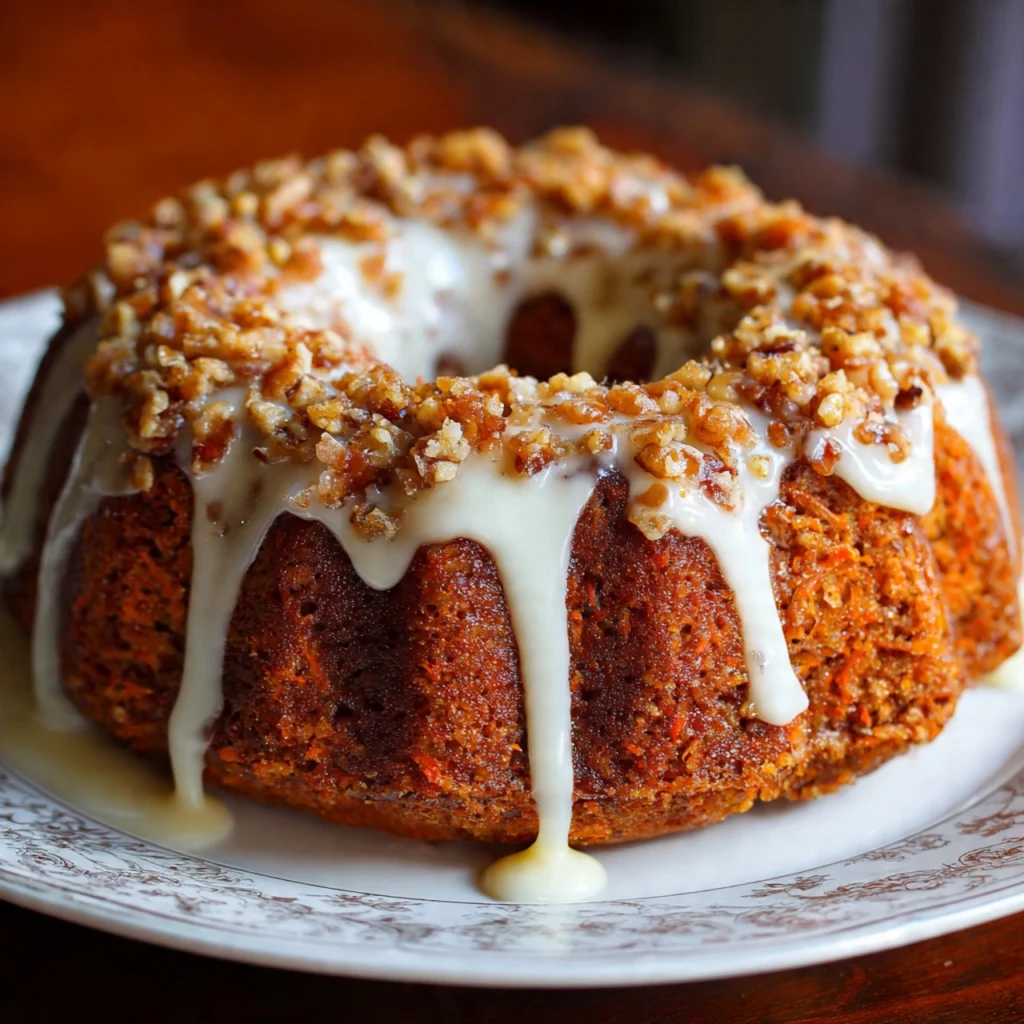
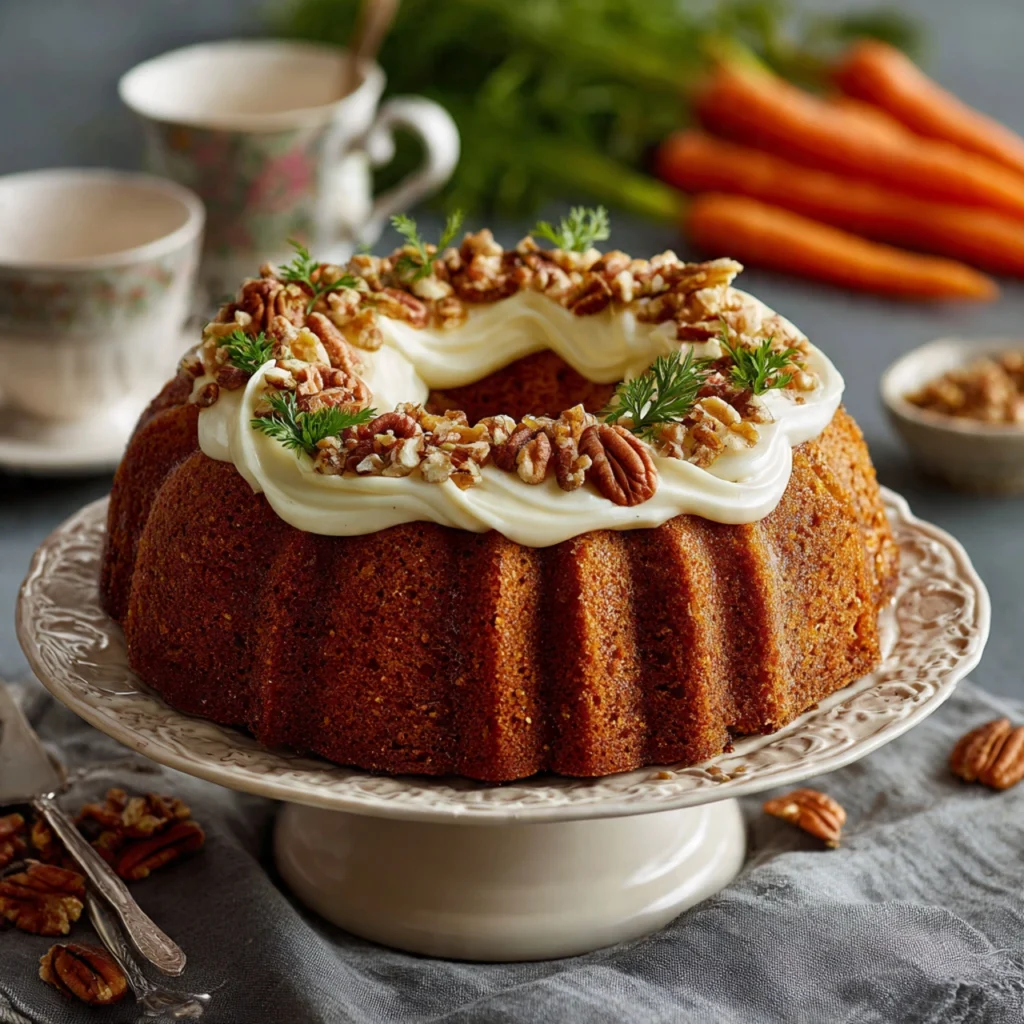
A carrot bundt cake is the kind of dessert that turns heads. I’ll never forget bringing one to my sister’s Easter brunch – the spiral ridges glistening with cream cheese glaze and the warm spices in every slice impressed everyone. The best part? This stunning dessert is surprisingly simple to make, and the bundt pan does half the work for you.
What makes this carrot bundt cake special is how it simplifies the classic carrot cake. Instead of layering and frosting, you pour the batter into a bundt pan, and its shape creates an elegant dessert naturally. Every slice has the perfect cake-to-glaze ratio, and the center hole helps it bake evenly, resulting in the moist texture we all love.
I developed this recipe after years of making traditional layer carrot cakes for birthdays and holidays. Don’t get me wrong – I love a good layer cake – but there’s something wonderfully freeing about a bundt cake. No worrying about lopsided layers, no stress about frosting techniques, and no need for fancy decorating skills. The pan does the decorating for you, and the result is a professional-looking dessert that tastes even better than it looks.
This carrot bundt cake has become my go-to recipe for spring gatherings, potlucks, and any time I want to impress without the stress. The combination of freshly grated carrots, warming spices like cinnamon and nutmeg, crunchy walnuts, and sweet pineapple creates layers of flavor and texture that keep people coming back for seconds. And that cream cheese glaze? It’s the perfect tangy-sweet finishing touch that cascades down the ridges like edible artwork.
Whether you’re a seasoned baker or someone who’s intimidated by bundt cakes, this recipe will become your new favorite. Let’s dive into creating this gorgeous, delicious carrot bundt cake together!
Ingredients You’ll Need
For the Carrot Bundt Cake:
- 3 cups all-purpose flour
- 2 teaspoons baking powder
- 1 1/2 teaspoons baking soda
- 1 teaspoon salt
- 2 teaspoons ground cinnamon
- 1 teaspoon ground ginger
- 1/2 teaspoon ground nutmeg
- 1/4 teaspoon ground cloves
- 1 1/2 cups granulated sugar
- 1 cup light brown sugar, packed
- 1 1/4 cups vegetable oil (or melted coconut oil)
- 4 large eggs, room temperature
- 2 teaspoons pure vanilla extract
- 3 cups finely grated carrots (about 4-5 medium carrots)
- 1 cup crushed pineapple, drained well
- 1 cup chopped walnuts or pecans, toasted
- 1/2 cup sweetened shredded coconut (optional)
- 1/2 cup raisins (optional)
For the Cream Cheese Glaze:
- 4 ounces cream cheese, softened
- 2 cups powdered sugar, sifted
- 3-4 tablespoons whole milk
- 1 teaspoon pure vanilla extract
- Pinch of salt
Optional Garnishes:
- Additional chopped walnuts
- Candied carrot ribbons
- Fresh edible flowers
- Toasted coconut flakes
Equipment Needed:
- 10-cup or 12-cup bundt pan
- Large mixing bowls
- Electric mixer or whisk
- Box grater or food processor for carrots
- Cooling rack
- Non-stick cooking spray or butter and flour for pan
Step-by-Step Instructions
Step 1: Prepare Your Pan and Preheat (10 minutes)
This is the most crucial step for bundt cake success, so don’t skip it! Preheat your oven to 350°F (175°C). Now, let’s talk pan preparation – this is where many bundt cakes go wrong. You need to thoroughly grease every single crevice, ridge, and corner of your bundt pan to ensure your carrot bundt cake releases cleanly.
I use a two-pronged approach: first, I spray the entire pan with non-stick baking spray that contains flour (Baker’s Joy or similar). Then, I use a pastry brush dipped in softened butter to get into every nook and cranny that the spray might have missed. Finally, I dust the pan with flour, tap out the excess, and sometimes even add a light coating of sugar for extra insurance. Yes, it seems like overkill, but there’s nothing more heartbreaking than a stuck bundt cake!
Alternatively, you can make your own “goop” by mixing equal parts softened butter, vegetable oil, and flour into a paste. Brush this mixture thoroughly all over the inside of the pan – it works like magic.
Step 2: Mix the Dry Ingredients (5 minutes)
In a large bowl, whisk together the flour, baking powder, baking soda, salt, cinnamon, ginger, nutmeg, and cloves. Whisking rather than just stirring ensures the leavening agents and spices are evenly distributed throughout the flour. This is important because it prevents pockets of spice or areas with too much baking soda, which can create an uneven texture in your carrot bundt cake.
Set this bowl aside. The dry ingredients can even be mixed the night before and stored in an airtight container if you want to speed up your baking process the next day.
Step 3: Prepare the Wet Ingredients (10 minutes)
In a separate large bowl (or the bowl of your stand mixer), combine both sugars and the oil. Mix on medium speed for about 2 minutes until well combined. The mixture will be loose – that’s normal! Oil-based cakes don’t cream the way butter cakes do.
Add the eggs one at a time, beating well after each addition. This is important for building structure in the cake. After all eggs are incorporated, mix in the vanilla extract. The mixture should look smooth and slightly glossy at this point.
Now here’s where your carrot bundt cake gets its signature moisture and flavor: fold in the grated carrots and well-drained pineapple. Make sure you’ve pressed the pineapple firmly in a fine-mesh strainer or squeezed it in a clean kitchen towel to remove excess liquid – too much liquid will make your cake dense and gummy.
Step 4: Combine and Add Mix-Ins (8 minutes)
Add the dry ingredients to the wet ingredients in three additions, mixing on low speed (or by hand with a wooden spoon) just until no flour streaks remain. Do not overmix! Overmixing develops gluten and creates a tough, dense cake. The batter should be thick and chunky from all the carrots and pineapple.
Fold in the toasted nuts, coconut (if using), and raisins (if using). Toasting your nuts for 8-10 minutes in a 350°F oven before adding them to the batter intensifies their flavor and adds a wonderful crunch to your carrot bundt cake.
Step 5: Bake the Cake (60-75 minutes)
Pour the batter into your prepared bundt pan, spreading it evenly with a spatula. Tap the pan firmly on the counter 3-4 times to release any air bubbles – this prevents large holes in your finished cake.
Place the pan on the center rack of your preheated oven. Bake for 60-75 minutes, depending on your oven and the size of your bundt pan. The cake is done when a long wooden skewer or cake tester inserted into the deepest part comes out clean or with just a few moist crumbs (not wet batter).
The top should be golden brown and spring back when lightly pressed. The edges may pull slightly away from the pan. If the top is browning too quickly but the center isn’t done, tent the pan loosely with aluminum foil for the remaining baking time.
Step 6: Cool Properly (Critical!) (15 minutes in pan, then 1 hour)
This step makes or breaks bundt cakes! When your carrot bundt cake comes out of the oven, place the pan on a wire cooling rack and let it cool for exactly 15 minutes – not more, not less. During this time, the cake continues cooking slightly from residual heat and firms up just enough to release from the pan.
After 15 minutes, run a thin knife or offset spatula around the outer and inner edges of the cake to loosen any spots that might be sticking. Place your cooling rack over the top of the bundt pan, then confidently flip the whole thing over in one smooth motion. Give the pan a few gentle taps, lift it up, and reveal your beautiful cake! If any pieces stick, carefully replace them – the glaze will hide minor imperfections.
Let the cake cool completely on the rack before glazing – at least 1 hour. A warm cake will cause the glaze to run right off instead of creating that gorgeous cascade effect.
Step 7: Make the Glaze and Finish (10 minutes)
In a medium bowl, beat the softened cream cheese with an electric mixer until smooth and fluffy, about 2 minutes. Gradually add the sifted powdered sugar, beating until combined. Add 3 tablespoons of milk, the vanilla extract, and a pinch of salt. Beat until smooth and pourable but still thick enough to cling to the cake. If it’s too thick, add the remaining tablespoon of milk; if too thin, add more powdered sugar.
Place your cooled carrot bundt cake (still on the cooling rack) over a baking sheet or large plate to catch drips. Pour the glaze over the top of the cake, letting it naturally cascade down the ridges. Use a spoon to guide it if needed, but resist the urge to over-manipulate it – those natural drips are beautiful! Sprinkle with chopped nuts or other garnishes while the glaze is still wet.
Let the glaze set for at least 30 minutes before slicing and serving.
Pro Tips for the Perfect Carrot Bundt Cake
Tip 1: Grate Your Own Carrots
While pre-shredded carrots seem convenient, they’re usually too thick and dry, having been treated with anti-caking agents that prevent them from releasing their natural moisture. For the moistest carrot bundt cake, always grate your own carrots using the small holes on a box grater or the grating disc of your food processor. The finer the grate, the more moisture and the more evenly distributed carrot flavor throughout your cake.
Tip 2: Room Temperature Eggs Make a Difference
Cold eggs don’t incorporate as smoothly into the batter and can cause the oil to seize up slightly. About 30 minutes before baking, take your eggs out of the refrigerator. In a hurry? Place them in a bowl of warm (not hot) tap water for 5-10 minutes to take the chill off.
Tip 3: Don’t Skip Toasting the Nuts
Raw nuts can taste flat and sometimes slightly bitter in baked goods. Toasting brings out their natural oils and creates a deeper, richer flavor that complements the spices in your carrot bundt cake beautifully. Spread nuts on a baking sheet and toast at 350°F for 8-10 minutes, stirring once, until fragrant and lightly golden.
Tip 4: Invest in a Quality Bundt Pan
Not all bundt pans are created equal. A good-quality, heavy-duty bundt pan (I love Nordic Ware) distributes heat evenly and has a non-stick coating that actually works. If you’re using an older or lower-quality pan, be extra thorough with your greasing technique. The intricate designs on fancy bundt pans look gorgeous but can be harder to release – for your first carrot bundt cake, consider using a classic design.
Tip 5: The Toothpick Test Isn’t Enough
Because this cake is so moist and filled with mix-ins, a toothpick can be misleading. Instead, use a long wooden skewer and insert it in several places. The cake should also pull slightly away from the edges of the pan, the top should spring back when lightly pressed, and the internal temperature should read about 205-210°F on an instant-read thermometer.
Tip 6: Control Your Spice Ratios
The spice blend in this carrot bundt cake is balanced for most palates, but spices can vary in strength depending on freshness. If your cinnamon is old or your nutmeg pre-ground, you might need to increase amounts slightly. Conversely, if you’re using freshly ground spices or particularly potent versions, you might want to dial back a touch. Taste your batter (yes, even with raw eggs – though if you’re concerned, just smell it) to check the spice level.
Tip 7: Make It a Day Ahead
Here’s a secret: carrot bundt cake actually tastes better on day two! The flavors meld, the texture becomes even more moist, and the glaze sets perfectly. If you’re making this for an event, bake it the day before, let it cool completely, wrap it tightly in plastic wrap (without the glaze), and store at room temperature overnight. Glaze it the day of serving for the freshest look and best texture.
Common Mistakes to Avoid
Mistake 1: Inadequate Pan Preparation
This is the number one reason bundt cakes fail. If you don’t thoroughly grease every single crevice of your bundt pan, your beautiful carrot bundt cake will stick and tear when you try to remove it. Don’t rely on just cooking spray – use multiple layers of grease, butter in the crevices, and even a dusting of flour or sugar. It’s impossible to over-grease a bundt pan!
Mistake 2: Using Pre-Shredded Carrots
I mentioned this in the tips, but it bears repeating because it’s such a common mistake. Pre-shredded carrots are dry, thick, and coated with cellulose to prevent clumping. They simply don’t have the moisture content or the right texture for a great carrot cake. Always grate your own carrots fresh for the best results.
Mistake 3: Not Draining the Pineapple Thoroughly
Crushed pineapple comes packed in juice or syrup, and every bit of that liquid needs to come out before adding it to your batter. Excess liquid creates a dense, gummy texture and can prevent your carrot bundt cake from baking properly in the center. Press it firmly in a strainer or squeeze it in a clean kitchen towel until no more liquid comes out.
Mistake 4: Opening the Oven Door Too Often
I know it’s tempting to check on your cake, but every time you open that oven door, you release heat and create temperature fluctuations that can cause your cake to sink or bake unevenly. Don’t open the door until at least 55 minutes into the baking time. Use your oven light and the window to monitor progress.
Mistake 5: Rushing the Cooling Process
The 15-minute cool-down in the pan is not a suggestion – it’s essential! Remove the cake too early and it will crumble and break apart because it hasn’t set. Leave it too long and it will stick to the pan and tear when you try to remove it. Set a timer for exactly 15 minutes and resist the urge to peek or rush.
Mistake 6: Glazing a Warm Cake
If your carrot bundt cake is even slightly warm, the glaze will melt and run right off, pooling at the base instead of creating that gorgeous cascade effect. The cake must be completely cool – and I mean room temperature, not just “cool enough to handle.” This takes at least an hour, sometimes longer on humid days.
Mistake 7: Overmixing the Batter
Once you add the flour to the wet ingredients, mix only until you can no longer see streaks of flour. Overmixing develops gluten, which creates a tough, dense cake with tunnels and a coarse crumb. Your carrot bundt cake should be tender and moist, not chewy or bread-like. Mix gently and know when to stop!
Storage and Serving Suggestions
Storage Guidelines
Room Temperature: A glazed carrot bundt cake can be stored at room temperature, covered with a cake dome or large bowl, for up to 3 days. The glaze will continue to set and become slightly firmer over time. Make sure the cake is completely cool before covering, or condensation will form and make the glaze weep.
Refrigerated: Because of the cream cheese in the glaze and the moisture content of the cake, refrigerating is perfectly fine and actually preferred in hot weather. Wrap the cake tightly in plastic wrap or store in an airtight container. It will keep for up to 5 days refrigerated. Bring slices to room temperature for 20-30 minutes before serving for the best flavor and texture.
Frozen (Unglazed): For longer storage, wrap the completely cooled, unglazed cake tightly in plastic wrap, then in aluminum foil. Freeze for up to 3 months. Thaw overnight in the refrigerator or at room temperature for several hours, then make fresh glaze and decorate before serving.
Frozen (Glazed): You can freeze glazed carrot bundt cake, though the glaze may crack or look less pristine when thawed. Freeze uncovered on a baking sheet until solid, then wrap carefully. The flavor will be fine, but the appearance might not be as stunning.
Individual Slices: Cut the cake into slices, wrap each slice individually in plastic wrap, and store in a freezer bag. This is perfect for grabbing single portions. Thaw at room temperature for about an hour or microwave for 20-30 seconds.
Serving Suggestions
Classic Presentation: Simply slice and serve on pretty dessert plates. The bundt cake is beautiful enough on its own that it doesn’t need much embellishment. A small fork and a cup of coffee or tea is all you need.
Plated Dessert: Place a slice on a plate and add a dollop of sweetened whipped cream or a scoop of vanilla ice cream on the side. Drizzle with additional cream cheese glaze or caramel sauce. Garnish with a mint sprig or candied carrot curl.
Coffee Accompaniment: This carrot bundt cake is exceptional with morning coffee or afternoon tea. The warm spices complement coffee beautifully, and the sweetness level is perfect for pairing with bitter or strong coffee.
Special Occasions: For Easter, spring celebrations, or Mother’s Day, decorate the top with edible flowers, sugared carrot ribbons (made by peeling carrots into ribbons, tossing with sugar, and baking until crisp), or fresh berries. The bundt shape makes a naturally festive presentation.
Brunch Centerpiece: Cut the cake and arrange slices on a large platter in a pinwheel pattern around the center. This creates an impressive display for brunch buffets or potlucks.
With Ice Cream: Warm a slice of carrot bundt cake in the microwave for 20-30 seconds and top with vanilla ice cream or salted caramel ice cream. The contrast of warm spiced cake and cold creamy ice cream is heavenly.
Make-Ahead Strategy
This carrot bundt cake is incredibly make-ahead friendly, which makes it perfect for stress-free entertaining:
Three Days Before: Shop for ingredients Two Days Before: Grate carrots, toast nuts, prepare pineapple (store separately in refrigerator) One Day Before: Bake cake, cool, wrap tightly (no glaze yet) Day Of: Make glaze, decorate cake, let set for 30 minutes, serve
This timeline ensures maximum freshness while spreading out the work.
Frequently Asked Questions (FAQ)
Q1: Can I make this carrot bundt cake without nuts?
Absolutely! While the nuts add wonderful texture and flavor, you can omit them entirely if you have allergies or simply don’t care for them. The cake will still be delicious and moist. You might consider replacing the nuts with additional coconut or even chocolate chips for a different flavor profile. Some people replace nuts with sunflower seeds for a similar crunch without the tree nut allergen.
Q2: Why did my bundt cake stick to the pan even though I greased it?
This is frustrating but usually comes down to one of several issues: the pan wasn’t greased thoroughly enough (especially in the crevices), you used only cooking spray without butter, the cake cooled too long in the pan (more than 20 minutes), or the pan has a damaged non-stick coating. For the best results, use a combination of butter, flour, and cooking spray, and always let the cake cool for exactly 15 minutes before flipping. If your cake does stick, try placing a warm, damp towel over the inverted pan for a few minutes to create steam, which can help release stubborn spots.
Q3: Can I use a different type of pan if I don’t have a bundt pan?
Yes, but you’ll need to adjust baking time. You can bake this carrot cake batter in a 9×13-inch pan (50-60 minutes), two 9-inch round pans (35-45 minutes), or even as cupcakes (18-22 minutes). The bundt shape is special because it creates that gorgeous presentation and ensures even baking, but the recipe is flexible. Just adjust the baking time accordingly and test for doneness with a skewer – when it comes out clean or with just a few moist crumbs, it’s done.
Q4: How do I know when my carrot bundt cake is done baking?
Use multiple indicators: a long wooden skewer inserted into the thickest part should come out clean or with just a few moist crumbs (not wet batter), the cake should spring back when lightly pressed on top, the edges should pull slightly away from the pan, and an instant-read thermometer should register 205-210°F in the center. Because this cake has so much moisture from carrots and pineapple, it can seem “wet” longer than other cakes, so don’t underbake it.
Q5: Can I make this recipe dairy-free or vegan?
Yes, with some modifications! For dairy-free, replace the cream cheese glaze with a simple powdered sugar glaze made with non-dairy milk and vanilla, or make a cream cheese glaze using vegan cream cheese. The cake itself is already dairy-free as long as you use vegetable oil. For fully vegan, replace the 4 eggs with one of these options: 4 flax eggs (4 tablespoons ground flaxseed mixed with 12 tablespoons water, let sit 5 minutes), 1 cup unsweetened applesauce, or 1 cup mashed banana. The texture will be slightly different but still delicious.
Q6: What’s the difference between bundt cake and regular layer cake?
The main differences are shape and baking method. A bundt cake is baked in a distinctive ring-shaped pan with decorative ridges, has a hole in the center that helps it bake evenly, and is usually glazed rather than frosted. Layer cakes are baked in round or square pans, stacked, and frosted between layers and on the outside. Bundt cakes tend to be denser and more moist because the batter is thicker and the pan shape promotes even heat distribution. This carrot bundt cake has all the same flavors as traditional carrot layer cake but in a more impressive, easier-to-make format.
Q7: Can I reduce the sugar in this recipe?
You can reduce the sugar somewhat, but I wouldn’t recommend cutting it by more than 1/4 cup from the total amount (both granulated and brown sugar combined). The sugar isn’t just for sweetness – it also contributes to moisture, texture, and browning. If you reduce it too much, your carrot bundt cake will be dry, dense, and won’t have that characteristic tender crumb. If you’re concerned about sweetness, you could reduce the glaze or use less of it rather than altering the cake itself.
Q8: Why does my cream cheese glaze look lumpy?
This usually happens when the cream cheese isn’t soft enough before you start beating it. Make sure your cream cheese sits at room temperature for at least 30-60 minutes before making the glaze (it should be very soft and spreadable). If you’re in a hurry, you can microwave it for 10-15 seconds, but be careful not to melt it. Beat the cream cheese alone first until it’s completely smooth and fluffy before adding any other ingredients. If you end up with lumps, press the glaze through a fine-mesh strainer to remove them.
Q9: Can I add cream cheese frosting instead of glaze?
Definitely! If you prefer the traditional thick cream cheese frosting that carrot cakes are famous for, simply reduce the milk in the glaze recipe to 1-2 tablespoons for a thicker consistency that spreads rather than pours. You can then spread it over the cooled bundt cake with an offset spatula. It won’t have that pretty cascade effect, but it will have more frosting overall, which some people prefer. You could also frost the entire cake and then drizzle with a thinner glaze for a really decadent presentation.
Q10: How long does this carrot bundt cake stay fresh?
When stored properly, this cake stays remarkably fresh for several days. At room temperature under a cake dome, it’s best for 3 days. Refrigerated in an airtight container, it will stay fresh for 5 days and actually becomes more moist and flavorful as it sits – the second and third days are peak deliciousness! The high moisture content from carrots, oil, and pineapple means this cake doesn’t dry out quickly like some cakes do. If anything, it gets better with time as the flavors meld together.
Nutrition Information (Approximate Values Per Serving)
Serving Size: 1 slice (based on 12 slices per cake) Servings Per Recipe: 12
- Calories: 485
- Total Fat: 24g
- Saturated Fat: 4g
- Trans Fat: 0g
- Cholesterol: 65mg
- Sodium: 320mg
- Total Carbohydrates: 63g
- Dietary Fiber: 2g
- Sugars: 45g
- Added Sugars: 38g
- Protein: 6g
- Vitamin A: 110% DV
- Vitamin C: 4% DV
- Calcium: 6% DV
- Iron: 10% DV
- Potassium: 180mg (4% DV)
Without Glaze (per slice):
- Calories: 420
- Total Fat: 22g
- Total Carbohydrates: 52g
- Sugars: 35g
Note: Nutritional values are estimates and may vary based on specific brands and ingredient variations. Values include cream cheese glaze, walnuts, coconut, and pineapple.
Health Highlights:
- Excellent source of Vitamin A from carrots (important for vision and immune function)
- Contains fiber from carrots and whole ingredients
- Provides healthy fats from nuts and vegetable oil
- Good source of antioxidants from spices like cinnamon and ginger
- Can be modified to reduce sugar or increase whole grain content
Final Thoughts:
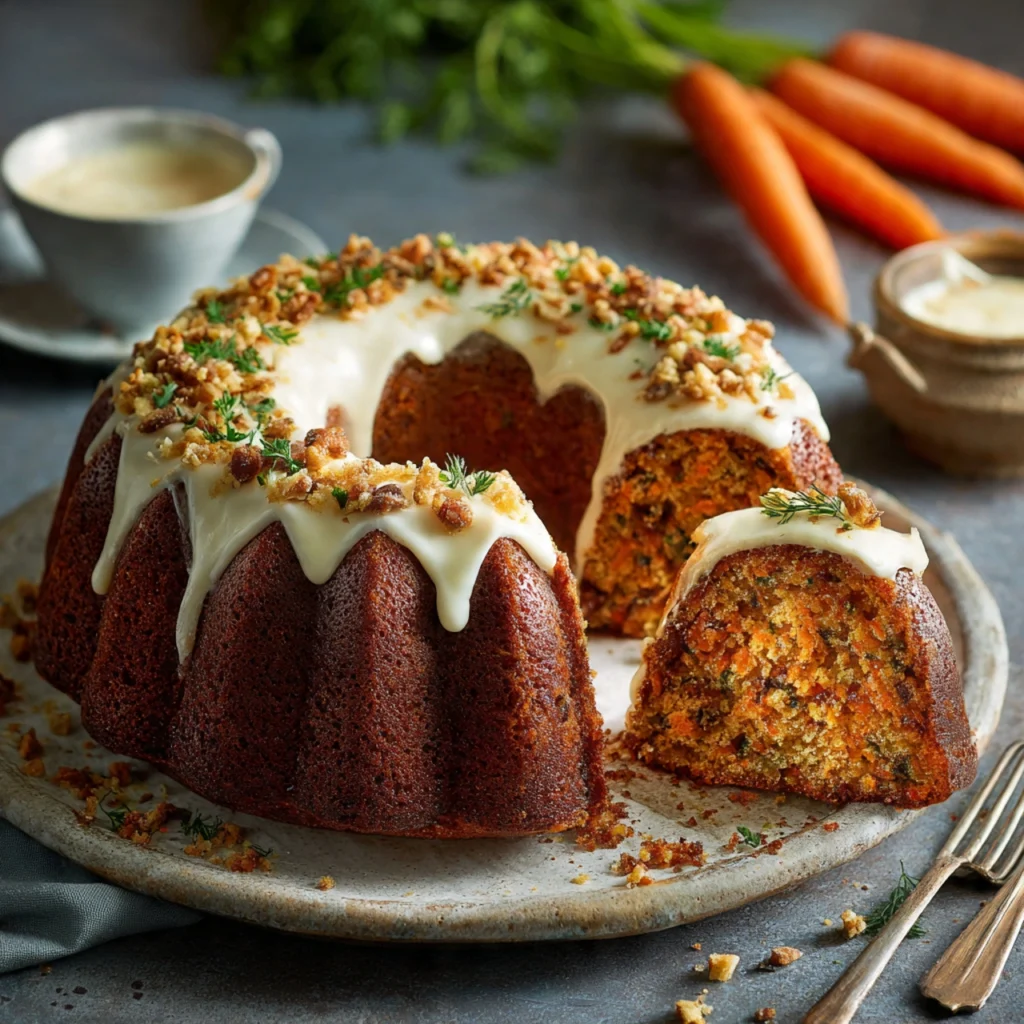
There’s something truly special about pulling a perfect carrot bundt cake from the oven. This recipe has been my go-to for impressing friends and family without stress.
What I love most is how it captures everything wonderful about carrot cake – warm spices, moist texture, and the subtle sweetness of carrots and pineapple – all in an elegant bundt shape. The cream cheese glaze adds the perfect sweet-tangy finish.
It’s become a family favorite for birthdays, holidays, and any time we want a special dessert. Preheat the oven, grate the carrots, and enjoy a cake that’s beautiful, delicious, and surprisingly easy to make.
PrintCarrot Bundt Cake: The Showstopping Dessert That’s Easier Than You Think
This carrot bundt cake is the perfect combination of elegantly simple and impressively delicious. Moist, tender crumb packed with freshly grated carrots, sweet pineapple, crunchy walnuts, and warming spices create a flavor-packed dessert that looks like it came from a bakery. The bundt pan’s beautiful ridges and curves make this naturally showstopping, while a silky cream cheese glaze cascading down the sides adds the perfect tangy-sweet finish. Unlike fussy layer cakes that require frosting skills, this bundt cake is beginner-friendly but sophisticated enough for special occasions. Whether you’re celebrating spring holidays, hosting a brunch, or simply craving classic carrot cake in a stunning new form, this recipe delivers every single time.
- Prep Time: 25 minutes
- Cook Time: 70 minutes (average baking time)
- Total Time: 2 hours 30 minutes (including cooling)
- Yield: 12-14 servings (one 10-12 cup bundt cake)
- Category: Dessert, Cake, Baked Goods
- Method: Baking
- Cuisine: American
- Diet: Vegetarian
Ingredients
Cake:
- 3 cups all-purpose flour
- 2 tsp baking powder
- 1½ tsp baking soda
- 1 tsp salt
- 2 tsp ground cinnamon
- 1 tsp ground ginger
- ½ tsp ground nutmeg
- ¼ tsp ground cloves
- 1½ cups granulated sugar
- 1 cup light brown sugar, packed
- 1¼ cups vegetable oil
- 4 large eggs, room temperature
- 2 tsp pure vanilla extract
- 3 cups finely grated carrots
- 1 cup crushed pineapple, well-drained
- 1 cup chopped walnuts, toasted
- ½ cup shredded coconut (optional)
- ½ cup raisins (optional)
Cream Cheese Glaze:
- 4 oz cream cheese, softened
- 2 cups powdered sugar, sifted
- 3-4 tbsp whole milk
- 1 tsp pure vanilla extract
- Pinch of salt
Instructions
- Prep Pan: Preheat oven to 350°F. Thoroughly grease a 10-12 cup bundt pan with butter and flour or baking spray, getting into every crevice.
- Mix Dry Ingredients: Whisk together flour, baking powder, baking soda, salt, and all spices in a large bowl. Set aside.
- Combine Wet Ingredients: In another large bowl, mix both sugars and oil for 2 minutes. Add eggs one at a time, beating well after each. Mix in vanilla extract.
- Add Carrots & Pineapple: Fold grated carrots and well-drained pineapple into the wet mixture.
- Combine Batters: Add dry ingredients to wet ingredients in three additions, mixing just until combined. Don’t overmix! Fold in toasted nuts, coconut, and raisins.
- Bake: Pour batter into prepared pan, spreading evenly. Tap pan on counter to release air bubbles. Bake 60-75 minutes until a skewer inserted comes out clean.
- Cool & Release: Cool in pan on wire rack for exactly 15 minutes. Run a knife around edges, invert onto rack, and lift off pan. Cool completely (1+ hour).
- Make Glaze: Beat softened cream cheese until fluffy. Gradually add powdered sugar, then milk, vanilla, and salt. Beat until smooth and pourable.
- Glaze & Serve: Place cooled cake on rack over baking sheet. Pour glaze over cake, letting it cascade naturally. Let set 30 minutes before slicing.
Notes
- ys grate your own fresh carrots – pre-shredded are too dry
- Press pineapple firmly to remove ALL excess liquid
- Toast nuts at 350°F for 8-10 minutes for best flavor
- The 15-minute cooling time is critical – set a timer!
- Cake tastes even better on day 2 as flavors meld
- Can be made a day ahead and glazed before serving
- Use high-quality bundt pan for best release
- Room temperature eggs incorporate better
- Don’t open oven door until at least 55 minutes of baking