Introduction: Why Garlic Butter Steak and Roasted Potatoes Is the Perfect Dinner
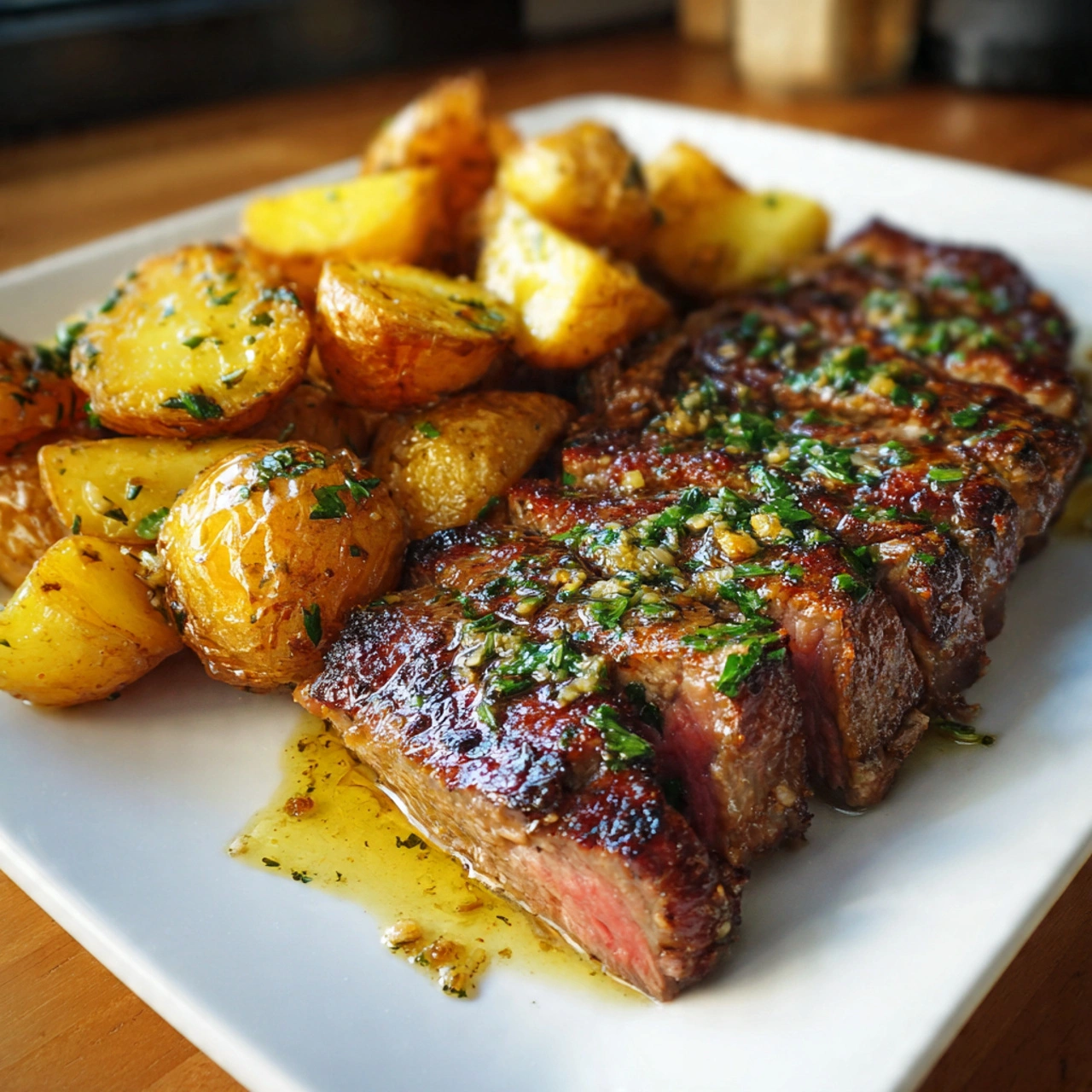
Garlic Butter Steak and Roasted Potatoes is hands-down one of those magical dinner combinations that never disappoints—juicy, perfectly seared steak draped in rich garlic butter alongside golden, crispy-edged potatoes that soak up all those delicious pan drippings. Whether you’re planning a romantic date night at home, celebrating a special occasion, or just tired of boring weeknight dinners, this recipe delivers restaurant-quality results without the hefty price tag or complicated techniques.
What makes this dish truly special is how deceptively simple it is to execute. Despite tasting like you spent hours in the kitchen, the entire meal comes together in about 30 minutes using basic ingredients you probably already have. The secret lies in proper technique—getting that beautiful caramelized crust on your steak while keeping the inside tender and juicy, achieving perfectly crispy potatoes with fluffy interiors, and creating that aromatic garlic butter that ties everything together.
I’ve been making variations of Garlic Butter Steak and Roasted Potatoes for nearly two decades, both professionally and at home, and I can confidently say this version strikes the perfect balance between impressive presentation and practical execution. No fancy equipment needed—just a good skillet, an oven, and about 30 minutes of your time.
The beauty of this garlic butter steak and roasted potatoes recipe is its versatility. Serve it for a cozy dinner for two, scale it up for family gatherings, or meal prep it for the week ahead. The combination of protein and starch makes it a complete, satisfying meal that doesn’t need much else besides maybe a simple salad or roasted vegetables.
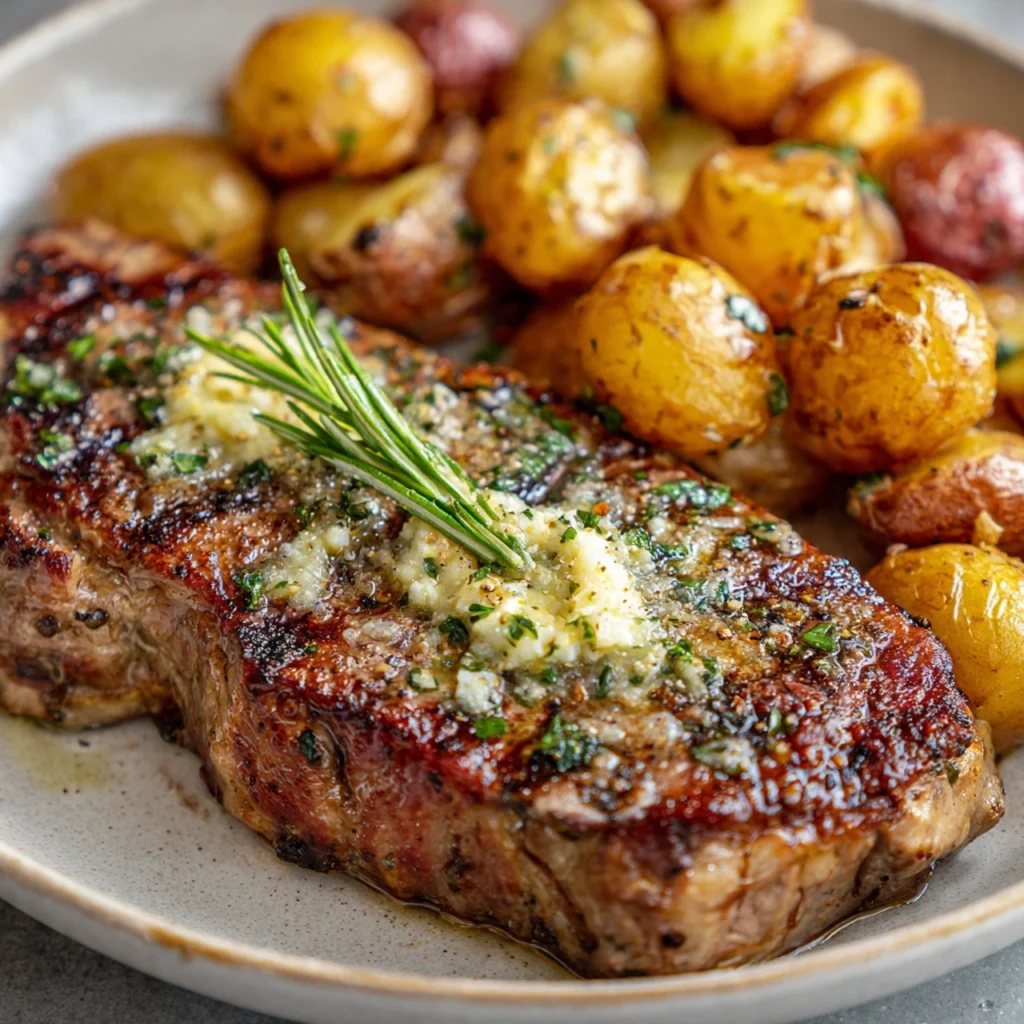
Understanding What Makes This Dish Restaurant-Worthy
Before we dive into the garlic butter steak and roasted potatoes recipe, let’s talk about what transforms ordinary steak and potatoes into something extraordinary. The three key elements that make Garlic Butter Steak and Roasted Potatoes shine are: proper searing technique for the steak, achieving crispy potato edges while maintaining fluffy centers, and creating that luscious garlic butter that brings everything together.
The Science of the Perfect Sear
When you sear steak at high heat, you’re triggering the Maillard reaction—a chemical process that creates hundreds of flavor compounds, turning the surface brown and developing that complex, savory taste we associate with perfectly cooked steak. This only happens when the meat’s surface is dry and the pan is screaming hot. That’s why patting your steak dry and not overcrowding the pan are non-negotiable steps.
Crispy Potato Perfection
The secret to restaurant-quality roasted potatoes is twofold: proper drying after cutting and high-heat roasting. When potatoes are cut, they release starch. Rinsing and drying removes excess surface starch, allowing the edges to crisp up instead of becoming gummy. Roasting at 425°F creates that golden, crunchy exterior while the steam inside cooks the flesh to fluffy perfection.
Garlic Butter Magic
The compound butter that finishes this dish isn’t just an afterthought—it’s what elevates the entire meal. Fresh garlic, quality butter, and herbs melt over the hot steak and potatoes, creating a sauce-like coating that adds richness and aroma. This technique is straight from professional kitchens where finishing proteins with flavored butter is standard practice.
Complete Ingredients List for Garlic Butter Steak and Roasted Potatoes
Roasted Potatoes Ingredients
- 2 pounds baby potatoes (Yukon Gold or red potatoes work best)
- 3 tablespoons olive oil (or avocado oil for higher smoke point)
- 1 teaspoon garlic powder
- 1 teaspoon dried rosemary (or 1 tablespoon fresh, chopped)
- 1 teaspoon dried thyme (or 1 tablespoon fresh)
- 1 teaspoon kosher salt
- ½ teaspoon black pepper (freshly ground preferred)
- ¼ teaspoon paprika (adds color and subtle sweetness)
Ingredients for the Steak
- 2 ribeye steaks (10-12 ounces each, 1-inch thick) or NY strip, sirloin
- 2 tablespoons vegetable oil (or other high-smoke-point oil)
- 2 teaspoons kosher salt
- 1 teaspoon black pepper (coarsely ground)
- ½ teaspoon garlic powder (optional for extra flavor)
For the Garlic Butter
- 6 tablespoons unsalted butter (¾ stick, room temperature)
- 4 cloves garlic (minced very fine or pressed)
- 2 tablespoons fresh parsley (finely chopped)
- 1 tablespoon fresh thyme leaves (or 1 teaspoon dried)
- ½ teaspoon lemon zest (optional but adds brightness)
- ¼ teaspoon kosher salt
- Pinch of red pepper flakes (optional for subtle heat)
Optional Garnishes
- Fresh parsley (chopped)
- Flaky sea salt (for finishing)
- Lemon wedges (for squeezing over)
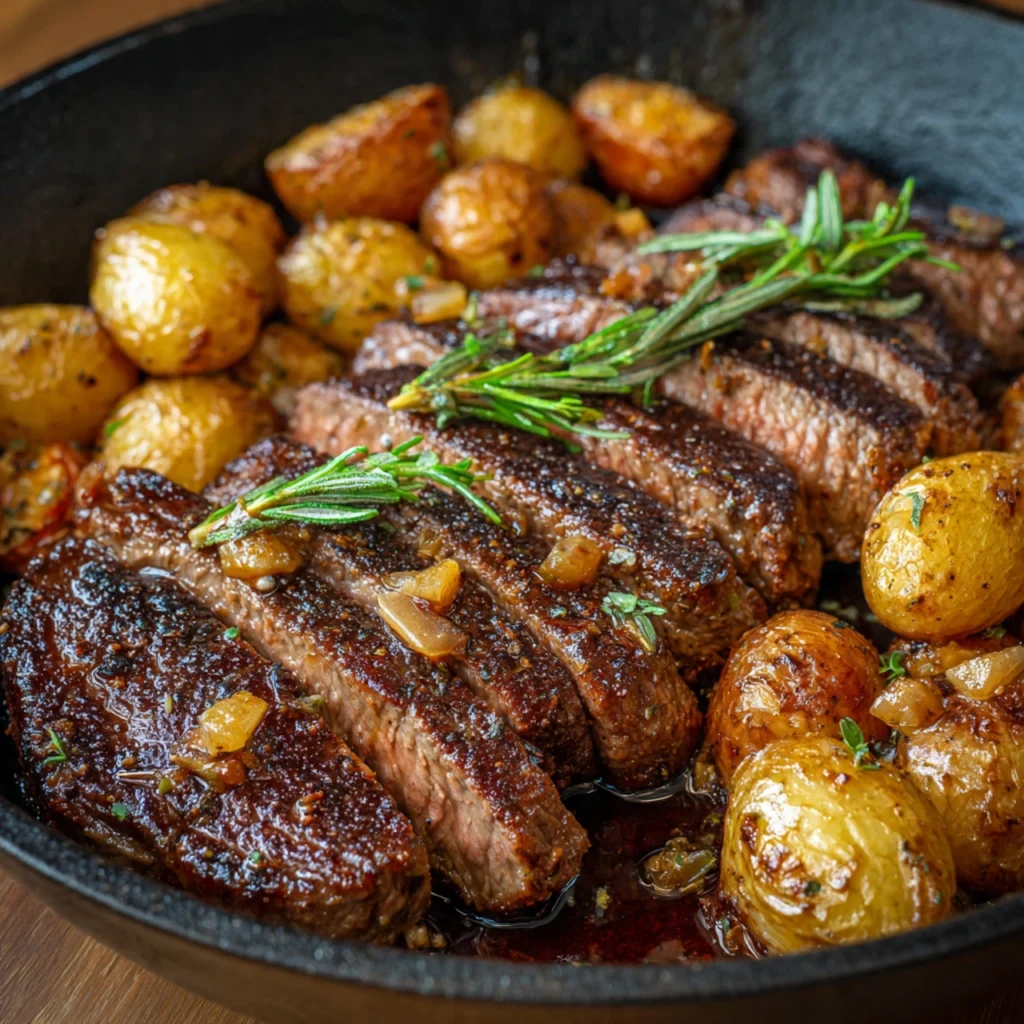
Step-by-Step Instructions: Creating Perfect Garlic Butter Steak and Roasted Potatoes
Phase 1: Preparing the Roasted Potatoes (10 minutes prep)
Step 1: Preheat and Prep (5 minutes) Preheat your oven to 425°F (220°C). This high temperature is crucial for achieving crispy potato edges. Line a large baking sheet with parchment paper or lightly oil it to prevent sticking. Position your oven rack in the upper third for maximum browning.
Step 2: Prepare the Potatoes (5 minutes) Wash the baby potatoes thoroughly—dirt affects taste and texture. Cut each potato in half, or if they’re larger than golf balls, cut into quarters. The goal is uniform pieces about 1-1.5 inches in size so they cook evenly. Place cut potatoes in a large bowl.
Step 3: Dry the Potatoes (Critical Step!) Pat the potatoes completely dry with paper towels or a clean kitchen towel. This step is non-negotiable if you want crispy edges. Any surface moisture will steam the potatoes instead of roasting them, resulting in soft, pale potatoes instead of golden, crispy ones.
Step 4: Season and Toss (2 minutes) Add the olive oil, garlic powder, rosemary, thyme, salt, pepper, and paprika to the bowl with the potatoes. Toss vigorously with your hands or a large spoon until every piece is evenly coated. The potatoes should glisten with oil and be uniformly seasoned.
Step 5: Arrange for Roasting Spread the potatoes in a single layer on your prepared baking sheet, cut-side down. This positioning is important—the flat surface against the hot pan creates maximum browning. Leave space between pieces; overcrowding creates steam pockets that prevent crisping.
Step 6: Start Roasting (20 minutes) Place the baking sheet in the preheated oven. Roast for 20 minutes without opening the oven door. Resist the urge to check—consistent heat is essential for proper crisping. Set a timer and use this time to prepare your steak.
Phase 2: Preparing the Steak (5 minutes prep)
Step 7: Bring Steak to Room Temperature (30 minutes before cooking) Remove steaks from the refrigerator 30 minutes before cooking. Cold steak doesn’t sear properly and cooks unevenly—the outside overcooks before the inside reaches desired doneness. This rest time is crucial for even cooking throughout.
Step 8: Pat Completely Dry Use paper towels to pat both sides of each steak thoroughly dry. Moisture is the enemy of a good sear. A wet surface steams instead of searing, preventing that beautiful brown crust we’re after. Get them bone-dry.
Step 9: Season Generously Season both sides of the steaks liberally with kosher salt and black pepper. Don’t be shy—you want about ½ teaspoon of salt per side for a 10-ounce steak. The coarse texture of kosher salt and freshly ground pepper creates the best crust. Add garlic powder now if using.
Step 10: Prepare Your Cooking Station Set up near your stove: the seasoned steaks on a plate, oil in a small bowl, tongs, and a meat thermometer if you have one. Having everything ready means you can focus on the searing process without scrambling.
Phase 3: Cooking the Steak (8-10 minutes)
Step 11: Heat Your Pan (Critical!) Heat a large cast-iron skillet or heavy-bottomed pan over high heat for 3-4 minutes until it’s smoking hot. This might seem extreme, but it’s essential for proper searing. Test readiness by flicking a drop of water in the pan—it should sizzle and evaporate immediately.
Step 12: Add Oil and Steak Add the vegetable oil and swirl to coat the pan. Immediately place the steaks in the pan—you should hear an aggressive sizzle. If you don’t hear that sound, your pan isn’t hot enough. Once in the pan, don’t move them!
Step 13: Sear First Side (4 minutes) Let the steaks cook undisturbed for 4 minutes. Don’t touch, don’t peek underneath, don’t move them. This hands-off approach allows the crust to develop properly. Moving the meat tears the developing crust and releases juices, preventing proper browning.
Step 14: Flip and Sear Second Side (3-4 minutes) Using tongs, flip the steaks. They should release easily from the pan—if they stick, give them another 30 seconds. Sear the second side for 3-4 minutes for medium-rare (internal temp 130-135°F), 4-5 minutes for medium (140-145°F).
Step 15: Check Doneness Use an instant-read thermometer inserted into the thickest part of the steak. For medium-rare, remove at 130°F (it will rise to 135°F while resting). For medium, remove at 140°F. Remember: you can always cook steak more, but you can’t uncook it!
Step 16: Rest the Steak (5-10 minutes) Transfer steaks to a cutting board or plate and tent loosely with foil. This resting period allows juices to redistribute throughout the meat. Cutting immediately causes all those flavorful juices to run out onto the plate instead of staying in the meat.
Phase 4: Making the Garlic Butter (5 minutes)
Step 17: Prepare Garlic Butter While the steak rests and potatoes finish roasting, prepare your garlic butter. In a small bowl, combine the softened butter, minced garlic, parsley, thyme, lemon zest (if using), salt, and red pepper flakes. Mash everything together with a fork until well combined and creamy.
Step 18: Finish the Potatoes (Final 5 minutes) When the timer goes off after the initial 20 minutes of roasting, open the oven and flip the potatoes using a spatula. Return to the oven for another 5-10 minutes until they’re golden brown and crispy on the edges, tender when pierced with a fork.
Phase 5: Plating and Serving
Step 19: Slice and Butter the Steak Slice the rested steak against the grain into ½-inch thick slices. The grain refers to the direction of the muscle fibers—cutting perpendicular to these fibers ensures tender bites. Place sliced steak on serving plates.
Step 20: Add Garlic Butter Generously Top each portion of sliced steak with a generous tablespoon or two of the garlic butter. The residual heat from the meat will melt the butter, creating a luscious sauce that pools around the steak.
Step 21: Plate the Potatoes Arrange the crispy roasted potatoes alongside the steak. If there are any browned bits stuck to the baking sheet, scrape them up—those caramelized edges are pure gold.
Step 22: Final Touches Drizzle any melted garlic butter from the steak over the potatoes as well. Garnish with additional fresh parsley, a sprinkle of flaky sea salt, and lemon wedges if desired. Serve immediately while everything is hot.
Pro Tips for Perfect Garlic Butter Steak and Roasted Potatoes
Choosing the Right Steak Cut
While this garlic butter steak and roasted potatoes recipe works with various cuts, I recommend ribeye for maximum flavor and tenderness—the marbling keeps it juicy even if slightly overcooked. NY strip offers excellent flavor with less fat. Sirloin is budget-friendly and works well but requires more precise cooking to avoid toughness. Whatever cut you choose, look for steaks that are at least 1 inch thick; thinner steaks overcook too easily.
The Secret to Extra-Crispy Potatoes
After cutting and rinsing your potatoes, toss them in a colander with a tablespoon of cornstarch or potato starch before adding the oil and seasonings. This creates an even crispier crust. Also, don’t skimp on the oil—the potatoes need enough to create that golden coating. Three tablespoons for 2 pounds is the minimum; you can use up to 4 tablespoons for extra crispiness.
Temperature Is Everything
Invest in an instant-read thermometer if you don’t have one—it’s the difference between perfectly cooked steak and disappointment. Oven temperatures vary wildly, and steak thickness affects cooking time. A thermometer removes all guesswork. Pull steak 5 degrees before your target temp since carryover cooking continues as it rests.
Making Compound Butter Ahead
The garlic butter can be made up to a week in advance. Roll it into a log in parchment paper, refrigerate, and slice off rounds as needed. You can even freeze it for up to 3 months. This makes weeknight dinners incredibly quick—just thaw a couple portions while your steak comes to room temperature.
Scaling the Garlic Butter Steak and Roasted Potatoes Recipe
This garlic butter steak and roasted potatoes recipe serves 2 generously but scales easily. For four people, double everything and use two baking sheets for the potatoes so they’re not crowded. You can cook 4 steaks in a large pan or use two pans simultaneously. Just don’t overcrowd—proper spacing is crucial for browning.
Wine and Butter Variation
For an even more luxurious finish, deglaze your steak pan with ¼ cup red wine after removing the steaks, scraping up the browned bits. Let it reduce by half, then swirl in your garlic butter off the heat. This creates a restaurant-style pan sauce that’s absolutely incredible.
Common Mistakes to Avoid When Making Garlic Butter Steak and Roasted Potatoes
Mistake #1: Cooking Cold Steak
Taking steak straight from the refrigerator to a hot pan is the most common error I see. Cold meat doesn’t sear properly—the exterior overcooks before the interior warms up, resulting in a thick band of gray, overcooked meat around a cold center. Always rest steak at room temperature for 30 minutes before cooking.
Mistake #2: Not Drying the Potatoes
Wet potatoes steam instead of roast, becoming soft and pale instead of crispy and golden. After cutting, rinse if desired, then thoroughly pat dry with towels. This single step makes the difference between mediocre potatoes and restaurant-quality sides.
Mistake #3: Overcrowding the Pan
Whether it’s the steak pan or the potato baking sheet, overcrowding prevents proper browning. Ingredients release moisture as they cook, and if they’re too close together, that moisture creates steam instead of evaporating, preventing caramelization. Leave space between potato pieces and don’t cook more than 2 steaks in a standard 12-inch pan.
Mistake #4: Moving the Steak While Searing
The instinct to check the sear or peek underneath is strong, but every time you move the steak, you interrupt crust formation and release juices. Once you place that steak in the hot pan, leave it completely alone for the full 4 minutes. Trust the process—the crust will develop and the steak will release easily when it’s ready.
Mistake #5: Cutting Into the Steak Too Soon
I know it’s tempting to cut into that beautiful steak immediately to check doneness or just because you’re hungry, but cutting before resting means all those precious juices run out onto your cutting board instead of staying in the meat. Wait the full 5 minutes minimum—I promise it’s worth it.
Mistake #6: Using Low Heat
Both the steak and potatoes need high heat to develop that beautiful caramelization. A moderately hot pan won’t create the Maillard reaction needed for flavor development, and roasting potatoes at 350°F instead of 425°F results in soft, pale potatoes. Embrace high heat for this dish—it’s essential.
Mistake #7: Over-Seasoning or Under-Seasoning
Steak needs generous seasoning—the salt doesn’t penetrate deeply, so you need enough on the surface to season each bite. However, the garlic butter adds additional salt, so account for that. Taste your compound butter and adjust accordingly. For potatoes, season assertively before roasting—you can’t add seasoning effectively after they’re cooked.
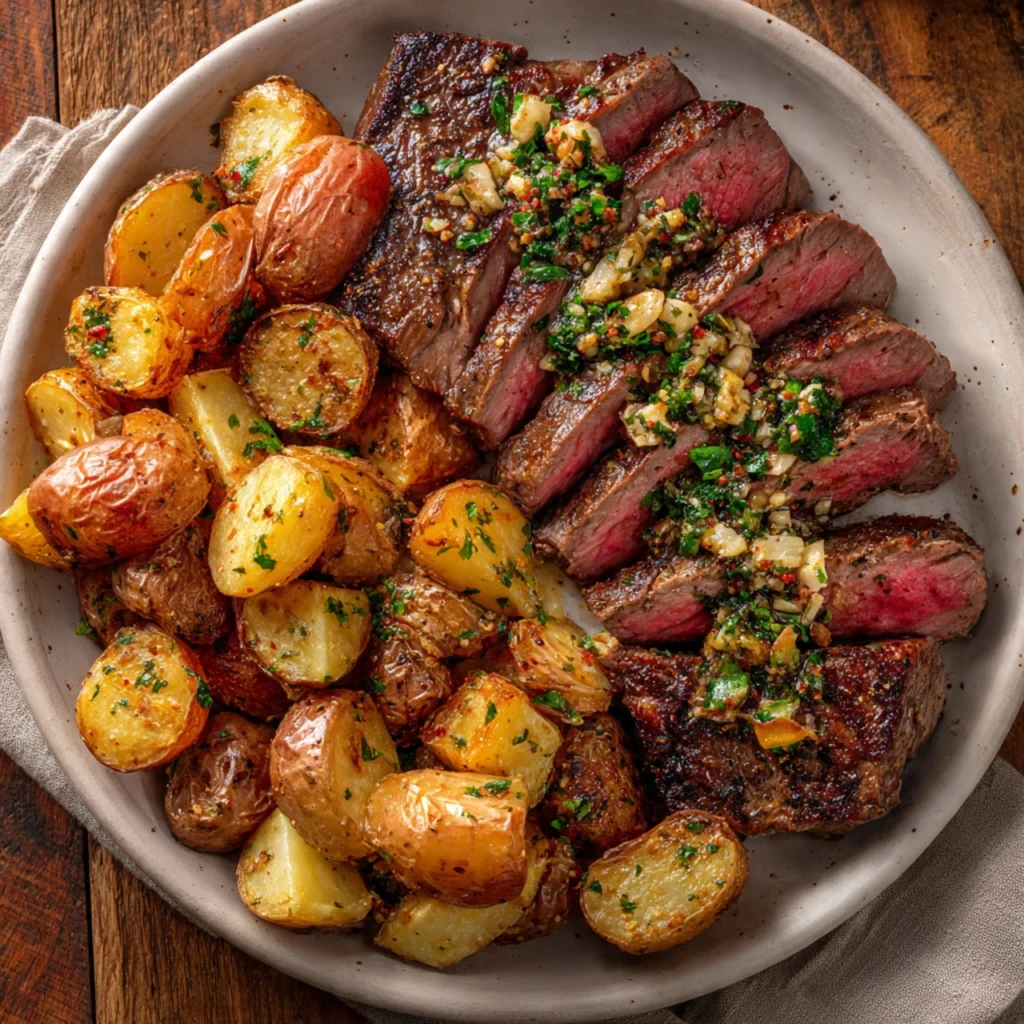
Storage and Serving Suggestions
Storing Leftovers
Steak: Store leftover cooked steak in an airtight container in the refrigerator for up to 3 days. Let it cool completely first to prevent condensation. The garlic butter will solidify on the steak, which is actually a good thing—it keeps the meat moist and flavorful.
Potatoes: Roasted potatoes keep well in the refrigerator for up to 4 days in an airtight container. They’ll lose some crispness, but you can revive them.
Garlic Butter: Unused compound butter keeps for a week refrigerated or up to 3 months frozen. Keep it wrapped in parchment or plastic wrap, then in a freezer bag to prevent absorbing other flavors.
Reheating Without Ruining Texture
Steak: Never microwave leftover steak—it turns rubbery and gray. Instead, let it come to room temperature, then sear briefly in a hot pan (30 seconds per side) or warm gently in a 250°F oven until just heated through (5-7 minutes). You’re not trying to cook it more, just warm it.
Potatoes: Revive leftover roasted potatoes by spreading them on a baking sheet and reheating in a 400°F oven for 8-10 minutes. They’ll crisp up again beautifully. Alternatively, pan-fry them in a little butter or oil over medium-high heat.
Serving Suggestions
Side Dishes: While this meal is satisfying on its own, it pairs beautifully with simple sides like a crisp Caesar salad, roasted asparagus, sautéed green beans with almonds, or grilled broccolini. Keep sides simple so they don’t compete with the rich garlic butter.
Sauce Options: Besides the garlic butter, this dish works well with classic steakhouse sauces like béarnaise, peppercorn cream sauce, or chimichurri for a lighter option. A tangy horseradish cream also cuts through the richness nicely.
Beverage Pairings: This rich, savory dish pairs excellently with bold red wines like Cabernet Sauvignon, Malbec, or Syrah. For beer lovers, try a malty amber ale or a rich stout. Non-alcoholic options include sparkling water with lemon or iced black tea.
Make-Ahead Strategy
For Meal Prep: Cook the full recipe, let everything cool, then portion into containers with steak and potatoes together. This makes excellent meal prep for lunch or quick dinners. Just reheat as directed above.
For Dinner Parties: Prep the garlic butter up to a week ahead. Season the steaks and cut the potatoes earlier in the day, keeping them refrigerated. Start the potatoes 30 minutes before guests arrive, then cook the steaks right before serving for maximum impact.
Frequently Asked Questions About Garlic Butter Steak and Roasted Potatoes
What’s the best cut of steak for this garlic butter steak and roasted potatoes recipe?
Ribeye is my top choice for Garlic Butter Steak and Roasted Potatoes because the marbling keeps it incredibly juicy and flavorful, even if cooking isn’t perfect. The fat renders during cooking, basting the meat from within. NY strip is excellent too—it’s leaner than ribeye but still tender with great beef flavor. Sirloin works if you’re budget-conscious, though it requires more precise cooking since it’s leaner and can become tough if overcooked. Filet mignon is wonderfully tender but lacks the robust flavor of ribeye or strip. Whatever you choose, select steaks at least 1 inch thick—thinner cuts overcook too easily.
Can I make this dish without an oven?
Yes, though the method changes slightly. For stovetop-only preparation, cut the potatoes smaller (½-inch pieces) and pan-roast them first in a large skillet with oil over medium-high heat, stirring occasionally, until golden and tender (about 20 minutes). Remove and keep warm, then cook your steaks in the same pan. The potatoes won’t be quite as crispy as oven-roasted, but they’ll still be delicious. Alternatively, you can finish everything on a grill—roast potatoes in a grill basket while grilling the steaks.
How do I know when my steak is done without a thermometer?
While a thermometer is the most reliable method, you can use the finger-touch test if you’re experienced. Press the fleshy part of your palm below your thumb: relaxed hand feels like rare steak, touching thumb to index finger feels like medium-rare, thumb to middle finger feels like medium, and thumb to ring finger feels like medium-well. However, I strongly recommend investing in an instant-read thermometer ($15-25) for consistent results. The timing guidelines in the recipe (4 minutes + 3-4 minutes) work for 1-inch thick steaks over high heat, but slight variations in thickness or heat level can change this significantly.
Can I use sweet potatoes instead of regular potatoes?
Absolutely! Sweet potatoes work wonderfully with the garlic butter steak, adding a slightly sweet contrast to the savory meat. Cut them into similar-sized pieces as you would regular potatoes, toss with the same seasonings (though you might reduce or omit the paprika since sweet potatoes already have natural sweetness), and roast at the same temperature. They may cook slightly faster, so check them at 20 minutes. The flavor profile shifts to something more autumnal, especially if you add a pinch of cinnamon to the potato seasoning.
Why does my garlic butter taste bitter?
Bitter garlic butter usually results from burned garlic. Raw garlic is best for compound butter because cooked garlic can burn when you melt the butter over hot steak, creating bitterness. If you prefer mellower garlic flavor, you can briefly cook minced garlic in butter until fragrant (30 seconds), let it cool completely, then mix with the remaining butter and herbs. Also ensure you’re using fresh garlic, not old cloves that have started sprouting—the green shoots taste bitter. Finally, don’t use garlic powder in the compound butter; it doesn’t have the fresh, aromatic quality needed.
Can this recipe be made ahead for meal prep?
Yes, Garlic Butter Steak and Roasted Potatoes makes excellent meal prep! Cook everything according to the recipe, let it cool completely, then portion into airtight containers (I recommend glass containers that can go from fridge to oven). Store in the refrigerator for up to 3 days. To reheat, remove from the fridge 20 minutes before eating to take the chill off, then reheat the potatoes in a 400°F oven for 8-10 minutes while you gently warm the sliced steak in a pan with a tiny bit of butter (30 seconds per side). Don’t microwave the steak—it ruins the texture. The flavors actually develop and deepen after a day, so many people prefer meal-prepped steak!
What should I do if my steaks are different thicknesses?
Different thicknesses require adjusted cooking times to reach the same internal temperature. The thicker steak needs more time. You have two options: (1) Start the thicker steak 1-2 minutes before adding the thinner one to the pan, or (2) Remove the thinner steak first when it reaches your desired temperature, let it rest while the thicker one continues cooking. Using a thermometer makes this much easier—you can track each steak individually and remove them at the perfect moment regardless of thickness differences.
Nutrition Information (Per Serving, Recipe Serves 2)
Approximate values for one serving (1 steak + half the potatoes):
- Calories: 785 kcal
- Total Fat: 52g
- Saturated Fat: 23g
- Trans Fat: 0g
- Cholesterol: 195mg
- Sodium: 890mg
- Total Carbohydrates: 45g
- Dietary Fiber: 5g
- Sugars: 2g
- Protein: 42g
- Vitamin A: 18% DV
- Vitamin C: 45% DV
- Calcium: 6% DV
- Iron: 28% DV
- Potassium: 25% DV
Note: Nutritional values are estimates based on a 10-ounce ribeye steak and may vary depending on specific cuts, potato varieties, and exact ingredient measurements. Values include the garlic butter.
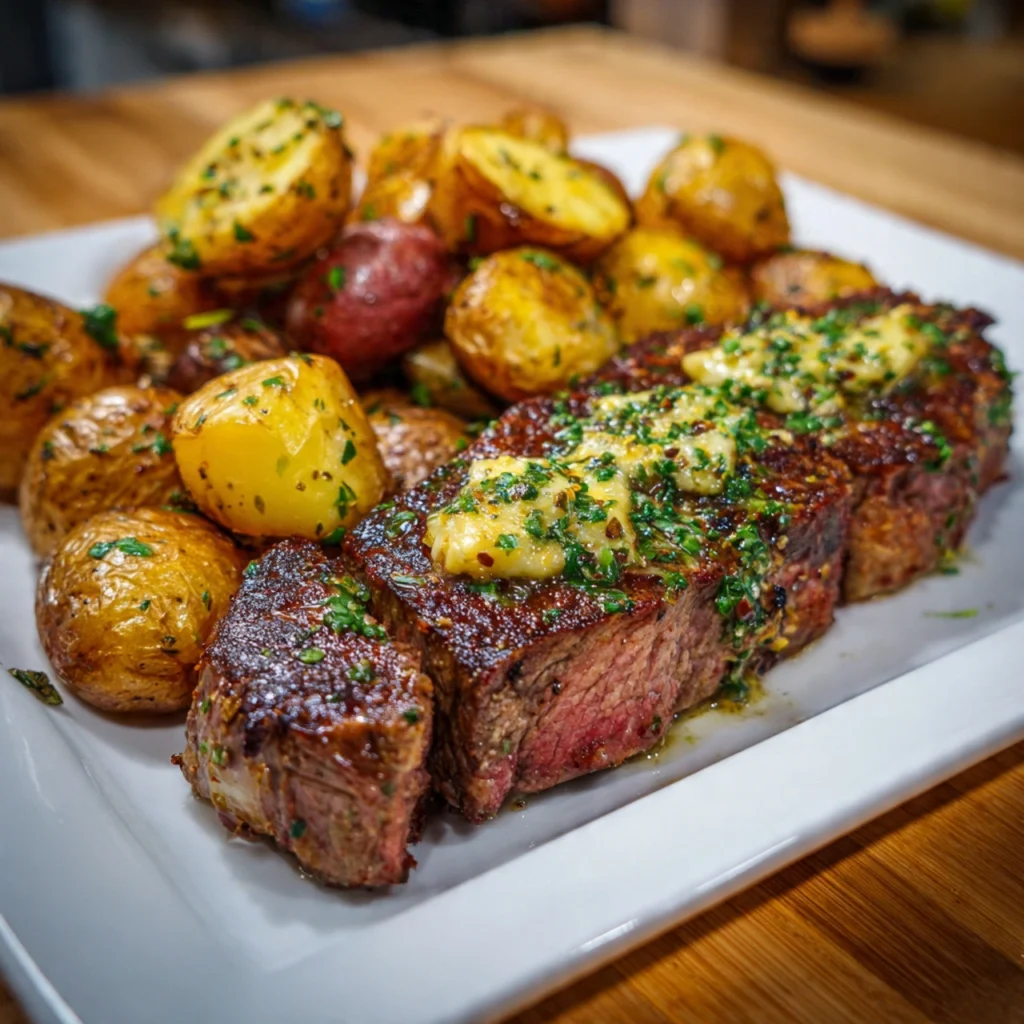
Final Thoughts:
Mastering Garlic Butter Steak and Roasted Potatoes means you’ll always have an impressive, satisfying dinner in your back pocket—whether you’re cooking for a date, hosting friends, or just treating yourself to something special on a Wednesday night. There’s something deeply satisfying about the sizzle of steak hitting a hot pan and the aroma of garlic butter melting over perfectly cooked meat.
What I love most about this garlic butter steak and roasted potatoes recipe is how it teaches fundamental cooking techniques that translate to countless other dishes. Learning to properly sear protein, roast vegetables for maximum flavor, and create compound butter opens up an entire world of culinary possibilities. These aren’t just techniques for fancy meals—they’re everyday skills that elevate everything you cook.
Don’t be intimidated by cooking steak at home. Yes, it requires attention and proper technique, but it’s far more forgiving than you might think, especially once you understand the key principles: dry surface, hot pan, don’t move it, use a thermometer, and rest before cutting. Follow these rules and you’ll achieve restaurant results every single time.
The beauty of this meal is that it feels special without being fussy. There’s no complicated sauce to reduce, no dozen ingredients to prep, no advanced techniques required. Just quality ingredients treated with respect and cooked properly. That’s the essence of good cooking—simple food done well.
I encourage you to make this recipe your own. Try different herb combinations in the garlic butter. Experiment with various potato varieties. Add a splash of balsamic to the potatoes before roasting. The template is here; the creativity is yours.
So fire up that oven, heat your skillet, and get ready to create a dinner that’ll have everyone at the table asking when you became such an amazing cook. The secret? You always were—you just needed the right recipe to prove it.
Now go make someone’s night with the best steak and potatoes they’ve ever had. You’ve got this!
Happy cooking!
PrintGarlic Butter Steak and Roasted Potatoes: The Ultimate One-Pan Dinner That’ll Change Your Weeknights
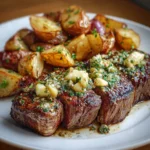
Restaurant-quality Garlic Butter Steak and Roasted Potatoes featuring perfectly seared, juicy steak topped with aromatic compound butter alongside golden, crispy-edged roasted potatoes. A complete, impressive dinner ready in 30 minutes with minimal cleanup.
- Prep Time: 15 minutes
- Cook Time: 15 minutes
- Total Time: 30 minutes (plus 30 min steak rest time)
- Yield: 2 servings
- Category: Main Course
- Method: Pan-searing and Roasting
- Cuisine: American Steakhouse
- Diet: Gluten Free
Ingredients
For Potatoes:
- 2 lbs baby potatoes, halved
- 3 tablespoons olive oil
- 1 teaspoon garlic powder
- 1 teaspoon dried rosemary
- 1 teaspoon dried thyme
- 1 teaspoon kosher salt
- ½ teaspoon black pepper
- ¼ teaspoon paprika
For Steak:
- 2 ribeye steaks (10-12 oz each, 1-inch thick)
- 2 tablespoons vegetable oil
- 2 teaspoons kosher salt
- 1 teaspoon black pepper
For Garlic Butter:
- 6 tablespoons unsalted butter, softened
- 4 cloves garlic, minced
- 2 tablespoons fresh parsley, chopped
- 1 tablespoon fresh thyme leaves
- ½ teaspoon lemon zest (optional)
- ¼ teaspoon kosher salt
- Pinch red pepper flakes (optional)
Instructions
- Preheat oven to 425°F. Line baking sheet with parchment.
- Cut potatoes in half, pat completely dry.
- Toss potatoes with olive oil, garlic powder, rosemary, thyme, salt, pepper, and paprika.
- Arrange potatoes cut-side down on baking sheet. Roast 20 minutes.
- Remove steaks from fridge 30 minutes before cooking. Pat dry and season generously with salt and pepper.
- Make garlic butter: combine softened butter, garlic, parsley, thyme, lemon zest, salt, and pepper flakes.
- Heat cast-iron skillet over high heat until smoking hot.
- Add oil to pan, then steaks. Sear 4 minutes without moving.
- Flip steaks, cook 3-4 minutes more for medium-rare (130-135°F internal temp).
- Remove steaks to cutting board, tent with foil, rest 5-10 minutes.
- Flip potatoes, roast 5-10 minutes more until golden and crispy.
- Slice steak against the grain. Top with garlic butter.
- Serve steak with roasted potatoes, garnish with parsley.
Notes
- Room temperature steak is crucial for even cooking
- Don’t move steak while searing—let crust develop
- Use instant-read thermometer for perfect doneness
- Rest steak before slicing to retain juices
- Garlic butter can be made 1 week ahead
- Recipe easily doubles for 4 servings