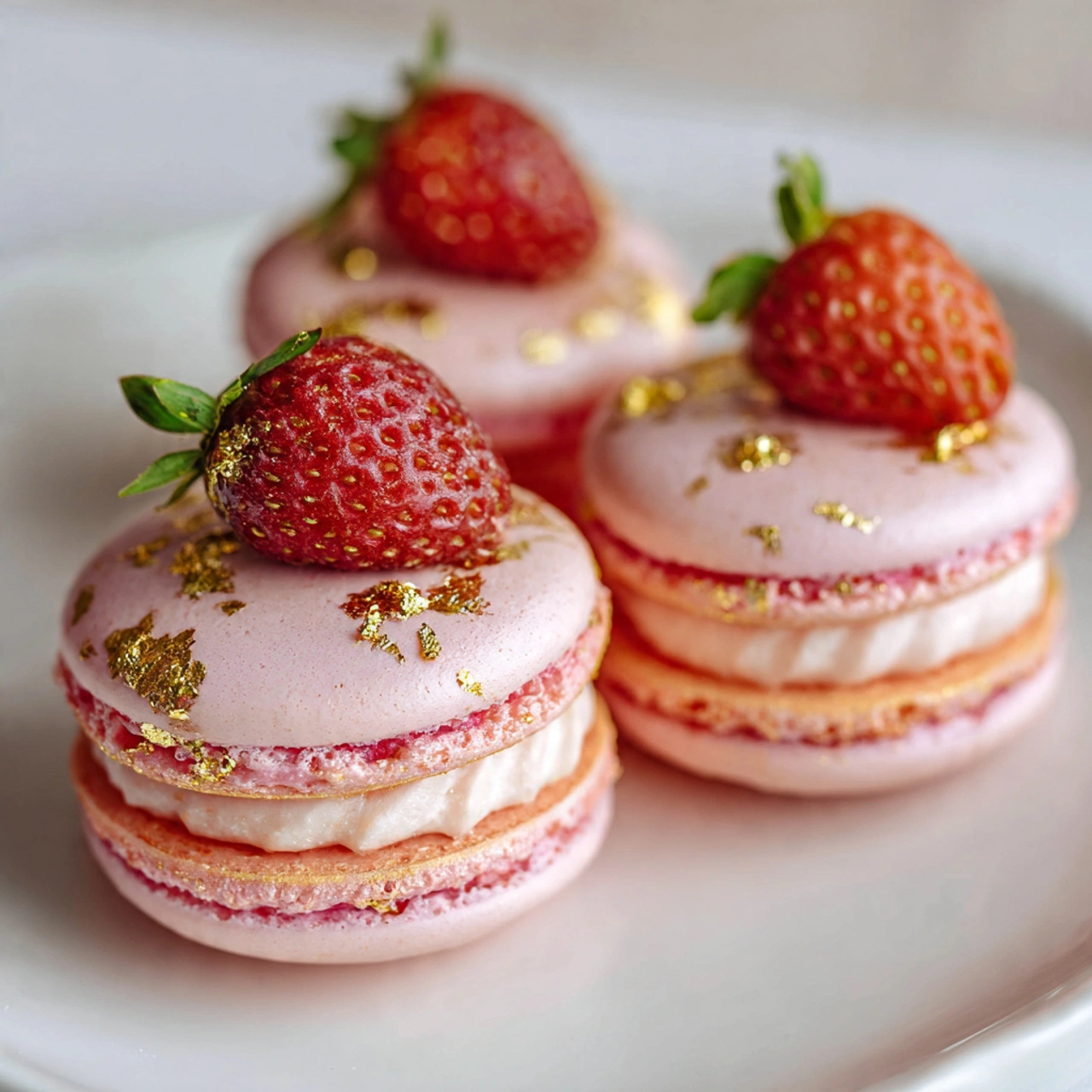
Introduction: Mastering the Art of Strawberry Macarons
If you’ve been dreaming of creating picture-perfect Strawberry Macarons with their delicate crispy shells, chewy centers, and luscious strawberry buttercream filling, you’re about to discover exactly how to bring that dream to life. These iconic French confections have earned a reputation for being finicky and temperamental, but I’m here to tell you that with the right guidance, anyone can master the art of macaron making.
I still remember my first attempt at making macarons nearly fifteen years ago. It was a disaster of epic proportions—cracked tops, no feet, hollow shells that collapsed at the slightest touch. I was ready to give up entirely. But something about these elegant little cookies kept calling me back to the kitchen.
What makes strawberry macarons so irresistible is the combination of textures and flavors. The shell delivers that signature macaron experience—a delicate crunch that gives way to a soft, slightly chewy interior with just the right amount of resistance.
These aren’t just any cookies—they’re showstoppers that command attention at weddings, baby showers, Valentine’s Day celebrations, or any occasion that calls for something truly special. Yet despite their fancy reputation, strawberry macarons are surprisingly achievable when you understand the science behind them and follow a few critical rules.
In this comprehensive guide, I’m going to share everything I’ve learned through years of perfecting my macaron technique. You’ll discover why certain steps matter, how to troubleshoot common problems before they happen, and the insider secrets that separate amateur macarons from bakery-quality beauties.
The best part? Once you master this strawberry macaron recipe, you’ll have the foundation to create endless variations. The technique remains the same whether you’re making chocolate, pistachio, lemon, or any other flavor your imagination conjures.
Understanding Strawberry Macarons: The Science Behind the Magic
Before we dive into the Strawberry Macarons recipe itself, let’s talk about what makes macarons unique and why strawberry macarons require special consideration.
Macarons (not to be confused with coconut macaroons) are meringue-based cookies made primarily from almond flour, egg whites, and sugar. The French technique we’ll be using is called the “Italian meringue method,” which involves pouring hot sugar syrup into whipped egg whites. This method is more stable and forgiving than the French method (which uses raw sugar), making it ideal for beginners and producing more consistent results.
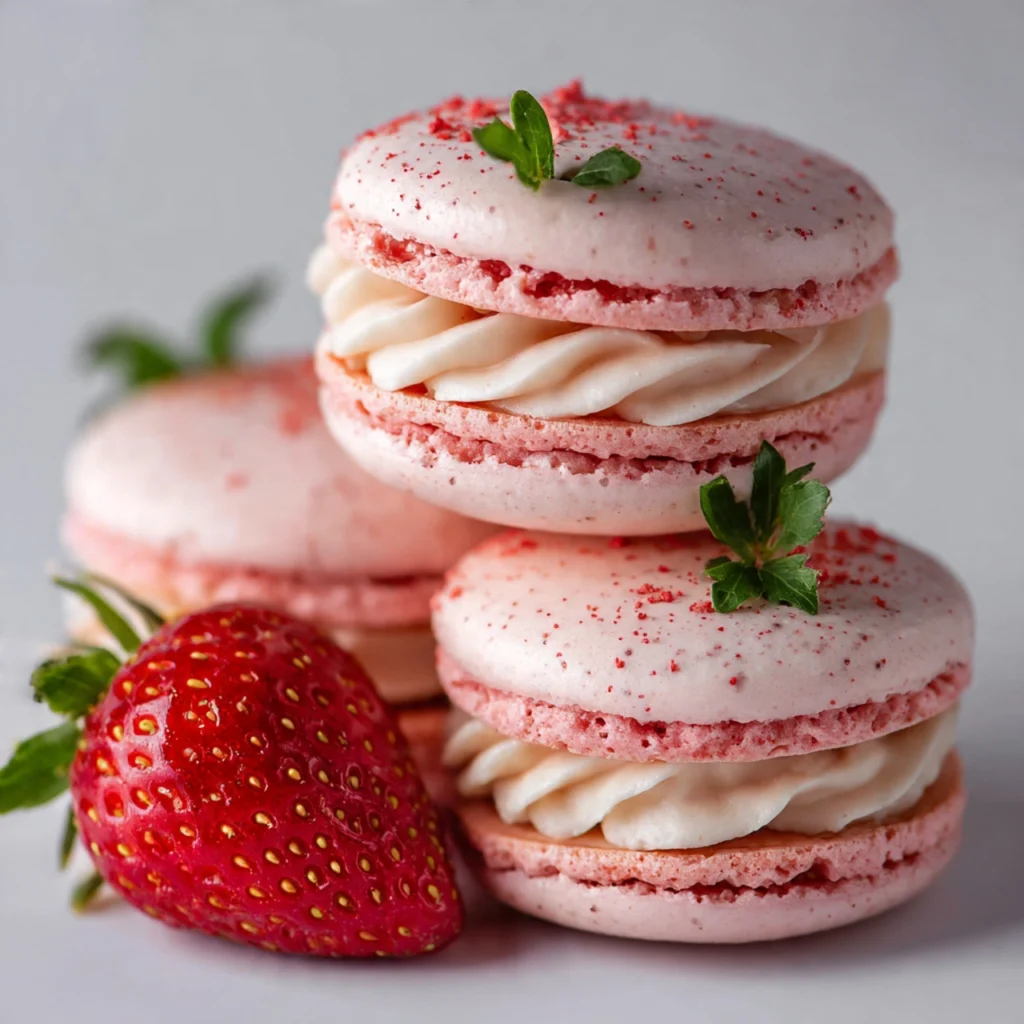
The anatomy of a perfect macaron includes several distinct features:
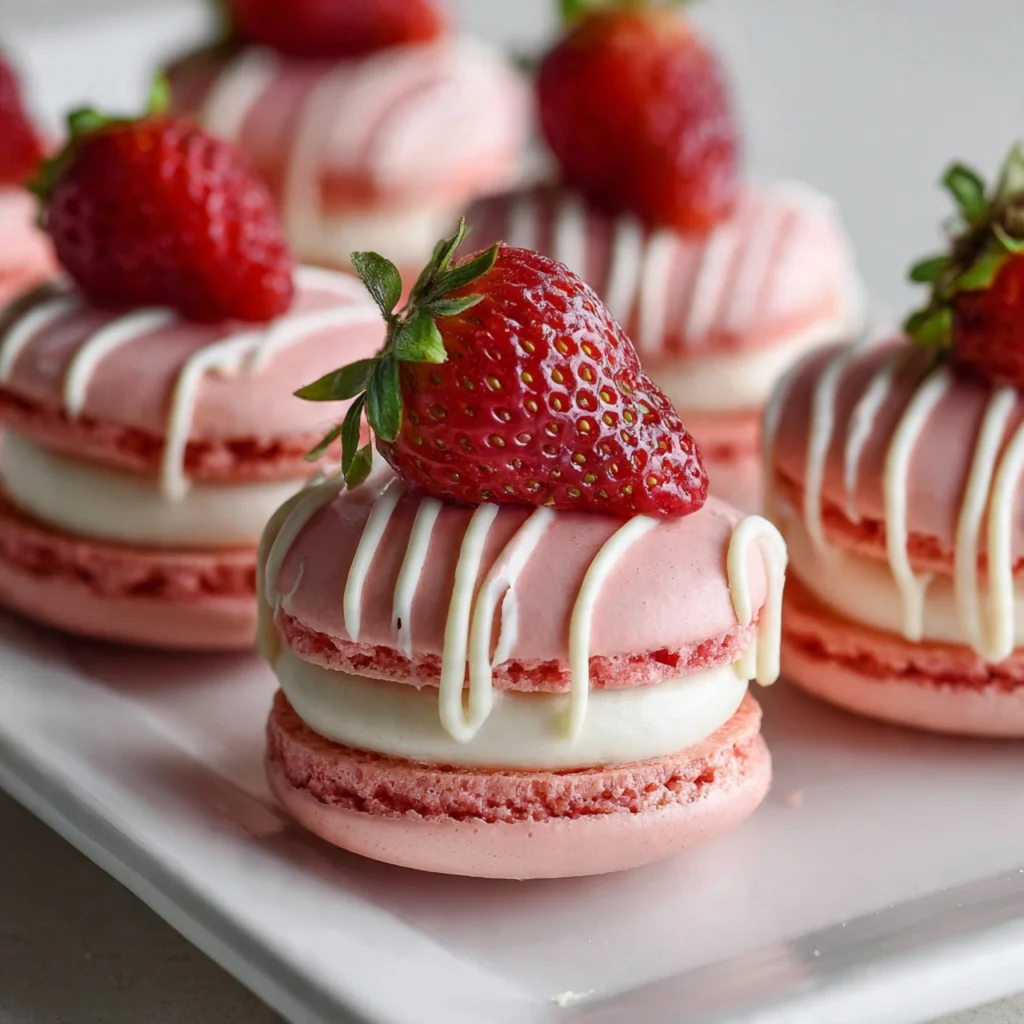
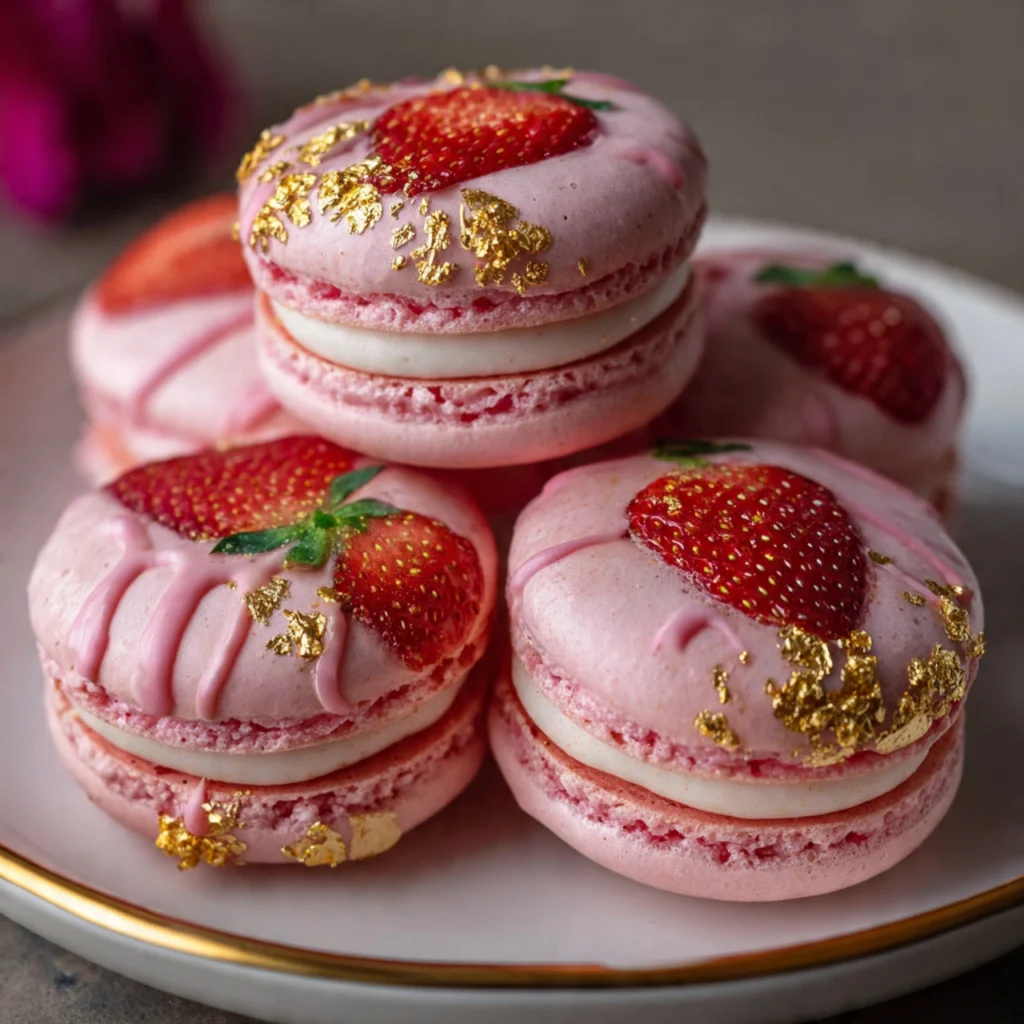
The Shell: Smooth, slightly domed, with a delicate crisp exterior The Foot (Pied): The ruffled base that forms during baking The Interior: Soft and slightly chewy, never hollow The Filling: Creamy, flavorful, and proportionate to the shell
For strawberry macarons specifically, we face an interesting challenge: fresh strawberries contain too much moisture to incorporate directly into the shells or the buttercream without compromising texture. The solution? Freeze-dried strawberries. When pulverized into powder, they deliver concentrated strawberry flavor and natural pink color without adding problematic moisture. This is the secret that professional bakers use, and it’s a game-changer.
The Italian meringue method we’ll employ creates a stable foam that’s less likely to deflate during the critical macaronage process (the technique of folding ingredients together). This stability translates to more consistent results, especially in less-than-perfect environmental conditions.
Ingredients for Perfect Strawberry Macarons
Precision is everything in macaron making. I cannot stress enough the importance of weighing ingredients rather than using volume measurements. Invest in a digital kitchen scale—it’s the single most important tool for macaron success.
For the Macaron Shells (Makes approximately 40-50 shells, or 20-25 filled macarons):
Dry Ingredients:
- 200g almond flour (superfine, blanched)
- 200g powdered sugar (also called confectioners’ sugar or icing sugar)
- 20g freeze-dried strawberry powder (from about 30g whole freeze-dried strawberries)
Meringue:
- 150g egg whites (approximately 5 large eggs, aged at room temperature)
- 200g granulated white sugar
- 50g water
- 1/4 teaspoon cream of tartar (optional but recommended)
- Pink gel food coloring (optional, if you want a more vibrant color)
For the Strawberry Buttercream Filling:
- 1 cup (227g) unsalted butter, softened to room temperature
- 3 cups (360g) powdered sugar, sifted
- 30g freeze-dried strawberry powder (from about 45g whole freeze-dried strawberries)
- 2-3 tablespoons heavy cream or whole milk
- 1 teaspoon pure vanilla extract
- Pinch of salt
Ingredient Deep Dive
Almond Flour: This must be superfine blanched almond flour, not almond meal. Almond meal includes the skins and is too coarse, resulting in bumpy, grainy shells. Brands like Bob’s Red Mill Superfine Almond Flour or Honeyville Blanched Almond Flour work beautifully. Some bakers sift their almond flour multiple times or even process it in a food processor with the powdered sugar to ensure ultra-fine texture.
Egg Whites: Aging egg whites (separating them and leaving them at room temperature for 24 hours, covered with plastic wrap with a few holes poked in it) helps reduce moisture content and creates more stable meringue. However, with the Italian meringue method, aging is less critical than with the French method. If you forget to age them, don’t panic—room temperature fresh egg whites will still work.
Freeze-Dried Strawberries: These are your secret weapon. Look for them in the dried fruit section of your grocery store, at Trader Joe’s, or online. Brands like Nature’s All Foods or Brothers-All-Natural work well. You’ll process them into a fine powder using a spice grinder or food processor. Make sure there are no large chunks, as these can create holes in your shells.
Cream of Tartar: This stabilizes the meringue and helps prevent over-whipping. While optional, I highly recommend it, especially if you’re new to macarons.
Food Coloring: Gel or powder food coloring is essential—liquid coloring adds too much moisture. The freeze-dried strawberries will give you a lovely natural pink, but if you want that iconic bright pink macaron look, add a tiny amount of gel coloring to your meringue.
Butter: European-style butter with higher fat content (like Kerrygold or Plugrá) creates a more luxurious, stable buttercream, but standard American butter works perfectly well.
Step-by-Step Instructions: Creating Your Strawberry Macarons
1: Preparation and Mise en Place (This is Critical!)
- Prepare your freeze-dried strawberry powder: Place your freeze-dried strawberries in a clean spice grinder or food processor. Pulse until you have a fine powder. Sift the powder through a fine-mesh sieve to remove any larger pieces. You’ll need 20g for the shells and 30g for the filling, so process enough to yield at least 50g total.
- Sift your dry ingredients: In a large bowl, sift together the almond flour, powdered sugar, and 20g of strawberry powder at least twice. Discard any large almond pieces that won’t go through the sieve (or give them a few pulses in the food processor and try again). This step is non-negotiable—lumpy dry ingredients mean lumpy macarons.
- Prepare your piping equipment: Line two large baking sheets with silicone baking mats (Silpat is the gold standard) or parchment paper. If using parchment, secure the corners with a tiny dab of batter or tape so the paper doesn’t shift while piping. Fit a large piping bag with a round tip (I use Ateco #806 or Wilton 1A). If you don’t have a tip, you can cut the bag, but a tip gives more control.
- Set up your template (optional but helpful): If this is your first time, print or draw circles (1.5 inches in diameter, spaced 1 inch apart) on paper, then place your parchment or silicone mat on top. You’ll be able to see through to use the circles as guides.
- Bring your egg whites to room temperature: If you forgot to age them, you can quick-warm them by placing the container of separated whites in a bowl of warm water for 10-15 minutes.
2: Making the Italian Meringue
- Start your meringue base: Place 150g of room-temperature egg whites in the bowl of a stand mixer fitted with the whisk attachment. Add the cream of tartar if using. Don’t start mixing yet—you’ll begin this when your sugar syrup is almost ready.
- Make the sugar syrup: In a small, heavy-bottomed saucepan, combine the 200g granulated sugar and 50g water. Do not stir once the sugar dissolves—stirring can cause crystallization. Place the pan over medium-high heat and clip a candy thermometer to the side. Heat the syrup to exactly 240°F (115°C). This is the “soft ball stage.”
- Time your meringue: When your sugar syrup reaches about 230°F, start whipping your egg whites on medium speed. You want them to reach soft peaks right as your syrup hits 240°F. If the whites reach soft peaks before the syrup is ready, reduce the mixer speed to low to maintain them without over-whipping.
- Combine syrup and egg whites: When the syrup reaches exactly 240°F, immediately remove it from heat. With your mixer running on medium speed, pour the hot syrup in a slow, steady stream down the side of the bowl (not directly onto the whisk, which will splatter it). Aim for the space between the whisk and the bowl’s edge.
- Whip to stiff, glossy peaks: Once all the syrup is incorporated, increase the mixer speed to medium-high and whip until the meringue is thick, glossy, and holds stiff peaks. The bowl should feel just barely warm to the touch—this takes about 5-7 minutes. If you want to add gel food coloring for a more vibrant pink, add 1-2 drops at this stage and mix until evenly distributed.
3: Macaronage (The Make-or-Break Step)
- Combine dry ingredients with meringue: Add all of your sifted dry ingredients (almond flour, powdered sugar, strawberry powder) to the meringue in one addition. Using a large silicone spatula, begin folding the mixture together.
- The folding technique: Use a motion that combines folding and pressing. Scrape down the side of the bowl, cut through the center of the mixture, then press the spatula against the side of the bowl to deflate some air. Rotate the bowl and repeat. This isn’t gentle cake batter folding—you need to be somewhat firm to achieve the right consistency.
- Test for proper consistency: This is where experience matters, but here’s what to look for: When you lift the spatula, the batter should fall in a thick ribbon that slowly dissolves back into the mass in about 10-15 seconds. If you pipe a small amount onto a plate, it should hold its shape for a few seconds, then slowly flatten into a circle with a smooth surface. The consistency should be similar to thick lava or molten cake batter—flowing but not runny. This typically takes 45-65 folds, but count strokes less important than achieving the right texture.
- The figure-eight test: A fully ready batter should be able to form a figure-eight when drizzled from the spatula without breaking. If the ribbon breaks before completing the eight, continue folding. If the batter is completely liquidy and runs everywhere, you’ve over-mixed (unfortunately, this batch is likely compromised).
4: Piping the Shells
- Fill your piping bag: Transfer the macaron batter to your prepared piping bag. Twist the top of the bag to prevent batter from squeezing out the wrong end.
- Pipe the shells: Hold the piping bag perpendicular to the baking sheet (straight up and down, not at an angle). Position the tip about 1/2 inch above the surface. Apply steady pressure to pipe circles about 1.5 inches in diameter. When each circle is the right size, stop squeezing and do a quick swirl motion to break the flow cleanly. This prevents nipples on top of your macarons.
- Perfect the shapes: If you do end up with small peaks on top, wet your fingertip and gently tap them down. Work quickly so the batter doesn’t dry out.
- Remove air bubbles: Once all your shells are piped, pick up the entire baking sheet and firmly tap it against the counter 3-5 times. Rotate the pan 90 degrees and tap again. This releases large air bubbles that would otherwise create hollow shells or cracked tops. You should see small bubbles come to the surface—pop these with a toothpick.
5: Drying the Shells
- Rest the shells: Let your piped macarons sit at room temperature for 30-60 minutes. They need to form a skin on top that’s dry to the touch. When you gently touch a shell, no batter should stick to your finger. This step is crucial for developing the feet and preventing cracks. In humid environments, this may take longer (up to 90 minutes). In very dry environments, 30 minutes might be sufficient.
- The touch test: You’ll know they’re ready when you can lightly run your finger across the top without any batter transferring to your skin. The shell should feel dry and slightly tacky, not wet.
6: Baking
- Preheat your oven: While your shells are drying, preheat your oven to 300°F (150°C). Every oven is different—you may need to adjust this temperature. Some ovens bake macarons better at 325°F, others at 280°F. If this is your first batch, start at 300°F and take notes on the results.
- Bake the macarons: Place one baking sheet in the center of the oven. Bake for 15-18 minutes, rotating the pan halfway through. The macarons are done when they’ve developed feet and don’t wobble when you gently touch the top. The feet should be well-formed and the tops should look matte, not shiny.
- The wobble test: At the 13-minute mark, gently touch the top of a macaron. If the top slides around on the feet like it’s not attached, continue baking. When properly done, the top and bottom should be firmly connected, with no sliding or wobbling.
- Cool completely: Remove the baking sheet from the oven and let the macarons cool on the pan for 5 minutes, then transfer the entire mat or parchment to a cooling rack. Let them cool completely before attempting to remove them—at least 30 minutes. Trying to remove them while warm guarantees broken shells.
7: Making the Strawberry Buttercream
- Cream the butter: While your shells cool (or even the day before), make your filling. In a stand mixer with the paddle attachment, beat the softened butter on medium speed for 2-3 minutes until light and fluffy.
- Add the dry ingredients: With the mixer on low speed, gradually add the sifted powdered sugar and strawberry powder. Beat until well combined.
- Add the liquid: Pour in the vanilla extract and 2 tablespoons of cream. Beat on low until incorporated, then increase to medium-high and whip for 3-4 minutes until the buttercream is light, fluffy, and pale pink.
- Adjust consistency: If the buttercream seems too thick, add the additional tablespoon of cream. If it’s too thin, add more powdered sugar (1/4 cup at a time). You want a consistency that holds its shape when piped but isn’t stiff or dry.
- Intensify the flavor: Taste your buttercream. If you want more strawberry punch, add another 10g of freeze-dried strawberry powder. Remember that flavors will meld and intensify as the filled macarons rest in the refrigerator.
8: Assembly
- Match your shells: Pair up your cooled shells by size, matching each shell with a partner of similar dimensions. This ensures uniform, professional-looking macarons.
- Pipe the filling: Transfer your buttercream to a piping bag fitted with a medium round tip (or no tip if you prefer). Pipe a generous dollop of buttercream onto the flat side of one shell from each pair. You want enough filling to create a nice layer without squishing out the sides when you sandwich them together.
- Create the sandwich: Gently press the matching shell on top, applying light pressure until the buttercream just reaches the edges. Don’t press too hard or you’ll crack the delicate shells.
- Rest for optimal flavor: Place your filled macarons in an airtight container and refrigerate for at least 24 hours before serving. This “maturation” period is essential—it allows the filling to soften the shells slightly and all the flavors to meld together, creating that perfect texture and taste.
Pro Tips for Perfect Strawberry Macarons
After making literally hundreds of batches of macarons over the years, I’ve accumulated a treasure trove of tips that consistently produce perfect results.
Environment Matters More Than You Think
Humidity is the arch-nemesis of macaron making. On very humid days (above 70% humidity), you may struggle to get your shells to dry properly. If possible, choose a dry day for your first attempts. Some bakers run a dehumidifier in their kitchen or turn on the air conditioning to create optimal conditions. Conversely, very dry environments can cause shells to dry too quickly and crack.
Temperature Precision is Non-Negotiable
The 240°F target for your sugar syrup isn’t a suggestion—it’s critical. Too low, and your meringue won’t stabilize properly. Too high, and you’ll make candy instead of meringue. A reliable candy thermometer is essential. I’ve had great results with both digital instant-read thermometers and traditional clip-on candy thermometers.
The Silpat Advantage
While you can make macarons on parchment paper, silicone baking mats (Silpat brand specifically) produce more consistent results. They provide even heat distribution and the perfect non-stick surface. They’re an investment, but if you plan to make macarons regularly, they’re worth every penny.
Freeze-Dried Strawberry Quality
Not all freeze-dried strawberries are created equal. Look for ones that are bright red, crispy, and aromatic. If they seem old or stale, they’ll produce dull color and muted flavor. Store your freeze-dried strawberries in an airtight container to preserve their quality.
The Overnight Aging Secret
While you can eat your strawberry macarons immediately after assembly, they reach their absolute peak flavor and texture after 24-48 hours in the refrigerator. The shells soften slightly from the moisture in the filling, creating that perfect tender-crisp texture that defines a great macaron. Many professionals won’t serve macarons until they’ve aged at least one full day.
Consistent Sizing
Using a template for your first few batches ensures uniform sizes, which not only looks more professional but also ensures even baking. Once you get the feel for it, you can free-hand, but templates are a helpful training tool.
The Freezer is Your Friend
Macaron shells (unfilled) freeze beautifully for up to 3 months. Make a double or triple batch, freeze the extras, and you’ll always have shells ready for quick assembly when you need an impressive dessert.
Troubleshooting While You Bake
If your first few macarons aren’t perfect, don’t throw out the whole batch. Take notes on what went wrong, adjust your technique or temperature mid-batch if needed, and use the experience to improve the next tray. Learning from real-time failures is the fastest path to macaron mastery.
Strawberry Macarons Common Mistakes to Avoid
Understanding what can go wrong—and why—will help you prevent these issues before they derail your batch.
Over-Mixing or Under-Mixing the Macaronage
This is the number one mistake. Under-mixed batter won’t spread properly, resulting in thick, lumpy shells with no feet. Over-mixed batter is too runny, spreads too much, and creates flat macarons with no structure. The batter should flow like thick honey or lava—slow but steady. Practice makes perfect here, so don’t get discouraged if your first attempt isn’t spot-on.
Skipping the Resting Time
If you skip the 30-60 minute drying period, your macarons will crack during baking and won’t develop proper feet. The skin that forms during resting is what allows the feet to push out from underneath. In humid environments, you might need even longer—up to 90 minutes. Be patient; rushing this step almost always results in failure.
Incorrect Oven Temperature
Every oven has hot spots and temperature variations. If your macarons brown too quickly, lower the temperature by 25°F. If they don’t develop feet or take forever to bake, raise it by 25°F. Consider using an oven thermometer to verify your oven’s actual temperature, which often differs from what the dial says. Some bakers even double-pan (stack two baking sheets) to protect the bottoms from getting too dark.
Using Low-Quality Almond Flour
Coarse almond flour creates bumpy, grainy shells that look homemade in the worst way. Always use blanched, superfine almond flour, and sift it at least twice. If you can only find regular almond flour, process it with the powdered sugar in a food processor until ultra-fine, then sift multiple times.
Opening the Oven Door Too Soon
Resist the temptation to peek! Opening the oven door in the first 10 minutes of baking can cause temperature fluctuations that lead to cracked shells or collapsed macarons. If you must check, wait until at least the 12-minute mark and open the door gently and briefly.
Adding Too Much Liquid to the Buttercream
When making your strawberry buttercream, add liquid conservatively. You can always add more to thin it out, but you can’t take it back. Too-thin buttercream will squish out the sides and make the macarons soggy. The filling should be pipeable but hold its shape.
Not Weighing Ingredients
Volume measurements are wildly inconsistent for macaron ingredients. A cup of almond flour can vary by 30 grams depending on how you scoop it. That kind of variation will completely change your results. A digital scale eliminates this variable and costs less than $15.
Using Old Egg Whites
While aged egg whites are recommended, old egg whites that have been in your fridge for a week past their prime won’t create stable meringue. Use fresh eggs (separated and aged for 24 hours) or fresh egg whites used immediately at room temperature.
Storage and Serving Suggestions About Strawberry Macarons
Proper storage is crucial for maintaining the quality and texture of your strawberry macarons.
Short-Term Storage (Up to 5 Days)
Store filled macarons in an airtight container in the refrigerator for up to 5 days. Place parchment paper between layers to prevent sticking. Before serving, remove them from the refrigerator and let them come to room temperature for 20-30 minutes. Cold macarons have muted flavors and harder texture—room temperature is when they shine.
Long-Term Storage (Up to 3 Months)
Both filled and unfilled macarons freeze exceptionally well. For filled macarons, place them in a single layer in an airtight container with parchment between layers. Freeze for up to 3 months. Thaw in the refrigerator overnight, then bring to room temperature before serving.
For unfilled shells, freeze in airtight containers for up to 3 months. They thaw in about 30 minutes at room temperature and can then be filled with fresh buttercream.
Serving Suggestions
Strawberry macarons are perfect for:
- Valentine’s Day dessert tables
- Wedding favors or dessert displays
- Baby showers (especially for girls)
- Mother’s Day gifts
- Bridal showers
- Spring and summer gatherings
- Afternoon tea service
- Birthday party treats
Presentation Ideas
Arrange macarons on a tiered stand for elegant display, package them in clear boxes tied with ribbon for gifts, or serve them alongside champagne or sparkling rosé for a sophisticated treat. They’re also stunning when paired with fresh strawberries and cream for a deconstructed strawberry shortcake presentation.
Optimal Eating Window
While macarons keep well, they’re absolutely best between 24-72 hours after assembly. This is when the texture and flavor balance reaches perfection. Day-old macarons are good, but two-day-old macarons are extraordinary.
Pairing Suggestions
Strawberry macarons pair beautifully with:
- Champagne or sparkling wine
- White tea or chamomile tea
- Coffee (especially light roasts)
- Vanilla ice cream
- Fresh berries
- Chocolate fondue
Frequently Asked Questions
Can I make strawberry macarons without freeze-dried strawberries?
While freeze-dried strawberries create the best flavor and texture, you can make a strawberry variation using strawberry extract or strawberry emulsion. However, these won’t provide the natural pink color or the intensity of flavor that freeze-dried strawberries deliver. Fresh or frozen strawberries contain too much moisture to work in this recipe. If using extract, add 1-2 teaspoons to your buttercream and use pink gel food coloring for the shells.
Why did my macarons crack on top?
Cracking typically happens for one of several reasons: (1) You didn’t let the shells dry long enough before baking—they must form a complete skin; (2) Your oven temperature is too high—try reducing by 25°F; (3) You over-mixed the batter, causing it to be too thin and unable to support itself; or (4) You opened the oven door during the first 10 minutes of baking, causing temperature shock.
How do I know when my macarons are done baking?
Properly baked macarons will have well-developed feet and won’t wobble when you gently touch the top. At around the 13-15 minute mark, lightly press the top of a macaron with your finger. If the shell slides around on the feet like it’s not attached, continue baking. When done, the top and feet should be firmly connected. The shells should look matte, not shiny or wet.
Can I make strawberry macarons dairy-free or vegan?
The macaron shells are naturally dairy-free (they contain only almond flour, sugar, and egg whites), but they’re not vegan due to the egg whites. Unfortunately, aquafaba (chickpea liquid) and other egg white substitutes don’t create stable enough meringue for successful macarons using traditional methods. For the filling, you can substitute dairy-free butter and use coconut cream instead of heavy cream to create a dairy-free strawberry buttercream.
My macarons are hollow inside. What went wrong?
Hollow macarons are usually caused by over-mixing the batter (making it too thin and unable to maintain structure) or by oven temperature that’s too high, causing the shells to rise and set too quickly before the inside can fill in. Make sure you don’t deflate the batter too much during macaronage, and consider reducing your oven temperature by 25°F. Also ensure you’re firmly tapping the pan after piping to release large air bubbles.
Can I use this same technique for other macaron flavors?
Absolutely! Once you master the strawberry version, you can create endless variations. Replace the freeze-dried strawberries with freeze-dried raspberries, blueberries, or passion fruit. For chocolate macarons, replace 30g of almond flour with cocoa powder. For pistachio, use pistachio paste in the filling and add a touch of almond extract. The shells always use the same base technique—only the flavoring and filling change.
How far in advance can I make strawberry macarons?
You can make the shells up to 3 months ahead and freeze them unfilled. The buttercream can be made 3-4 days ahead and refrigerated (bring to room temperature and re-whip before using). Fully assembled macarons are best within 3-5 days but can be frozen for up to 3 months. For events, I recommend making the shells in advance, freezing them, then filling them 2-3 days before serving.
Why are my macarons spreading too much?
Excessive spreading usually indicates over-mixed batter. The batter should be thick enough to hold its shape for a few seconds after piping before slowly spreading. If your batter immediately spreads into a pancake, you’ve over-mixed. There’s no fix for this once it’s happened—consider it a learning experience and mix less next time. Under-mixing can also prevent proper spread, resulting in thick, peaked macarons without feet.
Nutrition Information (Per Macaron)
Please note these are approximate values for one filled macaron (2 shells + filling).
Serving Size: 1 filled macaron (approximately 25-30g)
- Calories: 110-130
- Total Fat: 6-7g
- Saturated Fat: 2.5-3g
- Cholesterol: 10-15mg
- Sodium: 10-15mg
- Total Carbohydrates: 13-15g
- Dietary Fiber**: 0.5-1g
- Sugars: 12-14g
- Protein: 2-3g
Nutritional Notes
Macarons are treats, not health foods, but they do offer some nutritional benefits:
- The almond flour provides protein, vitamin E, and healthy fats
- They’re naturally gluten-free
- One macaron typically has fewer calories than a slice of cake or cupcake
- The freeze-dried strawberries retain much of the vitamin C and antioxidants from fresh berries
If you’re watching calories, these make an excellent portion-controlled dessert since one or two macarons feel indulgent and satisfying. They’re also nut-based rather than flour-based, which some people find easier to digest.
For those managing blood sugar, macarons do contain significant sugar, so enjoy them mindfully as an occasional treat.
Conclusion: Your Journey to Macaron Mastery Begins Now
Creating perfect Strawberry Macarons is absolutely within your reach. Yes, they require precision, patience, and attention to detail, but they’re not the impossible feat they’re often made out to be. With this comprehensive guide, you have everything you need to produce bakery-quality macarons in your own kitchen.
Remember that even professional pastry chefs had to practice to perfect their technique. If your first batch isn’t perfect, don’t be discouraged. Take notes on what happened, adjust your technique based on the troubleshooting advice in this guide, and try again. Each batch teaches you something valuable about how the ingredients behave, how your specific oven performs, and how to recognize the right consistency at each stage.
The beauty of mastering macarons is that once you understand the technique, an entire world of flavors opens up to you. But strawberry macarons will always hold a special place—they’re romantic, delicious, and stunningly beautiful. They make people smile, they impress at gatherings, and they taste like a little bite of Parisian paradise.
So gather your ingredients, set aside a afternoon when you can focus without rushing, and embark on your macaron-making adventure. Your perfect batch of Strawberry Macarons is waiting to be created. Trust the process, follow the steps, and prepare to amaze yourself (and everyone lucky enough to taste your creations). Bon appétit!
PrintStrawberry Macarons: The Ultimate Guide to Perfect French Cookies (With Natural Strawberry Flavor!)
Delicate French macaron cookies with a crispy shell, chewy center, and luscious strawberry buttercream filling. Made with real freeze-dried strawberries for intense natural flavor and beautiful pink color. Perfect for special occasions!
- Prep Time: 45 minutes (plus 30-60 minutes drying time)
- Cook Time: 15-18 minutes per batch
- Total Time: Approximately 2-3 hours (including cooling and filling)
- Yield: 20-25 filled macarons (40-50 shells)
- Category: Desserts, Cookies, French Pastry
- Method: Italian Meringue Method, Baked
- Cuisine: French
- Diet: Vegetarian
Ingredients
For Shells:
- 200g almond flour (superfine, blanched)
- 200g powdered sugar
- 20g freeze-dried strawberry powder
- 150g egg whites (room temperature)
- 200g granulated sugar
- 50g water
- 1/4 tsp cream of tartar
- Pink gel food coloring (optional)
For Filling:
- 227g (1 cup) unsalted butter, softened
- 360g (3 cups) powdered sugar
- 30g freeze-dried strawberry powder
- 2-3 tbsp heavy cream
- 1 tsp vanilla extract
- Pinch of salt
Instructions
- Process freeze-dried strawberries into fine powder; sift to remove chunks
- Sift almond flour, powdered sugar, and 20g strawberry powder together twice
- Make Italian meringue by heating sugar and water to 240°F while whipping egg whites to soft peaks
- Pour hot syrup into whipping egg whites; continue whipping to stiff, glossy peaks
- Fold dry ingredients into meringue using 45-65 strokes until batter flows like lava
- Pipe 1.5-inch circles onto silicone mats; tap pan firmly to release air bubbles
- Rest 30-60 minutes until shells form dry skin
- Bake at 300°F for 15-18 minutes until feet develop and tops don’t wobble
- Cool completely before removing from mat
- Make buttercream by creaming butter, adding powdered sugar and strawberry powder, then adding cream and vanilla
- Match shells by size, pipe filling on one shell, sandwich with matching shell
- Refrigerate 24 hours before serving for best texture
Notes
- Must use superfine blanched almond flour for smooth shells
- Weigh all ingredients—volume measurements don’t work for macarons
- Humidity affects drying time; may need up to 90 minutes in humid weather
- Oven temperature varies; adjust by 25°F if needed
- Shells freeze beautifully for 3 months unfilled