Introduction: Why Sheet Pan Chicken Fajitas Changed My Weeknight Dinner Game Forever
Sheet Pan Chicken Fajitas are the weeknight dinner revelation I genuinely wish someone had told me about years earlier. Before discovering this method, I was attempting the traditional skillet route—crowded pan, uneven cooking, constant stirring, three different pans to wash, and somehow still ending up with pale, steamed chicken instead of that beautiful caramelized sear I desperately wanted. Sound familiar?
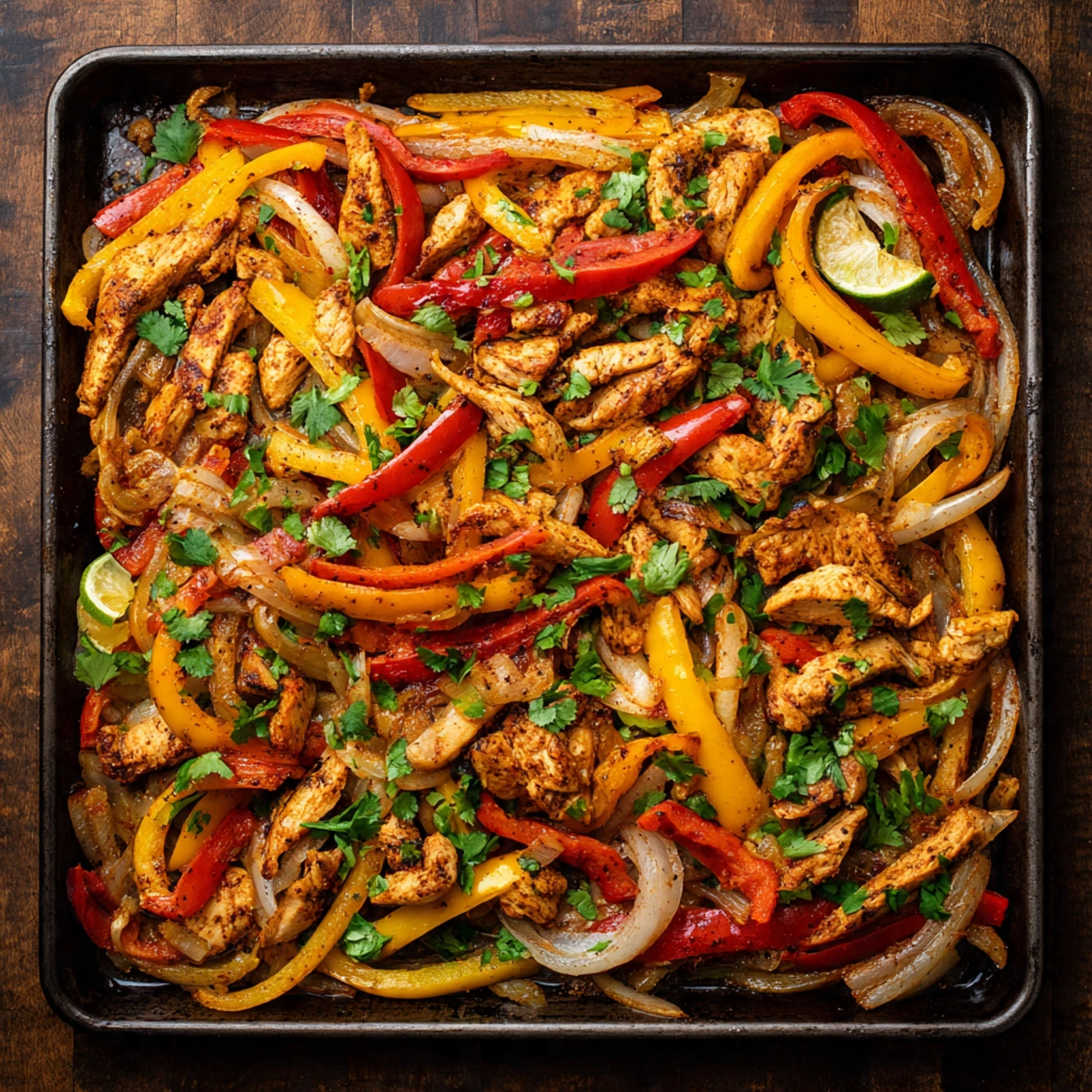
The sheet pan method makes everything easier. Just place everything on one pan and let the oven do the work. You’ll get caramelized peppers and onions with juicy, well-seasoned chicken and a light char that adds great flavor. Prep is simple, cleanup is quick, and the result is a tasty meal the whole family will love.
What I love most about Sheet Pan Chicken Fajitas is their consistency. They turn out great every time. The high oven heat caramelizes the vegetables and gives the chicken a lightly charred outside instead of letting it steam. That caramelization brings out the best flavor, and the sheet pan method makes it easy to achieve.
This dish is incredibly flexible. Swap chicken for steak, shrimp, or portobello mushrooms, adjust the spices, and add your favorite toppings. Perfect for one or a crowd, it’s simple, forgiving, and adaptable.
I’ve made Sheet Pan Chicken Fajitas for weeknight dinners, casual gatherings, meal prep, and potlucks. They’re just as good wrapped in tortillas, served in rice bowls, or added to a hearty salad. Their versatility makes them a staple in my kitchen—and they can easily become one in yours too.
Ready to make the most flavorful, perfectly caramelized Sheet Pan Chicken Fajitas of your life?
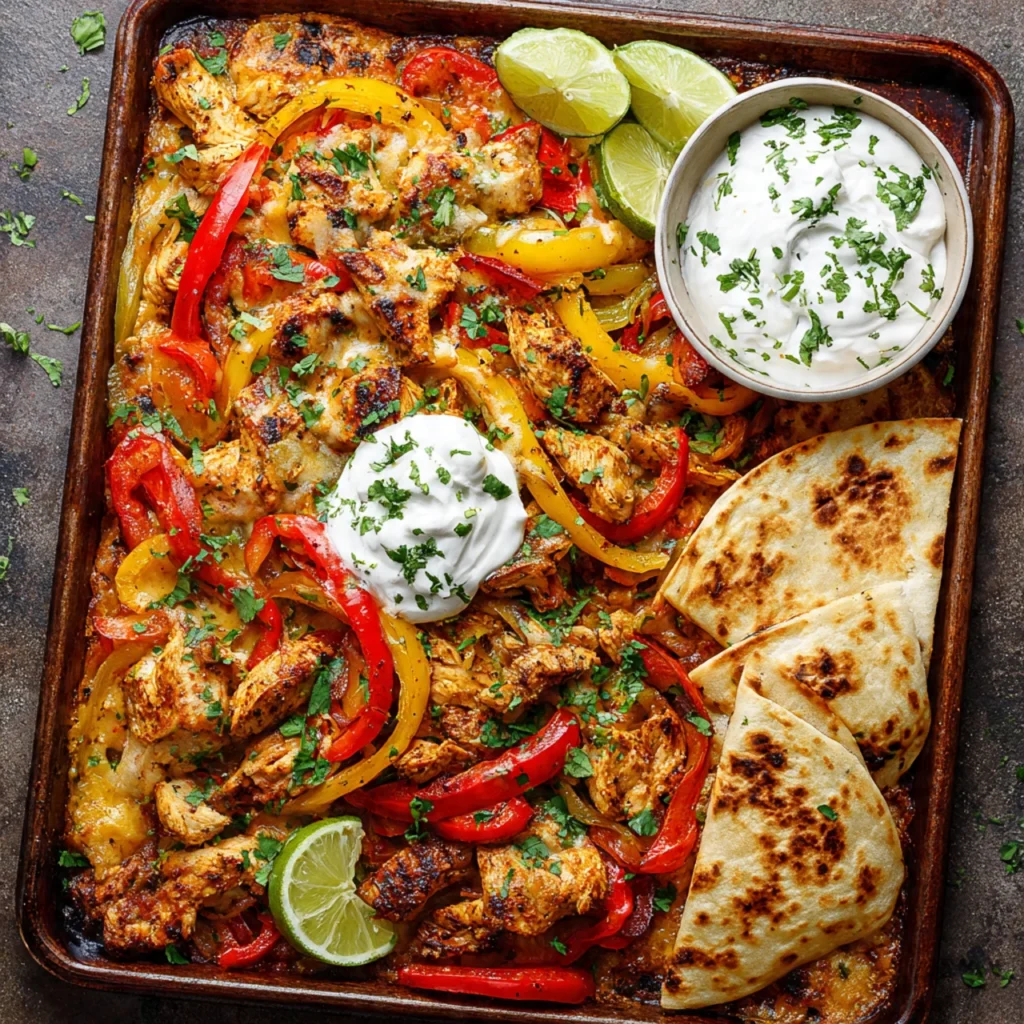
Ingredients: What You’ll Need for Perfect Sheet Pan Chicken Fajitas
For the Chicken and Vegetables
- 2 pounds boneless, skinless chicken breasts or thighs – Sliced into strips
- 3 bell peppers (1 red, 1 yellow, 1 green) – Sliced into ¼-inch strips
- 1 large onion (yellow or red) – Halved and sliced into strips
- 3 tablespoons olive oil – For tossing and caramelizing
- 3 cloves garlic, minced – Fresh flavor boost
Fajita Seasoning (Homemade Blend)
- 2 teaspoons chili powder – The backbone of fajita flavor
- 1½ teaspoons cumin – Warm, earthy authenticity
- 1 teaspoon smoked paprika – Subtle smokiness
- 1 teaspoon garlic powder – Reinforces fresh garlic
- 1 teaspoon onion powder – Aromatic depth
- ½ teaspoon oregano – Herbal complexity
- ½ teaspoon salt – Essential seasoning
- ½ teaspoon black pepper – Gentle heat
- ¼ teaspoon cayenne pepper (adjust to taste) – Spicy kick
- Juice of 1 lime (about 2 tablespoons) – Brightens everything
For Serving
- 8-10 flour or corn tortillas, warmed – The vessel
- 1 cup shredded Mexican blend cheese – Melty goodness
- ½ cup sour cream – Cool contrast
- 1 avocado, sliced, or guacamole – Creamy richness
- ½ cup pico de gallo or salsa – Fresh brightness
- Fresh cilantro, roughly chopped – Herbal finish
- Lime wedges – Essential squeeze before eating
- Jalapeño slices (optional) – For heat seekers
Optional Additions
- 1 cup corn kernels (fresh or frozen) – Sweet accent
- 1 can black beans, drained and rinsed – Protein and fiber boost
- Cherry tomatoes, halved – Burst of freshness
Equipment Needed
- Large rimmed baking sheet (18×13-inch preferred)
- Parchment paper or aluminum foil
- Large mixing bowl
- Sharp knife and cutting board
- Tongs
- Small bowl for seasoning
- Measuring spoons
Step-by-Step Instructions: Creating Perfect Sheet Pan Chicken Fajitas
Step 1: Make Your Fajita Seasoning Blend (3 minutes)
In a small bowl, combine chili powder, cumin, smoked paprika, garlic powder, onion powder, oregano, salt, black pepper, and cayenne. Mix thoroughly with a fork or small whisk. This homemade blend is significantly better than store-bought packets—no fillers, no excess sodium, just pure concentrated flavor. Make a double or triple batch and store the extra in an airtight container for up to six months. You’ll use it constantly once you realize how good it is.
Smell the blend after mixing—it should be complex, aromatic, and slightly warm from the spices. If it doesn’t smell exciting, your spices might be old and need replacing. Fresh spices make an enormous difference in the final flavor of your Sheet Pan Chicken Fajitas.
Step 2: Prep the Chicken and Vegetables (10 minutes)
Slice your chicken breasts or thighs into strips about ½ inch wide and 3-4 inches long. Try to keep them relatively uniform in thickness so they cook evenly. If your chicken breasts are very thick, consider slicing them horizontally first to create thinner cutlets before cutting into strips.
For the peppers, remove the core and seeds, then slice lengthwise into ¼-inch strips. Resist the urge to cut them thicker—thicker strips won’t cook as quickly and won’t caramelize as beautifully. For the onion, cut it in half through the root, then slice each half into ¼-inch strips. These thinner cuts allow maximum surface area contact with the hot pan, which is essential for caramelization.
Step 3: Season Everything (5 minutes)
This step is where the flavor foundation gets built. Add the chicken strips, sliced peppers, and onion to a large mixing bowl. Add the minced garlic, olive oil, and lime juice. Sprinkle the entire spice blend over everything. Now use your hands or tongs to toss everything together thoroughly, making sure every piece of chicken and every vegetable strip gets coated with the oil and seasoning.
Don’t rush this tossing step. You want every surface covered with that beautiful spice blend. If anything looks pale and unseasoned, toss more. The seasoning should be visibly coating everything with a reddish-brown color.
For best results, let everything marinate in this bowl for at least 15-30 minutes at room temperature, or cover and refrigerate for up to 8 hours. Even 15 minutes of marinating makes a noticeable difference in flavor penetration.
Step 4: Prepare the Baking Sheet (3 minutes)
Preheat your oven to 425°F (220°C). Line your large rimmed baking sheet with aluminum foil or parchment paper—this is non-negotiable for easy cleanup. The sugars in the peppers and onions will caramelize and stick badly to a bare pan.
If you have two baking sheets, even better. Dividing everything between two sheets rather than crowding one is the secret to proper caramelization. Crowding is the enemy of all sheet pan cooking—we’ll get more into this in the tips section.
Step 5: Arrange for Maximum Caramelization (5 minutes)
Here’s where most people make their critical mistake—they dump everything onto the pan in a big pile and expect magic to happen. Spread everything out in a single layer with space between pieces. The chicken strips should not overlap, and the peppers and onions should have room to breathe.
If using one large baking sheet, you can arrange the chicken strips in the center and scatter the peppers and onions around the edges, or intermix everything in an even single layer. Just ensure nothing is stacked on top of anything else.
Step 6: Roast to Perfection (20-25 minutes)
Slide the pan into your preheated oven and set your timer. Roast for 20-25 minutes, flipping everything with tongs at the halfway point (around 12 minutes). This flipping ensures even browning and caramelization on both sides.
For the last 2-3 minutes, switch the oven to broil and watch carefully—this is the step that gives you that beautiful restaurant-style char on the edges of the peppers and onions. The chicken will also pick up some lovely caramelized edges. Stay close to the oven during broiling because things can go from perfectly charred to burnt in less than a minute.
The chicken is done when it reaches 165°F internally and shows beautiful browning. The peppers should be tender with charred, caramelized edges, and the onions should be soft and slightly translucent with golden-brown edges.
Step 7: Warm the Tortillas (5 minutes)
While the fajitas are in the oven for the final few minutes, warm your tortillas. You have several options: wrap them in a damp paper towel and microwave for 30-60 seconds, heat them directly over a gas flame for 15-20 seconds per side for charred spots, or wrap in foil and warm in a 300°F oven. Warm tortillas are essential—cold tortillas crack and fall apart during eating.
Step 8: Assemble and Serve
Remove the pan from the oven and squeeze additional lime juice over everything while still hot—this bright acidity wakes up all the flavors and adds freshness. Let it rest for 2-3 minutes before serving.
Bring the whole pan to the table for a dramatic, sizzling-style presentation, or transfer to a serving platter. Set up your toppings bar with cheese, sour cream, avocado, salsa, cilantro, and lime wedges. Let everyone build their own perfect fajitas.
Pro Tips for the Perfect Sheet Pan Chicken Fajitas
Tip 1: Don’t Crowd the Pan—Ever
This deserves emphasis because it’s the most important rule of sheet pan cooking. When you crowd the pan, moisture from the chicken and vegetables creates steam instead of allowing the dry heat needed for caramelization. Steamed chicken and peppers are sad and pale. Caramelized chicken and peppers are golden, flavorful, and magnificent. Use two pans or bake in batches if necessary. Your Sheet Pan Chicken Fajitas depend on this single decision.
Tip 2: Chicken Thighs vs. Breasts
Both work, but they behave differently. Chicken thighs are more forgiving—the higher fat content means they stay juicy even if slightly overcooked, and they develop better caramelized edges. Chicken breasts are leaner and cook faster but can become dry if overcooked. For beginners, thighs are more reliable. For those watching fat intake, breasts with careful temperature monitoring work perfectly.
Tip 3: Slice Consistently
Uniform thickness matters enormously. Thick pieces take longer to cook while thin pieces are already done—resulting in some dry and some undercooked. Spend a few extra minutes cutting consistently. For the chicken, aim for ½-inch wide strips. For peppers, ¼-inch strips. This uniformity ensures everything finishes cooking at the same time.
Tip 4: The Broil Finish is Your Secret Weapon
Most recipes stop at roasting, but switching to broil for the final 2-3 minutes gives you that char that makes fajitas taste like they came from a restaurant with commercial stovetop power. Those slightly blackened edges on the peppers and onions aren’t burnt—they’re concentrated, caramelized flavor. Don’t skip this step, but stay vigilant; the difference between charred and burnt happens fast.
Tip 5: Room Temperature Ingredients
Take your chicken out of the fridge 20-30 minutes before cooking. Room temperature chicken cooks more evenly and develops better caramelization than cold chicken straight from the refrigerator. Cold proteins also cause dramatic temperature drops when they hit the hot pan, which affects cooking time and browning.
Tip 6: Don’t Skip the Lime
Both in the marinade and squeezed over at the end, lime juice is essential to authentic fajita flavor. The acid brightens all the spices, cuts through the richness of the oil and cheese, and adds that signature Mexican restaurant quality that makes the whole dish sing. Fresh lime is significantly better than bottled lime juice for this purpose.
Tip 7: Season Generously
Chicken and vegetables can absorb a lot of seasoning, especially after marinating. If you’re worried your Sheet Pan Chicken Fajitas taste bland, it’s almost always because of under-seasoning. The tablespoon-plus of spice blend might seem like a lot, but spread over two pounds of chicken and three peppers, it’s exactly right. Don’t be shy with the seasoning.
Tip 8: Let the Pan Rest
After pulling from the oven, resist serving immediately. Those 2-3 minutes of resting allow the chicken juices to redistribute and the entire pan to cool slightly so the lime juice and fresh garnishes you add at serving don’t immediately evaporate or wilt. Better flavors come with just a few minutes of patience.
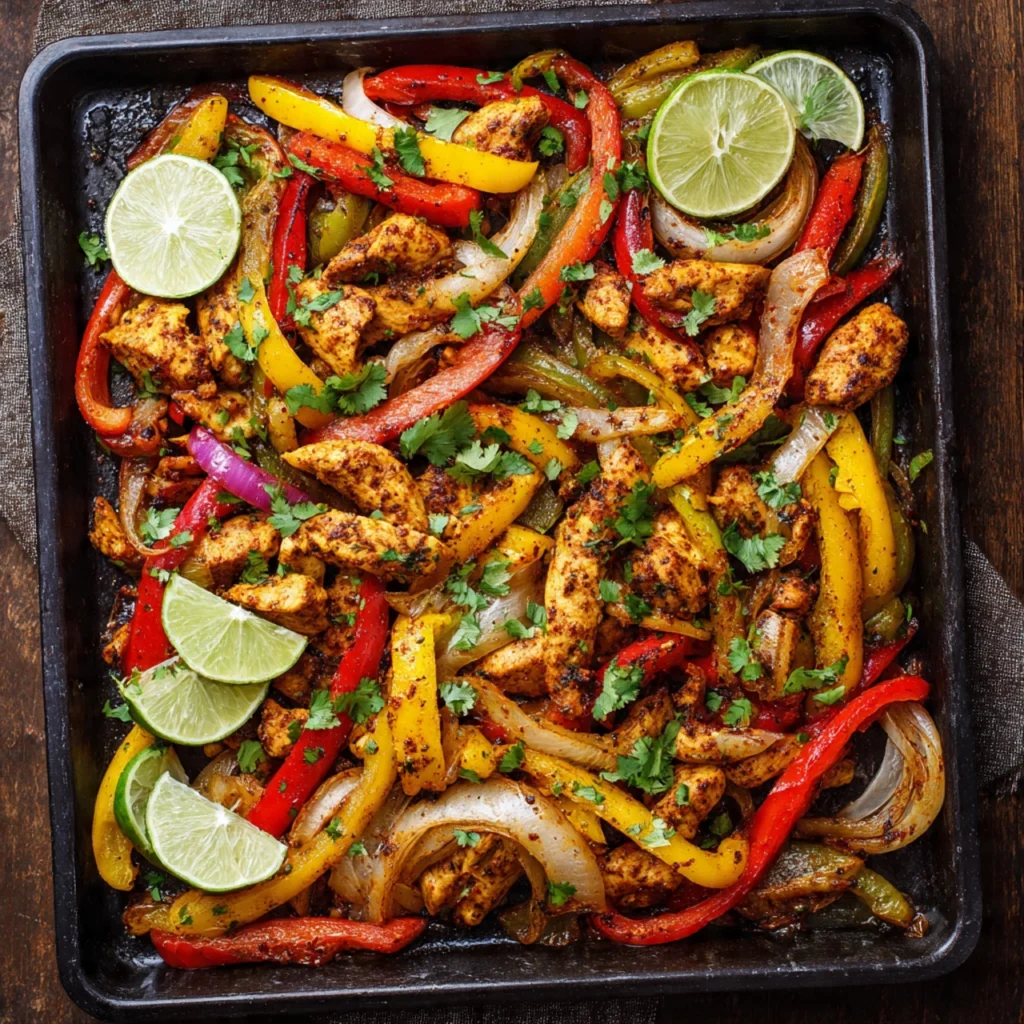
Common Mistakes to Avoid When Making Sheet Pan Chicken Fajitas
Mistake 1: Using a Small Baking Sheet
A standard 9×13-inch pan is too small for this recipe. You need an 18×13-inch commercial-style rimmed baking sheet, also called a half sheet pan. If you only have smaller pans, use two of them rather than cramming everything into one inadequate pan. Proper pan size determines whether you get caramelization or steamed disappointment.
Mistake 2: Skipping the Marinating Time
Even 15 minutes of marinating makes a difference, but some people coat and immediately bake. The spices need time to penetrate the chicken and vegetables, especially the chicken, which is denser. If you’re truly pressed for time, even 10 minutes is better than zero. Plan ahead and marinate in the morning for an evening meal—the difference in flavor depth is remarkable.
Mistake 3: Cutting Peppers Too Thick
Thick pepper strips look beautiful raw but take too long to cook and don’t caramelize properly in the same timeframe as the chicken. Aim for ¼-inch strips consistently. At this thickness, the peppers will be perfectly tender-crisp with caramelized edges right when the chicken reaches 165°F.
Mistake 4: Not Flipping Halfway Through
Sheet pans transfer heat from the bottom, so the undersides of your ingredients cook and brown while the tops don’t. Flipping at the halfway point ensures both sides get caramelized and the cooking is even throughout. Set a timer so you don’t forget this crucial step.
Mistake 5: Ignoring the Broil Step
The broil finish is what separates good Sheet Pan Chicken Fajitas from genuinely great ones. Without it, you get nicely roasted chicken and peppers. With it, you get charred, caramelized edges that taste like a restaurant fajita. The extra 2-3 minutes makes a disproportionately large difference in the final result.
Mistake 6: Cold Tortillas
Serving warm fajita filling in cold, stiff tortillas ruins the whole experience. Cold tortillas crack and fall apart, and they don’t meld with the filling the way warm, pliable tortillas do. Always warm your tortillas right before serving, using whatever method works for you—microwave, gas flame, dry skillet, or oven.
Mistake 7: Overcooking the Chicken
Chicken strips are thin and cook quickly. Leaving them in the oven too long while waiting for the peppers to soften results in dry, chewy chicken. If your peppers need more time but the chicken is done, pull the chicken off the pan and return just the vegetables to the oven. Better yet, cut everything uniformly so it all finishes at the same time.
Mistake 8: Forgetting Acid at the End
Many cooks season before cooking but forget to add freshness at the end. That final squeeze of lime juice over the hot pan brightens everything and adds a burst of fresh flavor that contrasts beautifully with the deep, roasted flavors developed during cooking. It’s the final note that makes the whole dish sing.
Storage and Serving Suggestions for Sheet Pan Chicken Fajitas
How to Store
Refrigerator Storage: Store leftover Sheet Pan Chicken Fajitas (without tortillas and fresh toppings) in an airtight container for up to 4 days. Keep the filling separate from tortillas, which will get soggy if stored together. The flavors actually intensify overnight, making leftovers arguably better than the fresh version for some people.
Freezer Storage: Cooled fajita filling freezes beautifully for up to 3 months. Portion into zip-top freezer bags, remove excess air, label with the date, and lay flat to freeze. Thaw overnight in the refrigerator. Don’t freeze assembled fajitas or fajitas with toppings applied—freeze only the chicken and vegetable filling.
Meal Prep: This recipe is ideal for meal prep. Make a double batch on Sunday and portion the filling into individual containers. Throughout the week, you have ready-to-heat fajita filling that takes 2 minutes in the microwave. Store toppings separately and assemble fresh at meal time.
Reheating Tips
Stovetop (Best for Texture): Heat a skillet over medium-high heat. Add fajita filling and cook for 3-5 minutes, stirring occasionally, until heated through and slightly re-caramelized. A tiny bit of oil helps prevent sticking and revives the caramelized exterior.
Microwave (Quickest): Place filling in a microwave-safe container, cover loosely, and heat in 60-second intervals until hot throughout. The peppers will be slightly softer than fresh, but the flavor remains excellent.
Oven (For Large Batches): Spread filling on a sheet pan and reheat at 375°F for 10-12 minutes until hot. This method restores some of the caramelized texture.
Air Fryer: Heat at 375°F for 5-7 minutes, shaking halfway through. This gives the best results for restoring some crispiness.
Serving Ideas
Classic Fajita Style: Warm flour tortillas filled with chicken, peppers, onions, cheese, sour cream, guacamole, and salsa. This is the crowd-pleaser that never fails.
Fajita Bowl: Serve over cilantro-lime rice with black beans, corn, shredded lettuce, all your favorite toppings, and a drizzle of chipotle crema. This is my personal favorite way to eat these.
Fajita Salad: Pile the warm filling over a bed of mixed greens or chopped romaine, add corn, black beans, cherry tomatoes, tortilla strips, and avocado with a lime vinaigrette. A fantastic low-carb option.
Quesadillas: Layer fajita filling and shredded cheese between two flour tortillas and cook in a dry skillet until golden and crispy. Serve with sour cream and salsa for dipping.
Breakfast Fajita Hash: Reheat leftover filling in a skillet and add scrambled eggs, serve with warm tortillas for an incredible breakfast.
Stuffed Baked Potatoes: Top baked potatoes with fajita filling, cheddar cheese, and sour cream for a creative leftover use.
Nacho Topping: Use leftover fajita filling as nacho topping with cheese, jalapeños, sour cream, and guacamole.
Toppings Bar Setup
For parties and family dinners, set up a toppings bar with:
- Warm tortillas (both flour and corn for variety)
- Shredded cheese blend
- Sour cream or Greek yogurt
- Guacamole or sliced avocado with lime
- Pico de gallo and your favorite salsa
- Pickled jalapeños and fresh jalapeño slices
- Fresh cilantro
- Lime wedges
- Shredded lettuce
- Hot sauce selection
Frequently Asked Questions (FAQ)
1. Can I use chicken thighs instead of chicken breasts?
Absolutely, and many people prefer thighs for Sheet Pan Chicken Fajitas. Boneless, skinless chicken thighs have more fat than breasts, which means more flavor and much more forgiveness if they cook slightly past perfect temperature. They also develop better caramelized edges than breasts. If using thighs, the cook time remains essentially the same since you’re cutting them into strips of similar thickness. Just make sure they reach 165°F internally.
2. How do I make Sheet Pan Chicken Fajitas less spicy?
Simply reduce or eliminate the cayenne pepper in the seasoning blend. The base recipe without cayenne is quite mild—the chili powder provides flavor without significant heat. For very spice-sensitive families or children, you can also reduce the chili powder by half. Adding sour cream and cheese when serving naturally cuts perceived spiciness.
3. Can I make this recipe ahead of time?
Yes, this is one of the best recipes for advance preparation. You can marinate the chicken and vegetables together in the refrigerator for up to 8 hours before baking. Pull the mixture out 20-30 minutes before baking to take the chill off. You can also fully cook the fajita filling up to 4 days ahead and refrigerate it, then reheat as needed throughout the week—making this a fantastic meal prep option.
4. What can I use instead of flour tortillas to make this gluten-free?
Corn tortillas are naturally gluten-free and taste authentic and delicious with fajitas. Look for certified gluten-free corn tortillas to avoid cross-contamination. Warm corn tortillas need especially careful handling as they’re more fragile than flour—warm them wrapped in a damp towel in the microwave for 30 seconds. You can also serve the fajita filling over rice or in lettuce wraps for a completely grain-free option.
5. Can I make Sheet Pan Chicken Fajitas with frozen chicken?
You should not use frozen chicken directly—it needs to be fully thawed before using. Frozen chicken releases too much water during cooking, which creates steam instead of caramelization, resulting in pale, steamed chicken instead of beautifully browned fajita strips. Always thaw chicken completely in the refrigerator overnight before making this recipe.
6. Why are my peppers and onions coming out soggy instead of caramelized?
Soggy vegetables are almost always caused by one of three things: overcrowding the pan (the most common culprit), oven temperature too low, or too much liquid released by the vegetables. Make sure you’re using a large enough baking sheet with everything in a single layer, preheating to a full 425°F before the pan goes in, and not marinating in too much liquid. The oil should be enough to coat without pooling.
7. How do I keep the fajita filling warm while serving?
If you’re having a party or serving a crowd over time, transfer the filling to a slow cooker set on “warm” to maintain temperature for up to 2 hours. You can also return the sheet pan to a 200°F oven with the door cracked slightly. For individual servings, the filling stays hot for about 15-20 minutes after coming out of the oven, which is usually plenty of time for family dinner service.
8. Can I use the same technique for steak fajitas?
Yes! Use the exact same method with flank steak or skirt steak, sliced against the grain into strips. The main difference is cook time—steak cooks faster than chicken, so check it at about 15 minutes. Also, steak can be served medium or medium-rare (135-145°F) if preferred, unlike chicken which must reach 165°F. Everything else about the seasoning, vegetable preparation, and sheet pan technique remains identical.
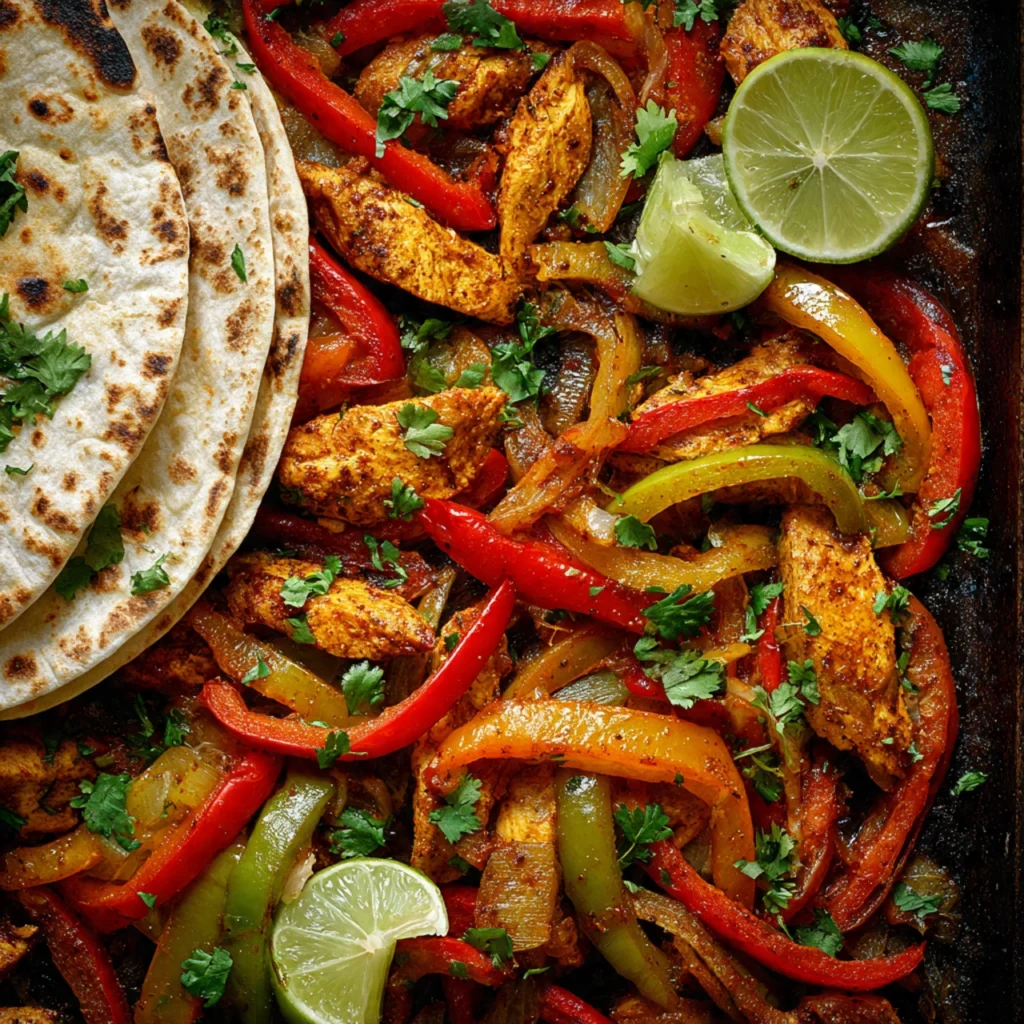
Nutrition Information (Per Serving, Based on 6 Servings, Filling Only Without Tortillas or Toppings)
Calories: 285 kcal
Total Fat: 12g
- Saturated Fat: 2g
- Trans Fat: 0g
Cholesterol: 95mg
Sodium: 520mg
Total Carbohydrates: 12g
- Dietary Fiber: 3g
- Sugars: 6g
Protein: 34g
Vitamin A: 45% DV
Vitamin C: 180% DV
Calcium: 4% DV
Iron: 12% DV
Potassium: 680mg
Note: Nutrition information is approximate and applies to the fajita filling only, not including tortillas, cheese, sour cream, or other accompaniments. Using chicken thighs increases fat content by approximately 3-4g per serving. Adding flour tortillas adds approximately 150-180 calories, 30g carbohydrates, and 5g protein per two tortillas.
Conclusion: Sheet Pan Chicken Fajitas Deserve a Permanent Spot in Your Recipe Rotation
Sheet Pan Chicken Fajitas represent everything I believe great weeknight cooking should be: simple enough to make on a tired Tuesday, impressive enough to serve to guests, flexible enough to accommodate various dietary preferences, and delicious enough that everyone actually wants to eat it without negotiations.
The sheet pan method doesn’t just make this easier—it genuinely makes it better. The consistent high heat creates more even caramelization than most home stovetops can achieve. The one-pan approach means you can prep everything at once rather than cooking in batches. And the broil finish gives you that restaurant-quality char that makes people think you have professional cooking skills.
What I appreciate most is how this recipe rewards even minimal effort with outstanding results. Spend fifteen extra minutes on the marinade instead of coating and immediately baking? The flavor improvement is dramatic. Use a wire rack or ensure your pan isn’t crowded? The caramelization goes from adequate to spectacular. Squeeze fresh lime at the end? The whole dish brightens and comes alive.
These Sheet Pan Chicken Fajitas have become my most-requested dinner party contribution, my go-to answer when someone asks what to make for a crowd with various dietary restrictions, and my family’s hands-down favorite weeknight meal. Once you make them, I’m confident they’ll earn that same status in your kitchen too.
So grab that sheet pan, slice those peppers, and get ready for fajita night done right. Better yet, double the recipe because leftovers are just as good reheated, and trust me—you’ll be happy to have more.
Happy fajita making!
PrintSheet Pan Chicken Fajitas: One Pan, Zero Stress, Maximum Flavor
These Sheet Pan Chicken Fajitas deliver restaurant-quality caramelized chicken and peppers with minimal effort and just one pan to wash. The homemade fajita seasoning, brief marinating time, and strategic broil finish create deeply flavored, slightly charred fajita filling that blows any restaurant version out of the water. Ready in 30 active minutes with endless serving options, this weeknight staple is as versatile as it is delicious.
- Prep Time: 15 minutes
- Cook Time: 25 minutes
- Total Time: 40 minutes (plus optional marinating time)
- Yield: 6 servings
- Category: Main Dish, Dinner
- Method: Roasting, Sheet Pan
- Cuisine: Mexican, Tex-Mex
- Diet: Gluten Free
Ingredients
Chicken and Vegetables:
- 2 pounds boneless, skinless chicken breasts or thighs, sliced into strips
- 3 bell peppers (1 red, 1 yellow, 1 green), sliced into ¼-inch strips
- 1 large onion, sliced into strips
- 3 tablespoons olive oil
- 3 cloves garlic, minced
Fajita Seasoning:
- 2 teaspoons chili powder
- 1½ teaspoons cumin
- 1 teaspoon smoked paprika
- 1 teaspoon garlic powder
- 1 teaspoon onion powder
- ½ teaspoon oregano
- ½ teaspoon salt
- ½ teaspoon black pepper
- ¼ teaspoon cayenne pepper
- Juice of 1 lime
For Serving:
- 8-10 flour or corn tortillas, warmed
- Shredded cheese, sour cream, guacamole, salsa, cilantro, lime wedges
Instructions
- Make seasoning: Combine all spices in small bowl and mix well.
- Prep ingredients: Slice chicken into ½-inch wide strips. Slice peppers and onion into ¼-inch strips.
- Season: Toss chicken, peppers, and onion in large bowl with olive oil, garlic, lime juice, and spice blend. Coat thoroughly. Marinate 15-30 minutes at room temperature (or up to 8 hours refrigerated).
- Prep pan: Preheat oven to 425°F. Line large baking sheet with foil or parchment paper.
- Arrange: Spread chicken and vegetables in single layer on prepared sheet. Don’t crowd or overlap.
- Roast: Bake 20-25 minutes, flipping everything at halfway point.
- Broil: Switch to broil for final 2-3 minutes until edges are slightly charred. Watch carefully.
- Finish and serve: Squeeze fresh lime over everything. Serve immediately with warm tortillas and toppings
Notes
- Never crowd the pan—use two sheets if needed for proper caramelization
- The broil step creates essential char—don’t skip it but watch carefully
- Marinating even 15 minutes significantly improves flavor
- Chicken thighs are more forgiving and flavorful than breasts
- Cut everything uniformly for even cooking
- Filling stores 4 days refrigerated, 3 months frozen
- Works for bowls, salads, quesadillas, and nachos—not just wrapped fajitas
- Completely gluten-free with corn tortillas
- Can substitute steak or shrimp for chicken using same technique