Introduction: Why Rice Paper Dumplings Became My Go-To Dumpling Method
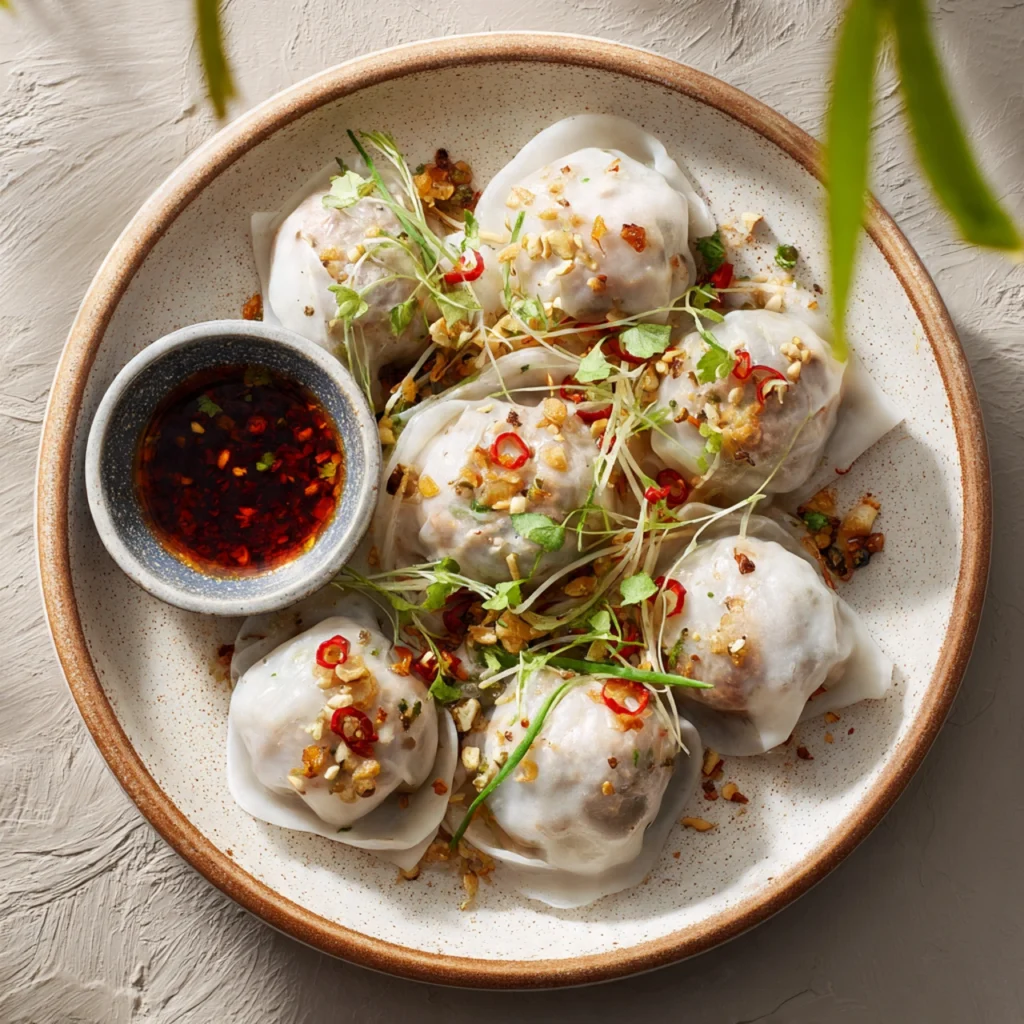
Rice Paper Dumplings are a revelation for anyone who’s ever struggled with traditional wheat wrappers. These gluten-free dumplings crisp up into golden, crunchy shells while keeping the filling juicy and flavorful—without any tricky folding techniques. One bite, and the shattering exterior gives way to a savory, perfectly cooked filling that will make you wonder why you ever used anything else.
What’s more, rice paper is naturally forgiving: it seals with just water, doesn’t tear easily, and pan-fries to a shatteringly crisp texture that wheat wrappers can’t match. Additionally, you can steam them for a delicate chew or deep-fry them into puffed, golden pockets—thus the same wrapper adapts to whatever cooking method you prefer.
Perfect for pork, veggie, seafood, or creative fusion fillings, these dumplings are versatile, accessible, and surprisingly easy to make. Even beginners can master them quickly—if you can wrap a spring roll, you’ll be a pro by your third or fourth dumpling. They’re ideal for weeknight dinners, casual gatherings, or impressive dinner parties where they disappear in seconds.
Ready to make Rice Paper Dumplings that’ll impress everyone while being secretly easy?
Ingredients: What You’ll Need for Perfect Rice Paper Dumplings
For the Filling (Makes About 24 Dumplings)
- 1 pound ground pork (or chicken, turkey, or plant-based ground) – The protein base
- 2 cups napa cabbage, finely chopped – Adds moisture and crunch
- 3 green onions, finely chopped – Fresh, mild onion flavor
- 2 cloves garlic, minced – Essential savory depth
- 1 tablespoon fresh ginger, minced – Aromatic warmth
- 2 tablespoons soy sauce – Salty umami
- 1 tablespoon sesame oil – Nutty richness
- 1 teaspoon sugar – Balances flavors
- ½ teaspoon white pepper – Gentle spice
- ½ teaspoon salt – Essential seasoning
Wrappers
- 12 round rice paper sheets (8-inch diameter) – Cut in half to make 24 wrappers
- Warm water – For softening rice paper
For Cooking
- 2 tablespoons vegetable oil – For pan-frying
- ½ cup water – For steaming during pan-frying
For Serving
- Soy sauce or tamari – Classic dipping sauce
- Black vinegar – Tangy, complex dipping option
- Chili oil – For heat lovers
- Sesame seeds – Garnish
- Sliced green onions – Fresh finish
Optional Filling Variations
- 8 oz shrimp, chopped – Seafood version
- 8 oz mushrooms, finely chopped – Vegetarian/vegan option
- 2 cups spinach, chopped – Extra vegetables
- 1 tablespoon oyster sauce – Deeper umami (not vegetarian)
- Fresh cilantro – Herbal brightness
Equipment Needed
- Large mixing bowl
- Large skillet with lid
- Shallow dish or pie plate for soaking rice paper
- Clean kitchen towel
- Spatula
- Sharp knife or kitchen scissors
Step-by-Step Instructions: Creating Perfect Rice Paper Dumplings
Step 1: Prepare the Filling (10 minutes)
In a large mixing bowl, combine the ground pork, finely chopped napa cabbage, chopped green onions, minced garlic, minced ginger, soy sauce, sesame oil, sugar, white pepper, and salt. Using your hands or a wooden spoon, mix thoroughly until everything is evenly distributed and the mixture becomes slightly sticky and cohesive—about 2-3 minutes of mixing.
The cabbage will release moisture as it sits, which is actually desirable—it keeps the filling juicy. If you’re making the filling ahead, refrigerate it covered for up to 24 hours. The flavors will actually improve as they meld.
To test seasoning, take a small amount of filling and microwave it for 20-30 seconds until cooked through. Taste and adjust salt, soy sauce, or other seasonings as needed. It’s easier to fix seasoning now than after the dumplings are assembled.
Step 2: Prepare Your Workspace (5 minutes)
Cut each rice paper sheet in half using clean kitchen scissors or a sharp knife. You’ll get two half-circles from each full sheet. Stack the cut pieces and keep them dry—don’t soak them until you’re ready to use each one.
Set up your assembly station: Have your filling bowl nearby, a shallow dish or pie plate filled with warm (not hot) water, a clean damp kitchen towel on your work surface, and a plate or tray ready for the assembled dumplings.
Fill your shallow dish with warm water—about the temperature of warm bath water (100-105°F). Water that’s too hot makes the rice paper too soft and difficult to work with. Water that’s too cold won’t soften it enough.
Step 3: Soften and Fill the Rice Paper (2 minutes per dumpling)
Working with one piece at a time, submerge a rice paper half-circle in the warm water for about 5-10 seconds—just until it begins to soften. It should still feel slightly firm when you remove it. It will continue softening as you work.
Place the softened rice paper on your damp towel. Position it so the straight edge is closest to you and the curved edge is away from you.
Place about 1 tablespoon of filling in the center-bottom portion of the rice paper, leaving about 1 inch of space from all edges. Don’t overfill—too much filling makes sealing difficult and causes bursting during cooking.
Step 4: Wrap the Dumplings (1 minute per dumpling)
Fold the bottom edge (closest to you) over the filling. Fold in both sides, creating an envelope. Continue rolling away from you, tucking tightly as you go, until you’ve created a neat package. The rice paper is sticky and will seal to itself without any additional water or egg wash.
The shape should be a compact rectangular or cylindrical package with the filling completely enclosed. Press gently to seal and remove any air pockets, which can cause the dumplings to burst during cooking.
Place the finished dumpling on your prepared plate, seam side down. Cover loosely with plastic wrap or a damp towel to prevent drying out. Repeat with remaining rice paper and filling.
Step 5: Pan-Fry the Dumplings (12-15 minutes)
Heat 2 tablespoons of vegetable oil in a large skillet (preferably non-stick) over medium-high heat. Once the oil is shimmering, arrange the dumplings in the pan in a single layer, seam side down. Don’t crowd—leave space between each dumpling.
Let them cook undisturbed for 2-3 minutes until the bottoms are golden brown and crispy. You should hear steady sizzling.
Once the bottoms are golden, carefully add ½ cup of water to the pan (it will sizzle and steam dramatically—be careful). Immediately cover the pan with a tight-fitting lid. Reduce heat to medium.
Steam the dumplings for 6-8 minutes until the filling is cooked through (pork should reach 160°F internal temperature). The rice paper will become slightly translucent when fully cooked.
Remove the lid and increase heat to medium-high. Let any remaining water evaporate and allow the dumplings to crisp up again for 1-2 minutes. This creates crispy bottoms and sides while ensuring the filling is fully cooked.
Step 6: Serve Immediately
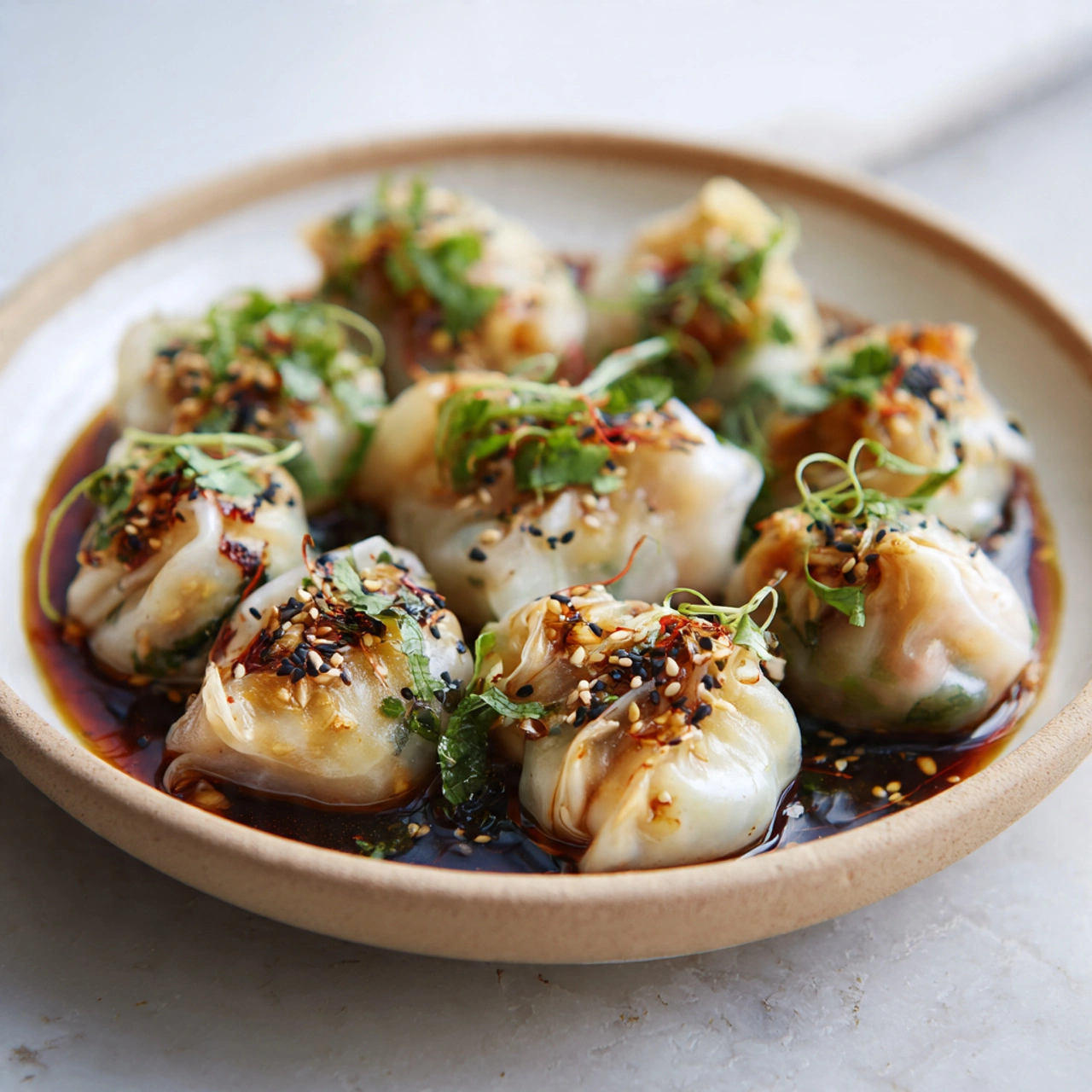
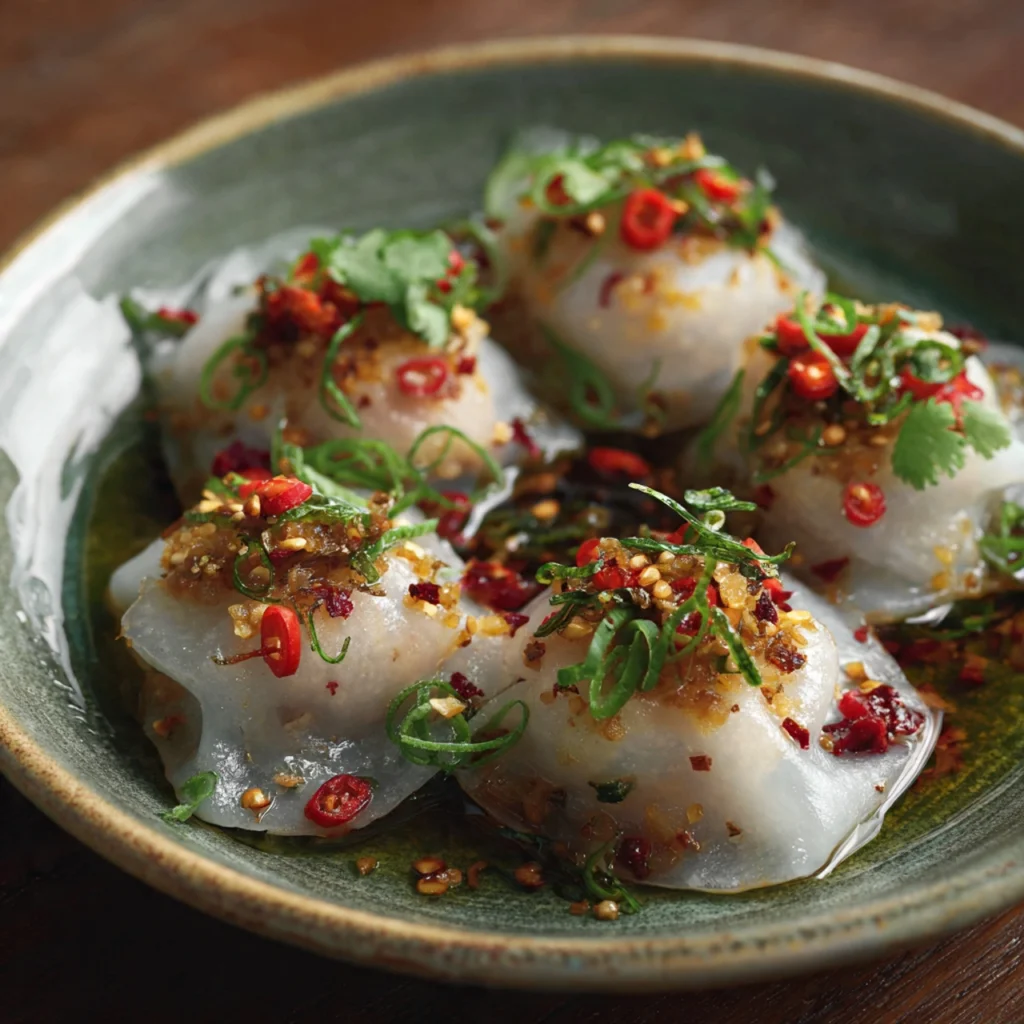
Transfer the dumplings to a serving plate using a spatula. Garnish with sesame seeds and sliced green onions if desired. Serve hot with your choice of dipping sauces—soy sauce, black vinegar, chili oil, or a combination.
Rice paper dumplings are best eaten hot and fresh when the contrast between crispy exterior and juicy filling is at its peak.
Pro Tips for the Perfect Rice Paper Dumplings
Tip 1: Don’t Oversoak the Rice Paper
The most common mistake is leaving rice paper in water too long, creating wrappers that are too soft, sticky, and difficult to work with. Dip for just 5-10 seconds—the paper should still feel slightly firm when you remove it. It continues softening as you work and will be perfectly pliable by the time you finish wrapping.
Tip 2: Keep Everything Moist But Not Wet
Work on a damp (not soaking wet) towel to prevent sticking. If the towel gets too wet, wring it out and dampen again. If the rice paper starts sticking to your hands, lightly dampen your fingers. The balance between too dry (sticking) and too wet (falling apart) is key.
Tip 3: Don’t Overfill
More filling seems better but creates dumplings that are impossible to seal and prone to bursting during cooking. Use about 1 tablespoon of filling per wrapper—it seems like a small amount but it’s exactly right. Overfilled dumplings inevitably burst open.
Tip 4: The Pan-Fry-Steam Method is Essential
This technique—frying first, then steaming, then crisping again—ensures fully cooked filling while creating that irresistible crispy bottom. Skipping the steam means raw filling. Skipping the final crisp means soggy dumplings. All three steps are necessary for perfect results.
Tip 5: Use a Non-Stick Pan
Rice paper can stick stubbornly to regular pans. A good non-stick skillet makes the entire process easier and ensures you get those beautifully golden, crispy bottoms without the dumplings tearing when you try to flip or remove them.
Tip 6: Make Ahead and Freeze Uncooked
Assemble dumplings completely, place on a parchment-lined baking sheet without touching, and freeze until solid (about 2 hours). Transfer frozen dumplings to freezer bags for storage up to 3 months. Cook directly from frozen, adding 2-3 extra minutes to the steaming time.
Tip 7: Cut Rice Paper for Perfect Size
Full-size rice paper sheets are too large for convenient dumplings. Cutting them in half creates the perfect size for hand-held dumplings with the right filling-to-wrapper ratio. Use clean scissors or a sharp knife to cut dry rice paper before soaking.
Tip 8: Work in Batches
Don’t soften multiple rice papers at once thinking you’ll save time. They stick together and become unmanageable. Soften one piece, fill it, wrap it, then move to the next. This methodical approach prevents frustration and produces better results.
Common Mistakes to Avoid When Making Rice Paper Dumplings
Mistake 1: Using Hot Water to Soften Rice Paper
Hot water makes rice paper too soft too quickly, creating wrappers that tear easily and stick to everything. Use warm water (100-105°F)—about the temperature of a warm bath. This gives you control and workable wrappers.
Mistake 2: Not Draining Cabbage
Cabbage releases water, which can make filling too wet and cause dumplings to leak. While some moisture is good, excess is problematic. If your filling seems very wet, let it drain in a colander for 10 minutes before assembling dumplings.
Mistake 3: Cooking Over Too-High Heat
High heat burns the rice paper before the filling cooks through. Use medium-high heat for the initial fry, then medium for steaming. This ensures golden, crispy bottoms without burning and fully cooked filling.
Mistake 4: Not Covering During Steaming
Skipping the lid means the filling doesn’t cook through and the dumplings don’t become translucent and tender. The steam is essential for cooking the filling and creating the right texture. Always cover tightly during the steaming phase.
Mistake 5: Opening the Lid During Steaming
Every time you lift the lid, you release heat and steam, extending cooking time and potentially resulting in undercooked filling. Keep the lid on for the full 6-8 minutes of steaming without peeking.
Mistake 6: Crowding the Pan
Overcrowding prevents proper browning and even cooking. Leave space between dumplings so steam can circulate and each dumpling gets direct contact with the hot pan. Cook in batches if necessary rather than cramming them all in.
Mistake 7: Skipping the Final Crisping Step
After steaming, there’s usually residual water in the pan. Let this evaporate completely and allow the dumplings to crisp up again for 1-2 minutes. This final step creates those shatteringly crispy bottoms that make rice paper dumplings special.
Mistake 8: Storing Assembled But Uncooked Dumplings at Room Temperature
Rice paper dumplings that sit uncooked will dry out and the wrappers will become brittle and crack. If not cooking immediately, cover tightly with plastic wrap and refrigerate for up to 2 hours, or freeze as directed.
Storage and Serving Suggestions for Rice Paper Dumplings
How to Store
Uncooked Assembled Dumplings:
- Refrigerate: Cover tightly with plastic wrap, refrigerate up to 2 hours before cooking
- Freeze: Place on parchment-lined tray, freeze until solid, transfer to freezer bags for up to 3 months. Cook from frozen.
Cooked Dumplings:
- Refrigerate: Store in airtight container for up to 3 days. Reheat in a skillet to restore crispiness.
- Room Temperature: Don’t leave cooked dumplings at room temperature for more than 2 hours (food safety)
- Freezing: Not recommended—cooked rice paper doesn’t freeze well and becomes mushy when thawed
Filling Alone: Store uncooked filling in airtight container, refrigerate up to 24 hours or freeze up to 3 months
Serving Suggestions
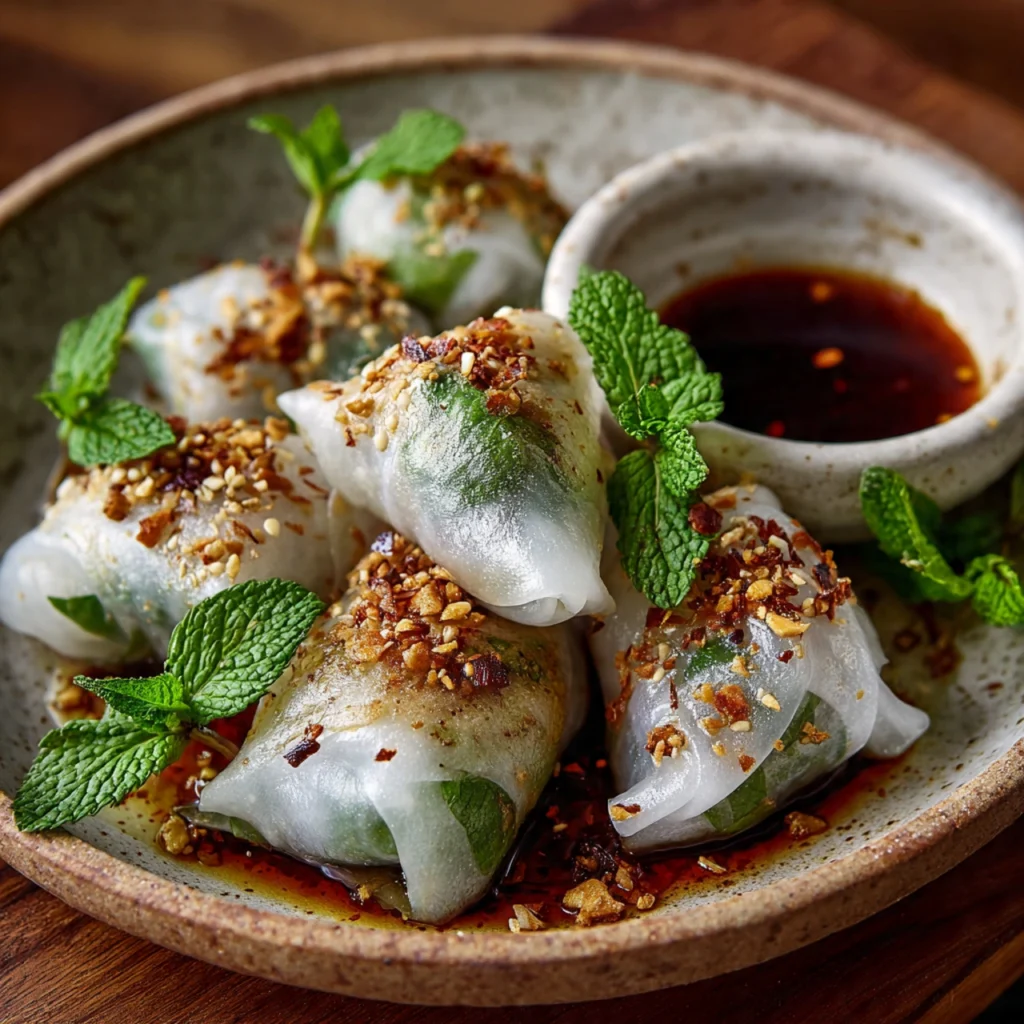
Classic Presentation: Serve hot dumplings on a platter with individual small bowls of dipping sauces—soy sauce, black vinegar, and chili oil. Garnish with sesame seeds and green onions.
Dumpling Party: Set up a DIY dumpling station with softened rice paper, filling, and toppings. Let guests make and cook their own dumplings. It’s interactive and fun.
As Part of Larger Meal: Serve dumplings as an appetizer before a larger Asian-inspired meal, or as part of a dim sum spread with multiple small dishes.
Dumpling Bowl: Serve dumplings over rice or noodles with steamed vegetables and drizzle with sauce for a complete meal.
Bento Box: Pack cooled dumplings in lunch boxes with dipping sauce in a small container. They’re delicious at room temperature or reheated.
Soup Addition: Add pan-fried dumplings to hot broth with vegetables and noodles for a hearty soup.
Dipping Sauce Ideas
Classic Soy-Vinegar: 2 parts soy sauce, 1 part rice vinegar, dash of sesame oil, sliced green onions
Spicy Chili Oil: Soy sauce with generous chili oil, minced garlic, a splash of black vinegar
Ginger-Scallion: Minced ginger, sliced scallions, hot oil poured over, then add soy sauce
Peanut Sauce: Peanut butter, soy sauce, rice vinegar, honey, sesame oil, water to thin
Sweet Chili Sauce: Store-bought or homemade Thai sweet chili sauce
Ponzu: Citrus-soy sauce with a refreshing, tangy flavor
Filling Variation Ideas
Shrimp and Pork: Half pork, half chopped shrimp for seafood lovers
Vegetarian: Finely chopped mushrooms, cabbage, carrots, and tofu
Chicken and Ginger: Ground chicken with extra ginger and green onions
Lamb and Cumin: Ground lamb with cumin, coriander, and chili for Middle Eastern twist
Thai-Inspired: Ground pork with lemongrass, Thai basil, and fish sauce
Korean-Style: Kimchi and pork with gochugaru (Korean chili flakes)
Vegan: Plant-based ground with traditional vegetables and seasonings
Frequently Asked Questions (FAQ)
1. Can I steam Rice Paper Dumplings instead of pan-frying?
Yes! Line a steamer basket with parchment paper or cabbage leaves (to prevent sticking), arrange dumplings without touching, and steam over boiling water for 8-10 minutes until filling is cooked through. Steamed rice paper dumplings are translucent, delicate, and chewy rather than crispy.
2. Are Rice Paper Dumplings healthier than traditional dumplings?
Rice paper dumplings are naturally gluten-free and can be lower in calories depending on cooking method. Steamed rice paper dumplings are very light and healthy. Pan-fried versions use minimal oil compared to deep-fried options. The wrappers themselves are quite low in calories and fat.
3. Can I use spring roll wrappers instead of rice paper?
Spring roll wrappers (the thick, opaque kind) are different from rice paper and don’t work the same way. Rice paper (bánh tráng) is thin, translucent, and requires soaking. Spring roll wrappers are wheat-based and wouldn’t give you the same texture. Stick with rice paper specifically.
4. Why do my Rice Paper Dumplings stick to the pan?
Sticking usually means insufficient oil, pan not hot enough before adding dumplings, or moving them too soon. Make sure the pan is properly heated, use enough oil to coat the bottom, and let dumplings cook undisturbed for 2-3 minutes before checking. A good non-stick pan makes this much easier.
5. Can I make Rice Paper Dumplings with pre-cooked filling?
Yes! Using pre-cooked filling means you only need to heat them through rather than worrying about fully cooking raw meat. Reduce steaming time to 3-4 minutes. This is great for using leftover cooked ground meat or vegetables.
6. How do I know when the filling is fully cooked?
The pork filling should reach 160°F internal temperature. Visually, the rice paper becomes translucent when fully cooked, and you should no longer see any pink in the meat (if using pork). If you’re unsure, cut one dumpling open to check—the filling should be completely cooked through with no raw areas.
7. Can I deep-fry Rice Paper Dumplings?
Absolutely! Heat oil to 350°F and fry dumplings for 3-4 minutes until golden and crispy all over. They puff up slightly and become incredibly crunchy. Make sure the filling is pre-cooked or very finely minced so it cooks through quickly. Deep-fried rice paper dumplings are addictively crispy.
8. What if my rice paper tears while wrapping?
If a wrapper tears, you can patch it with another small piece of softened rice paper—the layers will stick together. Or simply start over with a new piece. Rice paper is inexpensive, so don’t stress about occasional tears while you’re learning. With practice, tearing becomes rare.
Nutrition Information (Per Dumpling, Based on 24 Dumplings with Pork Filling)
Calories: 65 kcal
Total Fat: 3.5g
- Saturated Fat: 1g
- Trans Fat: 0g
Cholesterol: 15mg
Sodium: 125mg
Total Carbohydrates: 5g
- Dietary Fiber: 0.5g
- Sugars: 0.5g
Protein: 4g
Vitamin A: 2% DV
Vitamin C: 4% DV
Calcium: 1% DV
Iron: 3% DV
Note: Nutrition information is approximate and based on pan-fried dumplings with pork filling. Values will vary based on cooking method (steamed vs. fried), type of protein used, and specific ingredients. Rice paper wrappers are naturally low in calories and gluten-free.
Conclusion: Your Rice Paper Dumplings Journey Starts Now
Rice Paper Dumplings prove that sometimes the best solutions come from creative substitutions—what started as a pantry emergency has become my preferred method for making dumplings, delivering results that are not just “as good as” traditional dumplings but genuinely different and special in their own right.
What I treasure most about this recipe is how it removes the intimidation factor from dumpling-making while creating something that’s actually more interesting texturally than standard dumplings. The shatteringly crisp exterior you get from rice paper simply isn’t achievable with wheat wrappers, making this a genuinely unique eating experience.
Since discovering rice paper dumplings, they’ve become a regular part of my cooking rotation. They’re easier to assemble than traditional dumplings, they’re naturally gluten-free for friends with dietary restrictions, and they disappear just as quickly at dinner parties while generating more conversation and recipe requests.
The beauty is in the versatility. Make them exactly as written for classic pork dumplings, or experiment with vegetarian, seafood, or fusion fillings. Pan-fry for crispiness, steam for delicacy, or deep-fry for maximum crunch. The rice paper wrapper adapts beautifully to whatever direction you take.
So grab those rice paper sheets, mix up that filling, and prepare to discover why rice paper might just become your new favorite dumpling wrapper. Your crispy, gluten-free dumpling journey starts now.
Happy cooking!
PrintRice Paper Dumplings: The Genius Gluten-Free Alternative to Traditional Wrappers
These Rice Paper Dumplings offer a gluten-free alternative to traditional dumplings with an incredibly crispy exterior and juicy filling. Using rice paper instead of wheat wrappers, they’re easier to assemble, naturally gluten-free, and develop a shatteringly crisp texture when pan-fried. Perfect for anyone avoiding gluten or looking for a unique dumpling experience!
- Prep Time: 30 minutes
- Cook Time: 15 minutes
- Total Time: 45 minutes
- Yield: 24 dumplings
- Category: Appetizer, Main Dish, Snack
- Method: Pan-Frying, Steaming
- Cuisine: Vietnamese, Asian Fusion
- Diet: Gluten Free
Ingredients
Filling:
- 1 lb ground pork
- 2 cups napa cabbage, finely chopped
- 3 green onions, chopped
- 2 cloves garlic, minced
- 1 tablespoon ginger, minced
- 2 tablespoons soy sauce
- 1 tablespoon sesame oil
- 1 teaspoon sugar
- ½ teaspoon white pepper
- ½ teaspoon salt
Wrappers:
- 12 round rice paper sheets (8″), cut in half
- Warm water for soaking
For Cooking:
- 2 tablespoons vegetable oil
- ½ cup water
For Serving:
- Soy sauce, black vinegar, chili oil
- Sesame seeds, green onions
Instructions
- Make filling: Mix ground pork, cabbage, green onions, garlic, ginger, soy sauce, sesame oil, sugar, white pepper, and salt until combined. Refrigerate if making ahead.
- Prep workspace: Cut rice paper sheets in half. Fill shallow dish with warm water. Have damp towel on work surface.
- Soften wrapper: Dip one rice paper half in warm water 5-10 seconds until beginning to soften. Place on damp towel.
- Fill: Place 1 tablespoon filling in center-bottom of rice paper, leaving 1″ from edges. Fold bottom over filling, fold in sides, roll tightly. Seal naturally (no additional water needed). Repeat with remaining wrappers and filling.
- Pan-fry: Heat 2 tbsp oil in large non-stick skillet over medium-high. Arrange dumplings seam-side down without crowding. Cook 2-3 minutes until bottoms are golden. Add ½ cup water, immediately cover tightly. Reduce to medium, steam 6-8 minutes. Remove lid, increase heat, let water evaporate and bottoms crisp again, 1-2 minutes.
- Serve: Transfer to serving plate. Serve hot with dipping sauces, sesame seeds, and green onions.
Notes
- Don’t oversoak rice paper—just 5-10 seconds
- Work on damp (not wet) towel to prevent sticking
- Don’t overfill—1 tablespoon filling per wrapper
- Pan-fry, steam, then crisp again for best texture
- Use non-stick pan to prevent sticking
- Freeze assembled uncooked dumplings up to 3 months
- Cook frozen dumplings directly, adding 2-3 min steaming time
- Cut full rice paper sheets in half for perfect size
- Work one wrapper at a time—don’t prep multiple ahead
- Steam instead of pan-fry for lighter, translucent texture