Introduction: Why Red Velvet Desserts Are the Crown Jewel of Baking
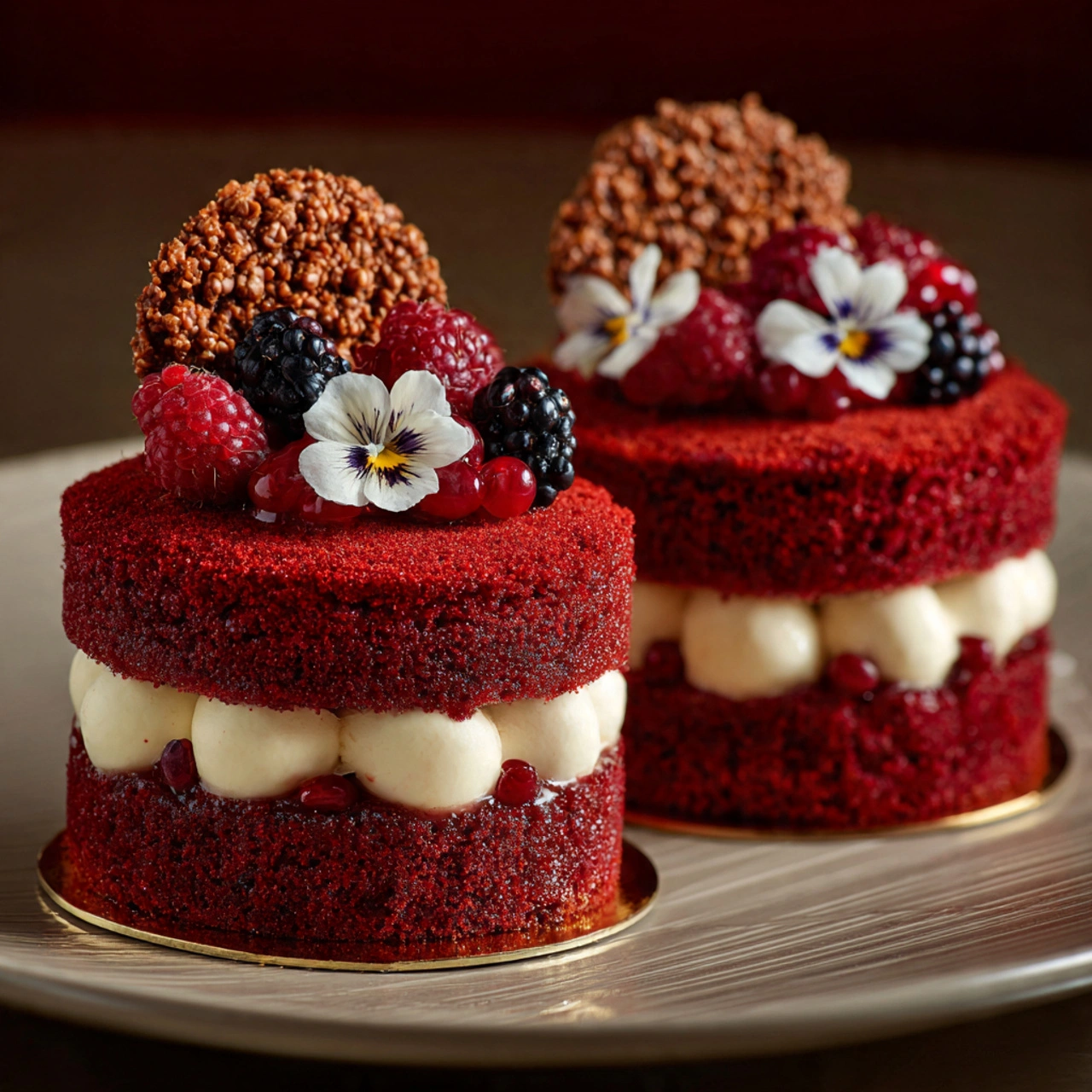
Red Velvet Desserts have captivated dessert lovers for generations with their stunning crimson hue, velvety texture, and subtle cocoa flavor perfectly balanced with tangy cream cheese frosting. Whether you’re planning a romantic Valentine’s Day dinner, celebrating a birthday, or simply craving something special, these luxurious treats deliver both visual drama and unforgettable taste.
What makes red velvet truly special isn’t just the color—it’s the unique combination of buttermilk, cocoa, and vinegar that creates an incredibly tender crumb with a flavor profile unlike any other chocolate cake. The chemistry between these ingredients produces that signature “velvet” texture that gave this Southern classic its name back in the 1800s.
In this comprehensive guide, I’ll walk you through everything you need to know about creating perfect Red Velvet Desserts at home. From the essential ingredients that make red velvet special to pro tips that ensure bakery-quality results every single time, you’ll discover why this recipe has earned its place as one of America’s most beloved desserts.
The Magic Behind Red Velvet: Understanding What Makes It Special
Before we dive into the recipe, let’s talk about what actually makes Red Velvet Desserts different from regular chocolate cake. The secret lies in the careful balance of acidic ingredients (buttermilk and vinegar) with cocoa powder and baking soda. This chemical reaction not only affects the texture but also enhances the red color—originally a natural reaction before food coloring became the standard.
The buttermilk provides moisture and tang, the cocoa adds depth without overwhelming chocolate flavor, and the vinegar activates the baking soda while tenderizing the gluten in the flour. Together, these components create that impossibly soft, fine-crumbed texture that literally melts on your tongue.
Essential Ingredients for Perfect Red Velvet Desserts
Dry Ingredients
- 2½ cups all-purpose flour (spooned and leveled, not packed)
- 2 tablespoons unsweetened cocoa powder (Dutch-process or natural)
- 1 teaspoon baking soda
- 1 teaspoon salt
- 1½ cups granulated sugar
Wet Ingredients
- 1½ cups vegetable oil (or canola oil for neutral flavor)
- 2 large eggs (room temperature)
- 1 cup buttermilk (room temperature, full-fat preferred)
- 2 tablespoons red food coloring (liquid or gel, adjust for desired intensity)
- 1 teaspoon pure vanilla extract
- 1 teaspoon white vinegar (or apple cider vinegar)
Classic Cream Cheese Frosting
- 16 ounces cream cheese (two 8-oz blocks, softened to room temperature)
- 1 cup unsalted butter (2 sticks, softened)
- 4 cups powdered sugar (sifted for smoothness)
- 2 teaspoons pure vanilla extract
- Pinch of salt
Optional Enhancements
- 1 teaspoon espresso powder (enhances chocolate flavor without adding coffee taste)
- ½ teaspoon almond extract (adds complexity)
- Extra cocoa powder for dusting (decorative finish)
Step-by-Step Instructions: Mastering Red Velvet Desserts
Preparation Phase (10 minutes)
Step 1: Set Up Your Kitchen Preheat your oven to 350°F (175°C). This is crucial—starting with the correct temperature ensures even baking and proper rise. Position your oven rack in the center position for optimal heat distribution.
Step 2: Prepare Your Pans Grease two 9-inch round cake pans thoroughly with butter or non-stick spray, then line the bottoms with parchment paper circles. Grease the parchment too. This double insurance means your cakes will release perfectly every time without sticking or tearing.
Step 3: Bring Ingredients to Room Temperature This step cannot be skipped! Room temperature eggs and buttermilk incorporate much more smoothly into the batter, creating a better emulsion and more tender final texture. Leave eggs and buttermilk out for 30-45 minutes before starting.
Making the Batter (15 minutes)
Step 4: Combine Dry Ingredients In a large mixing bowl, whisk together the flour, cocoa powder, baking soda, and salt. Whisking aerates the flour and evenly distributes the leavening agents, preventing pockets of baking soda that could create an unpleasant taste.
Step 5: Mix Wet Ingredients In a separate large bowl or stand mixer, combine the sugar and oil. Beat on medium speed for 2-3 minutes until well combined. Add eggs one at a time, beating well after each addition until the mixture looks lighter and slightly fluffy.
Step 6: Create the Red Velvet Color In a small bowl, whisk together the buttermilk, red food coloring, vanilla extract, and vinegar. The vinegar will slightly curdle the buttermilk—this is normal and actually desirable for the chemical reaction we want.
Step 7: Combine Everything Add one-third of the dry ingredients to the oil mixture, mixing on low speed just until combined. Add half the buttermilk mixture, then another third of the dry ingredients, the remaining buttermilk, and finally the last third of the dry ingredients. Mix after each addition only until just incorporated—overmixing develops gluten and creates a tough cake.
Step 8: Final Batter Check Your batter should be smooth, pourable, and vibrantly red. It will be thinner than typical cake batter, almost like thick cream. This is perfect—it’s what creates that tender, velvety texture.
Baking Process (30-35 minutes)
Step 9: Divide and Bake Divide the batter evenly between your prepared pans. I like to use a kitchen scale for precision—each pan should have approximately 23-24 ounces of batter. Tap the pans firmly on the counter 3-4 times to release any air bubbles trapped in the batter.
Step 10: Monitor the Baking Bake for 28-32 minutes. Start checking at 28 minutes by inserting a toothpick into the center of each cake. It should come out with just a few moist crumbs attached—not wet batter, but not completely clean either. The tops should spring back when lightly pressed.
Step 11: Cool Properly Let cakes cool in the pans for exactly 10 minutes on a wire rack. This allows them to set without becoming soggy from steam. After 10 minutes, run a butter knife around the edges and carefully invert onto the wire rack. Peel off the parchment paper. Let cool completely before frosting—at least 2 hours.
Creating the Cream Cheese Frosting (10 minutes)
Step 12: Beat the Butter and Cream Cheese In a large bowl with a hand mixer or stand mixer with the paddle attachment, beat the softened cream cheese and butter together on medium speed for 3-4 minutes. They should be completely smooth with no lumps. Scrape down the sides and bottom of the bowl frequently.
Step 13: Add Sugar Gradually Reduce speed to low and add the powdered sugar one cup at a time, mixing well after each addition. Once all the sugar is incorporated, increase speed to medium-high and beat for an additional 2-3 minutes until light and fluffy.
Step 14: Flavor and Adjust Beat in the vanilla extract and salt. Taste and adjust—add more vanilla for stronger flavor or more powdered sugar if you prefer sweeter frosting. The consistency should be spreadable but hold its shape.
Assembly and Decoration (20 minutes)
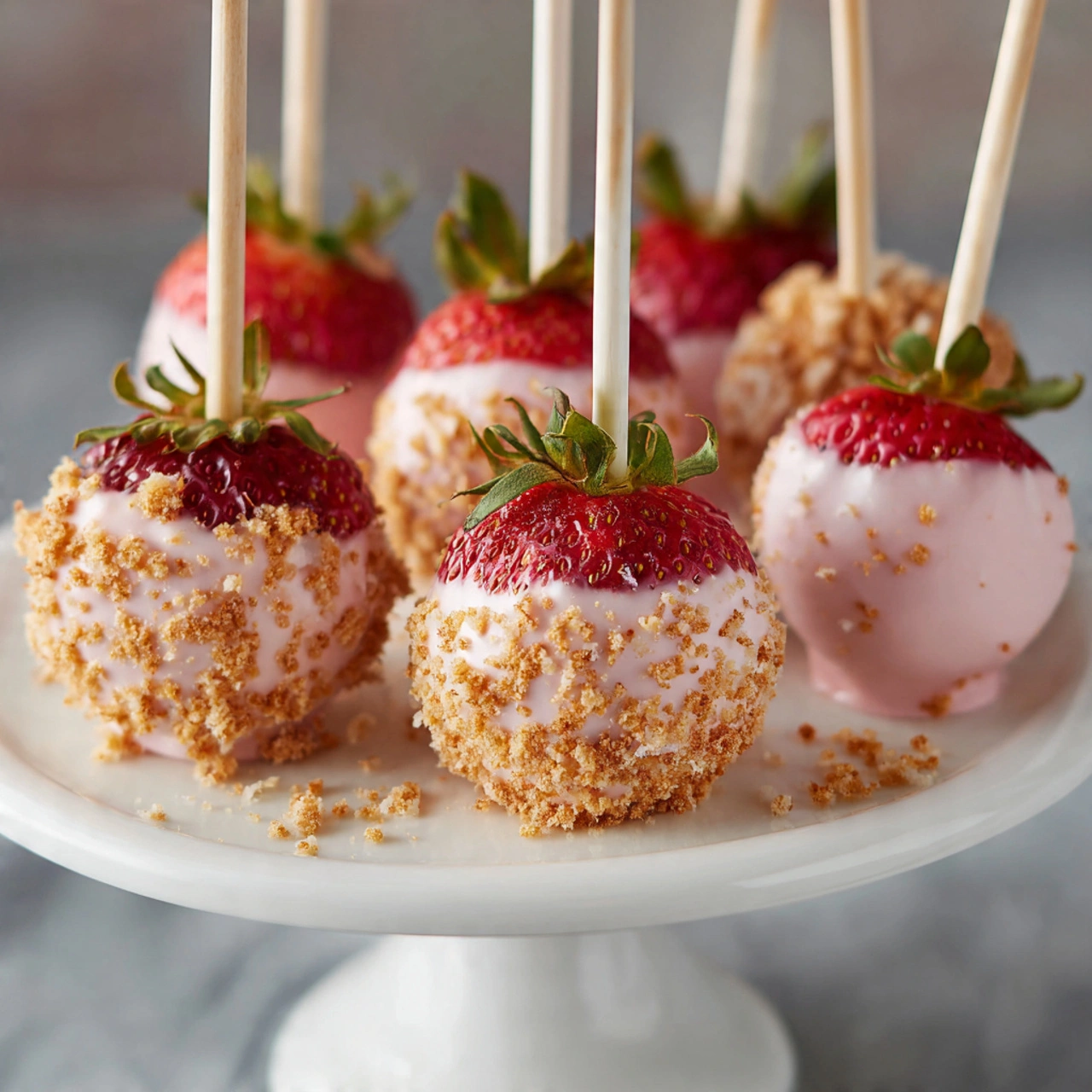
Step 15: Level Your Cakes If your cake layers have domed tops, use a long serrated knife to level them off. This ensures stable stacking and prevents sliding. Save those scraps—they’re perfect for snacking or making cake pops!
Step 16: Frost the First Layer Place one cake layer on your serving plate or cake stand. Add about 1½ cups of frosting to the top and spread it evenly with an offset spatula, leaving about ¼ inch from the edges (it will spread when you add the top layer).
Step 17: Add Top Layer and Crumb Coat Carefully place the second layer on top, cut side down. Apply a thin “crumb coat” of frosting all over the cake—this seals in crumbs. Refrigerate for 20 minutes to set.
Step 18: Final Frosting Apply the remaining frosting generously, creating swirls and peaks with your spatula. For a bakery-smooth finish, use a bench scraper or large offset spatula dipped in hot water.
Pro Tips for Perfect Red Velvet Desserts
Color Intensity Secrets
The amount of red food coloring is entirely up to your preference. For a traditional deep red, use 2 tablespoons of liquid coloring or 1-1½ tablespoons of gel coloring. Gel colors produce more vibrant results with less liquid. For a more natural approach, try using beet juice powder, though the color will be more burgundy than bright red.
Texture Enhancement Tricks
For an even more tender crumb, replace ¼ cup of the buttermilk with sour cream. The extra fat creates an incredibly rich, moist texture. You can also add 2 tablespoons of mayonnaise to the wet ingredients—it sounds unusual, but the emulsified fats and eggs in mayo create exceptional moisture.
Flavor Depth Boosters
Toast your cocoa powder before adding it to the dry ingredients. Simply heat it in a dry skillet over low heat for 2-3 minutes, stirring constantly, until fragrant. This deepens the chocolate flavor significantly without adding more cocoa.
Professional Frosting Techniques
Make sure your cream cheese and butter are truly at room temperature—around 65-68°F. Too cold and the frosting will be lumpy; too warm and it will be soupy. If your frosting becomes too soft, refrigerate it for 15 minutes and re-beat before using.
Make-Ahead Strategy
Bake the cake layers up to 2 days in advance. Once completely cooled, wrap them tightly in plastic wrap, then aluminum foil, and refrigerate. You can also freeze unfrosted layers for up to 3 months. The frosting can be made 5 days ahead and stored in an airtight container in the refrigerator—just bring to room temperature and re-beat before using.
Altitude Adjustments
If you’re baking above 3,000 feet, reduce the baking soda to ¾ teaspoon, increase the flour by 2 tablespoons, and reduce the sugar by 2 tablespoons. These small changes compensate for lower air pressure at higher elevations.
Common Mistakes to Avoid When Making Red Velvet Desserts
Mistake #1: Using Cold Ingredients
Cold eggs and buttermilk don’t emulsify properly with the oil, resulting in a dense, uneven texture. Always bring dairy and eggs to room temperature—it only takes 30-45 minutes and makes a dramatic difference in the final result.
Mistake #2: Overmixing the Batter
Once you start adding the dry ingredients, mix only until just combined. Overmixing develops gluten, which creates a tough, chewy cake instead of a tender, delicate crumb. It’s okay if you still see a few small flour streaks—they’ll incorporate during the final stir.
Mistake #3: Incorrect Oven Temperature
An oven that’s too hot will cause the cakes to dome excessively and develop a crusty exterior. Too cool, and they’ll be dense and won’t rise properly. Use an oven thermometer to verify your actual oven temperature—many ovens run 25°F hotter or cooler than the dial indicates.
Mistake #4: Opening the Oven Door Too Early
Resist the temptation to check your cakes before 25 minutes of baking. Opening the door releases heat and can cause the cakes to sink in the middle as they haven’t set yet. Only open to check once they’re close to done.
Mistake #5: Frosting Warm Cakes
This is perhaps the most common mistake I see. Frosting a cake that’s even slightly warm will cause the frosting to melt and slide right off. Your cakes must be completely cool—not just cool to the touch, but genuinely room temperature throughout, which takes at least 2 hours.
Mistake #6: Using Imitation Vanilla
In a dessert this delicate and refined, imitation vanilla extract’s harsh chemical notes are quite noticeable. Pure vanilla extract has complex, warm notes that complement the subtle cocoa flavor beautifully. It’s worth the investment.
Mistake #7: Not Measuring Flour Correctly
Scooping flour directly with your measuring cup compacts it, giving you up to 25% more flour than the recipe intends. This creates a dry, dense cake. Always spoon flour into your measuring cup and level it off with a knife for accurate measurement.
Storage and Serving Suggestions for Red Velvet Desserts
Room Temperature Storage
Due to the cream cheese frosting, Red Velvet Desserts should not sit at room temperature for more than 2 hours. If you’re serving at a party or event, keep it refrigerated until 30 minutes before serving time. This allows the cake to come to room temperature for optimal flavor and texture while keeping the frosting stable.
Refrigeration Guidelines
Store leftover cake in an airtight container or covered cake dome in the refrigerator for up to 5 days. The cake actually improves over the first 24 hours as the flavors meld together. For best texture, always let refrigerated slices sit at room temperature for 20-30 minutes before eating.
Freezing Instructions
Red velvet cake freezes beautifully! For unfrosted layers, wrap tightly in plastic wrap, then aluminum foil, and freeze for up to 3 months. For frosted cake, freeze until solid (about 2 hours), then wrap the same way. Thaw overnight in the refrigerator, then bring to room temperature before serving.
Serving Presentation Ideas
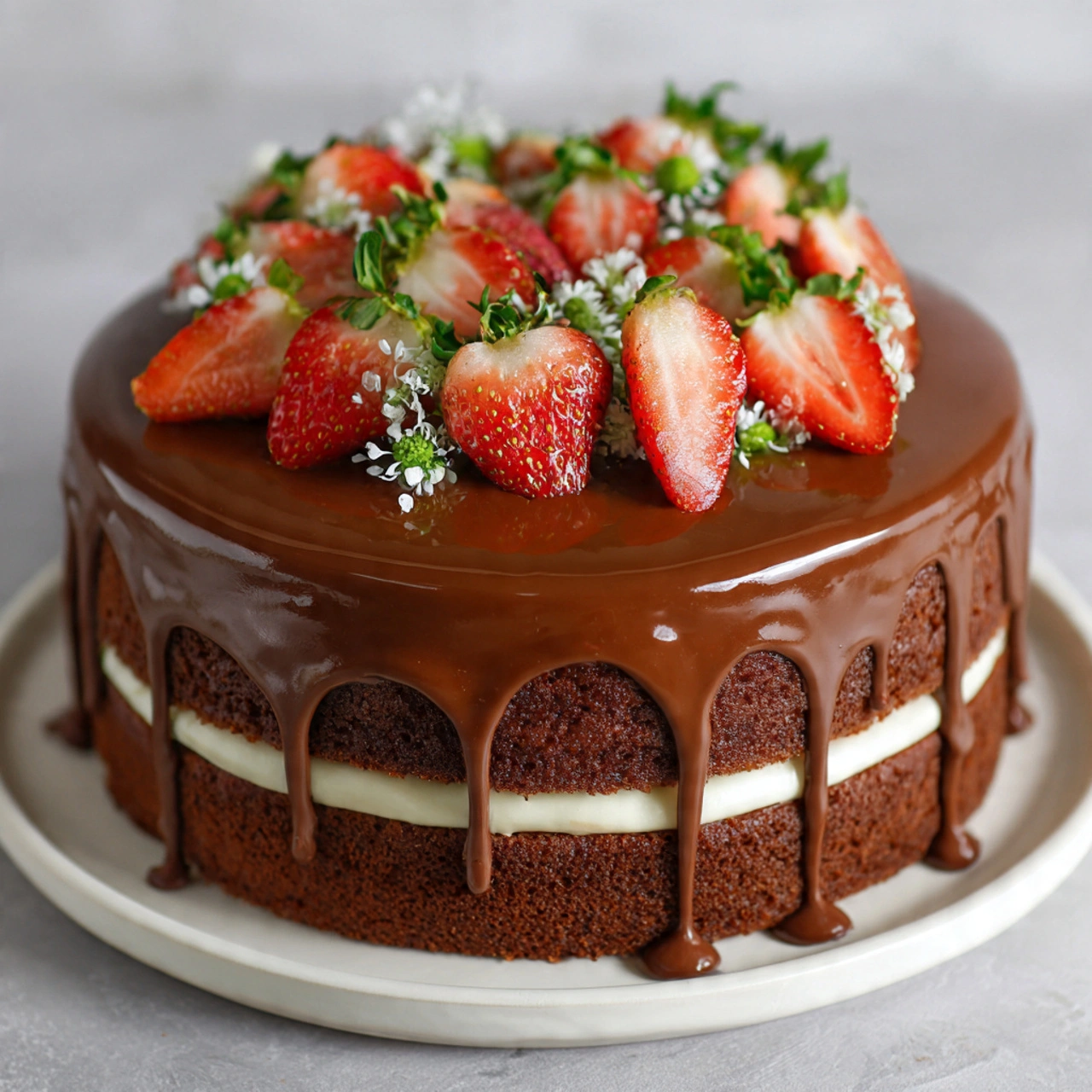
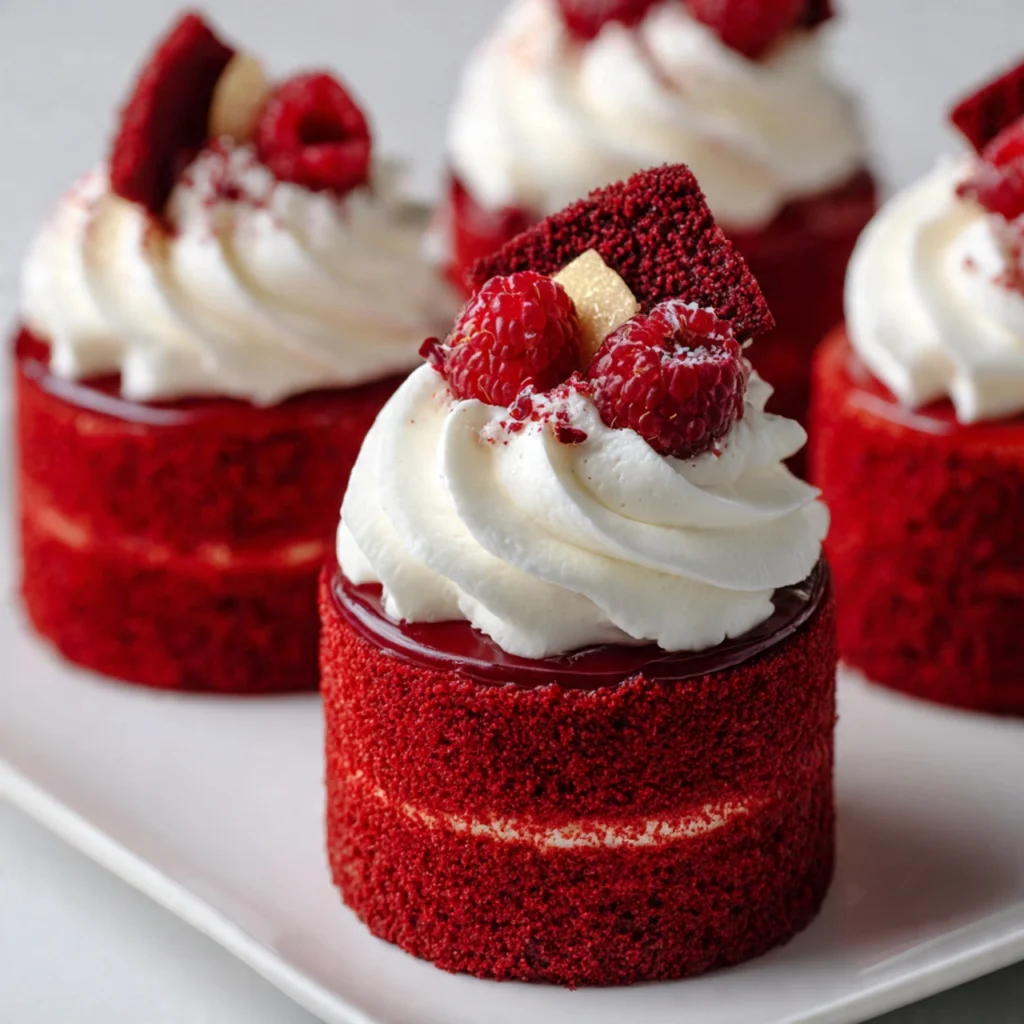
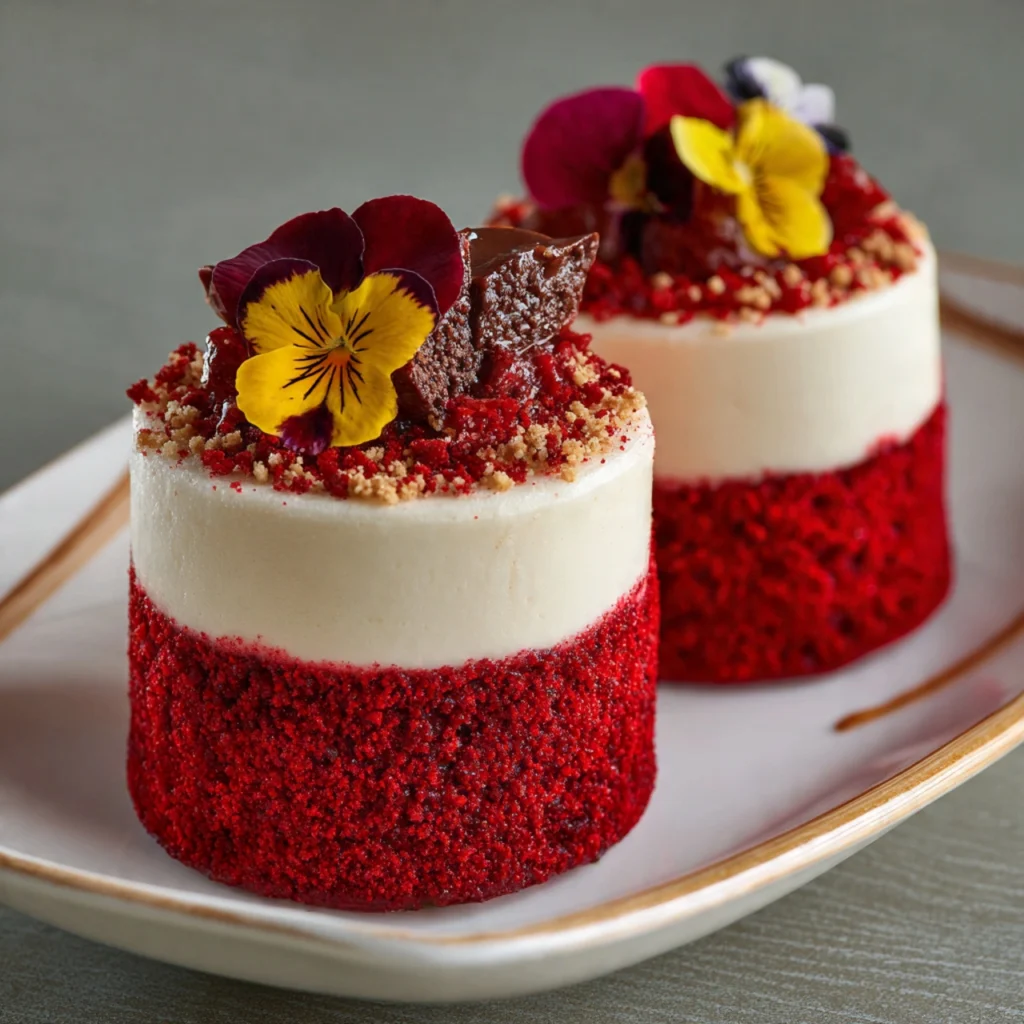
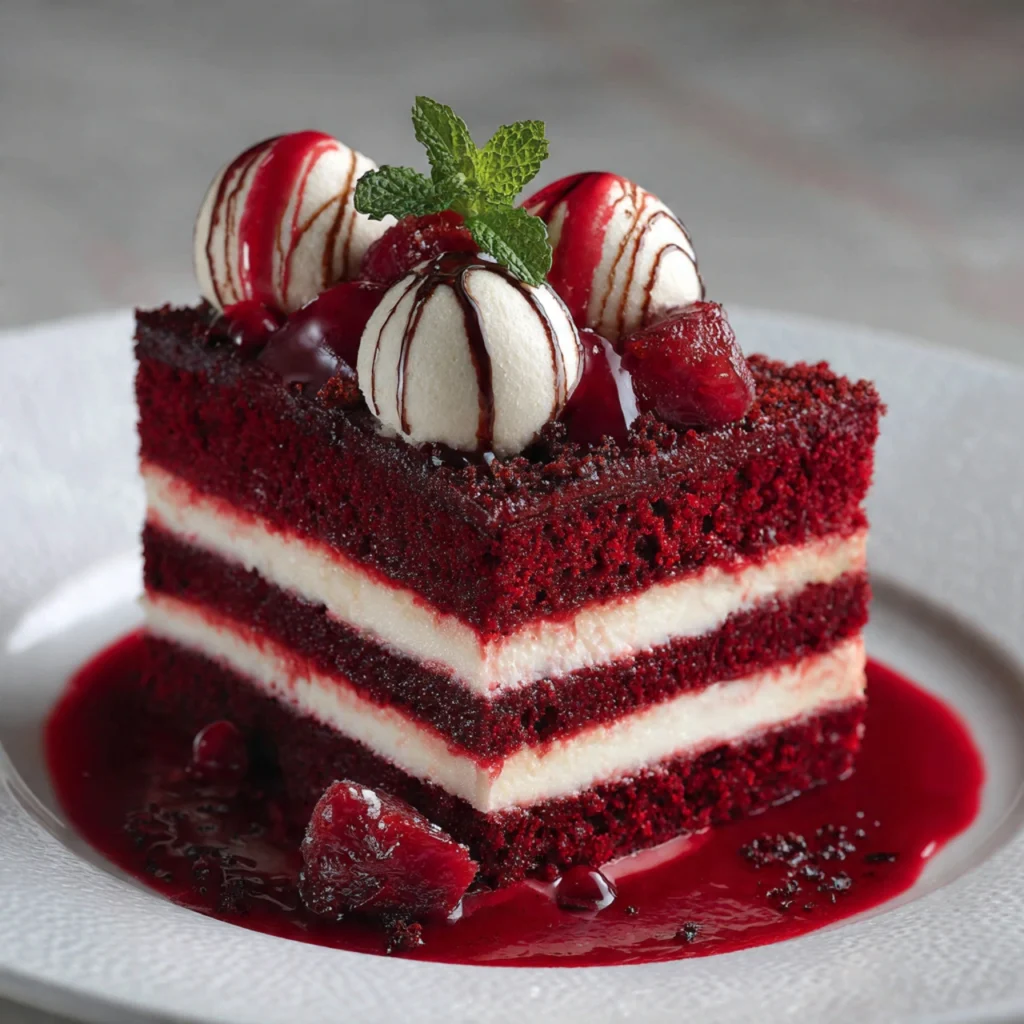
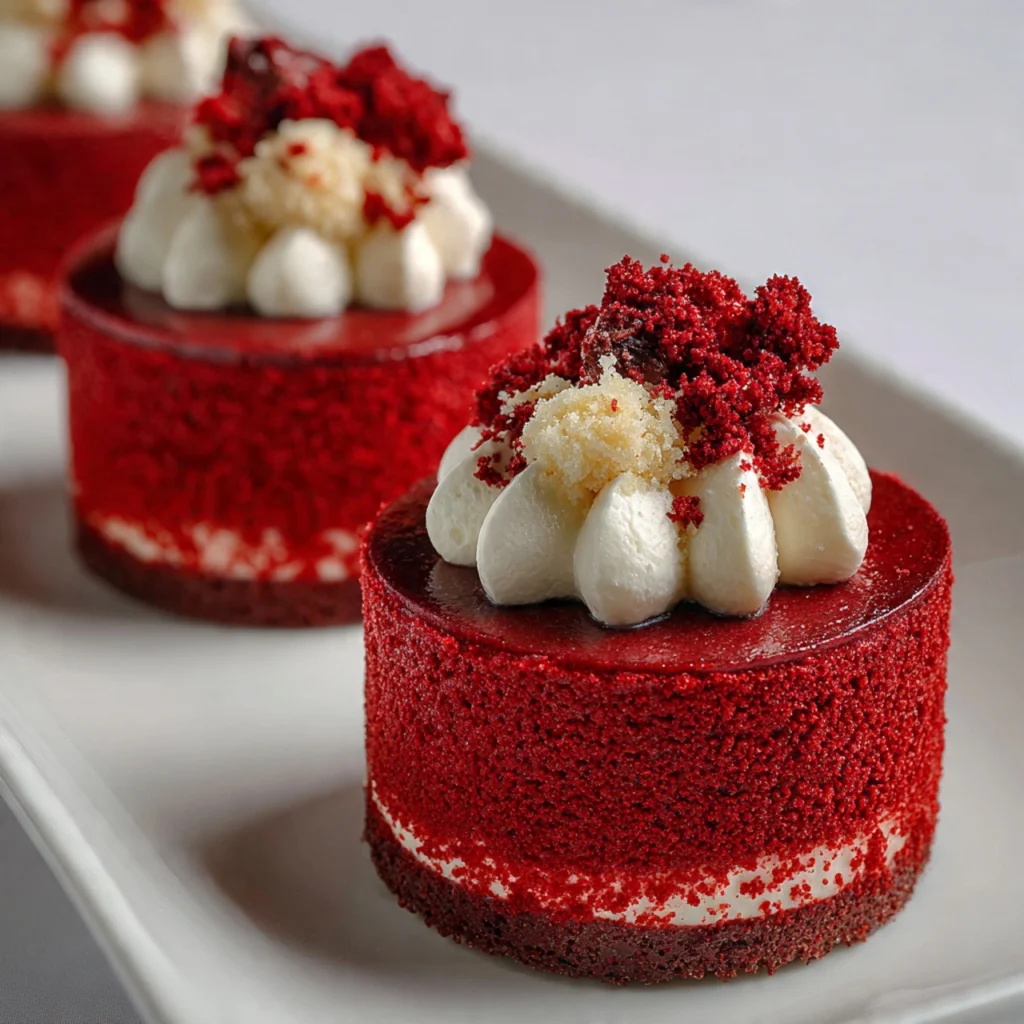
Serve Red Velvet Desserts on white plates to make the dramatic red color pop. Garnish with fresh berries, especially raspberries or strawberries, which complement the tangy cream cheese frosting. A light dusting of powdered sugar or cocoa powder adds an elegant finishing touch.
Portion Sizes
One 9-inch two-layer cake serves 12-16 people depending on slice size. For parties, cut smaller slices—red velvet is quite rich, and most people are satisfied with a modest portion.
Beverage Pairings
Red velvet pairs beautifully with coffee, especially a medium roast that won’t overpower the delicate chocolate notes. Champagne or sparkling wine provides a celebratory contrast, while whole milk offers a classic, comforting accompaniment.
Frequently Asked Questions About Red Velvet Desserts
What makes red velvet cake different from chocolate cake?
Red velvet cake contains much less cocoa powder than chocolate cake—typically just 1-2 tablespoons compared to ½ cup or more in chocolate cake. This creates a subtle cocoa flavor rather than an intense chocolate taste. Red velvet also includes buttermilk and vinegar, which react with the baking soda to create a uniquely tender, fine-crumbed texture. The chemical reaction between these acidic ingredients and the cocoa actually enhances the red color, which is why red velvet has its signature hue.
Can I make Red Velvet Desserts without food coloring?
Yes, though the cake won’t have that distinctive bright red color. Historically, red velvet got its reddish tint from a natural reaction between cocoa powder and acidic ingredients. Using non-alkalized (natural) cocoa powder will give you a brownish-red hue. For a more vibrant natural color, you can use beet juice powder or freeze-dried raspberry powder, though the color will be more burgundy than bright red. The flavor will remain delicious regardless of color.
Why did my red velvet cake turn out dense instead of fluffy?
Dense red velvet cake usually results from overmixing the batter, using cold ingredients, or incorrect measurements. Overmixing develops gluten, creating a tough texture. Cold eggs and buttermilk don’t emulsify properly with the oil, leading to a heavy crumb. Too much flour (from scooping instead of spooning and leveling) also creates density. Finally, expired baking soda won’t provide proper lift. Make sure all your leavening agents are fresh and active.
Can I substitute oil with butter in red velvet cake?
While you can substitute butter for oil, it will change the texture of your Red Velvet Desserts. Oil creates a more tender, moist crumb that stays soft even when refrigerated, which is ideal for red velvet’s signature texture. Butter provides more flavor but produces a slightly denser cake that can become firm when cold. If you prefer using butter, melt it and let it cool to room temperature before using, and expect a slightly different but still delicious result.
How do I prevent my cream cheese frosting from being too runny?
Runny cream cheese frosting typically happens when the ingredients are too warm. Make sure your butter and cream cheese are at cool room temperature (65-68°F), not warm. If your kitchen is very warm, your frosting may soften too much—chill it in the refrigerator for 15-20 minutes, then beat again. You can also add more powdered sugar (¼ cup at a time) to thicken it. Avoid overbeating, which can cause the butterfat to separate and make the frosting soupy.
Can I make Red Velvet Desserts into cupcakes?
Absolutely! This recipe makes 24 standard cupcakes. Fill cupcake liners about ⅔ full and bake at 350°F for 18-22 minutes. Check for doneness at 18 minutes with a toothpick. Cupcakes are perfect for parties and events since they’re already portioned and easy to serve. Top each cooled cupcake with a generous swirl of cream cheese frosting using a piping bag with a large star tip for a bakery-style finish.
What’s the best way to get vibrant red color without using too much food coloring?
Use gel food coloring instead of liquid—it’s much more concentrated, so you need less to achieve vibrant color without adding excess liquid to your batter. Start with 1 tablespoon of red gel color and adjust from there. Also, using white vinegar instead of apple cider vinegar keeps the batter lighter. Some bakers add a tiny drop of brown or black food coloring to deepen the red to a more sophisticated burgundy shade. Remember that the cocoa powder naturally darkens the batter, so you’ll need more coloring than you might initially think.
Nutrition Information (Per Slice, Based on 14 Servings)
Approximate values:
- Calories: 485 kcal
- Total Fat: 28g
- Saturated Fat: 11g
- Trans Fat: 0g
- Cholesterol: 75mg
- Sodium: 340mg
- Total Carbohydrates: 56g
- Dietary Fiber: 1g
- Sugars: 42g
- Protein: 5g
- Vitamin A: 12% DV
- Calcium: 6% DV
- Iron: 8% DV
Note: Nutritional values are estimates based on standard ingredient measurements and may vary depending on specific brands used and portion sizes.
Final Thoughts: Creating Your Perfect Red Velvet Masterpiece
Red Velvet Desserts represent more than just a cake—they’re an experience that combines visual drama with exquisite flavor and texture. Whether you’re baking for a special celebration or simply treating yourself to something extraordinary, this recipe delivers consistent, bakery-quality results that will have everyone asking for your secret.
Remember that the key to perfect red velvet lies in the details: room temperature ingredients, gentle mixing, proper measurement, and patience during cooling and frosting. These small steps make the difference between a good cake and an exceptional one that becomes a requested favorite.
Don’t be intimidated by the process. While red velvet might seem complex, it’s actually quite forgiving once you understand the science behind it. The buttermilk and vinegar create tenderness, the oil ensures moisture, and the minimal cocoa provides that signature subtle chocolate flavor without overwhelming the delicate balance.
I encourage you to make this recipe your own. Try different frosting variations like adding orange zest or espresso. Experiment with natural colorings if you prefer. Transform it into cupcakes, a sheet cake, or even cake pops. The fundamental recipe is versatile enough to adapt to your needs while maintaining that essential red velvet character.
Most importantly, enjoy the process. Baking is as much about the joy of creating as it is about the final result. The satisfaction of slicing into a homemade red velvet cake with its perfect layers and creamy frosting is worth every minute spent in the kitchen.
Now gather your ingredients, preheat that oven, and get ready to create Red Velvet Desserts that will become your signature dish—the one everyone hopes you’ll bring to every gathering, the one that makes ordinary moments feel special, and the one that proves homemade really is the best.
Happy baking!
PrintRed Velvet Desserts: The Ultimate Guide to Creating Luxurious Homemade Treats
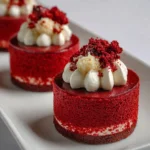
Luxurious Red Velvet Desserts featuring tender, velvety cake layers with the perfect balance of cocoa and tang, topped with smooth, rich cream cheese frosting. This classic Southern dessert delivers stunning presentation and unforgettable flavor for any special occasion.
- Prep Time: 25 minutes
- Cook Time: 30 minutes
- Total Time: 55 minutes (plus cooling time)
- Yield: 14 servings (one 9-inch two-layer cake)
- Category: Dessert
- Method: Baking
- Cuisine: American (Southern)
- Diet: Vegetarian
Ingredients
For the Cake:
- 2½ cups all-purpose flour
- 2 tablespoons unsweetened cocoa powder
- 1 teaspoon baking soda
- 1 teaspoon salt
- 1½ cups granulated sugar
- 1½ cups vegetable oil
- 2 large eggs, room temperature
- 1 cup buttermilk, room temperature
- 2 tablespoons red food coloring
- 1 teaspoon pure vanilla extract
- 1 teaspoon white vinegar
For the Frosting:
- 16 ounces cream cheese, softened
- 1 cup unsalted butter, softened
- 4 cups powdered sugar, sifted
- 2 teaspoons pure vanilla extract
- Pinch of salt
Instructions
- Preheat oven to 350°F. Grease and line two 9-inch round pans with parchment paper.
- Whisk together flour, cocoa powder, baking soda, and salt in a large bowl.
- In another bowl, beat sugar and oil for 2-3 minutes. Add eggs one at a time, beating well after each.
- Combine buttermilk, red food coloring, vanilla, and vinegar in a small bowl.
- Add dry ingredients to oil mixture in three additions, alternating with buttermilk mixture, beginning and ending with dry ingredients. Mix only until just combined.
- Divide batter evenly between prepared pans. Bake 28-32 minutes until a toothpick comes out with moist crumbs.
- Cool in pans 10 minutes, then turn out onto wire racks to cool completely.
- For frosting: Beat cream cheese and butter until smooth, 3-4 minutes. Gradually add powdered sugar, then beat in vanilla and salt until fluffy.
- Level cake layers if needed. Place one layer on serving plate, spread with frosting, add second layer, apply crumb coat, refrigerate 20 minutes, then frost entire cake.
Notes
- All ingredients must be at room temperature for best results
- Gel food coloring produces more vibrant color with less liquid
- Cake layers can be frozen for up to 3 months
- Let refrigerated cake sit at room temperature 30 minutes before serving
- Frosting can be made 5 days ahead and stored refrigerated