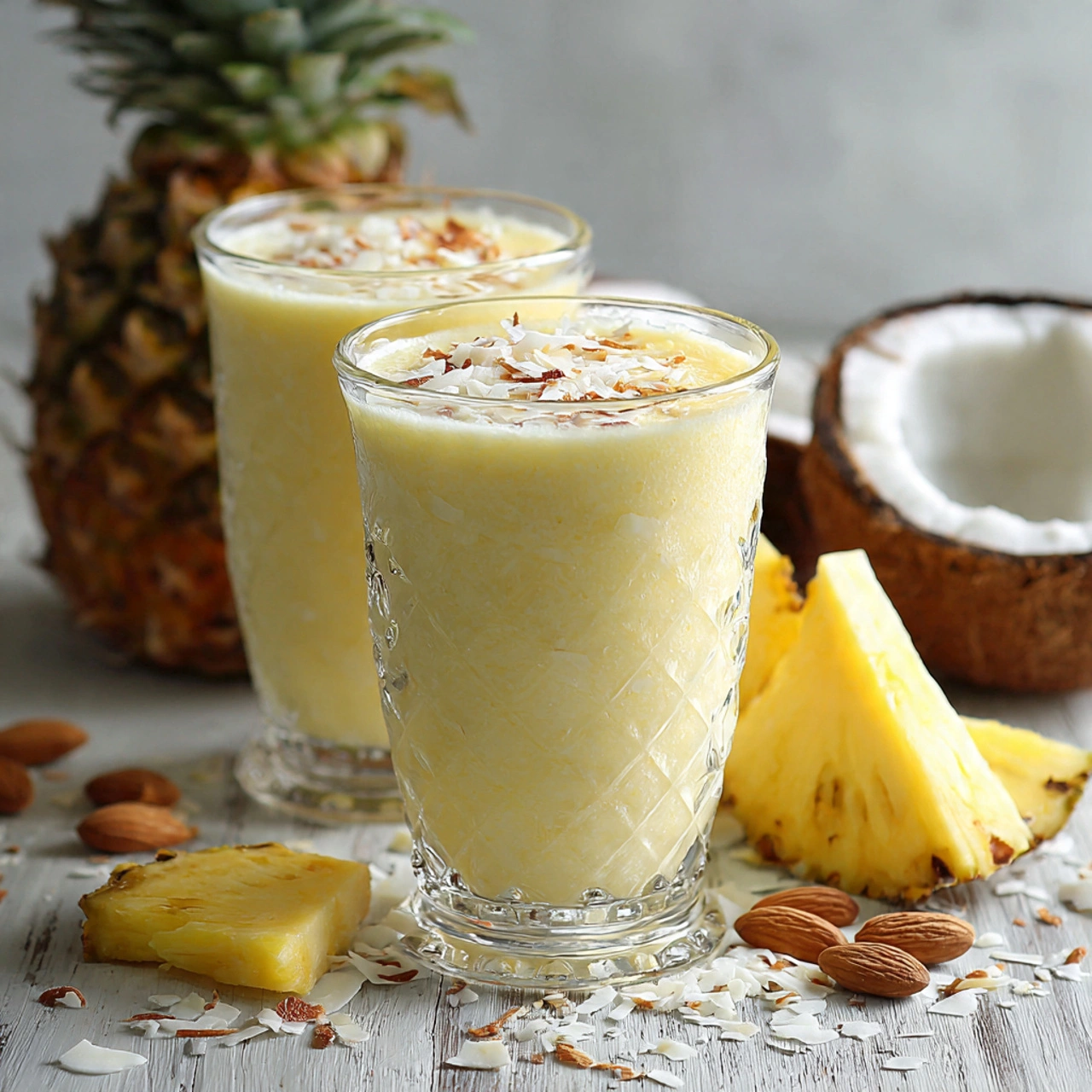
Introduction: Instant Vacation in Every Sip
The Pineapple Coconut Smoothie is my ultimate escape from ordinary mornings—a tropical paradise captured in a glass that transports you straight to a white-sand beach regardless of what’s happening outside your window. I’ve been perfecting this recipe for over a decade, and what started as a simple fruit blend has evolved into something far more special: a perfectly balanced combination of sweet pineapple and rich coconut that tastes indulgent while being genuinely nourishing.
My love affair with this particular smoothie began during a particularly brutal winter when I desperately needed something to combat the gray skies and freezing temperatures. That first sip was revelatory—suddenly I was mentally sitting under palm trees with warm sunshine on my face instead of shivering at my kitchen counter. Since then, this recipe has become my year-round mood booster, my go-to breakfast when I need something quick but satisfying, and the smoothie I make when friends visit and ask for “something tropical.”
What makes this Pineapple Coconut Smoothie truly exceptional isn’t just the vacation-worthy flavor—though that alone would be reason enough to make it. It’s the incredible versatility, the surprising nutritional benefits, and the fact that you can customize it endlessly while maintaining that signature tropical character. Whether you’re looking for a dairy-free option, a protein-packed breakfast, or simply the best-tasting smoothie you’ve ever had, this recipe delivers.
Throughout this comprehensive guide, I’ll share everything I’ve learned from countless batches—from selecting the perfect pineapple to achieving that resort-quality creaminess, from troubleshooting common texture issues to creating variations that keep this smoothie exciting week after week. This isn’t just a recipe; it’s your complete roadmap to tropical smoothie mastery.
Why This Pineapple Coconut Combination Works So Brilliantly
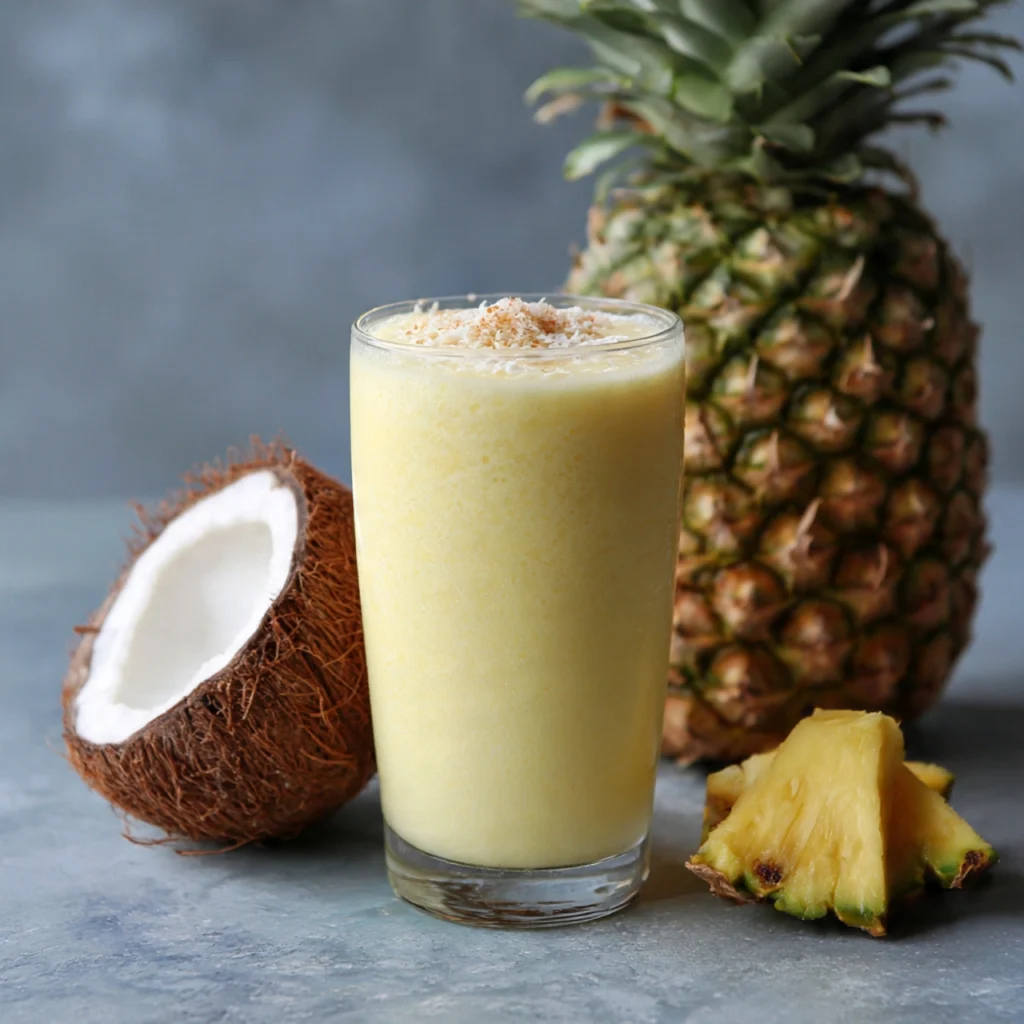
Before diving into the Pineapple Coconut Smoothie recipe, let me explain the magic behind this pairing. Pineapple brings bright, tangy sweetness with natural enzymes (bromelain) that aid digestion and reduce inflammation. Its vibrant flavor is assertive enough to stand up to rich coconut without being overwhelmed.
Coconut provides creamy richness and subtle sweetness that mellows pineapple’s acidity while adding healthy fats that keep you satisfied. The combination creates a flavor profile reminiscent of piña colada—that classic tropical cocktail—but in a healthier, energizing form you can enjoy any time of day.
The beauty of this duo is that they’re naturally complementary. Pineapple’s brightness cuts through coconut’s richness, preventing the smoothie from feeling heavy. Coconut’s creaminess balances pineapple’s tartness, creating a perfectly harmonious blend that tastes complex yet refreshing.
Ingredients: Building Your Tropical Paradise
Here’s everything you need to create this island-inspired blend. I’ve organized ingredients by their function to make substitutions easier:
Core Tropical Components:
- 2 cups fresh or frozen pineapple chunks (about ½ of a medium pineapple if fresh)
- 1 cup coconut milk (full-fat canned for richest texture, or carton variety for lighter version)
- ½ cup coconut water (adds hydration and subtle sweetness)
- 2 tablespoons shredded unsweetened coconut (optional but adds texture and coconut intensity)
Creamy Base Builders:
- ½ frozen banana (for extra creaminess and natural sweetness)
- ¼ cup Greek yogurt or coconut yogurt (adds body and tang)
- 1 tablespoon coconut oil (optional, adds healthy fats and richer coconut flavor)
Sweeteners and Enhancers:
- 1-2 teaspoons honey, agave, or maple syrup (adjust based on pineapple sweetness)
- ½ teaspoon vanilla extract (enhances tropical notes)
- Juice of ½ lime (brightens flavors and adds complexity)
- Pinch of sea salt (amplifies sweetness and balances flavors)
Ice and Texture Modifiers:
- 1 cup ice cubes (if using fresh pineapple; reduce or omit if using frozen)
- 2-3 ice cubes (if using frozen pineapple for extra frostiness)
Optional Protein and Nutrition Boosters:
- 1 scoop vanilla or unflavored protein powder (plant-based or whey)
- 2 tablespoons chia seeds or ground flaxseed (omega-3s and fiber)
- ¼ cup rolled oats (makes it more substantial)
- 1 tablespoon hemp hearts (protein and healthy fats)
- Handful of baby spinach (undetectable taste, adds nutrients)
- 1-inch piece fresh ginger (adds zing and aids digestion)
- ½ teaspoon turmeric (anti-inflammatory properties, subtle warmth)
Garnish Ideas:
- Fresh pineapple wedges
- Toasted coconut flakes
- Fresh mint leaves
- Lime wheels
- Maraschino cherry (for full piña colada effect)
- Coconut whipped cream
Step-by-Step Instructions: Crafting Tropical Perfection
The technique matters significantly when creating the perfect Pineapple Coconut Smoothie. Follow these detailed steps for consistently excellent results:
Step 1: Pineapple Preparation and Selection
If using fresh pineapple, select one that’s ripe but not overripe. A ripe pineapple smells sweet at the base, gives slightly when pressed, and has leaves that pull out easily from the crown. Cut away the skin and core, then cube the flesh into roughly 1-inch pieces.
Critical tip: Fresh pineapple creates a brighter, more vibrant flavor, while frozen pineapple produces a thicker, frostier texture. I actually prefer frozen for this recipe because it eliminates the need for excessive ice, which dilutes flavor.
If you’re cutting fresh pineapple, freeze the chunks for at least 2 hours before blending. Spread them in a single layer on a parchment-lined baking sheet first to prevent clumping, then transfer to a freezer bag once solid.
Step 2: Choosing Your Coconut Components
The type of coconut products you use dramatically affects the final result. Full-fat canned coconut milk creates an ultra-rich, dessert-like smoothie with incredible creaminess. Shake the can before opening to ensure the cream and water are mixed—or intentionally use just the thick cream from the top for maximum richness.
Carton coconut milk (like Silk or So Delicious) produces a lighter smoothie with fewer calories but less coconut flavor. I use this when I want something refreshing rather than indulgent.
Coconut water adds hydration and subtle sweetness without heaviness. Use it to thin your smoothie while maintaining tropical flavor rather than using regular water.
Step 3: Strategic Layering for Optimal Blending
The order you add ingredients affects blending efficiency and final texture. Here’s my proven sequence:
- Pour coconut milk and coconut water in first—liquids should always reach the blades
- Add fresh lime juice and any liquid sweetener
- Drop in yogurt (if using)
- Add frozen banana chunks
- Add frozen or fresh pineapple chunks
- Top with ice cubes and shredded coconut last
This layering creates a vortex that pulls ingredients down efficiently, preventing air pockets and ensuring smooth, even blending without having to stop and scrape sides.
Step 4: The Blending Technique
Start your blender on the lowest setting for 10-15 seconds. This initial gentle phase breaks down larger frozen pieces without straining your blender motor. You’ll hear the sound transition from choppy to smoother as chunks break apart.
Gradually increase to medium speed for another 15 seconds, letting the vortex establish properly. Finally, increase to high speed for 30-40 seconds until the mixture is completely smooth with no visible pineapple chunks or coconut pieces.
Important: Total blending time should be 60-70 seconds maximum. Over-blending warms the smoothie, incorporates too much air (making it foamy instead of creamy), and can actually thin the texture.
Step 5: Texture Assessment and Adjustment
Stop the blender and check consistency. Your Pineapple Coconut Smoothie should be thick enough to coat a spoon but still pour smoothly. It should have a frosty, almost soft-serve-like quality when made with frozen pineapple.
Too thick and not blending? Add coconut milk or coconut water 2 tablespoons at a time, pulsing after each addition. Don’t exceed 4-6 tablespoons or you’ll lose that luscious texture.
Too thin and runny? Add 3-4 more frozen pineapple chunks or a handful of ice cubes and blend for another 15 seconds. You can also add more frozen banana or a tablespoon of coconut cream.
Not cold enough? Add 3-4 ice cubes and blend briefly. The smoothie should be frosty and refreshing, not lukewarm.
Step 6: Flavor Balancing
Taste your creation before serving—this is crucial for perfection. The flavor should be predominantly pineapple with creamy coconut undertones, bright but not sour, sweet but not cloying.
Adjustments:
- Too tart? Add another teaspoon of honey or a bit more banana
- Not enough pineapple flavor? Add 3-4 more chunks and a squeeze of lime
- Coconut too subtle? Blend in another tablespoon of shredded coconut or a teaspoon of coconut oil
- Tastes flat? Add a pinch more salt and a splash of lime juice—these make everything pop
Step 7: Serve with Tropical Flair
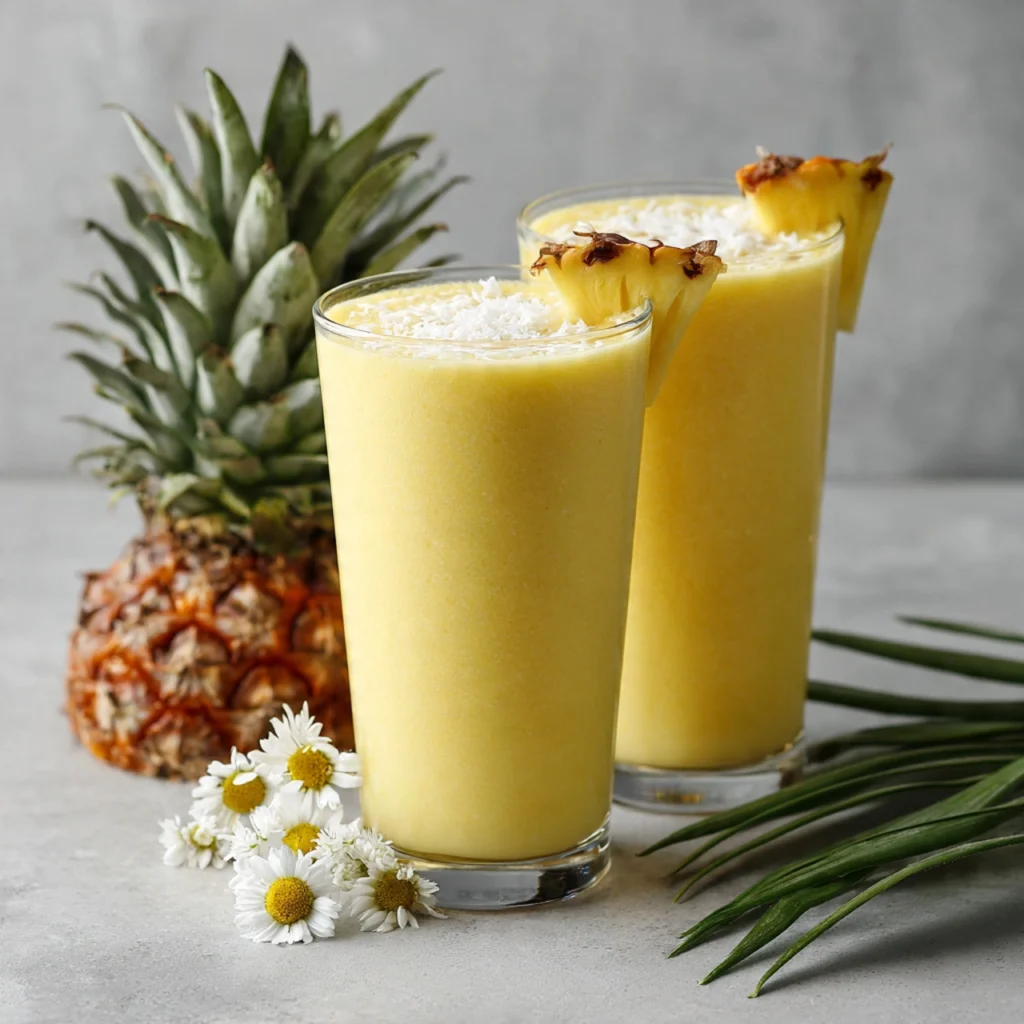
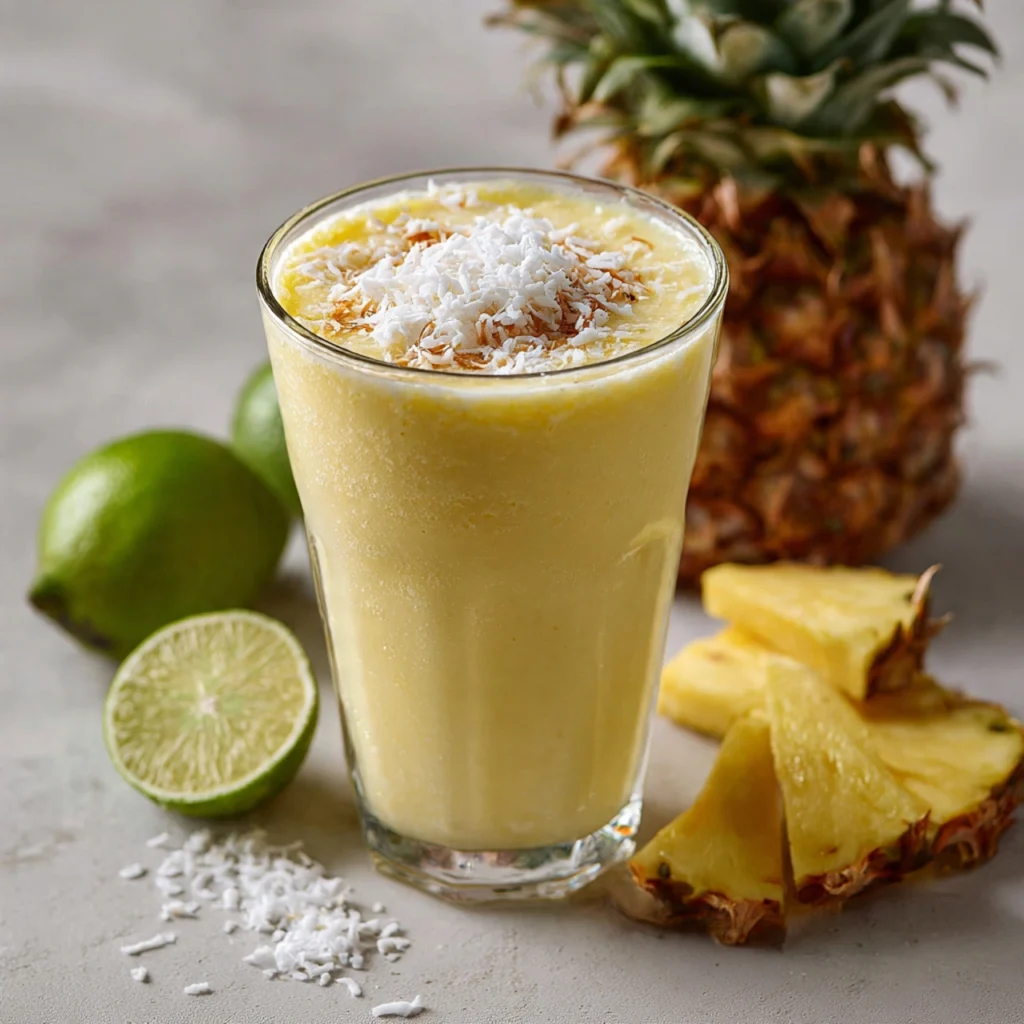
Pour your Pineapple Coconut Smoothie into a chilled glass. For that resort-style presentation, rim the glass with lime and roll in shredded coconut, garnish with a pineapple wedge and fresh mint sprig, add a colorful straw, or top with toasted coconut flakes for textural contrast.
If you’re going full piña colada aesthetic, serve in a hollowed-out pineapple half with an umbrella. It sounds over-the-top, but it genuinely makes the experience more fun and special.
Pro Tips for the Perfect Pineapple Coconut Smoothie
After making this recipe hundreds of times in various kitchens and conditions, I’ve developed specific techniques that elevate it from good to extraordinary:
Pineapple Selection and Preparation Mastery
The ripeness sweet spot: Underripe pineapple is starchy and sour, requiring excessive sweetener. Overripe pineapple ferments quickly and tastes boozy. You want golden-yellow flesh that’s juicy and fragrant. If your pineapple is slightly underripe, leave chunks at room temperature for 30 minutes before freezing—this allows enzymes to develop more sweetness.
Core or no core? The pineapple core is tougher and slightly bitter. I remove it for smoothies, but if you have a high-powered blender (Vitamix, Blendtec), you can include it for extra fiber. Just know it creates a slightly grittier texture.
The freeze-ahead strategy: I buy whole pineapples when they’re on sale, prep them all at once, and freeze in 2-cup portions in freezer bags. This means I always have perfectly ripe, frozen pineapple ready for smoothies. Pre-portioned bags also mean no measuring—just dump and blend.
Coconut Creaminess Secrets
Shake that can: Canned coconut milk separates into thick cream and watery liquid. Always shake vigorously before opening to recombine. If you want extra richness, refrigerate the can overnight and scoop out just the thick cream, saving the liquid for another use.
Coconut milk versus coconut cream: Coconut cream (found in small cans near mixers) is ultra-concentrated and creates an incredibly decadent smoothie. Use ½ cup coconut cream plus ½ cup coconut water instead of 1 cup coconut milk for a richer result.
Toasting the shredded coconut: If adding shredded coconut, toast it first in a dry skillet until golden and fragrant. This amplifies the coconut flavor exponentially and adds a subtle nutty dimension. Let it cool before adding to your blender.
The coconut oil trick: Adding a tablespoon of melted coconut oil seems excessive, but it creates unbelievable silkiness and amplifies coconut flavor. The healthy fats also help your body absorb fat-soluble vitamins from the fruit.
Achieving Perfect Sweetness Balance
Start unsweetened: Pineapple’s natural sweetness varies dramatically based on variety and ripeness. Always taste your fruit first. Super-sweet golden pineapple needs zero added sweetener. Less ripe fruit might need 1-2 teaspoons of honey.
Natural sweetener alternatives: Dates (2-3 pitted Medjool) add caramel-like sweetness plus fiber. Frozen mango chunks (½ cup) increase tropical sweetness and create gorgeous color. A frozen banana contributes creamy sweetness without adding calories from honey.
The lime juice paradox: Adding acidic lime juice seems counterintuitive when balancing tartness, but it actually brightens all the flavors and makes the smoothie taste more complex and tropical rather than one-dimensionally sweet.
Texture Perfection Techniques
The banana secret: Half a frozen banana is the magic ingredient most people miss. It creates creamy, almost ice-cream-like texture without dominating the pineapple-coconut flavor profile. More than half a banana and you’ll start tasting it prominently—less and you lose that signature creaminess.
Yogurt selection matters: Greek yogurt adds protein and tang that prevents the smoothie from being cloying. Coconut yogurt keeps it vegan while adding extra coconut flavor. Regular yogurt works but creates a thinner consistency. I prefer full-fat Greek yogurt for richest texture.
Ice cube strategy: Make ice cubes from coconut water or coconut milk instead of regular water. As they melt, they add flavor instead of diluting your smoothie. This is a game-changing trick I learned from a smoothie bar owner.
Equipment Optimization
Blender power matters: High-powered blenders create silky-smooth texture with frozen pineapple in 45 seconds. Standard blenders need an extra 20-30 seconds and may leave detectable fibers. If using a regular blender, let frozen ingredients thaw for 5 minutes before blending.
The tamper advantage: If your blender includes a tamper tool, use it to push ingredients toward the blades while blending. This prevents air pockets and ensures even consistency without adding excess liquid.
Glass pre-chilling: Freeze your serving glass for 15 minutes before using. This single step keeps your smoothie cold and perfectly thick for significantly longer—especially important if you’re sipping slowly or serving it outside in warm weather.
Common Mistakes to Avoid
Even this straightforward recipe has potential pitfalls that can derail your tropical Pineapple Coconut Smoothie. Here’s what to watch out for:
Mistake #1: Using Only Fresh Pineapple Without Enough Ice
Fresh pineapple at room temperature creates a lukewarm, thin smoothie regardless of how much ice you add. Ice dilutes flavor as it melts, creating a watery rather than creamy result. Always use frozen pineapple, or freeze fresh pineapple chunks for at least 2 hours before blending. This is the single most important factor in achieving proper texture.
Mistake #2: Choosing Low-Quality Coconut Products
Coconut milk varies dramatically in quality. Some brands contain stabilizers, gums, and minimal actual coconut. Check labels—the only ingredients should be coconut and water. My favorite brands are Native Forest, Thai Kitchen, and Aroy-D. The quality difference is noticeable in both flavor and texture.
Mistake #3: Over-Adding Liquid
The biggest rookie mistake is panicking when the blender struggles initially and immediately adding more liquid. Frozen fruit needs time to break down. Use the tamper, pause and scrape sides, or simply be patient—but resist adding excessive coconut milk. You can always thin a thick smoothie, but you can’t rescue an overly thin one without adding more frozen fruit.
Mistake #4: Forgetting Acid and Salt
Both lime juice and a pinch of salt seem like optional ingredients, but they’re actually crucial for bringing out the tropical flavors. Without acid, the smoothie tastes flat and one-dimensional. Without salt, the sweetness doesn’t register properly on your palate. These two ingredients are what separate amateur smoothies from professional-quality ones.
Mistake #5: Using Coconut Extract Instead of Real Coconut
I’ve seen recipes call for coconut extract to boost coconut flavor, but this creates an artificial, sunscreen-like taste rather than genuine tropical flavor. If your smoothie lacks coconut presence, add more shredded coconut, coconut oil, or use full-fat coconut milk instead of reaching for extract.
Mistake #6: Blending Too Long
Over-blending is surprisingly common. Once your smoothie is uniformly smooth, stop immediately. Continuing to blend warms the mixture, incorporates air that creates foam, and can actually break down the ingredients so much that they become thin and watery rather than thick and creamy.
Mistake #7: Ignoring Pineapple Core and Tough Parts
If using fresh pineapple, always remove the core and any tough, woody sections near the skin. These don’t break down fully even in powerful blenders and create an unpleasant fibrous texture. Take an extra 30 seconds to trim properly—it makes a significant difference.
Mistake #8: Not Adjusting for Frozen Banana
Frozen banana adds both sweetness and thickness. If your smoothie comes out too sweet or too thick, the banana is often the culprit. Start with half a banana, taste, and add more only if needed. You can always increase but can’t decrease.
Storage and Serving Suggestions
Understanding proper storage extends the usefulness of your Pineapple Coconut Smoothie beyond immediate consumption:
Pineapple Coconut Smoothie Immediate Serving Ideas
Tropical smoothie bowl: Pour into a bowl and top with fresh pineapple chunks, toasted coconut flakes, sliced kiwi, granola, chia seeds, and fresh passion fruit if available. Eat with a spoon for a more substantial, Instagram-worthy breakfast.
Piña colada mocktail: Serve in a hurricane glass, add a splash of sparkling water on top for fizz, garnish with pineapple wedge and maraschino cherry, and stick in a colorful umbrella. It’s a festive non-alcoholic party drink.
Layered parfait: Alternate layers of smoothie with layers of coconut yogurt and granola in a clear glass for beautiful presentation and textural variety.
Frozen smoothie pops: Pour into popsicle molds for healthy frozen treats. These are perfect for summer and kids absolutely love them. They keep for up to 2 months in the freezer.
Short-Term Storage (Same Day)
Your freshly blended Pineapple Coconut Smoothie is best consumed within 15-20 minutes of making it, but life doesn’t always cooperate:
Refrigeration guidelines: Transfer to an airtight container, filling to the very top to minimize air exposure. The smoothie will naturally separate—the coconut fat rises to the top while juice sinks to the bottom. This is normal and doesn’t indicate spoilage. Store for up to 8 hours maximum. Before drinking, shake vigorously for 30 seconds or pour back into the blender for a 10-second re-blend.
Thermos method: Pour into a pre-chilled insulated thermos or insulated tumbler. This maintains temperature and texture for 3-4 hours, making it ideal for work or school. The insulation also minimizes separation.
Mason jar storage: Wide-mouth mason jars work perfectly for individual portions. Fill to the brim, seal tightly, and refrigerate. The minimal air exposure helps preserve color and prevents oxidation.
Freezer Storage Solutions Pineapple Coconut Smoothie
Smoothie prep bags: My favorite meal-prep strategy involves portioning all ingredients except liquid into individual freezer bags. Each bag gets 2 cups pineapple chunks, ½ frozen banana, and 2 tablespoons shredded coconut. Label with date and smoothie type. When ready to blend, dump the bag contents plus liquids into your blender. These stay fresh for 3 months.
Frozen smoothie cubes: Pour your prepared smoothie into ice cube trays and freeze completely. Pop out 8-10 cubes, add ½ cup coconut milk, and re-blend for an instant smoothie refresh. These cubes also work beautifully as flavor enhancers for plain smoothies or as a cooling addition to tropical cocktails (for adults). They last up to 3 months.
Individual portion containers: Freeze in 16-ounce freezer-safe containers for grab-and-go convenience. Thaw in the refrigerator overnight, shake well, and drink the next morning. The texture won’t be quite as perfect as fresh-blended, but it’s remarkably close and incredibly convenient for busy mornings.
Pineapple Coconut Smoothie Serving Temperature and Timing
The ideal serving temperature for a Pineapple Coconut Smoothie is 34-38°F (1-3°C)—cold enough to be refreshing but not so frozen that it numbs your taste buds and masks the delicate tropical flavors. If your smoothie comes out too thick and icy to drink, let it sit at room temperature for 2-3 minutes. The flavors will actually improve slightly as it warms to optimal temperature.
Weekly Meal Prep Strategy
Every Sunday, I prepare components for the entire week:
- Buy 2-3 ripe pineapples when they’re on sale
- Prep all at once: peel, core, chunk, and freeze on baking sheets
- Transfer to labeled freezer bags (date them for freshness tracking)
- Peel and chunk 3-4 bananas, freeze the same way
- Pre-portion into 5 individual bags (one for each weekday)
- Store prepped bags in dedicated freezer bin for easy morning access
This system means making a smoothie takes literally 90 seconds on busy weekday mornings—just grab a bag, add liquids, and blend.
Frequently Asked Questions (FAQ)
1. Can I make this Pineapple Coconut Smoothie without banana?
Absolutely! While banana adds creaminess and natural sweetness, you can definitely omit it or substitute it. Your best alternatives are frozen mango chunks (½ cup—maintains tropical vibe and adds creamy texture), frozen cauliflower rice (½ cup—sounds strange but adds creaminess with zero flavor impact, though you’ll need slightly more sweetener), ripe avocado (¼ of a large one—creates incredible silkiness without affecting the tropical flavor), or silken tofu (¼ cup—adds protein and creaminess with a neutral taste). You can also simply add another cup of frozen pineapple and ¼ cup of coconut cream for thickness. The frozen mango option is my personal favorite banana-free version because it maintains that tropical character while adding beautiful golden color.
2. How do I make this smoothie thicker or thinner?
Achieving your ideal consistency is all about understanding the ratios and which ingredients affect texture. For a thicker, spoonable smoothie: use less liquid initially, use more frozen fruit, include ¼ cup of frozen cauliflower or extra frozen banana, add 2 tablespoons of rolled oats and let them soak for a minute before blending, use full-fat canned coconut milk instead of carton variety, or add a tablespoon of chia seeds which will thicken dramatically. For a thinner, more drinkable smoothie: add coconut milk or coconut water gradually until you reach desired consistency, use less frozen fruit and more fresh, skip the banana entirely, use coconut water as your only liquid base, or add a splash of regular filtered water.
3. Can I make this completely vegan and dairy-free?
This Pineapple Coconut Smoothie is already naturally dairy-free when made with coconut milk and coconut yogurt, making it perfect for vegans! Just use plant-based yogurt (coconut yogurt is ideal for maintaining flavor, but cashew or almond yogurt work too), coconut milk from a can or carton (both are plant-based), maple syrup or agave instead of honey (honey isn’t vegan), and skip the Greek yogurt or use a plant-based alternative. The smoothie is actually MORE naturally suited to being vegan than vegetarian since its tropical nature pairs perfectly with coconut-based dairy alternatives. I actually prefer the fully plant-based version for its lighter, more refreshing quality and the way it allows the fruit flavors to shine without any dairy tang competing.
4. Why does my smoothie separate or get watery?
Separation is a natural occurrence but can be minimized with proper technique. The watery layer at the bottom happens because: frozen fruit releases water as it thaws, coconut milk naturally separates into fat and water components, and ingredients have different densities that cause them to settle apart over time. To minimize separation: use frozen pineapple instead of fresh, add ingredients with fat like coconut cream or coconut oil which help emulsify the mixture, include chia seeds or ground flaxseed which absorb liquid and act as natural stabilizers, blend very thoroughly to fully emulsify all components, and consume immediately rather than letting it sit.
5. How can I add more protein to make this a complete meal?
Transforming this tropical treat into a protein-packed meal is easy and delicious. The simplest addition is protein powder—use vanilla or unflavored to avoid competing with the tropical flavors . Plant-based options like pea protein, brown rice protein, or hemp protein work beautifully. Beyond protein powder, Greek yogurt already provides about 10 grams of protein per ½ cup, but you can increase to a full cup for 20 grams. Silken tofu (½ cup) adds 10 grams of protein with zero taste impact and creates incredible creaminess. Hemp hearts (3 tablespoons) contribute 10 grams of protein plus omega-3s and have a mild, slightly nutty flavor that complements tropical notes. Chia seeds (2 tablespoons) provide 4 grams of protein plus filling fiber.
6. Can I use canned pineapple instead of fresh or frozen?
You can use canned pineapple, but the results differ significantly from fresh or frozen. If using canned: choose pineapple chunks in 100% pineapple juice, drain the chunks thoroughly and pat dry with paper towels to remove excess liquid, reduce the amount of added sweetener since canned pineapple tends to be sweeter, and increase the amount of ice to achieve proper thickness and temperature since canned pineapple isn’t frozen. The flavor will be slightly different—less vibrant and fresh-tasting, with a cooked quality—but still pleasant and tropical. In a pinch, canned pineapple absolutely works. However, frozen pineapple chunks from the freezer section provide far better flavor and texture at a similar price point.
7. What’s the best time of day to drink this smoothie?
This Pineapple Coconut Smoothie works beautifully at different times depending on your needs. For breakfast, it provides quick natural energy from fruit sugars, sustained energy from healthy coconut fats, and enough volume to keep you satisfied until lunch—especially if you add protein. The tropical flavors are incredibly uplifting first thing in the morning. As a post-workout snack (within 45 minutes of exercise), the pineapple provides simple sugars for glycogen replenishment while the bromelain in pineapple has anti-inflammatory properties that may aid recovery. For an afternoon energy boost (typically 2-4 PM), it combats that mid-afternoon slump while satisfying sweet cravings with real nutrition instead of empty calories from typical snacks.
8. How do I prevent my smoothie from being too tart or too sweet?
Achieving perfect balance comes down to tasting and understanding your ingredients. Pineapple tartness varies dramatically based on variety and ripeness. Always taste your pineapple before blending—if it’s tart when eaten fresh, it’ll be tart in the smoothie. To counteract tartness: add more sweetener , include the full half banana instead of less, use ripe golden pineapple instead of regular, add a tablespoon of shredded coconut which adds sweetness, or include a handful of frozen mango. To prevent excessive sweetness: use less or no added sweetener initially, add a full tablespoon of lime juice which brightens and balances, use coconut water instead of all coconut milk, include a pinch of salt which balances sweetness.
Nutrition Information Pineapple Coconut Smoothie
This nutritional breakdown is based on the standard recipe using full-fat canned coconut milk, coconut water, ½ frozen banana, and 1 teaspoon of honey:
Serving Size: 1 large smoothie (approximately 16 oz) Servings Per Recipe: 1
- Calories: 290
- Total Fat: 15g
- Saturated Fat: 13g
- Trans Fat: 0g
- Cholesterol: 0mg
- Sodium: 45mg
- Total Carbohydrates: 41g
- Dietary Fiber: 5g
- Sugars**: 31g (naturally occurring from fruit)
- Added Sugars: 6g
- Protein: 3g
- Vitamin C: 95mg (106% DV)
- Calcium: 45mg (4% DV)
- Iron: 2.8mg (16% DV)
- Potassium: 485mg (10% DV)
- Manganese: 1.5mg (65% DV)
- Copper: 0.3mg (33% DV)
- Vitamin B6: 0.3mg (18% DV)
- Magnesium: 52mg (12% DV)
Nutritional Highlights:
This Pineapple Coconut Smoothie delivers impressive nutrition beyond its tropical taste. The vitamin C content is exceptional—more than your daily requirement in a single serving—supporting immune function, collagen production, and iron absorption. Manganese from pineapple supports bone health and metabolism. The medium-chain triglycerides (MCTs) in coconut are easily absorbed and may support energy and metabolism. Bromelain from pineapple is a natural enzyme with anti-inflammatory properties that aids protein digestion. The healthy fats from coconut help your body absorb fat-soluble vitamins and keep you satisfied. If you add protein powder and Greek yogurt, you can reach 30+ grams of protein, transforming this into a complete meal replacement with balanced macros.
Final Thoughts: Your Tropical Journey Begins
Mastering this Pineapple Coconut Smoothie is about more than just following a recipe—it’s about creating a daily ritual that brings joy, nourishment, and a touch of vacation magic to your routine. What I love most about this particular blend is how it manages to feel like an indulgent treat while actually fueling your body with real, wholesome nutrients. It’s permission to enjoy something delicious without guilt, celebration without compromise.
Over the years, this smoothie has been my companion through so many experiences—rushed mornings when I needed something quick but satisfying, hot summer afternoons when nothing else sounded appealing, post-workout sessions when I craved something refreshing and restorative.
The journey from that first experimental blend during that gray winter to this refined recipe has taught me that the best recipes aren’t necessarily the most complicated—they’re the ones that consistently deliver happiness. They taste amazing, they’re flexible enough to adapt to different needs and preferences.
I encourage you to make this Pineapple Coconut Smoothie your own starting point. Begin with my base recipe, then start exploring. Maybe you’ll discover that a pinch of cardamom adds something magical, or that adding fresh mint takes it in an exciting direction.
The beauty of smoothie mastery is that experimentation is encouraged and “mistakes” usually still taste good. Even when proportions are slightly off, you’re still drinking fruit and nutrients. So grab that pineapple (fresh or frozen), that can of coconut milk, and create your first or your hundredth Pineapple Coconut Smoothie.
Here’s to tropical mornings regardless of the weather outside, to satisfied afternoon cravings, and to the simple joy of creating something that tastes like paradise and actually loves you back.
PrintPineapple Coconut Smoothie: Your Tropical Escape in a Glass
A lusciously creamy tropical smoothie combining sweet pineapple with rich coconut for a vacation-in-a-glass experience. Ready in just 3 minutes with simple ingredients that transport you straight to paradise.
- Prep Time: 3 minutes (5 minutes if cutting fresh pineapple)
- Cook Time: 0 minutes
- Total Time: 3 minutes
- Yield: 1 large smoothie (16 oz) or 2 small servings (8 oz each)
- Category: Breakfast, Snack, Beverage, Smoothie, Dessert Alternative
- Method: Blending
- Cuisine: Tropical, American
- Diet: Vegetarian
Ingredients
- 2 cups frozen pineapple chunks
- 1 cup coconut milk (full-fat canned or carton)
- ½ cup coconut water
- ½ frozen banana
- ¼ cup Greek yogurt or coconut yogurt
- 2 tablespoons shredded unsweetened coconut
- 1-2 teaspoons honey or maple syrup
- ½ teaspoon vanilla extract
- Juice of ½ lime
- Pinch of sea salt
- 2-3 ice cubes (optional, for extra frostiness)
Instructions
- Prepare ingredients: Ensure pineapple and banana are frozen. If using fresh pineapple, freeze chunks for at least 2 hours first. Gather all other ingredients.
- Layer strategically: Add to blender in this order—coconut milk, coconut water, lime juice, yogurt, frozen banana, frozen pineapple, sweetener, vanilla, salt, shredded coconut, and ice cubes on top.
- Blend properly: Start on low speed for 10-15 seconds, increase to medium for 15 seconds, then high for 30-40 seconds until completely smooth. Total time: 60-70 seconds.
- Check and adjust: Test thickness with a spoon. Add more coconut milk to thin or frozen pineapple to thicken as needed.
- Taste and perfect: Adjust sweetness with honey, tropical intensity with more pineapple, or coconut flavor with more shredded coconut.
- Serve immediately: Pour into chilled glass, garnish with pineapple wedge and toasted coconut flakes. Enjoy right away for best texture and temperature.
Notes
- Frozen pineapple is essential for proper texture—don’t skip this step
- Full-fat canned coconut milk creates richest texture; carton variety is lighter
- Toast shredded coconut before adding for enhanced flavor
- Add lime juice even though it seems odd—it brightens all the flavors
- For protein boost, add 1 scoop vanilla protein powder
- Can substitute coconut yogurt for Greek yogurt to keep it fully vegan
- Smoothie thickens as it sits; thin with coconut water if needed