Introduction: The No-Bake Cheesecake That Saved My Summer (And My Sanity)
This No-Bake Cheesecake is the dessert that transformed me from someone who found cheesecake intimidating into someone who makes it regularly without a second thought. With a buttery graham cracker crust, an impossibly creamy filling that requires no water bath or precise oven temperature, and the ability to customize it with endless toppings and flavors, this recipe delivers all the richness and satisfaction of traditional cheesecake without any of the stress.
I’ll never forget the first time I attempted a baked cheesecake. It was for my mother-in-law’s birthday, and I spent hours meticulously following instructions, creating a water bath, obsessing over oven temperature, and anxiously checking for cracks every thirty seconds.
Fast forward a few months, and I discovered no-bake cheesecake. I was skeptical at first—could something this simple really taste as good as the traditional baked version? The answer, I discovered after my first creamy, luxurious bite, was an emphatic yes. In fact, many people actually prefer the lighter, mousse-like texture of no-bake cheesecake to the denser baked version.
What makes this no-bake cheesecake so special is its remarkable simplicity combined with impressive results. You don’t need any special equipment beyond a mixing bowl and a springform pan.
The texture is what really sets this apart—it’s silky smooth, creamy, and almost cloud-like, with just the right amount of richness from cream cheese balanced by the tang of sour cream and the subtle sweetness from powdered sugar.
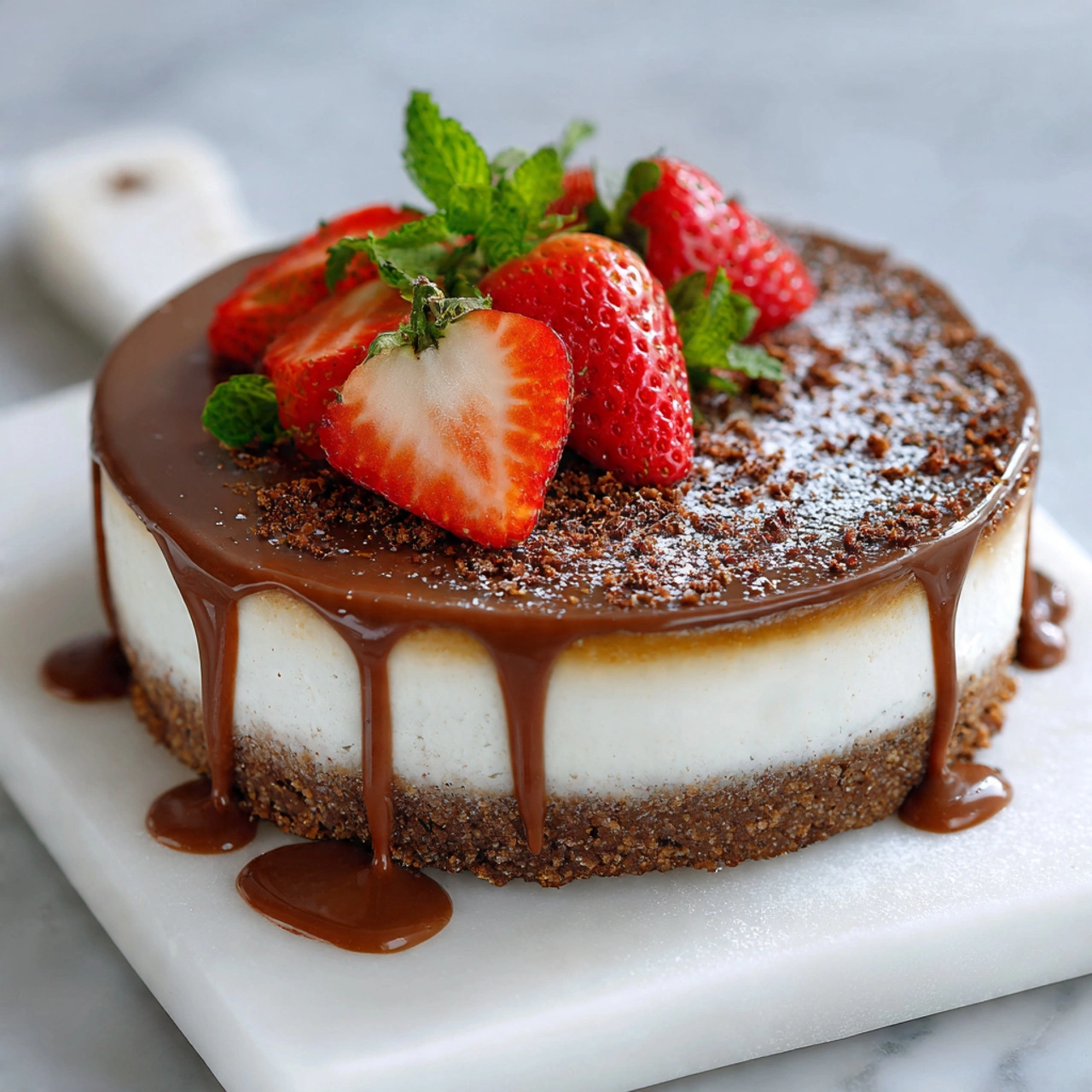
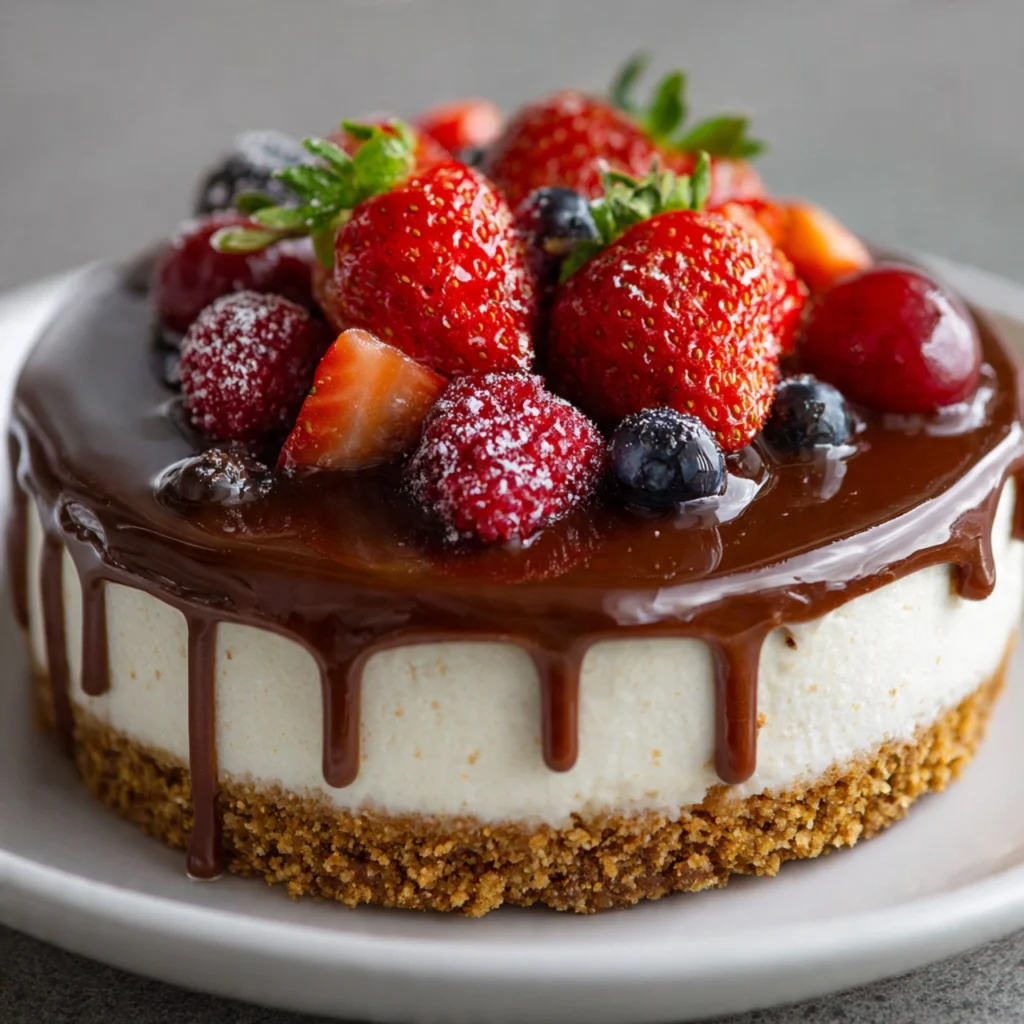
Beyond the ease of preparation, no-bake cheesecake is incredibly versatile. The basic vanilla version is absolutely delicious on its own, but it also serves as a blank canvas for endless variations. Top it with fresh berries, drizzle it with chocolate or caramel sauce, swirl in some lemon curd, add Oreos to the crust.
Understanding What Makes Perfect No-Bake Cheesecake
Before we dive into the recipe, let’s talk about what distinguishes an exceptional no-bake cheesecake from a mediocre one.
The Filling: The heart of any cheesecake is the filling, and for no-bake versions, achieving the right texture is crucial. We’re using cream cheese as the base for richness and tang, heavy whipping cream to create that light, airy texture, and just enough gelatin (or alternative stabilizer) to help everything set without becoming rubbery or overly firm.
The Crust: A great crust should be buttery, slightly sweet, and hold together when you slice the cheesecake without crumbling into dust. Graham crackers are traditional and wonderful, but Oreos, vanilla wafers, or even crushed pretzels can create interesting variations.
The Balance: The best no-bake cheesecakes achieve perfect balance—rich but not heavy, sweet but not cloying, creamy but still structured enough to slice cleanly. The tang from cream cheese and sour cream prevents the sweetness from becoming one-dimensional.
The Set: Unlike baked cheesecake that sets through eggs and heat, no-bake cheesecake relies on refrigeration and sometimes stabilizers like gelatin. The filling should be firm enough to hold its shape when sliced but still creamy and smooth on the tongue—never rubbery or overly dense.
When these elements come together correctly, you get a dessert that’s impressive enough for special occasions but easy enough to make on a Tuesday just because you want something delicious.
Ingredients for Perfect No-Bake Cheesecake
This recipe makes one 9-inch cheesecake serving 10-12 people. The ingredient list is refreshingly short.
For the Graham Cracker Crust:
- 2 cups graham cracker crumbs (about 14-16 full graham crackers, crushed)
- 1/4 cup granulated sugar
- 1/2 cup (1 stick) unsalted butter, melted
- Pinch of salt
For the Cheesecake Filling:
- 16 ounces (2 packages, 8 oz each) cream cheese, softened to room temperature
- 2/3 cup granulated sugar (or powdered sugar for smoother texture)
- 1 teaspoon vanilla extract
- 1/4 teaspoon salt
- 1 cup sour cream, room temperature
- 1 1/2 cups heavy whipping cream, cold
Optional Stabilizer (for firmer texture):
- 1 envelope (2 1/4 teaspoons) unflavored gelatin
- 3 tablespoons cold water
For Topping (Optional):
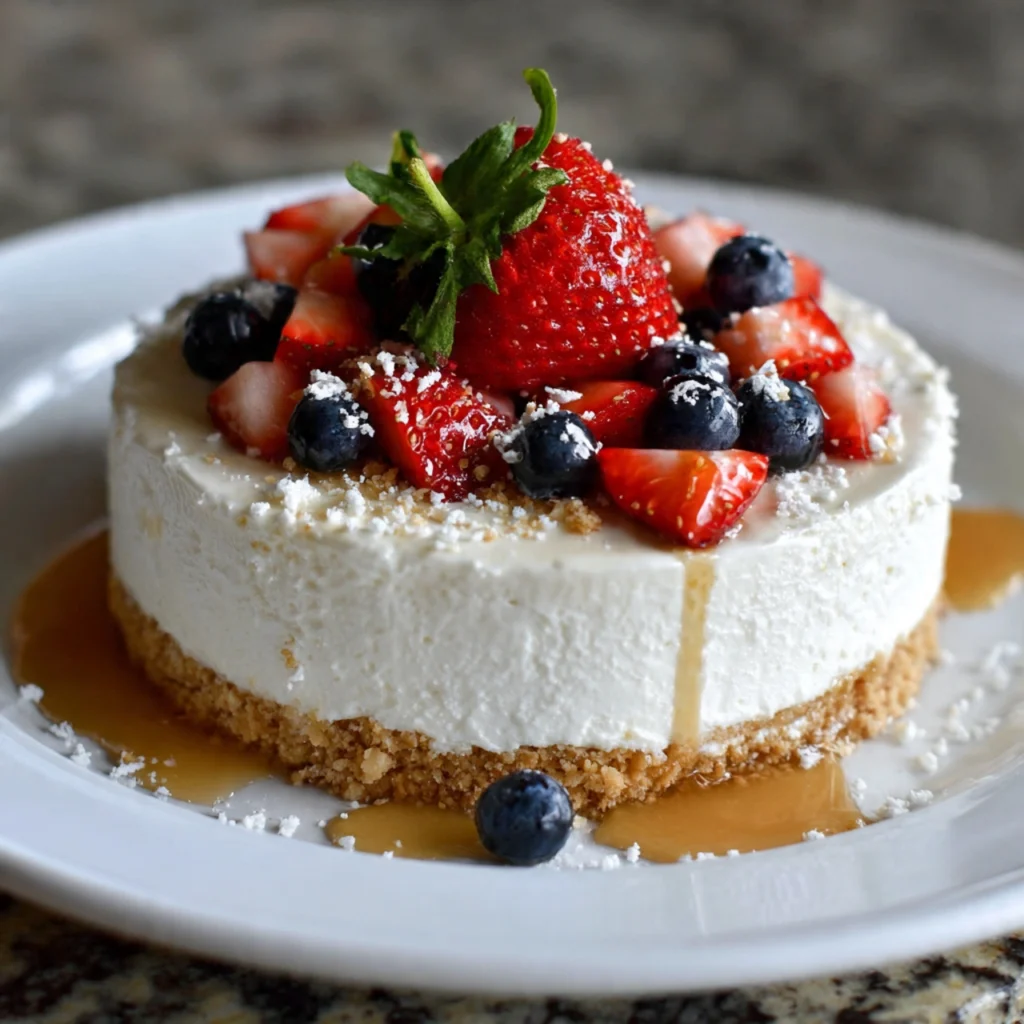
- Fresh berries (strawberries, blueberries, raspberries)
- Fruit compote or pie filling
- Chocolate ganache or sauce
- Caramel sauce
- Whipped cream
- Lemon curd
Ingredient Deep Dive
Cream Cheese: This is the foundation of your cheesecake, so quality matters. Use full-fat cream cheese, never the low-fat or whipped varieties—they contain too much water and will create a runny filling. The cream cheese MUST be at room temperature or you’ll end up with lumps that are nearly impossible to smooth out.
Heavy Whipping Cream: This is what creates that light, airy, mousse-like texture that sets no-bake cheesecake apart from baked versions. Make sure it’s very cold when you whip it—warm cream won’t whip properly. Heavy whipping cream has 36-40% fat content; don’t substitute with half-and-half or light cream.
Sour Cream: This adds tang and helps balance the sweetness while contributing to the creamy texture. Full-fat sour cream works best. Greek yogurt can be substituted in equal amounts if you prefer, though the flavor will be slightly different.
Sugar: Granulated sugar works perfectly well, but powdered sugar creates an even smoother texture since it’s already superfine and dissolves more easily.
Gelatin (Optional): Some no-bake cheesecake recipes use gelatin to help the filling set more firmly, making it easier to slice cleanly. I’ve made this recipe both with and without gelatin, and both work beautifully—it just depends on whether you want a firmer texture or a softer, more mousse-like texture.
Graham Crackers: The classic choice for cheesecake crust. You can buy graham cracker crumbs or make your own by crushing full crackers in a food processor or placing them in a zip-top bag and crushing with a rolling pin.
Butter: Unsalted butter gives you control over the salt level. The butter must be melted to bind the crumbs together. Salted butter works if that’s what you have—just omit the pinch of salt from the crust.
Step-by-Step Instructions: Creating Your No-Bake Cheesecake
1: Prepare the Crust (10 minutes + 10 minutes chilling)
- Prepare your pan: Spray a 9-inch springform pan with non-stick cooking spray, or line the bottom with parchment paper. A springform pan makes removing the cheesecake easy, but you can use a 9-inch pie dish if that’s what you have—just know you won’t be able to remove it for serving.
- Make the graham cracker crumbs: If using full graham crackers, place them in a food processor and pulse until you have fine, even crumbs. You want the texture of coarse sand, not powder. Alternatively, place crackers in a large zip-top bag and crush with a rolling pin.
- Combine crust ingredients: In a medium bowl, mix together the graham cracker crumbs, sugar, and salt. Pour the melted butter over the mixture and stir with a fork until all the crumbs are evenly moistened. The mixture should hold together when you press it between your fingers—if it’s too dry, add a tablespoon more melted butter.
- Press the crust into the pan: Pour the crumb mixture into your prepared pan. Using the bottom of a measuring cup or a flat glass, press the crumbs firmly into an even layer across the bottom and about 1-1.5 inches up the sides of the pan. Press firmly—a loose crust will crumble when you cut the cheesecake.
- Chill the crust: Place the pan in the refrigerator for at least 10-15 minutes while you make the filling. This helps the butter solidify and the crust set, making it sturdier.
Optional: For a firmer crust, you can bake it at 350°F for 8-10 minutes, then cool completely before adding the filling. This isn’t necessary but does create a sturdier base.
2: Prepare the Gelatin (If Using – 5 minutes)
- Bloom the gelatin: If you’re using gelatin for a firmer set, sprinkle the powdered gelatin over 3 tablespoons of cold water in a small, microwave-safe bowl. Let it sit for 5 minutes to “bloom”—it will absorb the water and become spongy.
- Melt the gelatin: Microwave the bloomed gelatin for 15-20 seconds until it’s completely melted and liquid. Stir until smooth and set aside to cool slightly. Don’t let it cool too much or it will start to set.
Note: If you prefer a softer, more mousse-like texture, skip the gelatin entirely. The cheesecake will still set beautifully in the refrigerator; it will just be a bit softer and creamier.
3: Make the Cheesecake Filling (15 minutes)
- Beat the cream cheese: In a large bowl using an electric mixer (hand mixer or stand mixer with paddle attachment), beat the softened cream cheese on medium speed for 2-3 minutes until completely smooth, fluffy, and free of lumps. Stop and scrape down the sides of the bowl several times.
- Add sugar and flavorings: Add the sugar, vanilla extract, and salt to the cream cheese. Beat on medium speed for another 2 minutes until light and fluffy. The mixture should be completely smooth with no granules of sugar visible.
- Add sour cream: Add the sour cream and beat on low speed just until incorporated, about 30 seconds. Don’t overmix at this stage.
- Add gelatin if using: If you used gelatin, make sure it’s liquid and slightly cooled (not hot, but still pourable). With the mixer on low speed, quickly stream the gelatin into the cream cheese mixture and beat for about 10-15 seconds until just combined.
4: Whip and Fold the Cream (10 minutes)
- Whip the heavy cream: In a separate large bowl (make sure it’s very clean—any fat residue will prevent proper whipping), beat the cold heavy whipping cream on medium-high speed until stiff peaks form. This takes about 3-5 minutes. You want the cream to hold its shape firmly when you lift the beaters.
- Fold cream into cream cheese mixture: Using a large silicone spatula, gently fold about one-third of the whipped cream into the cream cheese mixture to lighten it. Use a gentle folding motion—cut down through the center, sweep along the bottom, and fold over the top. Don’t stir or beat, as this will deflate the whipped cream.
- Fold in remaining whipped cream: Add the remaining whipped cream and continue folding gently until no white streaks remain and the mixture is uniform in color and texture. This should take 20-30 gentle folds. The filling should be light, airy, and mousse-like.
5: Assemble and Chill (5 minutes + 4-6 hours chilling)
- Pour filling into crust: Remove the chilled crust from the refrigerator. Pour the cheesecake filling into the crust, spreading it into an even layer with a spatula. Gently tap the pan on the counter 2-3 times to release any air bubbles.
- Smooth the top: Use an offset spatula or the back of a spoon to smooth the top into an even layer. For a perfectly smooth finish, dip the spatula in hot water, wipe it dry, and run it across the surface.
- Refrigerate: Cover the cheesecake loosely with plastic wrap (don’t let it touch the surface) or aluminum foil. Refrigerate for at least 4-6 hours, or preferably overnight. The cheesecake needs this time to set properly. Don’t rush this step!
6: Serve (5 minutes)
- Remove from pan: When ready to serve, run a thin knife around the edge of the cheesecake to loosen it from the pan. If using a springform pan, release and remove the sides. Leave the cheesecake on the springform base or carefully transfer to a serving plate.
- Slice cleanly: For the cleanest slices, dip a sharp knife in hot water, wipe it dry, then make one smooth cut through the cheesecake. Wipe the knife clean and repeat for each slice.
- Add toppings: Top individual slices or the whole cheesecake with your desired toppings just before serving.
Pro Tips for Perfect No-Bake Cheesecake
After making this recipe dozens of times and troubleshooting every possible issue, I’ve learned tricks that consistently produce flawless results.
Achieving Perfectly Smooth Filling
The texture can make or break no-bake cheesecake:
- Room temperature cream cheese is non-negotiable: Cold cream cheese will create lumps that are nearly impossible to remove. Let it sit at room temperature for at least 1-2 hours, or microwave blocks for 10-15 seconds at 50% power.
- Beat the cream cheese first: Always beat cream cheese alone until fluffy before adding other ingredients. This is your chance to ensure it’s completely lump-free.
- Don’t overmix after adding whipped cream: Once you fold in the whipped cream, stop mixing as soon as everything is combined. Overmixing deflates the air bubbles that create that light, creamy texture.
- Strain if necessary: If you end up with a few lumps despite your best efforts, press the filling through a fine-mesh sieve before folding in the whipped cream.
Getting the Perfect Set
The difference between a cheesecake that slices beautifully and one that’s runny:
- Be patient: Don’t try to slice the cheesecake before it’s fully set. Minimum 4 hours, but overnight is better. If you’re in a rush, you can place it in the freezer for 2-3 hours instead.
- Use gelatin for cleaner slices: If you want picture-perfect slices that hold their shape, add the gelatin. Without it, the cheesecake will still taste amazing but will be softer and more difficult to slice neatly.
- Don’t skip the whipping cream: The whipped cream is what gives no-bake cheesecake its signature texture. You can’t substitute with Cool Whip or other products and get the same results.
Creating a Sturdy Crust
Nobody wants a crumbly crust that falls apart:
- Press firmly: Really pack that crust down, especially at the corners where the bottom meets the sides. Use the bottom of a measuring cup or flat glass for even pressure.
- Chill thoroughly: The butter needs time to solidify. Even 10 minutes makes a difference.
- Consider baking it: An optional 8-10 minute bake at 350°F creates a sturdier crust that’s less likely to crumble.
Flavor Variations
Once you master the basic recipe, try these variations:
- Chocolate: Replace 1/2 cup of cream cheese with melted and cooled chocolate, or fold in 1/4 cup cocoa powder
- Lemon: Add 2 tablespoons lemon juice and 1 tablespoon lemon zest to the filling
- Berry swirl: Swirl in 1/3 cup berry puree or jam before refrigerating
- Oreo: Replace graham crackers with crushed Oreos and fold crushed cookies into filling
- Peanut butter: Add 1/2 cup creamy peanut butter to the cream cheese mixture
- Coffee: Dissolve 2 tablespoons instant espresso powder in the vanilla extract
Common Mistakes to Avoid
Understanding potential pitfalls helps you prevent them and troubleshoot in real-time.
Lumpy Filling
Nothing ruins the experience of creamy cheesecake like encountering lumps:
- The cause: Using cold cream cheese, not beating it long enough initially, or adding cold ingredients
- The fix: Prevention is key—always use room temperature ingredients. If you do end up with lumps, press the mixture through a fine-mesh sieve
- Prevention: Take cream cheese out of the fridge 2 hours before making the cheesecake
Runny, Watery Cheesecake That Won’t Set
If your cheesecake is still liquid after hours in the fridge:
- The cause: Using low-fat cream cheese or whipped cream cheese, not whipping the heavy cream to stiff peaks, or not refrigerating long enough
- The fix: Place in the freezer for 1-2 hours to firm up, or return to the bowl, add bloomed gelatin, remix, and re-chill
- Prevention: Use full-fat cream cheese and whip the cream until it holds stiff peaks
Deflated, Dense Texture
If your cheesecake is heavy instead of light and airy:
- The cause: Overmixing after adding the whipped cream, under-whipping the cream before folding, or deflating the mixture by stirring instead of folding
- The fix: Unfortunately, you can’t re-whip once it’s deflated. Next time, fold more gently
- Prevention: Use a gentle folding motion and stop as soon as no white streaks remain
Crumbly Crust That Falls Apart
If your crust disintegrates when you try to slice the cheesecake:
- The cause: Not enough butter, not pressing firmly enough, or cutting before the crust has fully chilled
- The fix: Next time, add an extra tablespoon of melted butter and press more firmly
- Prevention: Make sure every crumb is moistened with butter and press very firmly into the pan
Grainy Texture
If your cheesecake has a gritty mouthfeel:
- The cause: Using granulated sugar that didn’t fully dissolve, or cream cheese that had ice crystals
- The fix: Use powdered sugar instead of granulated for smoother texture
- Prevention: Let cream cheese come to true room temperature and beat the mixture thoroughly
Can’t Remove Cheesecake from Pan
If your cheesecake sticks to the pan:
- The cause: Not greasing the pan or not running a knife around the edge before releasing
- The fix: Dip a thin knife in hot water and carefully run it around the entire edge before attempting to release the springform
- Prevention: Always grease or line your pan, and loosen the edge before opening the springform
Storage and Serving Suggestions
Proper storage maintains quality, while thoughtful serving makes this impressive dessert even more memorable.
How to Store No-Bake Cheesecake
Refrigerator (Recommended): Store covered in the refrigerator for up to 5-7 days. Cover tightly with plastic wrap or store in an airtight container. The cheesecake actually improves after a day or two as the flavors meld.
Freezer: No-bake cheesecake freezes beautifully for up to 2-3 months:
- Freeze the whole cheesecake or individual slices
- Wrap tightly in plastic wrap, then aluminum foil
- Thaw overnight in the refrigerator (never at room temperature)
- Add toppings after thawing
Room Temperature: Don’t leave cheesecake at room temperature for more than 2 hours. It contains dairy and needs to be refrigerated for food safety.
Serving Suggestions
Temperature: Cheesecake is best served cold but not ice-cold. Remove from the refrigerator about 10-15 minutes before serving to take the chill off slightly.
Toppings and Garnishes:
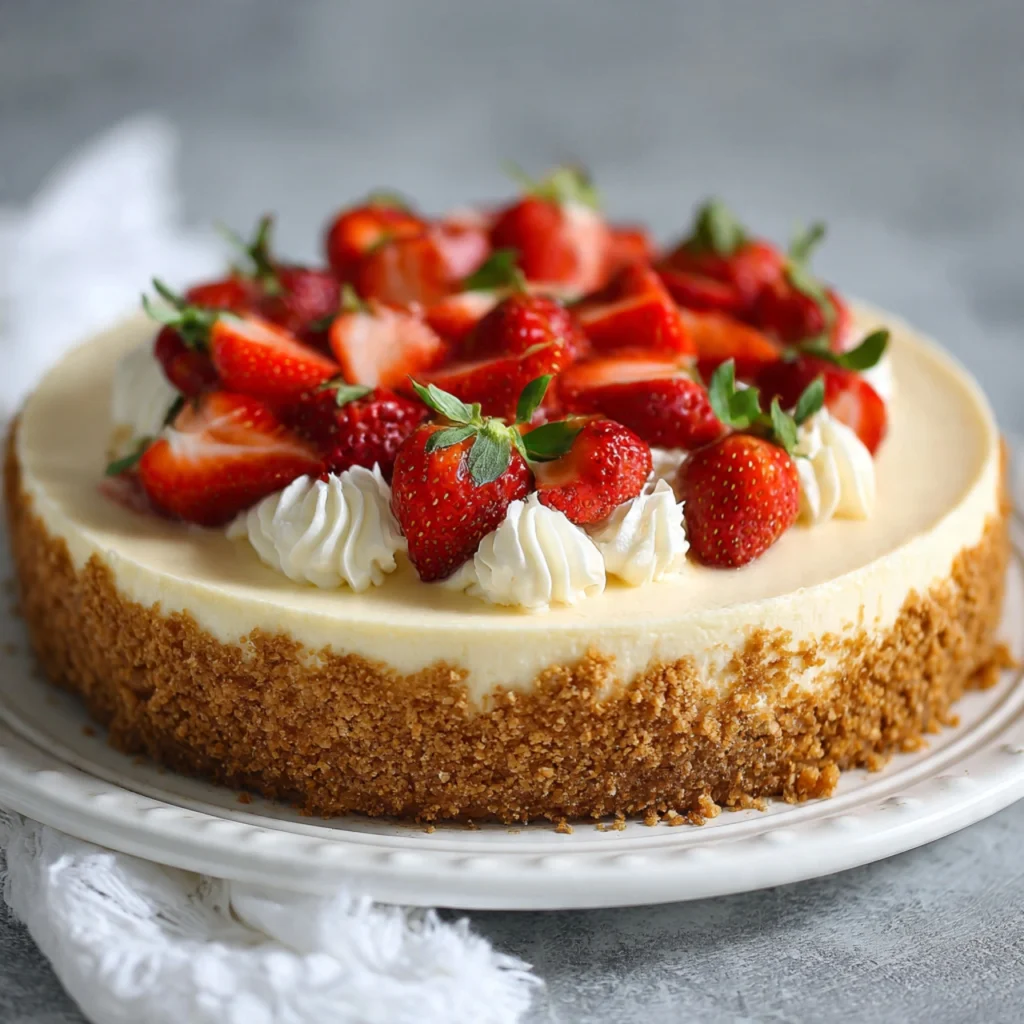
- Fresh berries: Classic and beautiful, especially strawberries
- Fruit compote: Cherry, blueberry, or strawberry sauce
- Chocolate: Ganache, chocolate sauce, or chocolate shavings
- Caramel: Salted caramel sauce drizzle
- Whipped cream: Fresh whipped cream rosettes
- Citrus: Lemon curd, lime zest, or orange segments
- Nuts: Toasted pecans or candied walnuts
Presentation:
- Dust with powdered sugar for elegance
- Pipe whipped cream rosettes around the edge
- Create a pattern with fruit on top
- Drizzle sauce in decorative patterns
- Add fresh mint leaves for color
Occasions: Perfect for:
- Summer gatherings (no oven needed!)
- Birthday parties
- Holiday desserts
- Potlucks (travels well)
- Make-ahead entertaining
- Bridal or baby showers
- Casual weeknight treats
Portion Sizes: This rich dessert is best served in modest portions:
- Standard: 12 slices from a 9-inch cheesecake
- Generous: 10 slices for heartier portions
- Petite: 16 small slices for parties
Beverage Pairings
- Coffee: Espresso or strong coffee balances the sweetness
- Tea: Earl Grey or chai complements the creamy richness
- Dessert wine: Late harvest Riesling or Moscato
- Milk: Classic and kid-friendly
- Sparkling wine: Champagne or Prosecco for celebrations
Frequently Asked Questions
Can I make no-bake cheesecake without gelatin?
Absolutely! The gelatin is completely optional. Without it, the cheesecake will have a softer, more mousse-like texture that’s absolutely delicious but will be slightly more difficult to slice cleanly. The whipped cream and refrigeration time alone are usually sufficient to set the filling. If you want a firmer texture without gelatin, you can increase the cream cheese slightly (add 4 ounces more) or decrease the heavy cream by 1/4 cup.
How long does no-bake cheesecake need to set?
Minimum 4 hours, but overnight (8-12 hours) is ideal for the best texture and easiest slicing. If you’re in a hurry, you can place it in the freezer for 2-3 hours instead of refrigerating, but remember to thaw it slightly before serving. The longer it chills, the better the flavors meld and the firmer the texture becomes. I always make mine the night before I plan to serve it.
Can I use a different crust?
Yes! Graham crackers are traditional, but many other options work beautifully:
- Oreo cookies: Use the whole cookie (cream and all) for chocolate crust
- Vanilla wafers: Creates a lighter, more delicate crust
- Digestive biscuits: Classic British option
- Gingersnaps: Adds spicy warmth
- Pretzels: For sweet-salty contrast
- Shortbread cookies: Rich and buttery
- Gluten-free cookies: For gluten-free version
Use the same amount (2 cups crumbs) and follow the same process.
Why is my no-bake cheesecake runny?
Several reasons can cause this:
- Low-fat cream cheese: Always use full-fat (not whipped or low-fat)
- Whipped cream not stiff enough: Beat to stiff peaks before folding
- Not chilled long enough: Wait the full minimum time
- Too much liquid: Measure carefully
- Overmixing: This deflates the air that helps it set
To fix runny cheesecake: Return the filling to a bowl, bloom 1 envelope of unflavored gelatin in 3 tablespoons water, microwave until dissolved, quickly fold into the filling, return to crust, and refrigerate overnight.
Can I make this ahead of time?
Yes! This is actually an ideal make-ahead dessert. Make the cheesecake 1-3 days before you need it and store it covered in the refrigerator. In fact, it tastes even better after sitting for a day as the flavors develop. Don’t add toppings like fresh fruit or whipped cream until shortly before serving, as these can make the cheesecake soggy or cause them to weep. You can also freeze it for up to 2 months and thaw overnight in the refrigerator.
Is no-bake cheesecake better than baked?
It depends on personal preference! No-bake cheesecake has a lighter, airier, mousse-like texture and is much easier to make (no risk of cracks, no water bath required, no oven needed). Baked cheesecake has a denser, more traditional “New York style” texture with a slightly tangy, more complex flavor from the eggs. Many people actually prefer no-bake for its creamy, cloud-like texture. Try both and see which you prefer!
Can I make individual no-bake cheesecakes?
Absolutely! Divide the crust and filling among:
- Muffin tins lined with cupcake liners (makes 12-14 individual cheesecakes)
- Small jars or glasses for a rustic presentation
- Individual serving bowls
- Mini springform pans (4-inch size)
The chill time remains the same (4-6 hours or overnight). Individual cheesecakes are perfect for parties and portion control.
Nutrition Information (Per Serving)
Based on 12 servings from one 9-inch cheesecake, without toppings.
Serving Size: 1 slice (approximately 120g)
- Calories: 380-420
- Total Fat: 30-34g
- Saturated Fat: 18-21g
- Cholesterol: 90-110mg
- Sodium: 220-280mg
- Total Carbohydrates: 26-30g
- Dietary Fiber**: 0-1g
- Sugars: 20-24g
- Protein: 5-6g
- Calcium: 8-10% Daily Value
- Vitamin A: 15-18% Daily Value
Nutritional Notes
No-bake cheesecake is an indulgent dessert meant for special occasions and treats. The calories come primarily from cream cheese, butter, and heavy cream.
To make it lighter:
- Use reduced-fat cream cheese (texture will be slightly different)
- Replace half the heavy cream with Greek yogurt (tangier flavor, firmer texture)
- Reduce sugar to 1/2 cup if serving with sweet toppings
- Make smaller portions (cut into 16 slices instead of 12)
- Use a thinner crust or skip the crust entirely
Dietary Considerations:
- Naturally vegetarian
- Can be made gluten-free using gluten-free cookie crumbs for the crust
- Not suitable for vegan, dairy-free, or low-lactose diets (unless made with alternative ingredients)
Remember that desserts are meant to be enjoyed! A smaller portion of something truly delicious is often more satisfying than a larger portion of something mediocre.
Conclusion: Your New Favorite No-Stress Dessert
This No-Bake Cheesecake is proof that impressive desserts don’t have to be complicated or stressful. With just a few simple ingredients, basic mixing bowls, and your refrigerator doing all the heavy lifting, you can create something that looks stunning and tastes absolutely incredible.
What I love most about this recipe is how it removes all the anxiety from making cheesecake. There’s no worrying about cracks, no fussing with water baths, no precise oven temperatures to maintain. You simply mix, pour, chill, and enjoy. It’s the kind of recipe that makes you feel like a baking genius while requiring surprisingly little effort.
I hope this comprehensive guide gives you everything you need to make perfect no-bake cheesecake with complete confidence. Whether you’re serving it plain and simple or dressing it up with elaborate toppings, whether it’s for a special celebration or just a Tuesday night treat, this cheesecake will deliver every single time.
So grab that cream cheese, chill your heavy cream, and get ready to make a dessert that will have everyone convinced you’re a pastry chef. The secret of how easy it was? Well, that’s entirely up to you to share!
PrintNo-Bake Cheesecake: The Ultimate Creamy Dessert (No Oven Required!)
Silky smooth, incredibly creamy no-bake cheesecake with a buttery graham cracker crust. Easier than traditional baked cheesecake with a lighter, mousse-like texture. Perfect make-ahead dessert that sets beautifully in the refrigerator. Customize with your favorite toppings!
- Prep Time: 30 minutes
- Cook Time: 0 minutes
- Total Time: 30 minutes prep + 4-6 hours chilling
- Yield: 10-12 servings
- Category: Dessert, No-Bake Dessert, Cheesecake
- Method: No-Bake, Refrigerated, Whipped
- Cuisine: American
- Diet: Vegetarian
Ingredients
Crust:
- 2 cups graham cracker crumbs
- 1/4 cup sugar
- 1/2 cup melted butter
- Pinch salt
Filling:
- 16 oz cream cheese, softened
- 2/3 cup sugar
- 1 tsp vanilla extract
- 1/4 tsp salt
- 1 cup sour cream
- 1 1/2 cups heavy cream, cold
Optional Stabilizer:
- 1 envelope unflavored gelatin
- 3 tbsp cold water
Instructions
- Mix graham cracker crumbs, sugar, salt, and melted butter
- Press firmly into 9-inch springform pan bottom and sides
- Refrigerate crust 10-15 minutes
- If using gelatin: sprinkle over cold water, let bloom 5 minutes, microwave 15-20 seconds until melted
- Beat cream cheese 2-3 minutes until fluffy and smooth
- Add sugar, vanilla, salt; beat 2 minutes
- Add sour cream; beat until just combined
- Add melted gelatin if using; beat 10-15 seconds
- In separate bowl, whip heavy cream to stiff peaks
- Fold 1/3 whipped cream into cream cheese mixture to lighten
- Gently fold in remaining whipped cream until no streaks remain
- Pour into prepared crust; smooth top
- Cover and refrigerate 4-6 hours or overnight
- Run knife around edge before releasing springform
- Slice with hot, clean knife
- Add desired toppings and serve chilled
Notes
- Cream cheese must be room temperature
- Gelatin is optional; omit for softer, mousse-like texture
- Whip cream to stiff peaks before folding
- Use gentle folding motion to preserve airiness
- Overnight chilling recommended for best results
- Can be frozen up to 2 months