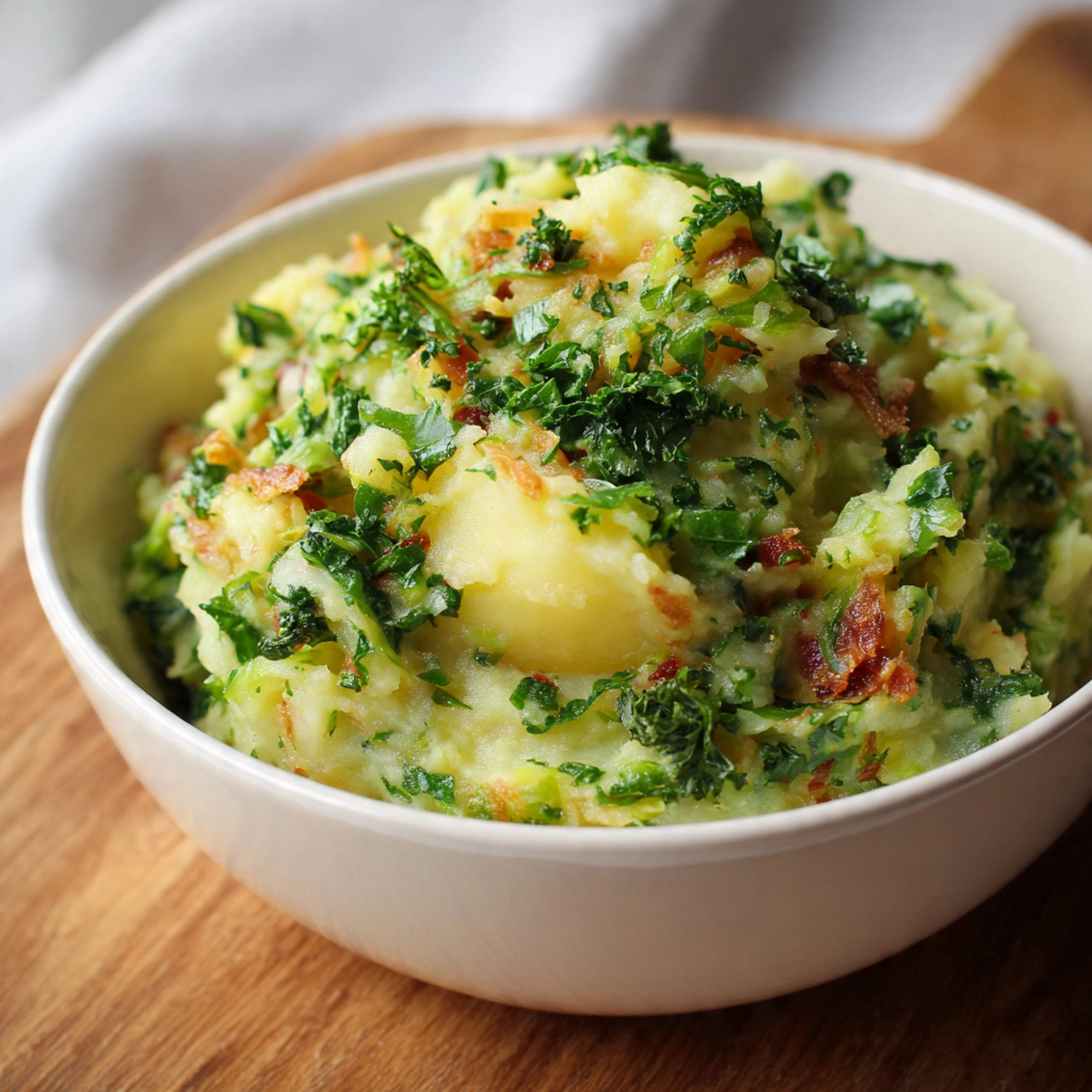
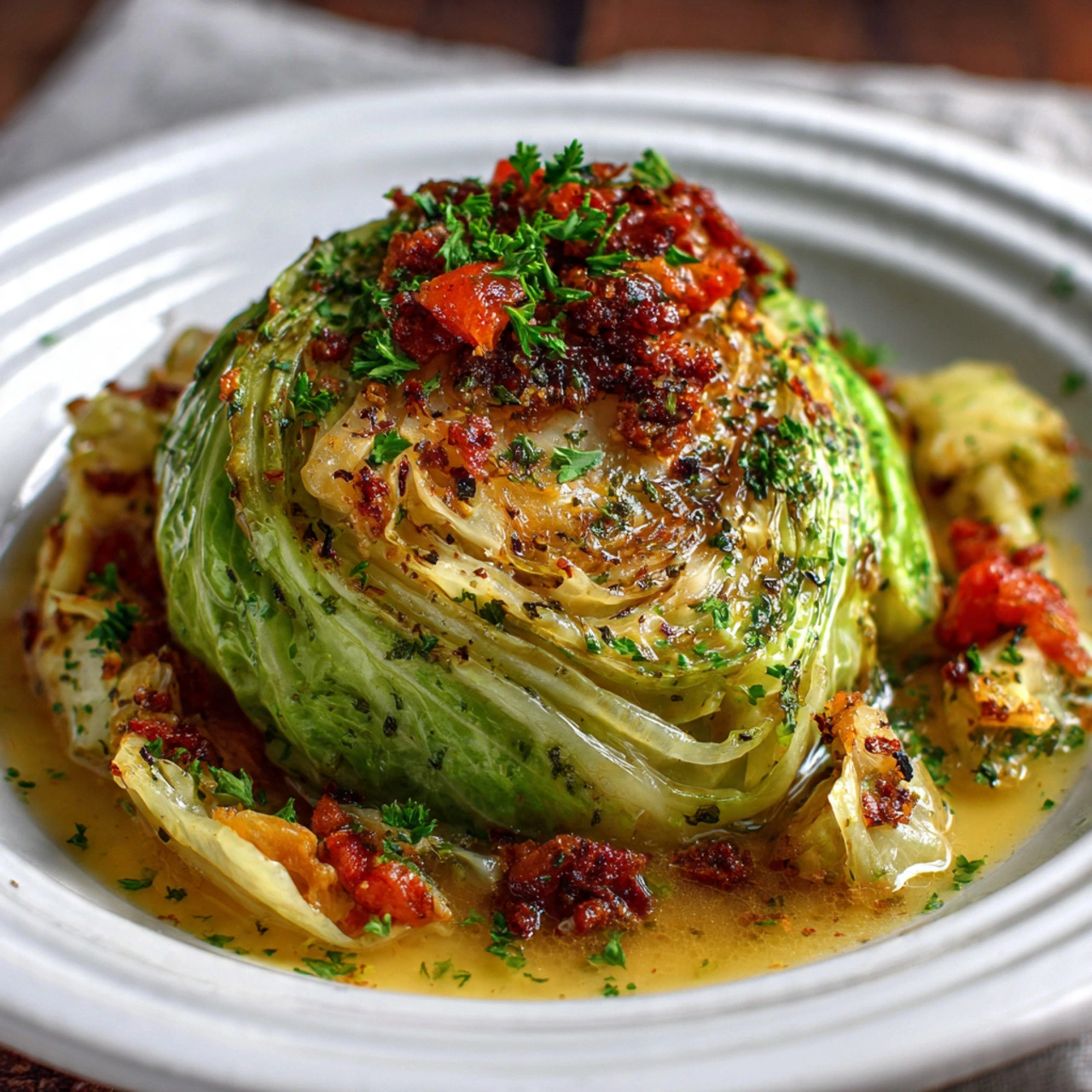
Introduction: Why Meat-Free Cabbage Delight Became My Favorite Weeknight Dinner
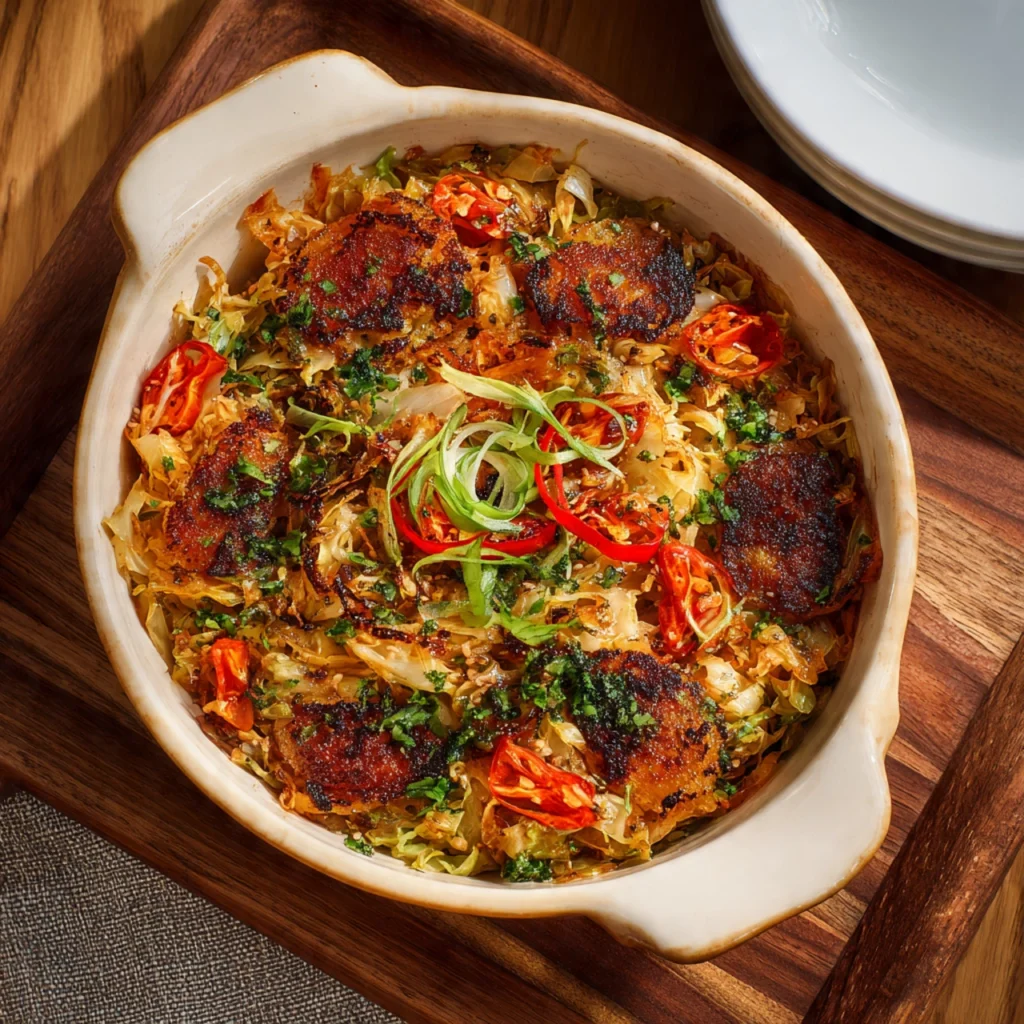
Meat-Free Cabbage Delight shows that vegetables can be just as satisfying and comforting as meat-heavy dishes. Tender cabbage, savory vegetables, and aromatic seasonings combine into a hearty, wholesome, and delicious plant-based meal. When properly seasoned and cooked, cabbage takes on a meaty texture and deeply savory flavor, making you forget it’s entirely plant-based.
What makes Meat-Free Cabbage Delight truly special is that it proves vegetarian food can be filling and satisfying. The cabbage adds texture and volume, vegetables bring sweetness and complexity, and a well-balanced blend of spices creates depth rivaling any meat-based casserole. This dish appeals to both vegetarians and omnivores—nobody feels like they’re missing out.
Beyond tasting great, this recipe is remarkably practical for everyday life. Cabbage is one of the most affordable vegetables available year-round, making this an incredibly budget-friendly meal. It’s naturally low in calories but high in fiber and nutrients, supporting healthy eating without requiring expensive specialty ingredients. The recipe scales easily for meal prep, feeding a crowd, or cooking for one. And it stores beautifully, actually improving in flavor after a day in the refrigerator as the spices meld.
I’ve made countless batches of Meat-Free Cabbage Delight for everything from casual weeknight dinners to potlucks where meat-eaters genuinely ask for the recipe. It works as a main course with crusty bread, a side dish alongside other plant-based proteins, or stuffed into wraps and sandwiches. The versatility means this one recipe solves multiple meal-planning challenges while introducing more vegetables into your diet in the most delicious way possible.
The cooking process is straightforward—no complicated techniques, no hard-to-find ingredients, just simple sautéing and simmering that transforms humble cabbage into something genuinely crave-worthy.
Ready to make Meat-Free Cabbage Delight that’ll change how you think about vegetarian cooking?
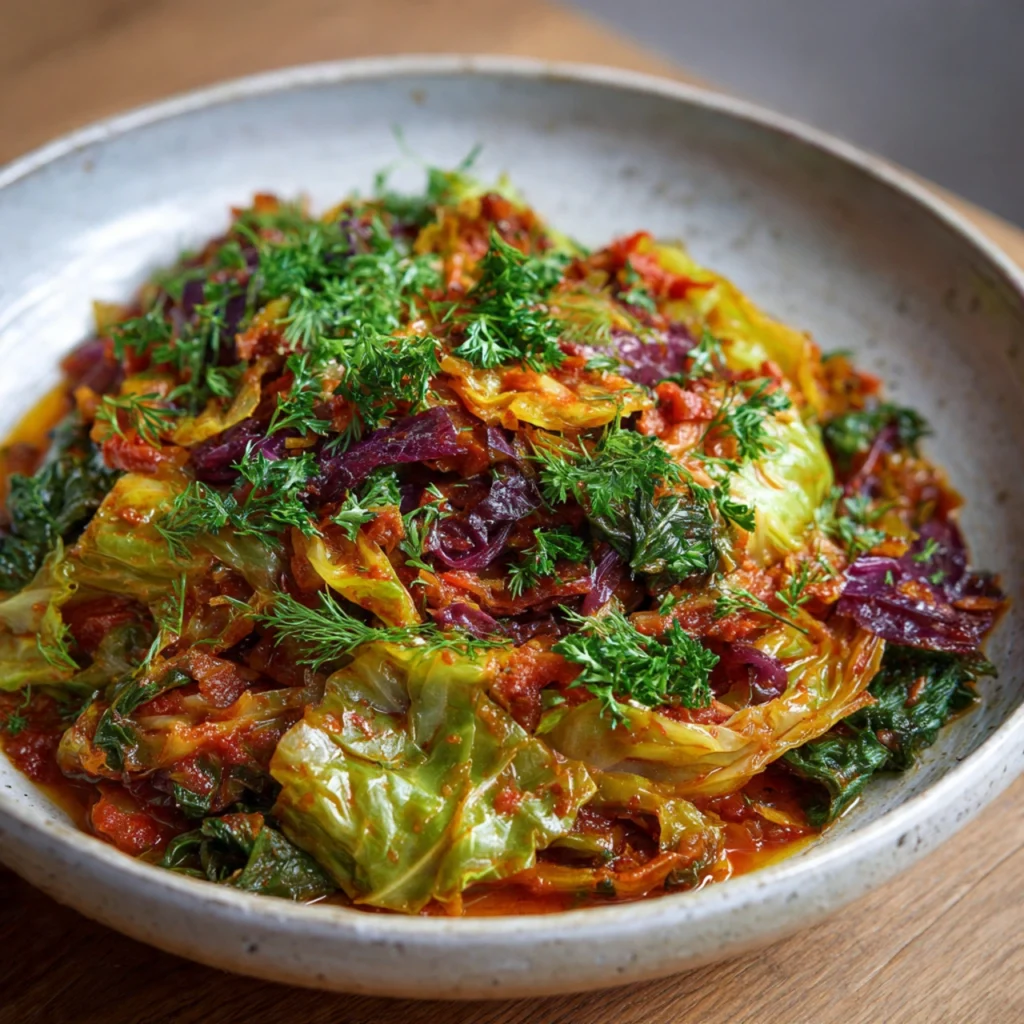
Ingredients: What You’ll Need for Perfect Meat-Free Cabbage Delight
Core Ingredients (Serves 6)
- 1 large head green cabbage (about 2-3 pounds) – The star ingredient
- 2 tablespoons olive oil – For sautéing
- 1 large onion, diced – Aromatic foundation
- 3 cloves garlic, minced – Essential savory depth
- 2 large carrots, diced – Sweetness and color
- 2 celery stalks, diced – Classic vegetable trio
- 1 bell pepper (any color), diced – Sweet crunch
- 1 can (14 oz) diced tomatoes – Acidic brightness
- 2 cups vegetable broth – Flavorful liquid base
- 2 tablespoons tomato paste – Concentrated tomato flavor
- 2 teaspoons paprika – Warmth and color
- 1 teaspoon dried thyme – Herbal note
- 1 teaspoon dried oregano – Mediterranean flavor
- ½ teaspoon smoked paprika (optional) – Smoky depth
- 1 bay leaf – Subtle complexity
- Salt and black pepper to taste – Essential seasoning
Optional Add-Ins for Extra Heartiness
- 1 can (15 oz) white beans or chickpeas – Added protein and substance
- 1 cup cooked rice or quinoa – Makes it more filling
- ½ cup lentils (red or green) – Protein boost
- 1 cup mushrooms, sliced – Meaty texture
- 2 tablespoons nutritional yeast – Umami and B vitamins
- 1 teaspoon soy sauce or tamari – Extra savory depth
- Fresh parsley or dill – Bright finish
Equipment Needed
- Large Dutch oven or deep skillet with lid
- Sharp knife and cutting board
- Wooden spoon or spatula
- Measuring cups and spoons
Step-by-Step Instructions: Creating Perfect Meat-Free Cabbage Delight
Step 1: Prepare the Cabbage (5 minutes)
Remove the outer leaves of the cabbage if they’re wilted or damaged. Cut the cabbage into quarters, remove the tough core, then chop into roughly 1-inch pieces. Don’t worry about precise cutting—rustic, irregular pieces work perfectly and add textural interest.
You should have approximately 8-10 cups of chopped cabbage. Cabbage cooks down dramatically, so what seems like an enormous amount will reduce to a manageable volume.
Step 2: Sauté the Aromatics (5 minutes)
Heat the olive oil in a large Dutch oven or deep skillet over medium heat. Add the diced onion and cook, stirring occasionally, for 3-4 minutes until it begins to soften and turn translucent.
Add the minced garlic and cook for another 30-60 seconds until fragrant. Don’t let the garlic brown or it will become bitter—it should just release its aroma.
The goal here is to build an aromatic foundation that will flavor the entire dish. Take your time with this step—properly cooked onions and garlic create depth you can’t achieve by rushing.
Step 3: Add the Vegetables (5 minutes)
Add the diced carrots, celery, and bell pepper to the pot. Cook, stirring occasionally, for about 5 minutes until the vegetables begin to soften slightly. They don’t need to be fully cooked—they’ll continue cooking with the cabbage.
This sautéing step caramelizes the vegetables slightly, developing sweetness and complexity that makes the final dish more interesting than if you’d just thrown everything together.
Step 4: Add the Cabbage (5 minutes)
Add all the chopped cabbage to the pot. It will seem like way too much cabbage for the pot, but don’t worry—it will wilt down significantly as it cooks. Stir to combine with the other vegetables.
Cook, stirring occasionally, for about 5 minutes. The cabbage will start to wilt and release moisture, reducing in volume considerably. This initial cooking helps remove some of cabbage’s raw, sulfurous notes and begins developing its sweet, savory character.
Step 5: Add Liquids and Seasonings (2 minutes)
Add the diced tomatoes (with their juices), vegetable broth, tomato paste, paprika, smoked paprika if using, thyme, oregano, bay leaf, and a generous pinch of salt and black pepper.
Stir everything together thoroughly, making sure the tomato paste is fully incorporated—it tends to clump if not mixed well. Scrape any browned bits from the bottom of the pot as you stir; those are pure flavor.
Step 6: Simmer Until Tender (25-30 minutes)
Bring the mixture to a boil over medium-high heat, then reduce to a gentle simmer. Cover the pot with a lid slightly ajar (to allow some steam to escape) and cook for 25-30 minutes, stirring occasionally.
The cabbage should become very tender and almost melt-in-your-mouth soft, while the vegetables maintain some texture. The liquid will reduce and thicken into a flavorful sauce that coats everything.
If the mixture seems too dry during cooking, add a bit more vegetable broth or water. If it’s too liquidy at the end, remove the lid and simmer uncovered for a few extra minutes to evaporate excess liquid.
Step 7: Add Optional Ingredients and Final Seasoning (5 minutes)
If adding beans, chickpeas, cooked rice, quinoa, or lentils, stir them in now and heat through for about 5 minutes. These additions make the dish more substantial and add protein.
Taste and adjust seasoning. The dish should be well-seasoned and flavorful—add more salt, pepper, or any of the spices until it tastes vibrant and delicious. Remove the bay leaf.
If using nutritional yeast for extra umami and B vitamins, stir it in now. If you want extra savory depth, add the soy sauce or tamari.
Step 8: Garnish and Serve (2 minutes)
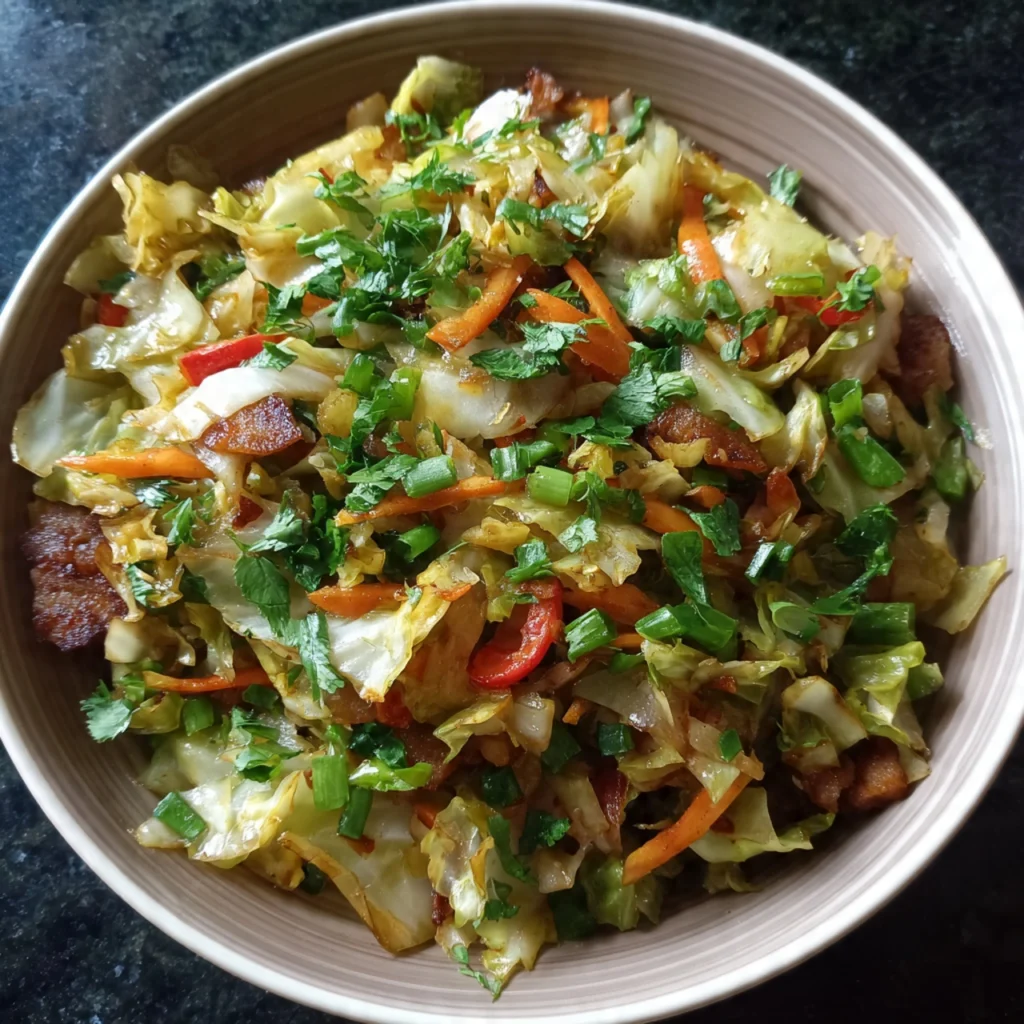
Transfer to serving bowls or a large serving dish. Garnish with fresh chopped parsley or dill if using—the fresh herbs add brightness that balances the hearty, cooked vegetables.
Serve hot with crusty bread for soaking up the flavorful sauce, over rice or grains, or on its own as a complete vegetarian meal.
Pro Tips for the Perfect Meat-Free Cabbage Delight
Tip 1: Don’t Skip the Initial Vegetable Sauté
Sautéing the onions, carrots, celery, and bell pepper before adding the cabbage develops sweetness and complexity through caramelization. Skipping this step and just throwing everything together creates a flatter, less interesting dish. Those few extra minutes of browning make a significant flavor difference.
Tip 2: Season Generously
Cabbage needs bold seasoning to taste good. Don’t be timid with salt, spices, and aromatics. Taste frequently during cooking and adjust seasoning until the dish tastes vibrant and exciting rather than bland and boring. Under-seasoned cabbage is the most common reason people think they don’t like vegetable-based dishes.
Tip 3: Cook Until Very Tender
Undercooked cabbage retains a sulfurous, slightly bitter taste that’s unpleasant. Cook until the cabbage is very tender and sweet—about 25-30 minutes of simmering. Properly cooked cabbage becomes sweet, silky, and almost meaty in texture.
Tip 4: Add Acid for Brightness
The tomatoes provide acidity, but if your dish tastes flat at the end, add a splash of lemon juice or a teaspoon of vinegar. Acid brightens all the flavors and makes the dish taste more vibrant and balanced.
Tip 5: Let It Rest Before Serving
Like many stews and braises, this dish actually tastes better after sitting for 15-20 minutes. The resting time allows flavors to meld and the sauce to thicken slightly. If you have time, make it ahead and reheat—it’s even better the next day.
Tip 6: Customize with Your Favorite Vegetables
While this recipe uses a classic combination, feel free to add or substitute vegetables you enjoy. Zucchini, green beans, peas, corn, or potatoes all work well. Just add harder vegetables early and softer ones later for proper texture.
Tip 7: Use Good Quality Vegetable Broth
The broth provides a significant portion of the flavor, so use a good quality one or make your own. Weak, bland broth creates weak, bland cabbage. If your broth tastes good on its own, it will make the final dish taste good.
Tip 8: Make It Your Own
Once you master the basic recipe, experiment with different spice blends (curry powder, Italian herbs, Mexican spices), different vegetables, and different add-ins like beans or grains. The technique stays the same while endless variations keep it interesting.
Common Mistakes to Avoid When Making Meat-Free Cabbage Delight
Mistake 1: Cutting the Cabbage Too Small
Tiny cabbage pieces turn to mush during the long cooking time. Cut into roughly 1-inch pieces—they’ll shrink during cooking but maintain some texture. Bigger pieces are better than too-small pieces for this recipe.
Mistake 2: Rushing the Onion Sauté
Undercooked onions taste sharp and raw rather than sweet and aromatic. Give them the full 3-4 minutes to soften and turn translucent before adding other ingredients. This foundation of properly cooked onions makes everything taste better.
Mistake 3: Not Using Enough Liquid
Cabbage releases water as it cooks, but it also absorbs liquid. If there’s not enough liquid, the cabbage can burn and stick to the bottom of the pot. Make sure there’s enough vegetable broth to keep everything moist during cooking.
Mistake 4: Cooking Over Too-High Heat
High heat can burn the vegetables on the bottom while leaving the cabbage raw on top. Use medium heat for sautéing and a gentle simmer (not a rolling boil) for cooking. Patient, gentle cooking develops the best flavor and texture.
Mistake 5: Not Stirring Occasionally
Unstirred cabbage can stick and burn on the bottom. Give it a stir every 5-7 minutes during the simmering phase to ensure even cooking and prevent burning. You don’t need to stir constantly, just occasionally.
Mistake 6: Under-Seasoning
This is the most common error that makes people think they don’t like cabbage dishes. Cabbage needs generous seasoning to taste good—salt, spices, aromatics. Taste frequently and adjust until it tastes vibrant and flavorful, not bland.
Mistake 7: Serving Immediately Without Resting
The dish benefits from a brief rest after cooking to let flavors meld and the sauce thicken. Give it at least 10-15 minutes before serving if possible. This patience is rewarded with better flavor and texture.
Mistake 8: Forgetting the Bay Leaf
Leaving the bay leaf in the dish after cooking means someone might bite into it—bay leaves don’t soften during cooking and taste terrible if eaten. Always remove the bay leaf before serving.
Storage and Serving Suggestions for Meat-Free Cabbage Delight
How to Store
Refrigerator: Store Meat-Free Cabbage Delight in an airtight container in the refrigerator for up to 5 days. The flavors actually improve over the first 2-3 days as they meld together. Reheat on the stovetop or in the microwave.
Freezer: This dish freezes excellently for up to 3 months. Cool completely, portion into freezer-safe containers, label with the date, and freeze. Thaw overnight in the refrigerator before reheating. The texture may be slightly softer after freezing but the flavor remains excellent.
Room Temperature: Don’t leave the dish at room temperature for more than 2 hours. Refrigerate promptly for food safety.
Meal Prep: This is an ideal meal prep recipe. Make a large batch on Sunday, portion into individual containers, and enjoy healthy, ready-made lunches or dinners all week.
Serving Suggestions
As a Main Course: Serve generous portions in bowls with crusty bread for soaking up the flavorful sauce. The dish is substantial enough to be a complete vegetarian meal on its own.
Over Grains: Serve over cooked rice, quinoa, farro, or couscous for a heartier meal with complete protein when combined with beans or lentils.
As a Side Dish: Smaller portions work beautifully as a side dish alongside other plant-based proteins like tofu, tempeh, or veggie burgers.
Stuffed into Wraps: Use as filling for whole wheat wraps or tortillas with a dollop of hummus or vegan sour cream for portable lunches.
Topped with Protein: Add a fried or poached egg on top for vegetarians who eat eggs. The runny yolk enriches the dish beautifully.
With Potatoes: Serve alongside roasted or mashed potatoes for a classic comfort food combination.
Soup Version: Add extra vegetable broth to create a hearty cabbage soup. Serve with a squeeze of lemon juice for brightness.
Flavor Variation Ideas
Italian-Style: Add Italian seasoning, fresh basil, and serve with parmesan (or nutritional yeast for vegan version)
Indian-Inspired: Use curry powder, cumin, coriander, add chickpeas and serve with naan
Mexican-Style: Add cumin, chili powder, corn, black beans, and top with avocado
Asian-Inspired: Use soy sauce, ginger, sesame oil, and serve over rice
German-Style: Add caraway seeds, apple cider vinegar, and a touch of brown sugar
Mediterranean: Add olives, sun-dried tomatoes, and herbs de Provence
Moroccan-Style: Add cumin, cinnamon, raisins, and chickpeas
Frequently Asked Questions (FAQ)
1. Can I make Meat-Free Cabbage Delight in a slow cooker?
Yes! Sauté the aromatics and vegetables in a skillet first (step 2-3), then transfer everything to a slow cooker. Add the cabbage, liquids, and seasonings. Cook on low for 6-8 hours or high for 3-4 hours until the cabbage is very tender. The slow cooker method creates incredibly tender, flavorful cabbage.
2. Is this recipe vegan?
Yes! As written, this recipe is completely vegan—it contains no animal products. It’s also naturally gluten-free, making it suitable for multiple dietary restrictions. Just ensure your vegetable broth is vegan (some contain chicken or beef).
3. Can I use red cabbage instead of green cabbage?
Absolutely! Red cabbage works wonderfully and adds beautiful color. Be aware that red cabbage takes slightly longer to cook (add 5-10 minutes) and the color will bleed into the dish, turning everything slightly purple. The flavor is slightly earthier than green cabbage.
4. How can I make this more filling?
Add protein-rich ingredients like white beans, chickpeas, or lentils. Include cooked grains like rice or quinoa. Serve over mashed potatoes or polenta. Add diced firm tofu for extra protein. These additions transform the dish from a side into a substantial main course.
5. Can I make this recipe without tomatoes?
Yes! For a non-tomato version, replace the diced tomatoes with extra vegetable broth and add a tablespoon of apple cider vinegar or lemon juice for acidity. The dish will be lighter in color but still delicious. You might want to add extra spices to compensate for the missing tomato flavor.
6. Why does my cabbage taste bitter?
Bitterness usually means the cabbage is undercooked. Cook longer (up to 35-40 minutes) until very tender. Also ensure you’re using enough salt and other seasonings—proper seasoning balances any natural bitterness. A pinch of sugar can help if your cabbage is particularly bitter.
7. Can I add meat to this recipe?
While this is designed as a meat-free dish, you can add ground meat (beef, turkey, sausage) during the vegetable sauté stage if you want a meat version. Brown the meat first, drain excess fat, then proceed with the recipe. This transforms it into a traditional cabbage casserole.
8. How do I reduce the cabbage smell while cooking?
Cabbage does release sulfur compounds during cooking. Improve ventilation by opening windows or running an exhaust fan. Adding a piece of bread crust to the cooking pot supposedly absorbs odors (remove before serving). Cooking with the lid slightly ajar also helps reduce concentrated odors.
Nutrition Information (Per Serving, Based on 6 Servings Without Optional Add-Ins)
Calories: 125 kcal
Total Fat: 5g
- Saturated Fat: 0.5g
- Trans Fat: 0g
Cholesterol: 0mg
Sodium: 420mg
Total Carbohydrates: 18g
- Dietary Fiber: 6g
- Sugars: 10g
Protein: 4g
Vitamin A: 85% DV
Vitamin C: 98% DV
Calcium: 8% DV
Iron: 10% DV
Potassium: 620mg
Note: Nutrition information is approximate and based on the basic recipe without optional add-ins. Adding beans, grains, or other ingredients will increase calories, protein, and fiber. This is a naturally low-calorie, high-fiber, nutrient-dense dish suitable for various dietary needs including vegan, vegetarian, gluten-free, and low-fat diets.
Conclusion: Your Meat-Free Cabbage Delight Journey Starts Now
Meat-Free Cabbage Delight proves that vegetarian cooking doesn’t mean sacrificing satisfaction, comfort, or flavor. This humble dish transforms affordable cabbage into something genuinely crave-worthy that appeals to vegetarians and meat-eaters alike—a rare achievement that makes it genuinely valuable for real-world cooking.
What I treasure most about this recipe is its perfect combination of practical and delicious. It’s budget-friendly enough for tight weeks, healthy enough for dietary goals, easy enough for busy weeknights, and tasty enough that nobody feels like they’re eating “health food.” That balance is genuinely rare and makes this recipe worth keeping in your regular rotation.
Since perfecting this dish, it’s become a weekly staple in my kitchen. The leftovers are actually better than the fresh batch, making it ideal for meal prep. The flexibility means I can adapt it based on what vegetables I have or what flavors I’m craving. And the health benefits mean I can feel good about eating generous portions.
The beauty is in how this recipe changes perceptions. People who claim to hate cabbage try this and ask for the recipe. Meat-lovers eat it happily without missing meat. Budget-conscious cooks appreciate how far one head of cabbage stretches. Health-focused eaters love the nutrients and fiber. It genuinely appeals to everyone.
So grab that head of cabbage, gather your vegetables, and prepare to discover why Meat-Free Cabbage Delight might just become your new favorite vegetarian dish. Your journey to satisfying, plant-based comfort food starts now.
Happy cooking!
PrintMeat-Free Cabbage Delight: The Hearty Vegetarian Comfort Food You’ll Crave Weekly

This hearty Meat-Free Cabbage Delight transforms humble cabbage into a satisfying vegetarian main course with savory vegetables, aromatic spices, and tomato-rich sauce. Budget-friendly, nutrient-dense, and naturally vegan and gluten-free, it’s perfect for meal prep and actually tastes better the next day!
- Prep Time: 15 minutes
- Cook Time: 40 minutes
- Total Time: 55 minutes
- Yield: 6 servings
- Category: Main Dish, Side Dish, Vegetarian
- Method: Sautéing, Simmering
- Cuisine: International, Comfort Food
- Diet: Vegan
Ingredients
Core:
- 1 large head green cabbage (2-3 lbs), chopped
- 2 tablespoons olive oil
- 1 large onion, diced
- 3 cloves garlic, minced
- 2 large carrots, diced
- 2 celery stalks, diced
- 1 bell pepper, diced
- 1 can (14 oz) diced tomatoes
- 2 cups vegetable broth
- 2 tablespoons tomato paste
- 2 teaspoons paprika
- 1 teaspoon dried thyme
- 1 teaspoon dried oregano
- ½ teaspoon smoked paprika (optional)
- 1 bay leaf
- Salt and black pepper to taste
Optional: white beans, chickpeas, cooked rice/quinoa, mushrooms, nutritional yeast, fresh herbs
Instructions
- Prep cabbage: Chop cabbage into 1-inch pieces (about 8-10 cups).
- Sauté aromatics: Heat oil in large Dutch oven over medium heat. Cook onion 3-4 minutes until soft. Add garlic, cook 30 seconds until fragrant.
- Add vegetables: Add carrots, celery, bell pepper. Cook 5 minutes, stirring occasionally, until slightly softened.
- Add cabbage: Add all chopped cabbage. Stir and cook 5 minutes until beginning to wilt.
- Add liquids and seasonings: Add tomatoes, broth, tomato paste, paprika, smoked paprika, thyme, oregano, bay leaf, salt, and pepper. Stir thoroughly.
- Simmer: Bring to boil, reduce to gentle simmer. Cover (lid slightly ajar) and cook 25-30 minutes, stirring occasionally, until cabbage is very tender.
- Optional additions: Stir in beans, grains, or other add-ins. Heat through 5 minutes. Taste and adjust seasoning. Remove bay leaf.
- Serve: Garnish with fresh herbs. Serve hot with crusty bread or over grains.
Notes
- Cook cabbage until very tender for best flavor
- Season generously—cabbage needs bold seasoning
- Sauté vegetables properly before adding cabbage
- Don’t skip the vegetable sauté step—it builds flavor
- Add acid (lemon juice or vinegar) if dish tastes flat
- Let rest 10-15 minutes before serving for best flavor
- Tastes better the next day as flavors meld
- Stores 5 days refrigerated, 3 months frozen
- Perfect for meal prep
- Add beans/grains for more protein and substance