Introduction: A Tropical Love Letter to Italy
Mango Tiramisu is what happens when Italian elegance meets tropical sunshine in the most delicious way possible. This stunning no-bake dessert takes the beloved layers of coffee-soaked ladyfingers and creamy mascarpone and reimagines them with the sweet, vibrant flavor of ripe mango. The result is something truly special—a dessert that’s simultaneously familiar and completely new, sophisticated yet refreshing, perfect for impressing dinner guests or treating yourself to something extraordinary.
I created this Mango Tiramisu recipe three summers ago after a trip to a Italian-Asian fusion restaurant where the chef served a mango-infused dessert that completely blew my mind. I couldn’t stop thinking about it, and when I got home, I started experimenting in my kitchen. After about a dozen attempts (my friends and family were very patient taste-testers), I landed on this version that perfectly balances the rich creaminess of traditional tiramisu with the bright, tropical sweetness of fresh mango. The first time I served it at a dinner party, the conversation stopped when people took their first bites.
What makes mango tiramisu absolutely brilliant is how it takes an already impressive dessert and makes it accessible for more occasions. Traditional tiramisu is undeniably delicious, but the coffee flavor isn’t for everyone, especially kids. This mango version? Universal appeal. It’s light enough for summer, elegant enough for special occasions, and eye-catching enough that people will ask you for the recipe before they’ve even tasted it. Plus, there’s no raw eggs like in some traditional recipes, making it safer and easier to prepare.
Whether you’re looking to wow guests at your next gathering, need a show-stopping dessert for a special celebration, or just want to treat yourself to something spectacular, this mango tiramisu is about to become your new signature dessert. Let’s dive into creating this tropical masterpiece!

Why This Mango Tiramisu Recipe Works Every Time
After perfecting this recipe through countless iterations, here’s why it succeeds:
- Perfect flavor balance: Sweet mango cuts through rich mascarpone beautifully
- No-bake convenience: Just assembly and chilling—no oven required
- Make-ahead friendly: Actually tastes better after overnight rest
- Visually stunning: Those golden mango layers are Instagram-worthy
- Crowd-pleasing: Even people who don’t like coffee love this version
- Flexible timing: Can be made 1-2 days ahead without quality loss
Ingredients You’ll Need for Mango Tiramisu
For the Mango Mixture:
- 2 large ripe mangoes (about 3 cups diced)
- ¼ cup sugar
- 2 tablespoons fresh lime juice
- 1 teaspoon vanilla extract
- Pinch of salt
Cream Layer:
- 16 ounces mascarpone cheese, at room temperature
- 1½ cups heavy whipping cream, cold
- ¾ cup powdered sugar
- 1 teaspoon vanilla extract
- Zest of 1 lime (optional, adds brightness)
For the Soaking Liquid:
- 1 cup mango juice or mango nectar
- ½ cup water
- 2 tablespoons sugar
- 1 tablespoon rum or coconut rum (optional but amazing)
For Assembly:
- 24-30 ladyfinger cookies (savoiardi)
- 1 ripe mango for garnish, thinly sliced
- Fresh mint leaves for garnish (optional)
- White chocolate shavings (optional)
Special Equipment:
- 9×13-inch dish or 8×8-inch for thicker layers
- Electric mixer or stand mixer
- Blender or food processor
- Pastry brush (optional, for soaking)
A note on mangoes: Use ripe, sweet mangoes for best results. Champagne/Ataulfo mangoes are ideal for their creamy texture and low fiber content, but any variety works if it’s properly ripe.
Step-by-Step Instructions: Creating Your Masterpiece
Step 1: Prepare Your Mango Puree
Start by preparing your mangoes. Peel them, remove the pit, and dice the flesh into chunks. You should have about 3 cups of diced mango for the filling, plus one additional mango reserved for garnish.
Place 3 cups of mango chunks in a blender or food processor with the sugar, lime juice, vanilla, and a pinch of salt. The salt might seem odd in a dessert, but it enhances the mango’s natural sweetness beautifully.
Blend until completely smooth—no chunks should remain. This puree should be silky and pourable. Taste it and adjust sweetness if needed. Keep in mind that this will be balanced by the rich cream, so it should taste slightly sweeter than you think.
Transfer the mango puree to a bowl and refrigerate while you prepare the other components. You want it chilled so it doesn’t soften the cream mixture when combined later.
Step 2: Make the Mascarpone Cream
This is the heart of your tiramisu, so take your time to do it right. Make sure your mascarpone is at room temperature—cold mascarpone will be lumpy and difficult to work with.
In a large bowl using an electric mixer, beat the mascarpone on medium speed for about 30 seconds until it’s smooth and creamy with no lumps. Scrape down the sides of the bowl.
In a separate bowl (this is important—don’t skip this step), whip the cold heavy cream with the powdered sugar and vanilla until you get stiff peaks. This usually takes 3-4 minutes. You’ll know you’re there when you lift the beaters and the cream forms peaks that stand straight up without drooping.
Here’s the crucial part: gently fold the whipped cream into the mascarpone in three additions. Use a rubber spatula and a folding motion—cut down through the center, sweep across the bottom, and bring the spatula up along the side. Repeat, rotating the bowl slightly each time. This preserves the airiness of the whipped cream while creating a light, fluffy mixture.
The result should be pale, fluffy, and cloud-like. If you see streaks of unincorporated mascarpone, keep folding gently. If you overmix, you’ll deflate the cream, so find that sweet spot.
Step 3: Create Your Soaking Liquid
In a shallow bowl or pie dish, combine the mango juice, water, and sugar. Stir until the sugar dissolves. If using rum, add it now.
This soaking liquid serves the same purpose as the espresso in traditional tiramisu—it moistens the ladyfingers and adds flavor. The mixture should taste sweet and fruity but not overwhelmingly so.
Step 4: Assemble the First Layer
Now for the fun part—assembly! Choose your dish. A 9×13-inch pan gives you thinner, more traditional layers. An 8×8-inch pan creates taller, more dramatic layers. Both work beautifully.
Take your first ladyfinger and quickly dip it into the mango soaking liquid. Here’s the key: we’re talking a 1-2 second dip per side—just long enough to moisten but not so long that it becomes soggy and falls apart. Some recipes say to just brush the liquid on, but I find a quick dip works better.
Arrange the soaked ladyfingers in a single layer on the bottom of your dish. You may need to break some to fit—that’s completely fine. The goal is full coverage with no gaps.
Step 5: Add Cream and Mango Layers
Spread half of your mascarpone cream mixture over the ladyfingers in an even layer. Use an offset spatula or the back of a spoon to smooth it out, taking it all the way to the edges.
Now drizzle or spoon about half of your mango puree over the cream layer. You can do this decoratively—create swirls, make lines, or just dollop it randomly. Use a butter knife or skewer to gently swirl the mango into the cream, creating a beautiful marbled effect. Don’t overmix—you want distinct ribbons of mango, not a uniform color.
Step 6: Repeat the Layers
Time for layer two! Repeat the dipping process with more ladyfingers, creating a second layer over the mango-cream mixture. Again, quick dips—in and out.
Spread the remaining mascarpone cream over the second layer of ladyfingers, smoothing it to the edges.
Finish with the remaining mango puree, either spreading it evenly over the top or creating a decorative swirled pattern. I like to leave some visible cream areas for visual interest.
Step 7: The Critical Chill
Cover your tiramisu tightly with plastic wrap. Make sure the plastic doesn’t touch the surface—you can use toothpicks as spacers if needed to keep it elevated.
Refrigerate for at least 6 hours, though overnight is ideal. This resting time is crucial—it allows the ladyfingers to fully absorb the liquid, the flavors to meld, and the whole dessert to set properly. I know waiting is hard, but this is what transforms individual components into tiramisu.
During this time, resist the urge to check on it constantly. Just let the refrigerator work its magic.
Step 8: Garnish and Serve
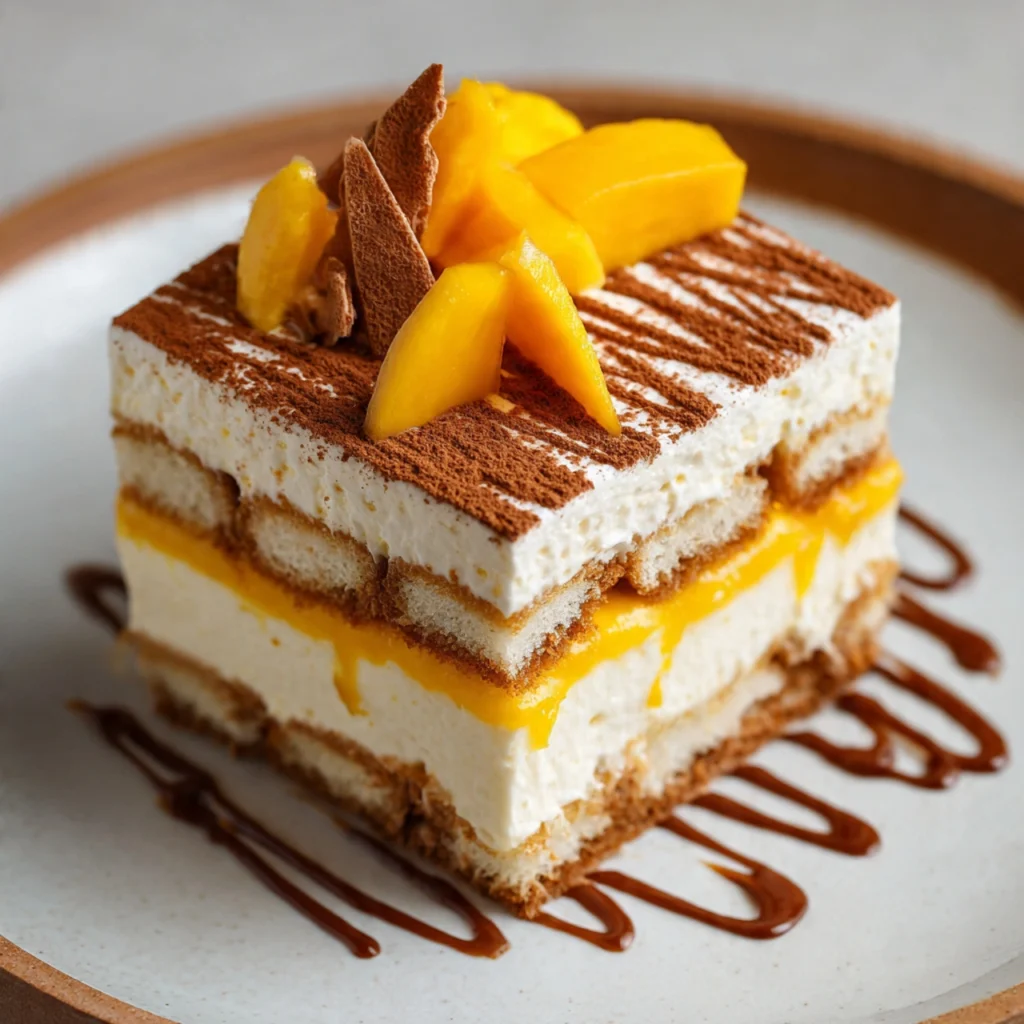
About 30 minutes before serving, prepare your garnishes. Thinly slice your reserved fresh mango. These should be delicate, pretty slices that will sit on top.
Right before serving, arrange the mango slices decoratively on top of your tiramisu. Add fresh mint leaves for a pop of color and white chocolate shavings if you’re feeling fancy.
Cut into squares using a sharp knife, wiping the blade clean between cuts for neat, professional-looking portions. A warm knife (dipped in hot water and dried) makes even cleaner cuts.
Serve chilled and watch faces light up as people take their first bite of this tropical treasure.
Pro Tips for Perfect Mango Tiramisu
After making this dessert dozens of times, here are my insider secrets:
1. Mango Ripeness is Everything
The success of this recipe hinges on properly ripe mangoes. They should yield slightly to gentle pressure and smell sweet and tropical at the stem end. Unripe mangoes will be tart and stringy, ruining the whole dessert.
2. Room Temperature Mascarpone is Non-Negotiable
Cold mascarpone will never incorporate smoothly into whipped cream. Set it out 1-2 hours before starting, or place the container in warm (not hot) water for 10 minutes.
3. The Quick Dip Technique
This cannot be overstated: quick dips only! Soggy ladyfingers make the whole dessert mushy. One second per side is plenty—the ladyfingers will continue absorbing moisture as the tiramisu chills.
4. Strain Your Mango Puree for Perfection
For an ultra-smooth, professional finish, strain your mango puree through a fine-mesh sieve to remove any fibrous bits. This extra step creates a silky texture.
5. Layer Precision
Use all your mascarpone cream in the layers. Don’t try to save any for decoration—you’ll end up with thin, disappointing layers. The recipe is perfectly portioned for generous layers.
6. The Overnight Advantage
While you can serve this after 6 hours, overnight rest produces the best results. The flavors deepen and the textures merge perfectly.
7. Serving Temperature
Tiramisu should be cold but not freezing. If you’ve made it more than a day ahead and it’s very cold, let it sit at room temperature for 10-15 minutes before serving.
8. Alternative Presentation
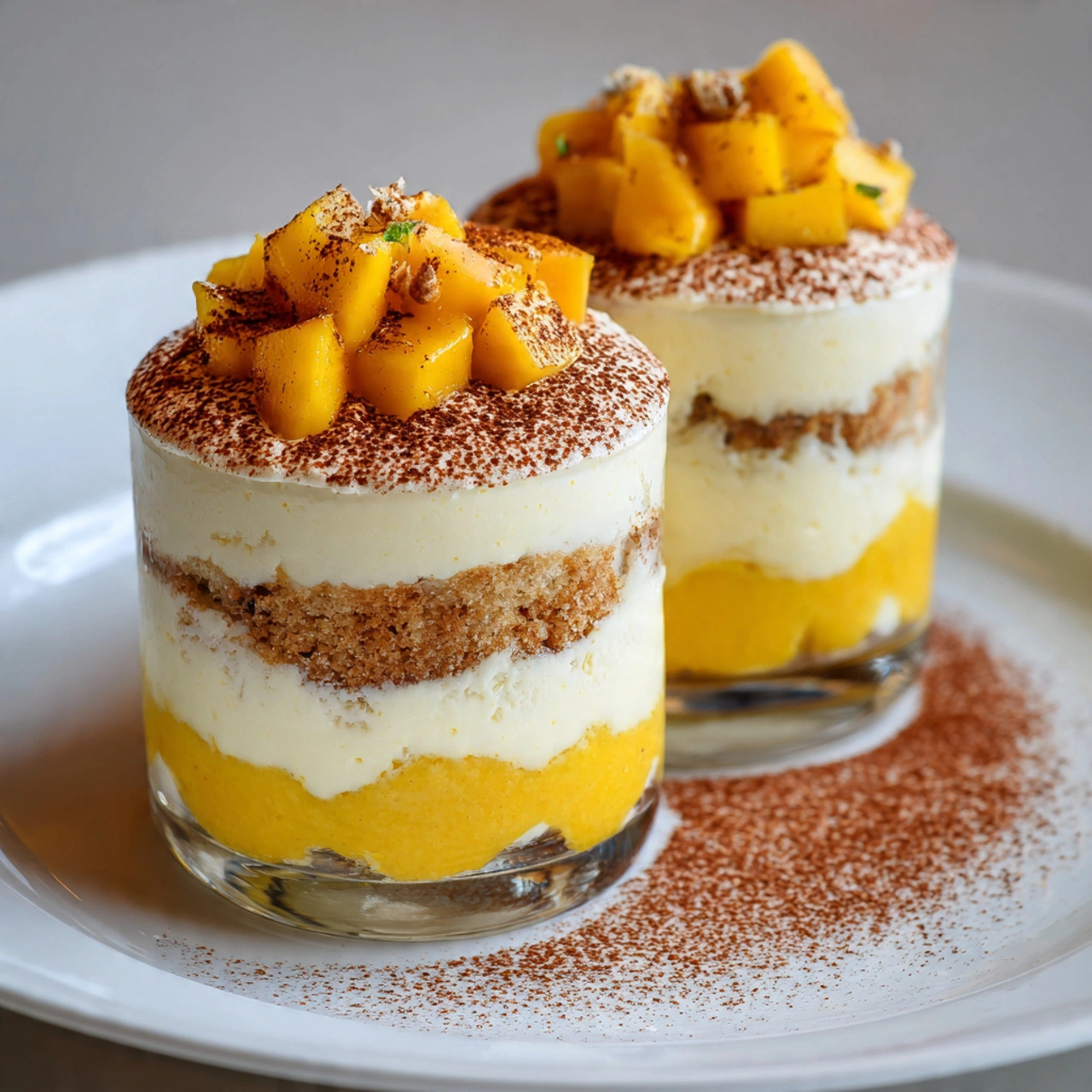
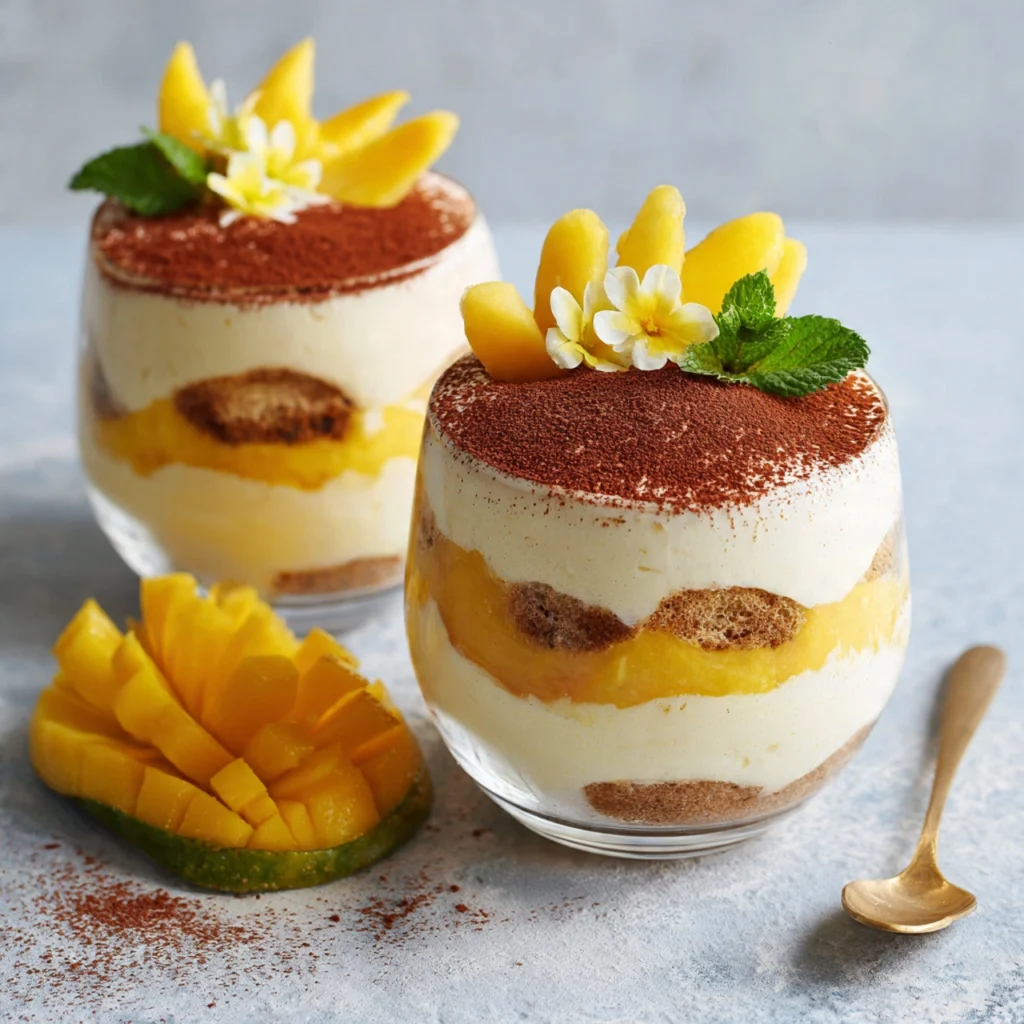
For individual servings, layer in wine glasses, mason jars, or small dessert cups. This makes portion control easier and looks stunning for dinner parties.
Mango Tiramisu Common Mistakes to Avoid
Learn from the errors I’ve made (and seen others make):
Mistake #1: Using Unripe Mangoes
This is the kiss of death for mango tiramisu. Unripe mangoes are tart, fibrous, and flavorless. Wait until your mangoes are properly ripe or don’t make this recipe at all.
Mistake #2: Oversoaking the Ladyfingers
Ladyfingers are like sponges. Leave them in liquid too long and they disintegrate, creating a mushy, unpleasant texture. Quick dips only!
Mistake #3: Not Chilling Long Enough
Cutting into your tiramisu after just 2-3 hours means the layers haven’t set and the flavors haven’t melded. You’ll have a messy, disappointing result. Be patient.
Mistake #4: Overmixing the Cream
When folding whipped cream into mascarpone, gentle is the name of the game. Aggressive mixing deflates the cream and creates a dense, heavy dessert instead of light and fluffy.
Mistake #5: Using Low-Quality Mascarpone
Mascarpone is the star here. Don’t substitute cream cheese (it’s too tangy) or use a bargain-brand mascarpone that’s grainy. Invest in good quality Italian mascarpone.
Mistake #6: Skipping the Puree Chill
Adding warm mango puree to your cream will soften it and could even cause it to separate. Always chill the puree before assembly.
Mistake #7: Not Using Enough Soaking Liquid
Dry ladyfingers in tiramisu are disappointing. Make sure each cookie gets its dip, and don’t be afraid to use all your soaking liquid.
Storage and Serving Suggestions
How to Store Your Mango Tiramisu
Refrigerator Storage:
- Cover tightly with plastic wrap or aluminum foil
- Store for up to 3 days (best on days 1-2)
- The mango flavor intensifies over time
- Keep away from strong-smelling foods in the fridge
Mango Tiramisu Freezing: Technically you can freeze tiramisu for up to 1 month, but I don’t recommend it. The texture of the cream changes when thawed, and fresh mango doesn’t freeze particularly well. This is best enjoyed fresh or refrigerated.
Make-Ahead Timeline:
- 2 days before: Can be fully assembled and refrigerated
- 1 day before: Ideal make-ahead timing
- Day of: Prepare garnishes, serve
Transporting: If taking to a gathering, keep it in its assembly dish, covered tightly. Transport in a cooler with ice packs, especially in warm weather. Garnish after arrival.
Serving Suggestions and Occasions
Perfect For:
- Summer dinner parties
- Tropical-themed celebrations
- Bridal or baby showers
- Birthday celebrations
- Mother’s Day or Easter brunch
- Potluck desserts (always the star)
- Romantic dinners for two
Portion Sizes:
- 9×13 pan: Cuts into 12-15 servings
- 8×8 pan: Cuts into 9 generous servings
- Individual glasses: Makes 6-8 parfait-style servings
Pairing Suggestions:
- Champagne or Prosecco
- Sweet white wine (Moscato, Riesling)
- Coconut rum cocktails
- Thai iced tea
- Mango lassi
- Passion fruit juice
Complementary Dishes: Serve after meals featuring:
- Grilled fish or seafood
- Thai or Asian-inspired cuisine
- Light pasta dishes
- Summer salads
- Barbecue (the cool, creamy dessert is perfect after spicy food)
Frequently Asked Questions (FAQ)
Can I use frozen mango instead of fresh?
Yes, but with caveats. Thaw frozen mango completely and drain extremely well—frozen mango releases a lot of liquid when thawed. Pat it very dry with paper towels before blending. The texture won’t be quite as vibrant as fresh, but it works in a pinch. Use about 3½-4 cups frozen to account for liquid loss.
What can I substitute for mascarpone?
Mascarpone’s unique creamy, slightly sweet flavor is hard to replicate perfectly, but in a pinch: combine 8 oz cream cheese (softened) with ½ cup heavy cream and 2 tablespoons sour cream. Beat until smooth. It won’t be identical, but it’s acceptable. Do not use straight cream cheese—it’s too tangy.
Can I make this alcohol-free?
Absolutely! The rum in the soaking liquid is optional and adds depth, but the dessert is delicious without it. Simply increase the mango juice by 1 tablespoon to replace the liquid volume, or add a drop of rum extract if you want that flavor without the alcohol.
Why did my cream layer turn runny?
Several possible causes: (1) mascarpone was too warm when you mixed it, (2) you didn’t whip the heavy cream to stiff peaks before folding, (3) you overmixed when folding and deflated the cream, or (4) you added warm mango puree to the cream. Next time, ensure cold cream, stiff peaks, gentle folding, and chilled puree.
Can I make this in individual servings?
Yes! Layer in wine glasses, mason jars, or small dessert cups. Start with crumbled or broken ladyfingers (soaked), then cream, then mango, and repeat. This makes 6-8 individual servings and looks beautiful. It’s also easier to portion control this way.
How do I know when my mangoes are ripe enough?
Ripe mangoes yield slightly to gentle pressure (like a ripe avocado), have a sweet, tropical aroma at the stem end, and may develop some golden color (though this varies by variety). Avoid rock-hard mangoes or those with sour/fermented smells.
Can I add other fruits to this Mango Tiramisu recipe?
Absolutely! Passion fruit works beautifully with mango. You could also add thin layers of sliced strawberries or kiwi between the cream layers. Just be careful not to add too much moisture from additional fruits, which can make the dessert soggy.
Nutrition Information
Serving Size: 1 piece (based on 12 servings from 9×13 pan)
- Calories: 345
- Total Fat: 22g
- Saturated Fat: 13g
- Trans Fat: 0g
- Cholesterol: 75mg
- Sodium: 85mg
- Total Carbohydrates: 32g
- Dietary Fiber: 1g
- Sugars: 24g
- Protein: 5g
- Vitamin A: 15% DV
- Vitamin C: 35% DV
- Calcium: 8% DV
- Iron: 4% DV
Note: Nutritional values are approximate and based on one serving (⅟₁₂ of recipe) using full-fat ingredients as listed. Values will vary based on specific brands used, actual portion sizes, and whether rum is included. This recipe is vegetarian but contains dairy and gluten (from ladyfingers).
Final Thoughts
There’s something absolutely magical about transforming a classic Italian dessert into something entirely new while still honoring its roots. Mango tiramisu does exactly that—it takes the elegant, layered structure we love and infuses it with vibrant tropical sunshine. Every time I make this dessert, I’m reminded of why I love cooking: taking familiar flavors and reimagining them in ways that surprise and delight.
What I appreciate most about this Mango Tiramisu recipe is its versatility. It’s fancy enough for the most special occasions yet approachable enough for a summer weeknight treat. It’s a conversation starter, a palate pleaser, and a gorgeous addition to any dessert table. Plus, the fact that it’s no-bake and make-ahead means you can create something truly spectacular without the stress of last-minute preparation.
So grab those ripe mangoes, stock up on mascarpone, and get ready to create something beautiful. Whether this becomes your signature dessert or just a special-occasion treat, I promise it’ll bring joy to everyone who tastes it.
Buon appetito—with a tropical twist!
PrintMango Tiramisu: The Tropical Twist on an Italian Classic (8 Easy Steps)

A stunning tropical twist on classic Italian tiramisu featuring layers of mango-soaked ladyfingers, creamy mascarpone, and fresh mango puree. This no-bake dessert is elegant, refreshing, and perfect for summer entertaining. The vibrant mango flavor replaces traditional coffee, making it universally appealing while maintaining that luxurious tiramisu texture everyone loves.
- Prep Time: 30 minutes
- Cook Time: 0 minutes
- Total Time: 6 hours 30 minutes
- Yield: 12-15 servings (9×13 pan) or 9 servings (8×8 pan)
- Category: Dessert, No-Bake
- Method: Layering, Chilling
- Cuisine: Italian-Fusion, Tropical
- Diet: Vegetarian
Ingredients
Mango Puree:
- 2 large ripe mangoes (3 cups diced)
- ¼ cup sugar
- 2 tbsp fresh lime juice
- 1 tsp vanilla extract
- Pinch of salt
Cream Layer:
- 16 oz mascarpone cheese, room temperature
- 1½ cups heavy whipping cream, cold
- ¾ cup powdered sugar
- 1 tsp vanilla extract
- Zest of 1 lime (optional)
Soaking Liquid:
- 1 cup mango juice or nectar
- ½ cup water
- 2 tbsp sugar
- 1 tbsp rum (optional)
Assembly:
- 24-30 ladyfinger cookies
- 1 ripe mango for garnish, sliced
- Fresh mint leaves (optional)
- White chocolate shavings (optional)
Instructions
- Make mango puree: Blend 3 cups diced mango with sugar, lime juice, vanilla, and salt until completely smooth. Refrigerate until cold.
- Prepare mascarpone cream: Beat room-temperature mascarpone until smooth. In separate bowl, whip cold heavy cream with powdered sugar and vanilla to stiff peaks. Gently fold whipped cream into mascarpone in three additions until fully incorporated and fluffy.
- Make soaking liquid: Combine mango juice, water, sugar, and rum (if using) in shallow dish. Stir until sugar dissolves.
- First layer: Quickly dip each ladyfinger in soaking liquid (1-2 seconds per side) and arrange in single layer in 9×13-inch dish.
- Add cream and mango: Spread half the mascarpone cream over ladyfingers. Drizzle or dollop half the mango puree over cream. Gently swirl with knife to create marbled effect.
- Repeat layers: Dip and layer remaining ladyfingers. Top with remaining cream, smooth evenly. Finish with remaining mango puree, creating swirls or spreading evenly.
- Chill: Cover tightly with plastic wrap (use toothpicks to keep wrap from touching surface). Refrigerate minimum 6 hours, preferably overnight.
- Garnish and serve: Before serving, top with fresh mango slices, mint, and white chocolate if desired. Cut with sharp knife, wiping clean between cuts.
Notes
- Use ripe, sweet mangoes—this is crucial for flavor
- Quick dip ladyfingers only (1-2 seconds) to prevent sogginess
- Room temperature mascarpone mixes smoothly; cold will be lumpy
- Fold whipped cream gently to maintain airiness
- Strain mango puree through fine-mesh sieve for ultra-smooth texture
- Best made 12-24 hours ahead for flavors to meld
- Stores covered in refrigerator up to 3 days
- For individual servings, layer in glasses or jars