Introduction
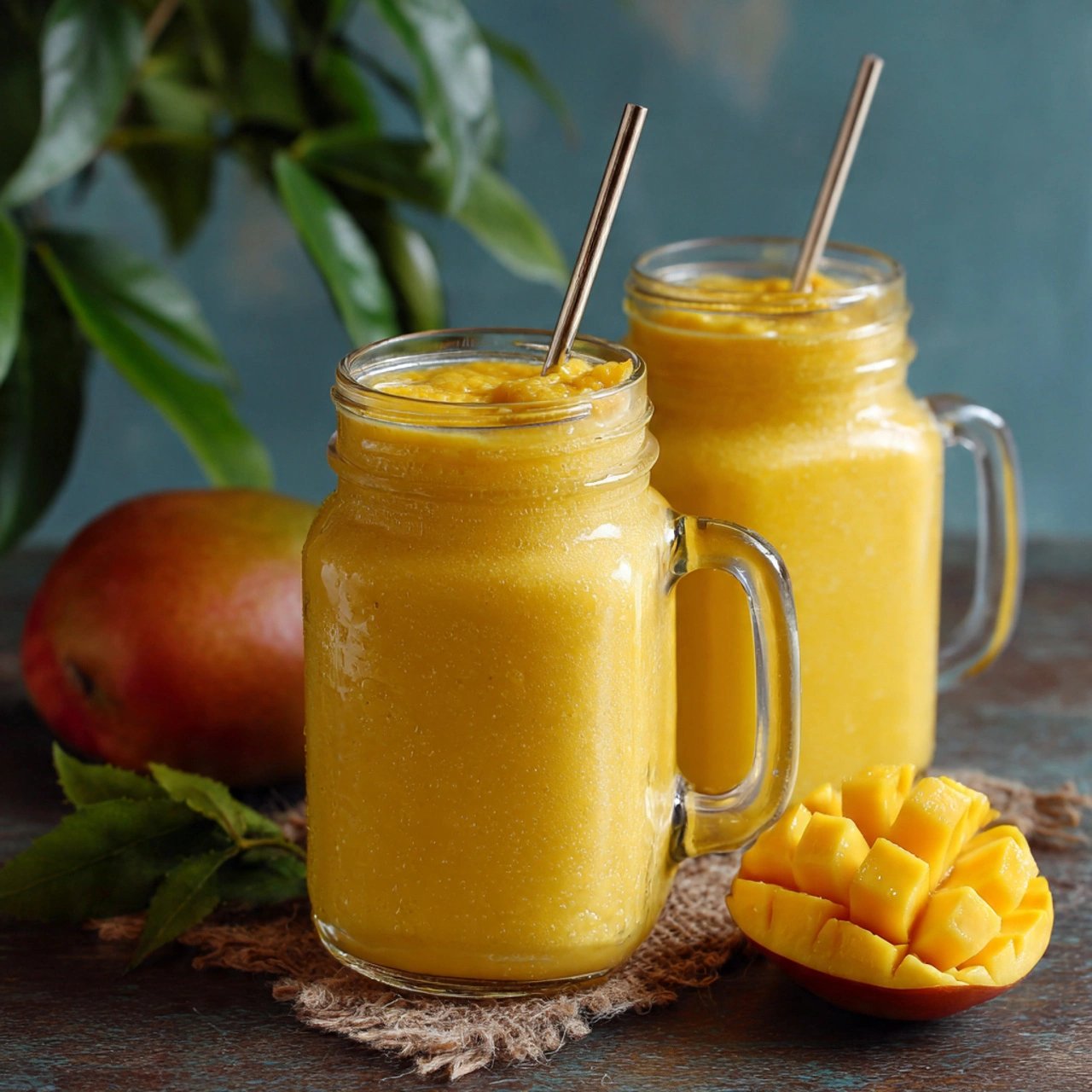
A perfectly blended Mango Smoothie is like drinking liquid sunshine—thick, creamy, naturally sweet, and bursting with tropical flavor that instantly brightens even the grayest morning. This isn’t just another fruit smoothie; it’s a velvety, golden-hued creation that captures the essence of ripe, juicy mangoes in their absolute prime, transformed into a refreshing drink that works equally well as a nutritious breakfast, an energizing afternoon pick-me-up, or a healthy dessert alternative.
I discovered my love for mango smoothies quite by accident during a sweltering summer afternoon when my air conditioning decided to quit working. Desperate for something cold and satisfying, I threw together whatever I had in my kitchen—a couple of overripe mangoes that needed using immediately, some Greek yogurt, a handful of ice, and a splash of orange juice. What emerged from my blender was nothing short of revelatory.
Since that fortuitous afternoon, I’ve made this Mango Smoothie literally hundreds of times, tweaking and perfecting the recipe through countless iterations. I’ve tested it with fresh mangoes, frozen mangoes, different varieties of mangoes, various dairy and non-dairy options, and every possible combination of add-ins you can imagine. What I’m sharing with you today is the result of all that experimentation—a foolproof recipe that delivers restaurant-quality.
The beauty of this mango smoothie lies in its simplicity. Unlike complicated recipes that require obscure superfoods or expensive equipment, this one needs just six basic ingredients and a decent blender. It takes three minutes from start to finish, yet tastes like something you’d pay eight dollars for at a trendy juice bar.
Let me walk you through creating the most incredible Mango Smoothie you’ve ever tasted—one that’s so good, you’ll genuinely look forward to making it every single morning.
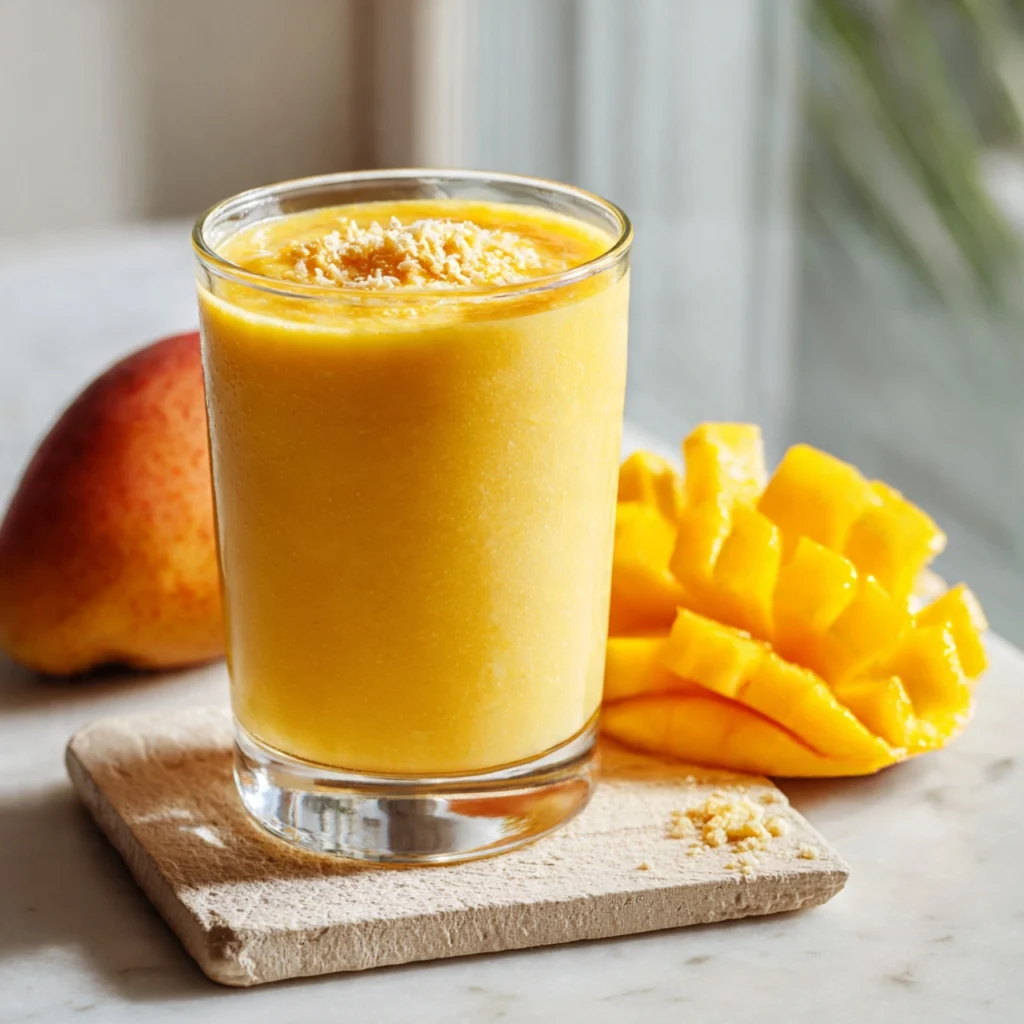
Ingredients
For the Classic Mango Smoothie:
- 2 cups ripe mango chunks (fresh or frozen, about 300g) – the star ingredient providing natural sweetness and vibrant color
- 1 cup plain Greek yogurt (or regular yogurt) – adds protein, probiotics, and incredible creaminess
- ½ cup milk (dairy or non-dairy) – helps blend everything smoothly; use more or less for desired thickness
- 2 tablespoons honey (or maple syrup, or to taste) – optional if your mangoes are very sweet
- ½ cup ice cubes (about 4-5 cubes) – creates that frosty, refreshing texture; omit if using frozen mango
- 1 teaspoon fresh lime juice – brightens the flavor and balances sweetness
Optional Flavor Enhancers:
- ½ frozen banana – adds extra creaminess and natural sweetness
- ¼ cup orange juice – intensifies the tropical flavor profile
- 1 tablespoon chia seeds – boosts fiber and omega-3s without affecting taste
- ½ teaspoon vanilla extract – adds warmth and depth to the mango flavor
- Pinch of ground cardamom or ginger – adds subtle, sophisticated warmth
- 1 tablespoon coconut flakes – enhances tropical vibes
- Handful of spinach – sneaks in greens without masking the mango taste
- 1 scoop vanilla protein powder – transforms it into a high-protein breakfast
Mango Variety Recommendations:
- Alphonso (Hapus) – intensely sweet with rich, creamy texture; considered the king of mangoes
- Ataulfo (Honey/Champagne) – buttery smooth, less fibrous, incredibly sweet
- Kent – large, sweet, and juicy with minimal fiber
- Tommy Atkins – widely available, mild flavor, slightly more fibrous
- Keitt – sweet with low acidity, great for smoothies
Milk Options (Choose Your Favorite):
- Whole milk – creates the richest, creamiest texture
- 2% or skim milk – lighter option with fewer calories
- Almond milk – nutty undertones, naturally sweet
- Coconut milk (from carton) – enhances tropical flavor
- Oat milk – adds natural sweetness and creamy body
- Cashew milk – ultra-creamy, neutral flavor
- Soy milk – adds protein, slightly thicker texture
Step-by-Step Instructions
Step 1: Prepare Your Mangoes (1 minute)
If you’re using fresh mangoes, proper preparation makes all the difference in achieving silky-smooth results. Stand the mango upright on your cutting board with the stem end facing up. Slice down along one side of the flat pit, removing one “cheek” of the mango. Repeat on the other side. Score the flesh in a crosshatch pattern without cutting through the skin, then push the skin inside-out to pop the cubes forward. Slice them off into your blender.
For the remaining fruit around the pit, carefully slice off strips of mango flesh, working around the fibrous center. Don’t worry about getting every last bit—the area immediately surrounding the pit tends to be quite fibrous anyway.
If you’re using frozen mango chunks (which I often prefer for convenience and year-round availability), you can skip all this and simply measure them directly into your blender. Let them sit at room temperature for about 2-3 minutes to soften slightly—this makes blending easier on your blender motor and creates a smoother final texture.
Pro tip: Taste your mango chunks before blending. If they’re exceptionally sweet and ripe, you may not need any additional sweetener. If they’re slightly underripe or tart, you’ll want to add the full amount of honey.
Step 2: Layer Ingredients Properly (30 seconds)
The order in which you add ingredients to your blender significantly impacts the final texture and how efficiently everything blends together. Always start with your liquid base at the bottom—this creates a vortex that pulls ingredients down toward the blades rather than allowing them to sit on top, spinning uselessly.
Pour your milk into the blender first, followed by the lime juice and honey (if using). Next, add your yogurt. The yogurt should sit in the middle layer where it can blend smoothly without sticking to the sides or bottom.
Finally, top with your mango chunks and ice cubes. The weight of the frozen or cold ingredients will help push everything down toward the blades. If you’re adding any optional ingredients like banana, spinach, or chia seeds, layer them between the yogurt and mango.
Step 3: Blend to Silky Perfection (1-2 minutes)
Start your blender on the lowest speed setting for about 15-20 seconds. You’ll hear the sound change as the larger chunks begin breaking down. This gentle start prevents your blender from getting overwhelmed and struggling with the frozen ingredients.
After this initial blending, gradually increase to medium speed for another 20-30 seconds. If your blender has a tamper tool, use it to push down any mango chunks that are avoiding the blades. If not, you may need to stop the blender, remove the lid, and use a spatula to scrape down the sides and redistribute ingredients.
Finally, increase to the highest speed setting and blend for 30-60 seconds until the smoothie is completely uniform with no visible chunks, streaks, or ice crystals. The final texture should be thick, creamy, and pourable—similar to a milkshake. You should be able to see the blender creating a smooth vortex, which indicates everything is properly incorporated.
Texture check: Lift the blender lid and examine the smoothie. It should be a beautiful, uniform golden-orange color with no white streaks of yogurt or darker spots of concentrated mango. If you see any inconsistencies, blend for another 15-20 seconds.
Step 4: Adjust Consistency and Flavor (30 seconds)
This step separates a good mango smoothie from an absolutely exceptional one. Pour a small amount into a glass and taste it. Assess both flavor and texture:
Too thick? Add milk or orange juice, one tablespoon at a time, and blend for 10 seconds after each addition until you reach your preferred consistency.
Too thin? Add a few more ice cubes or a small handful of frozen mango and blend again. Alternatively, add another spoonful of yogurt for thickness without diluting flavor.
Not sweet enough? Drizzle in a teaspoon of honey or maple syrup and blend briefly. Remember that smoothies taste less sweet when very cold, so they’ll seem slightly sweeter as they warm up to drinking temperature.
Too sweet? Add a squeeze of fresh lime juice—acid balances sweetness beautifully and makes the mango flavor pop even more.
Lacking depth? A tiny pinch of salt (I’m talking 1/8 teaspoon or less) can round out flavors and make the mango taste more pronounced. Similarly, a few drops of vanilla extract add complexity without being identifiable.
Step 5: Serve Immediately (30 seconds)
Pour your Mango Smoothie into a tall glass immediately after blending for the best texture and temperature. The longer it sits, the more it will begin separating and losing that perfect creamy consistency.
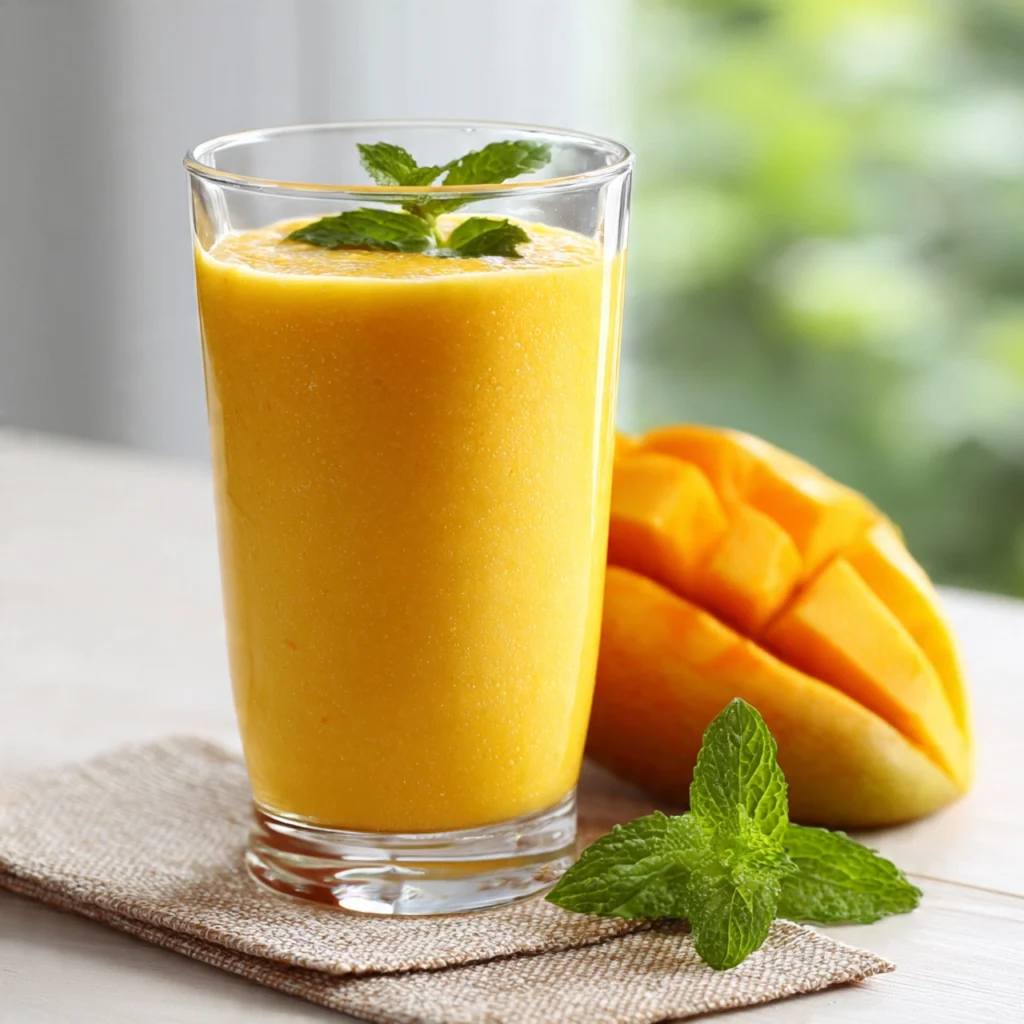
For a beautiful presentation, pour the smoothie into a chilled glass (pop glasses in the freezer for 10 minutes beforehand). Garnish with a small mango slice on the rim, a sprinkle of coconut flakes on top, or a fresh mint sprig. If you’re feeling fancy, drizzle a thin line of honey on the inside of the glass before pouring the smoothie—it creates an elegant visual effect and adds little pockets of sweetness.
Insert a thick smoothie straw or a long spoon and enjoy within 10-15 minutes for optimal flavor and texture. This smoothie is meant to be savored fresh, when it’s at its coldest and creamiest.
Pro Tips for the Perfect Mango Smoothie
Choosing the Best Mangoes
The quality of your mango directly determines the quality of your smoothie. A perfectly ripe mango should yield slightly to gentle pressure, similar to a ripe avocado. The skin should have a fruity, sweet aroma near the stem end—if there’s no smell, it’s likely underripe.
Don’t judge ripeness by color alone. While many mangoes develop red or yellow hues when ripe, some varieties like Keitt remain green even at peak ripeness. Instead, rely on feel and smell.
Ripening trick: If your mangoes are hard and unripe, place them in a paper bag with an apple or banana for 1-2 days at room temperature. The ethylene gas from the apple or banana accelerates ripening. Check daily—mangoes can go from perfectly ripe to overripe quickly.
Storage: Store unripe mangoes at room temperature. Once ripe, refrigerate them for 3-5 days. For longer storage, peel and cube ripe mangoes, then freeze them in a single layer on a baking sheet before transferring to freezer bags. Frozen mango chunks last 6 months and make smoothie prep incredibly convenient.
Fresh vs. Frozen Mango
I genuinely believe frozen mango produces superior smoothies for several reasons. Frozen mango chunks eliminate the need for ice (which can dilute flavor), they’re always perfectly ripe (frozen at peak sweetness), they’re available year-round regardless of season, and they create an exceptionally thick, almost soft-serve-like texture.
That said, fresh mango during peak season (late spring through summer in most regions) offers unbeatable flavor intensity. If using fresh mango, you must add ice to achieve the proper frosty texture. Use about ½ to ¾ cup of ice cubes.
Hybrid approach: Use half frozen mango and half fresh mango. This balances optimal texture (from frozen) with peak flavor (from fresh), and you’ll need less ice.
Yogurt Selection Matters
Greek yogurt creates the creamiest, most protein-rich smoothie, but different types work beautifully depending on your goals:
Full-fat Greek yogurt – produces the richest, most luxurious texture, highest in protein Low-fat Greek yogurt – still quite creamy with reduced calories Regular yogurt – creates a thinner, more drinkable consistency Icelandic yogurt (skyr) – extra thick, very high protein, tangy flavor Coconut yogurt – dairy-free option with tropical notes Almond or cashew yogurt – lighter, dairy-free alternatives
For the best results, always use plain, unsweetened yogurt. Flavored yogurts contain added sugars and artificial flavors that compete with the pure mango taste you’re trying to highlight.
The Secret Ingredient: Lime Juice
This might seem like a minor addition, but fresh lime juice is genuinely transformative in mango smoothies. Just one teaspoon brightens the entire flavor profile, cuts through excessive sweetness, and makes the mango taste more vibrant and complex.
Think of lime juice as the seasoning in your smoothie—the same way salt enhances savory dishes, acid enhances sweet ones. Without it, your smoothie might taste flat or one-dimensional. With it, the mango flavor practically explodes on your palate.
Always use fresh-squeezed lime juice, never bottled. The difference is noticeable, and a single lime typically yields about 2 tablespoons of juice, enough for four smoothies.
Blender Power and Technique
High-powered blenders like Vitamix, Blendtec, or Ninja create the smoothest results, but you can absolutely make excellent mango smoothies with more modest equipment. Here’s how to optimize based on your blender:
High-powered blender: You can blend frozen mango straight from the freezer with no waiting period. Start on low and gradually increase to high for 60 seconds total.
Standard blender: Let frozen mango sit at room temperature for 3-5 minutes to soften slightly. Cut fresh mango into smaller chunks. Use the pulse function initially to break down large pieces, then blend continuously. Be patient and allow extra blending time.
Personal/bullet blender: Use smaller portions, blend in batches if necessary, and ensure liquid fully covers the blades before adding frozen fruit.
Struggling blender? Stop and stir halfway through, add a splash more liquid, or let frozen ingredients thaw a bit longer.
Boosting Nutritional Value
While mango smoothies are already nutritious (packed with vitamins A and C, fiber, and antioxidants), you can enhance them further:
Protein boost: Add a scoop of vanilla or unflavored protein powder, a tablespoon of almond or peanut butter, or increase Greek yogurt to 1.5 cups.
Healthy fats: Include a tablespoon of ground flaxseed, hemp hearts, or a quarter of an avocado (sounds odd but creates incredible creaminess without affecting flavor).
Fiber increase: Add chia seeds, ground flaxseed, or a handful of oats. Let the smoothie sit for 5 minutes after blending to allow seeds to hydrate.
Greens addition: A generous handful of spinach or kale blends in completely, masked by the strong mango flavor. The smoothie might turn slightly greenish-gold, but you won’t taste the vegetables at all.
Anti-inflammatory boost: Add ¼ teaspoon of ground turmeric or fresh grated ginger for immune support and anti-inflammatory properties.
Sweetener Strategy
The need for sweetener depends entirely on your mango’s ripeness and natural sweetness. Here’s my approach:
Perfectly ripe mangoes: Skip sweetener entirely or use just ½ tablespoon for a slightly dessert-like quality.
Slightly underripe mangoes: Use 1-2 tablespoons honey, maple syrup, or agave nectar.
Tart or out-of-season mangoes: Use 2-3 tablespoons sweetener, or add half a frozen banana for natural sweetness.
Sugar-free option: Use 2-3 drops of liquid stevia or monk fruit sweetener.
Always taste your mango before blending and adjust sweetener accordingly. You can always add more sweetener after blending, but you can’t remove it once it’s in.
Common Mistakes to Avoid
Mistake #1: Using Underripe Mangoes
The most common reason mango smoothies disappoint is using mangoes that aren’t properly ripe. An underripe mango tastes bland, slightly sour, and has an unpleasant fibrous texture that creates strings in your smoothie. These strings get stuck in your teeth and create an unappealing mouthfeel.
The fix: Only use mangoes that are soft to touch and aromatic. If your mangoes are underripe, let them ripen for 2-4 days at room temperature before making smoothies. If you must use underripe mangoes, add extra sweetener and a frozen banana to compensate.
Mistake #2: Adding Too Much Liquid
Many people panic when their blender struggles with frozen fruit and immediately dump in extra liquid. This creates a thin, watery smoothie that’s disappointing to drink and more like mango-flavored milk than a proper smoothie.
The fix: Start with the minimum amount of liquid (½ cup) and add more gradually, one tablespoon at a time, only if absolutely necessary for blending. A thick smoothie is always better than a thin one. If your smoothie is too thick to drink comfortably, you can always thin it after blending, but you can’t thicken a watery smoothie without adding more fruit or ice.
Mistake #3: Over-Blending
While you want a smooth texture, blending for too long (over 2-3 minutes continuously) can actually warm up your smoothie from the friction created by the blades spinning at high speed. This causes ice to melt, creates a thinner consistency, and makes the drink less refreshing.
The fix: Blend just until smooth with no visible chunks, typically 60-90 seconds total. The smoothie should still be very cold when you pour it out.
Mistake #4: Using Low-Quality Frozen Mango
Not all frozen mango chunks are created equal. Some brands use unripe mangoes, include too much skin or pit fragments, or have been improperly stored and developed freezer burn or ice crystals that dilute flavor.
The fix: Invest in high-quality frozen mango from reputable brands. Whole Foods, Trader Joe’s, and Costco all carry excellent frozen mango chunks. Look for bags without excessive ice crystals or frost, which indicate temperature fluctuations during storage.
Mistake #5: Forgetting to Taste Before Serving
Every batch of mangoes tastes slightly different based on variety, ripeness, and growing conditions. A recipe that was perfectly balanced last week might need adjustments this week with a different batch of fruit.
The fix: Always taste your smoothie before serving and adjust as needed. This 15-second step ensures every smoothie you make is delicious, regardless of ingredient variations.
Mistake #6: Using the Wrong Proportions
Some people make their smoothies too yogurt-heavy (creating a lassi-like drink) or too fruit-heavy (creating a slushy texture). The magic ratio is approximately 2:1 mango to yogurt, which creates the perfect balance of fruitiness and creaminess.
The fix: Stick to the recipe proportions initially, then adjust based on your personal preferences once you understand how the ratios work.
Mistake #7: Serving in a Warm Glass
Pouring a cold smoothie into a room-temperature glass causes the outside to immediately warm up, which can make the smoothie seem less refreshing and can accelerate separation.
The fix: Either chill your serving glasses in the freezer for 10 minutes before making your smoothie, or run them under very cold water and dry completely before pouring.
Storage and Serving Suggestions
Immediate Serving (Best Option)
Mango smoothies are absolutely at their peak within the first 10-15 minutes after blending. The texture is perfectly thick and creamy, the temperature is ideal, and all the ingredients are fully emulsified for the best flavor. Serve immediately in a chilled glass with a thick straw or long spoon.
Refrigerator Storage (Same Day)
If you need to make your smoothie ahead of time for later consumption, it can be refrigerated for up to 6-8 hours. Pour the smoothie into an airtight container or mason jar, filling it all the way to the top to minimize air exposure (which causes oxidation and browning). Seal tightly and refrigerate.
Before drinking, the smoothie will have separated with liquid settling at the bottom and thicker solids rising to the top. This is completely normal. Simply shake vigorously for 15-20 seconds, or pour it back into your blender and pulse a few times to recombine. The texture won’t be quite as perfect as fresh, but it’s still delicious.
Freezer Storage (Up to 3 Months)
Mango smoothies freeze beautifully. Pour the smoothie into freezer-safe mason jars or containers, leaving about 1 inch of headspace at the top to allow for expansion as the liquid freezes. Seal tightly and freeze for up to 3 months.
To use, transfer from freezer to refrigerator the night before you want to drink it. In the morning, it will be partially thawed with a slushy, icy texture. You can either drink it as-is (refreshing on a hot day) or pour it into your blender with a splash of milk and blend for 20 seconds to restore the smooth, creamy texture.
Quick-thaw method: If you forgot to transfer it to the fridge overnight, let the frozen smoothie sit at room temperature for 15-20 minutes, then break it up with a spoon and blend with 2-3 tablespoons of milk until smooth.
Smoothie Popsicles
Transform your mango smoothie into frozen treats by pouring it into popsicle molds. These make fantastic healthy desserts or post-workout snacks, especially during summer. Freeze for at least 4-6 hours or overnight. These will keep for 2-3 months in the freezer.
Smoothie Bowl Presentation
For a more substantial breakfast, turn your mango smoothie into a beautiful smoothie bowl. Use less liquid (reduce milk to ¼ cup) to create an extra-thick consistency that you can eat with a spoon. Pour into a bowl and top with:
- Fresh mango cubes or slices
- Granola or muesli for crunch
- Coconut flakes (toasted for extra flavor)
- Fresh berries (blueberries, strawberries)
- Chia seeds or hemp hearts
- Sliced banana
- A drizzle of honey or almond butter
- Fresh mint leaves
- Chopped pistachios or cashews
This transformation turns a quick drink into an Instagram-worthy meal that’s more satisfying and takes longer to eat, which can help with feeling fuller.
Portion Control
This recipe makes approximately 2-2.5 cups (16-20 oz) of smoothie—a generous single serving or two smaller servings. For a lighter snack or for children, split it into two portions. For a meal replacement, the full recipe is perfect as it provides substantial nutrition and keeps you full for hours.
FAQ (Frequently Asked Questions)
1. Can I make a mango smoothie without yogurt?
Absolutely! While yogurt contributes creaminess and protein, you can create a delicious mango smoothie without it. For a dairy-free version, substitute the yogurt with: half an avocado (creates incredible creaminess with healthy fats), half a frozen banana (adds natural sweetness and body), ½ cup of coconut cream (the thick part from a can of coconut milk), or ½ cup of cashew cream (blend ½ cup raw cashews with ¼ cup water until smooth). You can also simply use more milk (increase to 1-1.5 cups) for a thinner, more juice-like smoothie, or use silken tofu for creaminess with added protein. Each substitution creates a slightly different flavor profile and texture, but all produce delicious results.
2. How can I make my mango smoothie thicker?
For an extra-thick, almost ice-cream-like consistency, try these techniques: Use frozen mango exclusively (no fresh) and skip the ice; reduce liquid to just ¼ cup milk; add an extra ¼ to ½ cup of Greek yogurt; include half a frozen banana; add 1-2 tablespoons of chia seeds and let the smoothie sit for 5 minutes to allow them to absorb liquid and thicken; or add a handful of ice cubes and blend thoroughly. The thickest possible version uses frozen mango, frozen banana, Greek yogurt, and minimal liquid—you’ll need a powerful blender and possibly a tamper to push ingredients toward the blades. This creates a spoonable smoothie bowl consistency that’s incredibly satisfying.
3. What’s the best milk to use in a mango smoothie?
The “best” milk depends on your dietary preferences and desired flavor profile. the creamiest texture, use whole dairy milk or oat milk. For a lighter, lower-calorie option, use almond milk or skim milk. enhanced tropical flavor, use coconut milk from a carton (not canned coconut milk, which is too rich). For added protein without protein powder, soy milk or pea protein milk. neutral flavor that doesn’t compete with mango, use cashew milk or rice milk. I personally rotate between oat milk (creates a naturally sweet, creamy smoothie) and almond milk (lighter, slightly nutty flavor that complements mango beautifully). Avoid chocolate milk or strongly flavored milk alternatives, as they’ll overpower the delicate mango taste.
4. Can I add vegetables to my mango smoothie without tasting them?
Yes! Mango has such a strong, sweet flavor that it easily masks the taste of mild greens. You can add up to 1-2 cups of fresh spinach without detecting it in the final smoothie—the color might shift slightly toward greenish-gold, but the taste remains purely fruity. Baby spinach works better than mature spinach because it has a milder flavor. Frozen cauliflower florets (about ½ cup) also add creaminess and nutrition without affecting taste at all. Start with small amounts (½ cup spinach or ¼ cup cauliflower) and gradually increase as you become comfortable with the idea. Avoid strongly flavored vegetables like kale, chard, or broccoli in mango smoothies—these will be detectable and might create an unpleasant flavor combination.
5. How long does fresh mango last, and how can I tell if it’s gone bad?
Unripe mangoes stored at room temperature typically last 5-7 days before ripening. Once ripe, they should be refrigerated and will last 3-5 days. Cut mango pieces stored in an airtight container in the refrigerator last 3-4 days. Frozen mango chunks maintain best quality for 6 months but remain safe to eat for up to a year. Signs that a mango has gone bad include: very soft, mushy texture throughout (rather than just slightly soft); dark spots or extensive bruising on the skin; sour or fermented smell instead of sweet, fruity aroma; visible mold on the skin or flesh; or extremely wrinkled, shriveled appearance. If the flesh has turned brown or grey inside, discard it.
6. Can I use mango nectar or mango juice instead of fresh mango?
Technically yes, but I don’t recommend it for the best smoothie experience. Mango nectar and mango juice are much thinner in consistency, contain added sugars, lack the fiber of whole fruit, and won’t produce that thick, creamy smoothie texture that makes this recipe special. If you absolutely must use mango nectar due to ingredient availability, use it as your liquid base (1 cup mango nectar instead of milk), omit the honey, and add extra Greek yogurt (1.5 cups total) plus ½ cup ice to compensate for the lack of whole fruit. The result will be acceptable but noticeably inferior to a smoothie made with whole mango pieces.
7. Is this mango smoothie suitable for meal replacement?
This smoothie can work as a meal replacement depending on your caloric needs and activity level. As written, it contains approximately 250-300 calories with about 10-12 grams of protein (if using Greek yogurt), making it suitable as a light breakfast or snack. To make it a more substantial meal replacement, add: 1 scoop of protein powder (adds 20-25g protein and 100-120 calories), 1-2 tablespoons of nut butter (adds healthy fats, protein, and 90-190 calories), ¼ cup of oats (adds fiber and complex carbohydrates), and a tablespoon of chia or flax seeds (adds omega-3s and fiber). These additions create a 450-550 calorie smoothie with 25-30g of protein that will keep you satisfied for 3-4 hours.
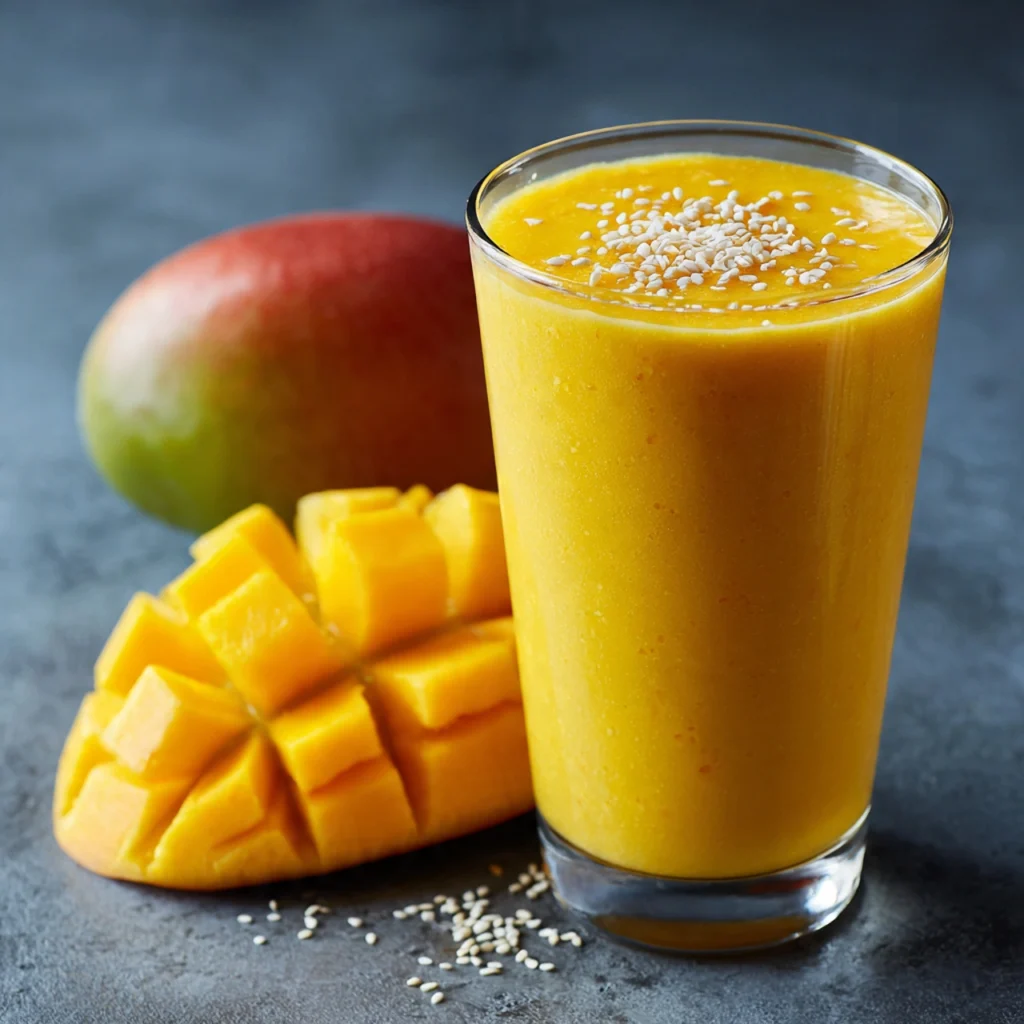
Nutrition Information (Approximate Values)
Serving Size: 1 smoothie (full recipe, about 20 oz)
Servings Per Recipe: 1
Calories: 280-320 kcal
Total Fat: 4g
- Saturated Fat: 2g
- Trans Fat: 0g
Cholesterol: 15mg (with dairy yogurt; 0mg if using plant-based)
Sodium: 90mg
Total Carbohydrates: 55g
- Dietary Fiber: 4g
- Sugars: 48g (naturally occurring from mango and milk)
- Added Sugars: 12g (from honey; 0g if honey is omitted)
Protein: 12g (with Greek yogurt; varies with other yogurt types)
Vitamin D: 2mcg (8% DV, from fortified milk)
Calcium: 280mg (22% DV)
Iron: 0.5mg (3% DV)
Potassium: 480mg (10% DV)
Vitamin A: 180mcg (20% DV)
Vitamin C: 60mg (67% DV)
Vitamin E: 2mg (13% DV)
Additional Micronutrients:
- Excellent source of Vitamin A (important for vision and immune function)
- Excellent source of Vitamin C (supports immune health and collagen production)
- Good source of folate (important for cell growth)
- Contains probiotics (from yogurt, supports digestive health)
- Rich in beta-carotene (antioxidant with anti-inflammatory properties)
- Contains polyphenols (plant compounds with antioxidant effects)
Notes on Nutrition:
- Values vary based on specific brands of yogurt and milk used
- Using low-fat or non-fat dairy products reduces overall calories and fat content
- Omitting honey reduces added sugars to 0g and calories by approximately 40
- Adding protein powder increases protein to 32-37g and adds 100-120 calories
- Using frozen mango vs. fresh doesn’t significantly impact nutritional values
- This smoothie is naturally gluten-free, vegetarian, and can easily be made vegan
Final Thoughts
This Mango Smoothie represents everything I love about simple, wholesome cooking—minimal ingredients, maximum flavor, and results that make you genuinely happy. There’s something deeply satisfying about transforming a few basic ingredients into something that tastes this good, this fresh, and this nourishing.
Over the years, this recipe has become my kitchen’s most reliable crowd-pleaser. I’ve served it to fitness enthusiasts who appreciate the protein and natural energy, to picky children who suddenly become enthusiastic about “healthy” drinks, to friends recovering from illness who need gentle, nutritious food that doesn’t tax their digestive systems, and to guests who simply want something delicious and refreshing on a warm afternoon. Every single time, the response has been overwhelmingly positive.
What makes me happiest about this smoothie is its accessibility. You don’t need expensive superfood powders, exotic ingredients from specialty stores, or complicated techniques. Just ripe mangoes, good yogurt, and a functioning blender. Yet the result tastes like something you’d pay premium prices for at a trendy juice bar.
I encourage you to make this recipe your canvas for experimentation. Try different mango varieties to discover your favorite flavor profile. Swap in various plant-based milks to find your perfect combination. Add protein powder for post-workout recovery or sneak in spinach for your kids.
Most importantly, don’t save smoothies for special occasions or weekend brunch. This three-minute recipe deserves to become part of your regular routine—a bright spot in busy mornings, a refreshing pick-me-up on hot afternoons, or a healthy dessert that satisfies sweet cravings without guilt.
Here’s to embracing simple pleasures, nourishing our bodies with real food, and starting more days with something that makes us smile. May your blender be forever filled with ripe mangoes, and may your mornings be perpetually golden and delicious.
Blend with joy and drink with happiness!
PrintMango Smoothie: 6 Ingredients to Creamy Perfection (3 Minutes)
This Mango Smoothie is the ultimate tropical refreshment—thick, creamy, naturally sweet, and bursting with fresh mango flavor. Made with just 6 simple ingredients including ripe mango, Greek yogurt, and a touch of honey, it blends together in 3 minutes for a nutritious breakfast or energizing snack that tastes like sunshine in a glass. Whether you use fresh or frozen mango, this foolproof recipe delivers smoothie shop quality results every single time.
- Prep Time: 3 minutes
- Cook Time: 0 minutes
- Total Time: 3 minutes
- Yield: 1 large smoothie (20 oz) or 2 small servings (10 oz each)
- Category: Breakfast, Smoothie, Snack, Beverage, Healthy Drink
- Method: Blending
- Cuisine: International, Tropical, Indian-inspired, American
- Diet: Vegetarian
Ingredients
- 2 cups ripe mango chunks (fresh or frozen, about 300g)
- 1 cup plain Greek yogurt (or regular yogurt)
- ½ cup milk (dairy or non-dairy, any variety)
- 2 tablespoons honey or maple syrup (optional, adjust to taste)
- ½ cup ice cubes (about 4-5 cubes; omit if using frozen mango)
- 1 teaspoon fresh lime juice
Optional Add-Ins:
- ½ frozen banana (extra creaminess)
- ¼ cup orange juice (enhanced tropical flavor)
- 1 tablespoon chia seeds (fiber boost)
- ½ teaspoon vanilla extract (added depth)
- Pinch of cardamom or ginger (warm spice notes)
- Handful of spinach (hidden greens)
Garnish Options:
- Fresh mango slices
- Coconut flakes
- Fresh mint leaves
- Honey drizzle
Instructions
- Prepare mango: If using fresh mango, peel and cube it into bite-sized chunks. If using frozen mango, let it sit at room temperature for 2-3 minutes to soften slightly. Taste a piece to assess sweetness and determine if you’ll need the full amount of honey.
- Layer ingredients: Add milk and lime juice to your blender first. Add honey (if using) and Greek yogurt in the middle layer. Top with mango chunks and ice cubes (if using fresh mango).
- Blend progressively: Start blender on low speed for 15-20 seconds to break down large chunks. Increase to medium speed for 20-30 seconds, using a tamper or stopping to scrape down sides if needed. Finish on high speed for 30-60 seconds until completely smooth and creamy with no visible chunks.
- Taste and adjust: Sample the smoothie. Add more honey if too tart, more lime juice to brighten flavors, or more milk to thin if too thick. Blend briefly after any additions.
- Serve immediately: Pour into a chilled glass, add garnishes if desired, and enjoy right away for the best texture and temperature.
Notes
- Mango selection: Use ripe, fragrant mangoes that yield slightly to pressure. Alphonso, Ataulfo, and Kent varieties work exceptionally well.
- Consistency control: For thicker smoothie, use all frozen mango and reduce milk to ¼ cup. For thinner consistency, add milk 1 tablespoon at a time.
- Dairy-free option: Use coconut yogurt or cashew cream instead of Greek yogurt, and any plant-based milk.
- Protein boost: Add 1 scoop vanilla protein powder or increase Greek yogurt to 1.5 cups.
- Sweetener alternatives: Replace honey with maple syrup, agave, or 2-3 drops liquid stevia for sugar-free version.
- Storage: Best consumed fresh. Can refrigerate in airtight container for 6-8 hours; shake well before drinking.
- Batch prep: Pre-portion mango chunks in freezer bags for quick smoothie assembly.