Introduction
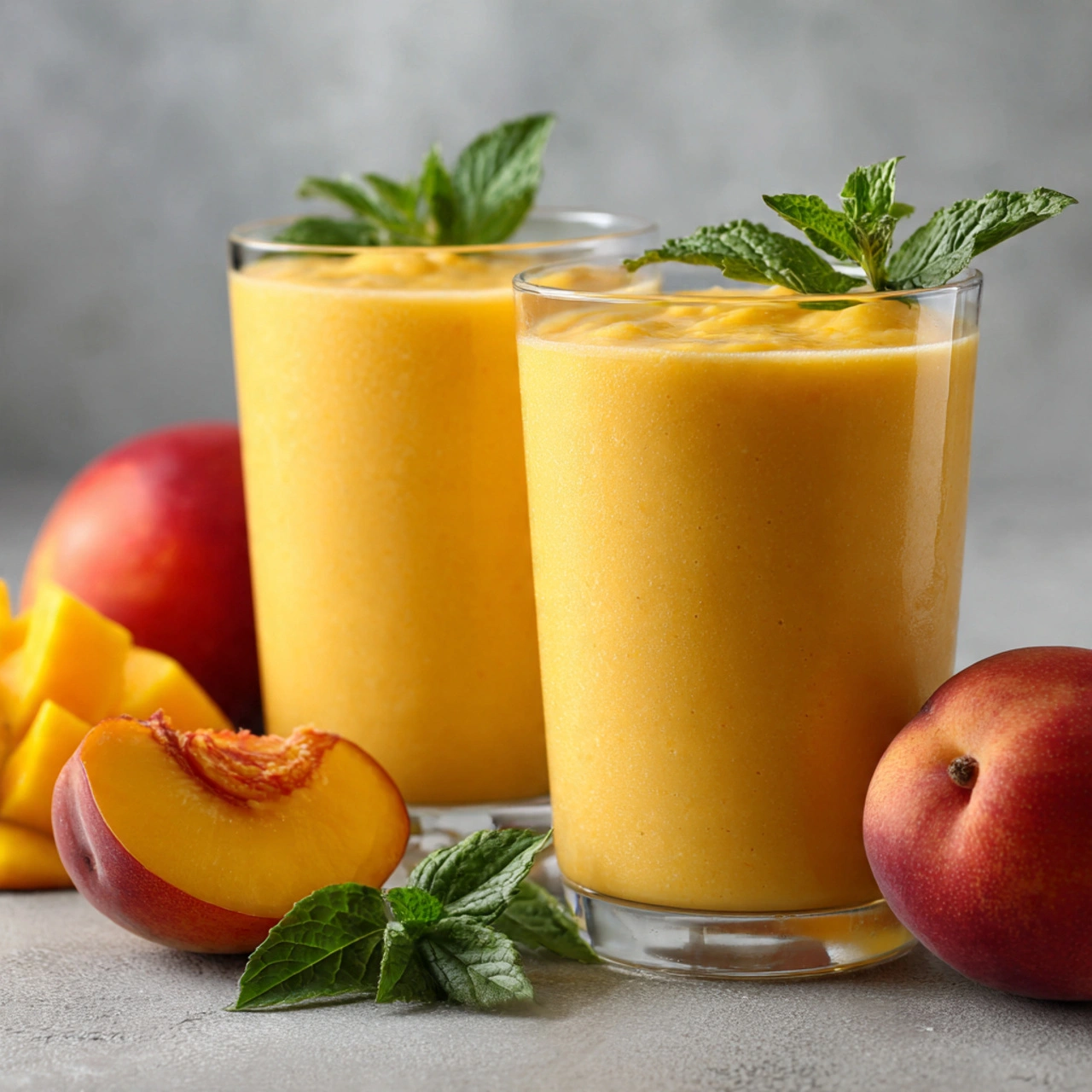
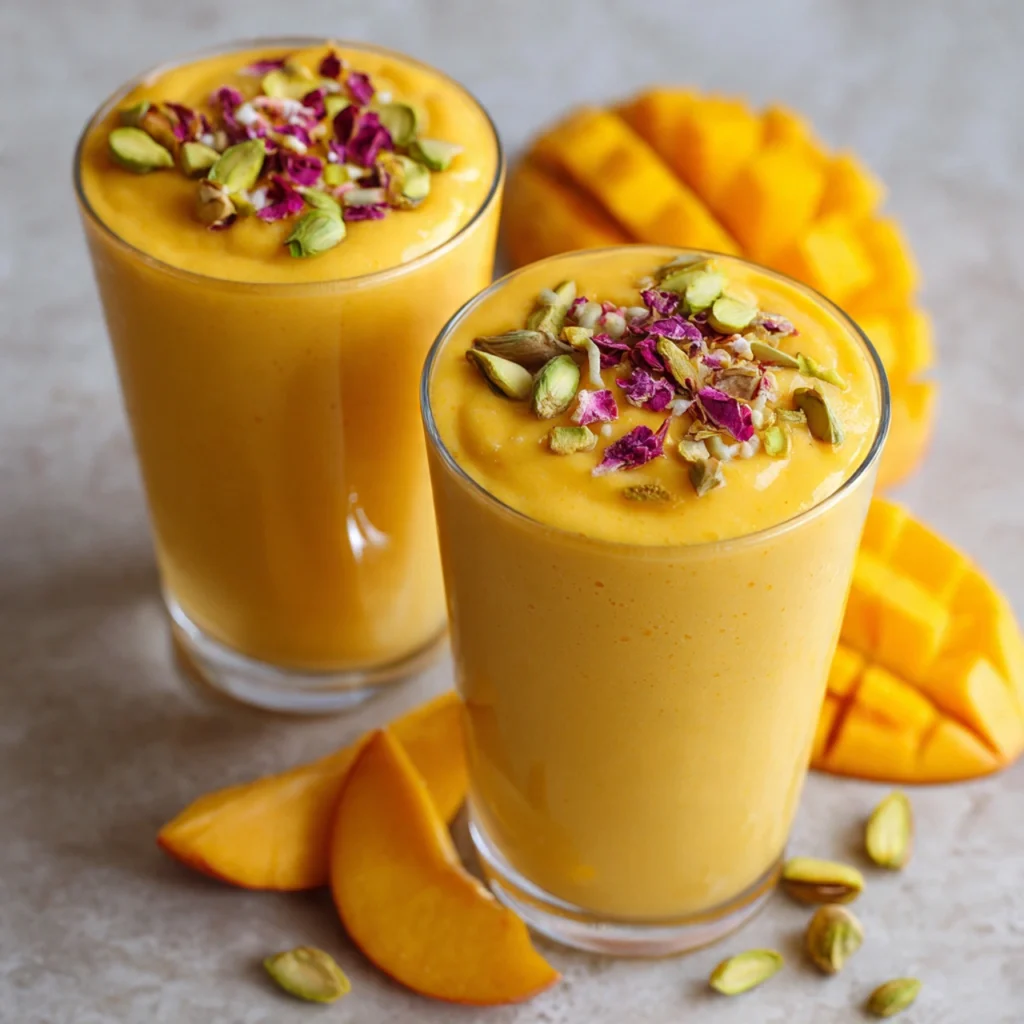
A Mango Peach Smoothie is the taste of summer captured in a glass—sweet, juicy, and radiantly golden with flavors that remind you of warm sunshine, farmers’ markets overflowing with ripe stone fruit, and lazy afternoons spent somewhere tropical. This isn’t just another fruit smoothie; it’s a harmonious blend where the honeyed sweetness of peaches meets the tropical brightness of mangoes in a combination so perfect you’ll wonder.
I stumbled upon this magical flavor pairing quite by accident one morning when I opened my freezer looking for ingredients to make my usual mango smoothie, only to discover I was running low. Sitting right next to the frozen mango bag was a package of frozen peaches I’d bought on a whim during peach season.
Since that serendipitous morning, this Mango Peach Smoothie has become my absolute favorite warm-weather drink. I’ve made it countless times for family brunches, brought it to summer potlucks in mason jars packed with ice, served it to houseguests who invariably ask for the recipe, and blended batch after batch during the peak of peach season when both fruits are at their absolute best.
What makes this smoothie exceptional is the synergy between mango and peach. Mangoes bring tropical flair, vibrant color, and a slight tang that keeps things interesting. Peaches contribute natural sweetness, a silky texture, and subtle floral notes that add complexity.
This recipe works equally well with fresh fruit during peak summer season or with frozen fruit any time of year. It takes just three minutes from start to finish, requires only five basic ingredients, and delivers smoothie shop quality without the premium price tag. Whether you’re looking for a nutritious breakfast, a post-workout refresher, or a healthy dessert alternative, this Mango Peach Smoothie will become your new obsession.
Ingredients
For the Classic Mango Peach Smoothie:
- 1 cup ripe mango chunks (fresh or frozen, about 150g) – provides tropical flavor and gorgeous golden color
- 1 cup ripe peach slices (fresh or frozen, about 150g) – adds natural sweetness and velvety texture
- 1 cup plain Greek yogurt (or regular yogurt) – creates creaminess and adds protein
- ½ cup orange juice (freshly squeezed or store-bought) – enhances fruit flavors and provides liquid base
- ½ cup ice cubes (about 4-5 cubes; reduce or omit if using all frozen fruit)
- 1 tablespoon honey or agave nectar (optional, depending on fruit sweetness)
Optional Flavor Enhancers:
- ½ frozen banana – adds extra creaminess and natural sweetness
- ¼ cup milk (dairy or non-dairy) – can replace orange juice for milder, creamier smoothie
- 1 tablespoon chia seeds – boosts omega-3s and fiber
- ½ teaspoon vanilla extract – adds warmth and depth
- ¼ teaspoon ground cinnamon – complements stone fruit beautifully
- Pinch of ground ginger – adds subtle warmth and aids digestion
- 1 scoop vanilla protein powder – transforms it into high-protein breakfast
- Handful of spinach – sneaks in greens without affecting fruity flavor
- 1 tablespoon almond butter – adds healthy fats and makes it more filling
- Squeeze of fresh lemon juice – brightens all the flavors
Best Fruit Varieties:
Mangoes:
- Alphonso (Hapus) – intensely sweet and aromatic
- Ataulfo (Honey Mango) – buttery, smooth, less fibrous
- Kent – sweet, juicy, minimal fiber
- Tommy Atkins – widely available, mild flavor
Peaches:
- Freestone varieties – easier to remove pit, great for smoothies
- Yellow peaches – classic sweet flavor, juicy
- White peaches – slightly less acidic, more delicate
- Donut/Saturn peaches – exceptionally sweet, unique flavor
Liquid Base Options:
- Orange juice (recommended) – enhances fruity flavors, adds vitamin C
- Mango juice – intensifies mango flavor
- Peach nectar – creates ultra-peachy smoothie
- Coconut water – light, tropical, hydrating
- Almond milk – creamy, neutral, dairy-free
- Oat milk – naturally sweet, creates creamy texture
- Regular milk – classic option, adds protein
- Pineapple juice – adds tropical tang
Yogurt Alternatives:
- Greek yogurt (recommended) – thick, creamy, high protein
- Regular yogurt – lighter texture, still delicious
- Coconut yogurt – dairy-free, tropical flavor
- Almond yogurt – dairy-free, neutral taste
- Silken tofu – vegan, protein-rich, ultra-creamy
- Frozen banana – dairy-free option for creaminess without yogurt
Step-by-Step Instructions
Step 1: Prepare Your Fruit (1 minute)
If you’re using fresh mangoes and peaches, they’ll need some quick prep work. For mangoes, stand the fruit vertically with the stem end up. The pit runs through the center lengthwise. Slice down along one side of the pit, removing a large “cheek” of fruit. Repeat on the other side. Score the flesh in a crosshatch pattern without cutting through the skin, then invert and slice off the cubes.
For fresh peaches, slice around the equator of the fruit down to the pit, then twist the halves in opposite directions to separate. If you’re using freestone peaches, the pit will pop right out. Remove any remaining pit fragments, then slice the peach halves into chunks.
If you’re using frozen fruit (my preferred method for convenience and year-round availability), simply measure out your mango and peach pieces and let them sit at room temperature for 2-3 minutes to soften slightly. This makes blending easier and reduces strain on your blender motor.
Quality check: Taste a piece of both fruits before blending. If they’re exceptionally sweet and ripe, you probably won’t need any additional honey. If they’re slightly tart or underripe, plan to add the full tablespoon of sweetener.
Step 2: Layer Ingredients Strategically (30 seconds)
The order in which you add ingredients to your blender significantly impacts how smoothly everything blends together. Always start with liquids at the bottom—this creates a vortex that pulls ingredients down toward the blades rather than letting them sit on top spinning uselessly.
Pour your orange juice into the blender first. Add your Greek yogurt next, positioning it in the middle layer where it can blend evenly without sticking to the container sides.
Add your mango chunks and peach slices on top of the yogurt. If you’re including optional ingredients like banana, chia seeds, or spinach, layer them between the yogurt and fruit. Finally, top everything with ice cubes. The weight of the ice helps push other ingredients down toward the blades.
Blender tip: If you’re using a less powerful blender, cut your fruit into smaller pieces and ensure your frozen fruit has softened for a full 5 minutes before blending.
Step 3: Blend to Silky Perfection (1-2 minutes)
Start your blender on the lowest speed setting for 15-20 seconds. You’ll hear the sound of ice and fruit breaking down, gradually changing from loud crunching to smoother whirring. This gentle start protects your blender motor and prevents ingredients from flying up and sticking to the sides.
After this initial blending, increase to medium speed for 20-30 seconds. If your blender has a tamper tool, use it to push down any stubborn chunks that are avoiding the blades. If not, you may need to stop the blender, remove the lid, and use a spatula to scrape down the sides and redistribute ingredients.
Finally, increase to the highest speed setting and blend for 30-45 seconds until the Mango Peach Smoothie is completely smooth and uniform. You should see no visible fruit chunks, no ice crystals, and no streaks of separated yogurt. The color should be a beautiful peachy-orange throughout, like a summer sunset.
Texture check: The final smoothie should be thick and creamy—similar to a milkshake—but still pourable. If you can’t see a smooth vortex forming in your blender, you may need to add a splash more orange juice.
Step 4: Taste and Adjust (30 seconds)
This crucial step ensures every smoothie you make is perfectly balanced. Pour a small amount into a glass and taste it carefully, evaluating both flavor and texture:
Too thick? Add orange juice or milk, one tablespoon at a time, and blend for 10 seconds after each addition.
Too thin? Add more frozen fruit, a few ice cubes, or an extra spoonful of yogurt and blend again.
Not sweet enough? Drizzle in honey or maple syrup, starting with one teaspoon. Remember that very cold smoothies taste less sweet, so they’ll seem slightly sweeter as they warm to drinking temperature.
Too sweet? Add a squeeze of fresh lemon or lime juice—acid balances sweetness beautifully and makes fruit flavors more vibrant.
Lacks depth? Add ¼ teaspoon vanilla extract or a tiny pinch of cinnamon for complexity.
Flat or one-dimensional? A minuscule pinch of salt (1/16 teaspoon) enhances all flavors and makes everything taste more pronounced.
Step 5: Serve Immediately (30 seconds)
Pour your Mango Peach Smoothie into a chilled glass for the most refreshing experience. The ideal temperature for smoothies is around 35-40°F (2-4°C), which is what you’ll achieve by serving immediately after blending.
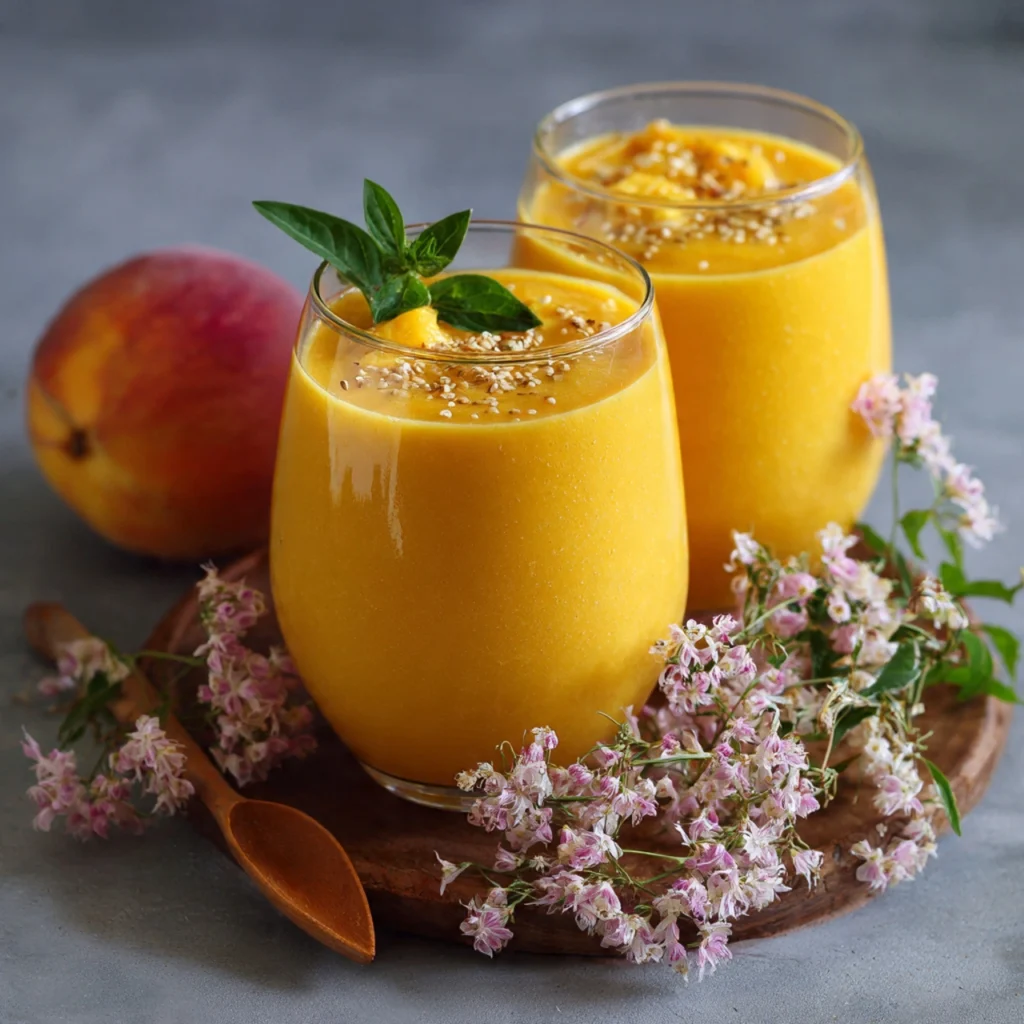
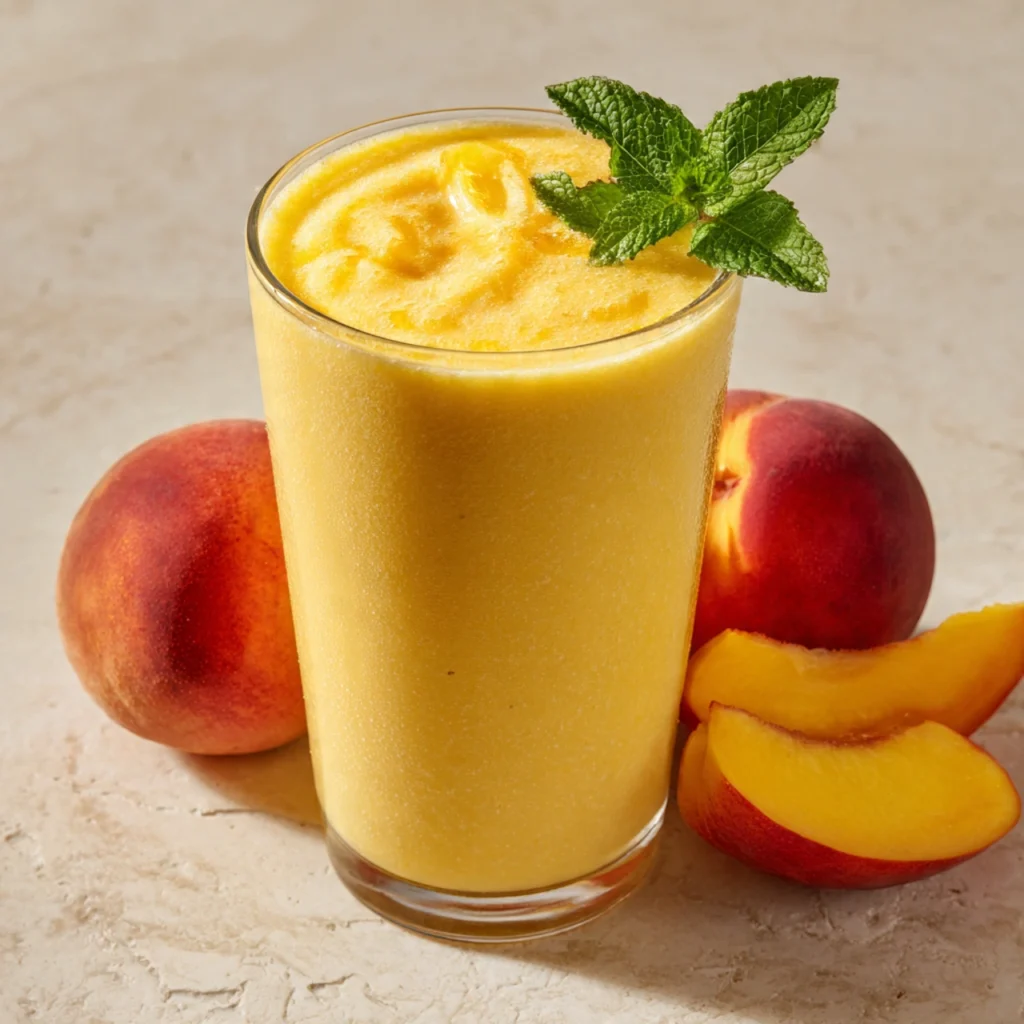
For beautiful presentation, consider garnishing with a fresh peach slice on the rim, a small wedge of mango, a sprinkle of cinnamon on top, or a sprig of fresh mint. If you’re feeling fancy, drizzle a thin line of honey on the inside of the glass before pouring—it creates an elegant visual effect and adds pockets of extra sweetness.
Insert a thick smoothie straw or a long spoon if it’s particularly thick, and enjoy within 10-15 minutes for optimal flavor and texture. The longer it sits, the more it will separate and lose that perfect creamy consistency.
Pro Tips for the Perfect Mango Peach Smoothie
Choosing the Best Fresh Fruit
The quality of your fruit directly determines the quality of your smoothie. For mangoes, look for fruits that yield slightly to gentle pressure (like a ripe avocado), have a fruity, sweet aroma near the stem end, and show some color change (though color alone isn’t a reliable indicator for all varieties). Avoid mangoes with extensive bruising, wrinkled skin, or sour/fermented smells.
For peaches, select fruits that are fragrant (you should smell them from a foot away when they’re perfectly ripe), have a warm peachy-orange or yellow background color (not green), yield gently to pressure, and have no green areas or hard spots. The best peaches feel heavy for their size, indicating juiciness.
Ripening trick: Both mangoes and peaches ripen at room temperature. To speed ripening, place them in a paper bag with an apple or banana for 1-2 days. The ethylene gas produced by the apple/banana accelerates ripening dramatically. Check daily, as stone fruits can go from underripe to overripe quickly.
Peak season: Mangoes peak in late spring through summer (May-August in most regions). Peaches peak in summer (June-August depending on variety and location). During peak season, fresh fruit offers unbeatable flavor intensity.
Fresh vs. Frozen Fruit Strategy
I actually prefer using frozen fruit for several compelling reasons. Frozen mango and peaches are harvested at peak ripeness and flash-frozen immediately, which often makes them sweeter and more consistent than fresh fruit from the grocery store (which is typically picked underripe for shipping). Frozen fruit eliminates prep work (already peeled and cubed), is available year-round regardless of season, creates the ideal thick, frosty texture without diluting flavor with ice, and is often more economical, especially outside peak season.
That said, fresh fruit during peak summer season offers incredible flavor and aroma that’s hard to beat. If using fresh fruit, you must add ice (about ½-¾ cup) to achieve the proper cold, thick texture.
Hybrid approach: Use ½ cup frozen mango + ½ cup frozen peaches + ½ cup fresh mango + ½ cup fresh peaches. This balances optimal texture (from frozen) with peak flavor (from fresh).
The Orange Juice Secret
Orange juice is the liquid base that makes this Mango Peach Smoothie truly special. It enhances both mango and peach flavors, adds natural sweetness and acidity that creates balance, provides vitamin C and bright citrus notes, and has enough body to create a thick smoothie (unlike water, which creates a thin texture).
Freshly squeezed vs. store-bought: Freshly squeezed orange juice offers superior flavor, but quality store-bought OJ (not from concentrate, with pulp) works beautifully. Avoid orange juice cocktails or drinks with added sugar—you want 100% juice.
Alternative liquids: For a creamier, less fruity smoothie, replace orange juice with milk (dairy or non-dairy). For tropical vibes, use coconut water. For maximum peach flavor, use peach nectar.
Greek Yogurt Benefits
Greek yogurt is my top choice for this smoothie because it provides exceptional creaminess and thickness, adds 15-20g of protein per cup (making the smoothie much more satisfying), contributes probiotics for gut health, and has a tangy flavor that balances fruit sweetness.
Full-fat vs. low-fat: Full-fat Greek yogurt creates the richest, most luxurious texture. Low-fat or non-fat varieties work well too, with slightly less creamy results but fewer calories.
Dairy-free options: Coconut yogurt, almond yogurt, or cashew yogurt all work beautifully. Choose unsweetened varieties for best results.
No yogurt? Substitute with ½ frozen banana plus 2 tablespoons nut butter for creaminess without dairy.
Achieving Perfect Consistency
Smoothie texture is highly personal. Here’s how to customize:
For extra-thick, spoonable texture:
- Use all frozen fruit (no fresh)
- Reduce orange juice to ¼ cup
- Increase Greek yogurt to 1.5 cups
- Add ½ frozen banana
- Skip ice cubes entirely
- This creates smoothie bowl consistency
Classic smoothie texture (recommended):
- Follow recipe as written
- Use combination of frozen fruit and ice
- Should be thick but drinkable through a straw
For thinner, more juice-like consistency:
- Increase orange juice to ¾ cup
- Reduce yogurt to ½ cup
- Use less ice
- Perfect for sippy cups for kids
Boosting Nutritional Value
While this Mango Peach Smoothie is already nutritious (packed with vitamins A and C, fiber, and protein from yogurt), you can enhance it further:
Protein boost: Add vanilla protein powder (20-25g protein), increase Greek yogurt to 1.5 cups, add 2 tablespoons hemp hearts, or include 1 tablespoon almond or peanut butter.
Healthy fats: Include ¼ avocado (adds creaminess without affecting flavor), 1 tablespoon ground flaxseed, or 1 tablespoon chia seeds.
Fiber increase: Add chia seeds, ground flaxseed, ¼ cup rolled oats, or psyllium husk.
Greens addition: A generous handful of baby spinach blends completely invisibly, masked by the strong fruit flavors. The smoothie might turn slightly more orange-green, but you won’t taste the greens at all.
Antioxidant boost: Add ½ teaspoon turmeric powder, ¼ teaspoon ground ginger, or a handful of frozen berries (creates a reddish-orange color).
Sweetener Strategy
The need for sweetener depends entirely on your fruit’s ripeness. Perfectly ripe, in-season mangoes and peaches are often sweet enough that you won’t need any additional honey at all. The orange juice also contributes natural sweetness.
My approach: Always taste your fruit first. If both mango and peach taste deliciously sweet on their own, skip sweetener entirely. If one or both are slightly tart, start with ½ tablespoon honey and adjust after blending.
Natural sweetener options:
- Honey – rich flavor, dissolves easily
- Maple syrup – neutral sweetness
- Medjool dates (1-2 pitted) – whole food option with fiber
- Agave nectar – vegan, neutral flavor
- Frozen banana – adds sweetness plus creaminess
Sugar-free options:
- Liquid stevia (2-3 drops)
- Monk fruit sweetener
- No sweetener (let fruit shine)
Common Mistakes to Avoid For Mango Peach Smoothie
Mistake #1: Using Underripe Fruit
The most common reason this smoothie disappoints is using mangoes or peaches that aren’t properly ripe. Underripe mango tastes bland, sour, and has unpleasant fibrous strings. Underripe peaches are hard, flavorless, and sometimes bitter.
The fix: Only use fruit that’s soft to touch, fragrant, and fully ripe. If your fruit is underripe, let it ripen at room temperature for 2-4 days before making smoothies. In a pinch, compensate with extra sweetener and frozen banana.
Mistake #2: Adding Too Much Liquid
Many people panic when their blender struggles and immediately dump in extra liquid. This creates a thin, watery smoothie that’s disappointing and more like juice than a proper smoothie.
The fix: Start with the minimum amount of liquid (½ cup orange juice) and add more gradually, one tablespoon at a time, only if truly necessary for blending. A thick smoothie is always better than a thin one.
Mistake #3: Skipping the Taste Test
Fruit sweetness varies dramatically based on variety, ripeness, and growing conditions. A recipe that was perfect last week might need adjustments this week with different fruit.
The fix: Always taste before serving. This 15-second step ensures every smoothie you make is delicious, regardless of fruit variations.
Mistake #4: Over-Blending
Blending for too long (over 2-3 minutes continuously) can warm up your smoothie from blade friction, causing ice to melt and creating a thinner, less refreshing drink.
The fix: Blend just until smooth with no visible chunks—typically 60-90 seconds total. The smoothie should still be very cold when poured.
Mistake #5: Using Poor Quality Frozen Fruit
Not all frozen fruit is equal. Some brands use underripe fruit, include too much ice or freezer burn, or have been improperly stored with temperature fluctuations that create ice crystals.
The fix: Buy quality frozen fruit from reputable brands (Whole Foods, Trader Joe’s, Costco/Kirkland). Look for bags without excessive frost or ice crystals.
Mistake #6: Wrong Mango-to-Peach Ratio
Some people make their smoothies too mango-heavy (creating a tropical smoothie rather than a balanced mango-peach blend) or too peach-heavy (losing the mango’s brightness).
The fix: Stick to the 1:1 ratio (1 cup mango to 1 cup peaches) for perfect balance. Once you know the recipe, adjust based on personal preference.
Mistake #7: Serving in Warm Glasses
Pouring a cold smoothie into room-temperature glasses causes the outside to warm up immediately, which makes the smoothie less refreshing and accelerates separation.
The fix: Chill serving glasses in the freezer for 10 minutes before making your smoothie, or run them under very cold water and dry completely.
Storage and Serving Suggestions
Immediate Serving (Best Option)
This Mango Peach Smoothie is absolutely at its peak within 10-15 minutes of blending. The texture is perfectly thick and creamy, the temperature is ideal, and all ingredients are fully emulsified for optimal flavor. Serve immediately in a chilled glass for the best experience.
Refrigerator Storage (Same Day)
If you need to make your smoothie ahead for later consumption, it can be refrigerated for 6-8 hours. Pour into an airtight container or mason jar, filling it all the way to the top to minimize air exposure (which causes oxidation and browning). Seal tightly and refrigerate.
Before drinking, the smoothie will have separated—this is completely normal. Simply shake vigorously for 15-20 seconds, or pour back into your blender and pulse a few times to recombine. The texture won’t be quite as perfect as fresh, but it’s still delicious.
Morning prep: Make your smoothie the night before and store in the fridge for a grab-and-go breakfast.
Mango Peach Smoothie Freezer Storage (Up to 3 Months)
Mango Peach Smoothies freeze beautifully for longer storage. Pour into freezer-safe mason jars or containers, leaving about 1 inch of headspace at the top for expansion. Seal tightly and freeze for up to 3 months.
To thaw and serve: Transfer from freezer to refrigerator overnight. In the morning, it will be partially thawed with a slushy consistency—either drink as-is (very refreshing) or pour into your blender with 2-3 tablespoons of orange juice and blend for 20 seconds to restore the smooth texture.
Quick-thaw method: Let the frozen smoothie sit at room temperature for 15-20 minutes, break it up with a spoon, then blend with a splash of liquid until smooth.
Smoothie Popsicles
Transform your Mango Peach Smoothie into frozen treats by pouring it into popsicle molds. These make fantastic healthy desserts or after-school snacks. Freeze for 4-6 hours or overnight. Store popsicles in the freezer for 2-3 months.
Layered popsicles: Create beautiful visual effects by layering the smoothie with yogurt or other fruit purees.
Smoothie Bowl Presentation
Turn this into a stunning breakfast bowl by using less liquid (reduce orange juice to ¼ cup) for extra-thick, spoonable consistency. Pour into a bowl and top with:
Suggested toppings:
- Fresh mango cubes and peach slices
- Granola or muesli
- Sliced banana
- Fresh berries (blueberries, strawberries)
- Coconut flakes
- Chia seeds or hemp hearts
- Chopped almonds or pecans
- Drizzle of honey or almond butter
- Fresh mint leaves
Arrange toppings artistically in sections or patterns for an Instagram-worthy breakfast that’s as beautiful as it is nutritious.
Batch Preparation
The smartest way to prep this smoothie is to create individual freezer bags with pre-measured fruit. In each bag, combine 1 cup frozen mango chunks, 1 cup frozen peach slices, and any add-ins like chia seeds. Store in your freezer.
When ready to make your smoothie, dump the contents of one bag into your blender, add yogurt, orange juice, and blend. This gives you convenience without sacrificing freshness.
Portion Recommendations
This recipe makes approximately 2-2.5 cups (16-20 oz) of smoothie:
- A generous single serving as a meal replacement
- Two smaller servings as a snack or dessert
- One large smoothie bowl with toppings
For children: Split into two 8-10 oz portions
For athletes: Use full recipe as post-workout recovery drink
For weight management: Enjoy half the recipe (8-10 oz) as a satisfying snack
Mango Peach Smoothie FAQ (Frequently Asked Questions)
1. Can I make this Mango Peach Smoothie without yogurt?
Absolutely! While Greek yogurt contributes creaminess and protein, you can create a delicious smoothie without it. For a dairy-free version, substitute the yogurt with: ½ to ¾ of a frozen banana (creates natural creaminess and sweetness), ½ cup of coconut cream or cashew cream, ½ cup of silken tofu (adds protein and incredible smoothness), or ¼ of an avocado (makes it ultra-creamy with healthy fats). You can also simply increase the fruit and use more orange juice or milk alternative for a lighter, juice-like smoothie. Each substitution creates a slightly different texture and flavor profile, but all produce delicious results.
2. What’s the best way to peel a mango for smoothies?
There are several effective methods for preparing mangoes. The easiest method for smoothies is the “hedgehog technique”: Stand the mango vertically and slice down along one side of the flat pit, removing a large “cheek.” Repeat on the other side. Score the flesh of each cheek in a crosshatch pattern without cutting through the skin, then invert the skin so the cubes pop outward, and slice them off. Alternatively, you can peel the entire mango with a vegetable peeler, then slice the flesh off the pit. For the quickest option with less precision needed for smoothies, simply peel the mango with your hands (messy but effective), roughly chop around the pit, and throw everything into the blender.
3. Can I use canned peaches instead of fresh or frozen?
You can, but I don’t recommend it for optimal results. Canned peaches are packed in heavy syrup or light syrup, which makes them overly sweet and adds processed sugars that aren’t necessary when using naturally sweet fruit. The texture is also softer and mushier than fresh or frozen peaches, and the canning process diminishes some of the fresh peachy flavor. If you must use canned peaches due to availability, choose ones packed in water or juice, drain them thoroughly, rinse to remove excess sweetness, and skip any additional sweetener in the recipe. You’ll need about 1.5 cups of drained canned peaches to equal 1 cup of fresh.
4. How can I make this smoothie more filling for a complete breakfast?
To transform this Mango Peach Smoothie into a substantial meal replacement, add ingredients that increase protein, healthy fats, and fiber—all of which promote satiety and sustained energy. Add protein by including 1 scoop of vanilla protein powder, increase Greek yogurt to 1.5 cups or add 2 tablespoons of hemp hearts. Include healthy fats with 1-2 tablespoons of almond butter, peanut butter, or cashew butter, ¼ of an avocado, or 1 tablespoon of ground flaxseed or chia seeds. Boost fiber by adding ¼ cup of rolled oats, 1 tablespoon of chia seeds, or 1 tablespoon of ground flaxseed. These additions create a 400-500 calorie breakfast with 25-30g of protein that will keep you satisfied for 3-4 hours.
5. Why does my smoothie taste bland even with ripe fruit?
If your Mango Peach Smoothie tastes flat or one-dimensional despite using ripe fruit, several factors could be responsible. First, not all ripe fruit is equally flavorful—some varieties and growing conditions produce less intensely flavored fruit. To fix this, add a squeeze of fresh lemon or lime juice (¼ to ½ teaspoon)—acid brightens flavors dramatically and makes fruit taste more vibrant. Add a tiny pinch of salt (1/16 teaspoon)—salt enhances sweetness and rounds out flavors without being detectably salty. Include ¼ teaspoon vanilla extract for depth and warmth.
6. Can I add vegetables to this smoothie without tasting them?
Yes! The strong, sweet flavors of mango and peach mask mild vegetables very effectively. You can add up to 1-2 cups of fresh baby spinach without detecting it in the final smoothie. Baby spinach has a milder flavor than mature spinach and blends invisibly. The smoothie might shift slightly toward a more golden-green color instead of pure orange, but the taste remains purely fruity. Start with ½ cup spinach and gradually increase as you become comfortable. Frozen cauliflower florets (½ cup) also add nutrition and creaminess without any detectable flavor—they blend completely into the fruity base. Other vegetables like carrots can work but are more detectable.
7. Is this smoothie suitable for people with diabetes?
This Mango Peach Smoothie contains natural sugars from fruit (approximately 35-40g of carbohydrates per full recipe), which will impact blood sugar levels. However, it can be modified to be more diabetes-friendly with several strategic adjustments. Reduce the fruit to ½ cup mango and ½ cup peaches, and add frozen cauliflower to maintain volume without adding carbs. Skip any additional sweetener beyond the natural fruit sugars. Increase protein significantly by adding protein powder or increasing Greek yogurt to 1.5 cups—protein slows sugar absorption. Add healthy fats like 1 tablespoon of almond butter or ¼ avocado to further moderate blood sugar response.
Nutrition Information (Approximate Values)
Serving Size: 1 smoothie (full recipe, about 20 oz)
Servings Per Recipe: 1
Calories: 280-320 kcal
Total Fat: 4g
- Saturated Fat: 2g
- Trans Fat: 0g
Cholesterol: 15mg (with dairy yogurt; 0mg if dairy-free)
Sodium: 80mg
Total Carbohydrates: 52g
- Dietary Fiber: 5g
- Sugars: 44g (naturally occurring from fruit and orange juice)
- Added Sugars: 4g (from honey; 0g if omitted)
Protein: 14g (with Greek yogurt; varies with other yogurt types)
Vitamin D: 2mcg (8% DV, from fortified yogurt)
Calcium: 250mg (19% DV)
Iron: 0.8mg (4% DV)
Potassium: 620mg (13% DV)
Vitamin A: 165mcg (18% DV)
Vitamin C: 95mg (106% DV)
Vitamin E: 2.5mg (17% DV)
Folate: 50mcg (13% DV)
Additional Micronutrients:
- Excellent source of Vitamin C (immune support, collagen production)
- Excellent source of Vitamin A (vision health, immune function)
- Good source of potassium (heart health, muscle function)
- Contains beta-carotene (antioxidant with anti-inflammatory properties)
- Provides probiotics (from yogurt, supports digestive health)
- Rich in polyphenols (plant compounds with antioxidant effects)
- Contains copper (supports immune system and iron absorption)
Notes on Nutrition:
- Values vary based on specific fruit ripeness and brands used
- Using low-fat Greek yogurt reduces calories by approximately 40-50
- Omitting honey reduces added sugars to 0g and calories by 15-20
- Adding protein powder increases protein to 34-39g and adds 100-120 calories
- Fresh vs. frozen fruit doesn’t significantly impact nutritional values
- This smoothie is naturally gluten-free and vegetarian
- Can easily be made vegan and dairy-free with yogurt substitutions
Final Thoughts
This Mango Peach Smoothie represents the best of what smoothies can be—delicious enough to feel like a treat, nutritious enough to fuel your body properly, and simple enough to make every single day without it feeling like a chore. The combination of mango and peach is genuinely magical, creating a flavor experience that’s greater than the sum of its parts.
Over the years of making and sharing this Mango Peach Smoothie recipe, I’ve witnessed it become a family favorite in countless households. Parents tell me their previously smoothie-resistant kids now ask for “the orange smoothie” by name. Fitness enthusiasts report it’s their favorite post-workout recovery drink.
What I love most about this smoothie is its versatility. During peak summer when farmers’ markets overflow with ripe peaches and mangoes, it showcases fresh fruit at its absolute best. During winter when fresh stone fruit is unavailable or disappointing, frozen fruit delivers consistent results.
The beauty lies in its simplicity. Five basic ingredients. Three minutes of your time. One blender. Yet the result is something that brightens your morning, nourishes your body with real whole foods, and makes you genuinely happy to be choosing healthy options.
I encourage you to make this recipe your own. Experiment with different mango and peach varieties to discover your favorite combination. Try the various add-ins to find what works best for your nutritional goals. Make it thicker for smoothie bowls or thinner for easy sipping.
Most importantly, don’t save this for special occasions or weekends. This three-minute recipe deserves to become part of your regular routine—a sweet spot of sunshine in your mornings, a refreshing afternoon revival, or a healthy way to satisfy evening sweet cravings without derailing your wellness goals.
Blend with joy, sip with happiness, and savor every Mango Peach Smoothie moment!
PrintMango Peach Smoothie: 5 Ingredients to Summer Bliss (3 Minutes)
This Mango Peach Smoothie is summer in a glass—sweet, refreshing, and bursting with the perfect balance of tropical mango and juicy peach flavors. Made with just 5 simple ingredients including fresh or frozen fruit, creamy Greek yogurt, and orange juice, it blends together in 3 minutes for a nutritious breakfast or energizing snack. The combination of mango’s tropical brightness and peach’s velvety sweetness creates a flavor profile that’s both familiar and exciting, making this one smoothie you’ll crave all year long.
- Prep Time: 3 minutes
- Cook Time: 0 minutes
- Total Time: 3 minutes
- Yield: 1 large smoothie (20 oz) or 2 small servings (10 oz each)
- Category: Breakfast, Smoothie, Snack, Beverage, Healthy Drink
- Method: Blending
- Cuisine: American, Fusion, International
- Diet: Vegetarian
Ingredients
- 1 cup ripe mango chunks (fresh or frozen, about 150g)
- 1 cup ripe peach slices (fresh or frozen, about 150g)
- 1 cup plain Greek yogurt (or regular yogurt)
- ½ cup orange juice (freshly squeezed or store-bought)
- ½ cup ice cubes (about 4-5 cubes; reduce if using all frozen fruit)
- 1 tablespoon honey or agave nectar (optional, adjust to taste)
Optional Add-Ins:
- ½ frozen banana (extra creaminess)
- 1 tablespoon chia seeds (fiber boost)
- ½ teaspoon vanilla extract (added depth)
- ¼ teaspoon ground cinnamon (warm spice notes)
- 1 scoop vanilla protein powder (high-protein version)
- Handful of spinach (hidden greens)
- 1 tablespoon almond butter (healthy fats)
Garnish Options:
- Fresh peach slice
- Fresh mango wedge
- Sprinkle of cinnamon
- Fresh mint sprig
- Honey drizzle
Instructions
- Prepare fruit: If using fresh mango and peaches, peel and cube into bite-sized pieces. If using frozen fruit, let sit at room temperature for 2-3 minutes to soften slightly. Taste a piece of each to assess sweetness and determine if you’ll need honey.
- Layer ingredients: Add orange juice to blender first. Add Greek yogurt in the middle layer. Top with mango chunks, peach slices, and ice cubes. Add any optional ingredients between yogurt and fruit.
- Blend progressively: Start on low speed for 15-20 seconds to break down large chunks. Increase to medium speed for 20-30 seconds, scraping down sides if needed. Finish on high speed for 30-45 seconds until completely smooth and creamy with no visible fruit chunks or ice crystals.
- Taste and adjust: Sample the smoothie. Add honey if too tart, orange juice to thin if too thick, or lemon juice to brighten flavors. Blend briefly after any additions.
- Serve immediately: Pour into a chilled glass, add garnishes if desired, and enjoy right away for best texture and temperature.
Notes
- Fruit selection: Use ripe, fragrant fruit that yields slightly to pressure. Alphonso or Ataulfo mangoes and freestone peaches work beautifully.
- Consistency control: For thicker smoothie, use all frozen fruit and reduce orange juice to ¼ cup. For thinner consistency, increase orange juice.
- Dairy-free option: Use coconut or almond yogurt, or replace with ½ frozen banana plus 1 tablespoon almond butter.
- Protein boost: Add 1 scoop vanilla protein powder or increase Greek yogurt to 1.5 cups for 25-30g total protein.
- Sweetener alternatives: Replace honey with maple syrup, dates, or skip entirely if fruit is very sweet.
- Storage: Best consumed fresh. Can refrigerate in airtight container for 6-8 hours; shake well before drinking.
- Batch prep: Pre-portion fruit in freezer bags for quick assembly