Introduction
Mango Pancakes are the ultimate tropical breakfast upgrade—fluffy, golden stacks infused with sweet mango puree that creates the most tender, moist pancakes you’ve ever tasted, with pockets of fresh mango chunks adding bursts of fruity flavor in every bite.
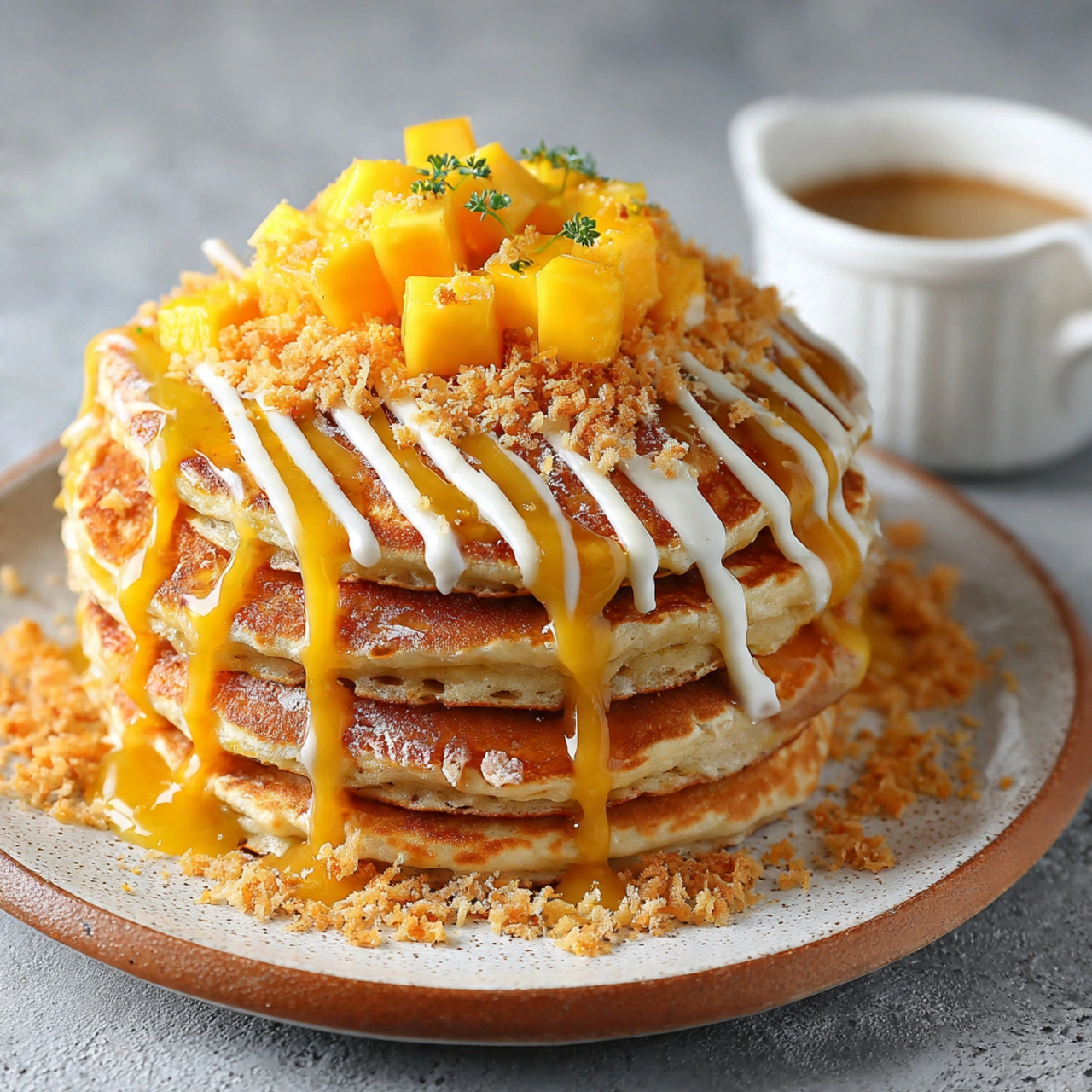
I discovered the magic of Mango Pancakes during a family vacation in Hawaii, where a beachside café served them as their signature breakfast dish. When the stack arrived at our table, golden and gorgeous with visible mango pieces throughout, topped with fresh mango slices and a drizzle of coconut syrup.
The secret, the chef explained when I asked, is in how you incorporate the mango. You can’t just dump chunks into regular pancake batter and hope for the best—that creates heavy, wet pancakes. Instead, you puree some of the mango to add moisture and flavor to the batter, then fold in fresh chunks at the end.
Since returning from that trip, I’ve made these Mango Pancakes countless times, perfecting the ratios and techniques. I’ve served them at weekend brunches where they’ve stolen the show from bacon and eggs. I’ve made them for kids who suddenly became enthusiastic about eating fruit at breakfast.
What makes these pancakes exceptional is how they capture tropical vacation vibes while being surprisingly practical for everyday cooking. You can use fresh mangoes during peak season or frozen mango year-round. The batter comes together in ten minutes using ingredients you probably have in your pantry.
Whether you’re looking to elevate your weekend breakfast routine, use up ripe mangoes, impress brunch guests, or simply try something different from the usual pancake repertoire, these Mango Pancakes will become your new favorite way to start the day.
Ingredients For Mango Pancakes
For Mango Pancakes (Makes 10-12 pancakes):
Dry Ingredients:
- 1½ cups all-purpose flour – provides structure
- 2 tablespoons granulated sugar – enhances sweetness
- 2 teaspoons baking powder – creates fluffy texture
- ½ teaspoon baking soda – helps browning and tenderness
- ¼ teaspoon salt – balances sweetness and enhances flavor
Wet Ingredients:
- 1 cup mango puree (from about 1 large ripe mango, about 200g) – provides flavor and moisture
- ¾ cup buttermilk (or regular milk with 1 tablespoon lemon juice) – adds tang and tenderness
- 1 large egg – binds ingredients and adds richness
- 2 tablespoons melted butter (plus more for cooking) – adds flavor and prevents sticking
- 1 teaspoon vanilla extract – enhances overall flavor
Mix-ins:
- ½ cup fresh mango chunks (small dice) – adds texture and fruit bursts
- Optional: pinch of ground cardamom – traditional Indian spice pairing
For Serving:
- Fresh mango slices
- Maple syrup or honey
- Whipped cream or Greek yogurt
- Toasted coconut flakes
- Fresh mint leaves
- Butter
Mango Selection:
Best varieties for pancakes:
- Ataulfo (Honey Mango) – smooth, less fibrous, perfect for pureeing
- Kent – sweet, juicy, great texture
- Alphonso – intensely flavorful if available
- Tommy Atkins – widely available, works well when ripe
Fresh vs. Frozen:
- Fresh ripe mango is ideal during peak season (spring/summer)
- Frozen mango works beautifully year-round—thaw completely and drain excess liquid before pureeing
- Canned mango pulp can work but may be overly sweet—reduce added sugar
Ingredient Substitutions:
Dairy-free:
- Replace buttermilk with almond milk or oat milk plus 1 tablespoon lemon juice
- Use coconut oil instead of butter (adds tropical flavor)
- Ensure baking powder is aluminum-free
Gluten-free:
- Replace all-purpose flour with 1:1 gluten-free flour blend
- Add ¼ teaspoon xanthan gum if blend doesn’t include it
- Results will be slightly denser but still delicious
Egg-free:
- Replace egg with flax egg (1 tablespoon ground flaxseed + 3 tablespoons water, let sit 5 minutes)
- Or use ¼ cup unsweetened applesauce
Step-by-Step Instructions
Step 1: Prepare Mango Puree (5 minutes)
Start by preparing your mango. If using fresh mango, peel and remove the flesh from the pit using the scoring method or by carefully slicing. You’ll need enough mango to yield 1 cup of puree plus ½ cup of chunks—typically this requires 1-2 large mangoes depending on size.
Cut most of the mango into rough chunks and place in a blender or food processor. Blend until completely smooth—no chunks should remain. You want a silky puree similar in consistency to applesauce. If the puree seems very thick, you can add a tablespoon of water to help it blend.
Dice the remaining mango into small ¼-inch pieces. These will be folded into the batter at the end for textural contrast. Set both the puree and chunks aside.
Ripeness matters: The mango should be fragrant and yield slightly to pressure. Underripe mango lacks sweetness and can make pancakes taste flat. Overripe is fine—it purees beautifully and adds natural sweetness.
Step 2: Mix Dry Ingredients (2 minutes)
In a large mixing bowl, whisk together the flour, sugar, baking powder, baking soda, and salt. Whisk thoroughly for at least 30 seconds to ensure the leavening agents are evenly distributed. This is crucial for uniform rise and texture.
Make a well in the center of the dry ingredients—this is where you’ll add the wet ingredients in the next step. This technique helps prevent overmixing by giving you a controlled mixing area.
Sifting note: While not absolutely necessary, sifting your flour creates even fluffier pancakes by aerating it and removing any lumps. If you have time, it’s worth the extra step.
Step 3: Combine Wet Ingredients (2 minutes)
In a separate medium bowl, whisk together the mango puree, buttermilk, egg, melted butter, and vanilla extract. Whisk until the mixture is smooth and uniform. The mango puree should be completely incorporated with no streaks.
Temperature tip: Your melted butter should be warm but not hot. If it’s too hot, it can cook the egg when you add it to the wet mixture. Let it cool for a minute after melting.
The wet mixture might look slightly curdled due to the buttermilk’s acidity reacting with the mango—this is normal and won’t affect the final pancakes.
Step 4: Combine Wet and Dry (1 minute)
Pour the wet ingredients into the well you created in the dry ingredients. Using a wooden spoon or rubber spatula, gently fold the ingredients together. Mix with a light hand, using broad folding motions rather than vigorous stirring.
Critical technique: Stop mixing as soon as you no longer see streaks of flour. The batter should be lumpy—this is correct! Lumpy batter creates fluffy pancakes. Overmixed batter develops gluten, resulting in tough, rubbery pancakes.
A few small lumps and some unmixed flour are fine. They’ll hydrate and incorporate during the resting period and cooking. If you’ve mixed until the batter is completely smooth, you’ve overmixed.
Step 5: Fold in Mango Chunks and Rest (5 minutes)
Gently fold the diced mango chunks into the batter using as few strokes as possible—maybe 3-4 folds total. You just want them distributed throughout, not perfectly mixed.
Let the batter rest for 5 minutes while your griddle or pan heats. This resting time allows the flour to fully hydrate, the gluten to relax, and the baking powder to start activating. Your pancakes will be noticeably fluffier if you don’t skip this step.
During resting, the batter will thicken slightly—this is normal and desired. If it becomes extremely thick (hard to pour), you can thin it with a tablespoon of milk.
Step 6: Heat Your Cooking Surface (3 minutes)
Heat a large non-stick griddle or skillet over medium heat. This temperature is crucial—too hot and pancakes burn before cooking through; too cool and they spread too thin and don’t brown properly.
To test if your pan is ready, splash a few drops of water on the surface. They should sizzle and evaporate within 2-3 seconds. If they immediately steam away, the pan is too hot. If they just sit there, it’s not hot enough.
Lightly grease the pan with butter or cooking spray. For the first batch, you’ll need more grease; subsequent batches may need very little if using a good non-stick pan.
Step 7: Cook the Pancakes (10-12 minutes)
Using a ¼-cup measuring cup or ladle, pour batter onto the hot griddle. Don’t spread the batter—let it settle naturally into a round shape. This creates thicker, fluffier pancakes.
Cook for 2-3 minutes on the first side without touching them. You’ll know they’re ready to flip when you see bubbles forming across the entire surface, the edges look set and slightly dry, and the bubbles that pop leave holes that don’t immediately fill in.
Flip gently with a wide spatula and cook for another 1-2 minutes on the second side. The second side always cooks faster. Pancakes are done when they spring back lightly when touched in the center and both sides are golden brown.
Batch cooking: You can typically fit 3-4 pancakes on a standard griddle. Don’t overcrowd or they’re difficult to flip. Cook in batches, keeping finished pancakes warm in a 200°F oven on a baking sheet while you finish the rest.
Step 8: Serve Immediately (1 minute)
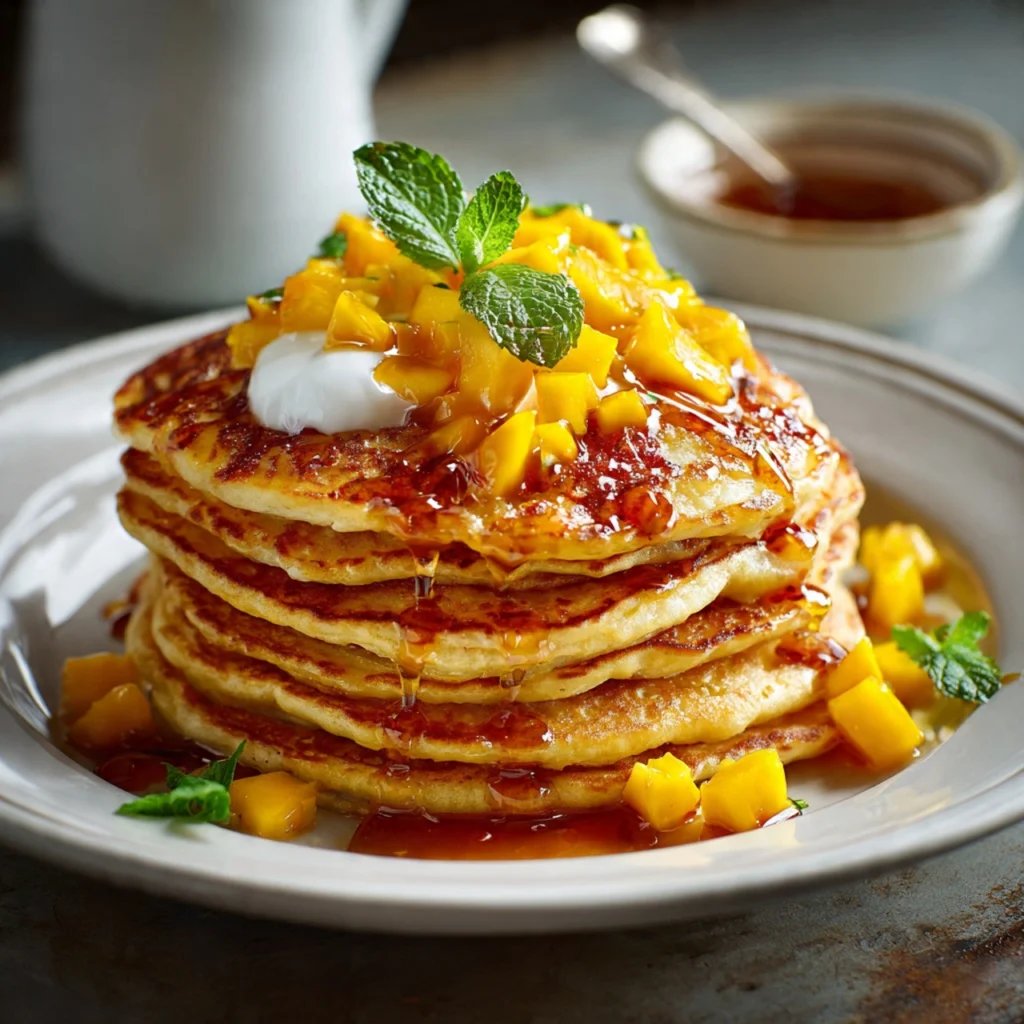
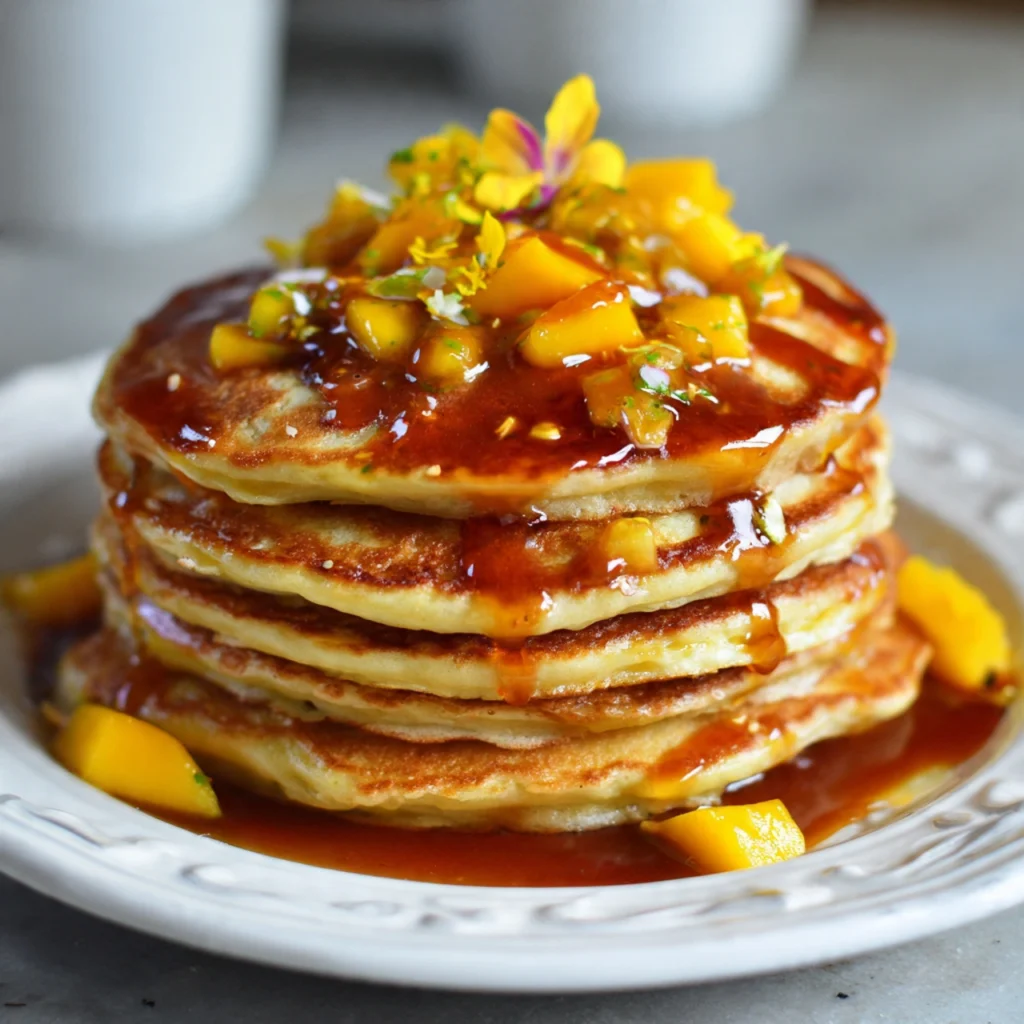
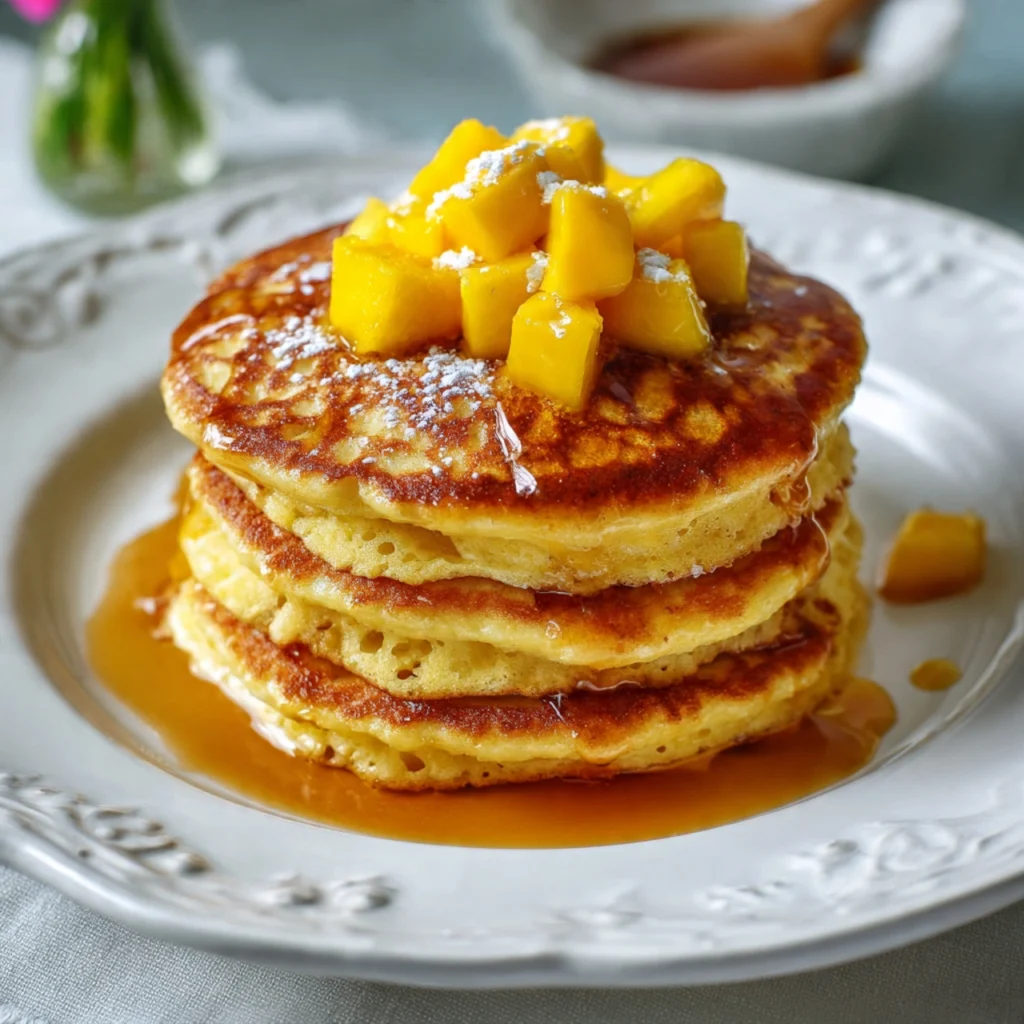
Stack pancakes on warm plates (you can heat plates in your warm oven while cooking). Top with fresh mango slices, a pat of butter, and your choice of syrup. Garnish with toasted coconut, whipped cream, or yogurt if desired.
Mango Pancakes are best served fresh and hot off the griddle when they’re at their fluffiest and most tender.
Pro Tips for the Perfect Mango Pancakes
Achieving Maximum Fluffiness
The key to fluffy Mango Pancakes despite the fruit content is in the technique and ingredient balance. The mango puree adds moisture but also weight, so you need adequate leavening and proper mixing to achieve lift.
Fluffiness secrets:
- Use fresh baking powder (check expiration date—old baking powder won’t create rise)
- Don’t overmix—lumpy batter is your friend
- Let batter rest 5 minutes before cooking
- Ensure your griddle is at proper medium heat
- Don’t press down on pancakes while cooking—this releases steam and creates dense pancakes
- Flip only once—multiple flips deflate the structure
Buttermilk matters: The acid in buttermilk reacts with baking soda to create carbon dioxide bubbles that make pancakes rise. Regular milk works but won’t create quite the same tender, fluffy texture. If you don’t have buttermilk, the lemon juice + milk substitute creates similar acidity.
Preventing Soggy Pancakes
Fruit pancakes can sometimes turn out soggy or gummy if the fruit adds too much moisture. Here’s how to prevent that:
Moisture management:
- If using frozen mango, thaw completely and drain any excess liquid before pureeing
- Pat fresh mango chunks dry with paper towels before folding into batter
- Don’t make batter too thin—it should be thick and scoopable, not runny
- Cook on proper heat so moisture evaporates during cooking
- Don’t stack hot pancakes directly on top of each other immediately—give them a minute to release steam first
Mango chunk size: Keep chunks small (¼ inch or smaller). Large pieces create pockets of moisture that don’t cook properly and can make pancakes soggy.
Mango Flavor Optimization
To get the best mango flavor in your pancakes:
Use ripe, aromatic mangoes: Underripe mango is bland and won’t provide good flavor. The mango should smell sweet and tropical at the stem end.
Balance is key: The 1 cup puree + ½ cup chunks ratio provides strong mango flavor without overwhelming the pancake structure. More than this and pancakes become difficult to flip and may not cook through properly.
Enhance with spices: A pinch of cardamom is traditional in Indian mango desserts and adds subtle aromatic complexity. Vanilla extract also enhances the fruit flavor.
Mango topping: Serving with fresh mango on top reinforces the flavor and makes it clear these are mango pancakes, not just pancakes with some fruit in them.
Perfect Cooking Temperature
Temperature control is crucial for pancakes with the ideal golden-brown exterior and fully cooked interior:
Heat guidelines:
- Start with medium heat—about 350°F if using an electric griddle
- First batch may need slight temperature adjustment
- If pancakes are browning in less than 2 minutes, heat is too high
- If they take more than 4 minutes to show bubbles, heat is too low
- Consistent medium heat creates even browning and proper cooking
Visual cues matter: Watch for those bubbles forming across the surface and edges looking set—these are more reliable than timing since stovetops vary.
Serving Presentation
Make your Mango Pancakes Instagram-worthy:
- Stack 3 pancakes in a slightly offset tower
- Place fresh mango slices in a fan pattern on top
- Drizzle syrup artistically rather than drowning them
- Add a dollop of whipped cream or Greek yogurt
- Sprinkle toasted coconut for texture and tropical flair
- Garnish with a small mint sprig for color contrast
- Dust very lightly with powdered sugar
Mango Pancakes Common Mistakes to Avoid
Mistake #1: Overmixing the Batter
This is the number one pancake mistake that creates tough, rubbery, dense pancakes rather than fluffy, tender ones. When you overmix pancake batter, you develop the gluten in the flour, creating an elastic network that makes pancakes chewy.
The fix: Mix wet and dry ingredients just until combined—about 10-15 strokes total. The batter should have lumps. It’s okay if you see some unmixed flour. Stop mixing while it still looks a bit rough.
Mistake #2: Using Underripe Mangoes
Underripe mangoes are hard, fibrous, tart, and bland. They won’t puree smoothly and will create pancakes that taste more like slightly off vegetables than tropical fruit.
The fix: Only use mangoes that are soft, fragrant, and fully ripe. They should smell sweet at the stem end and yield gently to pressure. If your mangoes aren’t ripe, let them sit at room temperature for 2-4 days before making pancakes.
Mistake #3: Cooking at Wrong Temperature
Too-hot pans create pancakes that are burned on the outside and raw in the middle. Too-cool pans create pale, dense pancakes that spread too thin.
The fix: Use medium heat and test your pan temperature with water drops before adding batter. Adjust heat between batches if needed. Patience is key—resist the urge to crank up the heat to cook faster.
Mistake #4: Flipping Too Early or Too Often
Flipping before bubbles form creates a mess—the unset batter runs everywhere. Flipping multiple times deflates the pancakes and creates uneven cooking.
The fix: Wait for bubbles across the entire surface, set edges, and bubbles that stay open before flipping. Then flip only once. The second side cooks much faster than the first.
Mistake #5: Making Batter Too Thin
Adding too much liquid (mango puree, buttermilk, or milk) creates thin, crepe-like pancakes rather than thick, fluffy ones. Fruit pancakes need slightly thicker batter to support the weight of the fruit.
The fix: The batter should be thick enough that it doesn’t spread immediately when poured—it should slowly spread into a round shape. If batter is too thin, add a tablespoon or two of flour and fold gently.
Mistake #6: Not Letting Batter Rest
Skipping the resting time means the flour doesn’t fully hydrate, baking powder doesn’t fully activate, and gluten doesn’t relax. Pancakes will be denser and less fluffy.
The fix: Always let batter rest 5 minutes before cooking. Use this time to prep toppings, heat your pan, or set the table.
Mistake #7: Pressing Down with Spatula
Some people press down on pancakes while they cook, thinking it helps them cook faster or more evenly. This actually squeezes out the air bubbles that make pancakes fluffy, creating dense, flat results.
The fix: Leave pancakes alone while they cook. Don’t press, don’t poke, don’t touch until it’s time to flip.
Storage and Serving Suggestions
Immediate Serving
Mango Pancakes are absolutely best served fresh and hot off the griddle. The texture is at its peak—fluffy inside, slightly crispy edges—and the mango flavor is brightest when warm.
Serving suggestions:
- Classic: Butter and maple syrup
- Tropical: Fresh mango slices, toasted coconut, and honey
- Creamy: Greek yogurt or whipped cream with fresh fruit
- Decadent: Mango compote (cooked mango with sugar and lime)
- Simple: Just butter and a squeeze of lime
Refrigerator Storage (3-4 Days)
Let pancakes cool completely on a wire rack (don’t stack while hot—this creates steam and soggy pancakes). Once cool, store in an airtight container or resealable bag with parchment paper between layers to prevent sticking. Refrigerate for up to 4 days.
To reheat:
- Microwave: 20-30 seconds per pancake (quick but can make them slightly rubbery)
- Toaster: Pop them in like toast for crispy edges (best method)
- Oven: 350°F for 5-8 minutes on a baking sheet
- Stovetop: Briefly warm in a dry pan
Freezer Storage (Up to 3 Months)
Mango Pancakes freeze beautifully for make-ahead breakfasts. Cool completely, then arrange in a single layer on a baking sheet and freeze for 1-2 hours until solid. Transfer to a freezer bag with parchment between layers. Freeze for up to 3 months.
To reheat from frozen:
- Toaster: Best method—straight from freezer, toasts until warm
- Oven: 350°F for 10-12 minutes
- Microwave: 45-60 seconds (check halfway)
Freezer tip: Freeze in portions matching your household size for easy grab-and-go breakfasts.
Make-Ahead Strategies
Batter: Can be made night before and refrigerated. Stir gently before cooking. May need to thin with a tablespoon of milk.
Dry mix: Combine dry ingredients up to a week ahead and store in an airtight container. Add wet ingredients when ready to cook.
Mango prep: Puree and chunk mango up to 2 days ahead. Store separately in refrigerator.
Serving for a Crowd
Keep pancakes warm for brunch crowds:
- Preheat oven to 200°F
- Place wire rack on baking sheet
- Transfer cooked pancakes to rack in oven
- They’ll stay warm for 30-45 minutes without getting soggy
FAQ (Frequently Asked Questions)
1. Can I make Mango Pancakes without a blender for the puree?
Yes, though a blender creates the smoothest puree. Alternatives include: mash very ripe mango thoroughly with a fork or potato masher until as smooth as possible (some small lumps are okay—they’ll add texture), use a food processor and process until smooth, or grate the mango on the fine side of a box grater then mash. The texture won’t be as silky as blender puree, but the pancakes will still be delicious. You can also use store-bought mango baby food or canned mango pulp (available at Indian grocery stores)—these are already pureed and work perfectly. If using canned pulp, reduce added sugar as it’s often quite sweet.
2. Why are my Mango Pancakes dense instead of fluffy?
Dense pancakes typically result from one or more issues. First, overmixing develops gluten, creating tough, heavy texture—mix just until combined with lumps remaining. Second, old or expired baking powder won’t provide lift—check dates and replace if old. Third, too much liquid makes batter too thin to rise properly—batter should be thick and scoopable. Fourth, baking soda and baking powder not mixed evenly through dry ingredients—whisk thoroughly. Fifth, pan too cool prevents proper rise—use medium heat. Sixth, too much fruit weighs down the batter—stick to the recipe ratios of 1 cup puree + ½ cup chunks. Finally, pressing down on pancakes while cooking deflates the structure—leave them alone until time to flip.
3. Can I use frozen mango for this recipe?
Absolutely! Frozen mango works beautifully and is often sweeter and more consistent than fresh off-season mangoes. Thaw completely in the refrigerator overnight or at room temperature for 2-3 hours. Drain any excess liquid that accumulates during thawing—too much liquid will make your batter thin. Pat the thawed mango dry with paper towels before pureeing and dicing. Frozen mango is already peeled and cubed, eliminating prep work. Use the same amounts as fresh: thaw and drain enough to yield 1 cup puree plus ½ cup chunks. Ataulfo or Alphonso frozen mango, if you can find it, produces the best flavor.
4. How do I make these pancakes dairy-free or vegan?
For dairy-free pancakes: replace buttermilk with almond milk, oat milk, or soy milk plus 1 tablespoon lemon juice (let sit 5 minutes to curdle), and substitute melted coconut oil or vegetable oil for the butter. For fully vegan pancakes, also replace the egg with a flax egg (1 tablespoon ground flaxseed + 3 tablespoons water, let sit 5 minutes until thick), chia egg (same ratio as flax), or ¼ cup unsweetened applesauce. The texture will be slightly different—potentially less fluffy and more dense—but still delicious. Use vegan butter or coconut oil for cooking.
5. Can I make these gluten-free?
Yes! Replace the all-purpose flour with a gluten-free 1:1 baking flour blend (Bob’s Red Mill, King Arthur, or Cup4Cup work well). If your blend doesn’t contain xanthan gum, add ¼ teaspoon to help with structure. Gluten-free pancakes typically need slightly more liquid—if your batter seems very thick, add milk 1 tablespoon at a time until it reaches thick but pourable consistency. Let batter rest for 10 minutes instead of 5 to allow the gluten-free flour to fully hydrate. The texture will be slightly different—perhaps a bit more delicate and less chewy—but they’ll still be fluffy and delicious.
6. Why do my pancakes stick to the pan even with a non-stick surface?
Sticking usually indicates insufficient fat or wrong temperature. Even non-stick pans need a light coating of butter or oil—don’t skip this. If using butter, watch that it doesn’t burn (this creates sticky residue)—use medium heat and add just before adding batter. The pan might be too hot, causing sugars to caramelize and stick—reduce heat. Or the pan might not be properly preheated—let it heat for 2-3 minutes before first batch. Older non-stick pans with damaged coating will stick—consider replacing. The first pancake often sticks more than subsequent ones—this is normal.
7. Can I add other fruits or flavors to Mango Pancakes?
Definitely! Mangoes pair beautifully with: coconut (add ¼ cup shredded coconut to batter), banana (mash ½ banana into wet ingredients), pineapple (fold in ¼ cup small diced pieces), berries (fold in ½ cup blueberries or diced strawberries), lime zest (add 1 teaspoon to dry ingredients for brightness), cardamom (¼ teaspoon for traditional Indian flavor), vanilla (already in recipe but can increase to 2 teaspoons), or ginger (¼ teaspoon ground ginger adds warmth). Don’t add too many mix-ins or the batter becomes overloaded and won’t cook properly. Stick to one or two additions maximum. Keep total fruit additions (including mango) to no more than 1.5 cups total or pancakes will be too heavy and wet.
Nutrition Information (Approximate Values)
Serving Size: 2 medium pancakes (about 6 inches each)
Servings Per Recipe: 5-6
Calories: 280-320 kcal
Total Fat: 6g
- Saturated Fat: 3g
- Trans Fat: 0g
Cholesterol: 45mg
Sodium: 380mg
Total Carbohydrates: 52g
- Dietary Fiber: 2g
- Sugars: 16g (includes natural sugars from mango)
- Added Sugars: 8g (from granulated sugar)
Protein: 7g
Vitamin A: 95mcg (11% DV)
Vitamin C: 30mg (33% DV)
Calcium: 120mg (9% DV)
Iron: 2mg (11% DV)
Potassium: 180mg (4% DV)
Notes on Nutrition:
- Values are for plain pancakes without toppings
- Adding butter, syrup, or whipped cream increases calories and sugar significantly
- Using whole wheat flour increases fiber by 2-3g per serving
- Mango provides natural vitamins A and C
- Can be made lower in calories with egg substitute and reduced sugar
- Naturally low in saturated fat
- Contains some protein from egg, milk, and flour
Final Thoughts
These Mango Pancakes have genuinely transformed weekend breakfast in my household. What started as a vacation splurge has become a regular rotation recipe that everyone requests. There’s something magical about how the mango puree creates pancakes that are somehow both lighter and more flavorful than traditional recipes—almost like the fruit enhances rather than weighs down the batter.
The beauty of this recipe lies in its accessibility. You don’t need exotic ingredients or complicated techniques. Just ripe mangoes (or frozen!), standard pantry staples, and about twenty-five minutes of your time. Yet the result tastes special enough for a celebration brunch, impressive enough to serve to guests, and delicious enough that kids actually get excited about eating fruit for breakfast.
I love how versatile these pancakes are. Make them during mango season with peak-ripeness fresh fruit for the absolute best flavor. Use frozen mango year-round when you’re craving tropical vibes in the middle of winter.
What makes me happiest about sharing this recipe is watching people’s reactions when they taste these for the first time. There’s always that moment of surprise—”Wait, these are incredibly fluffy despite all the fruit!”—followed by genuine enthusiasm.
Whether you’re a pancake purist looking to expand your repertoire, a mango lover seeking new ways to use your favorite fruit, or simply someone who wants to bring a little tropical sunshine to breakfast, these Mango Pancakes deliver on every level.
Here’s to mornings that taste like vacation, to discovering that fruit pancakes can be truly fluffy, and to simple recipes that bring genuine joy to the breakfast table.
Mix with a light hand, cook with patience, flip with confidence, and enjoy every tropical, fluffy, mango-licious bite!
PrintMango Pancakes: Fluffy Tropical Breakfast in 25 Minutes (9 Ingredients)
Mango Pancakes are fluffy, golden breakfast perfection infused with sweet mango puree and studded with fresh mango chunks. These tropical pancakes are tender, naturally sweet, and incredibly easy to make using simple ingredients. The mango puree replaces some of the liquid in traditional pancake batter, creating extra-moist pancakes with gorgeous color and authentic mango flavor throughout. Perfect for weekend brunch, special breakfasts, or any time you want to feel like you’re eating breakfast on a tropical island. Ready in just 25 minutes from start to finish!
- Prep Time: 10 minutes
- Cook Time: 15 minutes
- Total Time: 25 minutes
- Yield: 10-12 pancakes (5-6 servings of 2 pancakes each)
- Category: Breakfast, Brunch, Pancakes
- Method: Griddle cooking, Pan-frying
- Cuisine: American, Fusion, Tropical-inspired
- Diet: Vegetarian
Ingredients
Dry Ingredients:
- 1½ cups all-purpose flour
- 2 tablespoons granulated sugar
- 2 teaspoons baking powder
- ½ teaspoon baking soda
- ¼ teaspoon salt
Wet Ingredients:
- 1 cup mango puree (from about 1 large ripe mango)
- ¾ cup buttermilk
- 1 large egg
- 2 tablespoons melted butter
- 1 teaspoon vanilla extract
Mix-ins:
- ½ cup fresh mango chunks (small dice)
For Serving:
- Fresh mango slices
- Maple syrup or honey
- Butter
- Optional: whipped cream, toasted coconut
Instructions
- Prepare mango: Peel and cube mango. Blend about 200g until smooth to make 1 cup puree. Dice remaining mango into ¼-inch chunks (about ½ cup). Set aside.
- Mix dry ingredients: In large bowl, whisk together flour, sugar, baking powder, baking soda, and salt. Create a well in the center.
- Combine wet ingredients: In separate bowl, whisk together mango puree, buttermilk, egg, melted butter, and vanilla until smooth.
- Combine wet and dry: Pour wet ingredients into well in dry ingredients. Gently fold together just until combined—batter should be lumpy with some unmixed flour visible. Do not overmix.
- Add mango chunks: Fold in diced mango with just 3-4 gentle strokes. Let batter rest 5 minutes.
- Heat pan: Heat non-stick griddle or large skillet over medium heat. Test with water drops—should sizzle and evaporate in 2-3 seconds. Lightly grease with butter.
- Cook pancakes: Pour ¼ cup batter per pancake onto hot griddle. Don’t spread. Cook 2-3 minutes until bubbles form across surface and edges look set. Flip and cook 1-2 minutes on second side until golden. Don’t press down while cooking.
- Serve: Stack pancakes and top with fresh mango slices, butter, and syrup. Serve immediately while hot.
Notes
- Mango ripeness: Use very ripe, sweet, aromatic mangoes for best flavor
- Don’t overmix: Lumpy batter creates fluffier pancakes—stop mixing when barely combined
- Resting time: Don’t skip the 5-minute rest—it improves texture significantly
- Heat level: Medium heat is key—adjust if pancakes brown too fast or too slow
- Frozen mango: Works great—thaw completely and drain excess liquid
- Make ahead: Freeze cooked pancakes up to 3 months; reheat in toaster
- Gluten-free: Use 1:1 GF flour blend plus ¼ tsp xanthan gum
- Dairy-free: Use almond milk + lemon juice and coconut oil