Introduction: Your New Favorite Fruit Bar
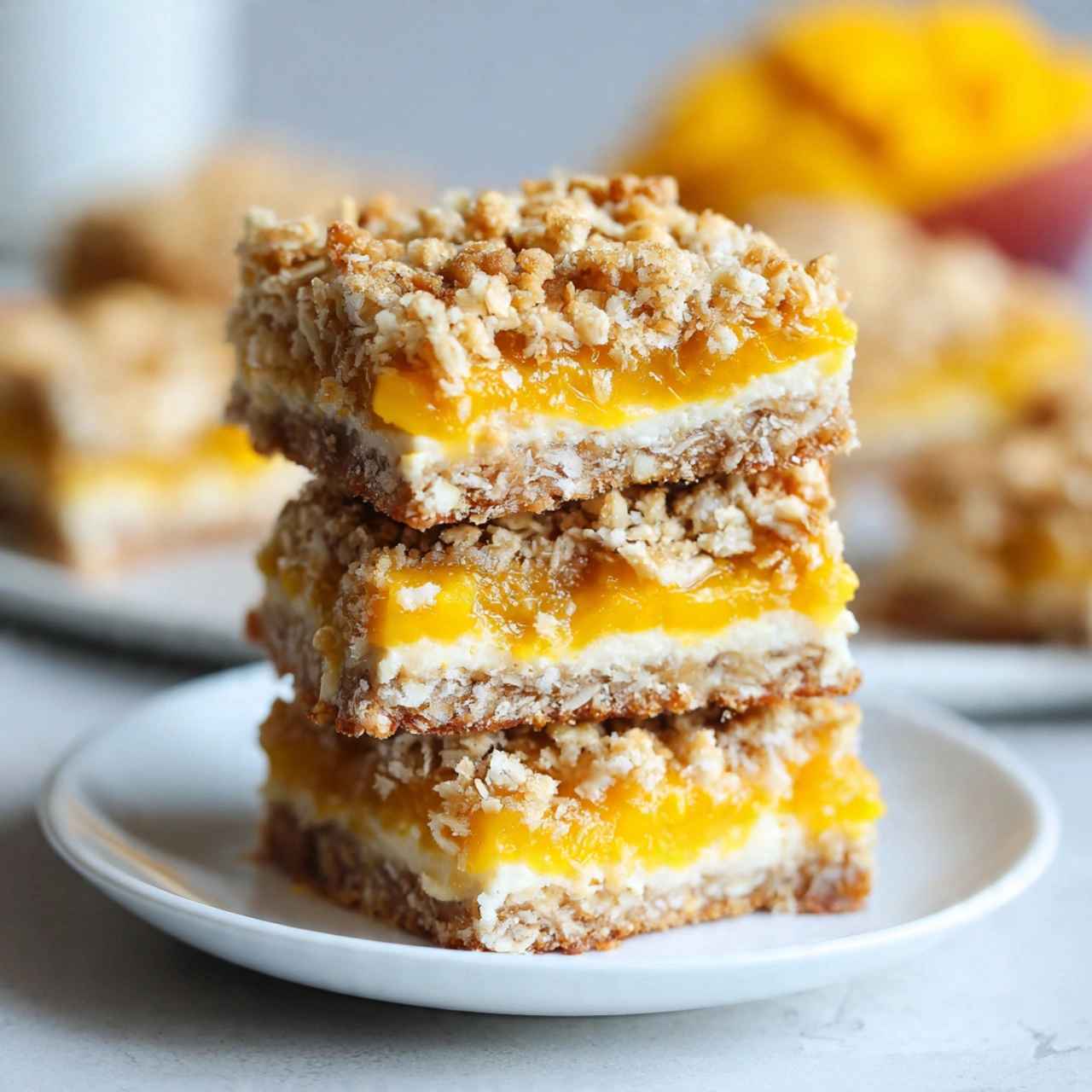
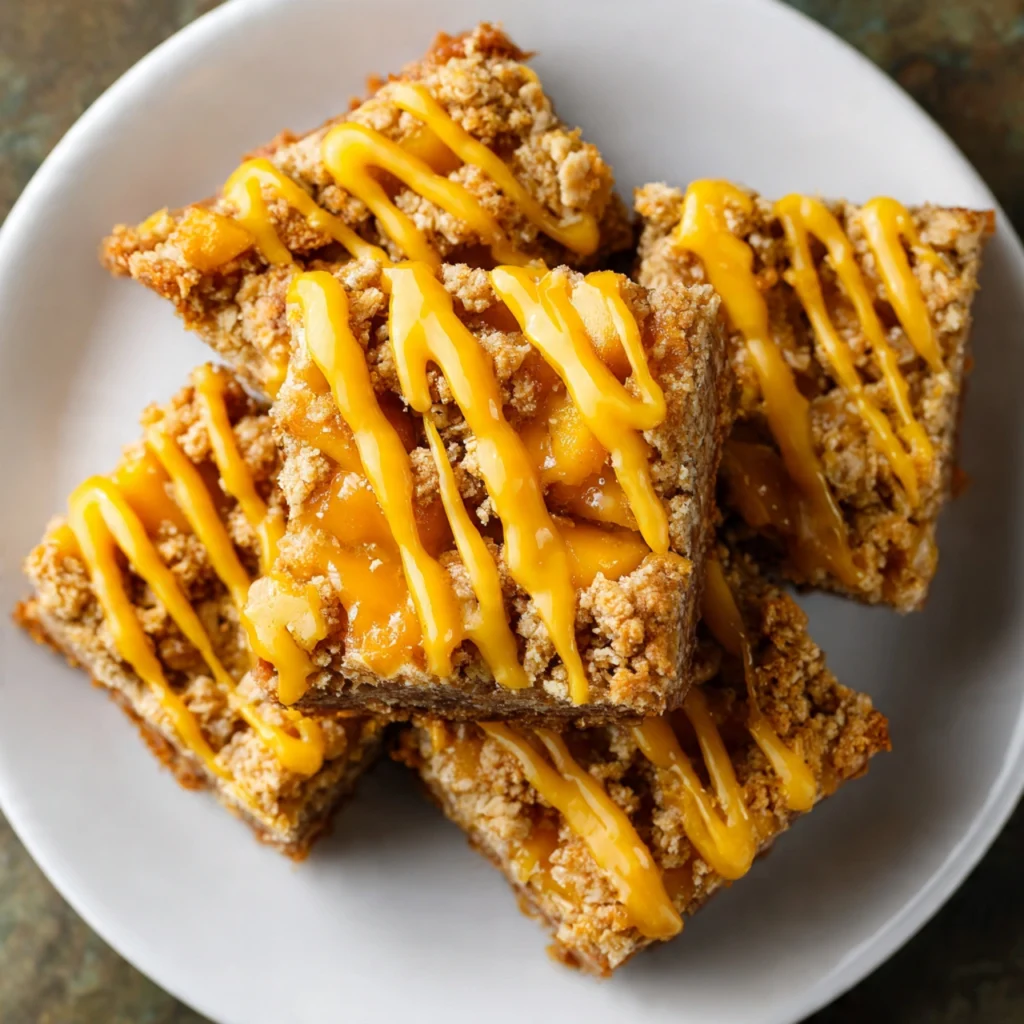
Mango Oatmeal Crumble Bars have become my absolute go-to recipe when I need something that straddles the line between wholesome snack and decadent dessert—and I’ve been baking for over twenty years. These bars capture everything I love about homemade baked goods: they’re simple enough for a weeknight yet impressive enough for company, they use real fruit that actually tastes like fruit, and they have that irresistible combination of buttery crumble and tender, jammy filling that makes it nearly impossible to eat just one piece.
I first stumbled upon the idea for these bars during a particularly abundant mango season when my local market had cases of champagne mangoes for a steal. I’d already made mango smoothies, mango salsa, and eaten fresh mango until I couldn’t look at another slice. That’s when inspiration struck—what if I treated mangoes the way I’d been treating apples, peaches, and berries in crumble bars for years? The first batch that came out of my oven exceeded every expectation, and this recipe has been refined through countless batches since then.
What makes these Mango Oatmeal Crumble Bars truly special is the way they showcase mango’s unique flavor—tropical, sweet, with subtle floral notes—while the oatmeal base provides earthy richness and satisfying texture.
Throughout this comprehensive guide, I’ll share everything I’ve learned from making these bars in different kitchens, with different mangoes, and for different occasions—from selecting the perfect mangoes to achieving that ideal crumble texture, from troubleshooting common issues to creating variations that keep these bars exciting season after season.
Why These Bars Work So Beautifully
Before diving into the recipe, let me explain the magic behind this combination. Mangoes provide natural sweetness and vibrant color, but they also contain pectin (especially when slightly underripe), which helps the filling set properly without becoming runny. Their bright, tropical flavor stands up beautifully to the buttery richness of the oat crust without being overwhelmed.
The oatmeal component isn’t just filler—it’s the structural foundation that holds everything together. Old-fashioned rolled oats create tender crumble with just enough tooth to provide contrast against the soft mango filling. The butter binds everything while providing that essential richness that makes these taste indulgent despite being made with whole grains and real fruit.
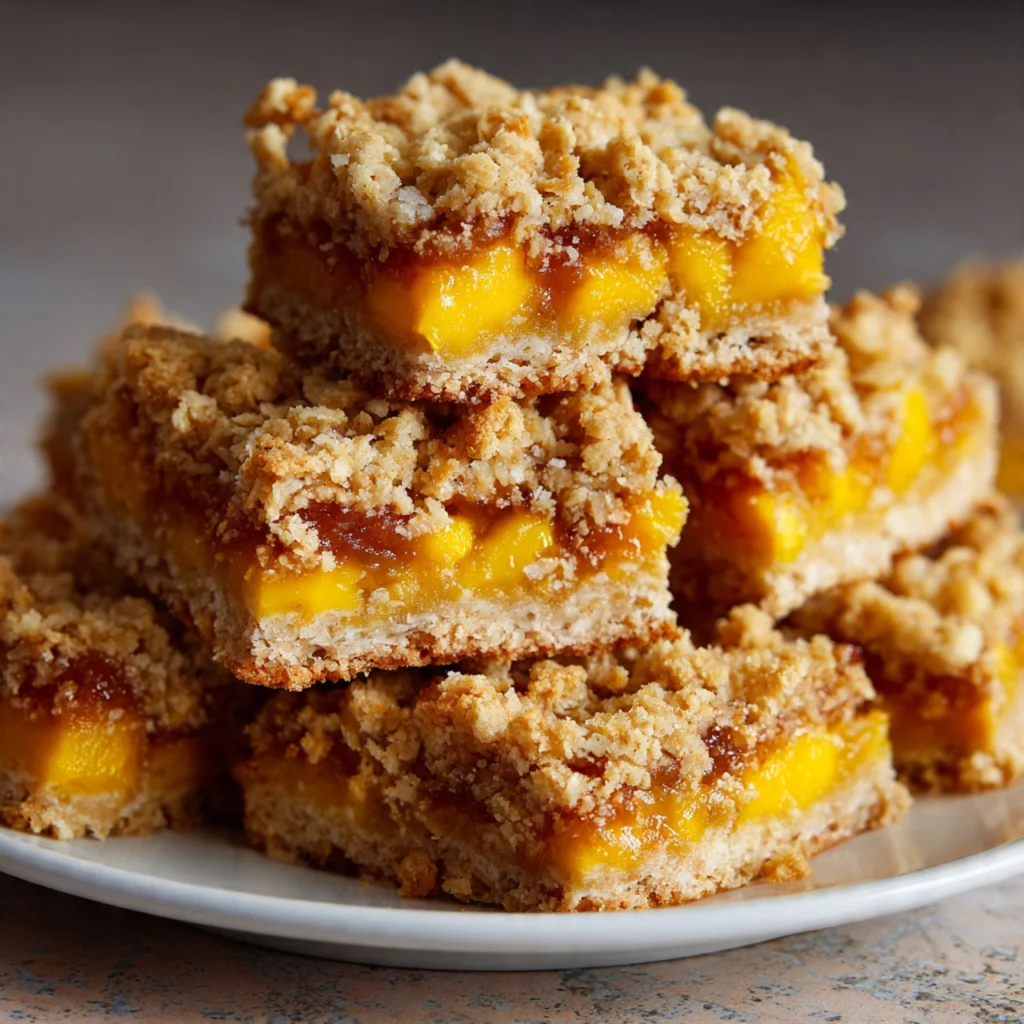
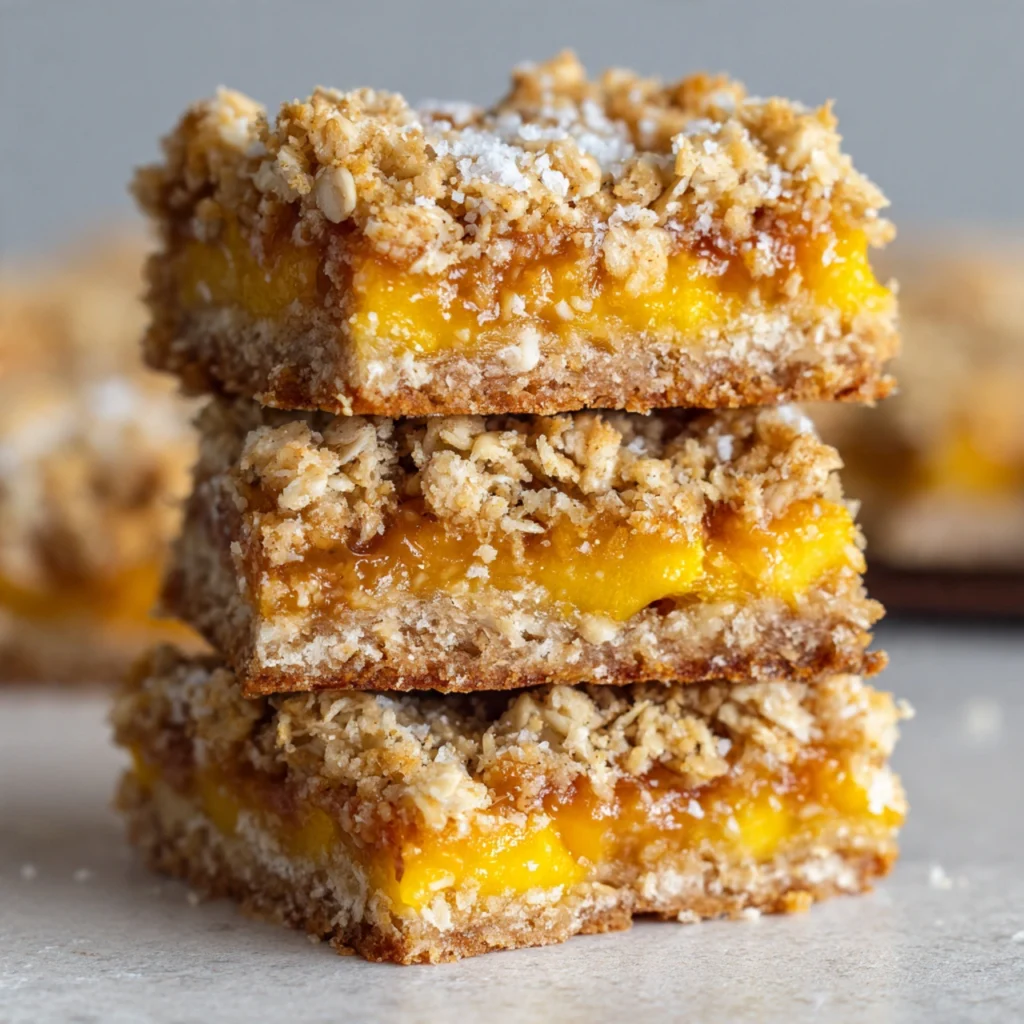
The genius of this recipe is that the same mixture forms both the bottom crust and the top crumble. This simplifies preparation dramatically while ensuring flavor consistency throughout. You’re essentially pressing two-thirds into the pan, spreading mango filling on top, then sprinkling the remaining third as crumble. It’s straightforward enough for beginning bakers yet delivers professional-looking results.
Ingredients: Building Your Perfect Mango Oatmeal Crumble Bars
Here’s everything you’ll need to create these delicious bars. I’ve organized ingredients by their function in the Mango Oatmeal Crumble Bars recipe:
For the Oatmeal Crumble (Crust and Topping):
- 2 cups old-fashioned rolled oats (not quick oats or steel-cut)
- 1½ cups all-purpose flour (or whole wheat pastry flour for heartier texture)
- ¾ cup packed light brown sugar (dark brown sugar works but has stronger molasses flavor)
- ½ teaspoon baking soda
- ½ teaspoon ground cinnamon (optional but adds warmth)
- ¼ teaspoon salt
- ¾ cup unsalted butter (1½ sticks, melted and slightly cooled)
- 1 teaspoon vanilla extract
For the Mango Filling:
- 3 cups fresh mango (diced small, about 3-4 medium mangoes)
- ⅓ cup granulated sugar (adjust based on mango sweetness)
- 2 tablespoons cornstarch or tapioca starch
- 2 tablespoons fresh lime juice (about 1 lime)
- 1 tablespoon water (if needed for consistency)
- Pinch of salt
Optional Flavor Enhancers:
- ½ teaspoon ground ginger (adds spicy warmth to filling)
- ¼ teaspoon cardamom (beautiful with mango)
- 1 teaspoon lime zest (brightens the mango flavor)
- 2 tablespoons shredded coconut (mixed into crumble for tropical vibes)
- ¼ cup chopped macadamia nuts (adds crunch to topping)
Step-by-Step Instructions: Crafting Perfect Bars
Follow these detailed steps for consistently excellent results:
Step 1: Preparation and Pan Setup
Preheat your oven to 350°F (175°C). This temperature is crucial—too hot and the edges burn before the center sets; too cool and the bars won’t develop proper texture.
Line a 9×9-inch baking pan with parchment paper, leaving overhang on two opposite sides. This creates “handles” that make lifting the bars out effortless once cooled. Alternatively, use an 8×8-inch pan for thicker bars (increase baking time by 5-7 minutes) or a 9×13-inch pan for thinner, crispier bars (decrease baking time by 5 minutes).
Pro tip: Lightly spray the parchment with cooking spray or brush with butter. This prevents sticking and ensures the bottom crust releases cleanly.
Step 2: Preparing the Mango Filling
Peel your mangoes and cut the flesh into small dice—roughly ¼ to ½ inch pieces. Larger chunks don’t break down sufficiently during baking, creating uneven texture. Smaller dice creates a more cohesive, jam-like filling.
In a medium saucepan, combine diced mango, sugar, cornstarch, lime juice, and salt. Stir well to coat the mango pieces evenly with cornstarch—this prevents clumping.
Cook over medium heat, stirring frequently, for 8-12 minutes. The mixture will release liquid, bubble vigorously, then thicken noticeably. You’re looking for a consistency similar to thick jam or pie filling—it should coat a spoon and mound slightly when dropped.
Critical signs it’s ready: The mixture should be translucent rather than opaque, thickened enough that you can draw a line through it on the spoon that holds for a second, and reduced by about one-third in volume.
Remove from heat and let cool while you prepare the crust. The filling continues thickening as it cools.
Step 3: Making the Oatmeal Crumble Base
In a large bowl, combine oats, flour, brown sugar, baking soda, cinnamon (if using), and salt. Whisk together thoroughly to distribute the baking soda and salt evenly—pockets of baking soda create metallic-tasting spots.
Pour melted butter and vanilla extract over the dry ingredients. Using a fork or your hands, mix until the mixture resembles coarse crumbs that clump together when squeezed. Every oat should be coated with butter and the mixture should hold together when pressed but still look crumbly.
Texture check: Grab a handful and squeeze—it should form a clump that holds its shape but breaks apart easily with gentle pressure. Too dry and it won’t form a cohesive crust; too wet and it becomes dense rather than crumbly.
Step 4: Assembling the Bars
Measure out roughly ⅔ of your oat mixture (about 3 cups). Reserve the remaining third for topping.
Press the larger portion firmly and evenly into your prepared pan. Use the bottom of a measuring cup or your fingers to create a compact, even layer that reaches into all corners. Pay special attention to edges and corners where gaps are most likely.
Important: Press firmly! A loosely packed crust crumbles when you cut the bars. You want it compact enough that it holds together as a cohesive layer.
Spread the cooled (or at least lukewarm) mango filling evenly over the crust, leaving a ¼-inch border around the edges. This prevents the filling from bubbling over and burning onto the pan edges.
Crumble the reserved oat mixture over the top, distributing it evenly. Don’t pack it down—you want loose, irregular crumbles that will bake into crispy nuggets. Leave some small gaps where filling peeks through; this creates attractive appearance and allows steam to escape.
Step 5: Baking to Golden Perfection
Bake for 35-45 minutes, rotating the pan halfway through for even browning. You’re looking for several signs of doneness:
- Edges are golden brown and pulling slightly away from pan sides
- Top crumbles are deeply golden and crispy-looking
- Mango filling is bubbling gently around the edges and through gaps in the crumble
- Center appears set rather than jiggly when you gently shake the pan
If the top is browning too quickly but the center isn’t set, tent loosely with foil for the remaining baking time.
Step 6: Cooling Completely
This step requires patience but it’s absolutely critical. Remove the pan from the oven and place it on a wire rack. Let it cool in the pan for at least 30 minutes, then use the parchment handles to lift the entire slab onto the wire rack to cool completely—this takes 1-2 hours.
Why complete cooling matters: The filling is molten when hot and needs time to set as it cools. Cutting too early results in messy, falling-apart bars with filling that runs everywhere. Fully cooled bars slice cleanly into neat squares.
Step 7: Cutting and Serving
Once completely cool, use a sharp knife to cut into 9, 12, or 16 squares depending on desired serving size. Wipe the knife clean between cuts for neat edges.
For extra-clean cuts, refrigerate the cooled bars for 30 minutes before slicing—the cold firms everything up beautifully.
Pro Tips for Perfect Mango Oatmeal Crumble Bars
After making these bars countless times, I’ve discovered specific techniques that elevate them from good to extraordinary:
Mango Selection and Preparation
Choosing the right mangoes: You want mangoes that are ripe but still slightly firm. Overripe, super-soft mangoes create a filling that’s too loose and watery. The perfect mango yields slightly to gentle pressure (like a ripe avocado) and smells fragrant at the stem end. Color varies by variety, so don’t judge ripeness by color alone.
Best varieties for baking: Champagne (Ataulfo) mangoes are my top choice—they’re less fibrous, intensely sweet, and have smaller pits, meaning more usable fruit per mango. Tommy Atkins mangoes (the large red-green ones) work fine but are more fibrous. Kent and Keitt mangoes are excellent—creamy and smooth with minimal fiber.
The ripening trick: If your mangoes are too firm, place them in a paper bag with an apple or banana for 1-2 days. The ethylene gas speeds ripening. Check daily to catch them at the perfect stage.
Frozen mango alternative: You can absolutely use frozen mango chunks! Thaw them completely, drain excess liquid, then proceed with the Mango Oatmeal Crumble Bars recipe. You may need to cook the filling slightly longer to evaporate the extra moisture. Frozen mango is actually more consistent in quality than off-season fresh mangoes.
Achieving Perfect Crumble Texture
Oat choice matters: Old-fashioned rolled oats are essential. Quick oats become mushy and paste-like during baking. Steel-cut oats remain too hard and crunchy. Rolled oats provide the ideal texture balance—tender but still with a bit of chew.
Butter temperature: Melted butter should be warm enough to pour but not scorching hot. If it’s too hot, it makes the mixture greasy and dense rather than crumbly. Let melted butter cool for 5 minutes before mixing with dry ingredients.
The pressing technique: When forming the bottom crust, press firmly with even pressure across the entire surface. I use the bottom of a flat measuring cup in a press-and-slide motion to create a compact, uniform layer. Pay extra attention to corners where thin spots create weak points.
Crumble distribution: For the top layer, break the mixture into various sizes—some pea-sized, some almond-sized. This creates textural variety and ensures some pieces get extra crispy while others provide tender pockets.
Mango Oatmeal Crumble Bars Filling Consistency Secrets
Cornstarch ratio: The 2 tablespoons of cornstarch per 3 cups of mango is carefully calibrated. Less and the filling is too runny; more and it becomes gummy. If your mangoes are exceptionally juicy, increase to 2½ tablespoons.
Cooking the filling properly: Don’t rush this step. Cooking concentrates the mango flavor and activates the cornstarch so it thickens properly. Undercooked filling stays thin and seeps into the crust. Overcooked filling becomes stiff and candy-like.
The lime juice secret: Lime juice isn’t just for flavor—the acidity balances mango’s sweetness and helps the filling set properly. Don’t skip it! Lemon juice works in a pinch but lacks that particular affinity with mango.
Cooling before assembly: Let the filling cool to at least lukewarm before spreading on the crust. Hot filling can melt the butter in the crust, creating a greasy bottom layer.
Mango Oatmeal Crumble Bars Baking and Cooling Wisdom
Oven positioning: Bake in the center of the oven for most even heat distribution. Too close to the top element and the crumble browns too fast; too close to the bottom and the crust can burn before the filling sets.
The foil tent technique: If your oven runs hot or the top is browning too quickly, create a loose foil tent over the pan for the last 10-15 minutes of baking. This allows the filling to finish cooking while preventing burnt topping.
The patience game: I know it’s tempting to cut into these bars while they’re still warm (they smell incredible!), but cooling completely is non-negotiable for clean slices. Warm bars are delicious but messy—save one corner piece for yourself to eat warm if you must!
Common Mistakes to Avoid For Mango Oatmeal Crumble Bars
Even this relatively straightforward Mango Oatmeal Crumble Bars recipe has potential pitfalls:
Mistake #1: Using Quick Oats or Instant Oatmeal
Quick oats are pre-steamed and cut thinner than rolled oats, so they absorb liquid differently and become mushy during baking. The bars end up dense and heavy rather than having that delightful crumbly texture. Always use old-fashioned rolled oats—they’re clearly labeled and available in every grocery store.
Mistake #2: Skipping the Parchment Paper
Trying to cut bars directly in the pan is frustrating and messy. Even with greased pans, the first pieces often stick and fall apart. The parchment paper sling technique (with overhang on two sides) lets you lift the entire slab out cleanly, making cutting and serving infinitely easier.
Mistake #3: Not Cooking the Filling Long Enough
Raw or undercooked filling releases too much liquid during baking, which seeps into the crust and makes the bars soggy. Cook until visibly thickened and reduced, with large bubbles forming. The mixture should coat a spoon and hold its shape rather than running off immediately.
Mistake #4: Pressing the Top Crumble
The top layer should be loosely crumbled, not pressed down. Pressing it creates a dense, hard crust rather than delicate, crispy nuggets. Simply distribute the crumble evenly and let it be—it’ll bind together naturally during baking.
Mistake #5: Cutting Too Soon
This is the most common mistake and the most disappointing. Hot or warm bars have liquid filling that hasn’t set. Cutting them creates a gooey mess that sticks to the knife and falls apart. Wait until completely cool—at least 2 hours at room temperature or 1 hour in the refrigerator.
Mistake #6: Overmixing the Crumble Base
Once you add melted butter to the dry ingredients, mix just until combined. Overmixing develops gluten in the flour, creating tough, dense bars instead of tender, crumbly ones. Mix until everything is moistened and clumps when squeezed, then stop.
Mistake #7: Using Overripe Mangoes
Super-soft, mushy mangoes contain too much moisture and break down into puree during cooking. This creates filling that’s too thin and runny. Use mangoes that are ripe but still have some firmness—they should yield to gentle pressure but not feel mushy.
Mistake #8: Uneven Crust Thickness
Thin spots in the bottom crust allow filling to seep through to the pan, while thick spots create heavy, doughy bites. Take time to press the mixture evenly across the entire pan bottom, using a measuring cup or your fingers to ensure consistent thickness.
Storage and Serving Suggestions
Proper storage keeps these bars fresh and delicious for days:
Mango Oatmeal Crumble Bars Room Temperature Storage
Fully cooled Mango Oatmeal Crumble Bars can be stored at room temperature for 2-3 days in an airtight container. Place parchment paper between layers to prevent sticking. Keep them in a cool, dry spot away from direct sunlight.
Room temperature storage works best in moderate climates. In hot, humid conditions, the bars can become soft and sticky—refrigeration is better in these cases.
Refrigerator Storage
For longer storage or in warm weather, refrigerate the bars in an airtight container for up to 1 week. The cold firms up the filling and makes them easier to handle, though the crumble topping loses some crispness.
Let refrigerated bars sit at room temperature for 15-20 minutes before serving to allow the flavors to bloom and the texture to soften slightly.
Freezer Storage
These bars freeze beautifully! Wrap individual bars in plastic wrap, then place in a freezer-safe container or bag. Freeze for up to 3 months.
To serve frozen bars, thaw overnight in the refrigerator or at room temperature for 1-2 hours. You can also microwave individual bars for 20-30 seconds for a warm treat, though the crumble softens slightly.
Serving Suggestions
Classic presentation: Serve at room temperature or slightly warm, cut into neat squares on a pretty plate.
A la mode: Top warm bars with vanilla ice cream or frozen yogurt for an elevated dessert experience.
With yogurt: Serve at breakfast or brunch alongside Greek yogurt and fresh fruit for a wholesome meal.
Whipped cream: A dollop of lightly sweetened whipped cream adds elegant richness for special occasions.
Tropical theme: Garnish with fresh mango slices, toasted coconut flakes, and a lime wedge for a beautiful tropical presentation.
Coffee pairing: These bars are exceptional with hot coffee or cold brew—the slight bitterness of coffee complements the sweet mango filling perfectly.
Frequently Asked Questions (FAQ)
1. Can I use other fruits instead of mango?
Absolutely! This Mango Oatmeal Crumble Bars recipe is incredibly versatile. Excellent substitutions include: fresh or frozen peaches (use the same measurements, no need to pre-cook), fresh or frozen mixed berries (add 1 extra tablespoon cornstarch as berries are juicier), fresh or frozen apricots (slightly increase sugar as they’re more tart), fresh or frozen pineapple (dice small and cook until softened), or diced strawberries and rhubarb. You can also combine fruits—mango with pineapple, mango with peach, or mango with berries all work wonderfully. The key is maintaining similar total fruit quantity (3 cups) and adjusting cornstarch based on the fruit’s water content. Juicier fruits need more thickener; drier fruits need less.
2. Can I make these bars gluten-free?
Yes! Simply replace the all-purpose flour with your favorite gluten-free flour blend (I recommend ones containing xanthan gum for best texture). Bob’s Red Mill 1-to-1 Baking Flour and King Arthur Measure for Measure flour both work beautifully with no other adjustments needed. Ensure your oats are certified gluten-free as well—oats are naturally gluten-free but often processed in facilities that handle wheat. The texture will be slightly more crumbly than the traditional version but still delicious and structurally sound.
3. How do I prevent the bottom crust from getting soggy?
Several techniques prevent soggy bottoms: First, cook the mango filling until properly thickened—it should be jam-like, not watery. Second, let the filling cool to at least lukewarm before spreading on the crust; hot filling creates steam that softens the crust. Third, press the bottom crust firmly to create a compact barrier. Fourth, bake until the edges of the bars are golden and pulling slightly from the pan—this ensures the bottom crust is fully cooked. Finally, cool completely before cutting, which allows everything to set properly. If you’re in an especially humid climate, you can pre-bake the crust for 10 minutes before adding filling and topping, though this isn’t usually necessary.
4. Can I make these dairy-free or vegan?
Yes! Replace the butter with coconut oil (melted and slightly cooled) or vegan butter stick. Coconut oil creates slightly more crumbly texture with subtle coconut flavor—delicious with mango! Vegan butter (like Earth Balance) behaves almost identically to regular butter. Use refined coconut oil if you don’t want coconut flavor, unrefined if you enjoy it. No other adjustments are necessary. The bars turn out beautifully and are naturally egg-free and dairy-free (when using coconut oil or vegan butter), making them suitable for vegans.
5. Why is my filling too runny even after baking?
Several factors cause runny filling: First, the filling may not have been cooked long enough before baking—it needs to be visibly thickened and reduced. Second, your mangoes may have been exceptionally juicy; increase cornstarch to 3 tablespoons next time. Third, you may have cut the bars before they were completely cool—the filling continues setting as it cools. Fourth, insufficient baking time prevents the filling from setting properly in the oven; look for gentle bubbling around edges. Finally, expired or ineffective cornstarch can fail to thicken properly; cornstarch doesn’t truly expire but loses potency over time if exposed to moisture.
6. Can I double this Mango Oatmeal Crumble Bars recipe?
Yes! Double all ingredients and use a 9×13-inch pan. The baking time will be similar (35-45 minutes), but check for doneness using the same visual cues—golden edges, bubbling filling, set center. The bars will be slightly thicker than when made in a 9×9 pan, so they may need an extra 5 minutes of baking. You can also make two separate 9×9 pans if you prefer, which gives you more flexibility for freezing one batch or serving different occasions.
7. What’s the best way to cut clean, neat squares?
For perfectly neat squares: First, cool completely (cannot emphasize this enough). Second, refrigerate for 30 minutes before cutting—cold bars slice more cleanly. Third, use a large, sharp chef’s knife rather than a serrated knife. Fourth, wipe the knife clean with a damp towel between each cut to prevent filling buildup. Fifth, use a gentle sawing motion rather than pressing straight down, which compresses the bars. Sixth, cut in straight lines rather than trying to free each piece individually—slice the entire slab into strips one direction, then cut perpendicular strips to create squares. These techniques produce bakery-worthy results.
8. Can I prepare components ahead of time?
Absolutely! You can prepare the mango filling up to 2 days in advance; store covered in the refrigerator and bring to room temperature before assembling. You can mix the dry ingredients for the crumble up to 1 week ahead; store in an airtight container and add melted butter when ready to bake. However, I don’t recommend assembling the bars completely and then refrigerating before baking, as the crust can become too firm and won’t bake properly. For best results, prepare components separately, then assemble and bake when ready. You can also freeze baked and cooled bars (as mentioned in storage section) for ultimate make-ahead convenience.
Nutrition Information (Mango Oatmeal Crumble Bars)
Based on cutting the 9×9-inch pan into 12 bars:
Serving Size: 1 bar Servings Per Recipe: 12
- Calories: 245
- Total Fat: 11g
- Saturated Fat: 6.5g
- Trans Fat: 0g
- Cholesterol: 28mg
- Sodium: 95mg
- Total Carbohydrates: 35g
- Dietary Fiber**: 2g
- Sugars**: 19g
- Added Sugars: 15g
- Protein: 3g
- Vitamin A: 420 IU (8% DV)
- Vitamin C: 18mg (20% DV)
- Calcium: 25mg (2% DV)
- Iron: 1.1mg (6% DV)
- Potassium: 145mg (3% DV)
Nutritional Highlights:
While these are certainly a treat, they offer more nutrition than many desserts. The oats provide whole grain fiber and complex carbohydrates. Mangoes contribute vitamin A (important for eye health and immune function) and vitamin C (supports immune system and collagen production). The bars also provide small amounts of B vitamins from the oats and various minerals. They’re relatively moderate in calories for a dessert bar—similar to two cookies but more satisfying due to the fiber content.
Final Thoughts: Your New Signature Mango Oatmeal Crumble Bars Recipe
Mastering these Mango Oatmeal Crumble Bars means having a reliable, crowd-pleasing recipe that works for virtually any occasion—casual weeknight desserts, potluck contributions, brunch spreads, gift boxes, bake sales, or elegant dinner parties. What I love most is how they elevate humble ingredients into something that feels special and tastes indulgent without requiring advanced techniques or exotic ingredients.
Over the years, these bars have become one of my most-requested Mango Oatmeal Crumble Bars recipes. Friends ask me to bring them to gatherings. Family members request them for birthdays. Neighbors appear at my door when they smell them baking. There’s something universally appealing about the combination of buttery crumble and sweet fruit filling—it’s comfort food that also feels bright and fresh.
The journey from that first experimental batch to this refined recipe has taught me that the best baking isn’t about complexity—it’s about understanding your ingredients, respecting technique, and making small adjustments that create big differences in the final result. These bars prove that simple can be spectacular when done thoughtfully.
I encourage you to make this Mango Oatmeal Crumble Bars recipe your own foundation. Start with my tested formula, then explore. Maybe you’ll discover that adding cardamom creates your perfect version, or that combining mango with passion fruit takes it somewhere magical. Perhaps you’ll develop your own signature crumble variation or find the ideal sweetness level for your palate.
So grab those mangoes (fresh or frozen), pull out your baking pan, and create your first or your fiftieth batch of Mango Oatmeal Crumble Bars. May your crumble be golden, your filling be jammy, and your bars disappear far too quickly!
PrintMango Oatmeal Crumble Bars: The Perfect Balance of Fruity and Wholesome
Buttery oatmeal crumble sandwiches a sweet, jammy mango filling in these irresistible bars. Perfect for dessert, snacking, or brunch, they showcase fresh mango flavor in every bite. Easy to make and even easier to devour!
- Prep Time: 20 minutes
- Cook Time: 45 minutes (including filling)
- Total Time: 3 hours (including cooling time)
- Yield: 12 bars (9×9-inch pan) or 16 bars (for smaller portions)
- Category: Dessert, Snack, Breakfast Bar, Baked Goods
- Method: Baking
- Cuisine: American
- Diet: Vegetarian
Ingredients
For the Oatmeal Crumble:
- 2 cups old-fashioned rolled oats
- 1½ cups all-purpose flour
- ¾ cup packed light brown sugar
- ½ teaspoon baking soda
- ½ teaspoon ground cinnamon
- ¼ teaspoon salt
- ¾ cup unsalted butter, melted
- 1 teaspoon vanilla extract
For the Mango Filling:
- 3 cups diced fresh mango (3-4 mangoes)
- ⅓ cup granulated sugar
- 2 tablespoons cornstarch
- 2 tablespoons fresh lime juice
- Pinch of salt
Instructions
- Preheat and prepare: Preheat oven to 350°F. Line a 9×9-inch baking pan with parchment paper, leaving overhang on two sides.
- Make filling: In a medium saucepan, combine diced mango, sugar, cornstarch, lime juice, and salt. Cook over medium heat, stirring frequently, for 8-12 minutes until thickened and jammy. Remove from heat and let cool.
- Mix crumble base: In a large bowl, whisk together oats, flour, brown sugar, baking soda, cinnamon, and salt. Pour melted butter and vanilla over dry ingredients and mix until crumbly and clumps form when squeezed.
- Form bottom crust: Press ⅔ of the oat mixture firmly and evenly into the prepared pan, creating a compact layer.
- Assemble: Spread cooled mango filling over crust, leaving a ¼-inch border. Crumble remaining oat mixture over the top—don’t press down.
- Bake: Bake 35-45 minutes until edges are golden, filling is bubbling, and top is crispy and golden brown.
- Cool completely: Let cool in pan for 30 minutes, then lift out using parchment handles. Cool completely on a wire rack (1-2 hours) before cutting into squares.
Notes
- Old-fashioned rolled oats are essential—don’t substitute quick oats
- Slightly firm mangoes work better than overripe ones
- Cook filling until properly thickened for clean-slicing bars
- Complete cooling is crucial for neat cuts
- Frozen mango works well if thawed and drained
- Substitute other fruits like peaches, berries, or apricots
- For gluten-free version, use gluten-free flour blend and certified GF oats