Introduction
Mango Lassi is India’s most beloved cold beverage—a luscious, creamy yogurt-based drink where sweet ripe mangoes blend with tangy yogurt, aromatic cardamom, and just a touch of sugar to create something that’s simultaneously refreshing and indulgent, cooling and satisfying, familiar yet exotic. This isn’t just a smoothie with an Indian name; it’s a centuries-old traditional drink that’s been perfected over generations, served in homes and restaurants across the Indian subcontinent as the ultimate accompaniment to spicy meals.
My first authentic Mango Lassi experience happened at a small family-run Indian restaurant in Jackson Heights, Queens—New York’s Little India. I’d ordered it casually, expecting something similar to the mango smoothies I’d had countless times before. When it arrived in a tall steel glass with condensation running down the sides.
Intrigued by this revelation, I asked the restaurant owner about the recipe. She smiled knowingly—the kind of smile that says “I’m glad you appreciate this”—and explained that authentic Mango Lassi is deceptively simple but relies entirely on quality ingredients and proper proportions.
Since that enlightening afternoon, I’ve made hundreds of batches of Mango Lassi, experimenting with different mango varieties, yogurt types, and spice combinations. I’ve served it at dinner parties where guests who’d never tried Indian cuisine were immediately smitten.
What makes this Mango Lassi exceptional is its perfect balance. The yogurt provides probiotics, protein, and a tangy base. The mango contributes natural sweetness, gorgeous color, and tropical flavor. The cardamom adds an aromatic complexity that elevates it from ordinary to extraordinary.
Whether you’re familiar with Indian cuisine or trying lassi for the first time, this recipe will show you exactly how to create an authentic, restaurant-quality Mango Lassi in just five minutes using ingredients you can find at any grocery store.
Ingredients
For Authentic Mango Lassi (2 servings):
- 1 cup ripe mango chunks (fresh or frozen, about 150g) – Alphonso, Kesar, or Ataulfo varieties are ideal
- 1 cup plain full-fat yogurt (preferably Greek yogurt or Indian dahi) – provides signature tangy creaminess
- ½ cup whole milk (cold) – adjusts consistency to perfect drinkable texture
- 3-4 tablespoons sugar (adjust to taste based on mango sweetness) – or honey for natural sweetness
- 4-5 ice cubes (optional, omit if using frozen mango) – creates refreshing cold temperature
- ¼ teaspoon ground cardamom (or seeds from 2-3 cardamom pods, ground) – essential aromatic spice
- Pinch of saffron threads (optional but traditional) – adds luxury and subtle flavor
- 1 tablespoon rose water (optional, for special occasions) – traditional aromatic addition
Traditional Variations:
Sweet Lassi (Plain):
- Omit mango
- Increase sugar to ¼ cup
- Add extra cardamom and rose water
- Garnish with crushed pistachios
Salted Lassi (Savory):
- Omit mango and sugar
- Add ½ teaspoon salt
- Add ¼ teaspoon roasted cumin powder
- Add pinch of black salt (kala namak)
- Garnish with fresh mint
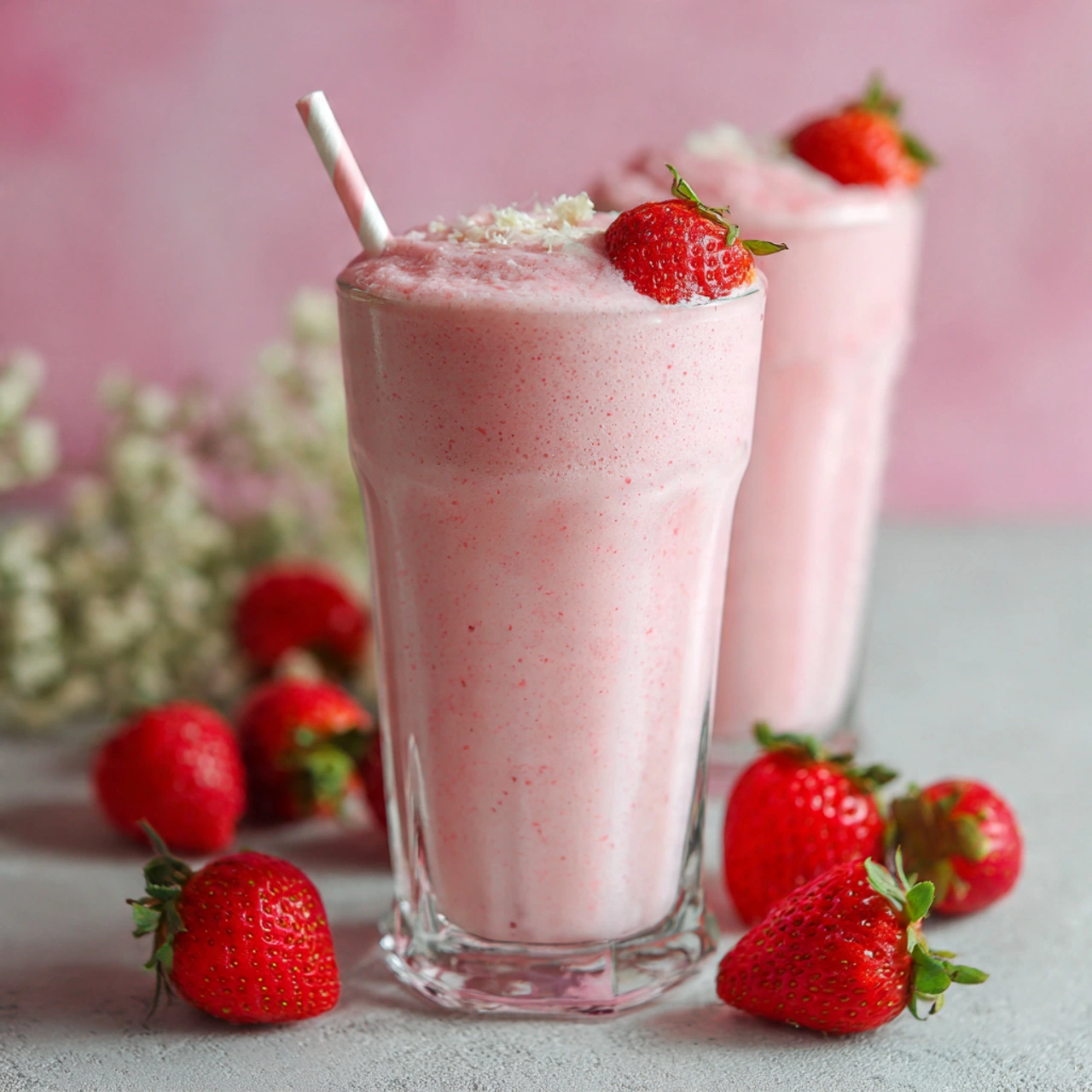
Strawberry Lassi:
- Replace mango with 1 cup fresh strawberries
- Increase sugar slightly
- Omit cardamom, add vanilla
Banana Lassi:
- Replace mango with 1 large ripe banana
- Reduce sugar
- Add pinch of cinnamon instead of cardamom
Best Ingredient Choices:
Mangoes:
- Alphonso (Hapus) – the gold standard, intensely sweet and aromatic (April-June)
- Kesar – saffron-hued, sweet, aromatic (May-July)
- Ataulfo (Honey Mango) – buttery, smooth, less fibrous
- Frozen mango – convenient year-round option, use Alphonso if available
Yogurt:
- Full-fat plain yogurt (recommended) – creates authentic creamy texture
- Greek yogurt – thicker, tangier, more protein
- Indian dahi – traditional choice, perfect tang and consistency
- Icelandic yogurt (skyr) – very thick, high protein
- Avoid flavored or sweetened yogurts
Milk:
- Whole milk (recommended) – creates proper creamy consistency
- 2% milk – works but slightly less rich
- Almond milk – dairy-free but thinner texture
- Coconut milk (from carton) – dairy-free with tropical notes
- Oat milk – dairy-free, naturally sweet
Essential Spices:
Cardamom (elaichi):
- Use freshly ground for best flavor
- Green cardamom is traditional
- Pre-ground works but has less aroma
- Don’t skip—it’s essential to authentic flavor
Optional aromatics:
- Saffron – luxury addition for special occasions
- Rose water – traditional Persian influence
- Kewra water – pandanus essence, very traditional
- Crushed pistachios – traditional garnish
Step-by-Step Instructions
Step 1: Prepare Your Mangoes (2 minutes)
If you’re using fresh mangoes, peel and cube them using the scoring technique described in previous recipes. For Mango Lassi, you want the ripest, sweetest, most aromatic mangoes possible—this is where Alphonso mangoes truly shine. The flesh should be deep orange-yellow, extremely fragrant, and so soft it’s almost custard-like.
If you’re using frozen mango chunks, let them sit at room temperature for 3-4 minutes to thaw slightly. They should still be quite cold but not rock-hard, which makes blending easier and creates better texture.
Quality check: Taste a piece of mango. It should be intensely sweet with no tartness or fibrous texture. If it’s not sweet enough, you’ll need to add the full amount of sugar. If it’s perfectly ripe and sweet, you can reduce sugar significantly.
Step 2: Prepare Cardamom (1 minute)
If you’re using whole cardamom pods (highly recommended for best flavor), gently crush 2-3 green cardamom pods with the flat side of a knife or in a mortar and pestle. Remove the outer green husks and collect the tiny black seeds inside. Grind these seeds into a fine powder using a spice grinder, mortar and pestle, or the back of a spoon.
Freshly ground cardamom has an incredibly aromatic, almost floral fragrance that’s far superior to pre-ground. However, if you only have pre-ground cardamom, use ¼ teaspoon and it will still be delicious.
Cardamom note: This spice is what transforms ordinary mango yogurt blend into authentic Mango Lassi. Don’t skip it!
Step 3: Blend All Ingredients (1-2 minutes)
Add your yogurt to the blender first—this creates a creamy base that helps other ingredients blend smoothly. Add the mango chunks on top of the yogurt, followed by the cold milk, sugar, ground cardamom, and ice cubes (if using).
If you’re adding optional saffron, crush the threads between your fingers and sprinkle them in. For rose water, add it now as well.
Start blending on low speed for 10-15 seconds to combine the ingredients initially. Then increase to medium-high speed and blend for 30-45 seconds until the mixture is completely smooth, creamy, and uniform with no visible mango chunks or yogurt streaks.
Blending milestone: The Mango Lassi should have a beautiful, uniform peachy-orange color (lighter than a mango smoothie due to the yogurt), and the texture should be thick, creamy, and smooth—similar to a thin milkshake or thick drinkable yogurt.
Step 4: Check Consistency and Adjust (30 seconds)
Pour a small amount into a glass and evaluate the texture. Authentic Mango Lassi should be thick enough to coat the back of a spoon but still easily drinkable through a straw. It should be thicker than a smoothie but thinner than a milkshake—a perfect middle ground.
Too thick? Add milk, 2 tablespoons at a time, and blend briefly after each addition until you achieve the ideal pourable but substantial consistency.
Too thin? Add more yogurt (2-3 tablespoons) or a few more mango chunks and blend again. The yogurt will thicken it while maintaining the tangy flavor.
Not sweet enough? Add sugar or honey, 1 tablespoon at a time, blending briefly and tasting after each addition. Remember that sweetness perception is dulled by cold temperature, so it will taste slightly sweeter at drinking temperature.
Not tangy enough? Add another tablespoon or two of yogurt and blend.
Needs more aromatic depth? Add a tiny pinch more cardamom, but be careful—too much cardamom can be overpowering and medicinal.
Step 5: Serve Traditionally (1 minute)
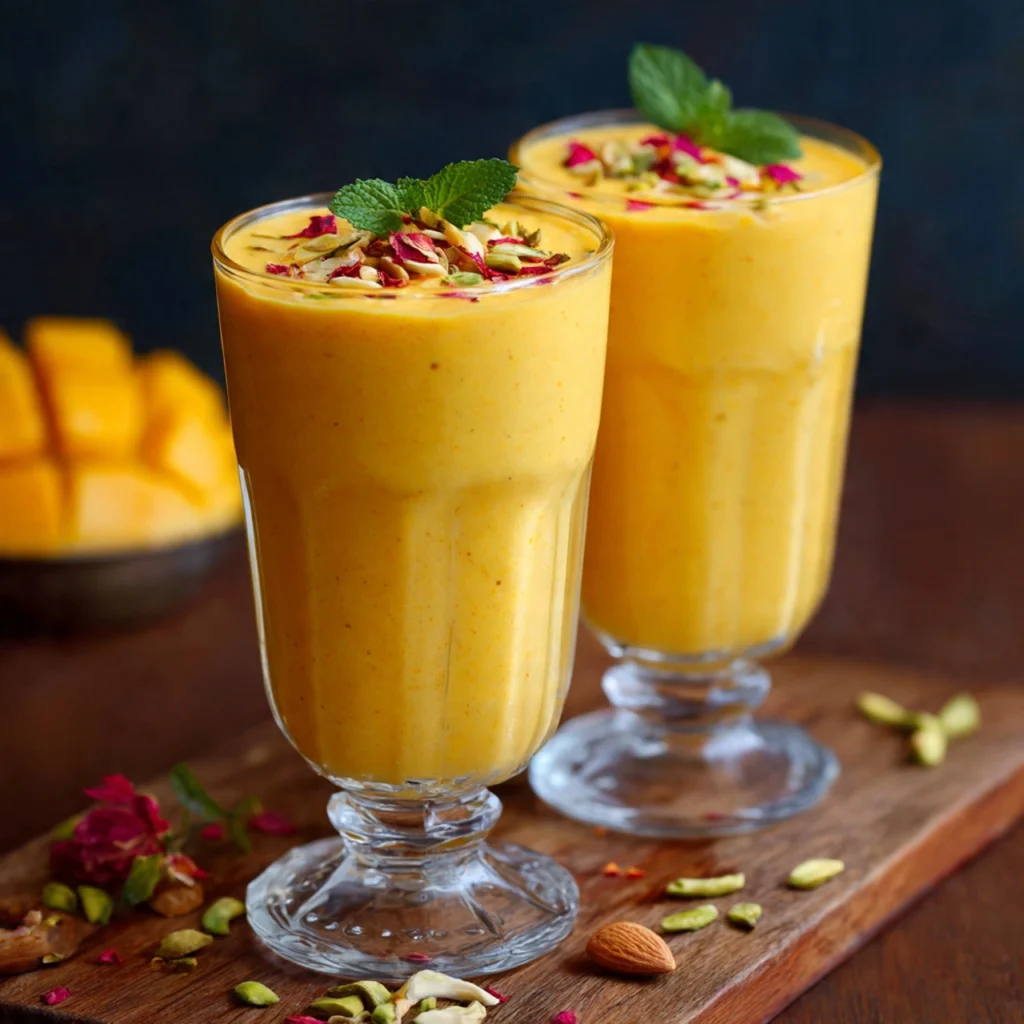
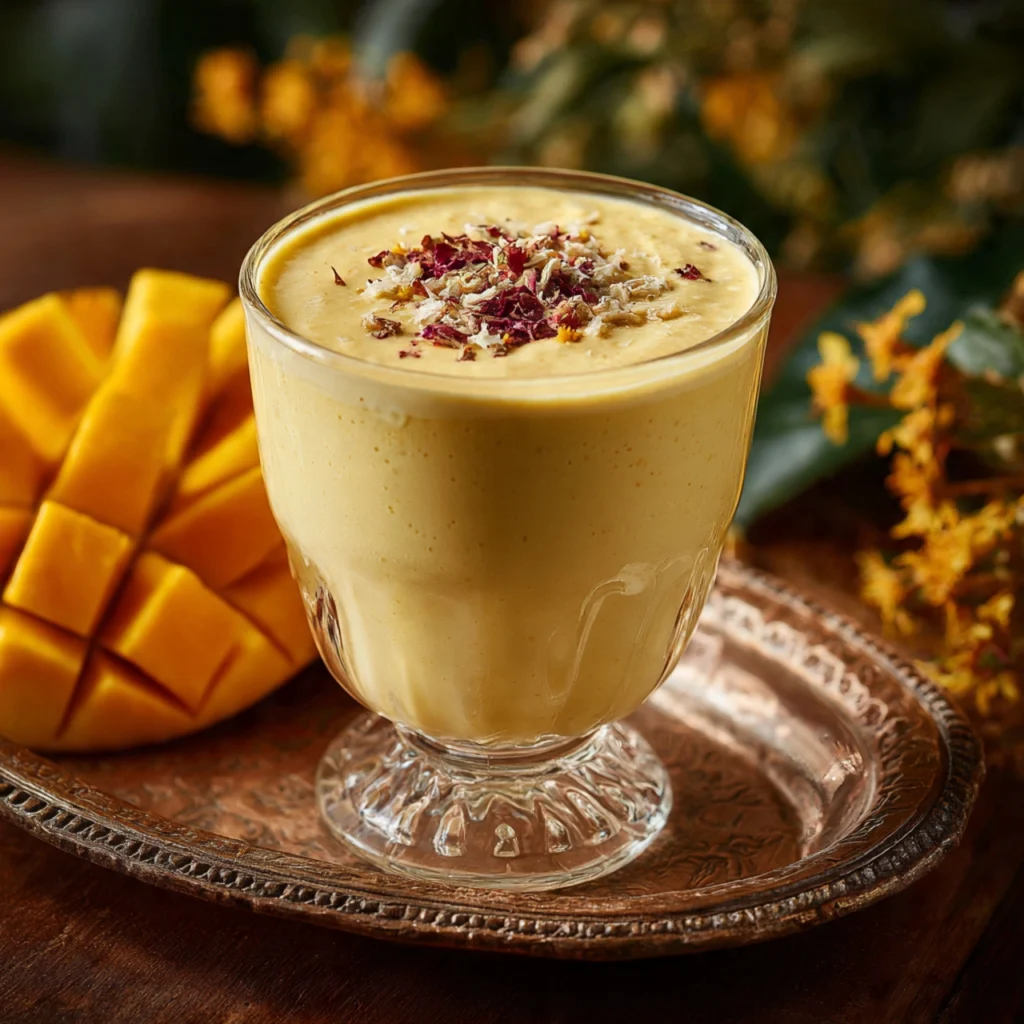
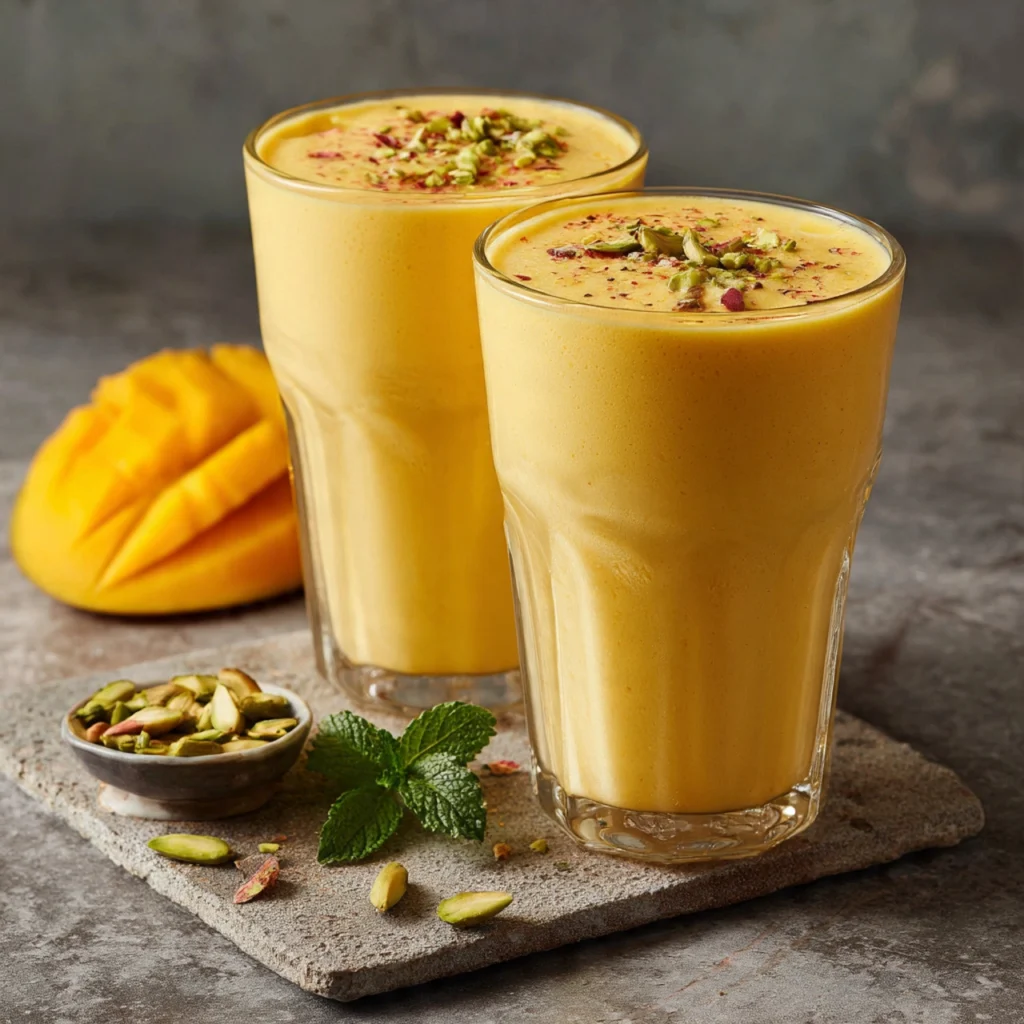
Pour your Mango Lassi into tall glasses, traditionally steel tumblers if you have them (they keep drinks colder longer), or clear glasses so you can admire that gorgeous peachy-orange color.
For traditional presentation, you can create a beautiful garnish: sprinkle a tiny pinch of ground cardamom on top, add a few strands of saffron threads floating on the surface, scatter some finely chopped pistachios, or place a small piece of mango on the rim.
Serve immediately while perfectly cold and fresh. Mango Lassi is typically enjoyed cold but not icy—refreshing and cooling rather than freezing. In India, it’s often served alongside spicy meals where its cooling properties help balance heat, but it’s equally delicious on its own as a refreshing beverage or breakfast drink.
Pro Tips for the Perfect Mango Lassi
The Yogurt is Everything
The quality and type of yogurt you use dramatically impacts the final result. Full-fat plain yogurt creates the most authentic, creamy Mango Lassi with proper body and richness. Low-fat or non-fat yogurt produces a thinner, less satisfying drink that lacks the signature creaminess.
Best yogurt choices:
- Indian dahi – if you can find it at an Indian grocery store, this is ideal
- Full-fat Greek yogurt – creates extra-thick, creamy lassi
- Full-fat regular yogurt – traditional consistency
- Homemade yogurt – best flavor if you make your own
Yogurt tips:
- Use cold yogurt straight from the refrigerator
- Check the expiration date—fresh yogurt tastes better
- Stir yogurt before measuring to ensure even consistency
- Avoid yogurts with added gums, stabilizers, or gelatin if possible
Mango Variety and Ripeness Matter
Not all mangoes create equally delicious lassi. The variety and ripeness dramatically affect flavor:
Best mango varieties for lassi:
- Alphonso (Hapus) – the undisputed king, worth seeking out during season
- Kesar – aromatic, sweet, traditional choice
- Ataulfo (Honey Mango) – widely available, excellent flavor
- Dasheri – North Indian favorite, very sweet
Ripeness indicators:
- Strong fruity, sweet aroma at the stem end
- Yields gently to pressure like a ripe avocado
- Skin may wrinkle slightly near the stem
- No green color (though some varieties stay greenish when ripe)
Off-season solution: Use high-quality frozen Alphonso mango pulp (available at Indian grocery stores) or frozen Ataulfo mango chunks from mainstream stores. Frozen mango actually works beautifully in lassi and eliminates prep work.
The Cardamom is Non-Negotiable
Cardamom is what distinguishes authentic Mango Lassi from a generic mango yogurt drink. This aromatic spice has been used in Indian beverages for thousands of years, providing a subtle, almost floral complexity that elevates the entire drink.
Cardamom best practices:
- Use freshly ground for most aromatic flavor
- Green cardamom (not white or black) is traditional
- Start with less (⅛ teaspoon) and add more if desired
- Crush and grind just before using for maximum aroma
- Pre-ground works but use very fresh for best results
Finding the right amount: Cardamom should be present but subtle—you should taste it but not be overwhelmed by it. If someone drinking your lassi can’t quite identify what makes it special, you’ve used the perfect amount.
Sweetness Balance
Unlike smoothies that rely entirely on fruit sweetness, Mango Lassi traditionally includes added sugar to balance the yogurt’s tartness and create the proper flavor profile. However, the amount varies based on several factors:
Sugar guidelines:
- Very ripe Alphonso mangoes: 2 tablespoons sugar may be sufficient
- Less sweet mango varieties: 3-4 tablespoons needed
- Greek yogurt (more tart): May need extra sugar
- Personal preference: Adjust to taste
Natural alternatives to white sugar:
- Honey – adds floral notes, use slightly less
- Jaggery (gur) – traditional Indian sweetener, caramel notes
- Coconut sugar – subtle caramel flavor
- Maple syrup – works but changes flavor profile
- Dates – blend 2-3 pitted Medjool dates for whole food sweetness
My approach: Start with 2 tablespoons sugar, blend, taste, and adjust. It’s easier to add more than to fix an overly sweet lassi.
Achieving Perfect Consistency
The ideal Mango Lassi consistency is thick enough to feel substantial and creamy, but thin enough to drink easily without a spoon. Think of it as halfway between a smoothie and a milkshake.
Consistency control:
- For thicker lassi: Use less milk (⅓ cup), more yogurt (1¼ cups), or Greek yogurt
- For thinner, more drinkable lassi: Increase milk to ¾ cup
- For smoothie-bowl thickness: Use just ¼ cup milk
Troubleshooting consistency:
- Too thick and gloppy? Add milk or water gradually
- Too thin and watery? Add yogurt or reduce liquid next time
- Separating? Blend longer for better emulsification
Temperature and Serving
Mango Lassi should be served cold but not icy-frozen. The ideal temperature is around 40-45°F (4-7°C)—cold enough to be refreshing but not so cold that it numbs your taste buds and masks the delicate flavors.
Temperature tips:
- Use cold ingredients straight from refrigerator
- Add ice only if ingredients aren’t cold enough
- Chill glasses in freezer for 10 minutes before serving
- Don’t over-ice or you’ll dilute the flavors
- Serve immediately for best taste and texture
Traditional serving:
- Steel tumblers (keep drinks colder)
- Tall glasses to show off the color
- Wide straws for easy drinking
- Small bowls of crushed pistachios on the side
Common Mistakes to Avoid
Mistake #1: Using Low-Fat or Non-Fat Yogurt
The most common mistake is trying to make Mango Lassi “healthier” by using low-fat or non-fat yogurt. This creates a thin, watery drink that lacks the signature creamy richness that makes lassi special. The fat in full-fat yogurt is essential for proper texture and mouthfeel.
The fix: Always use full-fat yogurt. If you must reduce calories, use a smaller portion size rather than compromising the recipe with low-fat ingredients that produce inferior results.
Mistake #2: Skipping or Skimping on Cardamom
Some people omit cardamom thinking it’s optional or unimportant. Without it, you just have a mango yogurt drink—perfectly fine, but not authentic Mango Lassi. The cardamom is what provides that distinctive aromatic quality.
The fix: Always include cardamom. Start with ¼ teaspoon if you’re new to the spice, but don’t skip it entirely. Use freshly ground if possible for maximum flavor impact.
Mistake #3: Over-Blending
Blending for too long (over 2 minutes continuously) can incorporate too much air, creating a frothy, almost foamy texture rather than the smooth, creamy consistency you want. Over-blending can also warm up the lassi slightly from friction.
The fix: Blend just until smooth and uniform—typically 30-60 seconds total. Stop as soon as you see no visible chunks or streaks. The texture should be smooth and creamy, not frothy or bubbly.
Mistake #4: Making it Too Sweet
While Mango Lassi should be pleasantly sweet, making it overly sweet masks the yogurt’s tang and the subtle spice notes. It should taste balanced—sweet, tangy, and aromatic in harmony.
The fix: Start with less sugar than you think you need. You can always add more after tasting, but you can’t remove it once it’s in. Taste your mango first—very ripe fruit needs minimal added sugar.
Mistake #5: Using Underripe or Bland Mangoes
Underripe mangoes are fibrous, tart, and sometimes have an unpleasant turpentine-like flavor near the skin. They create lassi that’s mediocre at best, requiring excessive sugar and lacking that distinctive mango aroma.
The fix: Only use perfectly ripe, aromatic mangoes. They should smell sweet and tropical, yield gently to pressure, and taste candy-sweet. If you can’t find good fresh mangoes, use high-quality frozen mango or canned Alphonso mango pulp from Indian grocery stores.
Mistake #6: Making the Consistency Too Thin
Adding too much milk or water creates a thin, juice-like beverage rather than the substantial, creamy drink lassi should be. It should have body and substance.
The fix: Start with the minimum amount of milk (½ cup) and add more only if needed. The lassi should coat the back of a spoon. If it’s already too thin, add more yogurt to thicken it.
Mistake #7: Not Tasting and Adjusting
Every batch of Mango Lassi is slightly different based on mango sweetness, yogurt tanginess, and personal preference. Not tasting before serving means you might miss the opportunity to perfect the balance.
The fix: Always taste before serving and adjust sweetness, consistency, or spice level as needed. This 30-second step ensures every batch is delicious.
Storage and Serving Suggestions
Immediate Serving (Best Option)
Mango Lassi is absolutely best when served immediately after blending, within 5-10 minutes of preparation. The texture is at its smoothest, the temperature is perfectly cold, the flavors are brightest, and the presentation is most appealing. Pour into chilled glasses and enjoy right away.
Refrigerator Storage (Same Day)
If you need to make Mango Lassi a few hours ahead, it can be refrigerated for up to 6-8 hours maximum. Pour into an airtight container or individual glasses covered with plastic wrap. Store in the coldest part of your refrigerator.
Before serving, the lassi will have separated slightly—this is normal. Simply stir vigorously with a spoon or pour back into the blender and pulse a few times to recombine. The texture won’t be quite as smooth as fresh, but it’s still tasty.
Separation prevention: Lassi separates less than smoothies because yogurt contains natural emulsifiers, but some separation is still normal over time.
Not Recommended for Long-Term Storage
Unlike some smoothies, Mango Lassi doesn’t freeze well due to the yogurt base. Freezing causes the yogurt to separate and develop a grainy texture when thawed. The consistency becomes watery and unappealing.
Exception: You can freeze lassi in popsicle molds for a different application—these make delicious frozen treats. Pour lassi into popsicle molds, freeze for 4-6 hours, and enjoy as a cooling dessert. The texture change works in this format.
Traditional Serving Suggestions
In India, Mango Lassi is served in several traditional contexts:
With spicy meals:
- Pairs perfectly with North Indian curries
- Cools the palate between bites of spicy food
- Traditional accompaniment to tandoori dishes
- Serves as a refreshing contrast to rich, oily foods
As a breakfast beverage:
- Provides probiotics, protein, and vitamins
- Substantial enough to be a light breakfast on its own
- Often served with parathas or dosas
As an afternoon refreshment:
- Popular during hot summer months
- Cooling and energizing
- Social beverage served to guests
For special occasions:
- Made with expensive Alphonso mangoes
- Garnished elaborately with saffron and nuts
- Served in beautiful glasses or traditional steel tumblers
Pairing Suggestions
Mango Lassi pairs beautifully with:
Indian dishes:
- Butter chicken or chicken tikka masala
- Palak paneer or other rich, creamy curries
- Biryani (balances the spices)
- Samosas and pakoras (cooling contrast to fried food)
- Tandoori meats
Other cuisines:
- Thai curries (similar cooling effect)
- Mexican food (alternative to horchata)
- Middle Eastern mezze
- Spicy Korean or Chinese dishes
Sweet pairings:
- Serves as dessert itself
- Accompaniment to mild desserts like rice pudding
- Afternoon snack with cookies or biscuits
Garnishing Like a Pro
Traditional garnishes add visual appeal and extra flavor:
- Ground cardamom – light dusting on top
- Saffron threads – 3-4 threads floating on surface
- Chopped pistachios – traditional and beautiful
- Sliced almonds – toasted for extra flavor
- Fresh mint leaves – refreshing and aromatic
- Rose petals – for special occasions (ensure they’re edible)
- Mango slice – on the rim of the glass
- Coconut flakes – toasted for tropical touch
Pro garnishing tip: Keep garnishes minimal and elegant rather than overdoing it. A few strands of saffron and a light dusting of cardamom is more sophisticated than a chaotic mix of everything.
FAQ (Frequently Asked Questions)
1. What’s the difference between Mango Lassi and a mango smoothie?
While both are blended mango drinks, they’re distinctly different beverages. Mango Lassi is a traditional Indian yogurt-based drink that must contain yogurt as the base, includes milk for consistency, is flavored with cardamom, traditionally contains added sugar to balance yogurt’s tartness, and has a specific thick-but-drinkable consistency that’s creamier than a smoothie. It’s also typically less icy-cold and more refreshing than freezing. In contrast, mango smoothies are Western-style beverages that may or may not include yogurt, often use juice or other liquids instead of milk, rarely include traditional spices like cardamom, rely more on fruit sweetness without added sugar, and are usually thicker and more frozen. The biggest difference is cultural contexe.
2. Can I make Mango Lassi dairy-free or vegan?
Yes, but the result will be different from traditional lassi since dairy yogurt is foundational to authentic flavor and texture. For the best dairy-free version: use full-fat coconut yogurt (the thickest, creamiest variety you can find), replace milk with coconut milk from a carton or canned coconut milk diluted with water, use coconut cream for extra richness, and add a squeeze of lemon juice to mimic yogurt’s tanginess. Cashew yogurt also works well and has a more neutral flavor than coconut. For sweetener, use maple syrup or agave since honey isn’t vegan. The cardamom remains essential. While dairy-free versions can be delicious, they won’t have quite the same tangy complexity as traditional lassi made with dairy yogurt.
3. Why does my Mango Lassi taste bland even with ripe mangoes?
Blandness usually results from insufficient seasoning or imbalanced proportions. First, check your cardamom—this is essential for authentic flavor and shouldn’t be skipped or reduced too much. If you used pre-ground cardamom that’s old, it may have lost its aroma; try using freshly ground from whole pods. Second, assess your yogurt’s tanginess—if using mild yogurt, the drink will lack depth; try using Greek yogurt or adding a squeeze of lemon juice. Third, evaluate sweetness—lassi needs some added sugar to balance the yogurt’s tartness and bring out the mango flavor; too little sugar can make it taste flat. Fourth, check salt—a tiny pinch enhances all flavors without tasting salty.
4. How do I make savory (salted) lassi?
Savory lassi is equally traditional and popular in India, especially in Punjab. To make salted lassi (namkeen lassi): use 1 cup full-fat yogurt, ¾ cup cold water or buttermilk, ½ teaspoon salt, ¼ teaspoon roasted cumin powder, pinch of black salt for authentic flavor, and fresh mint leaves. Omit the mango, sugar, and cardamom entirely. Blend yogurt, water, salt, and cumin until frothy. Serve cold, garnished with fresh mint and a sprinkle of cumin. This savory version is incredibly refreshing, aids digestion, and pairs perfectly with heavy, rich foods. Some variations include: adding fresh cilantro or curry leaves during blending, including green chilies for spicy lassi, adding a pinch of chaat masala for complex flavor, or incorporating grated ginger for digestive benefits.
5. Can I use canned or frozen mango pulp instead of fresh mangoes?
Absolutely! In fact, canned Alphonso mango pulp (available at Indian grocery stores) is a secret weapon for making exceptional Mango Lassi year-round, especially outside of mango season. Alphonso mango pulp is made from the finest mangoes harvested at peak ripeness, and many Indians prefer it for lassi because of its consistent quality and intense flavor. Use about ¾ to 1 cup of canned pulp to replace 1 cup of fresh mango chunks—taste and adjust as pulp is often sweeter and more concentrated than fresh fruit. Brands like Ratna, Swad, or Deep make excellent pulp. For frozen mango, use 1 cup of frozen chunks (preferably Alphonso or Ataulfo variety), let them thaw slightly for 5 minutes, then blend as usual.
6. Why is my Mango Lassi too thick or too thin?
Consistency issues come from liquid proportions. Too thick : You’ve used too much yogurt or too little milk, or you used Greek yogurt which is much thicker than regular yogurt. To fix, add milk or water 2 tablespoons at a time, blending briefly after each addition until you reach ideal drinkable consistency. Remember that lassi should be thicker than a smoothie but still easily pourable and drinkable. Too thin : You’ve added too much milk or water, or used very low-fat yogurt which lacks substance. To fix, add more yogurt or more mango chunks and blend again. The yogurt will thicken it while adding beneficial tang. For next time, start with less liquid—you can always add more.
7. How long does Mango Lassi last in the refrigerator?
Mango Lassi is best consumed immediately but can be refrigerated for up to 6-8 hours maximum with acceptable results. Beyond this timeframe, quality deteriorates significantly—the yogurt separates from the liquid, the mango flavor becomes less vibrant, the texture becomes grainy, and the bright color may dull slightly. If you must store it, pour into an airtight container filled to the top, seal tightly, and refrigerate in the coldest part of your fridge. Before serving stored lassi, shake or stir vigorously to recombine separated ingredients, or pour back into the blender and pulse a few times. Be aware that the texture will never be quite as smooth as freshly made.
Nutrition Information (Approximate Values)
Serving Size: 1 cup (about 12 oz)
Servings Per Recipe: 2
Calories: 220-260 kcal
Total Fat: 6g
- Saturated Fat: 3.5g
- Trans Fat: 0g
Cholesterol: 20mg
Sodium: 90mg
Total Carbohydrates: 38g
- Dietary Fiber: 2g
- Sugars: 34g (includes natural sugars from mango and lactose from yogurt)
- Added Sugars: 12g (from added sugar; less if using very ripe mangoes)
Protein: 7g
Vitamin D: 0.5mcg (3% DV)
Calcium: 230mg (18% DV)
Iron: 0.3mg (2% DV)
Potassium: 380mg (8% DV)
Vitamin A: 95mcg (11% DV)
Vitamin C: 40mg (44% DV)
Vitamin B12: 0.7mcg (29% DV)
Additional Micronutrients:
- Good source of probiotics (from yogurt, supports digestive and immune health)
- Good source of protein (from yogurt)
- Good source of calcium (bone health)
- Good source of Vitamin C (immune support, from mango)
- Contains Vitamin A (vision health, immune function, from mango)
- Provides Vitamin B12 (energy, nerve function, from dairy)
- Contains manganese (from mango, metabolism support)
Notes on Nutrition:
- Values based on full-fat yogurt, whole milk, and 3 tablespoons sugar
- Using Greek yogurt increases protein to 12-15g per serving
- Using low-fat dairy reduces calories by 60-80 and fat by 5-6g
- Reducing sugar to 2 tablespoons reduces added sugars to 8g
- Natural sugars from mango and lactose from dairy are not “added sugars”
- Lassi provides beneficial probiotics that support gut health
- The combination of protein, fat, and carbs creates sustained energy
- Naturally gluten-free
- Suitable for vegetarian diets
Final Thoughts
This Mango Lassi represents centuries of culinary wisdom distilled into a single, perfect beverage. What I love most about this recipe is how it proves that the best dishes often come from the simplest combinations executed with care and respect for tradition. You don’t need exotic ingredients, complicated techniques, or expensive equipment—just good yogurt, ripe mangoes, aromatic cardamom.
Over the years of making and serving this lassi, I’ve watched it become a bridge between cultures. Friends who’d never tried Indian cuisine found themselves enchanted by their first sip. Family members who claimed to dislike yogurt drinks discovered they loved lassi’s unique balance of sweet, tangy, and aromatic.
What makes Mango Lassi truly special isn’t just its delicious flavor, though it is genuinely delicious. It’s the way it cools and refreshes on hot days, the way it soothes your palate between bites of spicy curry, the way it provides probiotics and protein in a form that feels like a treat rather than a health obligation.
I encourage you to make this recipe during peak mango season using the ripest, most aromatic Alphonso or Ataulfo mangoes you can find. Experience how the fresh fruit transforms an already excellent beverage into something truly transcendent.
Don’t be afraid to adjust the recipe to your preferences once you understand the fundamentals. Some people prefer their lassi sweeter, others more tangy. Some love prominent cardamom flavor, others prefer it subtle.
Most importantly, don’t save this recipe for special occasions or Indian-themed dinner parties. Mango Lassi deserves to become part of your regular routine—a cooling breakfast beverage, an afternoon refreshment, a healthy dessert alternative, or simply a delicious reminder that the best pleasures in life are often the simplest.
Blend with respect for tradition, serve with pride, and savor every creamy, aromatic, perfectly balanced sip!
PrintMango Lassi: Authentic Indian Recipe in 5 Minutes (6 Ingredients)
Mango Lassi is India’s most beloved beverage—a creamy, refreshing yogurt-based drink where sweet ripe mangoes blend with tangy yogurt, aromatic cardamom, and just a touch of sugar. This authentic recipe creates restaurant-quality lassi in just 5 minutes, delivering the perfect balance of sweet, tangy, and aromatic flavors that make this centuries-old traditional drink so special. Thick, creamy, and absolutely delicious, it’s perfect as a cooling accompaniment to spicy Indian meals, a probiotic-rich breakfast beverage, or a refreshing afternoon treat. The secret is using full-fat yogurt, ripe aromatic mangoes, and freshly ground cardamom.
- Prep Time: 5 minutes
- Cook Time: 0 minutes
- Total Time: 5 minutes
- Yield: 2 servings (about 12 oz each)
- Category: Beverage, Drink, Smoothie, Breakfast, Indian Cuisine
- Method: Blending
- Cuisine: Indian, South Asian, North Indian
- Diet: Vegetarian
Ingredients
- 1 cup ripe mango chunks (fresh or frozen, about 150g)
- 1 cup plain full-fat yogurt (preferably Greek yogurt or Indian dahi)
- ½ cup whole milk (cold)
- 3-4 tablespoons sugar (adjust to taste based on mango sweetness)
- 4-5 ice cubes (optional, omit if using frozen mango)
- ¼ teaspoon ground cardamom (freshly ground from pods preferred)
- Pinch of saffron threads (optional but traditional)
- 1 tablespoon rose water (optional, for special occasions)
Garnish Options:
- Ground cardamom (light dusting)
- Saffron threads (3-4 strands)
- Chopped pistachios
- Fresh mint leaves
Instructions
- Prepare ingredients: If using fresh mango, peel and cube. If using frozen, let sit for 3-4 minutes to soften slightly. If using whole cardamom pods, crush 2-3 pods, remove seeds, and grind into powder. Use cold yogurt and milk straight from refrigerator.
- Blend: Add yogurt to blender first, then mango chunks, milk, sugar, ground cardamom, ice (if using), and optional saffron/rose water. Blend on low for 10-15 seconds to combine, then increase to medium-high and blend for 30-45 seconds until completely smooth and creamy with no visible chunks.
- Check consistency: Pour a small amount into a glass. The lassi should be thick enough to coat the back of a spoon but still easily drinkable. If too thick, add milk 2 tablespoons at a time. If too thin, add more yogurt.
- Taste and adjust: Sample the lassi. Add more sugar if needed (1 tablespoon at a time), or more cardamom for stronger aromatic flavor (just a pinch at a time—it’s potent).
- Serve immediately: Pour into chilled glasses. Garnish with a light dusting of cardamom, a few saffron threads, or chopped pistachios. Serve cold with wide straws.
Notes
- Yogurt is key: Must use full-fat yogurt for authentic creamy texture. Low-fat creates thin, watery lassi.
- Cardamom is essential: This distinguishes authentic lassi from mango yogurt drinks. Don’t skip it!
- Mango ripeness: Use the ripest, most aromatic mangoes possible. Alphonso is the gold standard.
- Sweetness: Start with 2 tablespoons sugar and adjust after tasting. Very ripe mangoes need less.
- Consistency: Should be thick but drinkable—between smoothie and milkshake consistency.
- Best fresh: Lassi is best served immediately. Can refrigerate 6-8 hours but texture declines.
- Frozen mango works great: Use frozen Alphonso or Ataulfo mango chunks for year-round lassi.
- Authentic touch: Use freshly ground cardamom from whole pods for best aroma.