Introduction: Why Loaded Smashed Potatoes Will Ruin Regular Potatoes for You
Loaded Smashed Potatoes have ruined me for every other potato recipe—and I’m not sorry. The first time I made them at home, I instantly understood the hype: crispy, golden edges with fluffy, creamy insides. Pressing down on a boiled baby potato and watching it transform in the oven is pure culinary magic.
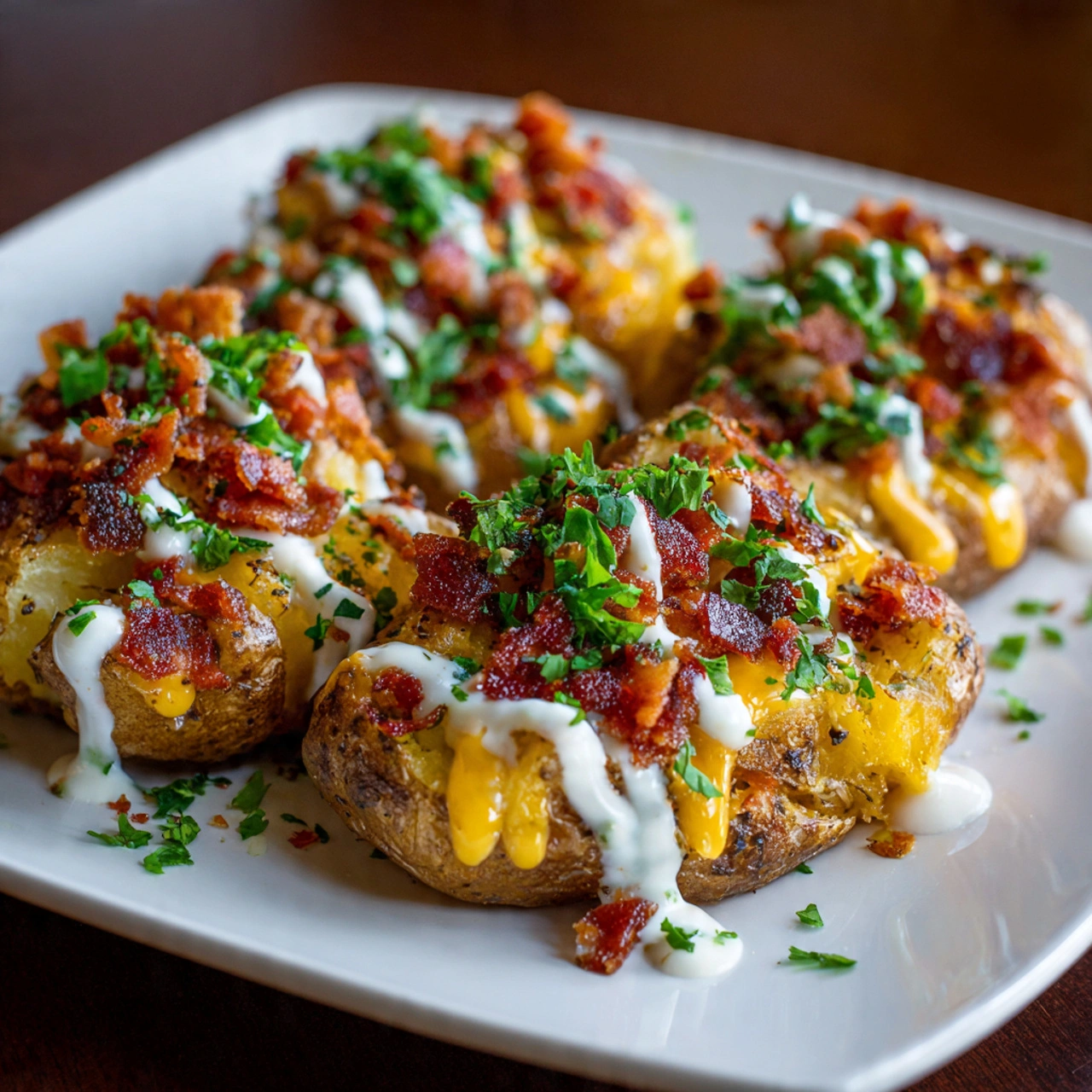
The secret is in the texture. Smashing creates irregular edges that turn perfectly crispy while the inside stays soft. Topped with melted cheese, crispy bacon, sour cream, and fresh chives, these potatoes become irresistible.
Perfect for any occasion. I’ve served them at family dinners, holiday gatherings, and game-day parties—and they disappear fast. Even picky eaters, like my teenage son, prefer these over regular fries or baked potatoes.
Simple ingredients, impressive results. Baby potatoes, olive oil, salt, cheese, bacon, and sour cream are all you need. They look fancy but are easy to make, making you seem like a culinary pro without extra effort.
Versatile and customizable. Serve them as a side dish, appetizer, breakfast, or light meal. Switch up the cheese, add different toppings, or make them spicy—there’s no limit to how you can enjoy them.
Ready to learn the secrets to achieving restaurant-quality Loaded Smashed Potatoes with maximum crispiness and minimum fuss?
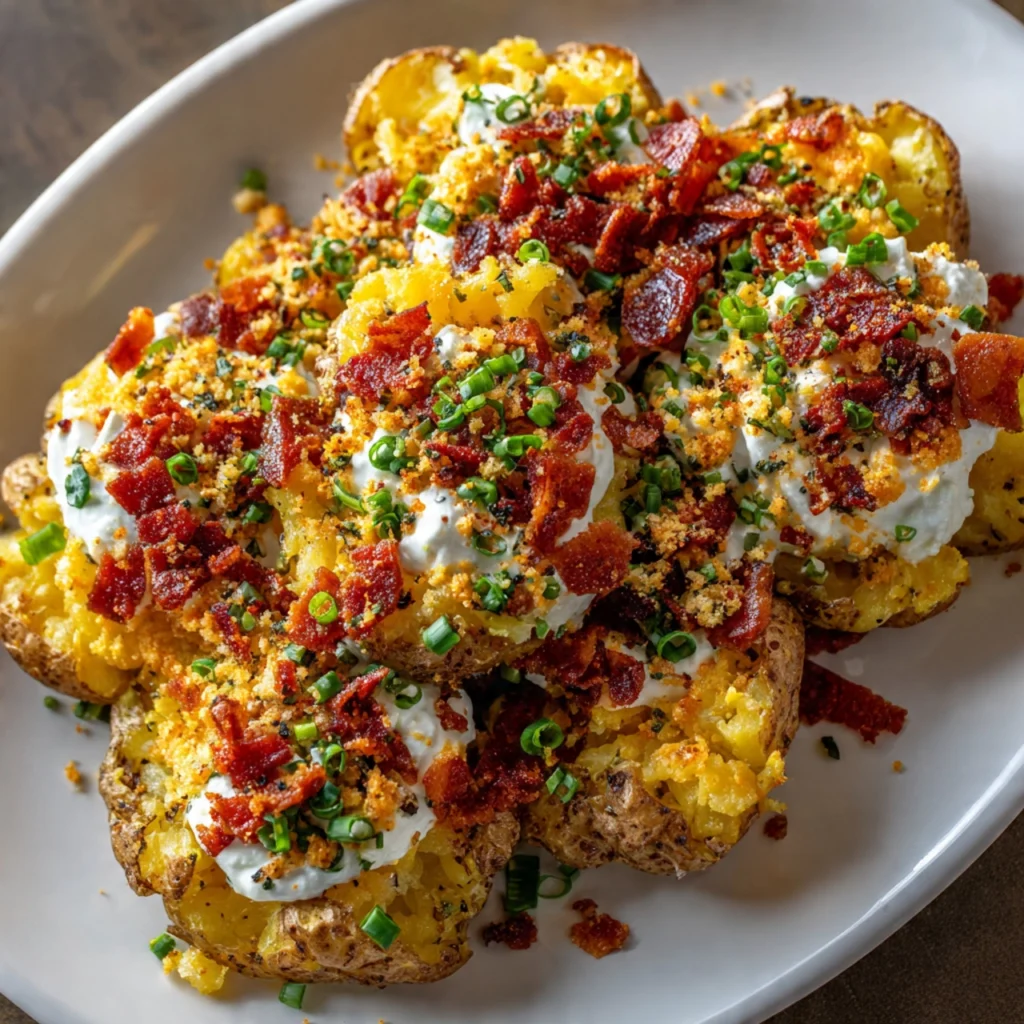
Ingredients: What You’ll Need for Perfect Loaded Smashed Potatoes
For the Potatoes
- 2 pounds baby potatoes (Yukon Gold or red potatoes) – About 16-20 small potatoes
- 3 tablespoons olive oil – For crisping (can substitute melted butter)
- 2 teaspoons kosher salt – For boiling water
- 1 teaspoon garlic powder – Savory depth
- 1 teaspoon onion powder – Aromatic sweetness
- ½ teaspoon smoked paprika – Subtle smokiness and color
- ½ teaspoon black pepper – Gentle heat
- 2 tablespoons melted butter – For brushing before final bake
For the Loaded Toppings
- 1½ cups shredded sharp cheddar cheese (150g) – Classic choice
- 8 slices bacon, cooked crispy and crumbled – Essential loaded topping
- ½ cup sour cream (120ml) – Cool, tangy contrast
- ¼ cup sliced green onions or fresh chives – Fresh, bright finish
- Salt and pepper – To taste
Optional Add-Ons (Choose Your Favorites)
- Ranch dressing – Instead of or in addition to sour cream
- Jalapeño slices – For heat lovers
- Crumbled blue cheese – Bold flavor alternative
- Caramelized onions – Sweet and savory
- Sautéed mushrooms – Earthy richness
- Diced tomatoes – Fresh element
- Pulled pork or brisket – Turn it into a meal
- Buffalo sauce – Spicy twist
Equipment Needed
- Large pot for boiling
- Baking sheet (rimmed)
- Parchment paper or silicone mat
- Potato masher, glass bottom, or measuring cup
- Pastry brush
- Tongs or spatula
Step-by-Step Instructions: Creating Perfectly Loaded Smashed Potatoes
Step 1: Boil the Potatoes (20-25 minutes)
Choose baby potatoes that are roughly the same size—about 1½ to 2 inches in diameter—so they cook evenly. Scrub them well under cold water to remove any dirt, but leave the skins on. The skins are essential for creating those crispy edges we’re after.
Place the potatoes in a large pot and cover with cold water by about 2 inches. Add 2 teaspoons of kosher salt to the water. Starting with cold water ensures the potatoes cook evenly from the outside in. Bring to a boil over high heat, then reduce to a steady simmer.
Cook for 15-20 minutes until the potatoes are fork-tender—a knife or fork should slide in easily with no resistance. The exact time depends on potato size, so start checking at 15 minutes. You want them fully cooked through but not falling apart. Overcooked potatoes are too soft to smash properly and will turn to mush.
Drain the potatoes in a colander and let them sit for 5 minutes to steam dry. This step is crucial—excess moisture prevents crisping. Some people even pat them gently with a clean kitchen towel to remove surface moisture.
Step 2: Prepare the Baking Sheet (5 minutes)
While the potatoes steam dry, preheat your oven to 425°F (220°C). Line a large rimmed baking sheet with parchment paper or a silicone baking mat. Don’t skip this step—the potatoes can stick stubbornly to bare metal, and cleanup becomes a nightmare.
Drizzle about 1 tablespoon of olive oil across the prepared baking sheet and spread it around to coat lightly. This creates an initial crispy bottom before you flip the potatoes.
Step 3: Smash the Potatoes (5 minutes)
Here’s where the fun begins. Arrange the boiled potatoes on your prepared baking sheet, spacing them about 2 inches apart. Using a potato masher, the bottom of a glass, or a measuring cup, press down firmly on each potato to flatten it to about ½ inch thick.
The goal is to smash them enough that they crack and spread out, creating lots of irregular edges and surface area, but not so much that they completely fall apart. Some pieces will break off—that’s perfect! Those little bits become extra crispy. Don’t worry about making them look perfect or uniform. The rustic, irregular appearance is part of their charm, and those uneven edges are where the magic happens.
Step 4: Season and Oil (3 minutes)
In a small bowl, mix together garlic powder, onion powder, smoked paprika, and black pepper. Drizzle the remaining 2 tablespoons of olive oil over all the smashed potatoes, using a pastry brush or your fingers to make sure each one gets coated, especially all those crispy edges.
Sprinkle the seasoning mixture evenly over all the potatoes. Don’t be shy—these need good seasoning to stand up to the rich toppings. Season generously with additional salt at this stage as well.
Step 5: First Bake for Crispiness (25-30 minutes)
Place the baking sheet in your preheated oven and bake for 25-30 minutes without disturbing them. You’re looking for deeply golden, crispy edges and bottoms. The potatoes should be turning brown and crunchy around all those irregular edges.
After about 20 minutes, check them. If the bottoms are golden and crispy, carefully flip each potato using a thin spatula. If they’re not quite crispy enough, give them another 5 minutes, then flip. Once flipped, brush the tops with melted butter for extra flavor and crispiness, and return to the oven for another 5 minutes.
The total first bake time is typically 30-35 minutes. You want serious crispiness and color before adding toppings. Pale, soft potatoes won’t give you that satisfying crunch.
Step 6: Load Them Up (2 minutes)
Remove the baking sheet from the oven. Working quickly while the potatoes are hot, sprinkle the shredded cheddar cheese over each smashed potato. The heat from the potatoes will start melting the cheese immediately. Top with crumbled bacon pieces, distributing them evenly.
Don’t add the sour cream or fresh herbs yet—those go on after the final bake. Only cheese and bacon go into the oven.
Step 7: Final Bake to Melt Cheese (5-7 minutes)
Return the loaded potatoes to the oven for 5-7 minutes, just until the cheese is fully melted and starting to brown in spots. Watch carefully during this stage—you want melted, bubbly cheese, but you don’t want the bacon to burn.
Step 8: Add Fresh Toppings and Serve (2 minutes)
Remove from the oven and let cool for 2-3 minutes. Top each loaded smashed potato with a dollop of sour cream and a generous sprinkle of fresh green onions or chives. The cool sour cream against the hot, crispy potato is one of life’s great pleasures.
Transfer to a serving platter and serve immediately while they’re at peak crispiness. These are best eaten hot and fresh from the oven.
Pro Tips for the Perfect Loaded Smashed Potatoes
Tip 1: Size Matters
Choose baby potatoes that are all roughly the same size—ideally 1½ to 2 inches in diameter. Uniform sizing ensures even cooking. If your potatoes vary wildly in size, the small ones will be mushy while the large ones are still undercooked, making smashing impossible.
Tip 2: Don’t Skip the Drying Step
After draining your boiled potatoes, let them steam in the colander for a full 5 minutes. Excess moisture is the enemy of crispiness. Some people even return the drained potatoes to the hot (but turned off) pot for a minute to evaporate more moisture. The drier the potato surface, the crispier your final result.
Tip 3: Use Enough Oil
Skimping on oil gives you potatoes that stick and don’t crisp properly. You need enough to coat all those irregular surfaces created by smashing. Three tablespoons might seem like a lot, but it’s what creates that golden, crunchy exterior. If you’re watching fat intake, you can use a bit less, but don’t go below 2 tablespoons.
Tip 4: Get Good Coverage When Smashing
When pressing down to smash your potatoes, use firm, even pressure. The potato should crack open and spread to about ½ inch thick. If it doesn’t crack and spread, it won’t have enough surface area to get crispy. Don’t be timid—give it a good smash! Some pieces will break off, and that’s perfect—those become the crispiest bits.
Tip 5: High Heat is Essential
425°F is the minimum temperature for achieving proper crispiness. Some people even go up to 450°F. Lower temperatures (like 350°F) will just dry out the potatoes without creating that crispy, golden exterior you want. Don’t reduce the temperature thinking you’re being careful—you need that high heat.
Tip 6: Don’t Overcrowd the Pan
Leave 2 inches of space between smashed potatoes. Crowding them causes steam buildup, which prevents crisping. If you’re making a large batch, use two baking sheets rather than cramming everything onto one. Proper air circulation is essential for crispiness.
Tip 7: Flip for Even Crispiness
Flipping the potatoes halfway through ensures both sides get crispy. Use a thin spatula and slide it under gently—if they’re properly crispy, they’ll release easily. If they stick, they need more time. After flipping, that butter brush makes a huge difference in final flavor and texture.
Tip 8: Timing the Toppings
Only cheese and pre-cooked toppings like bacon should go into the oven. Save delicate fresh toppings (sour cream, herbs, avocado) for after the final bake. This prevents them from getting hot and wilted or melted beyond recognition.

Common Mistakes to Avoid When Making Loaded Smashed Potatoes
Mistake 1: Undercooking the Potatoes Before Smashing
If your potatoes aren’t fully fork-tender when you drain them, they won’t smash properly—they’ll just resist and roll around when you try to flatten them. Make sure a fork or knife slides through easily before draining. Undercooked potatoes also have a weird chalky texture that no amount of oven time can fix.
Mistake 2: Not Preheating the Oven
Starting with a cold or insufficiently heated oven means longer cooking times and less crispy results. Always preheat fully to 425°F before the potatoes go in. This ensures immediate crisping when they hit the hot air.
Mistake 3: Using the Wrong Type of Potato
Regular russet potatoes or large baking potatoes don’t work well for this recipe. They’re too big, too starchy, and tend to fall apart when smashed. Stick with baby potatoes—Yukon Gold or red potatoes are ideal because they have a creamy texture and hold together better when smashed.
Mistake 4: Smashing While the Potatoes Are Too Hot
If you try to smash the potatoes immediately after draining while they’re still steaming hot, they’ll be too soft and will fall apart completely. That 5-minute steam-dry period isn’t just about moisture—it also lets them cool slightly and firm up just enough to withstand smashing while staying intact.
Mistake 5: Adding Too Many Wet Toppings
Piling on tomatoes, extra sour cream, or other wet ingredients before baking makes everything soggy. Only cheese and dry/crispy toppings (like bacon) should go in the oven. Everything else gets added at the end. Too many toppings also weighs down the potatoes and prevents proper crisping.
Mistake 6: Not Seasoning Enough
Potatoes need lots of seasoning to taste good. Underseasoned potatoes with flavorful toppings create a disappointing contrast—the toppings are great but the base is bland. Season generously with salt and your spice blend before the first bake. You can always add less next time, but you can’t add more after they’re cooked.
Mistake 7: Taking Them Out Too Early
Patience is crucial. If you remove the potatoes before they’re deeply golden and crispy, they’ll be soft and disappointing instead of crunchy and amazing. They should look almost too dark around the edges—that’s where the flavor is. Trust the process and let them get really crispy before adding toppings.
Mistake 8: Letting Them Sit Too Long After Baking
Loaded Smashed Potatoes are a “serve immediately” food. As they cool, the crispy edges soften and the whole experience changes. Make them right before serving and eat them hot. If you must hold them, keep them in a warm oven (200°F) uncovered, but honestly, they’re best within 10 minutes of coming out.
Storage and Serving Suggestions for Loaded Smashed Potatoes
How to Store
Room Temperature: These don’t hold well at room temperature. The crispy edges soften within 20-30 minutes, so eat them fresh from the oven whenever possible.
Refrigerator: Store leftover Loaded Smashed Potatoes in an airtight container for up to 3 days. Be aware that the crispy texture will be lost—they’ll be soft when refrigerated. The toppings should be stored separately if possible. The base potatoes can be refrigerated, then recrisped before adding fresh toppings.
Freezer: You can freeze the smashed and baked (but not loaded) potatoes for up to 2 months. Freeze them in a single layer on a baking sheet, then transfer to freezer bags. Thaw and recrisp in a hot oven before adding toppings. Don’t freeze them with toppings—the texture of cheese, bacon, and sour cream all suffer from freezing.
Make-Ahead Strategy: You can boil and smash the potatoes up to 24 hours ahead. Store them covered in the refrigerator, then let them come to room temperature before the first bake. This doesn’t give you the absolute best texture, but it works for meal prep situations.
Reheating Tips
Oven (Best Method): Reheat at 400°F on a baking sheet for 10-12 minutes to restore some crispiness. Don’t add new toppings until after reheating, or they’ll burn.
Air Fryer (Great Results): Reheat at 375°F for 5-7 minutes. The air fryer actually does a better job than the oven of restoring crispiness to leftover smashed potatoes.
Microwave (Not Recommended): The microwave makes them soft and soggy. Only use this method if you’re desperate and don’t care about texture. Heat in 30-second intervals until warm.
Serving Suggestions
As a Side Dish: Loaded Smashed Potatoes pair beautifully with grilled steak, roasted chicken, pork chops, or salmon. They’re substantial enough that you don’t need many other sides—maybe just a simple salad or steamed vegetable.
As an Appetizer: Arrange them on a large platter and serve at parties as finger food. Provide toothpicks for easy grabbing. They disappear quickly at gatherings.
As a Light Meal: Top extra generously with protein like pulled pork, shredded chicken, or chili for a complete meal. Add a side salad and you’ve got dinner.
For Breakfast: Top with scrambled eggs, breakfast sausage, and cheese for a hearty breakfast or brunch option. Add hot sauce or salsa for extra flavor.
Game Day Food: These are perfect for watching sports. They’re easier to eat than nachos, more interesting than regular fries, and everyone loves them. Make a double batch—they’ll go fast.
Variation Ideas
Buffalo Chicken Smashed Potatoes: Top with shredded buffalo chicken, blue cheese crumbles, and ranch dressing
BBQ Pulled Pork Smashed Potatoes: Add BBQ pulled pork, cheddar, and coleslaw
Philly Cheesesteak Smashed Potatoes: Top with sliced steak, sautéed peppers and onions, provolone
Breakfast Smashed Potatoes: Add scrambled eggs, breakfast sausage, cheddar, and hot sauce
Vegetarian Loaded: Skip bacon, add sautéed mushrooms, caramelized onions, and extra cheese
Greek-Style: Top with feta, kalamata olives, diced tomatoes, and tzatziki
Southwest: Add black beans, corn, jalapeños, pepper jack cheese, and cilantro-lime sour cream
Frequently Asked Questions (FAQ)
1. Can I make Loaded Smashed Potatoes in an air fryer?
Yes! Air fryers actually work brilliantly for smashed potatoes. After boiling and smashing, place them in a single layer in the air fryer basket (work in batches if needed). Brush with oil and season, then air fry at 400°F for 15-18 minutes, flipping halfway through. Add cheese and bacon, then air fry another 3-5 minutes until melted. The air fryer creates incredibly crispy edges with less oil than oven-baking.
2. Why aren’t my smashed potatoes getting crispy?
Several factors prevent crispiness: potatoes weren’t dried enough after boiling (moisture prevents crisping), oven temperature too low (needs to be at least 425°F), not enough oil (you need adequate fat for crisping), potatoes overcrowded on the pan (steam buildup prevents crisping), or removing them too early (they need time to develop that golden crust). Make sure you’re addressing all these factors.
3. Can I use large potatoes instead of baby potatoes?
You can, but the process changes. Cut large potatoes into 2-inch chunks before boiling, then smash them the same way. The texture won’t be quite the same—baby potatoes have a creamier interior and the skin-to-flesh ratio is better for this preparation. If using large potatoes, choose Yukon Gold for the best results, not russets.
4. What’s the difference between smashed potatoes and mashed potatoes?
Completely different! Mashed potatoes are peeled, boiled until very soft, then mashed until smooth and creamy, usually with butter and cream added. Smashed potatoes keep their skins on, are boiled until just fork-tender, then literally smashed flat and roasted until crispy. They’re meant to be crispy on the outside and fluffy inside, not smooth and creamy throughout. They’re two entirely different dishes.
5. Can I prep these ahead for a party?
You can do the boiling and smashing earlier in the day. Store the smashed (but not yet baked) potatoes covered in the refrigerator, then let them come to room temperature for 20 minutes before the first bake. They won’t be quite as crispy as doing everything fresh, but it’s a reasonable compromise for party prep. Add 5 extra minutes to the first bake time since they’ll be starting cold.
6. What toppings work best on Loaded Smashed Potatoes?
The classic loaded baked potato toppings work beautifully: cheddar cheese, bacon, sour cream, and chives. Beyond that, anything you’d put on a regular baked potato works—try broccoli and cheese sauce, chili and cheese, buffalo chicken, pulled pork, or even taco meat. Just remember that wet toppings should go on after baking, and only cheese and already-cooked ingredients should go in the oven.
7. Can I make these vegan?
Absolutely! Use olive oil instead of butter, skip the cheese and bacon or use vegan versions, and top with cashew cream or vegan sour cream instead of dairy sour cream. Add lots of sautéed vegetables, vegan bacon bits, and fresh herbs. They’re still delicious without animal products—the crispy potato itself is the star.
8. How do I know when the potatoes are done boiling?
Insert a fork or sharp knife into the center of a potato. It should slide in easily with no resistance. If you feel any firmness or the potato doesn’t slide off the fork easily when lifted, cook longer. They should be completely tender but not falling apart or mushy. Start checking at 15 minutes, but it often takes 20 minutes for proper fork-tenderness.
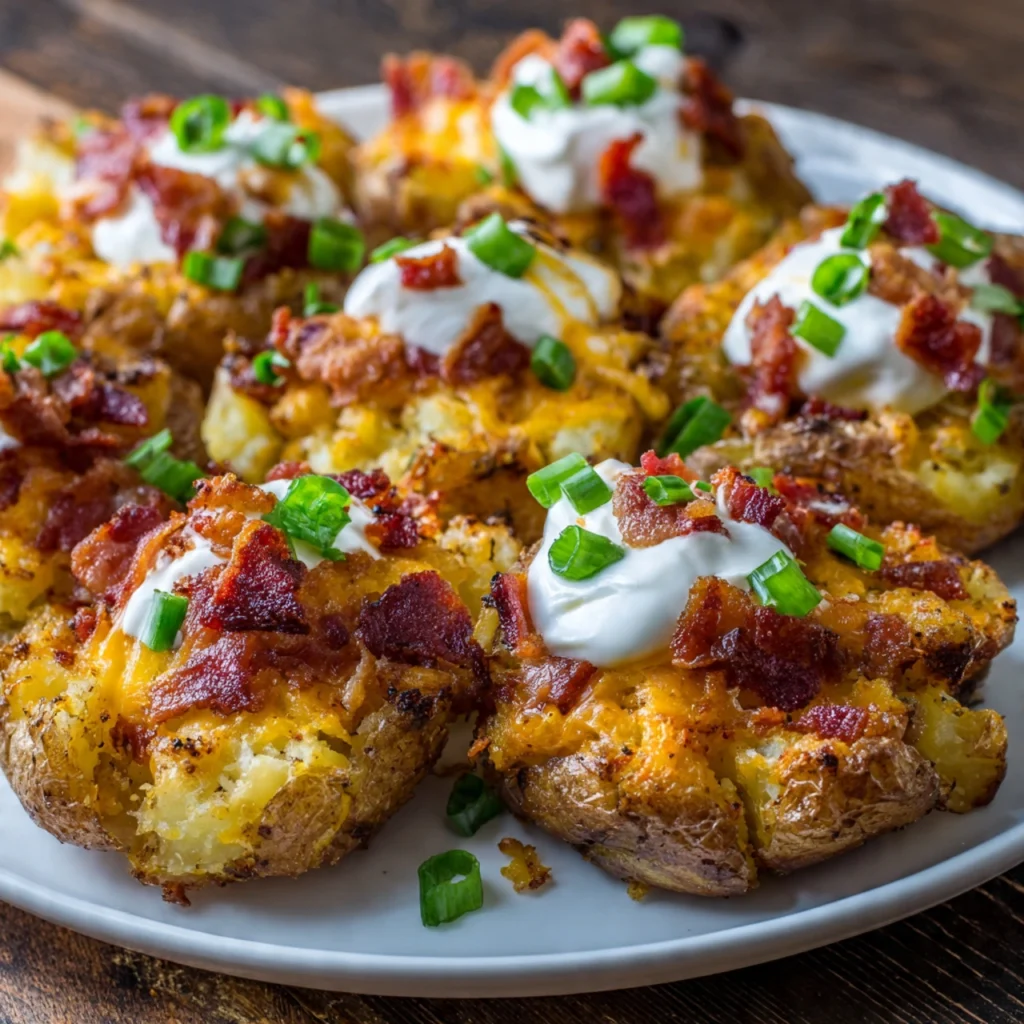
Nutrition Information (Per Serving, Based on 4 Servings with Standard Toppings)
Calories: 385 kcal
Total Fat: 22g
- Saturated Fat: 9g
- Trans Fat: 0g
Cholesterol: 45mg
Sodium: 520mg
Total Carbohydrates: 35g
- Dietary Fiber: 4g
- Sugars: 2g
Protein: 13g
Vitamin A: 8% DV
Vitamin C: 45% DV
Calcium: 18% DV
Iron: 8% DV
Potassium: 920mg
Note: Nutrition information is approximate and based on using baby Yukon Gold potatoes, olive oil, cheddar cheese, bacon, and sour cream. Values will vary based on specific ingredients, portion sizes, and topping choices. This is naturally gluten-free if using gluten-free bacon.
Conclusion: Your New Favorite Way to Eat Potatoes
Loaded Smashed Potatoes represent everything I love about really good food—they’re simple in concept but extraordinary in execution, they use basic ingredients to create something special, and they deliver on multiple levels with contrasting textures and complementary flavors. Once you master the basic technique of boiling, smashing, and crisping, you’ll find yourself making these constantly because they’re just that good.
What I appreciate most is how this recipe takes the humble potato—something we’ve all eaten a thousand times—and transforms it into something exciting that feels new and different. The smashing technique is brilliant because it maximizes crispy surface area while maintaining a fluffy interior. Adding loaded toppings turns it from a simple side into something crave-worthy that people genuinely get excited about.
Since perfecting this recipe, I’ve made Loaded Smashed Potatoes for countless meals and gatherings. They’ve become my signature side dish, the thing people specifically request when they’re coming over. I’ve watched potato-skeptics become enthusiastic converts after one bite. I’ve seen kids who “don’t like vegetables” (potatoes count as vegetables in kid logic) suddenly clean their plates.
The beauty is in the versatility. Keep them classic with bacon and cheddar, or experiment with different flavor profiles. Make them vegetarian, load them up for a complete meal, or keep them simple as an elegant side. The fundamental technique stays the same while the possibilities remain endless.
So grab those baby potatoes, heat up your oven, and prepare to smash your way to potato perfection. Your Loaded Smashed Potatoes journey starts now, and I promise—regular potatoes will never look quite the same again.
Happy smashing!
PrintLoaded Smashed Potatoes: Crispy, Creamy Perfection in Every Bite

These Loaded Smashed Potatoes feature ultra-crispy exteriors with fluffy, creamy centers, topped with melted cheddar cheese, crispy bacon, tangy sour cream, and fresh chives. The smashing technique creates maximum surface area for incredible crispiness while keeping the interior tender. Perfect as a side dish, appetizer, or light meal, these addictive potatoes are restaurant-quality but simple enough for weeknight cooking.
- Prep Time: 10 minutes
- Cook Time: 50 minutes
- Total Time: 1 hour
- Yield: 4 servings (16-20 smashed potatoes)
- Category: Side Dish, Appetizer
- Method: Boiling, Baking
- Cuisine: American
- Diet: Vegetarian
Ingredients
Potatoes:
- 2 pounds baby potatoes (Yukon Gold or red)
- 3 tablespoons olive oil
- 2 teaspoons kosher salt (for boiling water)
- 1 teaspoon garlic powder
- 1 teaspoon onion powder
- ½ teaspoon smoked paprika
- ½ teaspoon black pepper
- 2 tablespoons melted butter
Toppings:
- 1½ cups shredded sharp cheddar cheese (150g)
- 8 slices bacon, cooked and crumbled
- ½ cup sour cream (120ml)
- ¼ cup sliced green onions or chives
- Salt and pepper to taste
Optional Add-Ons:
- Jalapeño slices, ranch dressing, blue cheese, caramelized onions, or your favorite loaded potato toppings
Instructions
- Boil potatoes: Place scrubbed baby potatoes in large pot, cover with cold water by 2 inches, add 2 tsp salt. Bring to boil, reduce to simmer, cook 15-20 minutes until fork-tender. Drain and let steam dry 5 minutes.
- Prep baking sheet: Preheat oven to 425°F. Line rimmed baking sheet with parchment paper, drizzle with 1 tbsp olive oil.
- Smash: Arrange boiled potatoes on prepared sheet, spacing 2 inches apart. Use potato masher, glass bottom, or measuring cup to firmly press each potato to ½-inch thickness. They should crack and spread.
- Season: Drizzle remaining 2 tbsp olive oil over smashed potatoes. Mix garlic powder, onion powder, paprika, and pepper; sprinkle over potatoes. Season with additional salt.
- First bake: Bake 25-30 minutes until deeply golden and crispy. Flip halfway through, brush with melted butter, and return to oven for 5 more minutes.
- Load them up: Remove from oven, immediately top with shredded cheese and crumbled bacon. Return to oven 5-7 minutes until cheese melts.
- Finish: Remove from oven, let cool 2-3 minutes. Top with dollops of sour cream and sprinkle with green onions. Serve immediately.
Notes
- Choose uniformly sized baby potatoes (1½-2 inches) for even cooking
- Dry potatoes well after draining—moisture prevents crisping
- Don’t skip the steam-dry step after boiling
- Smash firmly to create lots of irregular, crispy edges
- High heat (425°F minimum) is essential for crispiness
- Only cheese and pre-cooked toppings go in oven; add sour cream and herbs after
- Best served immediately while crispy
- Can prep (boil and smash) up to 24 hours ahead, bake before serving
- Reheats best in air fryer or oven, not microwave
- Easily customizable with different cheeses and toppings