Introduction: Why Lemon Curd Deserves a Permanent Place in Your Refrigerator
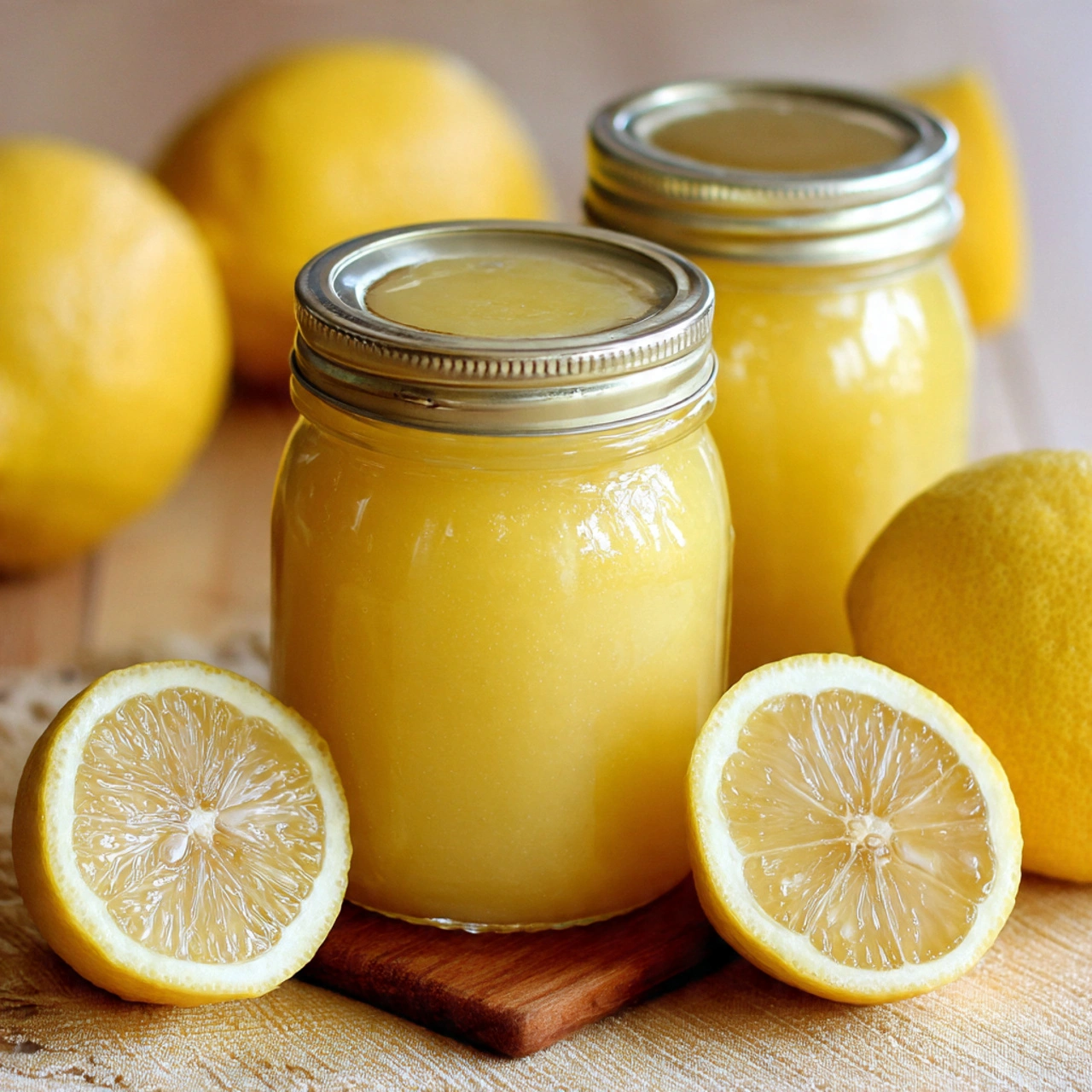
Lemon Curd is the kind of recipe that makes you feel like a culinary genius with very little effort. In fact, this silky, intensely lemony spread transforms simple ingredients into liquid gold that’s tangy, sweet, buttery, and incredibly versatile. Because of its balance, you’ll find yourself spreading it on everything from toast to cheesecake. I first made lemon curd years ago for a tart, and to my surprise, something so elegant came together in just 15 minutes using ingredients I already had. As a result, it quickly became a staple in my kitchen.
What makes lemon curd truly special is its bright, pure lemon flavor paired with an impossibly smooth, silky texture. Made with fresh lemon juice and zest—not extracts—it delivers authentic citrus intensity. Eggs and butter create a rich, custard-like curd that’s perfectly balanced: tangy enough to wake your taste buds, sweet enough to feel indulgent.
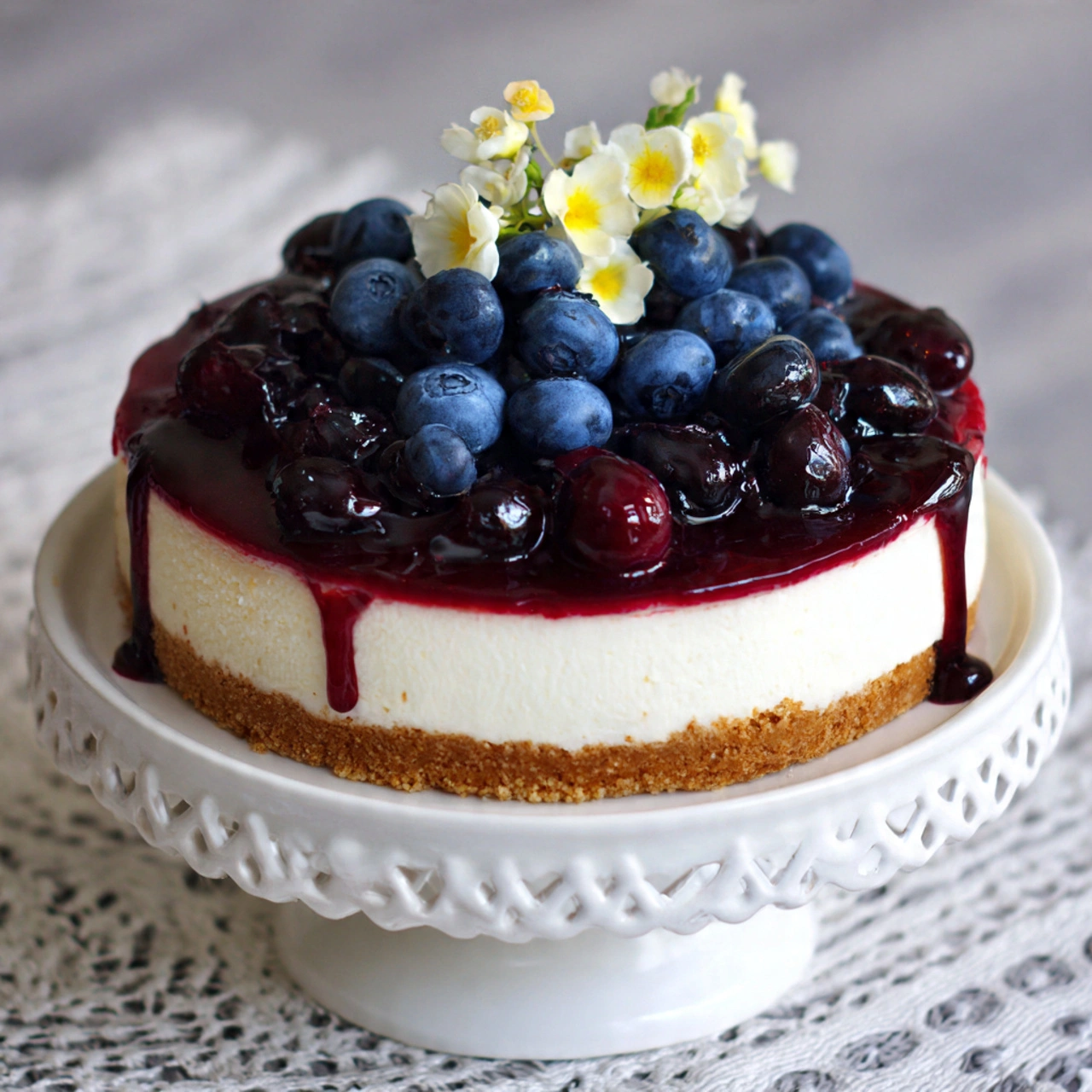
Beyond tasting incredible, lemon curd is incredibly versatile. Spread it on toast or scones, use it to fill tarts and cakes, swirl it into yogurt or ice cream, or fold it into whipped cream for an easy dessert upgrade. Keeping a jar on hand feels like having a secret shortcut to elegant treats.
The recipe itself is simple but rewards attention. Gentle heat, constant stirring, and proper technique prevent curdling and guarantee a smooth, velvety result every time. Once you master the basics, homemade lemon curd becomes effortless—and endlessly impressive.
Ready to make Lemon Curd that rivals anything from fancy specialty stores?
Ingredients: What You’ll Need for Perfect Lemon Curd
Core Ingredients (Makes About 1½ Cups)
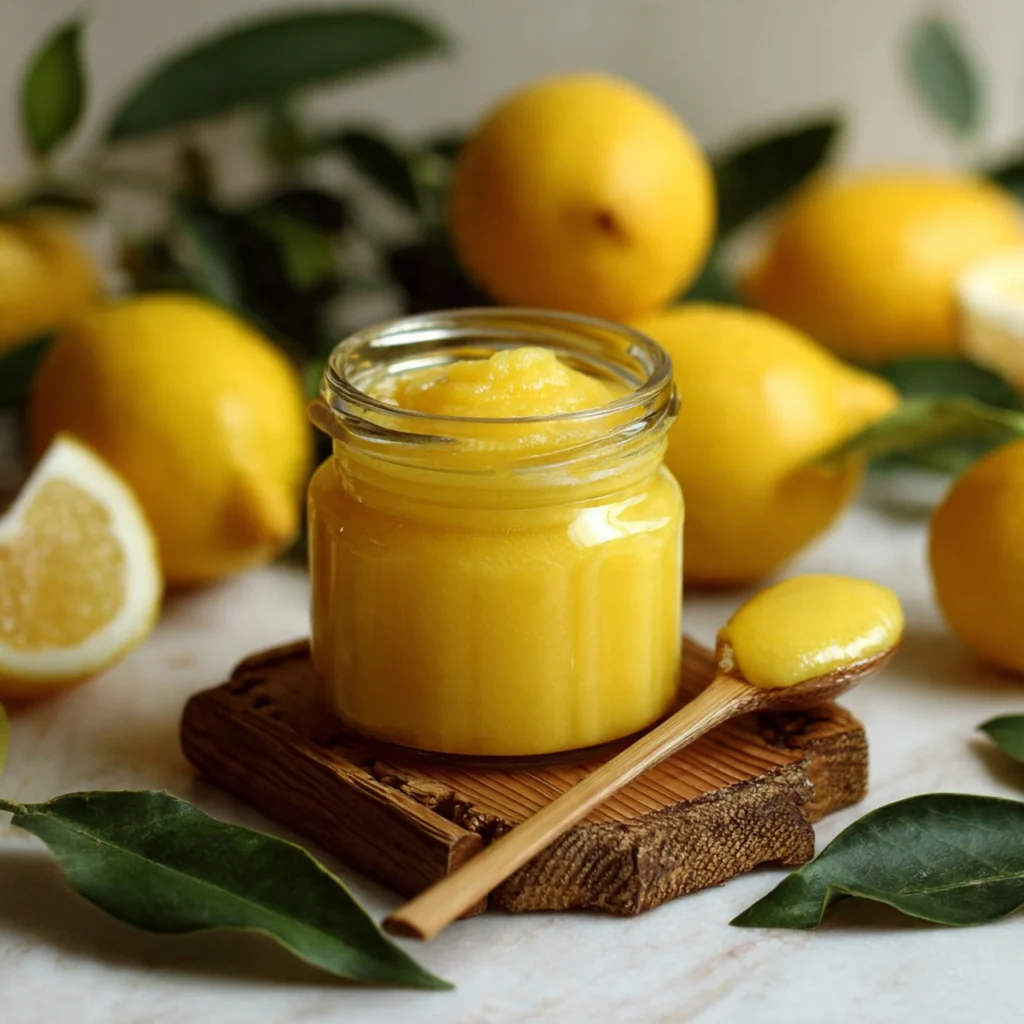
- 4 large lemons – For zest and juice
- 1 cup granulated sugar (200g) – Sweetness and body
- 4 large eggs – Creates custard texture
- ½ cup unsalted butter (1 stick/115g), cut into cubes – Richness and silkiness
- Pinch of salt – Enhances lemon flavor
Optional Additions
- 1 extra lemon – If you want more intense flavor
- 1 tablespoon cornstarch – For extra-thick curd (optional)
- Yellow food coloring – For vibrant color (optional, not recommended)
Equipment Needed
- Medium heavy-bottomed saucepan
- Fine-mesh strainer
- Microplane or zester
- Citrus juicer
- Whisk
- Rubber spatula
- Glass jars or containers for storage
- Instant-read thermometer (optional but helpful)
Step-by-Step Instructions: Creating Perfect Lemon Curd
Step 1: Prepare Your Lemons (5 minutes)
Wash the lemons thoroughly under warm water, scrubbing to remove any wax coating. Using a microplane or fine zester, remove the zest from all 4 lemons, being careful to get only the yellow part of the peel—the white pith underneath is bitter.
You should have approximately 2-3 tablespoons of lemon zest. Set this aside. Roll the lemons firmly on your counter, pressing down to break the internal membranes—this makes juicing easier and extracts more juice.
Cut the lemons in half and juice them using a citrus juicer, hand juicer, or simply by squeezing over a bowl. Strain the juice through a fine-mesh strainer to remove seeds and pulp. You need ½ cup (120ml) of fresh lemon juice. If you’re short, juice an additional lemon.
Fresh lemon juice is absolutely essential—bottled lemon juice creates inferior flavor and won’t give you the bright, authentic taste that makes homemade lemon curd special.
Step 2: Combine Ingredients (2 minutes)
In a medium, heavy-bottomed saucepan, whisk together the sugar and lemon zest. Using your fingers, rub the zest into the sugar—this releases the essential oils from the zest and infuses the sugar with intense lemon flavor. The sugar will become fragrant and slightly moist.
Add the eggs to the sugar-zest mixture and whisk vigorously until smooth and well combined. Add the fresh lemon juice and salt, whisking again until everything is fully incorporated. The mixture will be thin and bright yellow.
Add the cubed butter to the saucepan. Don’t turn on the heat yet—you want to start with everything cold and heat it gradually for best control.
Step 3: Cook Over Medium-Low Heat (8-12 minutes)
Place the saucepan over medium-low heat. This is the crucial step that requires your full attention. Using a whisk or rubber spatula, stir the mixture constantly—and I mean constantly, with no breaks.
As the butter melts and the mixture heats, it will gradually thicken. At first, nothing seems to happen for several minutes. Be patient and keep stirring. Gradually, you’ll notice the mixture becoming opaque and starting to coat the back of your spoon.
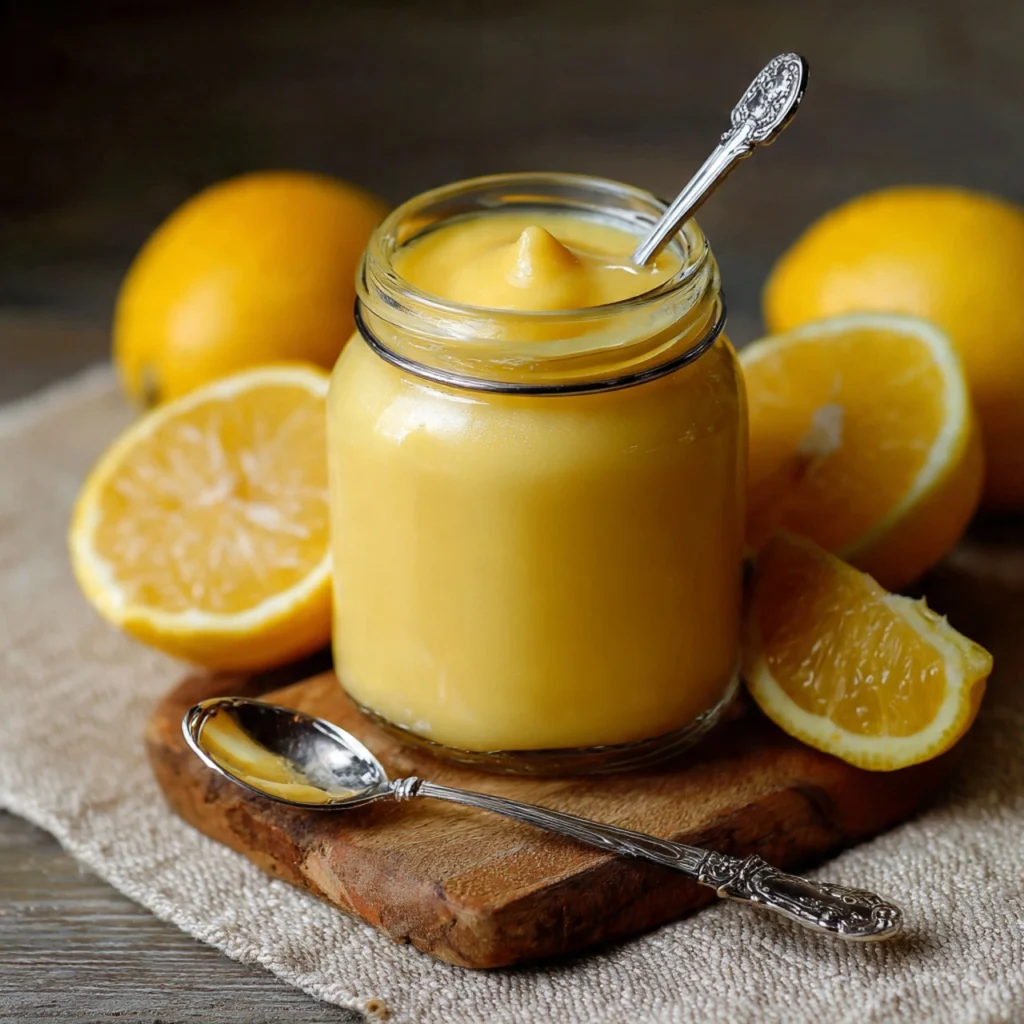
Continue cooking and stirring until the lemon curd thickens to the consistency of thick cream or pudding. It should coat the back of a spoon and when you draw a line through it with your finger, the line should hold. This usually takes 8-12 minutes total.
If using an instant-read thermometer, the mixture should reach 170-175°F (77-80°C). Don’t let it boil—boiling scrambles the eggs and ruins the silky texture. If you see any bubbles breaking the surface, immediately remove from heat and whisk vigorously.
The lemon curd will continue to thicken as it cools, so don’t wait for it to be super thick on the stove. It should be thick enough to coat the spoon but still pourable.
Step 4: Strain for Silky Smoothness (2 minutes)
Remove the saucepan from heat immediately when the curd reaches the right consistency. Pour it through a fine-mesh strainer set over a bowl, using a rubber spatula to push it through. This removes any bits of cooked egg, any pieces of zest you want removed, and ensures perfectly smooth, silky texture.
Don’t skip this straining step even if the curd looks smooth—it makes the difference between homemade and professional-quality lemon curd.
Step 5: Cool and Store (10 minutes active, 2+ hours cooling)
Transfer the strained lemon curd to clean glass jars or containers. Press a piece of plastic wrap directly onto the surface of the curd to prevent a skin from forming as it cools.
Let it cool at room temperature for about 30 minutes, then transfer to the refrigerator. The lemon curd will continue to thicken as it cools. After 2-3 hours in the refrigerator, it will reach its final, perfectly spreadable consistency.
Store covered in the refrigerator for up to 2 weeks. The flavor actually improves after 24 hours as the flavors meld together.
Pro Tips for the Perfect Lemon Curd
Tip 1: Fresh Lemons Are Absolutely Essential
Bottled lemon juice tastes flat, artificial, and bitter compared to fresh. The difference is dramatic and worth the extra five minutes of juicing fresh lemons. Meyer lemons create a sweeter, more floral lemon curd if you can find them. Regular Eureka lemons work perfectly too.
Tip 2: Constant Stirring Prevents Scrambled Eggs
The moment you stop stirring, the eggs at the bottom of the pan can overheat and scramble. Keep stirring constantly from the moment you turn on the heat until you pour the curd through the strainer. This consistent motion distributes heat evenly and prevents any hot spots that scramble eggs.
Tip 3: Medium-Low Heat is Your Friend
High heat seems like it would speed things up, but it actually makes it much harder to control the temperature and vastly increases the chance of scrambling the eggs. Medium-low heat takes a few extra minutes but gives you control and produces smooth, perfect results every time.
Tip 4: Strain Even If It Looks Smooth
Even when you’ve done everything perfectly, there might be tiny bits of cooked egg or zest pieces you don’t want in the final product. Straining takes 30 seconds and guarantees professional, silky-smooth texture. Never skip this step if you want the best possible result.
Tip 5: The Curd Thickens More As It Cools
Don’t wait for the curd to become super thick on the stovetop thinking that’s the final consistency. It should be thick enough to coat a spoon but still pourable. It will thicken significantly as it cools in the refrigerator. Overcooking makes it too thick and can cause graininess.
Tip 6: Use a Heavy-Bottomed Pan
Thin pans create hot spots that can scramble eggs before you know what’s happening. A heavy-bottomed saucepan distributes heat evenly, giving you much better control. This investment piece makes a real difference in recipes requiring temperature control.
Tip 7: Press Plastic Wrap on the Surface
A skin forms on cooling custards when exposed to air. Pressing plastic wrap directly onto the surface of the hot lemon curd prevents this. Remove the plastic before using—you’ll have perfectly smooth curd without any skin to stir in or remove.
Tip 8: Make a Double Batch
Lemon curd keeps for 2 weeks refrigerated and freezes beautifully for 6 months. Making a double batch requires barely more effort than a single batch, and having extra jars means you always have lemon curd ready. Future you will thank present you for this foresight.
Common Mistakes to Avoid When Making Lemon Curd
Mistake 1: Using Bottled Lemon Juice
Bottled lemon juice tastes nothing like fresh and creates lemon curd that’s disappointingly flat and artificial. Fresh lemon juice is non-negotiable for bright, authentic lemon flavor. The five minutes of juicing fresh lemons is absolutely worth it for the dramatic difference in taste.
Mistake 2: Cooking Over High Heat
High heat scrambles eggs before the curd properly thickens. You’ll end up with sweet lemon-flavored scrambled eggs instead of smooth custard. Always use medium-low heat and be patient. The extra few minutes of cooking time prevent disaster.
Mistake 3: Not Stirring Constantly
The moment you stop stirring, the eggs at the bottom of the pan can overheat and scramble. This isn’t a recipe where you can multitask or walk away. Stand at the stove and stir continuously from start to finish. Constant motion is what prevents scrambling.
Mistake 4: Letting the Mixture Boil
If the lemon curd reaches a full boil with bubbles breaking the surface, the eggs will scramble immediately. Watch carefully and remove from heat at the first sign of bubbling. If you accidentally let it boil, remove immediately and whisk vigorously—you might save it, but prevention is better.
Mistake 5: Skipping the Straining Step
Even if your curd looks perfectly smooth, tiny bits of cooked egg or zest pieces create texture you don’t want. Straining takes 30 seconds and transforms homemade lemon curd into professional-quality smoothness. This step is worth it every single time.
Mistake 6: Not Zesting Before Juicing
If you juice the lemons first, zesting becomes nearly impossible. Always zest first while the lemons are whole and firm, then juice. This simple order of operations saves frustration and wasted lemons.
Mistake 7: Using Old or Waxed Lemons
Old lemons have less juice and muted flavor. Heavily waxed lemons are difficult to zest and the wax can end up in your curd. Choose fresh, organic lemons when possible, or scrub conventional lemons thoroughly with warm water to remove wax before zesting.
Mistake 8: Expecting It to Be Thick on the Stove
Lemon curd continues to thicken dramatically as it cools. If you keep cooking until it’s very thick on the stovetop, it will be too thick—almost bouncy—when cool. Pull it when it’s thick enough to coat a spoon but still pourable.
Storage and Serving Suggestions for Lemon Curd
How to Store
Refrigerator: Store lemon curd in clean, airtight glass jars or containers in the refrigerator for up to 2 weeks. Press plastic wrap directly onto the surface before sealing to prevent a skin from forming. The flavor actually improves after 24 hours.
Freezer: Lemon curd freezes beautifully for up to 6 months. Freeze in small portions (ice cube trays work great, then transfer cubes to freezer bags) or in jars, leaving ½ inch headspace for expansion. Thaw overnight in the refrigerator before using.
Canning: Lemon curd can be canned using a water bath canning method for shelf-stable storage up to 3 months. However, refrigerator or freezer storage is easier and maintains better texture.
Gift Jars: Pour warm lemon curd into sterilized small jars, seal, and gift with a pretty label and ribbon. Include refrigeration instructions and a “use by” date (2 weeks from making).
Serving Suggestions
Classic British Style: Serve lemon curd on warm scones with clotted cream for traditional afternoon tea. This classic combination showcases lemon curd at its finest.
Breakfast Spread: Slather on toast, English muffins, croissants, or bagels for a bright, tangy breakfast that beats any store-bought jam.
Dessert Filling: Use as filling for tarts, layer cakes, cupcakes, macarons, or sandwich cookies. Lemon curd adds sophisticated flavor and beautiful color.
Yogurt Swirl: Fold a spoonful into Greek yogurt or layer in parfaits with granola and berries for elegant breakfast bowls.
Pancake Topping: Serve warm lemon curd over pancakes, waffles, or French toast instead of syrup for a special weekend breakfast.
Ice Cream Topper: Warm slightly and drizzle over vanilla ice cream for a simple but elegant dessert.
Lemon Fool: Fold lemon curd into whipped cream for an easy, impressive British dessert served in glasses with fresh berries.
Creative Uses for Lemon Curd
Lemon Curd Cheesecake: Swirl into cheesecake batter before baking or use as a topping
Lemon Bars: Use as the filling layer for homemade lemon bars
Trifle Layer: Include as a layer in trifles with pound cake, berries, and whipped cream
Thumbprint Cookies: Fill the centers of butter cookies with lemon curd
Crepe Filling: Fill delicate crepes with lemon curd and dust with powdered sugar
Donut Filling: Inject into homemade donuts for lemon-filled perfection
Pavlova Topping: Dollop over crispy meringue with whipped cream and berries
Frequently Asked Questions (FAQ)
1. Can I make lemon curd without a double boiler?
Yes! This recipe uses a regular saucepan over direct heat, which actually gives you more control than a double boiler. The key is using medium-low heat and stirring constantly. A heavy-bottomed pan distributes heat evenly and prevents hot spots. Many professional pastry chefs prefer this direct-heat method for better control.
2. Why is my lemon curd grainy instead of smooth?
Grainy texture results from eggs that cooked too fast and partially scrambled, or from cooking at too high a temperature. The solution is lower heat, constant stirring, and straining through a fine-mesh sieve. If your curd is slightly grainy, straining can usually save it. For prevention, keep heat at medium-low and never let it boil.
3. Can I use Meyer lemons instead of regular lemons?
Absolutely! Meyer lemons create a sweeter, more floral, less acidic lemon curd that many people prefer. You may want to add a tablespoon of regular lemon juice or reduce the sugar by 2 tablespoons since Meyer lemons are naturally sweeter. The technique remains exactly the same.
4. How do I make my lemon curd thicker?
If your lemon curd cools and turns out too thin, don’t worry—there are several easy fixes. First, you can return it to the saucepan and cook it a little longer until it thickens; afterward, strain it again for a smooth finish. Alternatively, before cooking, whisk in 1 tablespoon cornstarch dissolved in 1 tablespoon lemon juice to help it set. Finally, if the texture still feels light, simply embrace it—in that case, it works beautifully as a sauce, and you can make a new batch next time, cooking it slightly longer.
5. Can I make lemon curd with lime, orange, or grapefruit?
Yes! The technique works for any citrus. Lime curd is fantastic and requires the same amount of juice. Orange curd is milder and you might want to add a tablespoon of lemon juice for brightness. Grapefruit curd is sophisticated but can be bitter—reduce sugar by 2 tablespoons. Blood orange curd is gorgeous with natural pink color.
6. Is it safe to eat lemon curd with raw eggs?
The eggs in lemon curd are not raw—they’re cooked to 170-175°F, which pasteurizes them and makes them safe. The cooking process kills any potential salmonella. Properly made lemon curd that reaches the correct temperature is completely safe for everyone, including pregnant women and children.
7. Can I reduce the sugar in lemon curd?
You can reduce sugar by up to ¼ cup (to ¾ cup total), but this will make the curd quite tart and slightly thinner. Sugar doesn’t just sweeten—it also contributes to texture and helps preserve the curd. Going below ¾ cup affects both taste and consistency significantly. Most people find the full cup creates the right sweet-tart balance.
8. Why does my lemon curd have a skin on top?
A skin forms when the surface is exposed to air as it cools. Prevent this by pressing plastic wrap directly onto the surface of the hot curd before refrigerating. If a skin already formed, you can either stir it in (it will disappear) or carefully remove it before using the curd.
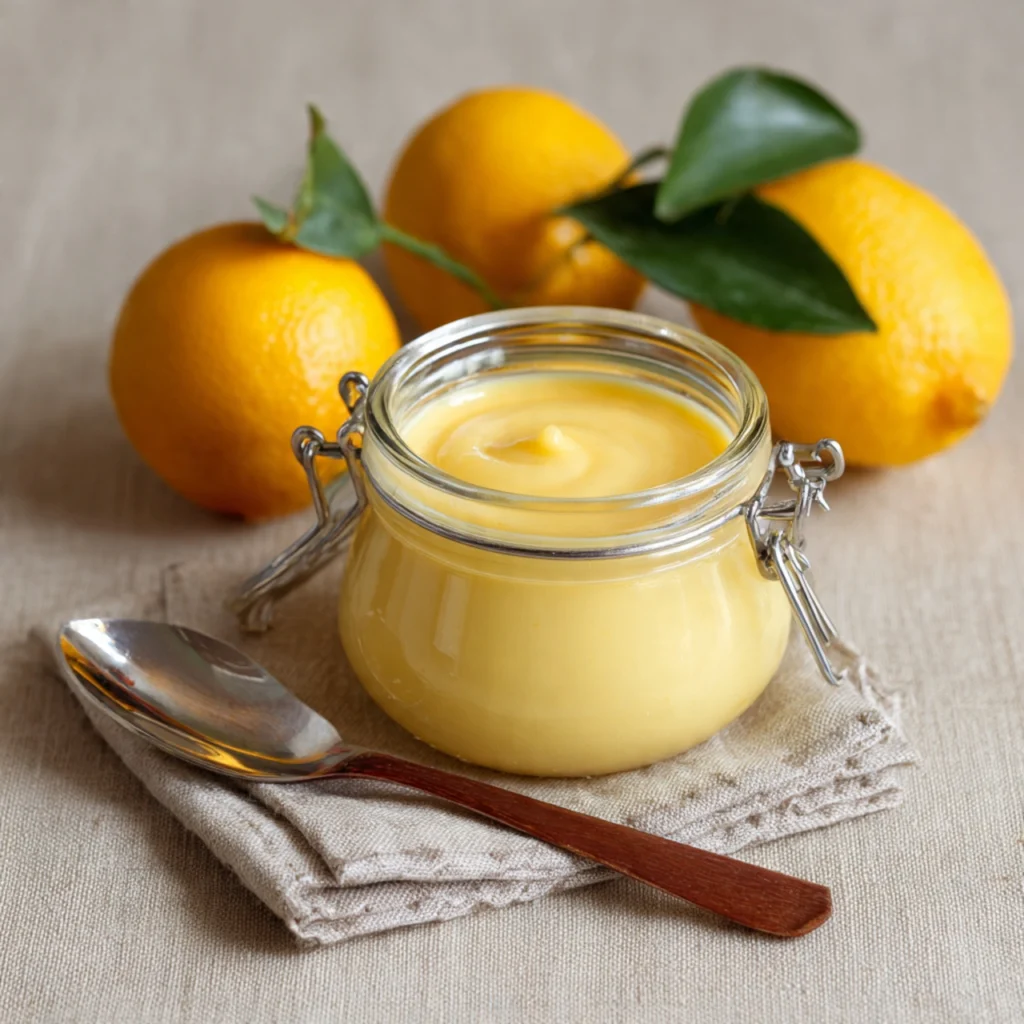
Nutrition Information (Per 2 Tablespoon Serving, Based on 12 Servings)
Calories: 125 kcal
Total Fat: 7g
- Saturated Fat: 4g
- Trans Fat: 0g
Cholesterol: 80mg
Sodium: 15mg
Total Carbohydrates: 15g
- Dietary Fiber: 0g
- Sugars: 15g
Protein: 2g
Vitamin A: 6% DV
Vitamin C: 12% DV
Calcium: 2% DV
Iron: 2% DV
Note: Nutrition information is approximate and based on a 2-tablespoon serving. This is a rich, indulgent spread meant to be used sparingly. A little goes a long way for adding flavor to desserts, breakfast items, and snacks.
Conclusion: Your Lemon Curd Journey Starts Now
Lemon Curd is one of those recipes that feels like a secret weapon once you master it—something that elevates ordinary foods into special treats, impresses guests with minimal effort, and makes you feel like a genuinely accomplished cook. The bright, intense lemon flavor and silky texture are genuinely addictive, and once you taste homemade lemon curd, store-bought versions pale in comparison.
What I treasure most about this recipe is its perfect combination of impressive results and straightforward technique. Yes, it requires attention and constant stirring, but the actual steps are simple and accessible to any home cook. Fifteen minutes of focused effort yields something that lasts two weeks and enhances countless meals.
Since incorporating lemon curd into my regular cooking repertoire, I’ve found uses for it I never anticipated. It’s become my go-to hostess gift, my secret weapon for turning simple vanilla cake into something special, and my favorite way to make breakfast feel indulgent without significant effort. Having a jar in the refrigerator genuinely changes how I approach cooking and entertaining.
The beauty is in the versatility. Make it exactly as written for classic lemon curd, or experiment with different citrus fruits, adjust sweetness to your preference, or use it in creative applications beyond traditional uses. The fundamental technique remains your reliable foundation while endless variations keep it interesting.
So grab those lemons, get your whisk ready, and prepare to create silky, tangy Lemon Curd that’ll make you wonder why you ever bought the jarred version. Your citrus curd journey starts now.
Happy cooking!
PrintLemon Curd: The Silky, Tangy Spread That Elevates Everything It Touches
This classic Lemon Curd recipe creates a silky, tangy spread with intense lemon flavor from fresh juice and zest. Made with just 5 ingredients in 15 minutes, it’s perfect for spreading on toast, filling tarts, topping desserts, or gifting in pretty jars. The foolproof technique ensures smooth, velvety results every time.
- Prep Time: 10 minutes
- Cook Time: 12 minutes
- Total Time: 22 minutes (plus 2 hours cooling)
- Yield: 1½ cups (about 12 servings)
- Category: Condiment, Spread, Dessert Component
- Method: Stovetop, Custard
- Cuisine: British
- Diet: Vegetarian
Ingredients
- 4 large lemons (for zest and juice)
- 1 cup granulated sugar (200g)
- 4 large eggs
- ½ cup unsalted butter (1 stick/115g), cubed
- Pinch of salt
Instructions
- Prep lemons: Zest all 4 lemons using microplane (avoid white pith). Juice lemons to get ½ cup fresh juice. Strain out seeds and pulp.
- Combine: In medium heavy-bottomed saucepan, whisk sugar and lemon zest. Rub zest into sugar with fingers. Add eggs, whisk until smooth. Add lemon juice, salt, and cubed butter. Don’t heat yet.
- Cook: Place pan over medium-low heat. Stir constantly with whisk or spatula. Cook 8-12 minutes, stirring continuously, until mixture thickens to coat back of spoon (170-175°F). Do not let boil.
- Strain: Remove from heat immediately. Pour through fine-mesh strainer into bowl, pressing with spatula.
- Cool and store: Transfer to clean jars. Press plastic wrap directly onto surface. Cool 30 minutes at room temp, then refrigerate at least 2 hours until thickened completely.
Notes
- Fresh lemon juice is essential—never use bottled
- Constant stirring prevents scrambled eggs
- Medium-low heat gives you control
- Strain even if it looks smooth for silky texture
- Curd thickens more as it cools—don’t overcook
- Meyer lemons create sweeter, floral variation
- Stores 2 weeks refrigerated, 6 months frozen
- Press plastic on surface to prevent skin forming
- Flavor improves after 24 hours
- Works with lime, orange, grapefruit using same technique