Introduction
If you’ve been searching for Greek Yogurt Bagels that are incredibly easy to make, require just two simple ingredients, and taste absolutely amazing, your search ends here. This revolutionary recipe has taken the internet by storm for good reason—it transforms plain Greek yogurt and self-rising flour into perfectly chewy, golden bagels in under 30 minutes, with no yeast, no boiling water, and no complicated techniques required.
Unlike traditional bagels that demand hours of rising time, precise temperature control, and the intimidating process of boiling dough, these Greek Yogurt Bagels are astonishingly straightforward. Even if you’ve never baked bread before, you can master this recipe on your first attempt. The magic happens when the protein-rich Greek yogurt combines with self-rising flour to create a dough that’s remarkably similar to traditional bagel dough in texture and taste, but without any of the fuss or waiting.
What makes these Greek Yogurt Bagels particularly valuable is their nutritional profile. Each bagel delivers significantly more protein than store-bought varieties, contains fewer preservatives and additives, and costs just pennies to make. They’ve become a staple for people following Weight Watchers (they’re surprisingly low in points), fitness enthusiasts seeking convenient protein sources, and busy families who want fresh-baked goods without the time commitment.
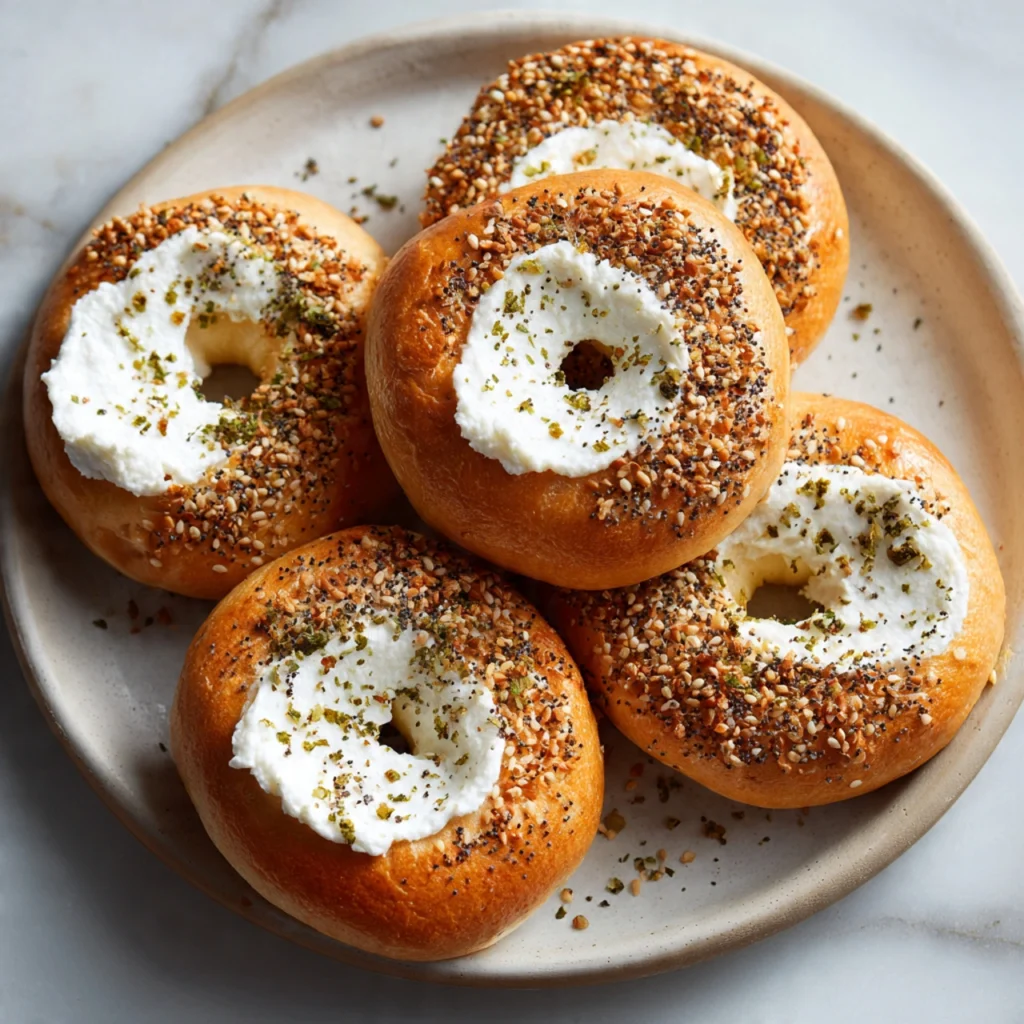
I’ve made literally hundreds of batches of these bagels while perfecting the technique, troubleshooting common issues, and developing variations that keep things interesting. Whether you eat them plain, toasted with cream cheese, transformed into breakfast sandwiches, or customized with everything seasoning, these Greek Yogurt Bagels will revolutionize your approach to homemade bread. The best part? You probably already have both ingredients sitting in your kitchen right now.

Ingredients
For the Basic Bagel Dough:
- 1 cup (240g) plain Greek yogurt, non-fat or full-fat
- 1¾ cups (210g) self-rising flour, plus extra for dusting
- 1 egg, beaten (for egg wash)
- Pinch of salt (optional, if your flour isn’t already salted)
For Topping Options (choose one or mix):
- 2 tablespoons everything bagel seasoning
- 2 tablespoons sesame seeds
- 1 tablespoon poppy seeds
- 1 tablespoon dried minced onion
- 1 tablespoon dried minced garlic
- 2 tablespoons grated Parmesan cheese
- 1 tablespoon cinnamon mixed with 2 tablespoons sugar (for sweet bagels)
- Coarse sea salt
Optional Mix-Ins for Flavor Variations:
- ¼ cup blueberries (for blueberry bagels)
- 2 tablespoons cinnamon and ¼ cup raisins (for cinnamon raisin)
- 2 tablespoons dried herbs (rosemary, thyme, or Italian seasoning)
- ¼ cup shredded cheddar cheese (for savory cheese bagels)
- 2 tablespoons cocoa powder and 2 tablespoons chocolate chips (for chocolate bagels)
What You’ll Need for Self-Rising Flour (if making your own):
- 1¾ cups (210g) all-purpose flour
- 2½ teaspoons baking powder
- ½ teaspoon salt
Step-by-Step Instructions
Step 1: Preheat and Prepare Your Workspace
Begin by preheating your oven to 375°F (190°C). Line a large baking sheet with parchment paper or a silicone baking mat—this prevents sticking and makes cleanup effortless. If you don’t have either, you can grease the baking sheet lightly with cooking spray, though parchment works best for achieving that golden-brown bottom. Clear your counter space and lightly dust it with flour. Having a clean, organized workspace makes the entire process smoother, especially when working with slightly sticky dough.
Step 2: Mix Your Greek Yogurt Bagel Dough
In a large bowl, mix 1 cup Greek yogurt with 1¾ cups self-rising flour until a rough dough forms. Keep stirring until it comes together—it may look messy at first, which is normal. If the dough is too dry, add yogurt a little at a time; if too sticky, add flour gradually. The dough should be slightly tacky but not sticking to your fingers.
Step 3: Knead the Dough to Perfection
Lightly flour your work surface and turn the dough out onto it. Flour your hands as well—this dough can be sticky, and floured hands make handling much easier. Knead the dough for 5-8 minutes until it becomes smooth, elastic, and only slightly tacky. Proper kneading is crucial for developing the gluten structure that gives these Greek Yogurt Bagels their characteristic chewiness. The dough should transform from rough and shaggy to smooth and cohesive. If the dough sticks to your hands or the counter during kneading, dust with additional flour sparingly—you want to add as little as possible while still being able to work with it comfortably.
Step 4: Divide and Shape Your Bagels
Divide the dough into 4 portions for large bagels or 6 for medium ones. Shape each into a smooth ball, then poke a hole in the center and stretch it to about 2 inches, or roll the dough into a rope and join the ends. Place the shaped bagels on a lined baking sheet, spacing them about 2 inches apart to allow even baking.
Step 5: Apply Egg Wash and Toppings
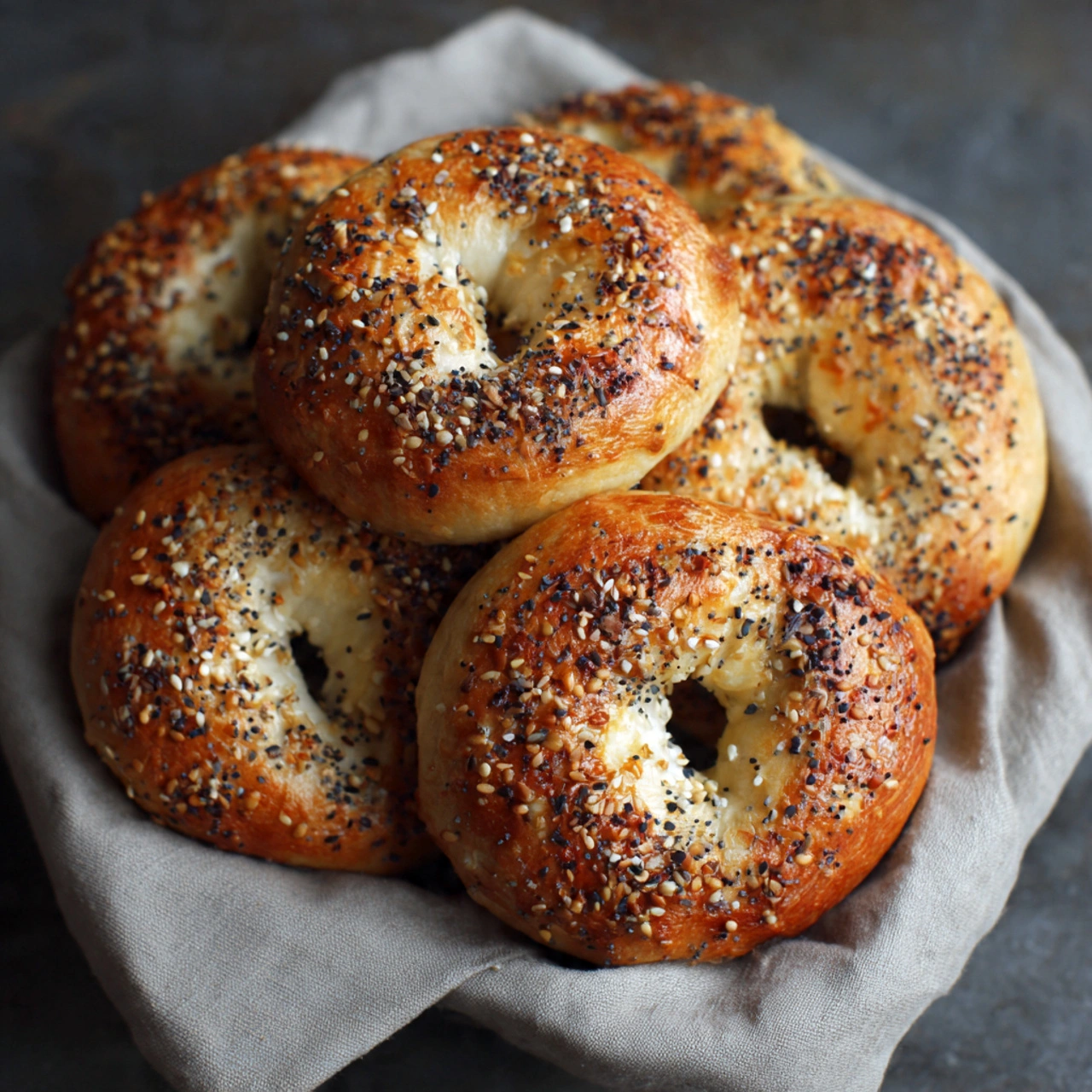
Beat one egg in a small bowl with a fork until the yolk and white are completely combined. Using a pastry brush, generously brush the top and sides of each bagel with the egg wash. This step is essential—it creates that beautiful golden-brown, glossy finish that makes bagels look professional and appetizing. Don’t skip it! Immediately after brushing with egg wash (while it’s still wet), sprinkle your chosen toppings over each bagel. Press toppings gently into the surface so they adhere properly and won’t fall off after baking. If you’re making multiple flavors, this is your chance to customize each bagel individually.
Step 6: Bake Your Greek Yogurt Bagels
Place the baking sheet in your preheated 375°F oven and bake for 22-25 minutes. The bagels are done when they’re golden brown on top and sound hollow when tapped on the bottom. The exact timing depends on your oven and the size of your bagels—smaller bagels may be done in 20 minutes, while larger ones might need the full 25 minutes. Keep an eye on them during the last 5 minutes to prevent over-browning. If the tops are browning too quickly but the bagels aren’t fully cooked, you can tent them loosely with aluminum foil for the remaining baking time.
Step 7: Cool and Enjoy
Remove the bagels from the oven and let them cool on the baking sheet for 5 minutes—this brief cooling period allows the structure to set, making them easier to handle. Then transfer them to a wire cooling rack. While these Greek Yogurt Bagels are absolutely delicious eaten warm from the oven, they slice more cleanly and develop better texture if you let them cool for at least 15-20 minutes. Once cooled, slice horizontally with a serrated knife and enjoy plain, toasted, or with your favorite spreads and toppings.
Pro Tips for the Perfect Greek Yogurt Bagels
Choose the Right Greek Yogurt:Full-fat Greek yogurt makes richer, softer bagels, while low-fat or non-fat gives a slightly denser texture with fewer calories. Both work well—just use thick, real Greek yogurt (not Greek-style) and avoid flavored varieties.
Make Your Own Self-Rising Flour:If you don’t have self-rising flour, mix 1 cup all-purpose flour with 1½ tsp baking powder and ¼ tsp salt. Whisk well before using; it works just like store-bought.
Don’t Skip the Kneading:Kneading for the full 5–8 minutes is key for chewy bagels. Under-kneading leads to dense, crumbly results. Set a timer and knead until smooth and elastic.
Size the Holes Generously:Bagel holes shrink during baking. Start with about a 2-inch hole so it stays open and looks like a true bagel after baking.
Customize Creatively:Add herbs, cheese, or garlic for savory bagels, or cinnamon and dried fruit for sweet ones. Keep mix-ins to ¼–⅓ cup to avoid affecting the dough structure.
Master the Egg Wash Technique:A generous egg wash creates golden, glossy bagels and helps toppings stick. Brush the entire surface well; a second light coat adds extra shine.
Adjust for Humidity:Humidity affects dough. In humid climates, use slightly less yogurt or more flour; in dry climates, the opposite. Aim for soft, pliable dough—not sticky.
Use a Kitchen Scale:Measuring flour by weight gives consistent results every time. A scale helps avoid adding too much flour and improves texture.
Try the Rope Method for Better Shape:Roll dough into an 8–9 inch rope, form a circle, overlap the ends, and pinch to seal. This method gives more uniform bagels.
Rotate the Baking Sheet:Rotate the pan halfway through baking to ensure even browning, especially if your oven has hot spots.
Common Mistakes to Avoid
Using Regular Yogurt Instead of Greek:This is a common mistake that leads to wet, sticky dough. Regular yogurt has too much liquid, while Greek yogurt is thick and helps the dough hold its shape. If needed, regular yogurt can be strained, but Greek yogurt is the best option.
Adding Too Much Flour While Kneading:Adding too much flour makes bagels dense and dry. The dough should feel slightly tacky. Only add flour if it’s truly sticking, and do so one tablespoon at a time.
Not Kneading Long Enough:Short kneading leads to dense, crumbly bagels. Knead for the full 5–8 minutes until the dough becomes smooth and elastic for the right chewy texture.
Making the Holes Too Small:Small holes will close during baking. Make holes about 2 inches wide before baking so they stay open and look like real bagels.
Skipping the Egg Wash:Egg wash gives bagels a golden color, shine, and helps toppings stick. Without it, bagels look pale. Milk or butter can be used as a backup, but results won’t be the same.
Overcrowding the Baking Sheet:Bagels need space to bake evenly. Leave about 2 inches between them to prevent sticking and pale sides.
Overbaking or Underbaking:Underbaked bagels are doughy, while overbaked ones are dry. Bake until golden brown and firm, and remove promptly.
Not Using Parchment Paper:Skipping parchment can cause sticking and uneven browning. Parchment paper helps bagels bake evenly and makes cleanup easier.
Using Expired Leavening:Old self-rising flour may not rise properly. Test it with warm water—if it doesn’t bubble, it’s time to replace it.
Working in a Very Warm Kitchen:Excess heat can affect the dough and cause spreading. If your kitchen is very warm, chill the yogurt and flour before starting.
Storage and Serving Suggestions
Storage Guidelines:
Room Temperature Storage: Store completely cooled Greek Yogurt Bagels in an airtight container or resealable plastic bag at room temperature for up to 2 days. They’ll stay relatively fresh during this time, though they’re definitely best on day one. Don’t refrigerate bagels, as this actually accelerates staling and makes them tough.
Freezing for Long-Term Storage: These bagels freeze exceptionally well! Once completely cooled, slice each bagel in half horizontally (this makes toasting easier later), then place in a freezer bag with as much air pressed out as possible. Freeze for up to 3 months. To use, remove from the freezer and either let thaw at room temperature for 30-60 minutes, or toast directly from frozen (this is my preferred method—it takes just slightly longer than toasting fresh bagels).
Refrigerator Storage (Not Recommended): While you can refrigerate these bagels, I don’t recommend it. Refrigeration causes the starch molecules to crystallize faster, making the bagels stale and tough more quickly than if left at room temperature or frozen. If you won’t eat them within 2 days, freeze them instead.
Refreshing Day-Old Bagels: If your bagels have lost their just-baked freshness, you can revive them! Wrap the whole bagel in a slightly damp paper towel and microwave for 15-20 seconds. This steams the bagel and makes it soft again. Alternatively, slice and toast them—toasting disguises any staleness and creates delicious crispy edges.
Serving Suggestions:
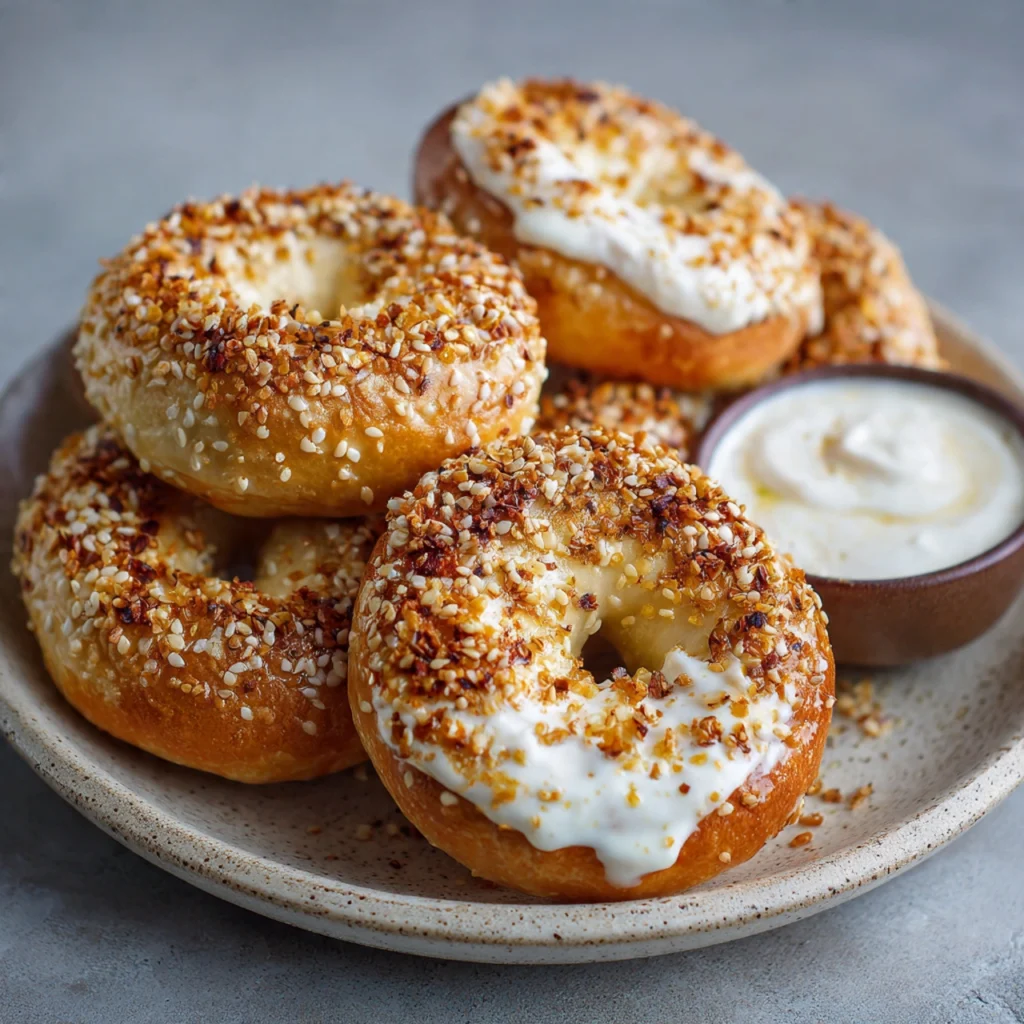
Classic Breakfast Options: Slice your Greek Yogurt Bagels horizontally and toast until golden and crispy. Spread with cream cheese (plain, flavored, or whipped), butter, jam, peanut butter, almond butter, or honey. For a protein boost, top with smoked salmon, sliced hard-boiled eggs, or avocado.
Breakfast Sandwich Base: These bagels make fantastic breakfast sandwiches. Toast them, then layer with scrambled eggs, cheese, bacon or sausage, and your favorite vegetables. The bagel’s protein content plus the sandwich fillings creates a genuinely filling breakfast.
Lunch and Dinner Applications: Don’t limit these to breakfast! Greek Yogurt Bagels make excellent sandwich bases for deli meats, tuna salad, chicken salad, or veggie sandwiches. They’re sturdy enough to hold generous fillings without falling apart.
Sweet Treats: For dessert or a sweet snack, try cinnamon-sugar bagels spread with Nutella, topped with sliced strawberries and whipped cream, or used as the base for an open-faced s’more (toasted bagel + chocolate + marshmallow).
Pizza Bagels: Slice bagels in half, top with pizza sauce, mozzarella cheese, and your favorite toppings, then bake at 375°F for 8-10 minutes until the cheese melts. These make fantastic quick lunches or snacks for kids.
Bagel Chips: If you have bagels getting stale, slice them very thinly, brush with olive oil, season with salt and herbs, and bake at 325°F for 15-20 minutes until crispy. These make addictive snacks or croutons for salads.
Pairing Suggestions: Serve these bagels alongside soup (they’re excellent for dipping), include them in a brunch spread with various cream cheese flavors and toppings, or pack them for lunch with containers of your favorite spreads.
Frequently Asked Questions (FAQs)
Q1: Can I use regular yogurt instead of Greek yogurt?
Regular yogurt is too watery and can make the dough sticky and difficult to shape. Greek yogurt, or well-strained yogurt, has a thicker texture that helps the bagels hold their shape and bake properly.
Q2: My dough is too sticky or too dry. What should I do?
If the dough is sticky, add flour one tablespoon at a time until manageable. If it’s dry or crumbly, add yogurt gradually until the dough becomes soft, pliable, and slightly tacky.
Q3: Are Greek Yogurt Bagels healthier than regular bagels?
Yes. They’re generally lower in calories, higher in protein, and lower in sodium than regular bagels. While carbs are similar, they’re more filling and made with fewer processed ingredients.
Q4: Can I make them gluten-free?
Yes, but you’ll need a gluten-free self-rising flour blend made for baking. You may need to adjust the liquid slightly, and the texture will be softer and less chewy than traditional bagels.
Q5: How many Weight Watchers points are they?
With non-fat Greek yogurt, each bagel is usually 3–4 points. Using full-fat yogurt increases it to 4–5 points, depending on size and ingredients.
Q6: Can I add mix-ins?
Yes. Add up to ⅓ cup of mix-ins during the final kneading. Sweet options include blueberries or chocolate chips, while savory options include cheese, herbs, or cooked bacon.
Q7: Why didn’t my bagels rise or turn fluffy?
This is usually caused by expired self-rising flour, under-kneading, or adding too much flour. Make sure your flour is fresh and knead until the dough is smooth and elastic.
Nutrition Information (Approximate Values per Bagel)
Serving Size: 1 large bagel (recipe makes 4)
- Calories: 170
- Total Fat: 1g
- Saturated Fat: 0.5g
- Trans Fat: 0g
- Cholesterol: 48mg
- Sodium: 380mg
- Total Carbohydrates: 31g
- Dietary Fiber: 1g
- Sugars: 3g
- Protein: 8g
- Calcium: 10% DV
- Iron: 8% DV
- Potassium: 3% DV
- Vitamin B12: 6% DV
Nutritional Notes:
- Values are based on using non-fat Greek yogurt and self-rising flour
- Does not include toppings or spreads
- Using full-fat Greek yogurt adds approximately 20 calories and 3g fat per bagel
- Medium bagels (if making 6 instead of 4) contain approximately 115 calories each
Note: Nutritional information is approximate and calculated using non-fat plain Greek yogurt and self-rising flour. Actual values may vary based on specific brands, yogurt fat content, and portion sizes. Toppings like everything bagel seasoning add negligible calories, but cheese or sweet toppings will increase nutritional values.
Final Thoughts
These Greek Yogurt Bagels represent a game-changing approach to homemade bread baking. In a world where traditional bagel recipes require specialized techniques, multiple rising periods, and boiling water baths, this simplified method democratizes bagel-making for everyone. The fact that you can create fresh, warm, protein-packed bagels from just two pantry staples in less time than it takes to run to the bakery is nothing short of remarkable.
What I love most about this recipe is how it removes every barrier to homemade bagels. No special equipment, no exotic ingredients, no extensive time commitment, and no complicated techniques. If you can stir, knead, and shape dough into a circle, you can make these bagels successfully. They’re genuinely beginner-friendly while producing results that impress even experienced bakers.
The versatility of Greek Yogurt Bagels means they’ll never get boring. Make everything bagels for breakfast sandwiches on Monday, cinnamon-raisin bagels for a sweet treat on Wednesday, and cheese-herb bagels for dinner alongside soup on Friday. The basic formula remains the same, but the possibilities are limited only by your imagination and taste preferences.
Whether you’re seeking a high-protein breakfast option, a Weight Watchers-friendly alternative to store-bought bagels, a fun baking project to do with kids, or simply the satisfaction of making fresh bread without complexity, this recipe delivers on all fronts. The joy of biting into a warm, chewy bagel you made yourself—knowing exactly what’s in it and feeling proud of your accomplishment—is something everyone should experience.
So grab your Greek yogurt and self-rising flour, and discover just how easy it is to make bakery-quality bagels in your own kitchen. Once you master this basic recipe, you’ll wonder why you ever thought bagels were difficult. Happy baking
PrintGreek Yogurt Bagels: The Easiest 2-Ingredient Recipe You’ll Ever Make
Greek Yogurt Bagels are a revolutionary 2-ingredient recipe that produces chewy, delicious homemade bagels in under 30 minutes with no yeast required. Made with just Greek yogurt and self-rising flour, these high-protein bagels are perfect for beginners, busy mornings, and anyone seeking a healthier alternative to store-bought bagels. Endlessly customizable with sweet or savory toppings.
- Prep Time: 15 minutes
- Cook Time: 25 minutes
- Total Time: 40 minutes
- Yield: 4 large bagels (or 6 medium bagels)
- Category: Bread, Breakfast
- Method: Baking
- Cuisine: American, Fusion
- Diet: Vegetarian
Ingredients
- Core: 1 cup plain Greek yogurt (non-fat or full-fat), 1¾ cups self-rising flour
- Egg wash: 1 beaten egg
- Toppings (optional): Everything bagel seasoning, sesame seeds, poppy seeds, cinnamon-sugar, sea salt, or Parmesan cheese
- Mix-ins (optional): Blueberries, raisins, chocolate chips, cheese, or herbs
Instructions
- Preheat oven to 375°F; line baking sheet with parchment paper
- Mix Greek yogurt and self-rising flour in bowl until shaggy dough forms
- Turn dough onto floured surface; knead 5-8 minutes until smooth and elastic
- Divide dough into 4 equal portions; shape into bagels with 2-inch center holes
- Brush bagels thoroughly with beaten egg; sprinkle with desired toppings
- Bake 22-25 minutes until golden brown and hollow-sounding when tapped
- Cool on wire rack 15-20 minutes before slicing and serving
Notes
- Use thick Greek yogurt, not regular yogurt or Greek-style yogurt
- Make self-rising flour by combining 1¾ cups all-purpose flour + 2½ tsp baking powder + ½ tsp salt
- Knead the full 5-8 minutes for proper texture—don’t skip this step
- Make bagel holes larger than desired final size; they shrink during baking
- Egg wash is essential for golden color and topping adhesion
- Customize with mix-ins or toppings based on preference