Introduction
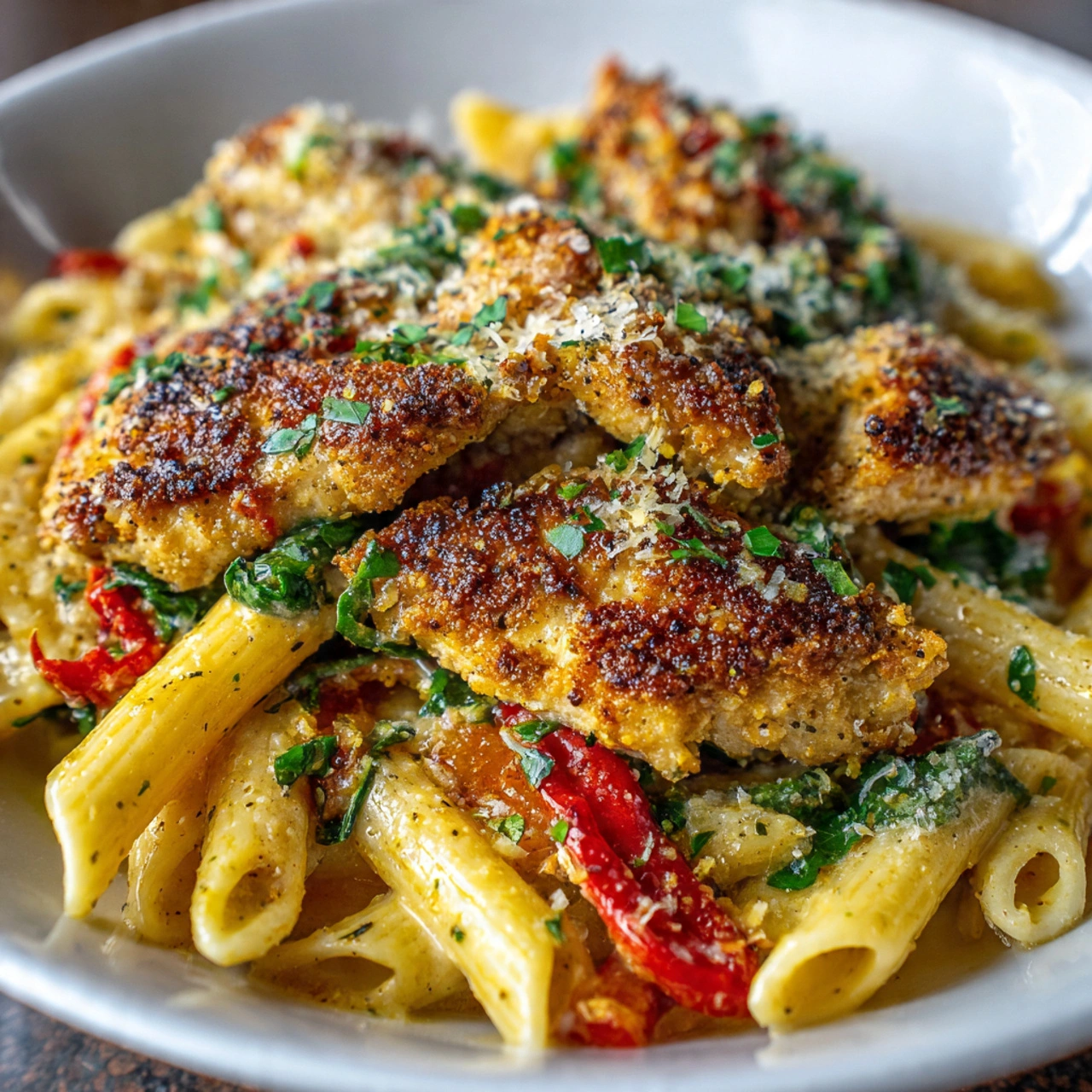
Garlic Parmesan Chicken Pasta is the kind of comfort food that never disappoints—tender, perfectly seasoned chicken, al dente pasta, and a luxuriously creamy garlic parmesan sauce that tastes just like a restaurant favorite. Made with simple ingredients and ready in about 30 minutes, this recipe is ideal for busy weeknights when you want a satisfying, homemade meal without the stress or expense of eating out.
What makes this Garlic Parmesan Chicken Pasta truly special is the way each element works together. The chicken is seared until golden and juicy, creating rich flavor in the pan that becomes the foundation of the sauce. Fresh garlic sautéed in butter, combined with cream and real parmesan cheese, forms a silky, flavorful sauce that coats every strand of pasta perfectly.
This step-by-step guide will walk you through the process of making Garlic Parmesan Chicken Pasta with confidence, from cooking the chicken just right to achieving the perfect sauce consistency. Whether you’re feeding your family, entertaining guests, or simply craving a comforting bowl of pasta, this recipe delivers dependable, crave-worthy results every time.
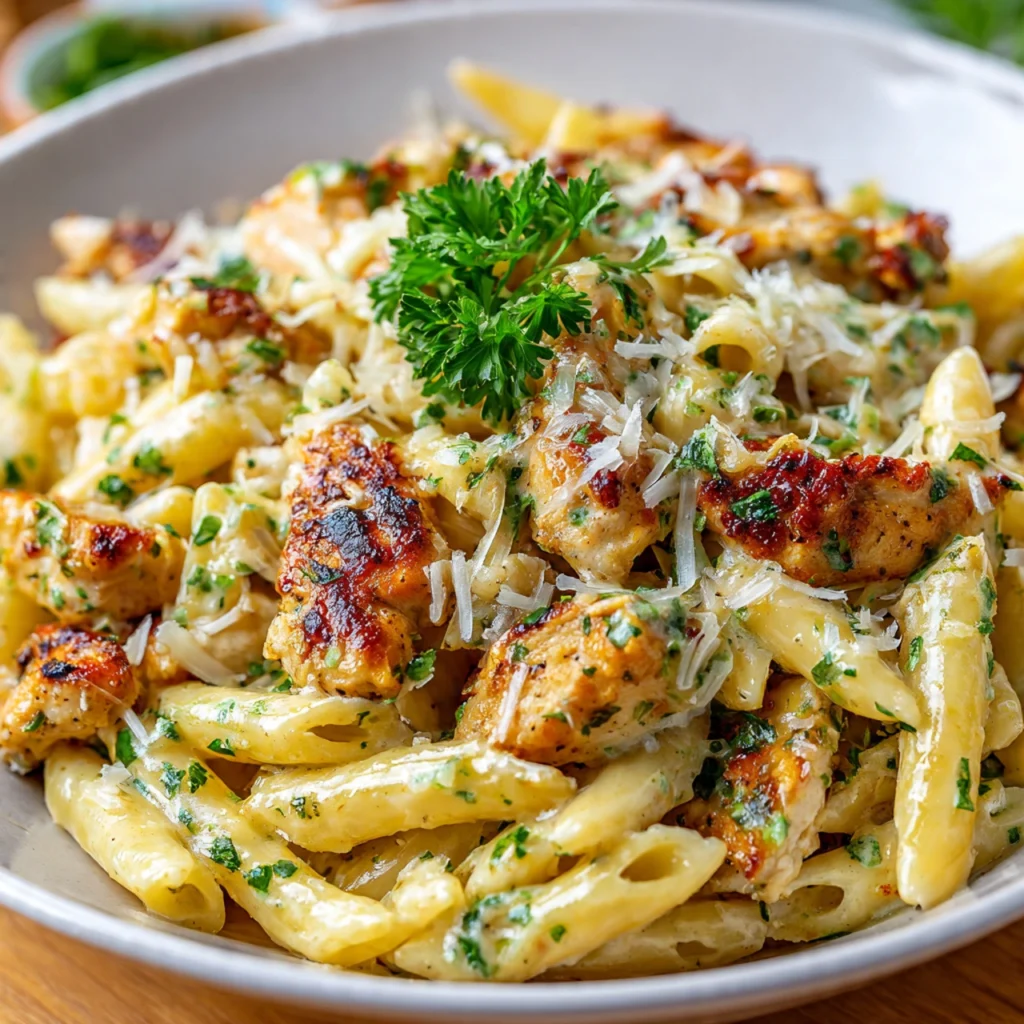
Garlic Parmesan Chicken Pasta Ingredients
For the Chicken:
- 1½ pounds boneless, skinless chicken breasts (about 2-3 large breasts)
- 1 teaspoon salt
- ½ teaspoon black pepper
- 1 teaspoon Italian seasoning
- ½ teaspoon garlic powder
- ½ teaspoon paprika
- 2 tablespoons olive oil (for cooking)
For the Pasta:
- 12 oz pasta (penne, fettuccine, or linguine work best)
- 1 tablespoon salt (for pasta water)
- Reserved 1 cup pasta cooking water
Garlic Parmesan Cream Sauce Ingredients:
- 4 tablespoons butter (½ stick)
- 6-8 cloves garlic, minced (about 2 tablespoons)
- 2 cups heavy cream (or half-and-half for lighter version)
- 1½ cups freshly grated parmesan cheese (about 6 oz)
- ½ teaspoon salt (adjust to taste)
- ¼ teaspoon black pepper
- ¼ teaspoon red pepper flakes (optional, for heat)
- ½ teaspoon dried basil (or 2 tablespoons fresh)
- 2 tablespoons fresh parsley, chopped (for garnish)
Optional Add-ins:
- 1 cup baby spinach or kale
- ½ cup sun-dried tomatoes, chopped
- 1 cup mushrooms, sliced
- ½ cup frozen peas
- ¼ cup white wine (for deglazing)
How to Make Garlic Parmesan Chicken Pasta Step by Step
Step 1: Prepare and Season the Chicken
Start by bringing your chicken to room temperature—this takes about 15-20 minutes and ensures even cooking. While it warms, place each chicken breast between two sheets of plastic wrap or parchment paper and gently pound to an even thickness of about ¾ inch using a meat mallet or heavy skillet. This crucial step prevents the dreaded thick-end-raw, thin-end-dry situation.
Pat the chicken completely dry with paper towels. Moisture is the enemy of a good sear, so don’t skip this step. Season both sides generously with salt, pepper, Italian seasoning, garlic powder, and paprika, pressing the seasonings into the meat so they adhere.
Step 2: Cook the Pasta
Bring a large pot of water to a rolling boil. Add 1 tablespoon of salt—the water should taste like the sea. Add your pasta and cook according to package directions until al dente (usually 1-2 minutes less than the package suggests for “tender”). Al dente pasta has a slight bite and will continue cooking slightly when you add it to the sauce.
Critical step: Before draining, reserve 1 cup of the starchy pasta cooking water. This liquid gold helps emulsify your sauce and adjust consistency perfectly. Drain the pasta but don’t rinse it—that starch helps the sauce cling to every strand.
Step 3: Sear the Chicken
While the pasta cooks, heat a large skillet (preferably 12-inch) over medium-high heat. Add 2 tablespoons of olive oil and let it heat until it shimmers but doesn’t smoke. Carefully lay the chicken breasts in the pan without overcrowding—you should hear an immediate sizzle.
Cook without moving for 5-6 minutes. Resist the urge to peek or flip too early. The chicken will release naturally from the pan when it’s ready. Flip and cook the second side for another 5-6 minutes until the internal temperature reaches 165°F and the chicken is golden brown with a nice crust.
Transfer the cooked chicken to a clean cutting board and tent loosely with foil. Let it rest for 5 minutes while you make the sauce—this allows juices to redistribute, keeping the meat moist and tender.
Step 4: Build the Garlic Parmesan Sauce
Don’t wipe out the pan! Those browned bits stuck to the bottom are pure flavor. Reduce heat to medium and add the butter. As it melts, use a wooden spoon to scrape up all those delicious fond bits from the chicken.
Add the minced garlic and sauté for 1-2 minutes, stirring constantly, until fragrant and just beginning to turn golden. Watch it carefully—garlic goes from perfect to burnt in seconds, and burnt garlic is bitter and will ruin your sauce.
If using wine, add it now and let it bubble for about 1 minute, scraping the pan bottom again. Pour in the heavy cream and bring to a gentle simmer. Let it bubble gently for 3-4 minutes, stirring occasionally, until it reduces slightly and begins to thicken.
Step 5: Add Cheese and Seasonings
Reduce heat to low. Add the freshly grated parmesan cheese gradually, stirring constantly as you add it. The cheese will melt into the cream, creating a smooth, velvety sauce. If you dump it all at once, it might clump, so add it in batches, stirring until each addition melts before adding more.
Season with salt, pepper, basil, and red pepper flakes if using. Taste and adjust—the sauce should be rich and flavorful but not overly salty since the pasta will add some saltiness from the cooking water.
If the sauce seems too thick, add reserved pasta water a few tablespoons at a time until you reach the desired consistency. The sauce should coat the back of a spoon but still be pourable—it will thicken more as it cools.
Step 6: Combine Everything
Slice the rested chicken into strips about ½ inch thick on a diagonal—this creates attractive pieces that look restaurant-worthy.
Add the drained pasta to the sauce and toss well to coat every strand. The pasta should be luxuriously coated but not swimming in sauce. Add more pasta water if needed to loosen the sauce to your preferred consistency.
Nestle the sliced chicken on top of the pasta or toss it right in—your choice. Garnish generously with fresh chopped parsley and additional grated parmesan if desired.
Step 7: Serve Immediately
This dish is at its absolute best served immediately while the sauce is still creamy and the chicken is hot. Plate it up in warmed bowls or on a serving platter for family-style dining. Have extra parmesan and red pepper flakes on the table for those who want more.
Pro Tips for the Perfect Garlic Parmesan Chicken Pasta
Use Freshly Grated Parmesan
Pre-shredded parmesan contains anti-caking agents that prevent smooth melting and can make your sauce grainy. Buy a wedge of real Parmigiano-Reggiano and grate it yourself using a box grater or microplane. The flavor difference is night and day, and the texture of your sauce will be silky smooth.
Don’t Overcook the Chicken
Chicken breasts are lean and unforgiving when overcooked, becoming dry and rubbery. Use an instant-read thermometer to check for 165°F at the thickest part. The carryover cooking during resting will bring it to perfect doneness without drying it out.
Save That Pasta Water
Starchy pasta water is a secret weapon in Italian cooking. It helps thin the sauce to the perfect consistency while the starch helps emulsify everything together, creating a cohesive, glossy sauce that clings to the pasta instead of pooling at the bottom of the bowl.
Adjust Cream Thickness as Needed
Heavy cream creates the richest, most luxurious sauce, but you can use half-and-half for a lighter version—just know the sauce won’t be quite as thick. If your sauce is too thin, let it simmer a bit longer to reduce. Too thick? Add pasta water or a splash of milk.
Add Vegetables for Nutrition and Color
This base recipe welcomes additions beautifully. Spinach wilts right into the hot sauce, mushrooms sautéed with the garlic add earthiness, and sun-dried tomatoes provide tangy sweetness. Just add them at the appropriate time so they don’t overcook.
Choose the Right Pasta Shape
While you can use any pasta, shapes with nooks and crannies (penne, rigatoni, farfalle) catch the creamy sauce beautifully. Long strands like fettuccine or linguine create that classic twirling experience. Avoid very small shapes like orzo—they don’t showcase the sauce as well.
Make It Ahead with Modifications
While best served fresh, you can prep components ahead. Cook and slice the chicken up to 2 days early. Make the sauce without adding the pasta, refrigerate, then gently reheat and add freshly cooked pasta when ready to serve. The texture won’t be quite as perfect but it’s still delicious.
Double the Garlic Parmesan Chicken Pasta Recipe for Meal Prep
This Garlic Parmesan Chicken Pasta recipe doubles beautifully if you’re feeding a crowd or want leftovers. Use a larger pan or work in batches for the chicken. The sauce can be made in a large pot or dutch oven to accommodate double the pasta.
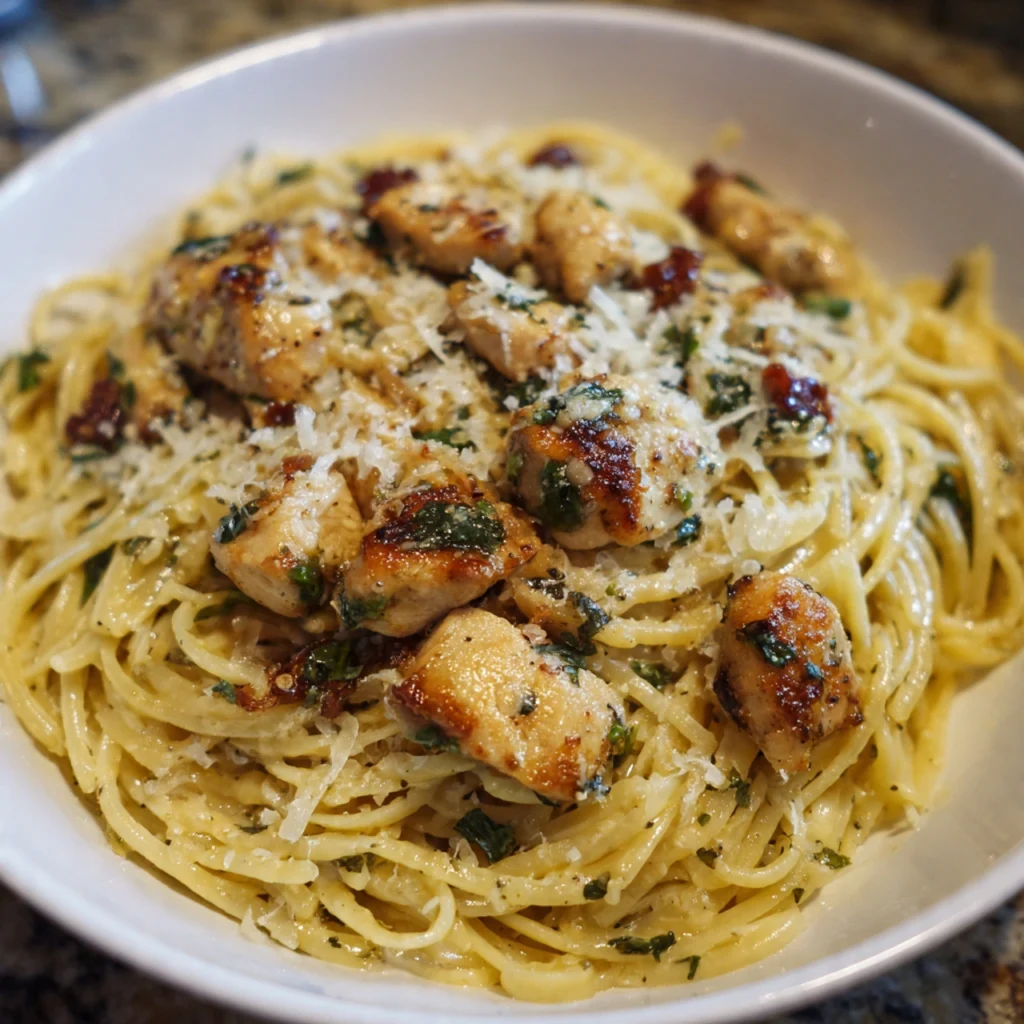
Common Mistakes to Avoid for Garlic Parmesan Chicken Pasta
Using Pre-Grated Parmesan
I mentioned this above, but it’s worth repeating—those green canisters of parmesan or bags of pre-shredded cheese will not give you the same creamy, smooth sauce. The anti-caking agents prevent proper melting, leaving you with a grainy, separated sauce. Always grate your own from a block.
Overcrowding the Pan When Cooking Chicken
If you cram too many chicken breasts into your pan, they’ll steam rather than sear. This prevents browning and flavor development. Use a large 12-inch skillet and cook in batches if necessary, or use two pans simultaneously.
Burning the Garlic
Garlic is delicate and burns quickly, especially in butter. Always add it to a pan that’s not screaming hot, stir constantly, and have your cream ready to add as soon as the garlic becomes fragrant. Burnt garlic tastes bitter and there’s no fixing it—you’ll have to start over.
Rinsing the Pasta
Never rinse pasta that’s going into a sauce. The surface starch helps the sauce adhere and contributes to the overall texture and cohesiveness of the dish. Rinsing washes away this essential element and leaves you with slippery pasta that won’t hold the sauce.
Not Reserving Pasta Water
I can’t tell you how many times I’ve forgotten this step in my early cooking days. The moment you drain that pasta, all that valuable starchy water goes down the drain forever. Set out a measuring cup or bowl as a visual reminder to scoop some out before draining.
Adding Cheese to Boiling Sauce
If your sauce is at a rolling boil when you add the cheese, it can separate and become grainy or stringy. Always reduce heat to low before adding cheese, and add it gradually while stirring constantly. Patience here is rewarded with silky smoothness.
Letting the Pasta Sit Too Long
Once you combine pasta with sauce, serve it promptly. The pasta continues absorbing sauce as it sits, and what was perfectly saucy becomes dry and clumpy after 10-15 minutes. If you must hold it, keep it slightly saucier than you want and add a splash of cream or pasta water when reheating.
Storage and Serving Suggestions For Garlic Parmesan Chicken Pasta
Storing Leftovers
Cool the pasta completely before storing. Transfer to an airtight container and refrigerate for up to 3-4 days. The sauce will thicken considerably as it sits and the pasta absorbs more liquid—this is normal.
To reheat, add a splash of milk, cream, or chicken broth to a skillet over medium-low heat. Add the pasta and stir gently, adding more liquid as needed until it returns to a creamy consistency. Microwave reheating works but tends to dry out the pasta—if using this method, add liquid and cover to trap steam.
Freezing Considerations
While you can freeze this pasta, cream-based sauces sometimes separate upon thawing, affecting texture. If you plan to freeze, slightly undercook the pasta and use slightly less sauce. Freeze in airtight containers or freezer bags for up to 2 months. Thaw overnight in the refrigerator and reheat gently with additional cream to restore consistency.
Serving Suggestions
This rich, satisfying pasta pairs beautifully with lighter sides:
Salads: A crisp Caesar salad, mixed green salad with lemon vinaigrette, or arugula salad with balsamic provides refreshing contrast.
Bread: Garlic bread is the classic choice (yes, more garlic!), but crusty Italian bread, focaccia, or warm breadsticks are equally delicious for soaking up extra sauce.
Vegetables: Roasted broccoli, sautéed green beans with lemon, roasted asparagus, or a simple caprese salad add color and nutrition.
Wine Pairing: A crisp white wine like Pinot Grigio or Sauvignon Blanc cuts through the richness beautifully. For red wine lovers, a light Pinot Noir works without overwhelming the delicate flavors.
Portion Sizes
This Garlic Parmesan Chicken Pasta recipe serves 4-6 people depending on portion sizes and what else you’re serving. As a main course with just a salad, plan on 4 generous servings. As part of a larger Italian feast with multiple courses, it stretches to 6 servings.
Make It a Complete Meal
To turn this into an even more complete one-dish meal, add vegetables directly to the pasta:
- Sauté mushrooms with the garlic
- Wilt spinach into the hot sauce
- Add frozen peas during the last minute of pasta cooking
- Toss in cherry tomatoes that burst in the pan
- Mix in roasted red peppers for sweetness
FAQ For Garlic Parmesan Chicken Pasta
Can I use chicken thighs instead of breasts?
Absolutely! Boneless, skinless chicken thighs are more forgiving and harder to overcook due to their higher fat content. They have richer flavor too. Cook them the same way, though they may need an extra minute or two to reach 165°F internal temperature.
What if I don’t have heavy cream?
Half-and-half works but creates a thinner sauce. You can compensate by simmering it longer to reduce and thicken, or by adding a bit more cheese. Milk doesn’t work well as it’s too thin and doesn’t create the proper texture. For dairy-free, full-fat coconut milk or cashew cream are decent substitutes.
Can I make this recipe gluten-free?
Yes! Simply substitute your favorite gluten-free pasta. Cook it according to package directions as gluten-free pasta timing varies by brand. Everything else in the recipe is naturally gluten-free. Make sure to check that all seasonings and cheese don’t contain hidden gluten.
My sauce is too thick/too thin. How do I fix it?
Too thick: Add reserved pasta water or a splash of milk/cream, a tablespoon at a time, stirring until you reach desired consistency. Too thin: Let it simmer uncovered for a few more minutes to reduce and thicken, or add a bit more grated parmesan which will thicken as it melts.
Can I use pre-cooked rotisserie chicken?
Yes! This is a great shortcut. Skip the chicken cooking steps and simply slice or shred rotisserie chicken, adding it to the finished sauce to warm through. You’ll miss the fond from searing fresh chicken, but you can compensate by adding a teaspoon of chicken bouillon to the sauce for extra depth.
How do I prevent the sauce from separating?
Separation usually happens from too-high heat or adding cheese to boiling liquid. Always reduce heat to low before adding cheese, add it gradually while stirring constantly, and keep the finished sauce at a gentle simmer (never a rolling boil). If it does separate, remove from heat and whisk in a tablespoon of cold cream.
What pasta shape works best?
Penne and rigatoni are excellent because the sauce gets inside the tubes. Fettuccine and linguine create that classic creamy pasta experience with sauce-coated strands. Farfalle (bow ties) are fun and family-friendly. Avoid tiny shapes like orzo or pastina which don’t showcase the sauce well.
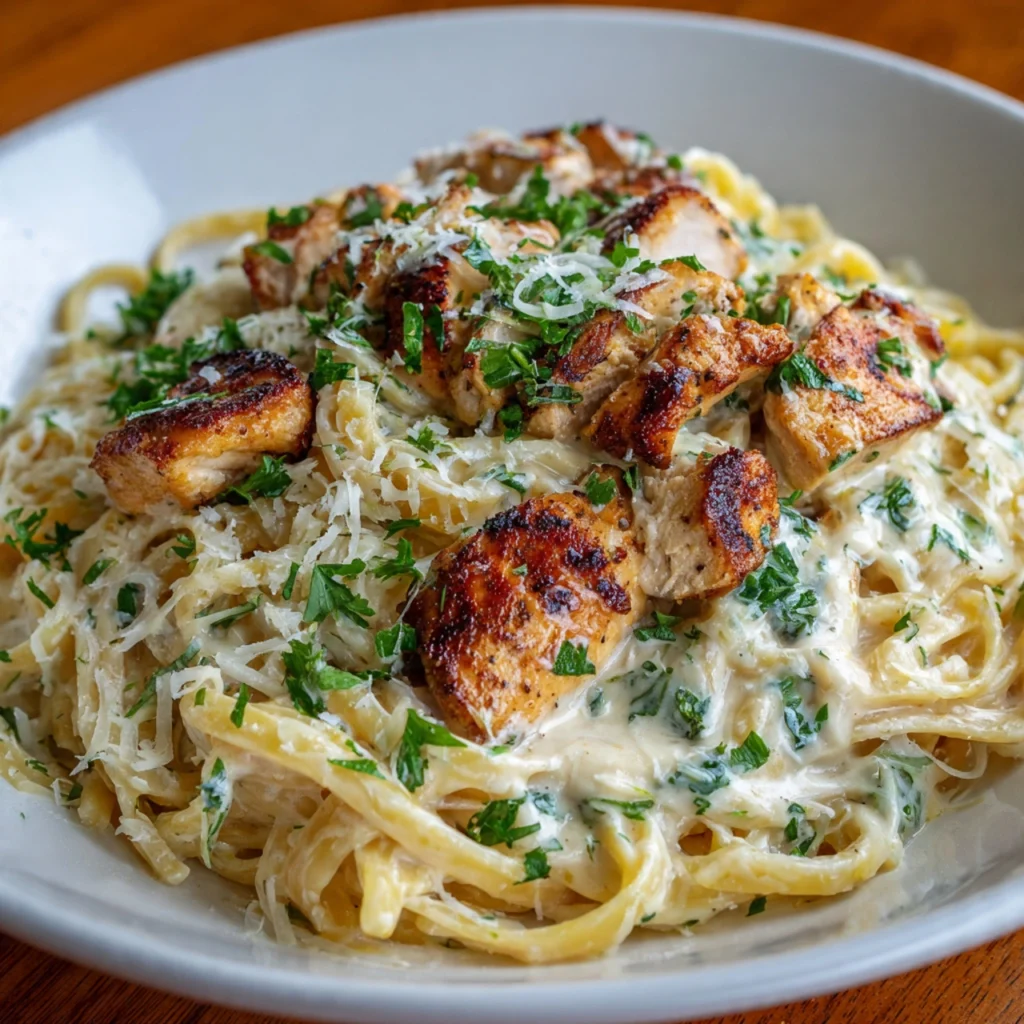
Nutrition Information (Approximate Values per Serving)
Serving Size: 1½ cups (based on 4 servings)
- Calories: 785
- Total Fat: 42g
- Saturated Fat: 24g
- Trans Fat: 0g
- Cholesterol: 195mg
- Sodium: 890mg
- Total Carbohydrates: 56g
- Dietary Fiber: 2g
- Sugars: 4g
- Protein: 48g
- Vitamin A: 25% DV
- Vitamin C: 4% DV
- Calcium: 35% DV
- Iron: 15% DV
Note: Nutrition information is approximate and will vary based on specific ingredients used, pasta type, and actual portion sizes. This is a rich, indulgent dish best enjoyed as an occasional treat.
Conclusion
Garlic parmesan chicken pasta proves that restaurant-quality meals don’t require culinary school training or hours in the kitchen. With simple techniques—properly searing chicken, building a flavorful sauce, and combining everything at just the right moment—you can create a dish that rivals anything you’d pay premium prices for at an Italian restaurant.
What makes this Garlic Parmesan Chicken Pasta recipe truly special is how it balances richness with brightness, how the garlic infuses every element without overwhelming, and how the parmesan creates that luxurious creaminess that makes you want to savor every bite. It’s comfort food that feels special enough for date night yet easy enough for a random Tuesday when you just want something delicious.
The techniques you’ve learned here—building fond for flavor, deglazing properly, creating cream sauces that don’t separate, and using pasta water to perfect consistency—extend far beyond this single recipe. These are foundational skills that will improve countless other dishes in your cooking repertoire.
So grab that chicken from the fridge, put a pot of water on to boil, and get ready to create something that will have everyone at your table asking when you’re making this again. Your weeknight dinner game is about to reach a whole new level. Buon appetito!
Print8 Secrets to Restaurant-Quality Garlic Parmesan Chicken Pasta
This creamy garlic parmesan chicken pasta brings restaurant-quality Italian comfort food to your home kitchen in just 30 minutes. Tender, seasoned chicken breasts are pan-seared to golden perfection, then sliced and served over al dente pasta coated in a luxurious sauce made with butter, garlic, heavy cream, and real parmesan cheese. The result is a rich, satisfying dinner that tastes like it came from an upscale Italian restaurant but uses simple ingredients you likely already have on hand.
- Prep Time: 10 minutes
- Cook Time: 20 minutes
- Total Time: 30minutes
- Yield: 4 servings
- Category: Main Course, Pasta, Dinner
- Method: Pan-Seared, Stovetop
- Cuisine: Italian-American
- Diet: Kosher
Ingredients
Chicken:
- 1½ pounds boneless, skinless chicken breasts
- 1 teaspoon salt
- ½ teaspoon black pepper
- 1 teaspoon Italian seasoning
- ½ teaspoon garlic powder
- ½ teaspoon paprika
- 2 tablespoons olive oil
Pasta:
- 12 oz pasta (penne, fettuccine, or linguine)
- 1 tablespoon salt for pasta water
- 1 cup reserved pasta cooking water
Sauce:
- 4 tablespoons butter
- 6-8 cloves garlic, minced
- 2 cups heavy cream
- 1½ cups freshly grated parmesan cheese
- ½ teaspoon salt
- ¼ teaspoon black pepper
- ¼ teaspoon red pepper flakes (optional)
- ½ teaspoon dried basil
- 2 tablespoons fresh parsley, chopped
Instructions
- Pound chicken breasts to even ¾-inch thickness. Pat dry and season both sides with salt, pepper, Italian seasoning, garlic powder, and paprika.
- Bring large pot of salted water to boil. Cook pasta until al dente according to package directions. Reserve 1 cup pasta water before draining. Don’t rinse pasta.
- Heat olive oil in large skillet over medium-high heat. Add chicken and cook 5-6 minutes per side until golden and internal temperature reaches 165°F. Transfer to cutting board, tent with foil, and rest 5 minutes.
- In same skillet over medium heat, melt butter and scrape up browned bits. Add garlic and sauté 1-2 minutes until fragrant.
- Add heavy cream, bring to gentle simmer, and cook 3-4 minutes until slightly reduced.
- Reduce heat to low. Gradually add parmesan cheese, stirring constantly until melted and smooth. Season with salt, pepper, basil, and red pepper flakes.
- Add drained pasta to sauce and toss to coat. Add reserved pasta water as needed to reach desired consistency.
- Slice chicken into strips. Add to pasta or arrange on top. Garnish with fresh parsley and serve immediately.
Notes
- Use freshly grated parmesan from a block—pre-shredded won’t melt smoothly
- Pound chicken to even thickness for uniform cooking
- Don’t rinse pasta—the starch helps sauce adhere
- Reserve pasta water before draining—it’s essential for adjusting sauce
- Add cheese on low heat while stirring to prevent separation
- Sauce thickens as it sits; add pasta water or cream when reheating
- Chicken thighs can substitute for breasts
- Add vegetables like spinach, mushrooms, or sun-dried tomatoes for variation
- Leftovers keep refrigerated 3-4 days
- For gluten-free, use GF pasta