Introduction
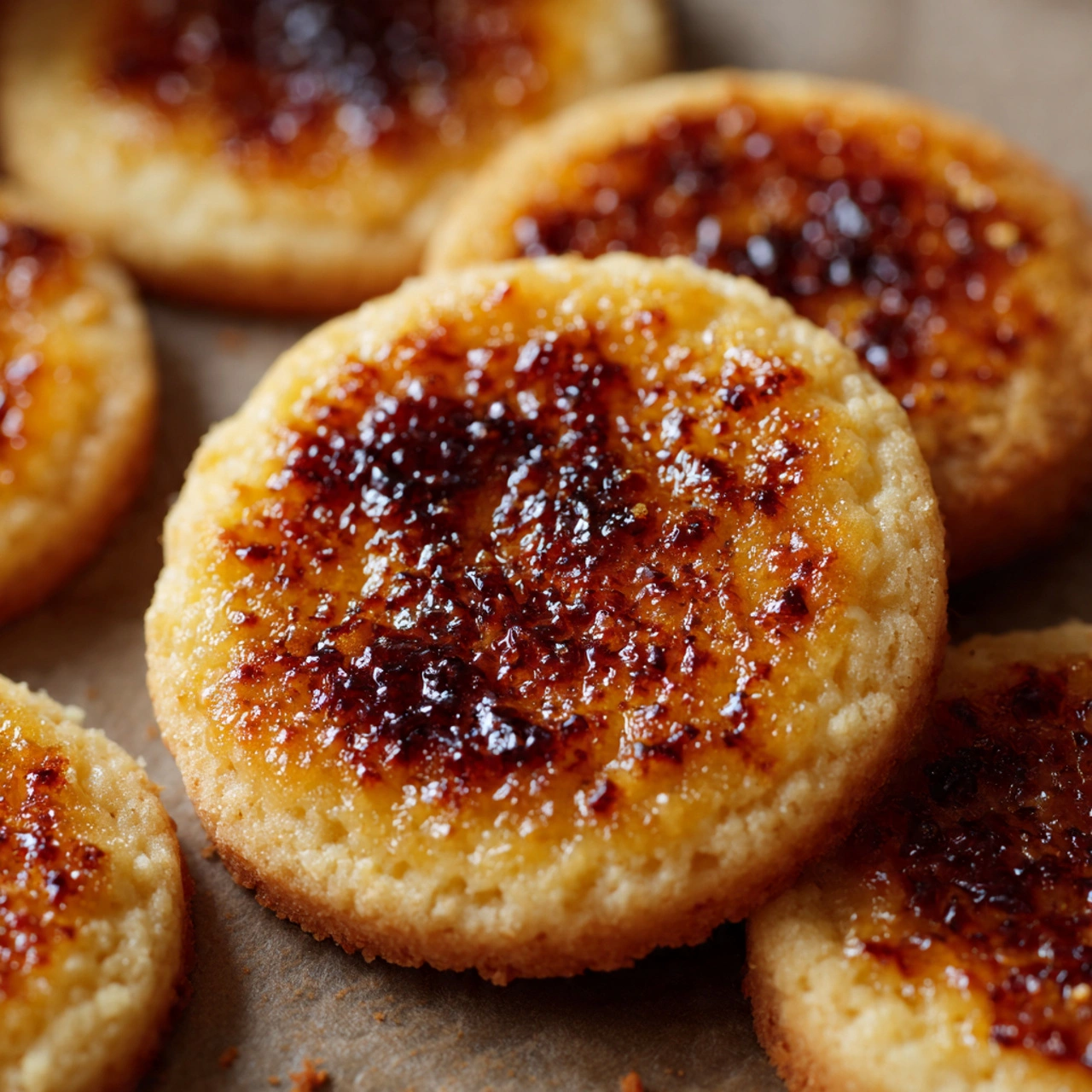
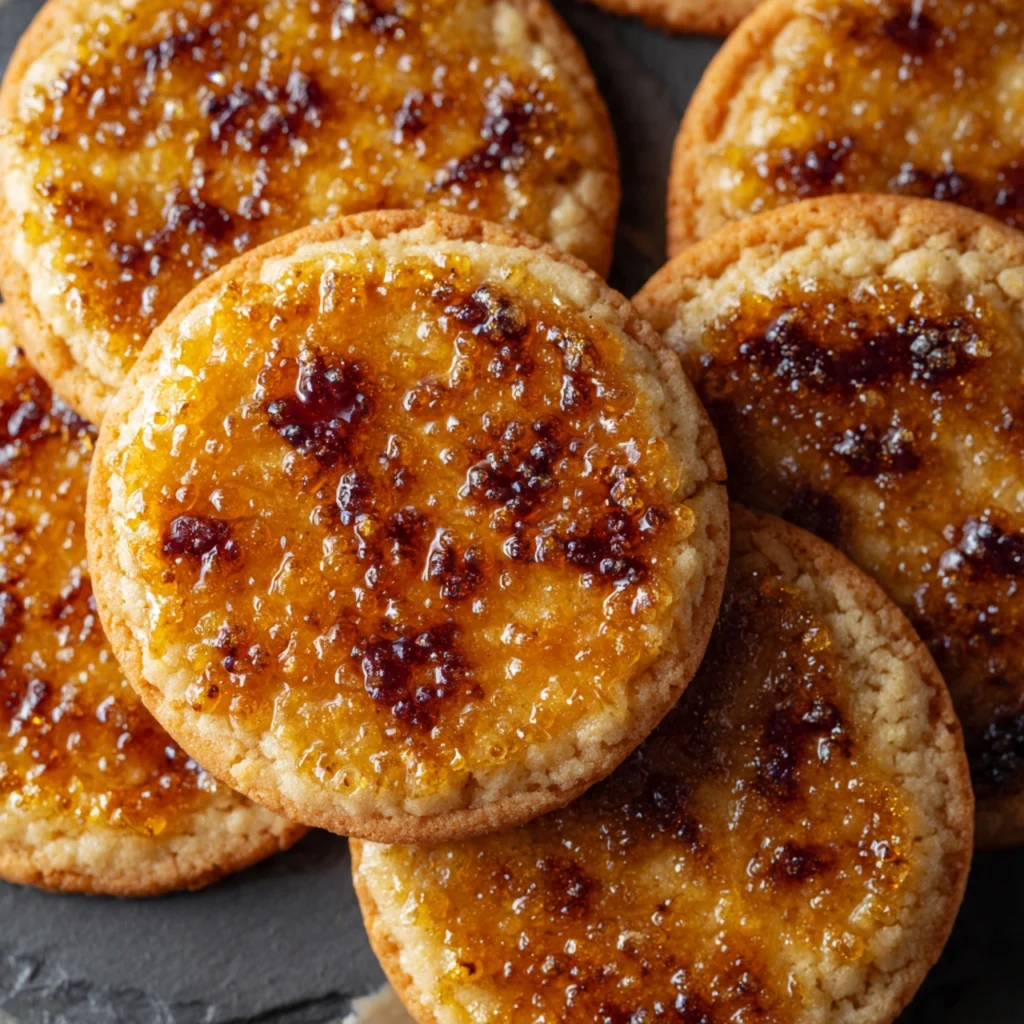
Crème brûlée cookies represent the perfect fusion of two beloved desserts, bringing together the crispy caramelized sugar topping of classic crème brûlée with the chewy, buttery goodness of homemade cookies in one extraordinary treat. These aren’t your average sugar cookies—they’re sophisticated showstoppers that feature a luscious vanilla custard center and that signature crackly, torched sugar shell that makes crème brûlée so irresistible.
The first time I encountered these hybrid desserts at a French patisserie, I was completely captivated by the genius of the concept. How do you capture the essence of an elegant, spoon-cracking custard dessert in portable cookie form? The answer lies in creating a sturdy yet tender cookie base, filling it with a stabilized vanilla custard that won’t ooze out during baking, and finishing with that theatrical caramelized sugar top that provides the satisfying crack we all crave.
What makes crème brûlée cookies particularly special is the textural contrast they deliver. You get the brittle snap of caramelized sugar giving way to soft cookie, followed by the creamy richness of vanilla custard—all in a single bite. It’s an experience that feels fancy and complicated, yet the technique is surprisingly achievable for home bakers willing to follow a few key steps and understand the science behind each component.
This comprehensive guide walks you through everything you need to know about creating bakery-quality crème brûlée cookies in your own kitchen. From making the perfect custard filling that holds its shape to achieving that restaurant-worthy caramelized top without a blowtorch, you’ll learn professional techniques that elevate these cookies from good to absolutely spectacular. Whether you’re baking for a special occasion, looking to impress guests, or simply treating yourself to something extraordinary, these cookies deliver every single time.
Ingredients For Crème Brûlée Cookies
For the Cookie Dough:
- 2¾ cups (345g) all-purpose flour
- 1 teaspoon baking powder
- ½ teaspoon salt
- 1 cup (226g) unsalted butter, softened
- 1 cup (200g) granulated sugar
- 1 large egg
- 1 large egg yolk
- 2 teaspoons pure vanilla extract
- ½ teaspoon vanilla bean paste (optional, for extra vanilla flavor)
Vanilla Custard Filling Ingredients (Crème Brûlée Cookies):
- 1 cup (240ml) whole milk
- 3 large egg yolks
- ¼ cup (50g) granulated sugar
- 3 tablespoons (24g) cornstarch
- 2 tablespoons (28g) unsalted butter
- 1½ teaspoons pure vanilla extract
- Seeds from 1 vanilla bean (or additional ½ teaspoon vanilla extract)
- Pinch of salt
For the Caramelized Topping:
- ½ cup (100g) granulated sugar (for sprinkling and torching)
- Additional sugar as needed for torching
Optional Additions:
- White chocolate chips (for extra richness)
- A splash of rum or bourbon (in the custard for depth)
Step-by-Step Instructions
Step 1: Prepare the Vanilla Custard Filling
Start with the custard since it needs time to chill completely. In a medium saucepan, heat the milk over medium heat until it just begins to steam and tiny bubbles form around the edges—don’t let it boil. While the milk heats, whisk together the egg yolks, sugar, and cornstarch in a separate bowl until smooth and pale yellow. This mixture should be completely lump-free.
Once the milk is ready, slowly pour about half of it into the egg mixture while whisking constantly. This process, called tempering, gradually raises the temperature of the eggs without scrambling them. Pour the tempered egg mixture back into the saucepan with the remaining milk, whisking continuously.
Return the saucepan to medium heat and cook, whisking constantly, until the custard thickens dramatically—this usually takes three to five minutes. You’ll know it’s ready when it coats the back of a spoon thickly and you can draw a clean line through it with your finger. The mixture should have the consistency of thick pudding.
Remove from heat and immediately whisk in the butter, vanilla extract, vanilla bean seeds, and salt until the butter melts completely and everything is silky smooth. Transfer the custard to a shallow bowl, press plastic wrap directly onto the surface to prevent a skin from forming, and refrigerate for at least two hours or until completely cold and firm. The custard can be made up to two days ahead.
Step 2: Make the Cookie Dough
In a medium bowl, whisk together the flour, baking powder, and salt. Set this dry mixture aside. In a large mixing bowl or the bowl of a stand mixer, beat the softened butter and sugar together on medium-high speed for three to four minutes until light, fluffy, and pale in color. This creaming process incorporates air that helps create tender cookies.
Add the whole egg, egg yolk, vanilla extract, and vanilla bean paste if using. Beat on medium speed until everything is fully incorporated and smooth, scraping down the sides of the bowl as needed. The mixture should look creamy and uniform.
Reduce mixer speed to low and gradually add the flour mixture, mixing just until the dough comes together with no dry streaks remaining. Be careful not to overmix, which can lead to tough cookies. The dough should be soft but not sticky—if it feels too soft to handle, refrigerate it for fifteen to twenty minutes.
Step 3: Shape the Cookie Bases
Preheat your oven to 350°F (175°C) and line two large baking sheets with parchment paper or silicone baking mats. Scoop the dough into balls using a medium cookie scoop (about two tablespoons of dough each). Roll each portion into a smooth ball between your palms.
Here’s the critical technique: place each dough ball on the prepared baking sheet, then use your thumb or the back of a rounded tablespoon to create a deep indentation in the center of each cookie, pressing down about three-quarters of the way through but not completely to the bottom. The wells should be substantial—about one inch wide and deep enough to hold a generous amount of custard. Space cookies about two inches apart as they will spread slightly during baking.
Step 4: Bake the Cookie Shells
Bake for 10-12 minutes, just until the edges are set and very lightly golden but the centers still look slightly underdone. The cookies should not brown significantly. Here’s an important tip: if the indentations puffed up during baking (which often happens), immediately press them back down using the back of a spoon while the cookies are still hot and pliable.
Let the cookies cool on the baking sheets for five minutes, then carefully transfer them to a wire rack to cool completely. The cookies need to be completely cold before filling, or the custard will melt and become runny.
Step 5: Fill with Custard
Once your custard is thoroughly chilled and your cookie shells are completely cool, it’s time to assemble. Give the custard a good stir to loosen it slightly—it should be thick but spreadable. Transfer the custard to a piping bag fitted with a round tip, or simply use a zip-top bag with a corner snipped off.
Pipe the custard into each cookie indentation, filling it generously but not overfilling to the point where it mounds too high above the cookie edge. You want a nice thick layer of custard that comes just to or slightly above the rim of the cookie. Use the back of a small spoon to smooth the tops if needed.
At this point, you can refrigerate the filled cookies for up to twenty-four hours before adding the caramelized topping, making these perfect for advance preparation.
Step 6: Create the Signature Caramelized Top
This is where these cookies transform into true crème brûlée magic. Sprinkle a generous, even layer of granulated sugar over the custard filling on each cookie—about one to two teaspoons per cookie. The sugar should completely cover the custard.
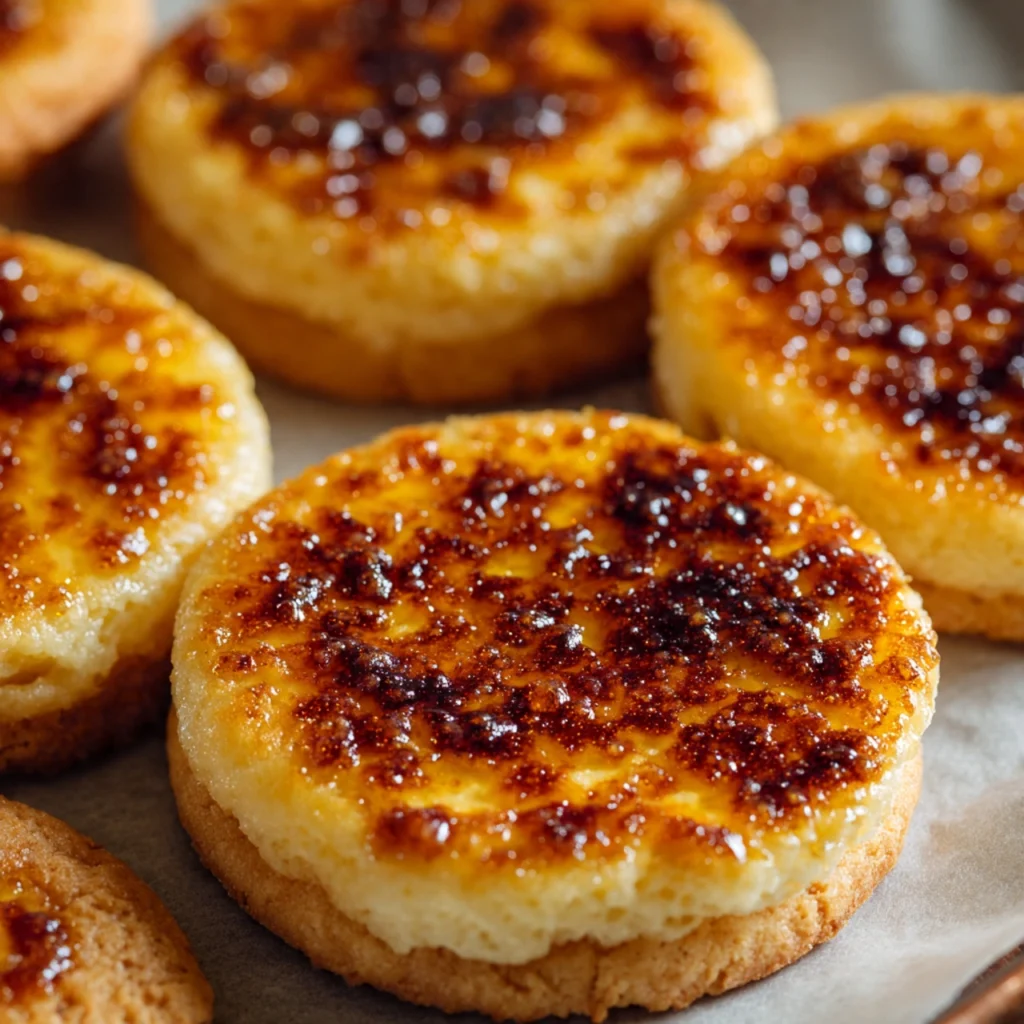
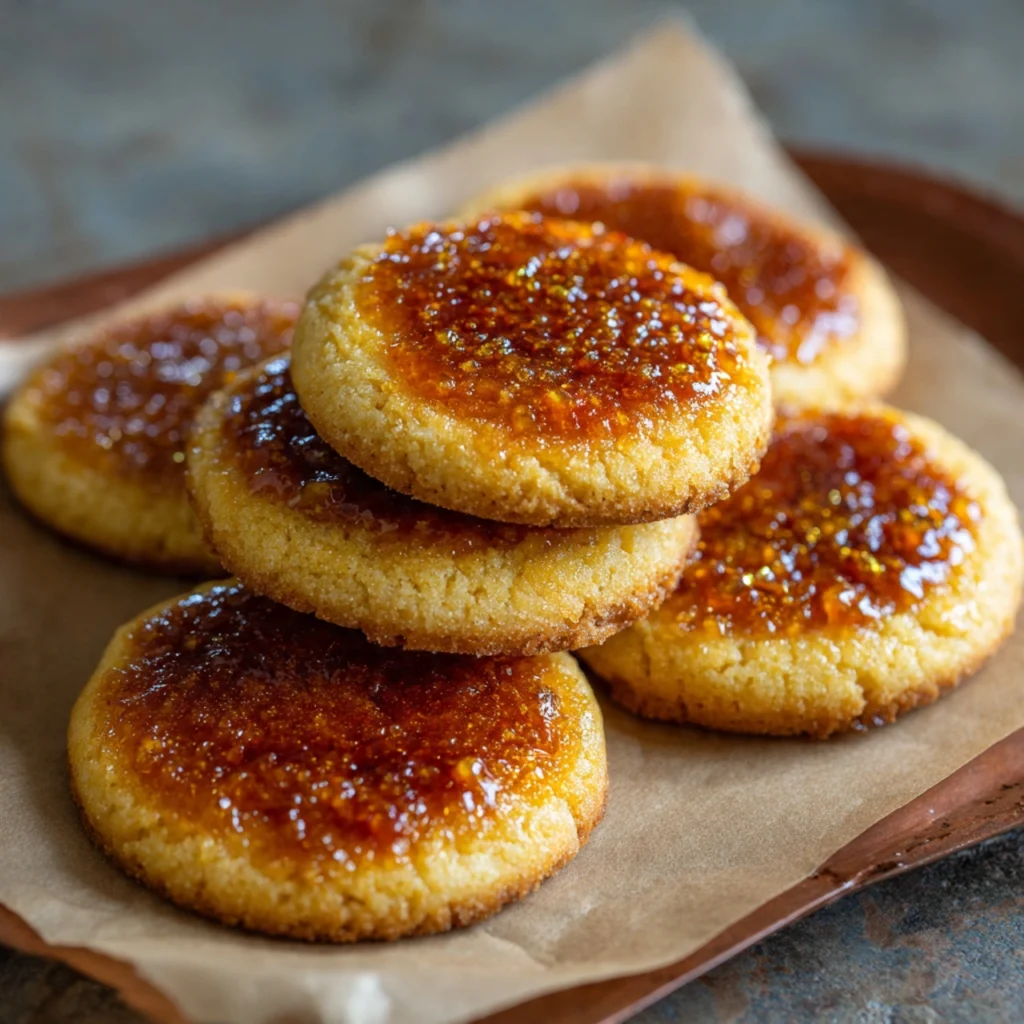
Using a kitchen blowtorch, carefully caramelize the sugar by holding the flame about two inches above the surface and moving it in circular motions. The sugar will first melt, then bubble, and finally turn a beautiful amber color with some darker spots. This takes about thirty to sixty seconds per cookie. The caramelized sugar will be very hot, so let the cookies sit for a minute or two before serving to allow the sugar to harden into that signature crackling shell.
No blowtorch? You can achieve similar results under your oven’s broiler. Place the filled, sugared cookies on a baking sheet and position them on the top rack under the broiler for one to two minutes, watching constantly. The sugar will caramelize quickly, so don’t walk away. However, the blowtorch gives you more control and more dramatic results.
Step 7: Serve and Enjoy
Serve the cookies within a few hours of caramelizing for the best texture contrast. The caramelized sugar top stays crisp for several hours but will eventually soften from moisture in the custard. That first crack through the sugar shell into the creamy custard is pure dessert perfection.
Pro Tips for the Perfect Crème Brûlée Cookie
Master the Custard Consistency
The custard needs to be thick enough to stay put in the cookie and not ooze out when bitten. That’s why cornstarch is essential—it creates a firmer set than eggs alone. Don’t reduce the cornstarch thinking you can make it more “authentic” to traditional Crème Brûlée Cookies, which uses only eggs. Cookie custard requires that extra stability.
Chill Everything Thoroughly
Both the custard and the cookies must be completely cold before assembly. Warm cookies will melt the custard, causing it to become runny and potentially soak into the cookie base, making everything soggy. Patience here pays off dramatically.
Create Deep Enough Indentations
Shallow wells don’t hold enough custard to create that true Crème Brûlée Cookies experience. Press firmly with your thumb or spoon, creating a well that’s at least three-quarters of an inch deep. If the indentation bakes closed, re-press it immediately while cookies are hot.
Use Real Vanilla for Maximum Impact
Since vanilla is the star flavor in both the cookie and custard, quality matters enormously. Pure vanilla extract is essential, and vanilla bean paste or scraped vanilla bean seeds take it to another level with those beautiful flecks and intense flavor.
Control Your Blowtorch Technique
Keep the torch moving constantly to avoid burning spots on the sugar. Hold it at the right distance—too close and you’ll burn it, too far and nothing will happen. Practice on a small plate of sugar before working on your precious Crème Brûlée Cookies if you’re new to using a blowtorch.
Sugar Selection for Caramelizing
Regular granulated white sugar works perfectly for the caramelized top. Superfine or caster sugar melts faster but can burn quickly if you’re not careful. Avoid powdered sugar entirely—it contains cornstarch that prevents proper caramelization.
Consider a Double Sugar Layer
For extra-thick caramelized tops, sprinkle sugar, torch it, let it cool for thirty seconds, then add another layer of sugar and torch again. This creates an even more substantial crackly top that provides maximum textural contrast.
Common Mistakes to Avoid
Overmixing the Cookie Dough
Once you add flour to the butter-sugar mixture, mix only until just combined. Overmixing develops gluten, resulting in tough, cake-like cookies instead of tender, buttery ones. Stop mixing the moment you see no more dry flour streaks.
Skipping the Tempering Step for Custard
Pouring hot milk directly into cold eggs will give you scrambled eggs, not silky custard. Always temper by adding hot liquid gradually to eggs while whisking constantly. This slow temperature increase is non-negotiable for smooth custard.
Not Cooking Custard Long Enough
Undercooked custard won’t set properly and will be runny even after chilling. Cook until noticeably thick and you can draw a clean line through it on the back of a spoon. When in doubt, cook thirty seconds longer rather than removing it too soon.
Filling Cookies While Still Warm
I cannot stress this enough—both components must be completely cold. Warm cookies and warm custard are a disaster waiting to happen. Plan your timing so both have adequate cooling time, or make components a day ahead.
Torching Too Quickly or Aggressively
Patience yields the best caramelized tops. Rushing with the torch on high heat creates burnt spots and uneven caramelization. Use medium heat and keep the torch moving in a steady pattern across the entire surface.
Storing Assembled Cookies Too Long
While the components store well separately, fully assembled cookies with caramelized tops are best enjoyed within a few hours. The sugar shell will eventually soften and the custard can make the cookie base soggy if left too long. Assemble and caramelize just before serving for optimal results.
Using Low-Fat Dairy in Custard
Whole milk creates rich, creamy custard with proper texture. Skim or low-fat milk produces thin, watery custard that lacks body and flavor. The fat content is essential for both taste and structure, so don’t try to make this healthier by reducing fat.
Storage and Serving Suggestions
Storing Cookie Components Separately
For best results, store unbaked Crème Brûlée Cookies dough wrapped tightly in plastic wrap in the refrigerator for up to three days or frozen for up to three months. Thaw frozen dough overnight in the refrigerator before using.
Baked cookie shells without filling can be stored in an airtight container at room temperature for up to five days. They can also be frozen for up to two months—just make sure they’re completely cool and store them in a single layer to prevent breaking.
The custard filling keeps in an airtight container in the refrigerator for up to four days. Just stir it before using to restore smooth consistency.
Storing Assembled Cookies
Once filled with custard but before caramelizing, cookies can be refrigerated in a single layer (covered loosely with plastic wrap) for up to twenty-four hours. Add the caramelized sugar topping just before serving.
After caramelizing, the Crème Brûlée Cookies are best eaten within two to four hours for optimal texture. The sugar shell will gradually soften as it absorbs moisture from the custard. If you must store them longer, keep them refrigerated in a single layer, but understand that the textural magic will diminish.
Freezing Considerations
While you can freeze the individual components, I don’t recommend freezing assembled Crème Brûlée Cookies. The custard doesn’t freeze particularly well and can become grainy upon thawing. The caramelized sugar also becomes sticky and loses its snap. Freeze components separately for best results.
Serving Suggestions and Presentations
These cookies are elegant enough to serve at dinner parties, bridal showers, or afternoon tea. Present them on a nice platter, perhaps with fresh berries and a dusting of powdered sugar on the plate for visual appeal.
They pair beautifully with:
- Coffee or espresso (the slight bitterness complements the sweet cookies)
- Champagne or dessert wine (for sophisticated entertaining)
- Fresh berries (raspberries or strawberries add tartness)
- Vanilla ice cream (creating a cookies-and-cream experience)
For a dramatic presentation at parties, caramelize the tops tableside using a kitchen torch. Guests love the theater of watching the sugar transform into crackling amber perfection.
Portion Sizes and Yield
These are rich, decadent Crème Brûlée Cookies—one or two per person is typically sufficient, especially if serving as dessert after a meal. For tea parties or dessert tables, plan on two cookies per guest, allowing people to return for seconds if desired.
FAQ For Crème Brûlée Cookies
Can I make these without a kitchen torch?
Yes, though the results won’t be quite as controlled. Use your oven’s broiler by placing the sugared cookies on the top rack about four inches from the heating element. Watch constantly—it takes only one to two minutes and can go from perfect to burnt in seconds. Rotate the pan halfway through for even caramelization. The torch is easier and gives you more precision, but the broiler method absolutely works.
Why did my custard turn out lumpy?
Lumps usually result from either not whisking the egg mixture thoroughly before adding hot milk, or from cooking the custard over heat that’s too high, causing the eggs to curdle. Make sure your cornstarch is completely dissolved in the egg mixture with no lumps before you start. Whisk constantly while cooking and use medium heat, not high. If you do get lumps, strain the custard through a fine-mesh sieve before chilling.
Can I use vanilla pudding mix instead of making custard from scratch?
While instant pudding is convenient, it doesn’t provide the same rich, authentic flavor or proper consistency. Homemade custard has a silkier texture and more complex vanilla taste that makes these cookies special. If you’re short on time, cook-and-serve pudding mix (following package directions but using slightly less liquid for thicker consistency) is a better shortcut than instant pudding.
How far in advance can I make these cookies?
You can prepare the cookie dough up to three days ahead and refrigerate it, or freeze it for up to three months. Bake the cookie shells up to two days ahead and store at room temperature. Make the custard up to two days ahead and refrigerate. Fill the Crème Brûlée Cookies up to twenty-four hours before serving. The only thing you must do close to serving time is the caramelized sugar topping—add that no more than two to four hours before eating for best texture.
My cookie indentations puffed back up during baking. What went wrong?
This is actually very common! The dough naturally wants to expand and fill in during baking. The solution is simple: immediately after removing cookies from the oven while they’re still soft and hot, use the back of a spoon to gently press the indentations back down. They’ll hold that shape as they cool. If you miss this window and they cool completely, you can’t fix it—just make shallower wells next time or press more firmly initially.
Can I make these cookies smaller or larger?
Absolutely! Adjust the size of your dough balls and the baking time accordingly. Mini versions using one tablespoon of dough bake in about eight minutes and make adorable two-bite treats. Larger Crème Brûlée Cookies using three tablespoons of dough need about fourteen minutes. Just make sure to create appropriately sized indentations for whatever size you choose.
Will these work with dietary restrictions?
Making these gluten-free is challenging because the cookie structure is important for holding the custard. You could try a 1:1 gluten-free flour blend, though the texture will differ. For dairy-free versions, full-fat coconut milk can replace the milk in the custard, and vegan butter can substitute regular butter in both components, though results vary. Unfortunately, the eggs are essential and difficult to replace successfully. These are naturally vegetarian but not vegan due to eggs and dairy.
Nutrition Information (Approximate Values per Serving)
Serving Size: 1 filled cookie with caramelized topping
- Calories: 245
- Total Fat: 12g
- Saturated Fat: 7g
- Trans Fat: 0g
- Cholesterol: 85mg
- Sodium: 95mg
- Total Carbohydrates: 32g
- Dietary Fiber: 0.5g
- Sugars: 18g
- Protein: 3g
- Vitamin A: 8% DV
- Calcium: 4% DV
- Iron: 6% DV
Note: Nutrition information is approximate and will vary based on exact ingredients used and cookie size. These are indulgent treats meant for special occasions rather than everyday snacking.
Conclusion
Creating crème brûlée cookies at home might seem ambitious, but breaking down the process into manageable steps reveals that this impressive dessert is absolutely achievable for home bakers. The magic lies in understanding that you’re essentially making three components—tender cookies, stable custard, and caramelized sugar—then bringing them together in perfect harmony. Each element is straightforward on its own, and when combined, they create something truly extraordinary.
What I love most about these Crème Brûlée Cookies is how they capture the essence of an elegant restaurant dessert in portable, shareable form. That satisfying crack through the caramelized sugar top, the creamy vanilla custard, and the buttery cookie base deliver all the textural contrasts and flavors that make crème brûlée such a beloved classic. Yet unlike the traditional ramekin version, these cookies can be served at room temperature, passed around at parties, or packaged as special gifts.
The technique you’ll develop making these Crème Brûlée Cookies—custard preparation, proper cookie shaping, and sugar caramelization—extends far beyond this single recipe. You’re learning fundamental pastry skills that will serve you well in countless other baking adventures. And while they require more effort than basic cookies, the results are so spectacular that every minute feels worthwhile.
These aren’t everyday cookies—they’re celebration cookies, special occasion cookies, impress-your-guests cookies. They’re the cookies you make when you want to show someone you care, when you want to elevate a simple gathering into something memorable, or when you just want to treat yourself to something truly special. So gather your ingredients, clear some time, and prepare to create cookie magic that would make any French patisserie proud!
Happy baking, and may your sugar always caramelize perfectly!
Print8 Secrets to Perfect Crème Brûlée Cookies (The Ultimate Guide)
These spectacular crème brûlée cookies combine buttery vanilla cookies with rich custard filling and a caramelized sugar top that cracks just like classic crème brûlée. Each cookie delivers multiple textures—crispy caramelized sugar shell, soft tender cookie, and smooth vanilla custard center—creating an elegant handheld version of the beloved French dessert. While they look impressive and taste sophisticated, the technique is achievable for home bakers with clear instructions and proper preparation. Perfect for special occasions, these cookies never fail to wow guests.
- Prep Time: 30 minutes
- Cook Time: 12 minutes
- Total Time: 3 hours (including chilling time for custard)
- Yield: 24 cookies
- Category: Dessert, Cookies, French Pastry
- Method: Baking, Torching
- Cuisine: French, French-American Fusion
- Diet: Vegetarian
Ingredients
Cookie Dough:
- 2¾ cups all-purpose flour
- 1 teaspoon baking powder
- ½ teaspoon salt
- 1 cup unsalted butter, softened
- 1 cup granulated sugar
- 1 large egg
- 1 large egg yolk
- 2 teaspoons pure vanilla extract
- ½ teaspoon vanilla bean paste (optional)
Vanilla Custard:
- 1 cup whole milk
- 3 large egg yolks
- ¼ cup granulated sugar
- 3 tablespoons cornstarch
- 2 tablespoons unsalted butter
- 1½ teaspoons pure vanilla extract
- Seeds from 1 vanilla bean (or extra vanilla extract)
- Pinch of salt
Topping:
- ½ cup granulated sugar for caramelizing
Instructions
- Make custard: Heat milk until steaming. Whisk egg yolks, sugar, and cornstarch. Temper eggs by slowly adding half the hot milk while whisking. Return to pan and cook, whisking constantly, until very thick (3-5 minutes). Remove from heat, whisk in butter, vanilla, and salt. Press plastic wrap on surface and refrigerate 2+ hours until cold and firm.
- Make dough: Whisk flour, baking powder, and salt. Beat butter and sugar 3-4 minutes until fluffy. Add egg, egg yolk, and vanilla, mixing until smooth. Add flour mixture on low speed just until combined.
- Shape cookies: Preheat oven to 350°F. Line baking sheets with parchment. Scoop 2-tablespoon portions of dough, roll into balls. Place on sheets and press deep indentations with thumb, creating wells for custard.
- Bake 10-12 minutes until edges are set but centers still soft. If wells puffed up, immediately press them back down with a spoon while hot. Cool 5 minutes on sheets, then transfer to wire rack to cool completely.
- Fill cookies: Stir chilled custard until smooth. Pipe or spoon custard into each cookie indentation, filling generously to just above the rim.
- Caramelize tops: Sprinkle 1-2 teaspoons sugar evenly over custard on each cookie. Use kitchen torch to caramelize sugar, moving flame in circles until amber colored (30-60 seconds per cookie). Alternatively, broil for 1-2 minutes watching carefully.
- Let caramelized sugar harden 1-2 minutes before serving.
Notes
- Custard must be completely cold and firm before filling cookies
- Cookie shells must be completely cool before filling
- Create deep indentations—at least ¾ inch deep
- If wells puff during baking, re-press immediately while hot
- Use whole milk for rich, creamy custard—low-fat won’t work as well
- Real vanilla extract is essential; imitation won’t provide proper flavor
- Caramelize sugar just before serving for best texture (within 2-4 hours)
- Components can be made ahead: dough (3 days refrigerated), shells (2 days), custard (2 days)
- Don’t assemble more than 24 hours before serving
- Kitchen torch provides best control for caramelizing; broiler works but requires vigilance