Introduction: The Creamy Garlic Butter Baked Salmon That Became My Signature Dish
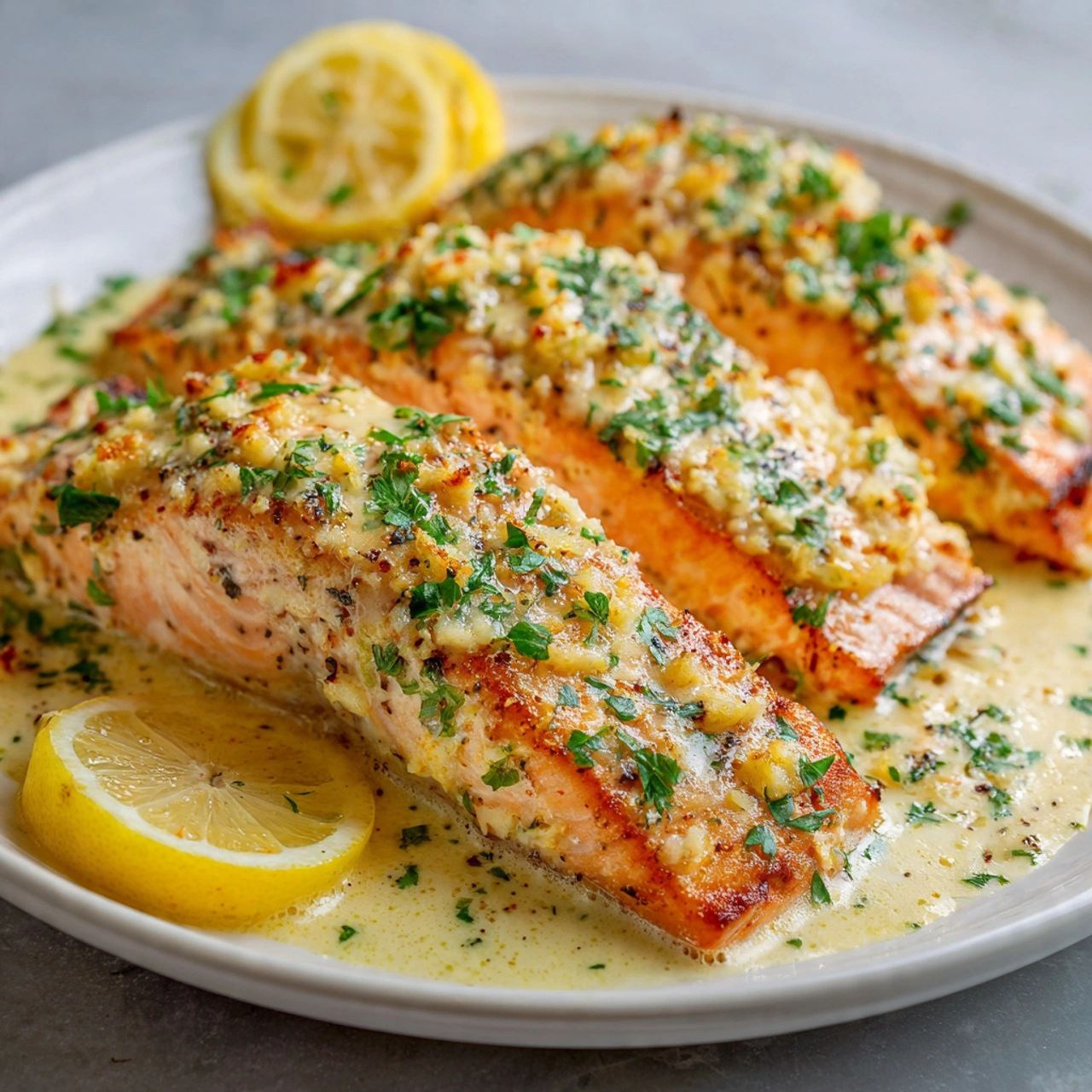
This Creamy Garlic Butter Baked Salmon is the recipe that transformed me from someone who occasionally ate salmon to someone who craves it weekly. With tender, perfectly cooked salmon bathed in a luxurious sauce made with butter, garlic, cream, and a touch of white wine, this dish delivers restaurant-quality elegance while being surprisingly simple to prepare at home.
I discovered this recipe during a particularly stressful week when I needed something special for dinner but had exactly zero energy for complicated cooking. I had salmon fillets in the refrigerator that needed using, a pint of heavy cream, and the usual suspects—butter, garlic, and pantry staples.
The magic happens in the oven, where the salmon gently bakes while the sauce reduces and thickens around it, creating this incredible symbiosis of flavors. The butter provides richness, the garlic adds aromatic depth, the cream creates silky texture, and a splash of white wine brightens everything with a subtle acidity that prevents the dish from feeling heavy.
What makes this creamy garlic butter baked salmon so special is its incredible versatility. It’s fancy enough to serve for date night, anniversary dinners, or when you’re trying to impress your in-laws, yet straightforward enough for a Tuesday evening when you just want something delicious without the fuss.
Beyond the outstanding flavor, this Creamy Garlic Butter Baked Salmon recipe checks all the boxes for a perfect weeknight meal: it’s ready in about 25 minutes from start to finish, it uses simple ingredients you probably already have, it requires only one baking dish, and it’s naturally gluten-free and low-carb.
Understanding What Makes Perfect Creamy Garlic Butter Baked Salmon
Before we dive into the Creamy Garlic Butter Baked Salmon recipe, let’s talk about what distinguishes truly exceptional creamy garlic butter baked salmon from the mediocre versions you might encounter.
The Salmon: The foundation is high-quality salmon that’s thick, firm, and fresh. Wild-caught salmon (like sockeye or king) has more pronounced flavor and firmer texture, while farm-raised Atlantic salmon is milder, fattier, and more readily available. Both work beautifully in this recipe—choose based on your preference and budget.
The Sauce: This isn’t just melted butter with garlic—it’s a proper pan sauce that’s been carefully constructed to create layers of flavor. The butter provides richness and carries flavor, the cream adds body and luxurious texture, the garlic contributes aromatic depth, and the wine or lemon juice provides brightness and balance.
The Cooking Method: Baking at the right temperature is crucial. Too high and the salmon overcooks before the sauce reduces; too low and you end up with pale, steamed fish in a watery sauce. The sweet spot is around 375°F, which allows the salmon to cook gently while the sauce bubbles and thickens.
The Balance: The best versions of this dish achieve perfect balance—rich but not heavy, garlicky but not overwhelming, creamy but not cloying. Every element should be noticeable yet harmonious, with no single flavor dominating.
When these components come together correctly, you get salmon that’s tender and moist with a sauce that clings beautifully to every bite, creating that restaurant-quality experience that makes you forget you’re eating at home.
Ingredients for Perfect Creamy Garlic Butter Baked Salmon
This recipe serves 4 people generously. The ingredient list is refreshingly short for such an impressive dish.
Main Components:
- 4 salmon fillets (6-8 ounces each, skin-on or skinless)
- 4 tablespoons unsalted butter, divided
- 6 cloves garlic, minced (about 2 tablespoons)
- 1 cup heavy cream (or half-and-half for lighter version)
- 1/3 cup dry white wine (or use chicken broth or extra lemon juice)
- 2 tablespoons fresh lemon juice (about 1 lemon)
- 1/2 cup grated Parmesan cheese (freshly grated, not the powdered stuff)
- 2 tablespoons fresh parsley, chopped (plus more for garnish)
- 1 teaspoon Italian seasoning (or use dried basil and oregano)
- 1/2 teaspoon salt (adjust to taste)
- 1/4 teaspoon black pepper
- 1/4 teaspoon red pepper flakes (optional, for gentle heat)
- 1 tablespoon olive oil
Optional Add-Ins and Variations:
- Fresh dill instead of parsley for herbaceous flavor
- Sun-dried tomatoes, chopped, for tangy sweetness
- Spinach leaves wilted into the sauce
- Capers for briny punch
- Fresh thyme or tarragon for sophisticated herb notes
- Dijon mustard (1 teaspoon) for depth
How to Make Creamy Garlic Butter Baked Salmon Ingredient Deep Dive
Salmon Selection: Look for fillets that are firm to the touch, have a bright color (ranging from deep red for sockeye to pink-orange for Atlantic), and smell like the ocean—fresh and clean, never fishy. Skin-on salmon is easier to cook without it falling apart, but skinless works if you prefer. Aim for fillets that are 1 to 1.5 inches thick for even cooking.
Butter: Unsalted butter gives you control over the salt level in the dish. European-style butter with higher fat content (like Kerrygold) creates an even richer sauce, but standard American butter works beautifully.
Heavy Cream: This creates the luxurious, velvety sauce. Half-and-half works for a lighter version, though the sauce will be thinner. Don’t use milk—it’s too thin and will curdle. For dairy-free, coconut cream (the thick part from a can of coconut milk) works surprisingly well.
Garlic: Fresh garlic is essential here—this is not the place for garlic powder or pre-minced jarred garlic. Six cloves might seem like a lot, but the flavor mellows considerably as it cooks in butter and cream. If you’re a serious garlic lover, add an extra clove or two.
White Wine: A dry white wine like Sauvignon Blanc, Pinot Grigio, or Chardonnay adds acidity and depth. The alcohol cooks off, leaving behind complex flavor. If you don’t cook with wine, substitute with chicken broth plus an extra tablespoon of lemon juice.
Parmesan: Freshly grated Parmesan (real Parmigiano-Reggiano) melts smoothly and adds nutty, salty depth. The pre-grated stuff in the green can doesn’t melt well and won’t create the same creamy texture.
Fresh Herbs: Fresh parsley adds brightness and color. Fresh dill is a classic pairing with salmon and works beautifully in this sauce. Avoid dried parsley—it tastes like lawn clippings.
Step-by-Step Instructions: Creating Your Creamy Garlic Butter Baked Salmon
1: Prepare the Salmon (5 minutes)
- Preheat your oven to 375°F (190°C). Position a rack in the center of the oven.
- Prepare your baking dish: Grease a 9×13-inch baking dish or oven-safe skillet with 1 tablespoon of the butter. You want a dish large enough that the salmon fillets fit comfortably without overlapping but aren’t swimming in space.
- Pat the salmon completely dry with paper towels. This is crucial—wet salmon won’t brown properly and will dilute your sauce. If there are any pin bones, remove them with tweezers or pliers.
- Season the salmon: Drizzle the olive oil over the salmon fillets and rub it in on all sides. Season both sides generously with salt and black pepper. Place the salmon fillets in the prepared baking dish, skin-side down if using skin-on salmon.
2: Create the Garlic Butter Base (5 minutes)
- Melt the remaining 3 tablespoons of butter in a medium saucepan over medium heat. Don’t let it brown—you want it melted and foamy but not browned.
- Add the minced garlic to the melted butter. Sauté for 1-2 minutes, stirring constantly, until the garlic is fragrant and just beginning to turn golden. Watch it carefully—burnt garlic is bitter and will ruin the sauce. You want that beautiful, aromatic garlic scent to fill your kitchen.
- Add the wine (if using) and lemon juice to the garlic butter. Let it bubble for about 1 minute. This step cooks off the raw alcohol flavor while the acid brightens everything.
3: Build the Cream Sauce (3 minutes)
- Pour in the heavy cream, stirring to combine with the garlic butter mixture. Bring to a gentle simmer—you should see small bubbles around the edges, not a rolling boil.
- Add the Parmesan cheese, Italian seasoning, and red pepper flakes if using. Stir until the cheese melts completely and the sauce is smooth. The sauce should coat the back of a spoon but still be pourable—it will thicken more as it bakes.
- Taste and adjust seasoning. Add more salt if needed (remember, Parmesan is salty, so taste first), black pepper, or a squeeze of lemon juice if it needs brightness.
- Stir in the fresh parsley, reserving a bit for garnish.
4: Bake the Salmon (12-15 minutes)
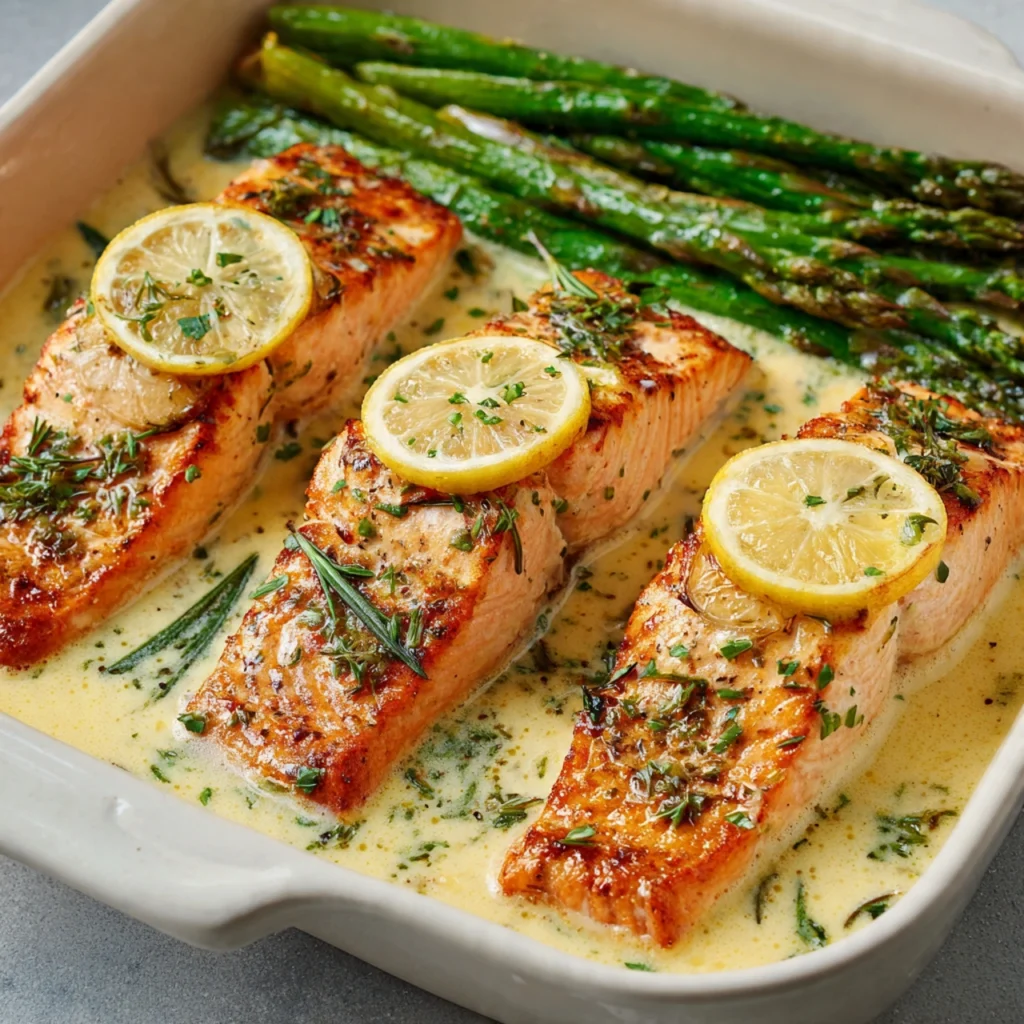
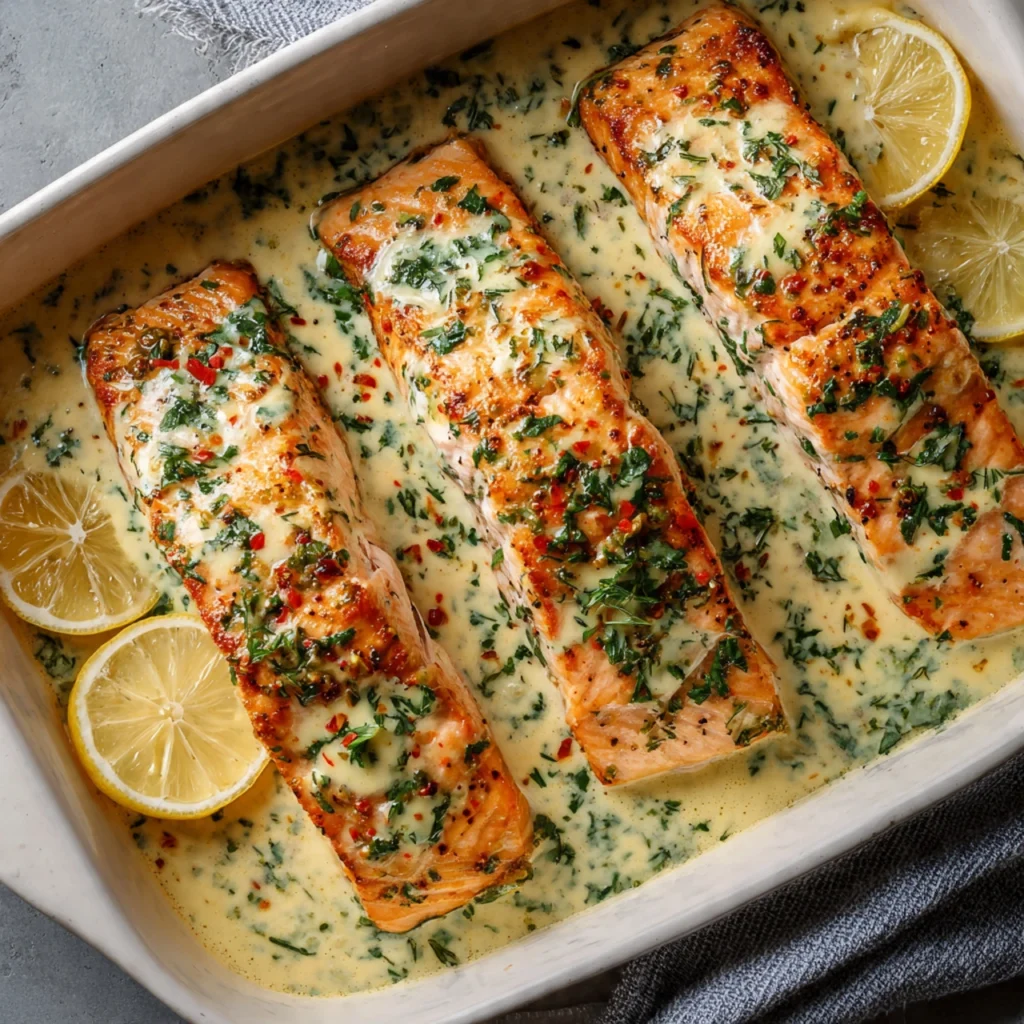
- Pour the sauce over and around the salmon fillets in the baking dish. Spoon some of the sauce directly over the top of each fillet so they’re nicely coated. The salmon should be partially submerged but not completely covered.
- Bake uncovered for 12-15 minutes, depending on the thickness of your fillets. You’re aiming for an internal temperature of 145°F (63°C) for fully cooked salmon, or 125-130°F (52-54°C) if you prefer your salmon medium-rare in the center.
- Test for doneness: The salmon should flake easily with a fork and be opaque throughout (or slightly translucent in the very center if you like it medium-rare). The sauce should be bubbling and slightly thickened.
- If the sauce seems thin, carefully transfer the salmon to serving plates and place the baking dish on the stovetop over medium-high heat. Simmer the sauce for 2-3 minutes until it reduces and thickens to your liking, then spoon it over the salmon.
5: Garnish and Serve (2 minutes)
- Remove from the oven and let the salmon rest for 2-3 minutes. This allows the juices to redistribute and the sauce to thicken slightly.
- Garnish generously with fresh parsley and additional lemon slices if desired.
- Serve immediately, spooning plenty of that incredible creamy garlic butter sauce over each portion. Make sure everyone gets their fair share of sauce!
Pro Tips for Perfect Creamy Garlic Butter Baked Salmon
After making this Creamy Garlic Butter Baked Salmon recipe dozens of times, I’ve learned tricks that consistently produce exceptional results.
Achieving Perfectly Cooked Salmon
The difference between moist, tender salmon and dry, overcooked salmon is just a few minutes:
- Use a thermometer: This is the most reliable way to achieve perfect salmon. Insert an instant-read thermometer into the thickest part of the fillet.
- 120°F (49°C): Rare, very soft and translucent
- 125°F (52°C): Medium-rare, my preference—tender with a slight translucent center
- 135°F (57°C): Medium, fully opaque but still moist
- 145°F (63°C): Well-done, USDA recommended
- Don’t overcook: Salmon continues cooking after you remove it from the oven (carryover cooking). Pull it when it’s 5 degrees below your target temperature.
- Thickness matters: A 1-inch thick fillet takes about 12-14 minutes at 375°F. Thicker fillets need more time; thinner ones need less. Check early and often.
- The flake test: Gently press the salmon with a fork. It should flake into large, moist pieces. If it’s hard to flake, it needs more time. If it crumbles, it’s overcooked.
Creating the Perfect Sauce
A great sauce can elevate good salmon to spectacular:
- Don’t skip the wine: Even if you don’t drink wine, cooking with it adds complexity. The alcohol cooks off completely. If you absolutely can’t use wine, add extra lemon juice and a splash of chicken broth.
- Quality cream matters: Ultra-pasteurized cream doesn’t reduce as well as regular pasteurized cream. Check the expiration date—fresher cream works better.
- Fresh Parmesan is essential: The pre-shredded stuff contains anti-caking agents that prevent smooth melting. Grate it fresh from a block.
- Adjust consistency: Like your sauce thicker? Simmer it longer on the stovetop after removing the salmon. Too thick? Whisk in a tablespoon or two of cream or white wine.
- Make it ahead: You can make the sauce up to 2 hours ahead and refrigerate it. Reheat gently before pouring over the salmon and baking.
Creamy Garlic Butter Baked Salmon Flavor Variations
This recipe is incredibly versatile:
- Tuscan-style: Add sun-dried tomatoes and baby spinach to the sauce
- Mediterranean: Use oregano and basil, add capers and tomatoes
- French-inspired: Replace parsley with fresh tarragon and add Dijon mustard
- Lemon-herb: Double the lemon juice and add fresh dill
- Spicy: Increase red pepper flakes or add a pinch of cayenne
Serving Suggestions Creamy Garlic Butter Baked Salmon
Make this a complete meal:
- Low-carb: Serve over cauliflower rice, zucchini noodles, or roasted vegetables
- Classic: Pair with mashed potatoes, rice, or pasta—the sauce is incredible over all of them
- Vegetable sides: Asparagus, green beans, broccoli, or Brussels sprouts
- Bread: Crusty bread is essential for sopping up the sauce
Common Mistakes to Avoid
Understanding what can go wrong helps you prevent these issues and troubleshoot in the moment.
Overcooking the Salmon
This is the number one mistake that ruins otherwise perfect salmon:
- The problem: Dry, chalky salmon that’s unpleasant to eat
- The cause: Baking too long or at too high a temperature
- The fix: Use a thermometer and check early. Remember that salmon continues cooking after you remove it from the oven.
Prevention: Set a timer for 10 minutes and start checking. It’s better to undercook slightly (you can always put it back) than to overcook (which can’t be reversed).
Watery, Thin Sauce
Nobody wants a puddle of thin liquid instead of creamy sauce:
- The problem: Sauce that’s more like milk than cream
- The cause: Not reducing the sauce enough, using low-fat cream, or adding too much liquid
- The fix: After removing the salmon, place the baking dish on the stovetop and simmer until the sauce thickens
Prevention: Use full-fat heavy cream, not half-and-half or milk. Let the sauce simmer and reduce slightly before baking.
Burnt Garlic
Burnt garlic is bitter and ruins the entire dish:
- The problem: Dark brown or black garlic bits that taste acrid
- The cause: Heat too high or cooking too long before adding liquid
- The fix: Unfortunately, you have to start over with fresh garlic
- Prevention: Use medium heat (not high) and add the wine/lemon juice within 1-2 minutes of adding garlic
Broken or Curdled Sauce
If your sauce looks separated or grainy:
- The problem: Cream has separated or cheese has clumped
- The cause: Heat too high, boiling instead of simmering, or adding cheese to boiling liquid
- The fix: Remove from heat and whisk vigorously. Add a tablespoon of cold cream and whisk until smooth
- Prevention: Keep the heat at medium or medium-low. The sauce should simmer gently, never boil hard
Unevenly Cooked Salmon
If parts of your salmon are overcooked while other parts are raw:
- The problem: The thick end is raw while the thin end is dry
- The cause: Using fillets with uneven thickness
- The fix: Next time, tuck the thin tail end under itself to create more uniform thickness, or cut fillets into equal portions
- Prevention: Choose fillets with even thickness, or ask your fishmonger to portion them uniformly
Fishy-Tasting Salmon
If your salmon tastes overly fishy rather than fresh and clean:
- The problem: Off-putting, strong fish flavor
- The cause: Old salmon or not removing the bloodline (dark red/brown flesh)
- The fix: There’s no fixing old fish—the sauce might mask it slightly, but quality matters
- Prevention: Buy the freshest salmon possible and remove any dark, bloody portions before cooking
Storage and Serving Suggestions
Proper storage maintains quality, while thoughtful serving makes this elegant dish even more memorable.
How to Store Creamy Garlic Butter Baked Salmon
Refrigerator:
- Store leftover salmon and sauce in an airtight container for up to 3 days
- Keep the salmon and sauce together—the sauce helps keep the fish moist
- Reheat gently in the microwave at 50% power in 30-second intervals, or in a covered skillet over low heat with a splash of cream
Freezer: While you can freeze this dish, I don’t particularly recommend it. The cream sauce can separate when thawed and reheated, and the salmon texture suffers. If you must freeze:
- Freeze in airtight containers for up to 2 months
- Thaw overnight in the refrigerator
- Reheat gently and whisk the sauce to re-emulsify
Make-Ahead Options:
- Prepare the sauce up to 2 days ahead and refrigerate
- Season the salmon up to 24 hours ahead and refrigerate
- When ready to cook, bring the sauce to room temperature or gently warm it, pour over salmon, and bake as directed
Creamy Garlic Butter Baked Salmon Serving Suggestions
Temperature: This dish is best served hot, straight from the oven. The contrast between the hot, creamy sauce and tender salmon is part of its appeal.
Plating:
- Place salmon on a warm plate
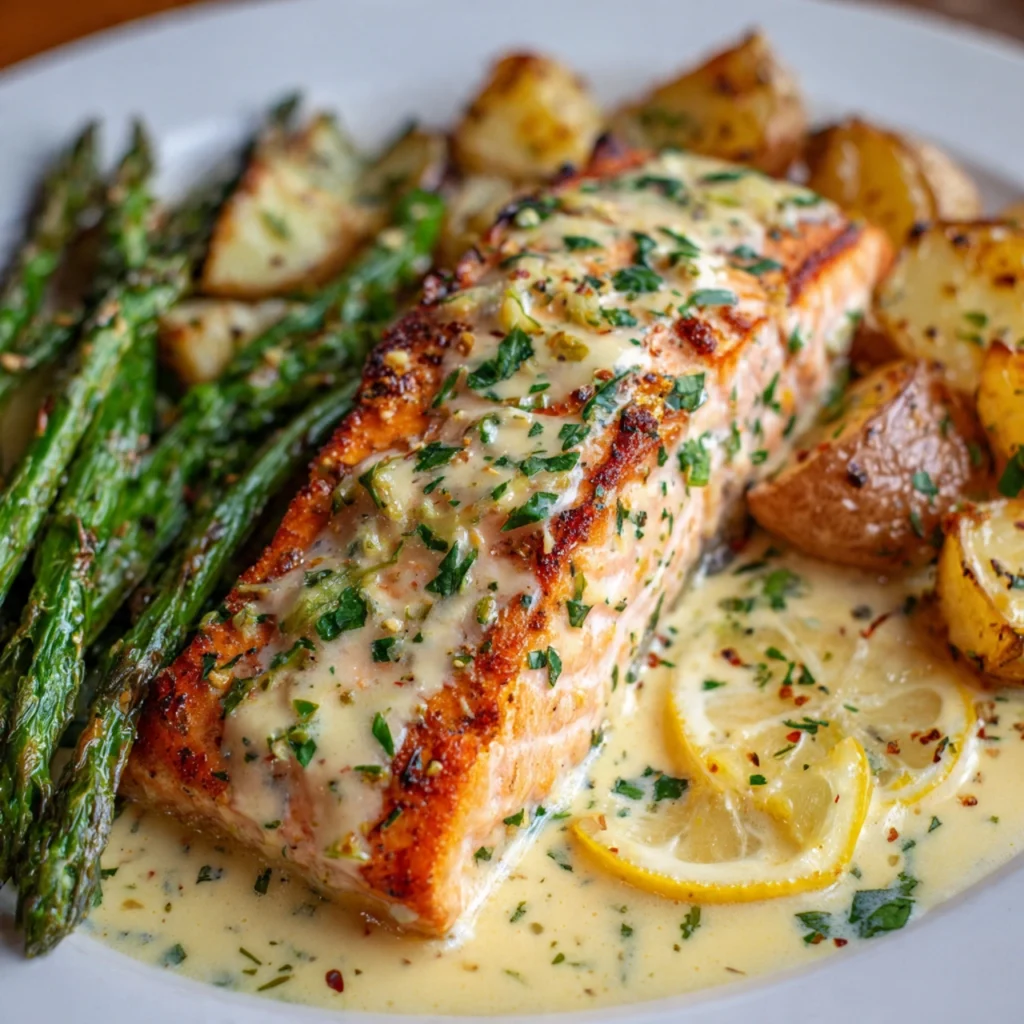
- Spoon generous amounts of sauce over and around the fish
- Garnish with fresh parsley and a lemon wedge
- For elegance, add a sprinkle of extra Parmesan
Side Dishes: This rich salmon pairs beautifully with:
- Starches: Garlic mashed potatoes, buttered pasta, rice pilaf, crusty bread
- Vegetables: Roasted asparagus, sautéed green beans, steamed broccoli, Brussels sprouts
- Salads: Simple arugula salad with lemon vinaigrette, Caesar salad, cucumber tomato salad
Occasions: Perfect for:
- Romantic date nights or anniversary dinners
- Special occasion family dinners
- Holiday meals (especially Christmas or Easter)
- Dinner parties (easily doubles or triples)
- Weeknight dinners when you want something special but quick
Wine Pairing:
- White: Chardonnay, Sauvignon Blanc, Pinot Grigio
- Light Red: Pinot Noir (if you prefer red with salmon)
- Sparkling: Champagne or Prosecco for celebrations
Portion Sizes:
- Light meal: 4-5 oz salmon fillet per person
- Standard: 6 oz fillet (as in this recipe)
- Hearty: 8 oz fillet for big appetites
Frequently Asked Questions
Can I use frozen salmon for this recipe?
Yes, but with proper thawing. Never cook salmon from frozen—it cooks unevenly and releases too much moisture. Thaw frozen salmon in the refrigerator overnight (never at room temperature). Once thawed, pat it very dry with paper towels to remove excess moisture before seasoning and baking. The texture and flavor will be nearly as good as fresh salmon if it was flash-frozen quickly after being caught.
What’s the best substitute for heavy cream?
Several options work depending on your dietary needs:
- Half-and-half: Creates a thinner but still creamy sauce (use 1/4 cup less and reduce longer)
- Greek yogurt: Stir in 1/2 cup at the end off heat for tangier flavor (don’t boil or it will curdle)
- Coconut cream: The thick part from canned coconut milk works for dairy-free (subtle coconut flavor)
- Cashew cream: Blend 1/2 cup raw cashews with 3/4 cup water for vegan option
Avoid regular milk—it’s too thin and will curdle. You need the fat content from cream for proper sauce consistency.
Can I make this recipe dairy-free?
Yes! Replace the butter with vegan butter or olive oil, use coconut cream instead of heavy cream, and omit the Parmesan (or use nutritional yeast for a cheesy flavor). The sauce won’t be quite as rich, but it’s still delicious. Add an extra tablespoon of lemon juice to brighten the coconut cream.
How do I know when the salmon is perfectly cooked?
The most reliable method is using an instant-read thermometer. Insert it into the thickest part of the fillet:
- 125°F (52°C): Medium-rare, my preference—tender with slightly translucent center
- 135°F (57°C): Medium, opaque throughout but still moist
- 145°F (63°C): Well-done, USDA recommendation
Without a thermometer, look for these visual cues:
- The salmon should flake easily with a fork
- It should be opaque (not translucent) throughout or slightly translucent in the very center
- The flesh should have changed from dark pink/red to light pink/orange
- It should feel firm but not hard when pressed gently
Can I use a different type of fish?
Absolutely! This creamy garlic butter sauce works beautifully with other fish:
- Halibut: Firm, mild, takes about 15-18 minutes
- Cod: Flaky and mild, cooks in 12-15 minutes
- Sea bass: Buttery texture, 12-14 minutes
- Mahi-mahi: Firm and slightly sweet, 15-18 minutes
- Trout: Similar to salmon, 12-15 minutes
Adjust cooking time based on the thickness of your fillets. Delicate fish like tilapia or sole aren’t ideal—they’re too fragile and thin.
Can I make this in advance for a dinner party?
Partially yes. Here’s my recommended approach:
- Make the sauce: Prepare the garlic butter cream sauce up to 2 days ahead and refrigerate
- Prep the salmon: Season the salmon and refrigerate up to 24 hours ahead
- To serve: Bring the sauce to room temperature or gently warm it. Pour over salmon and bake as directed
Don’t assemble and bake ahead of time—reheated baked salmon is never as good as fresh. If you need to prep further ahead, bake the salmon, store it refrigerated, then gently reheat in a 275°F oven covered with foil for about 10 minutes.
Why is my sauce not thickening?
Several reasons can cause thin sauce:
- Not enough reduction: The sauce needs to simmer and reduce. If it’s thin after baking, transfer salmon to plates and simmer the sauce on the stovetop for 2-3 minutes
- Too much liquid: Make sure you’re using the measurements as written
- Low-fat cream: Half-and-half or light cream won’t thicken as much as heavy cream
- Not enough Parmesan: The cheese helps thicken the sauce
To thicken thin sauce: Make a slurry of 1 teaspoon cornstarch mixed with 1 tablespoon cold water. Whisk it into the simmering sauce and cook for 1 minute.
Nutrition Information (Per Serving)
Based on 4 servings as written, with 6-ounce salmon fillets.
Serving Size: 1 salmon fillet (6 oz) with approximately 1/3 cup sauce
- Calories: 520-580
- Total Fat: 38-42g
- Saturated Fat: 18-22g
- Omega-3 Fatty Acids: 2.5-3g
- Cholesterol: 180-210mg
- Sodium: 480-580mg
- Total Carbohydrates: 4-6g
- Dietary Fiber**: 0g
- Sugars: 2-3g
- Protein: 40-45g
- Vitamin D: 110-130% Daily Value
- Vitamin B12: 120% Daily Value
- Selenium: 85% Daily Value
- Potassium: 20% Daily Value
Nutritional Highlights
This dish is surprisingly nutritious despite being indulgent:
Salmon provides:
- High-quality complete protein (40+ grams per serving)
- Omega-3 fatty acids (EPA and DHA) for heart and brain health
- Vitamin D (rare in foods, especially important in winter)
- B vitamins, especially B12
- Selenium, potassium, and other minerals
- Astaxanthin (the antioxidant that gives salmon its pink color)
The sauce contributes:
- Calcium from cream and Parmesan
- Vitamin A from butter and cream
- Beneficial compounds from garlic (allicin)
To make it lighter:
- Use half-and-half instead of heavy cream (saves about 100 calories and 10g fat per serving)
- Reduce butter to 2 tablespoons (saves about 50 calories per serving)
- Use 5-ounce salmon portions instead of 6 ounces (saves about 80 calories)
- Serve over zucchini noodles or cauliflower rice instead of pasta or potatoes
Despite the cream and butter, this is a nutrient-dense meal that fits well into most balanced diets. The high protein and healthy fats keep you satisfied, and it’s naturally low-carb and gluten-free.
Conclusion: Your New Go-To Salmon Recipe
This Creamy Garlic Butter Baked Salmon is the recipe that will make you fall in love with cooking salmon at home. It’s proof that restaurant-quality doesn’t have to mean restaurant-complicated. With just a few simple ingredients and about 25 minutes, you can create something truly spectacular that looks impressive, tastes incredible, and makes everyone at the table happy.
What I love most about this recipe is how it manages to be both elegant and effortless. The sauce is so good that it elevates the salmon from “healthy dinner” to “special occasion meal,” yet it comes together in one pan with minimal effort. The leftovers (if you have any) are just as delicious the next day, making this perfect for meal prep too.
I hope this comprehensive guide gives you everything you need to make this showstopping salmon with complete confidence. Whether you’re cooking for a special someone, hosting a dinner party, or just treating yourself on a Tuesday, this creamy garlic butter baked salmon will exceed your expectations.
So preheat that oven, grab your best salmon fillets, and get ready to create something magical. The combination of tender fish and that incredible sauce might just ruin you for all other salmon recipes—but in the very best way possible!
PrintCreamy Garlic Butter Baked Salmon: Restaurant-Quality Dinner in 25 Minutes!
Tender, flaky salmon baked in a luscious creamy garlic butter sauce with Parmesan, white wine, and fresh herbs. Restaurant-quality elegance ready in just 25 minutes. Perfect for special dinners or easy weeknights!
- Prep Time: 10 minutes
- Cook Time: 15 minutes
- Total Time: 25 minutes
- Yield: 4 servings
- Category: Main Course, Dinner, Seafood
- Method: Baked, One-Pan
- Cuisine: American, Italian-Inspired
- Diet: Gluten Free
Ingredients
- 4 salmon fillets (6-8 oz each)
- 4 tbsp unsalted butter, divided
- 6 cloves garlic, minced
- 1 cup heavy cream
- 1/3 cup dry white wine
- 2 tbsp fresh lemon juice
- 1/2 cup grated Parmesan
- 2 tbsp fresh parsley, chopped
- 1 tsp Italian seasoning
- 1/2 tsp salt
- 1/4 tsp black pepper
- 1/4 tsp red pepper flakes (optional)
- 1 tbsp olive oil
Instructions
- Preheat oven to 375°F; grease baking dish with 1 tbsp butter
- Pat salmon dry; drizzle with olive oil and season with salt and pepper
- Place salmon in baking dish
- Melt remaining 3 tbsp butter in saucepan over medium heat
- Add garlic; sauté 1-2 minutes until fragrant
- Add wine and lemon juice; simmer 1 minute
- Pour in cream; bring to gentle simmer
- Add Parmesan, Italian seasoning, and red pepper flakes; stir until smooth
- Taste and adjust seasoning
- Stir in parsley
- Pour sauce over and around salmon
- Bake uncovered 12-15 minutes until salmon reaches 145°F
- Let rest 2-3 minutes
- Garnish with fresh parsley and serve with extra sauce
Notes
- Use instant-read thermometer for perfect doneness (125°F for medium-rare, 145°F for well-done)
- If sauce is thin, simmer on stovetop to reduce after removing salmon
- Fresh Parmesan is essential for smooth sauce
- Don’t skip the wine—it adds important flavor depth
- Salmon continues cooking after removal from oven