Introduction: Why Caramelized Onion Spaghetti Is the Weeknight Gem You’ve Been Missing
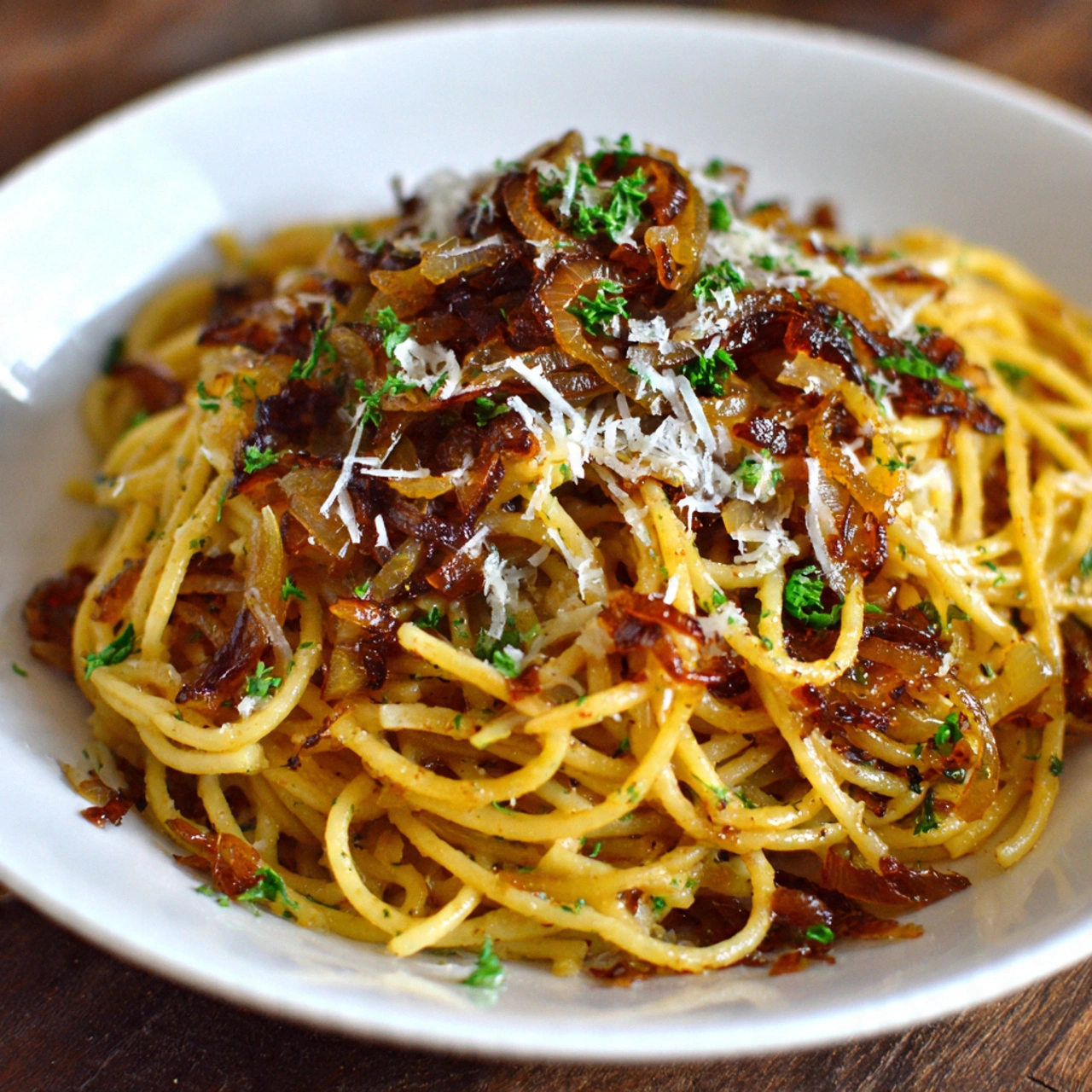
Caramelized Onion Spaghetti sounds almost too simple to be special—onions, pasta, butter, cheese—yet the result is a dish so elegant, sweet, and deeply satisfying that it’s become my secret weapon for nights when I want something that feels restaurant-quality without the restaurant effort or price tag. The first time I made this, I was skeptical that something with such a short ingredient list could deliver real flavor, but that first bite of sweet, jammy onions tossed with buttery spaghetti and sharp parmesan completely converted me.
What makes this dish truly exceptional is the slow, patient caramelization of onions. Raw onions are sharp, but cooking them gently in butter with a pinch of salt transforms them completely. Their natural sugars concentrate into a sweet, savory jam that clings to every strand of pasta, turning humble onions into something luxurious.
Even pasta purists who insist on tomato sauce or cream are won over by this combination of sweet onions, salty cheese, and perfectly cooked pasta. It’s simple yet deeply satisfying—proof that letting quality ingredients shine is sometimes all a dish needs.
Beyond flavor, this Caramelized Onion Spaghetti recipe is flexible and forgiving. Make it vegetarian or add pancetta for meat lovers, toss in herbs like thyme or sage, or finish with toasted breadcrumbs for crunch. Despite its fancy taste, it requires minimal active cooking—just 30-40 minutes of mostly hands-off caramelization—making it perfect for a relaxed weeknight dinne
Ready to discover why Caramelized Onion Spaghetti might just become your new favorite simple pasta?

Ingredients: What You’ll Need for Perfect Caramelized Onion Spaghetti
Core Ingredients (Serves 4)
- 1 pound spaghetti (or linguine, fettuccine) – The foundation
- 4 large yellow onions (about 2 pounds) – The star of the show
- 4 tablespoons unsalted butter, divided – Rich, creamy base
- 2 tablespoons olive oil – Prevents butter from burning
- 1 teaspoon salt, plus more for pasta water – Essential seasoning
- ½ teaspoon black pepper – Subtle warmth
- 1 cup freshly grated parmesan cheese (plus more for serving) – Salty, nutty finish
- Reserved pasta water (about 1 cup) – For sauce consistency
Optional Flavor Additions
- 2-3 sprigs fresh thyme – Herbal elegance
- 1 tablespoon balsamic vinegar – Adds depth and tang
- ¼ cup dry white wine – Deglazing and complexity
- 2 cloves garlic, thinly sliced – Extra aromatic depth
- Red pepper flakes – Gentle heat
- Fresh sage leaves – Earthy, savory notes
- 4 ounces pancetta or bacon, diced – For non-vegetarian version
- ¼ cup toasted breadcrumbs – Textural contrast
- Fresh parsley, chopped – Bright finishing touch
- Lemon zest – Citrus brightness
Equipment Needed
- Large, heavy-bottomed skillet or sauté pan
- Large pot for boiling pasta
- Wooden spoon or spatula
- Sharp knife and cutting board
- Box grater or microplane for cheese
- Tongs for tossing pasta
Step-by-Step Instructions: Creating Perfect Caramelized Onion Spaghetti
Step 1: Prepare and Start Caramelizing the Onions (5 minutes prep, 30-40 minutes cooking)
Peel your onions and slice them in half from root to tip. Place each half flat-side down and slice into thin half-moons, approximately ⅛ to ¼ inch thick. Consistent thickness ensures even caramelization—thick pieces won’t cook through while thin ones might burn.
In a large, heavy-bottomed skillet, heat 2 tablespoons of butter and 2 tablespoons of olive oil over medium heat. The oil raises the smoke point of butter, preventing it from burning during the long cooking process. Once the butter has melted and starts to foam, add all the sliced onions. They’ll seem like an enormous mountain that could never fit in the pan—that’s normal. Stir well to coat with the butter-oil mixture, add salt and pepper, and let them start cooking.
The onions will begin to soften and wilt dramatically within the first 5-10 minutes, reducing in volume by about half. Once they’ve wilted significantly, reduce heat to medium-low (or even low if your stove runs hot). This is where patience becomes your best friend. You’re looking for a slow, gentle cooking process that will take 30-40 minutes total.
Stir the onions every 5-7 minutes, scraping up any brown bits that form on the bottom of the pan—these fond bits are pure concentrated flavor. If the onions start to stick or burn before they’ve caramelized, reduce the heat further and add a tablespoon of water to deglaze the pan. The goal is gradual browning, not burning.
The onions are done when they’ve turned a deep golden-brown color, become very soft and jammy, and taste sweet rather than sharp. They should have reduced to about ¼ of their original volume. This process cannot be rushed—true caramelization requires time for the natural sugars to break down and develop that characteristic sweetness and complexity.
Step 2: Deglaze and Finish the Onions (Optional, 3 minutes)
If using wine or balsamic vinegar, add it to the caramelized onions once they’re deeply golden. The liquid will immediately bubble and steam—this is called deglazing. Use your wooden spoon to scrape up all the flavorful brown bits stuck to the bottom of the pan. Let the liquid reduce by half, concentrating the flavors, then remove the pan from heat. If using fresh herbs like thyme or sage, add them now and let them infuse in the residual heat.
Step 3: Cook the Pasta (10-12 minutes)
About 15 minutes before your onions finish caramelizing, bring a large pot of generously salted water to a rolling boil. The water should taste like the sea—this is your only chance to season the pasta itself. Add the spaghetti and cook according to package directions until al dente, usually 8-10 minutes.
Before draining, use a measuring cup or ladle to reserve at least 1 cup of the starchy pasta cooking water. This liquid gold is crucial for creating a silky sauce that clings to the pasta. Drain the pasta but don’t rinse it—you want that surface starch to help everything bind together.
Step 4: Combine Pasta and Onions (3 minutes)
Return the skillet with caramelized onions to medium heat. Add the remaining 2 tablespoons of butter and let it melt. Add the drained pasta directly to the skillet with the onions. Using tongs, toss everything together, lifting and turning to coat every strand of pasta with the sweet onions and butter.
Start adding reserved pasta water a few tablespoons at a time, tossing continuously. The starchy water will emulsify with the butter and onions, creating a glossy, silky sauce that coats the pasta beautifully. You may need anywhere from ¼ cup to ¾ cup of pasta water depending on how dry the mixture is—add gradually until you achieve a sauce consistency that’s creamy but not soupy.
Step 5: Add Cheese and Finish (2 minutes)
Remove the skillet from heat. Add about ¾ cup of freshly grated parmesan cheese and toss vigorously. The residual heat will melt the cheese, creating an even more luxurious coating on the pasta. Taste and adjust seasoning with additional salt and black pepper as needed.
If the pasta seems too thick or dry, add another splash of pasta water and toss again. The finished dish should be glossy, with sauce that clings to every strand without pooling at the bottom of the serving bowl.
Step 6: Serve Immediately
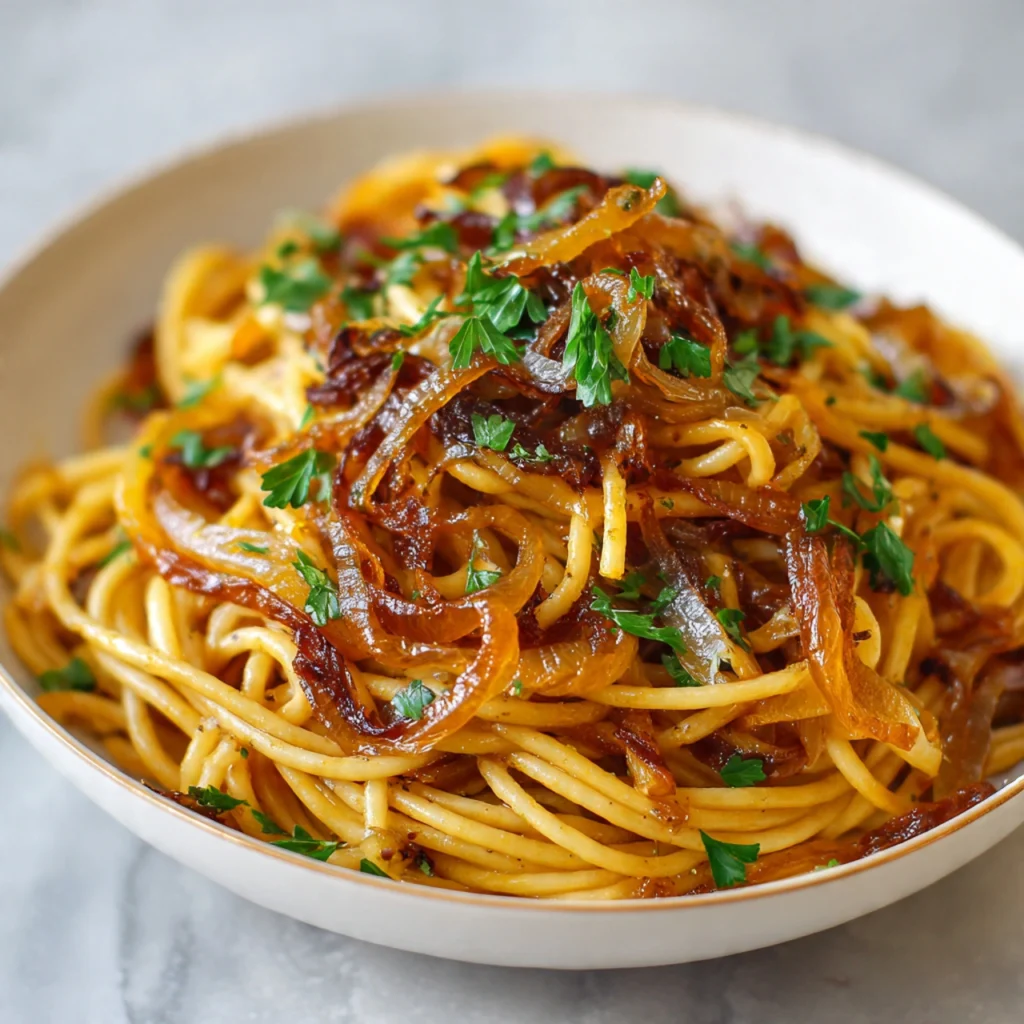
Transfer the Caramelized Onion Spaghetti to warm serving bowls. Top each portion with additional grated parmesan, a crack of fresh black pepper, and any optional garnishes like chopped parsley, toasted breadcrumbs, or a drizzle of good olive oil. Serve immediately while hot—pasta waits for no one.
Pro Tips for the Perfect Caramelized Onion Spaghetti
Tip 1: Low and Slow Wins the Caramelization Race
The single most important factor in this recipe is giving the onions enough time to properly caramelize. There’s no shortcut here—high heat creates burnt onions, not caramelized ones. Medium-low heat for 30-40 minutes is the sweet spot. If you think you’re going too slow, you’re probably going at the right pace. The transformation from sharp raw onions to sweet, jammy caramelized perfection simply requires time.
Tip 2: Yellow Onions Are Your Best Choice
While you can technically use any onion variety, yellow onions are ideal for caramelization because they have the perfect balance of sugar content and savory depth. Sweet onions (like Vidalia) caramelize faster but can become overly sweet and one-dimensional. Red onions work but have a sharper flavor even when caramelized. White onions lack the complexity yellow onions provide. Stick with yellow for the most balanced, deeply flavorful result.
Tip 3: Slice Uniformly for Even Cooking
Take a few extra minutes to ensure your onion slices are relatively uniform in thickness. Wildly varying slice thickness means some pieces will be perfectly caramelized while others are either still raw or burnt. Consistent ⅛ to ¼ inch slices cook evenly, giving you uniformly sweet, tender onions throughout the dish.
Tip 4: Don’t Crowd the Pan
If you’re doubling this recipe, resist the urge to cram all the onions into one pan. Use two separate large skillets or caramelize in batches. Crowded onions steam instead of caramelize, releasing moisture that prevents proper browning. Each onion slice should have contact with the pan surface for optimal caramelization.
Tip 5: Fresh Parmesan Makes All the Difference
Pre-grated parmesan contains anti-caking agents that prevent it from melting smoothly into your pasta. Spend the extra three minutes grating a block of good parmigiano-reggiano yourself. The texture will be creamier and the flavor exponentially better. This isn’t the place to skimp—quality cheese elevates this simple dish significantly.
Tip 6: Save More Pasta Water Than You Think You’ll Need
It’s better to have too much reserved pasta water than too little. You can always use less, but once the pasta is drained, you can’t get that starchy water back. Reserve at least 1 full cup, even if you don’t think you’ll use it all. The right amount of pasta water is what transforms this from “pasta with onions” to “silky, restaurant-quality pasta.”
Tip 7: Toss, Don’t Stir
When combining the pasta with the onions and sauce, use tongs to lift and toss rather than stirring with a spoon. Tossing coats every strand evenly and gently, preventing pasta from breaking and ensuring the sauce clings properly. Professional chefs toss pasta rather than stirring it for good reason—it’s simply more effective.
Tip 8: Finish with a Knob of Cold Butter
For extra richness and glossiness, add one final tablespoon of cold butter to the finished pasta off the heat and toss vigorously. This French technique called “mounting” creates an incredibly silky, luxurious sauce that catches the light beautifully. It’s optional but transforms the dish from great to extraordinary.
Common Mistakes to Avoid When Making Caramelized Onion Spaghetti
Mistake 1: Rushing the Onion Caramelization
This is the cardinal sin that ruins countless batches of this pasta. People get impatient and turn up the heat, thinking they can speed up the process. High heat doesn’t caramelize onions—it burns them. Proper caramelization requires 30-40 minutes at low to medium-low heat. There are no shortcuts. Plan accordingly and embrace the wait. The difference between properly caramelized and hastily browned onions is the difference between an mediocre dish and an exceptional one.
Mistake 2: Under-Salting the Pasta Water
Bland pasta cannot be fixed later. The cooking water is your only opportunity to season the pasta itself. It should taste noticeably salty—like seawater. Many people are too timid with salt here and end up with pasta that tastes flat even after adding cheese and seasoned onions. Use at least 1-2 tablespoons of salt per gallon of pasta water.
Mistake 3: Rinsing the Cooked Pasta
Never rinse pasta intended for a hot dish. Rinsing washes away the surface starch that helps sauce cling to the pasta. That starch is also what makes the pasta water so valuable for creating silky sauces. Drain the pasta and immediately toss it with the onions while both are hot.
Mistake 4: Adding Cheese While the Pan Is Too Hot
If you add parmesan while the skillet is still over direct heat, the cheese can become grainy and clumpy instead of melting smoothly. Always remove the pan from heat before adding cheese. The residual heat is plenty to melt it into a creamy coating without the risk of the cheese breaking or becoming stringy.
Mistake 5: Not Reserving Enough Pasta Water
Some people drain their pasta completely without reserving any cooking water, then realize too late that they need it to create sauce. By then it’s gone forever and they’re left with dry, clumpy pasta. Make reserving pasta water a non-negotiable habit—scoop out at least a cup before draining.
Mistake 6: Overcooking the Pasta
Pasta continues cooking from residual heat after draining and especially when tossed with hot onions. If you cook it to fully tender in the boiling water, it will be mushy by the time it’s combined with the sauce. Cook pasta one minute shy of al dente, then let it finish cooking in the skillet with the onions and pasta water.
Mistake 7: Using Pre-Minced Garlic (If Adding Garlic)
If you’re adding garlic to this recipe, fresh sliced garlic is essential. Pre-minced jarred garlic has a harsh, metallic flavor that clashes with the sweet onions. Take 30 seconds to thinly slice fresh garlic cloves—the flavor improvement is dramatic.
Mistake 8: Letting the Pasta Sit After Combining
Pasta is meant to be eaten immediately after saucing. As it sits, it absorbs liquid and the sauce becomes dry and clumpy. Serve Caramelized Onion Spaghetti within 5 minutes of combining everything. If you’re serving a crowd, work quickly or consider cooking in batches so everyone gets hot, properly sauced pasta.

Storage and Serving Suggestions for Caramelized Onion Spaghetti
How to Store
Best Fresh: Like most pasta dishes, Caramelized Onion Spaghetti is genuinely best served immediately after preparation. The texture and sauce consistency are at their peak in the first 10 minutes after combining.
Refrigerator: Store leftovers in an airtight container for up to 3 days. The pasta will absorb the sauce and become drier as it sits. When reheating, you’ll need to add liquid to restore the original sauce consistency.
Freezer: Pasta with butter-based sauces doesn’t freeze particularly well—the sauce separates when thawed and the texture suffers. If you must freeze, store in airtight containers for up to 1 month, but expect quality degradation.
Caramelized Onions Alone: The smart make-ahead strategy is to caramelize a large batch of onions (they store beautifully) and keep them in the refrigerator for up to a week or freezer for up to 3 months. Then you can make fresh pasta whenever you want and just reheat the pre-caramelized onions. This cuts your active cooking time dramatically.
Reheating Tips
Stovetop (Best Method): Place leftover pasta in a skillet with a few tablespoons of water, broth, or cream. Heat over medium-low, tossing frequently, until warmed through. The added liquid helps restore the sauce consistency. Add a pat of butter and additional parmesan to freshen the flavor.
Microwave: Place pasta in a microwave-safe bowl, add 2-3 tablespoons of water, cover loosely, and heat in 60-second intervals, stirring between, until hot. The microwave tends to dry pasta out, so the added water is essential.
Baked Pasta Transformation: Turn leftovers into baked pasta by mixing with a little cream or béchamel, topping with extra cheese and breadcrumbs, and baking at 375°F for 20 minutes until bubbly and golden.
Serving Suggestions
Simple Weeknight Dinner: Serve the pasta in shallow bowls with a simple arugula salad dressed in lemon vinaigrette alongside. The peppery, acidic salad cuts through the rich, sweet pasta beautifully. Add crusty bread for sopping up any remaining sauce.
Date Night Presentation: Plate individual portions using tongs to create a neat pasta nest on each plate. Top with extra parmesan shavings, a drizzle of high-quality olive oil, and fresh herbs. Serve with a glass of white wine (Pinot Grigio or Sauvignon Blanc pairs beautifully).
Family Style: Toss the pasta in a large serving bowl and bring it to the table with bowls of grated parmesan, toasted breadcrumbs, red pepper flakes, and fresh parsley so everyone can customize their portion.
Add Protein: Top with grilled chicken breast, sautéed shrimp, or pan-seared scallops to turn this vegetarian pasta into a complete protein-rich meal.
Make it a Complete Meal: Serve alongside roasted vegetables (Brussels sprouts, asparagus, or broccoli), a caprese salad, or garlic bread.
Caramelized Onion Spaghetti Variation Ideas
Caramelized Onion and Bacon Spaghetti: Cook diced bacon until crispy, remove from pan, and use the bacon fat in place of some of the butter for caramelizing the onions. Sprinkle crispy bacon over the finished pasta.
Mushroom and Caramelized Onion Pasta: Sauté sliced mushrooms separately, then add to the caramelized onions before tossing with pasta.
White Wine and Herb Version: Deglaze the caramelized onions with ½ cup white wine and add fresh thyme and sage.
Creamy Caramelized Onion Pasta: Stir in ½ cup heavy cream or crème fraîche to the onions before adding the pasta for a richer, cream-based sauce.
Balsamic Caramelized Onion Spaghetti: Add 2 tablespoons balsamic vinegar to the onions near the end of cooking for sweet-tangy depth.
Blue Cheese Version: Replace half the parmesan with crumbled gorgonzola or blue cheese for a pungent, bold flavor profile.
Caramelized Onion Spaghetti Frequently Asked Questions (FAQ)
1. Can I caramelize the onions ahead of time?
Absolutely, and this is actually a great strategy for meal prep! Caramelize a large batch of onions and store them in an airtight container in the refrigerator for up to a week, or freeze for up to 3 months. When you want to make the pasta, simply reheat the caramelized onions in butter while the pasta cooks, then proceed with the recipe. This cuts your active cooking time from 40 minutes to about 15 minutes.
2. What’s the difference between caramelized onions and sautéed onions?
Sautéed onions are cooked quickly over medium-high heat for 5-10 minutes until softened and lightly browned. Caramelized onions are cooked slowly over low to medium-low heat for 30-40 minutes until deeply golden, very soft, and sweet. The long, slow cooking breaks down the onions’ natural sugars and develops complex, sweet flavors that quick-cooked onions don’t have. There’s no substitute for properly caramelized onions in this recipe.
3. Can I make this recipe vegan?
Yes! Replace the butter with high-quality olive oil or vegan butter. Skip the parmesan or use a plant-based parmesan alternative. The caramelized onions provide so much flavor that the dish remains delicious even without dairy. For extra richness, add a tablespoon of nutritional yeast along with or instead of vegan parmesan.
4. Why do my caramelized onions taste bitter?
Bitterness usually means the onions burned rather than caramelized, which happens when the heat is too high or the onions aren’t stirred frequently enough. If you notice dark brown (not golden brown) or black spots forming, your heat is too high. Reduce immediately and add a splash of water to prevent further burning. Properly caramelized onions should taste sweet and savory, never bitter.
5. Can I use a different type of pasta?
Absolutely! While spaghetti is traditional, this recipe works beautifully with linguine, fettuccine, pappardelle, bucatini, or even short pastas like penne or rigatoni. Long, thin pastas (spaghetti, linguine) create the most elegant presentation and coat well with the sauce. Wider ribbons (fettuccine, pappardelle) have more surface area for the onions to cling to. Choose based on preference—they’re all delicious.
6. How do I know when the onions are done caramelizing?
Properly caramelized onions are deep golden to light brown in color (think the color of peanut butter or caramel), very soft and jammy in texture, and taste sweet rather than sharp. They should have reduced to about ¼ of their original raw volume. If you taste them and detect any sharp, raw onion flavor, they need more time. When in doubt, caramelize longer—it’s nearly impossible to over-caramelize onions as long as your heat is low enough.
7. Can I add cream to make this pasta richer?
Yes! For a cream-based version, add ½ cup heavy cream to the caramelized onions just before adding the pasta. Let it simmer for 1-2 minutes to thicken slightly, then proceed with combining the pasta. This creates a rich, luxurious sauce similar to Alfredo but with the complex sweetness of caramelized onions. Reduce the amount of pasta water you add since the cream provides liquid.
8. What wine pairs best with Caramelized Onion Spaghetti?
The sweet, rich flavors of this pasta pair beautifully with white wines that have good acidity to cut through the butter and cheese. Try Pinot Grigio, Sauvignon Blanc, or an unoaked Chardonnay. For red wine lovers, a light, fruity Pinot Noir works surprisingly well. The key is choosing wines with enough acidity to balance the richness of the dish.
Nutrition Information(Per Serving, Based on 4 Servings)
Calories: 520 kcal
Total Fat: 18g
- Saturated Fat: 9g
- Trans Fat: 0g
Cholesterol: 35mg
Sodium: 580mg
Total Carbohydrates: 72g
- Dietary Fiber: 5g
- Sugars: 12g
Protein: 18g
Vitamin A: 8% DV
Vitamin C: 15% DV
Calcium: 22% DV
Iron: 15% DV
Potassium: 420mg
Note: Nutrition is approximate and may vary with pasta, cheese, or other ingredients. Vegetarian, easily made vegan with substitutions.
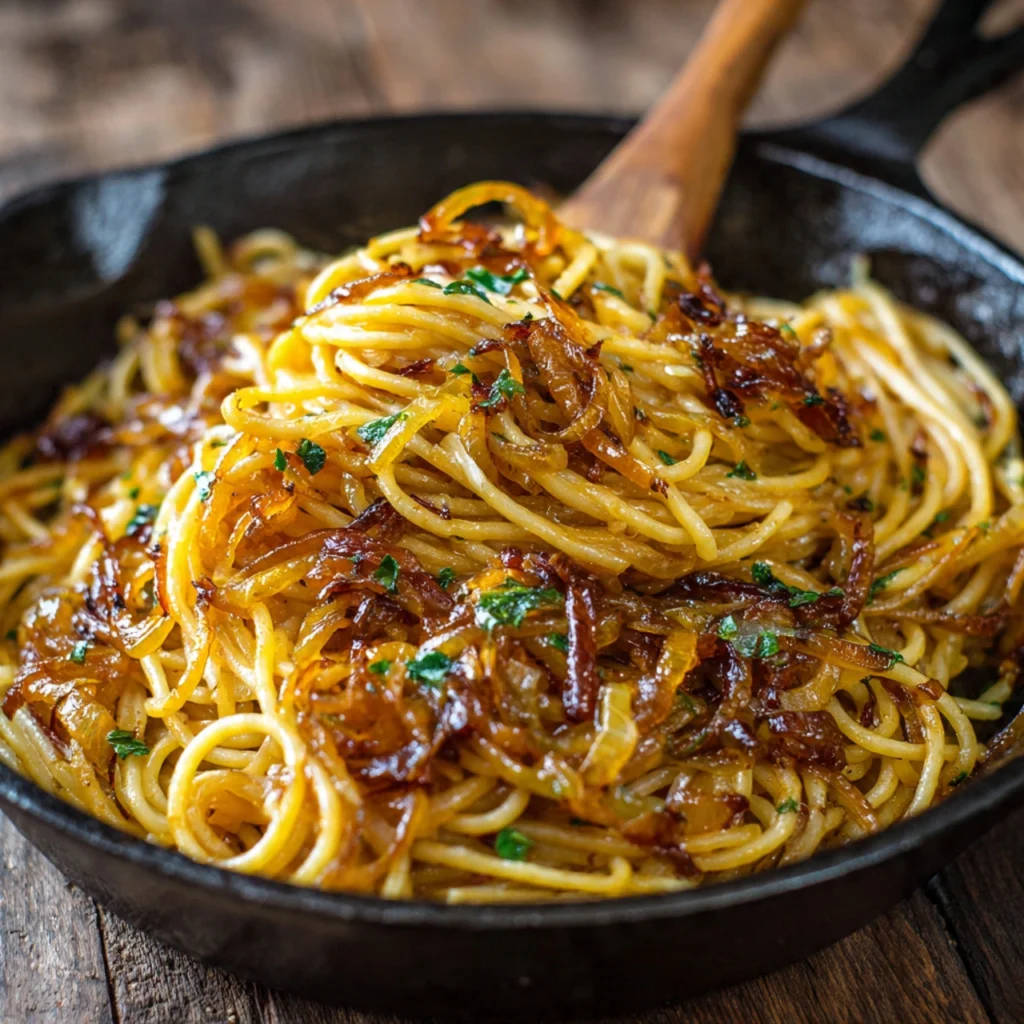
Caramelized onion pasta
Conclusion: Caramelized Onion Spaghetti Deserves a Place in Your Regular Rotation
Caramelized Onion Spaghetti proves that the best recipes don’t need long ingredient lists or complicated techniques—they just need time, patience, and respect for how simple ingredients can transform into something extraordinary. This pasta delivers sophisticated, restaurant-quality flavor from onions, butter, cheese, and time. That’s the kind of cooking magic that never gets old.
What I treasure most about this Caramelized Onion Spaghetti recipe is how it challenges the assumption that impressive food requires impressive effort. Yes, it takes 40 minutes, but 30 of those are passive time where you stir occasionally while doing other things. The actual active work is maybe 10 minutes. That’s less hands-on time than many “quick” recipes that keep you actively cooking the entire time.
Since discovering this dish, I’ve made it countless times for weeknight dinners, date nights, dinner parties, and those evenings when I want to cook something that feels special without the stress. It’s become my answer to “what should we have for dinner” on nights when takeout feels uninspired but elaborate cooking feels overwhelming.
The beauty is in how it scales with your ambition. Keep it simple with just the core ingredients for an elegant weeknight meal, or dress it up with wine, herbs, and pancetta for a dinner party showstopper. Either way, those sweet, jammy caramelized onions deliver every single time.
So grab those onions, clear your schedule for 40 peaceful minutes, and get ready to discover why sometimes the simplest recipes are the most profound. Your Caramelized Onion Spaghetti journey starts now.
Happy cooking!
PrintCaramelized Onion Spaghetti: The Surprisingly Elegant Pasta You’ll Make on Repeat
This elegant Caramelized Onion Spaghetti transforms humble onions into sweet, jammy perfection that coats every strand of pasta with deep, complex flavor. With just 6 core ingredients and 40 minutes (mostly hands-off), you’ll have restaurant-quality pasta that tastes like you spent hours in the kitchen. The slow-caramelized onions provide incredible sweetness balanced by salty parmesan and buttery richness.
- Prep Time: 10 minutes
- Cook Time: 40 minutes
- Total Time: 50 minutes
- Yield: 4 servings
- Category: Main Dish, Pasta, Dinner
- Method: Stovetop, Caramelizing
- Cuisine: Italian, Italian,American
- Diet: Vegetarian
Ingredients
Core Ingredients:
- 1 pound spaghetti
- 4 large yellow onions (about 2 pounds), thinly sliced
- 4 tablespoons unsalted butter, divided
- 2 tablespoons olive oil
- 1 teaspoon salt, plus more for pasta water
- ½ teaspoon black pepper
- 1 cup freshly grated parmesan cheese (plus more for serving)
- Reserved pasta water (about 1 cup)
Optional Additions:
- Fresh thyme or sage
- 1 tablespoon balsamic vinegar
- ¼ cup dry white wine
- Toasted breadcrumbs
- Red pepper flakes
- Fresh parsley
Instructions
- Caramelize onions: Heat 2 tbsp butter and 2 tbsp olive oil in large skillet over medium heat. Add sliced onions, salt, and pepper. Cook, stirring every 5-7 minutes, for 30-40 minutes over medium-low heat until deep golden brown and very soft. Reduce heat if onions start to burn.
- Cook pasta: About 15 minutes before onions finish, bring large pot of heavily salted water to boil. Cook spaghetti until al dente (about 1 minute less than package directions). Reserve 1 cup pasta water before draining.
- Combine: Add remaining 2 tbsp butter to caramelized onions over medium heat. Add drained pasta and toss with tongs to coat. Add pasta water a few tablespoons at a time, tossing constantly, until sauce is silky and coats pasta (you may need ¼ to ¾ cup total).
- Finish: Remove from heat. Add ¾ cup parmesan and toss vigorously until cheese melts and creates creamy coating. Taste and adjust seasoning.
- Serve: Divide among warm bowls. Top with additional parmesan, black pepper, and optional garnishes. Serve immediately.
Notes
- Low and slow is essential—don’t rush the onion caramelization
- Yellow onions provide the best balance of sweetness and depth
- Reserve more pasta water than you think you’ll need
- Fresh parmesan melts better than pre-grated
- Add cheese off heat to prevent it from becoming grainy
- Pasta is best served immediately
- Can caramelize onions up to a week ahead and refrigerate
- Works with any long pasta shape
- For vegan version, use olive oil instead of butter and nutritional yeast/vegan parm instead of cheese