Introduction: Why Beef and Broccoli Lo Mein Beats Takeout Every Time
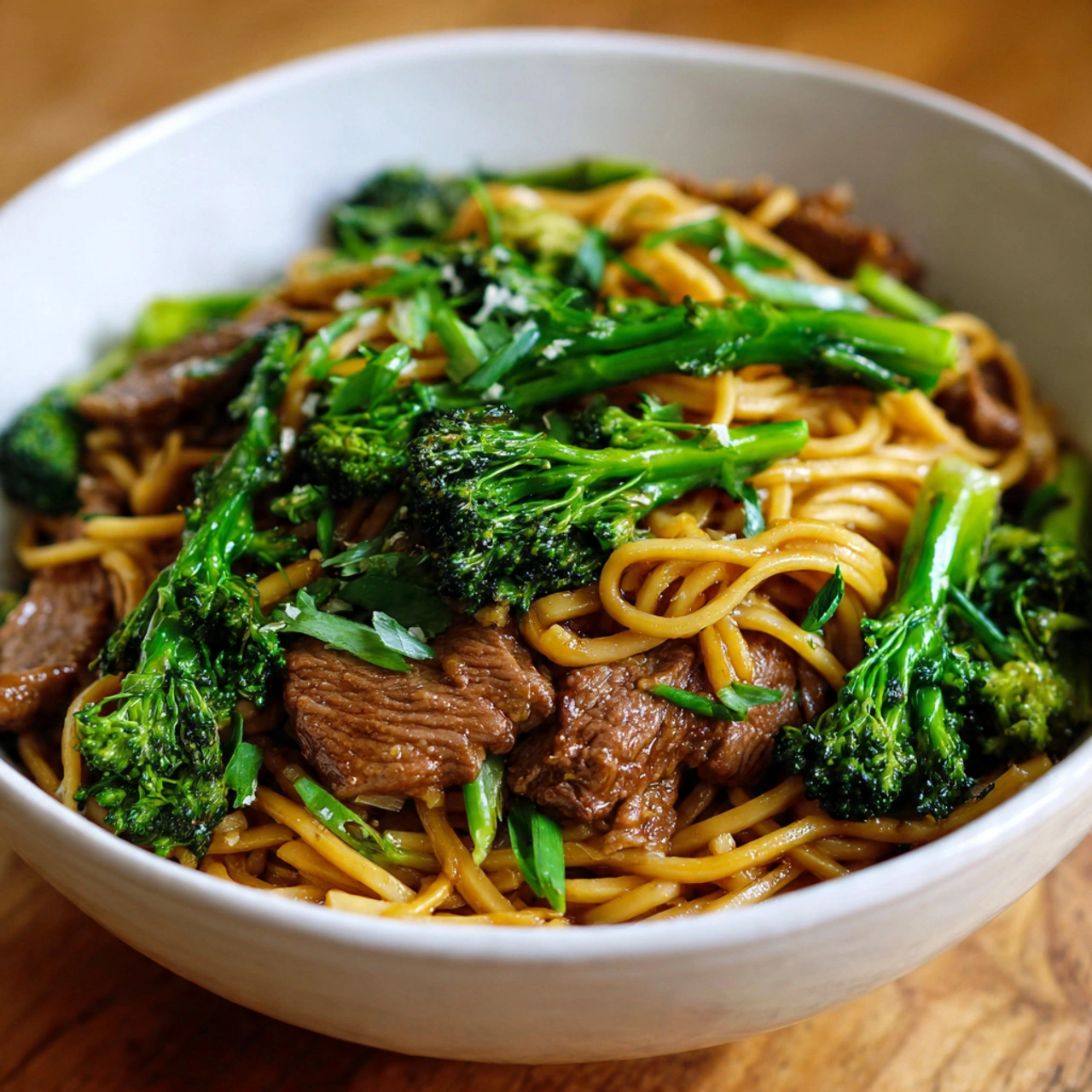
Beef and Broccoli Lo Mein completely changed my weeknight dinners. I used to order from a local Chinese restaurant whenever I craved silky noodles with tender beef and crisp broccoli. One snowy evening, I decided to make it myself—and discovered it comes together faster than delivery, costs much less, and tastes even better than takeout.
The secret to great lo mein isn’t complicated technique or hard-to-find ingredients. It’s about understanding a few key principles: proper noodle preparation, high-heat cooking, and a perfectly balanced sauce. Once you’ve got these fundamentals down, you can have restaurant-quality Beef and Broccoli Lo Mein on your table in about 20 minutes from start to finish.
What makes this dish so appealing goes beyond just convenience and flavor. Lo mein is incredibly versatile—swap the beef for chicken, shrimp, or tofu; change up the vegetables based on what’s in your fridge; adjust the spice level to your preference. It’s also a one-pan meal that somehow feels indulgent while actually being quite balanced with protein, vegetables, and carbohydrates all in one bowl.
The name “lo mein” literally translates to “stirred noodles,” which tells you exactly how it should be made—noodles tossed and stirred with other ingredients, not swimming in sauce like many Americanized versions. Authentic lo mein has just enough glossy sauce to coat every strand of noodle and every piece of beef and broccoli without pooling at the bottom of the plate.
After dozens of test batches, this recipe strikes the perfect balance of authentic technique and practical home cooking. Whether you want to save on takeout, impress with your skills, or get a satisfying meal quickly, this Beef and Broccoli Lo Mein will become your new go-to favorite.
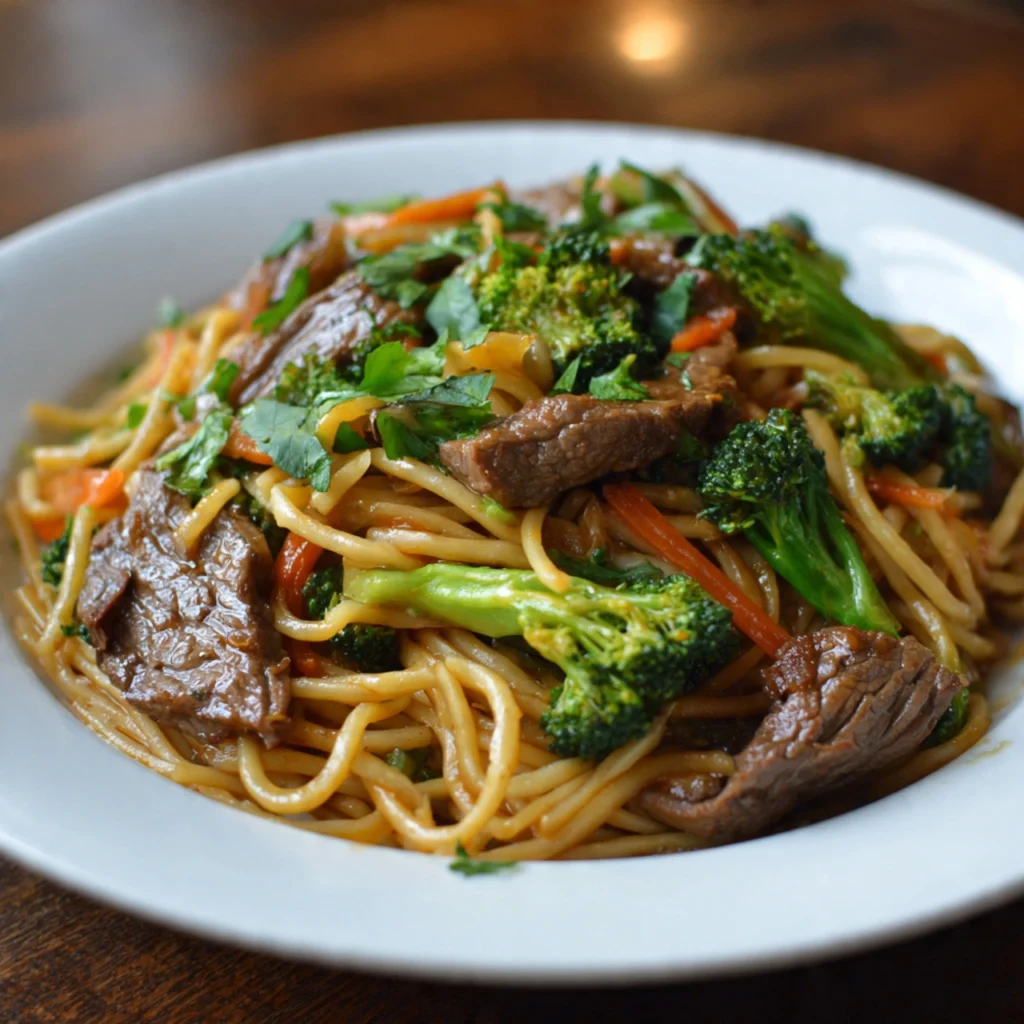
Ingredients: What You’ll Need for Beef and Broccoli Lo Mein
For the Beef Marinade
- 1 pound flank steak or sirloin – Sliced very thin against the grain
- 2 tablespoons soy sauce – For flavor and tenderizing
- 1 tablespoon cornstarch – Creates a protective coating
- 1 tablespoon Shaoxing wine (or dry sherry) – Authentic flavor
- 1 teaspoon sesame oil – Aromatic depth
- ½ teaspoon black pepper – Subtle heat
Lo Mein Sauce
- ¼ cup low-sodium soy sauce (60ml) – The salty foundation
- 2 tablespoons oyster sauce – Adds umami richness
- 1 tablespoon dark soy sauce – For deep color and subtle sweetness
- 1 tablespoon hoisin sauce – Sweet and savory balance
- 2 teaspoons sesame oil – Nutty aroma
- 1 tablespoon brown sugar – Balances the saltiness
- 2 teaspoons cornstarch – Thickens the sauce
- ¼ cup water or beef broth – Helps distribute sauce
For the Stir Fry
- 12 oz fresh lo mein noodles or 8 oz dried Chinese egg noodles – The star of the show
- 3 cups broccoli florets – Cut into bite-sized pieces
- 4 cloves garlic, minced – Essential aromatic
- 1 tablespoon fresh ginger, minced – Signature flavor
- 3 green onions, cut into 2-inch pieces – For color and bite
- 1 small carrot, julienned (optional) – Adds sweetness and color
- 3 tablespoons vegetable oil – Divided for cooking
- Sesame seeds – For garnish (optional)
Equipment Needed
- Large pot for boiling noodles
- Large wok or 14-inch skillet
- Tongs or wooden spoon
- Sharp knife for slicing beef
- Medium bowl for marinating
- Small bowl for mixing sauce
- Colander
Step-by-Step Instructions: Creating Perfect Beef and Broccoli Lo Mein
Step 1: Slice and Marinate the Beef (10 minutes)
Here’s where technique really matters. Place your flank steak in the freezer for 15-20 minutes—this firms it up and makes slicing much easier. Remove and slice against the grain into thin strips, about ⅛-inch thick. Slicing against the grain is crucial; it shortens the muscle fibers and makes the beef incredibly tender.
In a medium bowl, combine the sliced beef with soy sauce, cornstarch, Shaoxing wine, sesame oil, and black pepper. Mix thoroughly with your hands, making sure every piece is coated. The cornstarch creates a protective barrier that keeps the beef tender during high-heat cooking and helps create that glossy coating you see on restaurant beef. Let this marinate while you prepare everything else—at least 10 minutes, or up to 30 minutes if you have time.
Step 2: Prepare the Lo Mein Sauce (3 minutes)
In a small bowl, whisk together the soy sauce, oyster sauce, dark soy sauce, hoisin sauce, sesame oil, brown sugar, cornstarch, and water. Mix until the cornstarch is completely dissolved with no lumps. Set this aside—you’ll add it at the very end of cooking. Having your sauce ready before you start stir-frying is essential because things move very quickly once the wok heats up.
Step 3: Cook the Noodles (5-8 minutes)
Bring a large pot of water to a rolling boil. If using fresh lo mein noodles, they’ll only need 2-3 minutes—just until they separate and are barely tender. For dried Chinese egg noodles, follow package directions but subtract 1 minute from the recommended time. You want them al dente because they’ll cook a bit more when you toss them in the wok.
Drain the noodles in a colander and immediately rinse with cold water to stop the cooking process. Toss them with 1 teaspoon of sesame oil to prevent sticking. Spread them out on a plate or baking sheet so they don’t clump together while you cook everything else.
Step 4: Blanch the Broccoli (2 minutes)
Using the same pot you cooked the noodles in (why dirty another dish?), bring fresh water to a boil. Add the broccoli florets and blanch for exactly 90 seconds. You want them bright green and crisp-tender, not soft. Drain and rinse immediately with cold water to stop the cooking. This technique ensures your broccoli stays vibrant green and perfectly cooked in the final dish.
Step 5: Stir-Fry the Beef (3 minutes)
Now the magic happens. Heat your wok or large skillet over high heat until it’s smoking hot—this is absolutely critical. Add 2 tablespoons of vegetable oil and swirl to coat. Immediately add the marinated beef in a single layer. Let it sear without moving for 30-45 seconds to get that beautiful caramelized crust, then stir-fry for another 1-2 minutes until just cooked through with some pink remaining. Don’t overcrowd the pan; if your wok isn’t big enough, cook the beef in two batches.
Remove the beef to a clean plate. If you leave it in the wok while cooking the vegetables, it will overcook and become tough.
Step 6: Stir-Fry the Aromatics and Vegetables (2 minutes)
Add the remaining 1 tablespoon of oil to the hot wok. Toss in the minced garlic and ginger, stirring constantly for about 15 seconds until incredibly fragrant but not burned—burned garlic is bitter. Immediately add the blanched broccoli, julienned carrots if using, and green onions. Stir-fry for 1 minute to coat everything with the aromatic oil.
Step 7: Bring It All Together (3 minutes)
Return the cooked beef to the wok along with any accumulated juices. Add the cooked noodles. Give your sauce mixture a quick stir (the cornstarch settles to the bottom) and pour it over everything in the wok.
Now here’s the technique that separates good lo mein from great lo mein: use tongs or two wooden spoons to lift and toss everything together, making sure every strand of noodle and every piece of beef and broccoli gets coated with the glossy sauce. Keep tossing and stirring for 1-2 minutes over high heat. The sauce will thicken and cling to everything beautifully.
Taste and adjust seasoning if needed—some people like to add a splash more soy sauce or a pinch of white pepper.
Step 8: Serve Immediately (1 minute)
Transfer to serving plates or bowls while piping hot. Garnish with sesame seeds if desired. Lo mein is best enjoyed immediately while the noodles are at their peak texture and everything is hot and glossy.

Pro Tips for the Perfect Beef and Broccoli Lo Mein
Tip 1: The Right Cut of Beef Matters
Flank steak is ideal for this recipe because it’s flavorful, relatively inexpensive, and becomes wonderfully tender when sliced thin against the grain. Sirloin also works well. Avoid tougher cuts like chuck or round—they won’t become tender enough with quick stir-frying. The key is always slicing against the grain, which you can identify by looking at the direction of the muscle fibers.
Tip 2: Fresh vs. Dried Noodles
Fresh lo mein noodles from the refrigerated section of Asian markets have the best texture and are worth seeking out. They’re round, thick, and have a wonderful chew. If you can’t find them, dried Chinese egg noodles are the next best option. In a pinch, even linguine or spaghetti can work, though the texture won’t be quite the same. Never use ramen noodles—they’re too thin and have a completely different texture.
Tip 3: Master the High-Heat Technique
Restaurant woks reach temperatures home stoves simply can’t achieve, but you can approximate it. Use the highest heat your stove allows, make sure your wok or skillet is fully preheated until smoking, and work in batches if necessary to avoid overcrowding. Overcrowding drops the temperature and causes steaming instead of searing, which makes everything soggy instead of getting that beautiful caramelized flavor.
Tip 4: Don’t Overcook the Noodles
Undercooking your noodles slightly is insurance against mushiness. They’ll finish cooking when you toss them in the hot wok with the sauce. Overcooked noodles turn to mush when stir-fried and don’t hold their shape or pleasant chewy texture.
Tip 5: The Velveting Technique
The cornstarch in the beef marinade is a Chinese technique called “velveting.” It creates a protective coating that keeps proteins tender and adds a subtle, pleasant texture to the meat. Don’t skip this step—it’s what makes the difference between tough, dry beef and the silky, tender beef you get at restaurants.
Tip 6: Prep Everything Before You Start Cooking
Stir-frying happens fast—we’re talking minutes. Have your beef marinated, vegetables cut, sauce mixed, and noodles cooked before you heat up the wok. Once you start stir-frying, you won’t have time to stop and chop something you forgot. This mise en place approach is absolutely essential for successful stir-frying.
Tip 7: Control Your Sauce Consistency
If your sauce seems too thick, add water or broth one tablespoon at a time while tossing. If it’s too thin, the cornstarch will thicken it as it heats. The goal is a glossy coating that clings to everything without pooling at the bottom of the plate.
Tip 8: Temperature is Everything
Serve this dish immediately while it’s piping hot. Lo mein doesn’t hold well—the noodles continue absorbing sauce and the texture changes. If you must hold it, slightly undercook everything and finish it right before serving.
Common Mistakes to Avoid When Making Beef and Broccoli Lo Mein
Mistake 1: Cutting Beef with the Grain
This is the number one mistake that leads to tough, chewy beef. Always slice against the grain—perpendicular to the direction of the muscle fibers. This shortens the fibers and makes the beef tender. If you’re unsure, look closely at the raw meat and you’ll see lines running in one direction; cut perpendicular to those lines.
Mistake 2: Using Too Much Sauce
American-Chinese restaurants often drown lo mein in sauce, but authentic lo mein should have just enough sauce to coat the noodles with a glossy sheen. Too much sauce makes the dish heavy and the noodles soggy. Start with the amount in this recipe and only add more if needed—you can always add, but you can’t take away.
Mistake 3: Not Preheating the Wok Properly
A lukewarm wok steams food instead of searing it. You need that wok smoking hot before anything goes in. This is what creates the “wok hei” or “breath of the wok”—that slightly smoky, charred flavor that’s the hallmark of great Chinese stir-fries.
Mistake 4: Overcrowding the Pan
When you crowd too much food into the wok at once, the temperature drops and ingredients release moisture, causing everything to steam rather than sear. This results in gray, tough beef and soggy vegetables. Work in batches if your wok isn’t large enough or if you’re doubling the recipe.
Mistake 5: Adding Garlic and Ginger Too Early
These aromatics burn easily at high heat. They should only hit the hot oil for 10-15 seconds before you add other ingredients. Burned garlic tastes bitter and ruins the whole dish. Have your next ingredient ready to go in immediately after adding garlic and ginger.
Mistake 6: Overcooking the Broccoli
Mushy, olive-green broccoli is a tragedy. Blanching the broccoli separately ensures it stays bright green and crisp-tender. When you add it to the wok, you’re just coating it with sauce and heating it through, not cooking it.
Mistake 7: Forgetting to Stir the Sauce Before Adding
Cornstarch settles to the bottom of the bowl. If you don’t stir it right before pouring, you’ll get clumps of cornstarch in your lo mein. Always give it a quick stir to redistribute the cornstarch just before adding it to the wok.
Mistake 8: Using Regular Soy Sauce for Everything
Different types of soy sauce serve different purposes. Light soy sauce provides saltiness, dark soy sauce adds color and subtle sweetness, and they shouldn’t be used interchangeably. If you only have regular soy sauce, you can make do, but the complex flavor won’t be quite the same.
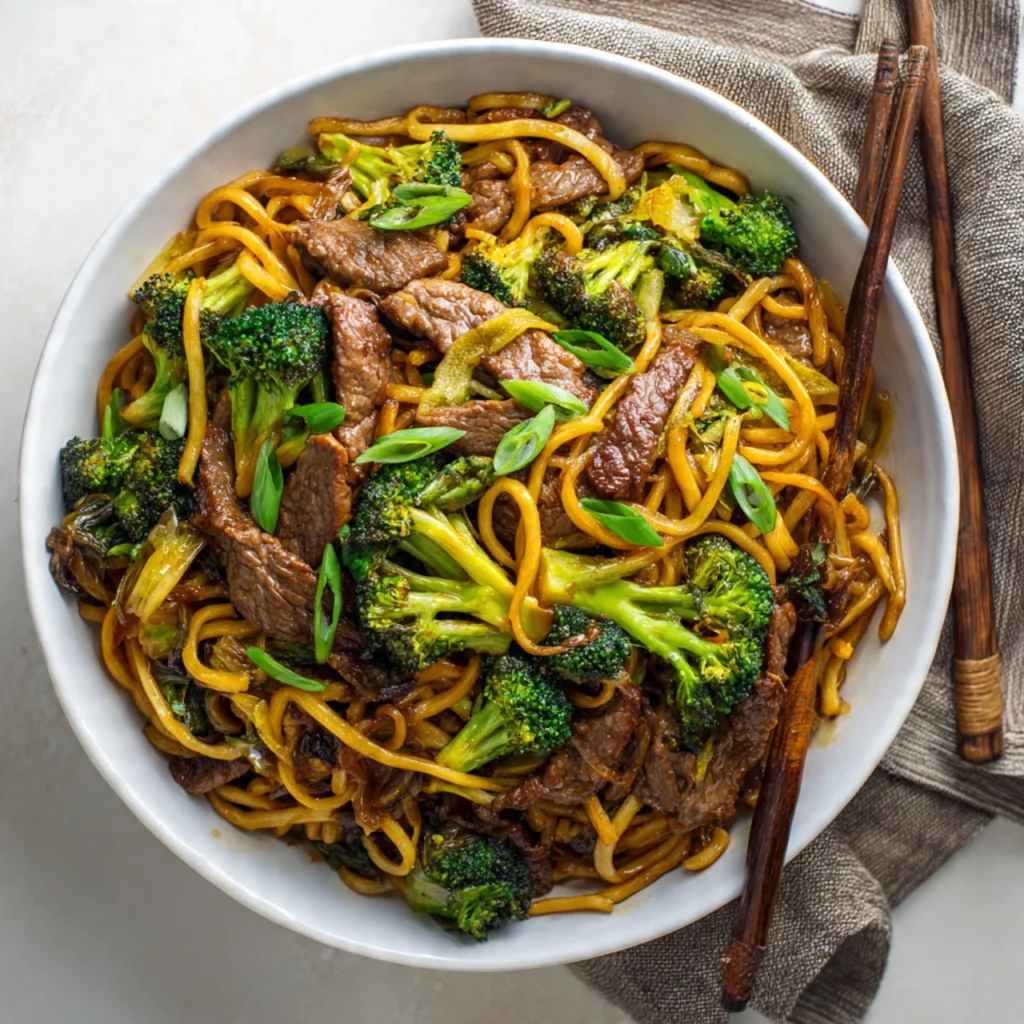
Storage and Serving Suggestions for Beef and Broccoli Lo Mein
How to Store
Refrigerator: Store leftovers in an airtight container for up to 3 days. The noodles will continue to absorb sauce and soften over time, so the texture won’t be quite the same as fresh, but it’s still delicious. Keep in mind that the dish is best consumed within 24 hours for optimal texture.
Freezer: While you can freeze lo mein for up to 2 months, I don’t particularly recommend it. The noodles change texture significantly when frozen and thawed, becoming either mushy or oddly dry. If you must freeze it, slightly undercook everything and use freezer-safe containers. Thaw overnight in the refrigerator before reheating.
Meal Prep Strategy: If planning to meal prep, consider storing the components separately—cooked noodles in one container, the beef and vegetable mixture in another, and extra sauce on the side. Combine and reheat when ready to eat for better texture than storing it already mixed together.
Reheating Tips
Stovetop (Best Method): Heat a large skillet or wok over medium-high heat with a tablespoon of oil. Add the lo mein and toss constantly for 2-3 minutes until heated through. Add a splash of water or broth to help loosen the noodles. This method revives the texture best.
Microwave (Quickest): Place lo mein in a microwave-safe dish, add 1-2 tablespoons of water, cover with a damp paper towel, and heat in 1-minute intervals, stirring between, until hot throughout. The water creates steam that helps rehydrate the noodles.
From Frozen: Thaw overnight in the refrigerator, then reheat using the stovetop method for best results.
Beef and Broccoli Lo Mein Serving Suggestions
As a Main Dish: This recipe serves 4 as a main course. Serve in large bowls or on plates, garnished with sesame seeds and extra sliced green onions. It’s a complete meal on its own with protein, vegetables, and carbohydrates.
As Part of a Chinese Feast: Serve alongside other Chinese dishes like egg drop soup, pot stickers, spring rolls, or fried rice for a full restaurant-style meal at home.
Protein Variations: Substitute chicken (sliced thin), shrimp (peeled and deveined), pork (tenderloin, thinly sliced), or tofu (pressed and cubed) for the beef. Each protein brings its own character while the basic technique remains the same.
Vegetable Variations: While broccoli is classic, you can add or substitute snap peas, bell peppers, mushrooms, bok choy, cabbage, or bean sprouts. Just adjust blanching times based on the vegetable’s density.
Spice It Up: Add sliced fresh red chilies, red pepper flakes, or a drizzle of chili oil for those who like heat. Some people love adding a spoonful of Sichuan chili crisp as a topping.
Garnish Options: Beyond sesame seeds, consider toasted cashews or peanuts for crunch, extra green onions for freshness, or fresh cilantro for a bright herbal note.
Pairing Suggestions
This hearty lo mein pairs beautifully with light Chinese soups like hot and sour soup or wonton soup. For beverages, try Chinese tea (jasmine or oolong), beer (Tsingtao is traditional), or for wine lovers, a light Riesling or Gewürztraminer complements the savory-sweet flavors.
Beef and Broccoli Lo Mein FAQ
1. What’s the difference between lo mein and chow mein?
Great question! Lo mein uses soft boiled noodles that are tossed with ingredients and sauce—the name literally means “stirred noodles.” Chow mein uses parboiled noodles that are then pan-fried until slightly crispy—the name means “fried noodles.” Lo mein has a softer texture and is saucier, while chow mein has crispy elements and less sauce. They’re both delicious but distinctly different dishes.
2. Can I make Beef and Broccoli Lo Mein without a wok?
Absolutely! While a wok is ideal for stir-frying because of its shape and heat distribution, a large (12-14 inch) skillet works perfectly fine. The key is using a pan large enough to avoid overcrowding and getting it very hot before adding ingredients. A carbon steel or cast iron skillet retains heat better than non-stick and is your best bet if you don’t have a wok.
3. What can I substitute for Shaoxing wine?
Dry sherry is the closest substitute and works beautifully in this recipe. Mirin (Japanese rice wine) can work in a pinch, though it’s sweeter. If you don’t have any cooking wine, you can omit it entirely or substitute with a splash of dry white wine, though the authentic flavor won’t be quite the same.
4. Is lo mein gluten-free?
Traditional lo mein is not gluten-free because it uses wheat-based noodles and soy sauce contains wheat. However, you can make a gluten-free version using rice noodles or gluten-free pasta and substituting tamari or coconut aminos for the soy sauce. The texture will be different but still delicious. Make sure your oyster sauce and hoisin sauce are also gluten-free.
5. Why is my beef tough and chewy?
Tough beef usually results from one of three issues: cutting with the grain instead of against it, overcooking the meat, or not marinating long enough. Make sure you’re slicing perpendicular to the muscle fibers, cooking the beef just until it loses its pink color (it will cook a bit more when you add it back), and giving it at least 10 minutes in the marinade. Using a tender cut like flank steak or sirloin also helps.
6. Can I make this dish vegetarian or vegan?
Yes! For vegetarian, substitute pressed firm tofu or tempeh for the beef, and use vegetarian oyster sauce (made from mushrooms) and skip the Shaoxing wine or use vegetable broth. For vegan, also ensure your noodles don’t contain eggs (use rice noodles or check ingredient labels) and substitute the oyster sauce with more hoisin sauce plus a splash of soy sauce.
7. How do I prevent my noodles from sticking together?
Several strategies help: rinse cooked noodles with cold water immediately after draining to remove excess starch, toss them with a small amount of sesame oil, spread them out on a plate rather than leaving them clumped in the colander, and don’t cook them too far in advance. If they do stick, running them under warm water for a few seconds while gently separating them usually works.
8. My sauce isn’t thickening. What went wrong?
The cornstarch in the sauce needs heat to activate and thicken. Make sure your wok is hot when you add the sauce, and give it a minute or two of tossing over high heat. Also, always stir the sauce right before adding it—cornstarch settles to the bottom. If your sauce is still too thin, you can mix ½ teaspoon cornstarch with 1 tablespoon water and add it while tossing.
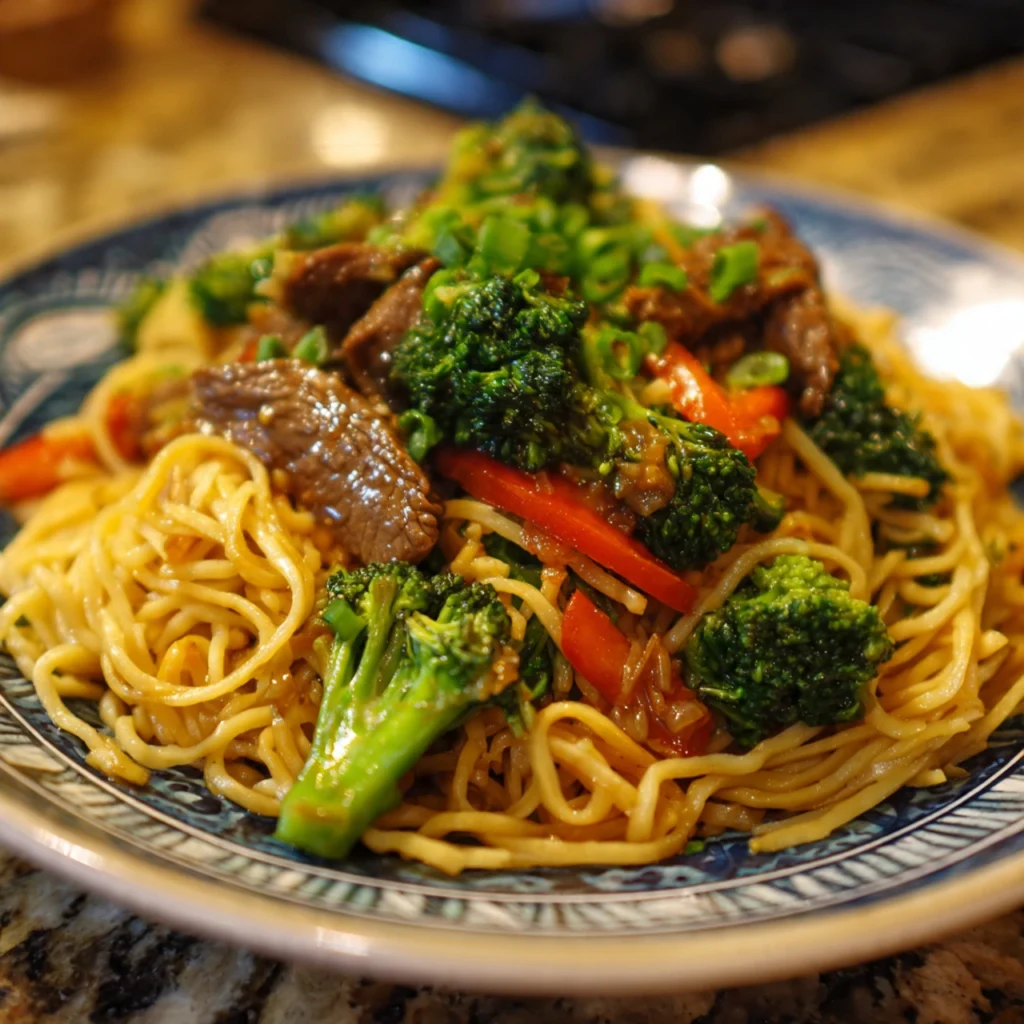
Nutrition Information (Per Serving, Based on 4 Servings)
Calories: 520 kcal
Total Fat: 18g
- Saturated Fat: 4g
- Trans Fat: 0g
Cholesterol: 75mg
Sodium: 1,280mg
Total Carbohydrates: 58g
- Dietary Fiber: 4g
- Sugars: 8g
Protein: 32g
Vitamin A: 25% DV
Vitamin C: 85% DV
Calcium: 6% DV
Iron: 20% DV
Potassium: 620mg
Note: Nutrition information is approximate and calculated based on standard ingredients. Values may vary based on specific brands used, portion sizes, and any modifications or substitutions. Sodium content is relatively high due to soy sauce; use low-sodium versions to reduce it.
Conclusion: Your New Favorite Beef and Broccoli Lo Mein
This Beef and Broccoli Lo Mein recipe represents everything I love about home cooking—it’s faster than waiting for delivery, costs a fraction of takeout prices, tastes better than most restaurants, and gives you complete control over the quality of ingredients and the level of oil, salt, and vegetables.
Once you master the basic technique here, a world of variations opens up. Change the protein, swap vegetables based on seasons or preferences, adjust the spice level, or create your own signature sauce blend. The fundamental skills you’ve learned—proper beef slicing, the velveting technique, high-heat stir-frying, and sauce balancing—apply to countless other Chinese dishes.
I find myself making this lo mein at least twice a month, and it never gets old because I’m constantly tweaking it based on what’s in my fridge or what sounds good that day. Sometimes it’s beef and broccoli, sometimes it’s shrimp with snap peas, sometimes it’s a vegetable-loaded version with whatever needs to be used up.
The best compliment I’ve received about this recipe came from my sister, who texted me after making it: “Why have we been wasting money on takeout all these years?” Exactly. Once you realize how quick and easy this is, and how much better it tastes fresh from your own wok, takeout lo mein loses its appeal.
So grab your wok, slice that beef thin, get your noodles ready, and prepare for twenty minutes of high-heat cooking that yields a dish you’ll be proud to serve to anyone. Your Beef and Broccoli Lo Mein journey starts now—and I promise, it’s going to become one of your most-requested Beef and Broccoli Lo Mein recipes.
Happy stir-frying!
PrintBeef and Broccoli Lo Mein: Better Than Takeout in 20 Minutes
This restaurant-quality Beef and Broccoli Lo Mein brings your favorite takeout dish home in just 20 minutes. Tender marinated beef, crisp-tender broccoli, and chewy lo mein noodles are tossed in a savory sauce that coats every strand. Master the simple stir-fry technique and you’ll never need to order delivery again. Perfect for busy weeknights when you want something quick, satisfying, and infinitely better than takeout.
- Prep Time: 15 minutes (including marinating time)
- Cook Time: 15 minutes
- Total Time: 30 minutes
- Yield: 4 servings
- Category: Main Dish, Dinner
- Method: Stir-Fry
- Cuisine: Chinese, Asian
- Diet: Halal
Ingredients
Beef Marinade:
- 1 pound flank steak, sliced thin against the grain
- 2 tablespoons soy sauce
- 1 tablespoon cornstarch
- 1 tablespoon Shaoxing wine
- 1 teaspoon sesame oil
- ½ teaspoon black pepper
Lo Mein Sauce:
- ¼ cup low-sodium soy sauce
- 2 tablespoons oyster sauce
- 1 tablespoon dark soy sauce
- 1 tablespoon hoisin sauce
- 2 teaspoons sesame oil
- 1 tablespoon brown sugar
- 2 teaspoons cornstarch
- ¼ cup water
Stir Fry:
- 12 oz fresh lo mein noodles (or 8 oz dried)
- 3 cups broccoli florets
- 4 cloves garlic, minced
- 1 tablespoon fresh ginger, minced
- 3 green onions, cut into 2-inch pieces
- 3 tablespoons vegetable oil (divided)
- Sesame seeds for garnish (optional)
Instructions
- Marinate beef: Slice beef thin against the grain. Combine with soy sauce, cornstarch, Shaoxing wine, sesame oil, and pepper. Mix well and marinate 10-30 minutes.
- Make sauce: Whisk together soy sauce, oyster sauce, dark soy sauce, hoisin sauce, sesame oil, brown sugar, cornstarch, and water. Set aside.
- Cook noodles: Boil noodles according to package directions, minus 1 minute. Drain, rinse with cold water, toss with 1 tsp sesame oil. Set aside.
- Blanch broccoli: Boil fresh water, add broccoli, cook 90 seconds. Drain and rinse with cold water immediately.
- Stir-fry beef: Heat wok over high heat until smoking. Add 2 tbsp oil. Add beef in single layer, sear 30-45 seconds, then stir-fry 1-2 minutes. Remove to plate.
- Stir-fry aromatics: Add remaining 1 tbsp oil. Add garlic and ginger, stir 15 seconds. Add broccoli and green onions, stir-fry 1 minute.
- Combine: Return beef to wok. Add noodles. Stir sauce and pour over everything. Toss constantly for 1-2 minutes until sauce thickens and coats everything.
- Serve: Transfer to plates immediately. Garnish with sesame seeds if desired.
Notes
- Always slice beef against the grain for tenderness
- Fresh lo mein noodles are best; find them in Asian market refrigerated section
- Wok must be smoking hot before adding ingredients
- Don’t skip marinating the beef—velveting technique keeps it tender
- Work quickly once stir-frying begins
- Best served immediately; texture changes as it sits
- Can substitute chicken, shrimp, pork, or tofu for beef
- Store leftovers up to 3 days; reheat in hot skillet with splash of water