Introduction: Bakery Magic in Your Kitchen
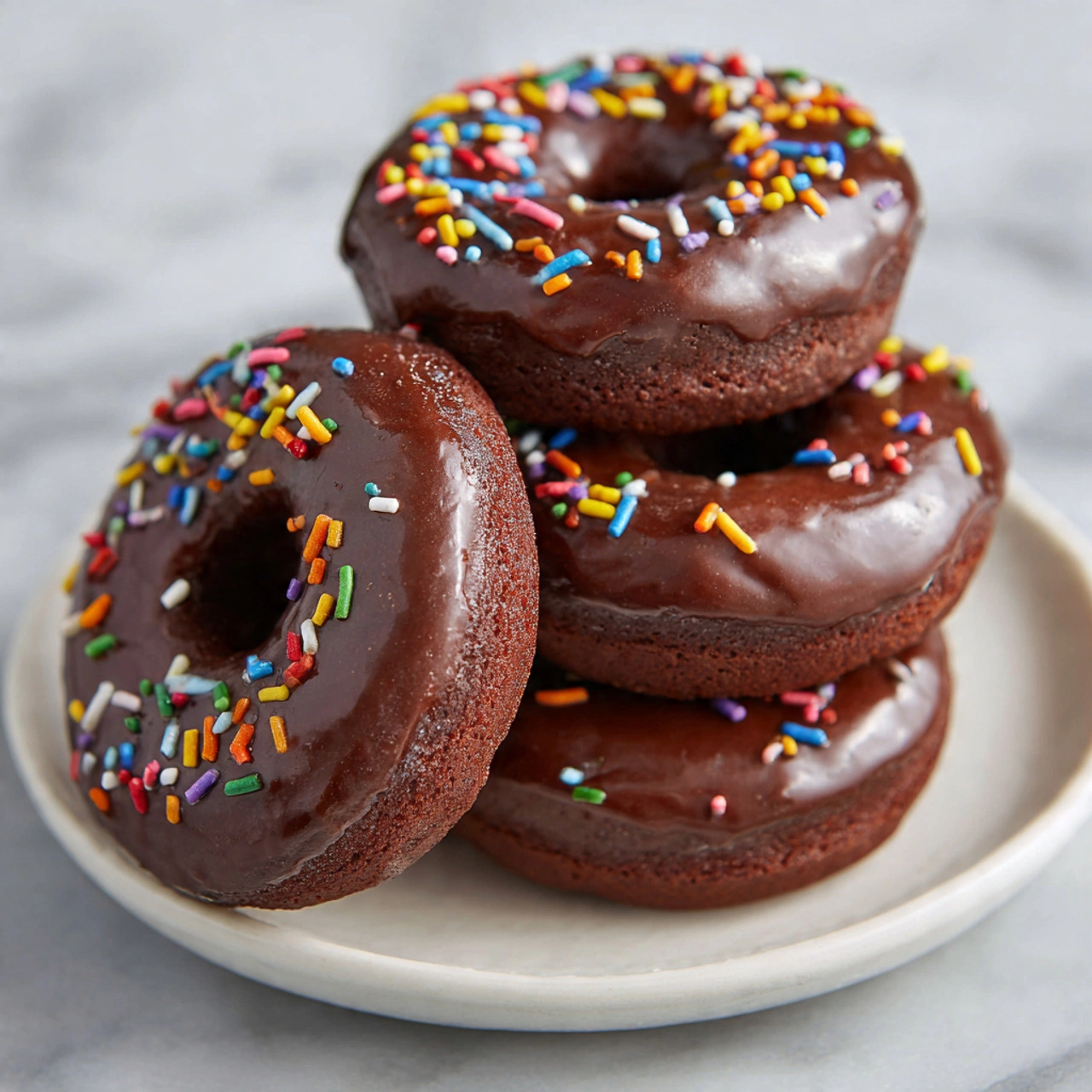
Baked Chocolate Fudge Glazed Doughnuts have completely transformed my weekend mornings from ordinary to extraordinary—and after more than twenty years of recipe development and professional baking, I can confidently say these are the doughnuts that finally convinced me that baked versions can rival their fried counterparts. These aren’t compromise doughnuts or “healthier alternatives” that sacrifice flavor for virtue; they’re legitimately delicious, tender, chocolatey rings topped with a glossy fudge glaze that would make any bakery proud.
My journey to perfecting these doughnuts started about eight years ago when I impulsively bought a doughnut pan at a kitchen store clearance sale. It sat unused in my cabinet for months because I was skeptical that baked doughnuts could ever match the texture and satisfaction of fried ones. Then one rainy Saturday, with a craving for something sweet and a reluctance to deal with hot oil, I finally pulled out that pan and started experimenting.
What makes these Baked Chocolate Fudge Glazed Doughnuts genuinely special is how they capture the essential doughnut experience without the mess, smell, and caloric load of deep-frying. The chocolate dough bakes up incredibly tender with a delicate crumb that’s somewhere between cake and a traditional yeast doughnut. The fudge glaze sets into a smooth, shiny coating that cracks gently when you bite through it, revealing the soft chocolate interior. They’re indulgent enough to feel like a real treat but light enough that you don’t feel overly full after eating one—or two.
Throughout this comprehensive guide, I’ll share everything I’ve learned from making these doughnuts countless times—from achieving bakery-perfect texture to creating that signature glossy glaze, from troubleshooting common issues to developing variations that keep these exciting batch after batch.
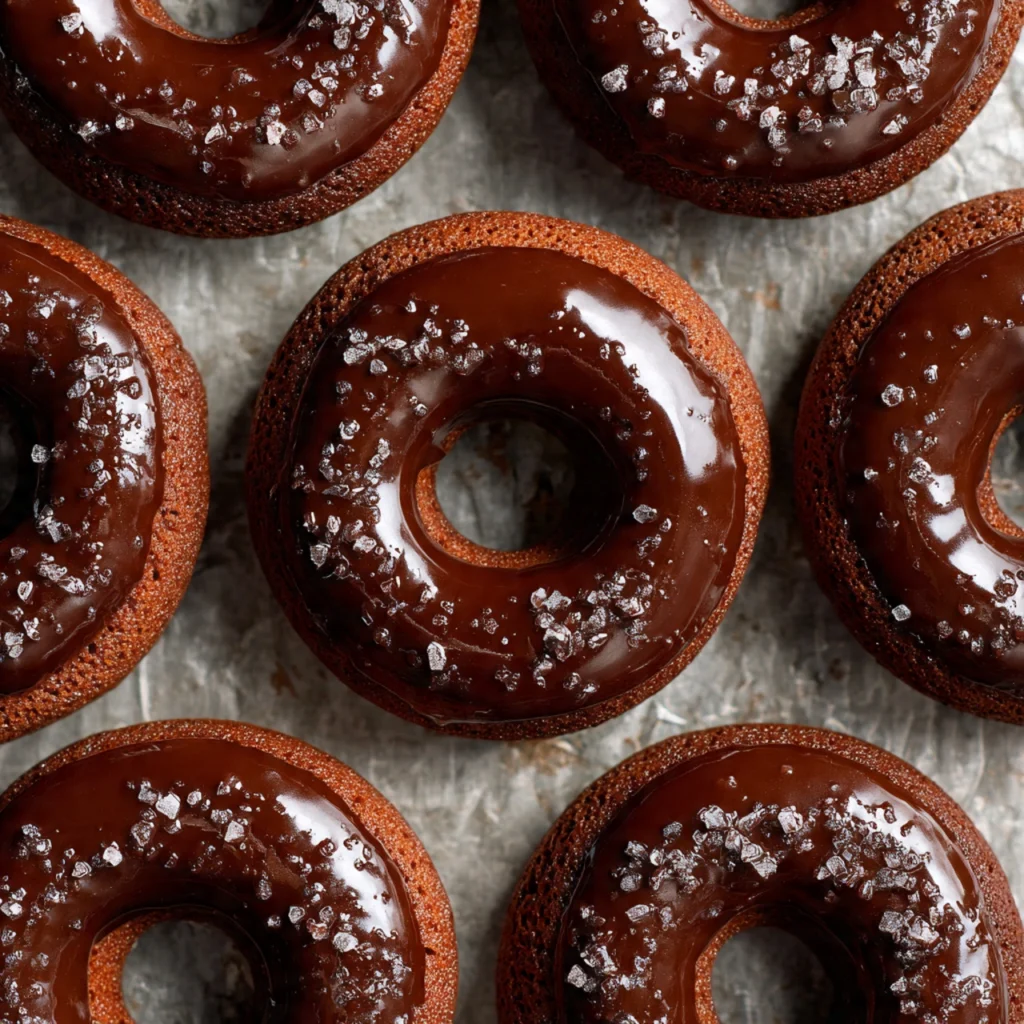
Why Baked Doughnuts Work
Before diving into the Baked Chocolate Fudge Glazed Doughnuts recipe, let me explain why baked doughnuts deserve respect rather than skepticism. Traditional fried doughnuts get their characteristic texture from hot oil rapidly cooking the exterior while steam expands the interior. Baked doughnuts achieve similar results through different chemistry: buttermilk and baking powder create tenderness and lift, while the shaped pan provides structure that creates that iconic ring shape.
The chocolate component serves multiple purposes here—it provides rich flavor obviously, but cocoa powder also contributes to the tender crumb structure. The slight acidity in cocoa works with buttermilk to create an incredibly soft texture that stays moist for days.
The fudge glaze is the crowning glory that elevates these from “pretty good homemade doughnuts” to “legitimate bakery-quality treats.” Unlike simple powdered sugar glazes that can taste flat, this chocolate glaze has depth, shine, and that satisfying snap when you bite through it.
Ingredients: Building Bakery-Quality Doughnuts
Here’s everything you’ll need. The ingredient list is straightforward, but quality matters:
For the Chocolate Doughnuts:
- 1¾ cups all-purpose flour (spooned and leveled, not packed)
- ½ cup unsweetened cocoa powder (natural or Dutch-process)
- 1 cup granulated sugar
- 1½ teaspoons baking powder
- ½ teaspoon baking soda
- ½ teaspoon salt
- 1 large egg (room temperature)
- ⅔ cup buttermilk (room temperature)
- ⅓ cup vegetable oil or melted coconut oil
- 2 teaspoons vanilla extract
- ½ cup hot water or hot coffee
For the Fudge Glaze:
- 3 tablespoons unsalted butter
- 3 tablespoons milk or heavy cream
- 2 tablespoons light corn syrup (gives the glaze shine)
- 3 tablespoons unsweetened cocoa powder
- 1½ cups powdered sugar (sifted for smoothest results)
- 1 teaspoon vanilla extract
- Pinch of salt
Optional Toppings and Variations:
- Sprinkles (add while glaze is still wet)
- Chopped nuts (toasted almonds, pecans, or hazelnuts)
- Mini chocolate chips (pressed gently into wet glaze)
- Flaky sea salt (sophisticated finish)
- Crushed cookies (Oreos or graham crackers)
- Shredded coconut (toasted for extra flavor)
- Freeze-dried fruit powder (raspberry or strawberry for color and flavor)
Step-by-Step Instructions: Creating Perfect Doughnuts
Follow these detailed steps for consistently excellent results Baked Chocolate Fudge Glazed Doughnuts:
Step 1: Preparation
Preheat your oven to 350°F (175°C). Position the rack in the center of the oven.
Generously spray a standard doughnut pan with non-stick cooking spray, making sure to coat all the grooves and the center post of each cavity. Alternatively, brush with melted butter. Proper greasing is crucial—these doughnuts need to release cleanly.
Equipment note: You’ll need a 6-cavity doughnut pan. If you only have one pan, you’ll bake in two batches. If you have two pans, you can bake all the doughnuts at once (just rotate pan positions halfway through baking for even browning).
Step 2: Mix the Dry Ingredients
In a large mixing bowl, whisk together flour, cocoa powder, sugar, baking powder, baking soda, and salt. Whisk thoroughly—at least 30 seconds—to break up any cocoa lumps and ensure even distribution of leavening agents. Cocoa powder tends to clump, so this step matters.
Pro tip: Sift the cocoa powder if it’s particularly lumpy. This prevents chocolate specks in your finished doughnuts.
Step 3: Combine the Wet Ingredients
In a medium bowl or large measuring cup, whisk together egg, buttermilk, oil, and vanilla extract until smooth and uniform. The mixture should be cohesive with no oil separation.
Make sure these ingredients are at room temperature. Cold ingredients don’t incorporate as smoothly and can create a slightly tougher texture.
Step 4: Combine Wet and Dry
Pour the wet ingredients into the dry ingredients. Using a rubber spatula or wooden spoon, gently fold together until just combined. You’ll still see some flour streaks—this is correct.
Add the hot water (or hot coffee, which intensifies chocolate flavor). Stir gently until the batter is smooth and uniform. The batter will be quite thin—thinner than typical cake batter. This is exactly right! Don’t worry; it’s supposed to be pourable.
Critical mixing rule: Don’t overmix! Stir just until no flour pockets remain. Overmixing develops gluten, creating tough, dense doughnuts instead of tender ones.
Step 5: Fill the Pan
Transfer the batter to a piping bag, a large zip-top bag with the corner cut off, or a liquid measuring cup with a spout for easy pouring. Fill each doughnut cavity about two-thirds full—roughly 3 tablespoons of batter per cavity.
Filling technique: Pipe or pour the batter in a circular motion around the center post, distributing it evenly. Avoid overfilling (batter will overflow and obscure the hole) or underfilling (doughnuts will be too flat and won’t look right).
Gently tap the pan on the counter 2-3 times to release any air bubbles trapped in the batter.
Step 6: Bake to Perfection
Bake for 10-12 minutes, until the doughnuts spring back when lightly touched and a toothpick inserted comes out clean or with just a couple of moist crumbs.
Signs of doneness: The doughnuts should look set and matte on top (not shiny/wet), edges should be pulling slightly away from the pan, and the center should spring back when gently pressed.
Remove from the oven and let cool in the pan for 5 minutes. This brief rest allows them to firm up slightly, making removal easier.
Step 7: Release the Doughnuts
After 5 minutes, carefully invert the pan onto a wire cooling rack. The doughnuts should drop out easily. If any stick, gently run a small offset spatula or butter knife around the edges to loosen.
Let the doughnuts cool completely on the wire rack before glazing—at least 20-30 minutes. Glazing warm doughnuts causes the glaze to be too thin and slide off.
If you’re baking in batches, let the pan cool completely, re-grease it, and repeat with remaining batter.
Step 8: Make the Fudge Glaze
In a medium saucepan, combine butter, milk, corn syrup, and cocoa powder. Heat over medium heat, whisking constantly, until the mixture comes to a gentle boil. Let it bubble for 30 seconds, then remove from heat.
Add powdered sugar, vanilla, and salt. Whisk vigorously until completely smooth, glossy, and free of lumps. The glaze should be thick but pourable—think of warm ganache consistency.
Consistency check: The glaze should coat the back of a spoon and slowly drip off. If it’s too thick, add milk 1 teaspoon at a time. If too thin, add powdered sugar 2 tablespoons at a time.
Let the glaze cool for 2-3 minutes—it should be warm but not scorching hot.
Step 9: Glaze the Doughnuts
Set up a glazing station: place the wire rack with cooled doughnuts over a baking sheet or parchment paper to catch drips.
Dip the top of each doughnut into the warm glaze, letting excess drip back into the pan. You can also spoon glaze over each doughnut, but dipping creates a smoother finish.
Place glazed doughnuts back on the wire rack. If desired, immediately add sprinkles or other toppings while the glaze is still wet.
Let the glaze set for 15-20 minutes before serving. It will firm up into a beautiful, shiny coating.
Pro Tips for Perfect Baked Chocolate Fudge Glazed Doughnuts
After countless batches, I’ve developed specific techniques that guarantee bakery-quality results:
Ingredient Quality and Temperature
Room temperature matters: Room temperature eggs and buttermilk create smoother batter that incorporates more evenly. Cold ingredients can cause the batter to be lumpy or create small pockets of unmixed ingredients. Bring eggs and buttermilk to room temperature by letting them sit out for 30-60 minutes, or quick-warm the buttermilk in the microwave for 15-20 seconds.
Buttermilk substitute: Don’t have buttermilk? Make your own by adding 2 teaspoons lemon juice or white vinegar to ⅔ cup milk. Let it sit for 5 minutes until slightly curdled. This works perfectly.
Cocoa powder choices: Natural cocoa powder (like Hershey’s) creates a lighter, more acidic chocolate flavor with reddish tones. Dutch-process cocoa powder (like Droste) produces deeper, mellower chocolate flavor with darker color. Both work beautifully—use what you have or prefer.
The hot water secret: Hot water (or better yet, hot coffee) “blooms” the cocoa powder, releasing flavor compounds and creating richer chocolate taste. Don’t skip this step or use cold water—the temperature matters!
Baked Chocolate Fudge Glazed Doughnuts Mixing and Baking Wisdom
Don’t overmix: This bears repeating because it’s the most common mistake. Once you add wet to dry, stir gently just until combined. The batter should look slightly lumpy before you add the hot water. Overmixing creates tough, dense doughnuts.
Proper pan greasing: Doughnuts that stick to the pan are heartbreaking. Use non-stick spray generously, or brush with melted butter, making sure to coat every crevice. I’ve had best luck with baking spray that contains flour (like Baker’s Joy).
Even filling: Try to fill each cavity with the same amount of batter. Unevenly filled doughnuts bake at different rates, creating some that are perfectly done while others are over or underbaked.
Don’t overbake: Baked doughnuts can go from perfect to dry quickly. Start checking at 10 minutes. They should spring back when lightly touched but not feel hard or crusty. Remember, they continue cooking slightly after removal from the oven.
Baked Chocolate Fudge Glazed Doughnuts Glaze Excellence
Corn syrup is magic: Light corn syrup gives the glaze professional shine and prevents it from becoming too stiff as it sets. Don’t skip it or substitute—it’s essential for that bakery-quality finish.
Sift powdered sugar: Unsifted powdered sugar creates lumpy glaze. Either sift it or press it through a fine-mesh strainer before adding to the chocolate mixture.
Glaze temperature: The glaze should be warm but not hot when you dip the doughnuts. Too hot and it slides right off; too cool and it doesn’t spread smoothly. Let it cool for 2-3 minutes after making.
Double-dipping: For extra-thick glaze, let the first coat set for 10 minutes, then dip again. This creates that ultra-decadent, bakery-style thick coating.
Smooth dipping technique: Hold the doughnut by the bottom, dip the top into the glaze in one smooth motion, give it a gentle twist, then lift and let excess drip off for 3-5 seconds before placing on the rack.
Flavor Variations Baked Chocolate Fudge Glazed Doughnuts
Espresso powder: Add 1 teaspoon instant espresso powder to the dry ingredients for mocha doughnuts. The coffee flavor enhances chocolate rather than overwhelming it.
Peppermint twist: Add ½ teaspoon peppermint extract to the batter and glaze for chocolate-mint doughnuts. Top with crushed candy canes during the holidays.
Orange chocolate: Add 1 tablespoon orange zest to the batter and 1 teaspoon orange extract to the glaze for sophisticated orange-chocolate flavor.
Spiced chocolate: Add ½ teaspoon cinnamon and ¼ teaspoon cayenne to the dry ingredients for Mexican hot chocolate doughnuts.
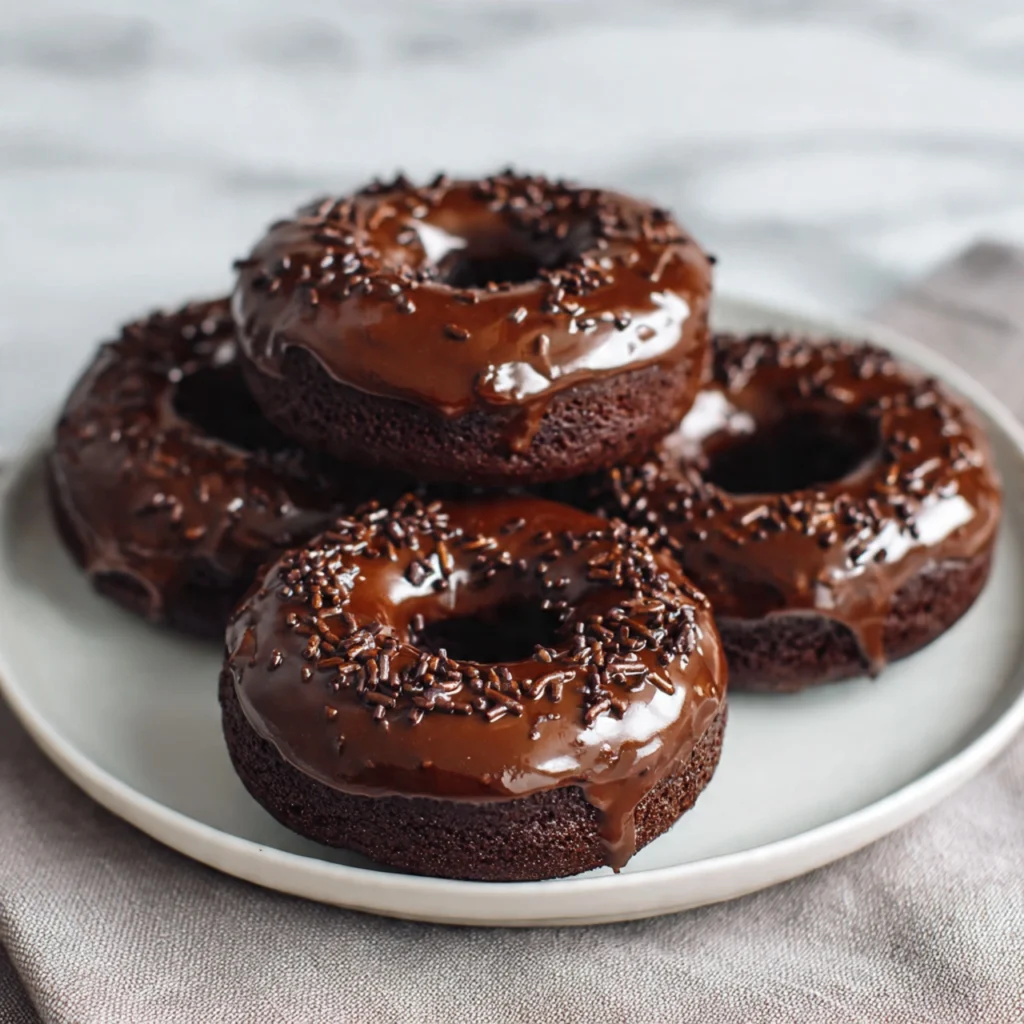
Baked Chocolate Fudge Glazed Doughnuts Common Mistakes to Avoid
Even this relatively straightforward Baked Chocolate Fudge Glazed Doughnuts recipe has potential pitfalls:
Mistake #1: Overfilling the Pan Cavities
Filling the doughnut cavities more than two-thirds full causes the batter to overflow during baking, filling in the center hole and creating muffin tops instead of proper doughnuts. The centers won’t bake through evenly either. Fill only to two-thirds, even if it seems conservative.
Mistake #2: Inadequate Greasing
This is the top reason doughnuts stick and tear when you try to remove them. Every part of the cavity must be greased, including the center post and all the grooves. Don’t be shy—generous greasing is essential. Baking spray with flour works best in my experience.
Mistake #3: Glazing Hot Doughnuts
Warm doughnuts seem tempting to glaze, but the heat causes the glaze to be too thin and slide off completely, pooling around the base instead of coating the top. Always let doughnuts cool to room temperature before glazing. Patience is rewarded with beautiful, evenly coated doughnuts.
Mistake #4: Lumpy Glaze
Unsifted powdered sugar and unwhisked cocoa powder create lumpy, unprofessional-looking glaze. Always sift or at least break up major clumps before adding to the liquid. Whisk vigorously after adding to create smooth, silky glaze.
Mistake #5: Overmixing the Batter
Stirring the batter too long or too vigorously develops gluten, resulting in tough, chewy doughnuts instead of tender, cakey ones. Mix just until no flour streaks remain. A few small lumps are fine and will disappear during baking.
Mistake #6: Opening the Oven Door Too Early
Resist the urge to check on the doughnuts before the minimum baking time (10 minutes). Opening the door causes temperature fluctuations that can make the doughnuts sink or bake unevenly. Trust the process and wait.
Mistake #7: Using Cold Ingredients
Cold eggs and buttermilk don’t incorporate as smoothly and can create slight texture issues. Always use room temperature ingredients for smoothest batter and most tender results. This small step makes a real difference.
Mistake #8: Skipping the Pan Tap
After filling the cavities, tap the pan firmly on the counter 2-3 times. This releases air bubbles that would otherwise create holes in your finished doughnuts. It seems like a minor step but significantly improves the final texture.
Storage and Serving Suggestions
Proper storage keeps these doughnuts fresh and delicious Baked Chocolate Fudge Glazed Doughnuts:
Room Temperature Storage
Baked Chocolate Fudge Glazed Doughnuts are best enjoyed the day they’re made, but they keep reasonably well. Store in an airtight container at room temperature for up to 2 days. Place parchment paper between layers to prevent sticking.
The glaze may lose some of its shine over time, and the doughnuts gradually become less tender, but they’re still enjoyable the next day—especially when briefly warmed in the microwave (10-15 seconds).
Baked Chocolate Fudge Glazed Doughnuts Refrigerator Storage
Refrigeration isn’t recommended for these doughnuts. The cold temperature firms up the glaze excessively and can dry out the doughnut texture. Room temperature storage or freezing works better.
Freezer Storage Baked Chocolate Fudge Glazed Doughnuts
For longer storage, these doughnuts freeze excellently! Place glazed, completely set doughnuts in a single layer on a baking sheet and freeze until solid (about 2 hours). Then transfer to a freezer-safe container or bag with parchment between layers. Freeze for up to 2 months.
Thaw frozen doughnuts at room temperature for 1-2 hours or microwave for 20-30 seconds. The glaze may dull slightly after freezing, but the flavor and texture remain excellent.
You can also freeze unglazed doughnuts and make fresh glaze when ready to serve.
Serving Suggestions Baked Chocolate Fudge Glazed Doughnuts
Breakfast treat: Serve with hot coffee or cold milk for the ultimate weekend breakfast indulgence.
Dessert presentation: Warm briefly and serve with a scoop of vanilla ice cream for an elevated dessert.
Party platter: Arrange on a tiered stand for brunches, showers, or parties. They look beautiful and disappear quickly.
Gift packaging: Stack 2-3 doughnuts in cellophane bags tied with ribbon for lovely homemade gifts.
Ice cream sandwich: Slice doughnuts in half horizontally and fill with ice cream for an indulgent treat.
Doughnut holes: Use a mini muffin pan to make doughnut holes instead—bake for just 6-8 minutes and glaze the same way.
Frequently Asked Questions (FAQ)
1. Can I make these without a doughnut pan?
While a doughnut pan creates the traditional ring shape, you can make these in a standard muffin tin if needed. They’ll be doughnut muffins rather than rings, but the flavor will be identical. Fill muffin cups half full and bake for 12-15 minutes. The texture and taste remain excellent, just without the iconic shape. Mini muffin pans work too (bake 6-8 minutes) for doughnut hole-style treats.
2. Can I make these gluten-free?
Yes! Replace the all-purpose flour with a gluten-free flour blend that contains xanthan gum (like Bob’s Red Mill 1-to-1 or King Arthur Measure for Measure). Use the same measurement—1¾ cups. Ensure your cocoa powder and other ingredients are certified gluten-free. The texture will be slightly more delicate and crumbly than the wheat version, but still delicious. They may bake slightly faster, so start checking at 9 minutes.
3. Why are my doughnuts dense instead of tender?
Several factors cause dense doughnuts: overmixing the batter develops gluten, creating heavy texture—mix just until combined. Old or expired baking powder/baking soda lacks leavening power—these should be replaced every 6 months. Overfilling the pan cavities prevents proper rising. Using cold ingredients can create slight texture issues. Finally, overbaking dries out the doughnuts, making them seem dense. Follow the recipe carefully, mix gently, and don’t overbake.
4. Can I make the doughnuts ahead and glaze later?
Absolutely! This is actually a great strategy. Bake the doughnuts, let them cool completely, then store in an airtight container for up to 24 hours or freeze for up to 2 months. Make fresh glaze when ready to serve and dip the doughnuts just before eating. Freshly made glaze on day-old doughnuts tastes almost as good as completely fresh doughnuts.
5. Can I make these dairy-free or vegan?
For dairy-free: use non-dairy milk (almond, oat, or soy) to make buttermilk substitute (milk + lemon juice), use coconut oil instead of butter in the glaze, and use coconut cream or additional non-dairy milk in the glaze. For fully vegan: additionally replace the egg with a flax egg (1 tablespoon ground flaxseed + 3 tablespoons water, let sit 5 minutes). The vegan version is slightly denser but still excellent. Make sure your sugar is vegan (some refined sugars use bone char in processing).
6. How do I get that bakery-style thick glaze?
The secret is temperature and technique. Make sure the glaze is warm but not hot, and let it cool for 2-3 minutes before dipping—this creates thicker coating. Dip the doughnut, let excess drip for only 2-3 seconds (longer dripping means thinner glaze), then place on the rack. For even thicker coverage, let the first coat set for 10-15 minutes, then dip again. The corn syrup in the glaze helps it stay glossy and thick.
7. Can I use this recipe to make filled doughnuts?
Yes! Bake the doughnuts as directed. Once cooled, use a piping bag fitted with a long, narrow tip (like a Bismarck tip) to fill them with your choice of filling—chocolate ganache, pastry cream, jelly, or Nutella all work beautifully. Insert the tip into the side of the doughnut and gently squeeze until you feel slight resistance (the doughnut will feel heavier). Then glaze as usual. This creates bakery-style filled doughnuts.
8. Why does my glaze look dull instead of shiny?
Several factors affect glaze shine: the corn syrup is essential for shine—don’t omit or substitute. If the glaze is too cool when applied, it doesn’t spread smoothly and can look dull. If the glaze is too thick, it doesn’t have the right consistency for shine—thin it slightly with milk. Finally, humidity affects how glaze sets—in very humid conditions, it may not shine as much. The corn syrup helps combat this, but extreme humidity can still affect appearance.
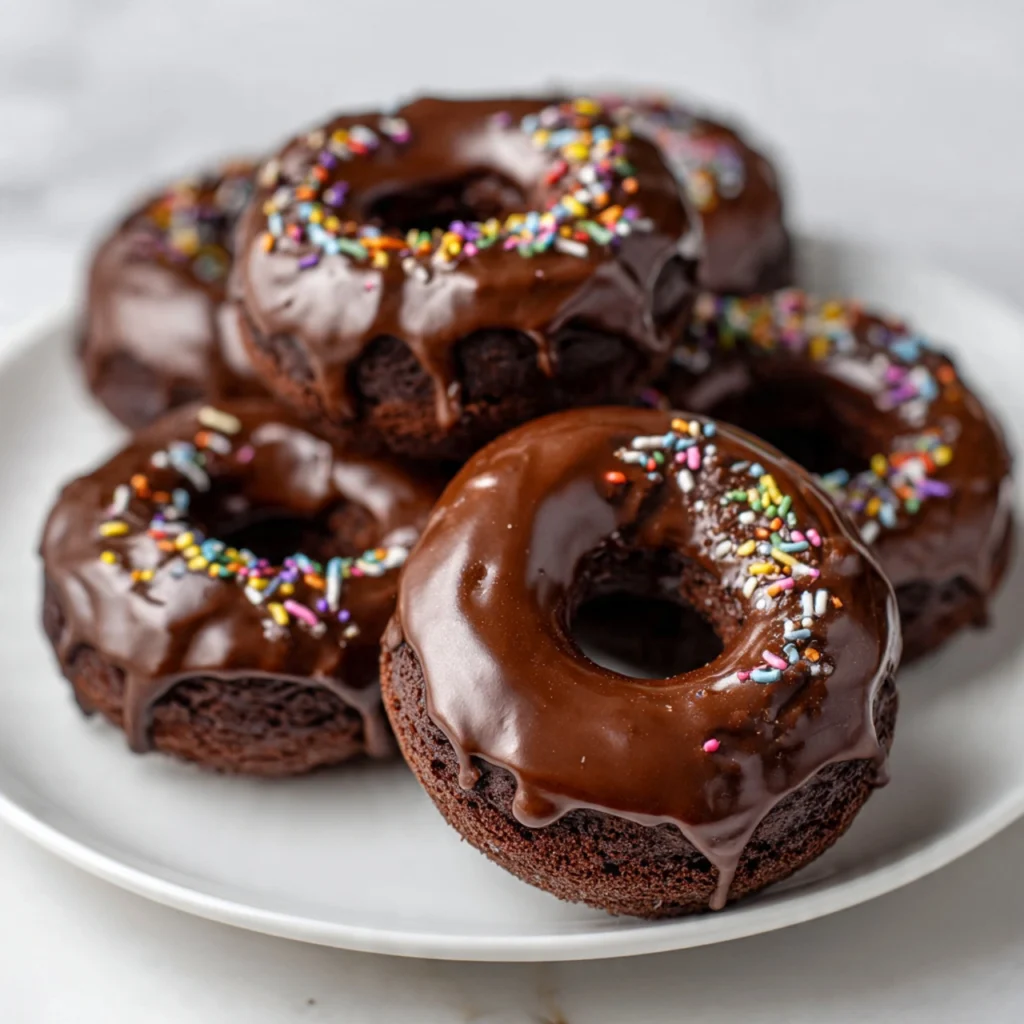
Nutrition Information (Baked Chocolate Fudge Glazed Doughnuts)
Based on 12 doughnuts:
Serving Size: 1 glazed doughnut Servings Per Recipe: 12
- Calories: 265
- Total Fat: 9g
- Saturated Fat: 3g
- Trans Fat: 0g
- Cholesterol: 25mg
- Sodium: 195mg
- Total Carbohydrates: 45g
- Dietary Fiber**: 2g
- Sugars**: 31g
- Added Sugars: 30g
- Protein: 3g
- Calcium: 45mg (4% DV)
- Iron: 2.1mg (12% DV)
- Potassium: 115mg (2% DV)
Nutritional Context:
While these are definitely a treat, they contain about 30-40% fewer calories than typical fried doughnuts because they’re baked without oil absorption. They’re perfect for special breakfasts, weekend treats, or celebrations. One doughnut is quite satisfying—the rich chocolate flavor means you don’t need to eat multiple to feel satisfied. Enjoy mindfully as part of balanced eating!
Final Thoughts: Bakery Magic at Home
Mastering these Baked Chocolate Fudge Glazed Doughnuts means owning a recipe that brings genuine bakery-quality results to your home kitchen without the intimidation factor of yeast doughs or the mess of deep-frying. What I love most is how these doughnuts prove that “baked” doesn’t mean “compromised”—they’re legitimately delicious, tender, and satisfying, standing proudly on their own merits rather than being judged as a “healthier alternative.”
Over the years, these doughnuts have become a beloved tradition in my household. Weekend mornings when I make a batch feel special and indulgent, yet the process is simple enough that it doesn’t consume my entire morning. Guests are always impressed when they learn these were baked at home rather than purchased from a fancy bakery. The combination of rich chocolate doughnut and glossy fudge glaze creates that perfect sweet-treat experience that makes ordinary days feel celebratory.
The journey from skeptical doughnut-pan owner to passionate advocate for baked doughnuts has taught me that sometimes our assumptions about what’s possible in home baking need challenging. Traditional methods aren’t always the only—or even the best—way to achieve delicious results Baked Chocolate Fudge Glazed Doughnuts. Innovation and adaptation can create something just as special, maybe even better suited to modern life.
I encourage you to give these doughnuts a chance, even if you’re skeptical about baked versions. Make a batch, experience how easy and rewarding they are, and taste for yourself how tender and delicious they turn out. You might find yourself joining me in the camp of baked doughnut believers.
So preheat that oven, grease that doughnut pan, and create your own bakery-quality treats at home. May your doughnuts be tender, your glaze be glossy, and your kitchen smell like a chocolate wonderland!
PrintBaked Chocolate Fudge Glazed Doughnuts: Bakery-Quality Treats at Home
Tender, chocolatey baked doughnuts with glossy fudge glaze. No frying required! These taste like bakery doughnuts but are made easily at home with simple ingredients. Perfect for weekend mornings, special breakfasts, or anytime chocolate cravings strike.
- Prep Time: 15 minutes
- Cook Time: 12 minutes (per batch)
- Total Time: 1 hour (includes cooling and glazing)
- Yield: 12 doughnuts
- Category: Breakfast, Dessert, Baked Goods, Doughnuts
- Method: Baking
- Cuisine: American
- Diet: Vegetarian
Ingredients
For the Doughnuts:
- 1¾ cups all-purpose flour
- ½ cup unsweetened cocoa powder
- 1 cup granulated sugar
- 1½ teaspoons baking powder
- ½ teaspoon baking soda
- ½ teaspoon salt
- 1 large egg, room temperature
- ⅔ cup buttermilk, room temperature
- ⅓ cup vegetable oil
- 2 teaspoons vanilla extract
- ½ cup hot water or hot coffee
For the Fudge Glaze:
- 3 tablespoons unsalted butter
- 3 tablespoons milk or cream
- 2 tablespoons light corn syrup
- 3 tablespoons unsweetened cocoa powder
- 1½ cups powdered sugar, sifted
- 1 teaspoon vanilla extract
- Pinch of salt
Instructions
- Preheat and prep: Preheat oven to 350°F. Generously grease a doughnut pan with non-stick spray.
- Mix dry ingredients: In a large bowl, whisk together flour, cocoa powder, sugar, baking powder, baking soda, and salt until well combined.
- Mix wet ingredients: In a medium bowl, whisk together egg, buttermilk, oil, and vanilla until smooth.
- Combine: Pour wet ingredients into dry ingredients. Stir gently until just combined (some flour streaks okay). Add hot water and stir until smooth. Don’t overmix—batter will be thin.
- Fill pan: Transfer batter to a piping bag or measuring cup. Fill each doughnut cavity about two-thirds full. Tap pan on counter to release air bubbles.
- Bake: Bake 10-12 minutes until doughnuts spring back when touched and toothpick comes out clean. Don’t overbake!
- Cool: Let cool in pan 5 minutes, then invert onto wire rack. Cool completely before glazing (20-30 minutes).
- Make glaze: In a saucepan, combine butter, milk, corn syrup, and cocoa. Bring to gentle boil, whisking constantly. Remove from heat. Add powdered sugar, vanilla, and salt. Whisk until smooth.
- Glaze doughnuts: Dip top of each cooled doughnut into warm glaze. Place on wire rack and let set 15-20 minutes before serving.
Notes
- Requires a standard 6-cavity doughnut pan (makes 12 doughnuts in 2 batches)
- Room temperature ingredients create smoothest batter
- Don’t overmix—stir just until combined
- Fill cavities only ⅔ full to prevent overflow
- Cool completely before glazing for best results
- Hot coffee instead of water intensifies chocolate flavor
- Corn syrup in glaze creates professional shine—don’t skip it
- Double-dip for extra-thick glaze coating
- Store in airtight container up to 2 days or freeze up to 2 months