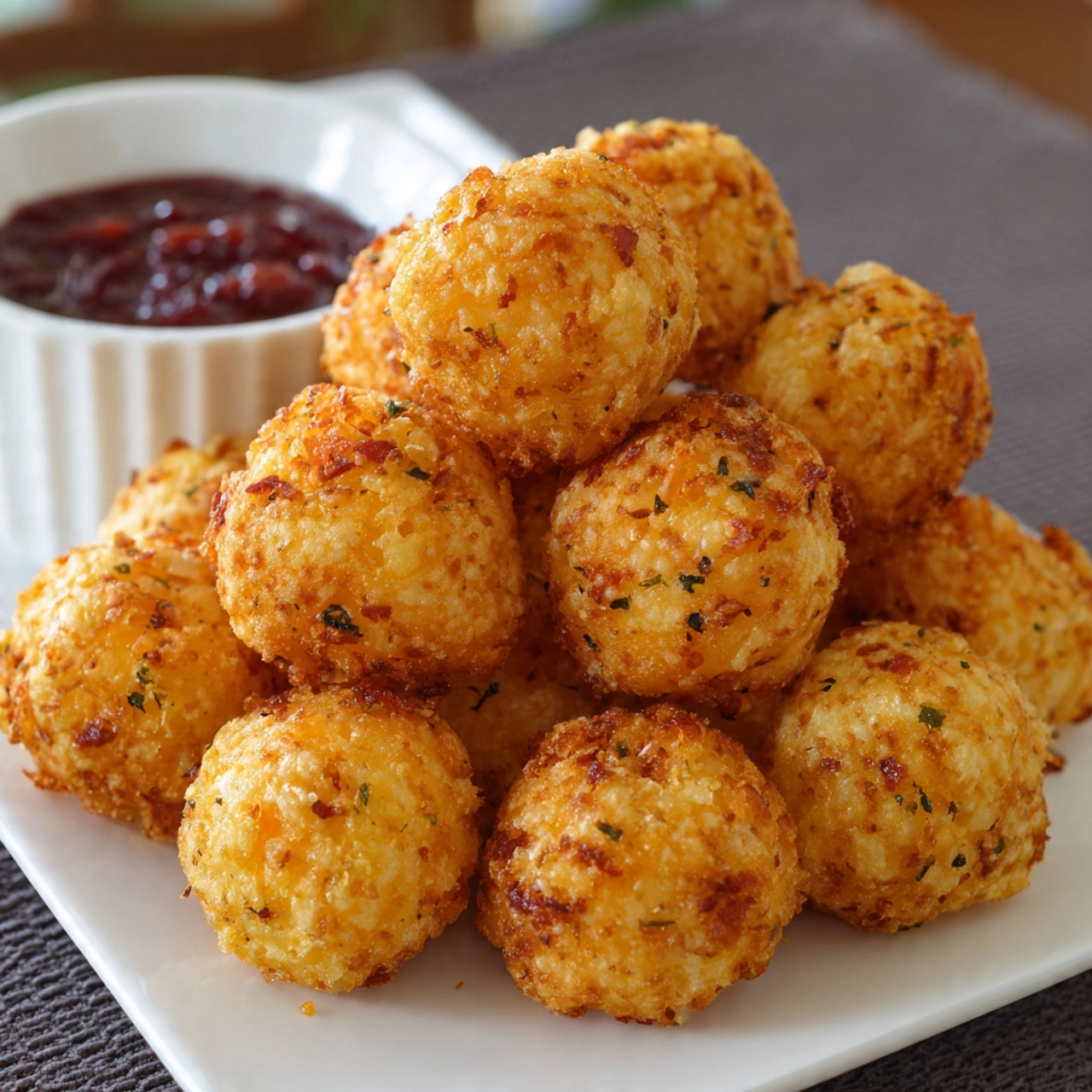
Introduction: Why This Cheese Balls Recipe Is Every Party’s MVP
Cheese Balls Recipe might sound retro, but this classic appetizer has remained a party staple for generations for one very good reason: it’s absolutely delicious and everyone loves it. I used to think cheese balls were something only my grandmother made for holiday gatherings in the 1980s, until I brought one to a modern potluck and watched a group of millennials and Gen Z guests hover around it all evening, spreading it on crackers and asking for the recipe. Turns out, creamy, tangy, herb-flecked cheese coated in crunchy pecans or bacon transcends generational trends.
What makes a cheese ball so irresistible is the contrast of textures and flavors. The creamy, rich interior—packed with sharp cheddar and tangy cream cheese—is complemented by a crunchy exterior, whether toasted pecans, crispy bacon, fresh herbs, or everything bagel seasoning. Every bite delivers a perfect balance of savory, tangy, and crunchy goodness.
Cheese balls aren’t just delicious—they’re incredibly practical for entertaining. They can be made ahead, improve after a day in the fridge, serve a crowd effortlessly, and are endlessly customizable. From ranch-flavored and jalapeño-bacon to sweet-and-savory versions with dried fruit and nuts, one basic technique unlocks countless variations.
I’ve served cheese balls at Christmas parties, Super Bowl gatherings, baby showers, and casual get-togethers, and the reaction is always the same: guests devour them and ask for the recipe. With just 20 minutes of prep—mixing cheeses and seasonings, shaping, and coating—this no-cook appetizer delivers maximum impact with minimal effort.
Ready to make a Cheese Balls Recipe that’ll have your guests fighting over the last cracker-full?

Ingredients: What You’ll Need for the Perfect Cheese Balls Recipe
For the Base (Makes One Large Cheese Ball, Serves 12-16)
- 16 oz (2 packages) cream cheese, softened to room temperature – The creamy foundation
- 2 cups shredded sharp cheddar cheese (about 8 oz) – Bold, tangy flavor
- ¼ cup sour cream – Adds tanginess and smooth texture
- 2 tablespoons unsalted butter, softened – Richness and spreadability
- 1 teaspoon Worcestershire sauce – Umami depth
- ½ teaspoon garlic powder – Savory backbone
- ½ teaspoon onion powder – Aromatic sweetness
- ¼ teaspoon cayenne pepper (optional) – Subtle heat
- Salt and black pepper to taste – Essential seasoning
Coating Options (Choose One or Combine)
Savory Coatings:
- 1½ cups chopped pecans or walnuts, toasted – Classic crunchy coating
- 1 cup cooked bacon, crumbled – Smoky, salty perfection
- ¾ cup everything bagel seasoning – Trendy, flavorful option
- 1 cup fresh parsley, finely chopped – Fresh, herbal, classic
- 1 cup sliced almonds, toasted – Elegant crunch
- ½ cup dried cranberries + ½ cup pecans – Sweet-savory combination
Creative Coatings:
- Crushed pretzels – Salty crunch
- Crumbled blue cheese – For blue cheese lovers
- Crushed potato chips – Ultimate indulgence
- Fresh chives, finely chopped – Delicate, oniony
Flavor Variation Add-Ins (Optional)
- 2 tablespoons fresh chives, minced – Mild onion flavor
- 2 tablespoons fresh dill, chopped – Fresh, bright notes
- ¼ cup sun-dried tomatoes, finely chopped – Mediterranean twist
- 2-3 tablespoons jalapeños, minced – Spicy kick
- ¼ cup blue cheese crumbles – Pungent depth
- 2 tablespoons prepared horseradish – Sharp heat
- 1 packet ranch seasoning – Ranch lover’s version
For Serving
- Assorted crackers – Buttery rounds, wheat thins, water crackers
- Fresh vegetables – Celery sticks, carrot sticks, bell pepper strips
- Pretzels or breadsticks – Alternative dippers
- Apple or pear slices – Sweet-savory pairing
Equipment Needed
- Large mixing bowl
- Electric mixer or sturdy wooden spoon
- Plastic wrap or parchment paper
- Serving plate
- Spreading knife
Step-by-Step Instructions: Creating the Perfect Cheese Balls Recipe
Step 1: Soften Your Ingredients (30-60 minutes passive)
This step is absolutely critical and cannot be rushed. Remove your cream cheese, butter, and shredded cheddar from the refrigerator at least 30 minutes before you plan to start mixing—60 minutes is even better. Room temperature ingredients blend smoothly and evenly, creating a homogeneous, creamy mixture. Cold ingredients will be lumpy, difficult to mix, and result in an inconsistent texture with pockets of unmixed cream cheese.
If you forgot to soften ingredients and need to speed up the process, you can cut the cream cheese into small cubes and microwave it in 10-second bursts, checking between each burst. Be careful—you want soft, not melted. Melted cream cheese cannot be salvaged and will create a runny cheese ball that won’t hold its shape.
Step 2: Mix the Base (5 minutes)
In a large mixing bowl, combine the softened cream cheese, shredded cheddar cheese, sour cream, and softened butter. Using an electric mixer on medium speed (or vigorous stirring with a wooden spoon if mixing by hand), beat until completely smooth and well combined. This should take 2-3 minutes with a mixer, longer by hand.
Scrape down the sides of the bowl midway through mixing to ensure everything incorporates evenly. The mixture should be uniformly colored with no visible streaks of cream cheese or pockets of shredded cheddar. It should look like a smooth, fluffy cheese spread.
Step 3: Add Seasonings and Mix-Ins (3 minutes)
Add the Worcestershire sauce, garlic powder, onion powder, cayenne if using, and salt and pepper to taste. Beat again until the seasonings are evenly distributed throughout the mixture. Taste the mixture at this point—yes, taste it! This is your only chance to adjust seasoning before shaping. It should taste tangy, savory, and well-seasoned. If it tastes bland, add more salt, garlic powder, and a dash more Worcestershire.
If you’re adding any mix-ins like chives, jalapeños, or sun-dried tomatoes, fold them in gently now with a spatula until evenly distributed.
Step 4: Chill the Mixture (1-2 hours)
Cover the bowl with plastic wrap and refrigerate for at least 1-2 hours, or until the mixture is firm enough to shape. This chilling step is essential—the mixture is too soft to shape into a ball when first mixed. As it chills, the cream cheese and butter firm up, making the mixture moldable.
If you’re in a hurry, you can place the bowl in the freezer for 30-40 minutes instead, checking every 10 minutes. You want it firm but not frozen solid.
Step 5: Shape the Cheese Ball (5 minutes)
Once the mixture is firm, prepare your work surface. Lay out a large sheet of plastic wrap or parchment paper. Turn the chilled cheese mixture out onto the plastic wrap. Using your hands (lightly dampened with cold water to prevent sticking), shape the mixture into a ball, log, or whatever shape you prefer. Work quickly so the heat from your hands doesn’t soften the cheese too much.
For a perfectly round ball, gather the plastic wrap around the cheese and twist the top, using the wrap to compress and shape the mixture into a uniform sphere. For a log shape, form it into a cylinder about 2-3 inches in diameter.
If the mixture becomes too soft during shaping, refrigerate for 15 minutes and try again.
Step 6: Apply the Coating (10 minutes)
Prepare your coating in a shallow dish or on a large plate. If using nuts, make sure they’re toasted and cooled first—toasting intensifies their flavor and creates better crunch. Spread the coating in an even layer.
Unwrap your shaped cheese ball and roll it in the coating, pressing gently so the coating adheres all over the surface. For nuts or bacon, press them into the cheese ball with your hands to ensure they stick firmly and cover completely.
Alternatively, you can lay out a sheet of plastic wrap, spread the coating on it, place the cheese ball in the center, gather the wrap around it, and press firmly through the wrap to embed the coating. This method keeps your hands cleaner.
Step 7: Final Chill (2+ hours or overnight)
Wrap the coated cheese ball tightly in fresh plastic wrap and refrigerate for at least 2 hours before serving, though overnight is ideal. This final chilling allows the flavors to meld together beautifully and firms up the cheese ball to perfect serving consistency.
The cheese ball can be made up to 3 days ahead of when you plan to serve it. In fact, making it a day or two ahead actually improves the flavor as the seasonings have more time to permeate the cheese.
Step 8: Serve
Remove the cheese ball from the refrigerator 15-20 minutes before serving to take the chill off slightly—it spreads more easily at cool room temperature than ice-cold. Place on a serving platter surrounded by crackers, vegetables, or whatever dippers you’re offering. Provide a spreading knife and watch it disappear.
Pro Tips for the Perfect Cheese Balls Recipe
Tip 1: Room Temperature is Non-Negotiable
I cannot overemphasize this enough: cold cream cheese will not mix properly. You’ll end up with lumps, streaks, and an inconsistent texture no matter how long you beat it. Plan ahead and leave ingredients on the counter for at least 30 minutes, preferably an hour. This single step is the difference between mediocre cheese balls and exceptional ones.
Tip 2: Toast Your Nuts for Maximum Flavor
Raw nuts are fine, but toasted nuts are exceptional. Toasting brings out oils and intensifies nutty flavor dramatically. Spread nuts in a single layer on a baking sheet and toast at 350°F for 8-10 minutes, stirring halfway through, until fragrant and lightly golden. Let them cool completely before using as coating. The difference in flavor is remarkable.
Tip 3: Shred Your Own Cheese
Pre-shredded cheese contains anti-caking agents (usually cellulose or potato starch) that prevent it from melting and incorporating smoothly into cream cheese. Shred your own cheese from a block—it takes three extra minutes and makes a noticeable difference in texture and flavor. The cheese ball will be creamier and more cohesive.
Tip 4: Taste and Adjust Before Shaping
Once you’ve mixed in all your seasonings, taste the mixture and adjust. This is your only opportunity to fix underseasoning. Cheese balls should be boldly flavored because they’re spread thinly on crackers—subtle seasoning gets lost. Don’t be afraid to be generous with garlic powder, salt, and Worcestershire sauce.
Tip 5: Multiple Small Balls > One Giant Ball
For larger gatherings or variety, consider making 2-3 smaller cheese balls with different coatings or flavors instead of one large one. This gives guests options and creates visual interest. Smaller balls also firm up faster in the refrigerator and are easier to shape uniformly.
Tip 6: Use Quality Cream Cheese
Store-brand cream cheese often contains more stabilizers and less actual cream, resulting in a less creamy, more rubbery texture. Splurge on name-brand Philadelphia cream cheese for the best texture and flavor. The difference is genuine and worth the extra dollar or two.
Tip 7: The Overnight Rest is Your Friend
While you can serve a cheese ball after 2 hours of chilling, letting it sit overnight in the refrigerator allows flavors to develop and meld together into something cohesive and complex. Make it a day ahead whenever possible—you’ll thank yourself for both the make-ahead convenience and the superior flavor.
Tip 8: Double the Recipe and Freeze One
Cheese balls freeze beautifully for up to 2 months. Make a double batch, freeze one before coating it, and you’ll have party-ready appetizers whenever you need them. Thaw overnight in the refrigerator, apply coating, and serve. Having a cheese ball in the freezer is like having entertaining insurance.
Common Mistakes to Avoid When Making Cheese Balls Recipe
Mistake 1: Using Cold Ingredients
This is the cardinal sin that ruins countless cheese balls. Cold cream cheese doesn’t blend—it creates lumps and streaks no matter how long you beat it. The resulting cheese ball has an inconsistent texture with pockets of pure cream cheese and pockets of pure cheddar. Always bring all dairy ingredients to room temperature before mixing.
Mistake 2: Not Chilling Long Enough Before Shaping
If you try to shape the cheese mixture when it’s too soft, you’ll end up with a misshapen mess that’s more blob than ball. The mixture needs time to firm up in the refrigerator (at least 1-2 hours) before it’s firm enough to hold a shape. Be patient with the chilling time—rushing this step guarantees frustration.
Mistake 3: Over-Softening or Melting the Cream Cheese
In an attempt to speed up the softening process, some people microwave cream cheese too aggressively and it melts. Melted cream cheese cannot return to its proper texture—it stays runny and will never firm up properly. If you must microwave, use 10-second bursts and check between each one. Stop when it’s soft, not liquid.
Mistake 4: Under-Seasoning the Mixture
Because cheese balls are spread thinly on crackers, bland seasoning becomes even blander. The cheese mixture should taste boldly seasoned when you sample it straight from the bowl—that bold flavor will be perfect when spread on a neutral cracker. Don’t be timid with salt, garlic, and seasonings.
Mistake 5: Applying Coating to Warm Cheese
If the cheese ball hasn’t chilled long enough after shaping, or if your hands warmed it too much during shaping, the coating won’t stick properly. The cheese will be too soft and the coating will slide off or embed unevenly. Make sure the shaped ball is firm and cold before applying coating.
Mistake 6: Using Wet Ingredients Without Compensation
If you’re adding wet ingredients like jalapeños, sun-dried tomatoes in oil, or pickles, pat them completely dry with paper towels first. Excess moisture makes the cheese ball too soft and prevents it from holding its shape. Better yet, increase the ratio of cheese slightly to compensate for added moisture.
Mistake 7: Not Pressing the Coating In Firmly
Simply rolling the cheese ball through nuts or bacon isn’t enough—you need to press the coating firmly into the surface so it adheres properly. Gently pat and press all over to embed the coating. Otherwise, pieces fall off when people try to spread the cheese, creating a messy presentation.
Mistake 8: Serving It Too Cold
Cheese balls straight from the refrigerator are too firm to spread easily and the flavors are muted by cold. Remove from the fridge 15-20 minutes before serving so it comes to cool room temperature. At this temperature, it spreads smoothly without being too soft or too hard.
Storage and Serving Suggestions for Cheese Balls Recipe
How to Store
Refrigerator: Wrap the cheese ball tightly in plastic wrap and store in an airtight container for up to 5 days. The flavor actually improves over the first 2-3 days as seasonings continue to develop. After 3 days, it’s still safe to eat but freshness starts to decline.
Freezer: Cheese balls freeze excellently for up to 2 months. Wrap tightly in plastic wrap, then aluminum foil, and place in a freezer bag. For best results, freeze before applying the coating—coat after thawing. To thaw, transfer to the refrigerator 24 hours before serving.
Make-Ahead Timeline:
- 2 months ahead: Make and freeze (uncoated)
- 3 days ahead: Make, coat, and refrigerate
- 1 day ahead: Ideal timing for best flavor development
- 4 hours ahead: Minimum time needed (1-2 hours to firm mixture, 2 hours after shaping)
Serving Suggestions
Classic Presentation: Place the cheese ball on a serving platter with crackers arranged in a fan or circle around it. Add a spreading knife and let guests serve themselves. Simple, elegant, and the cheese ball is clearly the star.
Deluxe Appetizer Board: Create an appetizer spread with the cheese ball as the centerpiece, surrounded by assorted crackers, sliced baguette, pretzel crisps, apple slices, grapes, celery sticks, and baby carrots. Add some salami or prosciutto for meat lovers.
Individual Portions: Make mini cheese balls (golf ball-sized) and place one on each appetizer plate with a few crackers. This works beautifully for sit-down dinners or formal parties where you want individual servings.
Holiday Display: Place the cheese ball on a festive platter garnished with fresh herbs, dried cranberries scattered around it, and surround with rosemary sprigs for a beautiful holiday presentation that doubles as decoration.
Casual Gathering: Serve with sturdy scoops-style chips, pretzel crisps, and veggies for a more casual vibe that’s perfect for game day or backyard parties.
Pairing Ideas
- Beverages: Pairs beautifully with wine (Chardonnay, Pinot Grigio, or light reds), beer, cocktails, or sparkling cider
- Crackers: Buttery rounds, wheat thins, water crackers, everything crackers, or crostini
- Vegetables: Celery, carrots, bell peppers, cucumber slices, endive leaves
- Fruits: Apple slices, pear slices, grapes (especially good with nut-coated versions)
Flavor Variation Ideas
Ranch Cheese Ball: Add 1 packet ranch seasoning mix to the base, coat with bacon and chives
Jalapeño Popper Ball: Add minced jalapeños and coat with crushed tortilla chips and bacon
Everything Bagel Ball: Add ¼ cup chopped smoked salmon to base, coat with everything bagel seasoning
Blue Cheese Ball: Replace half the cheddar with crumbled blue cheese, coat with toasted pecans
Sweet and Savory Ball: Add ⅓ cup dried cranberries to base, coat with pecans and more cranberries
Pizza Ball: Add Italian seasoning, garlic, and sun-dried tomatoes to base, coat with mini pepperoni
Buffalo Cheese Ball: Add hot sauce and blue cheese crumbles, coat with crushed blue cheese crackers
Frequently Asked Questions (FAQ)
1. Can I make a cheese ball without cream cheese?
Cream cheese provides the necessary structure and spreadability for a classic cheese ball. While you could technically use something like goat cheese or Neufchâtel cheese, the texture and flavor will be different. For truly cream cheese-free versions, look for dairy-free cream cheese alternatives made from cashews or almonds, though the result won’t be identical to the traditional version.
2. How far in advance can I make a cheese ball?
You can make a cheese ball up to 3 days before serving, and it actually improves in flavor as it sits. The ideal timeline is making it 1-2 days ahead. For longer storage, make it up to 2 months ahead and freeze it (without the coating). Thaw in the refrigerator 24 hours before serving, apply coating, and it’s ready.
3. Why is my cheese ball too soft and not holding its shape?
This usually happens for one of several reasons: the cheese mixture wasn’t chilled long enough before shaping (needs at least 1-2 hours), you added too many wet ingredients without compensation, you used low-fat cream cheese which doesn’t firm up properly, or the room/kitchen is too warm. Try refrigerating longer or adding a bit more shredded cheese to firm it up.
4. Can I make mini cheese balls instead of one large one?
Absolutely! Mini cheese balls are perfect for parties because they’re less intimidating, allow for variety (make several with different coatings/flavors), and look adorable on a platter. Shape the mixture into golf ball or ping pong ball-sized portions, coat each one, and arrange on a platter. They also make great gifts when wrapped individually.
5. What’s the best cheese to use for a cheese ball?
Sharp cheddar is the classic choice because it provides bold flavor that stands up to the cream cheese. Extra-sharp white cheddar creates a more elegant appearance. You can also use a combination: half sharp cheddar and half Monterey Jack, or mix in some smoked gouda, swiss, or pepper jack. Avoid very soft cheeses that won’t shred well or very hard aged cheeses that won’t incorporate smoothly.
6. Can I make a cheese ball dairy-free or vegan?
Yes! Use dairy-free cream cheese (Kite Hill or Miyoko’s work well), vegan butter, and dairy-free shredded cheese (Violife or Follow Your Heart). The texture will be slightly different but still delicious. Nutritional yeast adds cheesy flavor. Coat with toasted nuts, seeds, or fresh herbs. The technique remains the same.
7. How do I transport a cheese ball to a party?
Keep it wrapped in plastic wrap inside an airtight container with the lid secured. Transport in a cooler with ice packs if it’s warm outside or if travel time exceeds 30 minutes. Bring crackers separately. At the party, unwrap and place on the host’s serving platter about 15-20 minutes before guests arrive so it can come to the right temperature for spreading.
8. What can I do with leftover cheese ball?
Leftover cheese ball is delicious! Spread it on sandwiches, stuff it into celery sticks, spread on bagels for breakfast, use as a topping for baked potatoes, melt it into scrambled eggs, or spread on burgers. You can also reshape it into a log, wrap tightly, and slice it to serve on crackers in a different format.

Nutrition Information (Per Serving, Based on 16 Servings, Not Including Crackers)
Calories: 145 kcal
Total Fat: 13g
- Saturated Fat: 7g
- Trans Fat: 0g
Cholesterol: 35mg
Sodium: 180mg
Total Carbohydrates: 2g
- Dietary Fiber: 0.5g
- Sugars: 1g
Protein: 5g
Vitamin A: 8% DV
Vitamin C: 0% DV
Calcium: 12% DV
Iron: 2% DV
Note: Nutrition information is approximate and based on classic cheese ball with pecan coating. Values will vary significantly based on specific cheese used, coating choice, and serving size. This is an indulgent appetizer meant to be enjoyed in moderation as part of a balanced diet. Crackers, vegetables, or other dippers add additional calories.
Conclusion: Your New Go-To Cheese Balls Recipe for Every Occasion
Cheese Balls Recipe proves that sometimes the classics endure for excellent reasons—they’re delicious, practical, crowd-pleasing, and genuinely fun to make and serve. This isn’t trendy food that’ll be forgotten next year. This is reliable, nostalgic, universally beloved party food that has earned its place on appetizer tables for generations.
What I love most is how this recipe gives you a solid foundation that welcomes creativity. Master the basic technique once and you can create dozens of variations by changing the cheese blend, adjusting seasonings, or experimenting with coatings. Ranch lovers make ranch cheese balls. Bacon enthusiasts create bacon-forward versions. Herb gardeners showcase their fresh herbs. The formula is flexible enough to accommodate nearly any preference.
Since rediscovering cheese balls, I’ve made them for countless gatherings and the response never varies—people love them. They photograph beautifully, they taste incredible, and they generate genuine enthusiasm in a way that more elaborate appetizers sometimes don’t. There’s something about a cheese ball that makes people happy.
The make-ahead nature means stress-free entertaining. While other hosts are frantically assembling last-minute appetizers, your cheese ball sits serenely in the refrigerator, ready to shine. Just unwrap, place on a platter, and accept compliments.
So grab that cream cheese, shred some cheddar, and get ready to discover (or rediscover) why cheese balls have been party MVPs for decades. Your Cheese Balls Recipe journey starts now, and I promise—this retro classic is about to become your modern entertaining secret weapon.
Happy mixing
PrintCheese Balls Recipe: The Classic Party Appetizer That Never Goes Out of Style

This classic Cheese Balls Recipe combines cream cheese, sharp cheddar, and savory seasonings into a creamy, tangy spread coated with your choice of toasted pecans, crispy bacon, or herbs. Perfect for parties, holidays, and gatherings, this make-ahead appetizer takes just 20 minutes of active prep and serves a crowd. Customize with endless flavor variations and coating options!
- Prep Time: 20 minutes
- Cook Time: 0 minutes
- Total Time: 20 minutes (plus 3-4 hours chilling time)
- Yield: 1 large cheese ball (serves 12-16)
- Category: Appetizer, Snack, Party Food
- Method: No-Cook, Mixing
- Cuisine: American
- Diet: Vegetarian
Ingredients
Base:
- 16 oz (2 packages) cream cheese, softened
- 2 cups shredded sharp cheddar cheese (8 oz)
- ¼ cup sour cream
- 2 tablespoons unsalted butter, softened
- 1 teaspoon Worcestershire sauce
- ½ teaspoon garlic powder
- ½ teaspoon onion powder
- ¼ teaspoon cayenne pepper (optional)
- Salt and black pepper to taste
Coating (choose one):
- 1½ cups chopped pecans or walnuts, toasted
- 1 cup cooked bacon, crumbled
- ¾ cup everything bagel seasoning
- 1 cup fresh parsley, finely chopped
- Or other coating of choice
For Serving:
- Assorted crackers, vegetables, pretzels
Instructions
- Soften ingredients: Leave cream cheese, butter, and shredded cheese at room temperature 30-60 minutes until completely soft.
- Mix base: Beat cream cheese, cheddar, sour cream, and butter with electric mixer until smooth and completely combined (2-3 minutes).
- Add seasonings: Mix in Worcestershire sauce, garlic powder, onion powder, cayenne, salt, and pepper until evenly distributed. Taste and adjust seasoning.
- First chill: Cover and refrigerate 1-2 hours until firm enough to shape.
- Shape: Form chilled mixture into a ball or log using plastic wrap to help shape. Work quickly with cold, damp hands.
- Coat: Roll shaped cheese ball in your chosen coating, pressing firmly so coating adheres all over surface.
- Final chill: Wrap tightly and refrigerate at least 2 hours or up to 3 days (overnight is ideal).
- Serve: Remove from fridge 15-20 minutes before serving. Place on platter with crackers and serve with spreading knife.
Notes
- Room temperature ingredients are essential for smooth mixing
- Toast nuts before using for coating—intensifies flavor
- Taste mixture before shaping to adjust seasoning
- Can be made 3 days ahead; flavor improves with time
- Freezes beautifully for up to 2 months (freeze before coating)
- Shred your own cheese for better texture
- Overnight chilling allows flavors to meld perfectly
- Customize with endless coating and flavor variations
- Makes great gifts when wrapped decoratively