Introduction
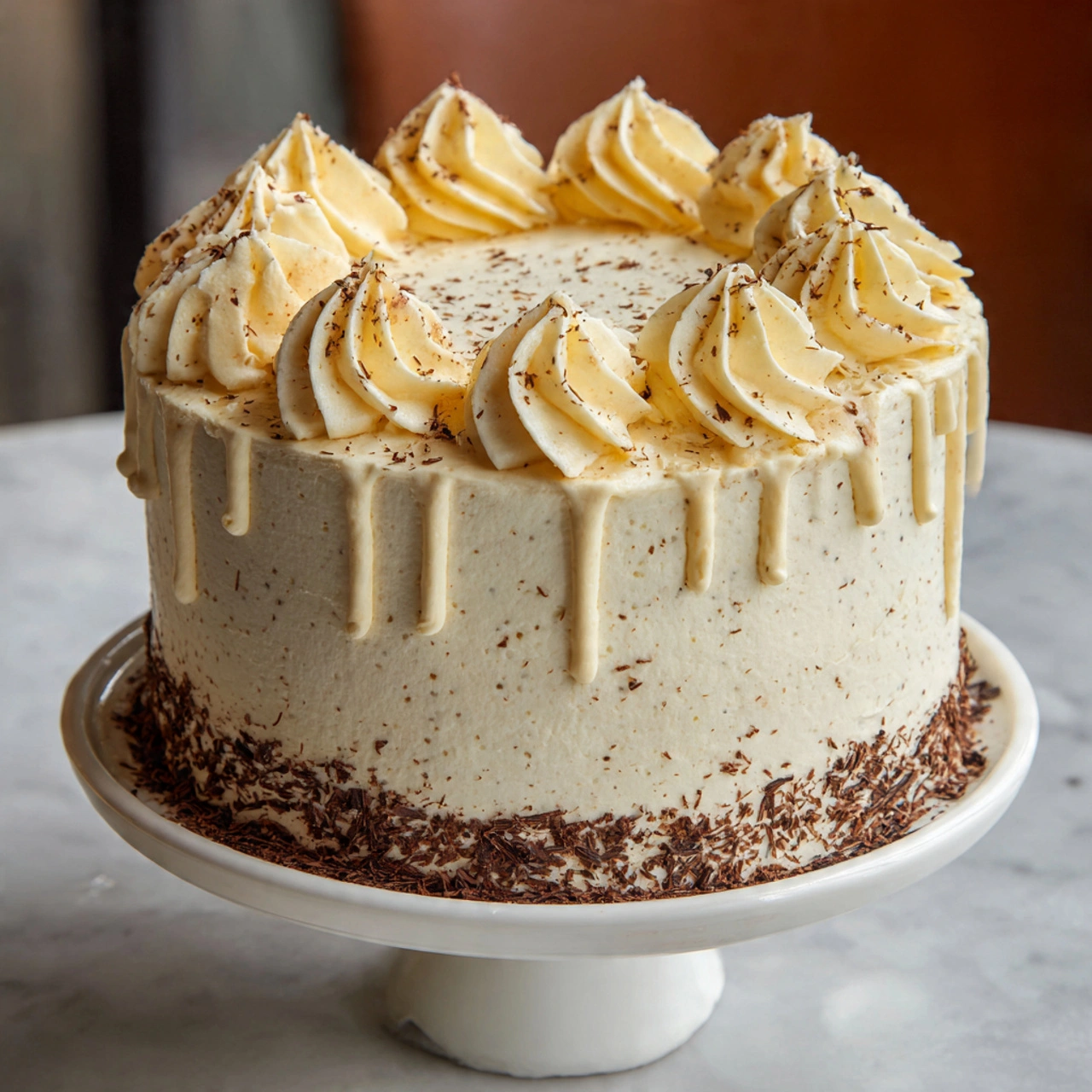
Vanilla bean cake is the ultimate test of a baker’s skill—proof that simplicity done exceptionally well can outshine even the most elaborate creations. This isn’t just any vanilla cake; it’s an elevated version studded with real vanilla bean seeds, creating delicate flecks throughout the crumb and delivering a pure, aromatic flavor that extract alone can’t match. When done right, the cake is moist but light, tender but sturdy, and intensely vanilla-forward—a true showstopper for any occasion.
I used to think vanilla cake was boring, the default choice when nothing more exciting came to mind. Then I attended a wedding where a “simple” white cake completely changed my perspective. The crumb practically melted on my tongue, and the vanilla flavor was so vibrant it needed no chocolate, fruit, or garnish. That moment launched me on a quest to recreate the perfect vanilla bean cake, experimenting with dozens of recipes and techniques until I finally nailed it.
What sets an extraordinary vanilla bean cake apart is attention to a few critical details: using real vanilla beans alongside extract, incorporating buttermilk or sour cream for tender moisture, properly creaming butter and sugar to build structure, and baking at just the right temperature for a golden exterior and soft interior. These small steps transform a cake people eat politely into one they rave about.
This guide walks you through every step to create bakery-quality vanilla bean cake at home—from scraping beans to achieving the perfect crumb—so you can impress at birthdays, showers, or any celebration. Vanilla, it turns out, is anything but boring.
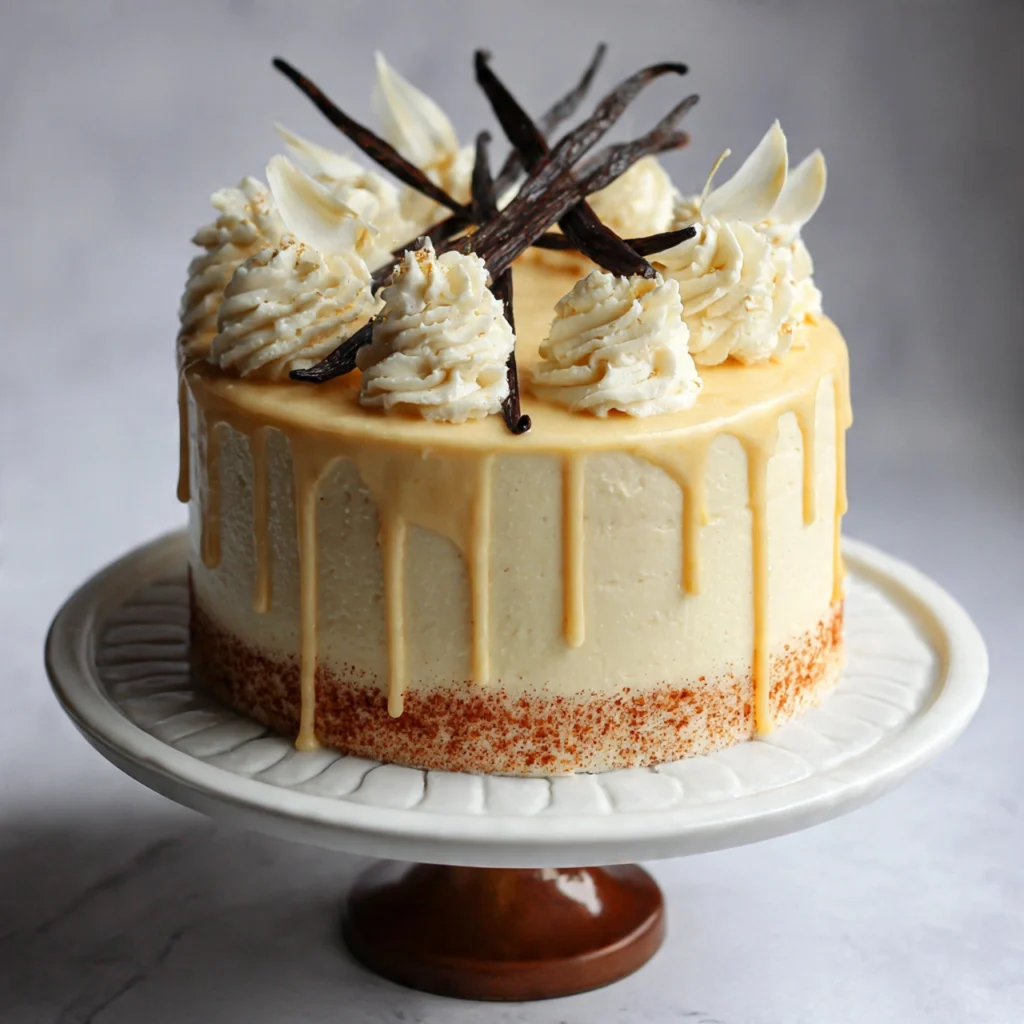
Ingredients for Vanilla Bean Cake
For the Vanilla Bean Cake:
- 3 cups (375g) cake flour (not all-purpose)
- 1 tablespoon baking powder
- ½ teaspoon salt
- 1 cup (226g) unsalted butter, softened (room temperature)
- 2 cups (400g) granulated sugar
- 4 large eggs, room temperature
- 1 cup (240ml) buttermilk, room temperature
- ½ cup (120ml) vegetable oil or melted coconut oil
- 2 vanilla beans, split and scraped (or 2 tablespoons vanilla bean paste)
- 2 teaspoons pure vanilla extract
For the Vanilla Bean Buttercream:
- 1½ cups (339g) unsalted butter, softened
- 6 cups (720g) powdered sugar, sifted
- ⅓ cup (80ml) heavy cream or milk
- 1 vanilla bean, split and scraped (or 1 tablespoon vanilla bean paste)
- 2 teaspoons pure vanilla extract
- ¼ teaspoon salt
Optional Vanilla Simple Syrup:
- ½ cup (100g) granulated sugar
- ½ cup (120ml) water
- 1 teaspoon vanilla extract
Step-by-Step Instructions
Step 1: Prepare Your Ingredients and Pans
Bring all refrigerated ingredients to room temperature about one hour before baking. This is crucial for proper emulsification and even baking. Room temperature butter should leave a slight indent when pressed but still hold its shape. Eggs should feel neither cold nor warm to the touch.
Preheat your oven to 350°F (175°C). Prepare three 8-inch round cake pans by greasing them generously with butter or baking spray, lining the bottoms with parchment paper rounds, then greasing the parchment. Dust lightly with flour, tapping out the excess. This triple protection ensures your cakes release perfectly.
Step 2: Prepare the Vanilla Beans
Using a sharp paring knife, split each vanilla bean lengthwise down the center. Hold the bean flat against your cutting board and use the back of your knife to scrape out the tiny black seeds from both halves. Place these precious seeds in a small bowl—this is where all that incredible vanilla flavor lives.
Add the vanilla extract to the vanilla bean seeds and stir together. This creates a vanilla paste that will distribute evenly throughout your batter. Don’t discard the scraped pods—they’re still packed with flavor and can be added to your sugar jar or used to make vanilla extract.
Step 3: Combine Dry Ingredients
In a medium bowl, whisk together the cake flour, baking powder, and salt until thoroughly combined. Whisking aerates the flour and ensures the leavening agents are evenly distributed. Set this mixture aside.
Step 4: Cream Butter and Sugar
In the bowl of a stand mixer fitted with the paddle attachment (or using a hand mixer and large bowl), beat the softened butter on medium speed for about 2 minutes until smooth and creamy. Add the sugar and increase speed to medium-high, beating for 5-6 minutes until the mixture is very light, fluffy, and pale in color—almost white.
This extended creaming time is absolutely critical. It incorporates air that helps create a light, tender crumb. The mixture should increase noticeably in volume and have a whipped, mousse-like texture. Don’t rush this step—those extra minutes make all the difference.
Step 5: Add Eggs and Vanilla
Reduce mixer speed to medium-low. Add the eggs one at a time, beating for about 30 seconds after each addition before adding the next. The mixture should look smooth and emulsified, not broken or curdled. If it looks slightly curdled, don’t panic—it will come together when you add the flour.
Add your vanilla bean seed mixture and beat until fully incorporated, scraping down the sides of the bowl to ensure even mixing. The batter should be beautifully flecked with tiny black vanilla specks.
Step 6: Alternate Dry and Wet Ingredients
In a liquid measuring cup, whisk together the buttermilk and oil until combined. With the mixer on low speed, add the flour mixture in three additions, alternating with the buttermilk mixture in two additions. Start and end with flour: flour, buttermilk, flour, buttermilk, flour.
Mix each addition only until just combined—you should see no dry streaks, but don’t overmix. Overmixing develops gluten, resulting in tough, dense cake. It’s fine if you see a few small lumps; they’ll disappear during baking.
Give the batter a final few folds with a rubber spatula to ensure everything is evenly incorporated, scraping the bottom and sides of the bowl where unmixed ingredients like to hide.
Step 7: Divide and Bake
Divide the batter evenly among the three prepared pans. For precision, weigh your filled pans—each should contain approximately 550-570 grams of batter. Alternatively, use a large scoop or measuring cup to divide evenly. Smooth the tops with an offset spatula.
Tap each pan firmly on the counter 2-3 times to release any large air bubbles trapped in the batter.
Bake for 25-30 minutes, rotating the pans halfway through for even baking. The cakes are done when a toothpick inserted in the center comes out clean or with just a few moist crumbs, the tops spring back when lightly pressed, and the edges just begin to pull away from the pan sides.
Step 8: Cool the Cakes
Let the cakes cool in the pans on wire racks for exactly 10 minutes. This brief rest allows them to firm up slightly, making them less likely to break when removed from the pans. After 10 minutes, carefully run a thin knife or offset spatula around the edges of each cake, then invert onto wire racks.
Peel off the parchment paper and flip the cakes right-side up to cool completely. Cooling right-side up prevents wire rack marks on the top. Let them cool completely to room temperature before frosting—this takes about 1-2 hours. Rushing this step will melt your frosting.
Step 9: Make the Vanilla Bean Buttercream
While the cakes cool (or up to a day ahead), make your frosting. In a stand mixer fitted with the paddle attachment, beat the softened butter on medium speed for 3-4 minutes until very smooth and creamy.
Add the vanilla bean seeds and extract, beating until combined. Reduce speed to low and gradually add the sifted powdered sugar, one cup at a time. Once all the sugar is incorporated, add the heavy cream and salt.
Increase speed to medium-high and beat for 4-5 minutes until the frosting is light, fluffy, and spreadable. If it’s too thick, add cream one teaspoon at a time. If too thin, add more powdered sugar a few tablespoons at a time.
Step 10: Assemble and Frost
Once your Vanilla Bean Cake layers are completely cool, level them if needed using a serrated knife or cake leveler to remove any doming. Place your first layer on a serving plate or cake board.
If using simple syrup (optional but adds extra moisture), brush each layer generously with the syrup before frosting.
Spread about 1 cup of buttercream evenly over the first layer, going almost to the edges. Place the second layer on top and repeat. Add the final layer, placing it bottom-side up for the flattest possible top surface.
Apply a thin crumb coat over the entire cake—top and sides—smoothing it as much as possible. This initial layer traps any loose crumbs. Refrigerate for 15-20 minutes until the crumb coat firms up.
Apply the final layer of frosting generously, smoothing with an offset spatula or bench scraper. You can create swirls and peaks for a rustic look or smooth it completely for an elegant finish. Decorate with fresh flowers, berries, or keep it beautifully simple.
Pro Tips for the Perfect Vanilla Bean Cake
Invest in Real Vanilla Beans
While vanilla bean paste is a good substitute, nothing beats real vanilla beans for flavor and visual appeal. Look for plump, moist beans that are flexible rather than dry and brittle. Madagascar Bourbon vanilla beans are the classic choice with rich, creamy flavor, while Tahitian beans offer floral notes.
Room Temperature Ingredients Are Essential
Cold ingredients don’t emulsify properly, leading to dense, uneven texture. Everything should be room temperature: butter, eggs, buttermilk. If you forget to take them out ahead, place eggs in warm water for 10 minutes and microwave buttermilk for 15 seconds.
Use Cake Flour for Superior Texture
Cake flour has lower protein content than all-purpose flour, resulting in a more tender, delicate crumb. Don’t substitute all-purpose flour—it will make your cake denser and chewier. If you absolutely must substitute, use ¾ cup all-purpose flour plus 2 tablespoons cornstarch for each cup of cake flour called for.
Don’t Overmix Once Flour Is Added
The number one cause of tough, dense cake is overmixing after adding flour. Mix only until you see no dry streaks remaining. Those extra 30 seconds of mixing can mean the difference between tender and tough.
Weigh Your Ingredients
Baking is chemistry, and precision matters. Measuring flour by weight ensures consistency every time. Too much flour creates dry, dense cake; too little makes it collapse. If you don’t have a scale, use the spoon-and-level method: spoon flour into your measuring cup and level with a knife without packing.
Test for Doneness Multiple Ways
Don’t rely solely on timing. Check doneness by: inserting a toothpick (it should come out clean or with a few moist crumbs), gently pressing the top (it should spring back), and looking at the edges (they should just start pulling away from the pan). Internal temperature should be 210°F.
Make Simple Syrup for Extra Moisture
That optional simple syrup isn’t just for show—it adds moisture and helps cakes stay fresh longer. Make it by boiling equal parts sugar and water until dissolved, then cooling and adding vanilla. Brush generously on each layer before frosting.
Chill Between Frosting Steps
That crumb coat step is essential for bakery-quality results. Don’t skip the 15-20 minute chill time—it makes applying the final frosting layer so much easier and prevents crumbs from marring your beautiful finish.
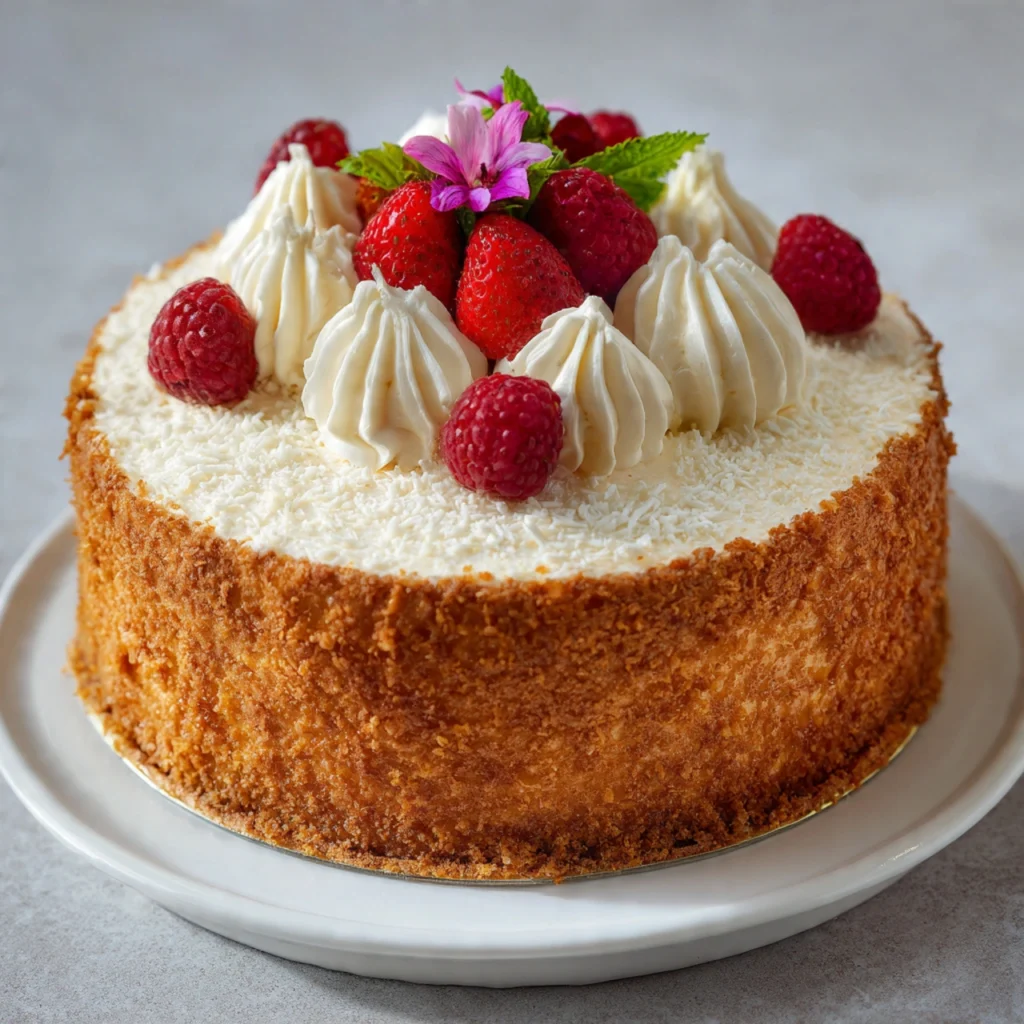
Common Mistakes to Avoid
Using Imitation Vanilla
Imitation vanilla extract contains synthetic vanillin that tastes harsh and one-dimensional compared to real vanilla. Since vanilla is the star flavor here, using quality vanilla beans and pure extract is non-negotiable. The difference is immediately noticeable.
Overmixing the Batter
Once flour enters the equation, every stir develops gluten. Mix only until ingredients are just combined—no more. A few small lumps are fine and will bake out. Overworked batter produces tough, dense, chewy cake instead of tender, fluffy perfection.
Incorrect Oven Temperature
An oven that runs too hot bakes the outside too quickly while leaving the center underdone. Too cool and cakes don’t rise properly and develop poor texture. Use an oven thermometer to verify your oven’s actual temperature and adjust accordingly.
Opening the Oven Door Too Early
Resist the urge to check on your cakes during the first 20 minutes of baking. Opening the door releases heat and can cause cakes to fall or bake unevenly. Only check after 20 minutes, and do so quickly.
Frosting Your Warm Vanilla Bean Cake
This is the fastest way to ruin an otherwise perfect cake. Warm cake causes buttercream to melt and slide right off, creating a soupy mess. Be patient and let cakes cool completely—at least 1-2 hours—before even thinking about frosting.
Skipping the Parchment Paper
Greasing alone sometimes isn’t enough. That parchment circle on the bottom of the pan is insurance against cakes sticking and breaking when you try to remove them. It takes 30 seconds and prevents heartbreak.
Not Leveling Cake Layers
Those domed tops create wobbly, unstable stacked layers. Always level your cakes for professional-looking results and easier assembly. Save the scraps for snacking or crumble them for decorating the sides.
Storage and Serving Suggestions for Vanilla Bean Cake
Room Temperature Storage
Unfrosted Vanilla Bean Cake layers can be wrapped tightly in plastic wrap and stored at room temperature for 1 day. Fully frosted cake can sit at room temperature (if your kitchen isn’t too warm) for up to 2 days under a cake dome or covered with a large bowl.
Refrigerator Storage
For longer storage, refrigerate the frosted Vanilla Bean Cake covered loosely with plastic wrap or under a cake dome for up to 5 days. The buttercream protects the cake from drying out. Remove from the refrigerator 30-60 minutes before serving for the best texture and flavor—cold cake is less tender and the frosting is firmer.
Freezing Options
Unfrosted Layers: Wrap cooled layers individually in plastic wrap, then aluminum foil. Freeze for up to 3 months. Thaw overnight in the refrigerator still wrapped, then bring to room temperature before frosting.
Frosted Cake: Freeze the frosted Vanilla Bean Cake uncovered until solid (about 2 hours), then wrap carefully in plastic wrap and foil. Freeze for up to 2 months. Thaw overnight in the refrigerator, still wrapped to prevent condensation from damaging the frosting.
Serving Suggestions
Vanilla bean cake is wonderfully versatile:
Classic Celebration: This is the perfect birthday cake, wedding Vanilla Bean Cake, or shower cake. Its elegant simplicity pairs beautifully with any theme or decoration.
With Fresh Berries: Serve slices with fresh strawberries, raspberries, or a mixed berry compote for color and tartness that complements the sweet vanilla.
With Ice Cream: A scoop of vanilla bean or complementary flavored ice cream alongside warm cake is pure indulgence.
As Cupcakes: Divide batter among 24 cupcake liners and bake for 18-22 minutes for portable vanilla bean cupcakes.
Flavored Variations: Fill layers with lemon curd, raspberry preserves, or chocolate ganache for exciting twists on the classic.
Beverage Pairings
The delicate vanilla flavor pairs beautifully with coffee, espresso, champagne, dessert wines like Moscato, or cold milk. For children’s parties, serve with vanilla milk or hot chocolate.
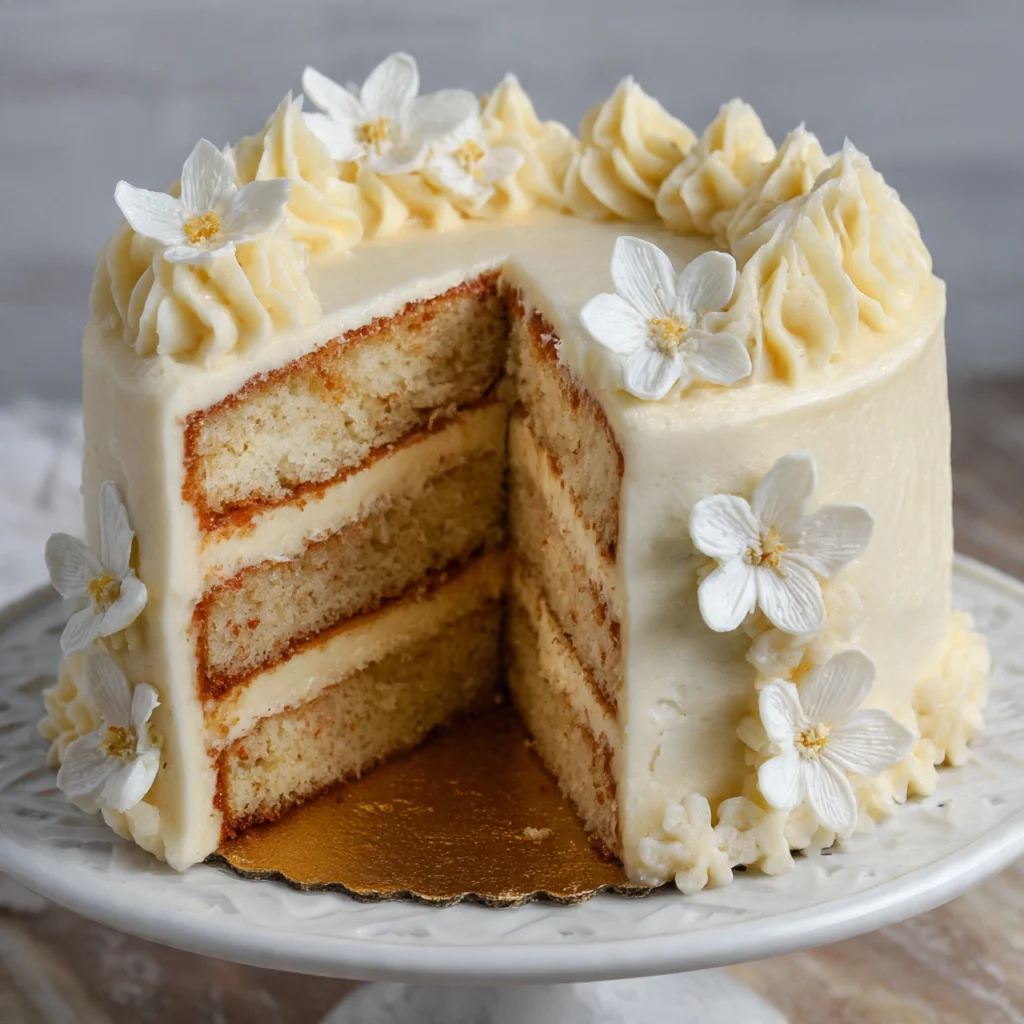
FAQ
Can I use vanilla extract instead of vanilla beans?
Yes, though you’ll lose the visual appeal of the vanilla bean specks and some flavor intensity. Use a total of 1 tablespoon of pure vanilla extract in the Vanilla Bean Cake if omitting beans. However, since vanilla is the star here, I strongly encourage using at least vanilla bean paste (2 tablespoons) as a middle-ground option that provides both flavor and those gorgeous flecks.
Why is my cake dense instead of light and fluffy?
Dense cake usually results from overmixing after adding flour, not creaming butter and sugar long enough, using cold ingredients, or measuring flour incorrectly (too much flour). Make sure to cream butter and sugar for the full 5-6 minutes, mix flour only until just combined, and ensure all ingredients are room temperature.
Can I make this cake ahead of time?
Absolutely! Unfrosted cake layers can be baked up to 2 days ahead and stored wrapped at room temperature, or frozen for up to 3 months. You can also frost the entire cake up to 2 days ahead and refrigerate it. For the best texture, bring refrigerated cake to room temperature before serving.
What’s the difference between cake flour and all-purpose flour?
Cake flour has about 8-9% protein compared to 10-12% in all-purpose flour. This lower protein content means less gluten development, resulting in a more tender, delicate crumb. Using all-purpose flour makes the cake denser and slightly chewier—still good, but noticeably different from the ethereal texture cake flour provides.
Can I make this cake dairy-free or vegan?
For dairy-free, substitute plant-based butter (like Miyoko’s) for regular butter and use a dairy-free milk with 1 tablespoon of lemon juice or vinegar in place of buttermilk. For fully vegan, also replace eggs: use ¾ cup unsweetened applesauce or make flax eggs (4 tablespoons ground flaxseed mixed with 10 tablespoons water, let sit 5 minutes). The texture will be slightly different but still delicious.
Why did my cake layers dome so much?
Significant doming usually happens when the oven is too hot, causing the outside to set before the center has risen, forcing the center to dome upward. It can also result from overmixing, which develops too much gluten. Use an oven thermometer to verify temperature, and consider using baking strips around your pans to insulate the edges.
How do I get perfectly smooth frosting?
The key is a proper crumb coat: apply a thin layer, chill until firm, then apply the final coat. Use a bench scraper or offset spatula held at a consistent angle, and work with room temperature frosting (too cold is stiff and tears the cake; too warm is runny). For ultra-smooth finishes, warm your spatula under hot water, dry it, then smooth the frosting.
Nutrition Information (Approximate Values per Serving)
Serving Size: 1 slice (based on 12 slices)
- Calories: 620
- Total Fat: 32g
- Saturated Fat: 18g
- Trans Fat: 0g
- Cholesterol: 140mg
- Sodium: 240mg
- Total Carbohydrates: 78g
- Dietary Fiber: 0.5g
- Sugars: 60g
- Protein: 5g
- Vitamin A: 20% DV
- Calcium: 8% DV
- Iron: 6% DV
Note: Nutrition information is approximate and will vary based on specific ingredients used, frosting thickness, and actual slice size. This is an indulgent dessert meant for special occasions.
Conclusion
Mastering vanilla bean cake is one of the most valuable skills in any baker’s repertoire because it provides the foundation for countless variations while being spectacular on its own. This isn’t a recipe you make once and move on from—it’s the cake you’ll return to again and again for birthdays, celebrations, and those times when you simply want something purely delicious without gimmicks or distractions.
What makes this recipe special isn’t just the real vanilla beans or the tender crumb—it’s understanding the “why” behind each step. When you know that extended creaming time incorporates air for structure, that alternating wet and dry ingredients prevents overmixing, and that room temperature ingredients emulsify properly, you become a better baker across all recipes. These fundamentals translate to every cake you’ll ever make.
The beauty of perfecting this vanilla bean cake is how it becomes your blank canvas. Once you’ve mastered the base, you can fill it with lemon curd, frost it with chocolate buttercream, fold in fresh berries, or keep it purely vanilla in all its simple glory. Each variation starts here, with this perfectly balanced, beautifully flavored foundation.
So gather your vanilla beans, bring those ingredients to room temperature, and prepare to create something truly special. Your friends and family are about to discover that vanilla, when done right, is the most sophisticated flavor of all. Happy baking!
Print10 Steps to Baking the Perfect Vanilla Bean Cake (Baker’s Secret!)
This classic vanilla bean cake elevates simple vanilla flavor to extraordinary heights with real vanilla beans, creating a moist, tender crumb studded with gorgeous vanilla specks. Three layers of buttery cake are filled and frosted with silky vanilla bean buttercream for a dessert that’s elegant in its simplicity yet impressive enough for any celebration. The secret lies in quality ingredients, proper technique, and patience—resulting in bakery-quality cake that proves vanilla is anything but boring.
- Prep Time: 30 minutes
- Cook Time: 30 minutes
- Total Time: 2 hours (including cooling time)
- Yield: 12 servings (three 8-inch layers)
- Category: Dessert, Cake, Special Occasion
- Method: Baking, Layer Cake
- Cuisine: American, Classic Bakery
- Diet: Vegetarian
Ingredients
Vanilla Bean Cake:
- 3 cups cake flour
- 1 tablespoon baking powder
- ½ teaspoon salt
- 1 cup unsalted butter, softened
- 2 cups granulated sugar
- 4 large eggs, room temperature
- 1 cup buttermilk, room temperature
- ½ cup vegetable oil
- 2 vanilla beans, split and scraped (or 2 tablespoons vanilla bean paste)
- 2 teaspoons pure vanilla extract
Vanilla Bean Buttercream:
- 1½ cups unsalted butter, softened
- 6 cups powdered sugar, sifted
- ⅓ cup heavy cream
- 1 vanilla bean, scraped (or 1 tablespoon vanilla bean paste)
- 2 teaspoons pure vanilla extract
- ¼ teaspoon salt
Optional Simple Syrup:
- ½ cup sugar
- ½ cup water
- 1 teaspoon vanilla extract
Instructions
- Preheat oven to 350°F. Grease and flour three 8-inch round pans, line bottoms with parchment.
- Split and scrape vanilla beans. Mix seeds with vanilla extract. Set aside.
- Whisk together cake flour, baking powder, and salt. Set aside.
- Beat butter 2 minutes until creamy. Add sugar, beat 5-6 minutes on medium-high until very light and fluffy.
- Add eggs one at a time, beating 30 seconds between additions. Add vanilla mixture, beat until combined.
- Whisk together buttermilk and oil. With mixer on low, add flour in 3 additions alternating with buttermilk mixture in 2 additions, beginning and ending with flour. Mix just until combined.
- Divide batter evenly among pans (about 550g each). Tap pans on counter to release air bubbles.
- Bake 25-30 minutes until toothpick comes out clean and tops spring back. Cool in pans 10 minutes, then turn out onto racks to cool completely.
- Make buttercream: Beat butter 3-4 minutes until smooth. Add vanilla, then gradually add powdered sugar. Add cream and salt, beat 4-5 minutes until fluffy.
- Level cakes if needed. Place first layer on plate, spread 1 cup frosting. Repeat with second layer. Add final layer bottom-side up. Apply thin crumb coat, chill 15-20 minutes. Apply final frosting layer and decorate.
Notes
- Real vanilla beans provide superior flavor and visual appeal; vanilla bean paste is acceptable substitute
- All ingredients must be room temperature for proper emulsification
- Use cake flour, not all-purpose, for tender crumb
- Cream butter and sugar for full 5-6 minutes—this creates light texture
- Don’t overmix once flour is added—mix just until combined
- Simple syrup brushed on layers adds moisture and helps cake stay fresh
- Unfrosted layers freeze beautifully for up to 3 months
- Fully frosted cake keeps refrigerated for 5 days
- Bring refrigerated cake to room temperature before serving for best texture