Introduction to Baked Salmon with Lemon Butter
An Elegant Yet Effortless Dinner
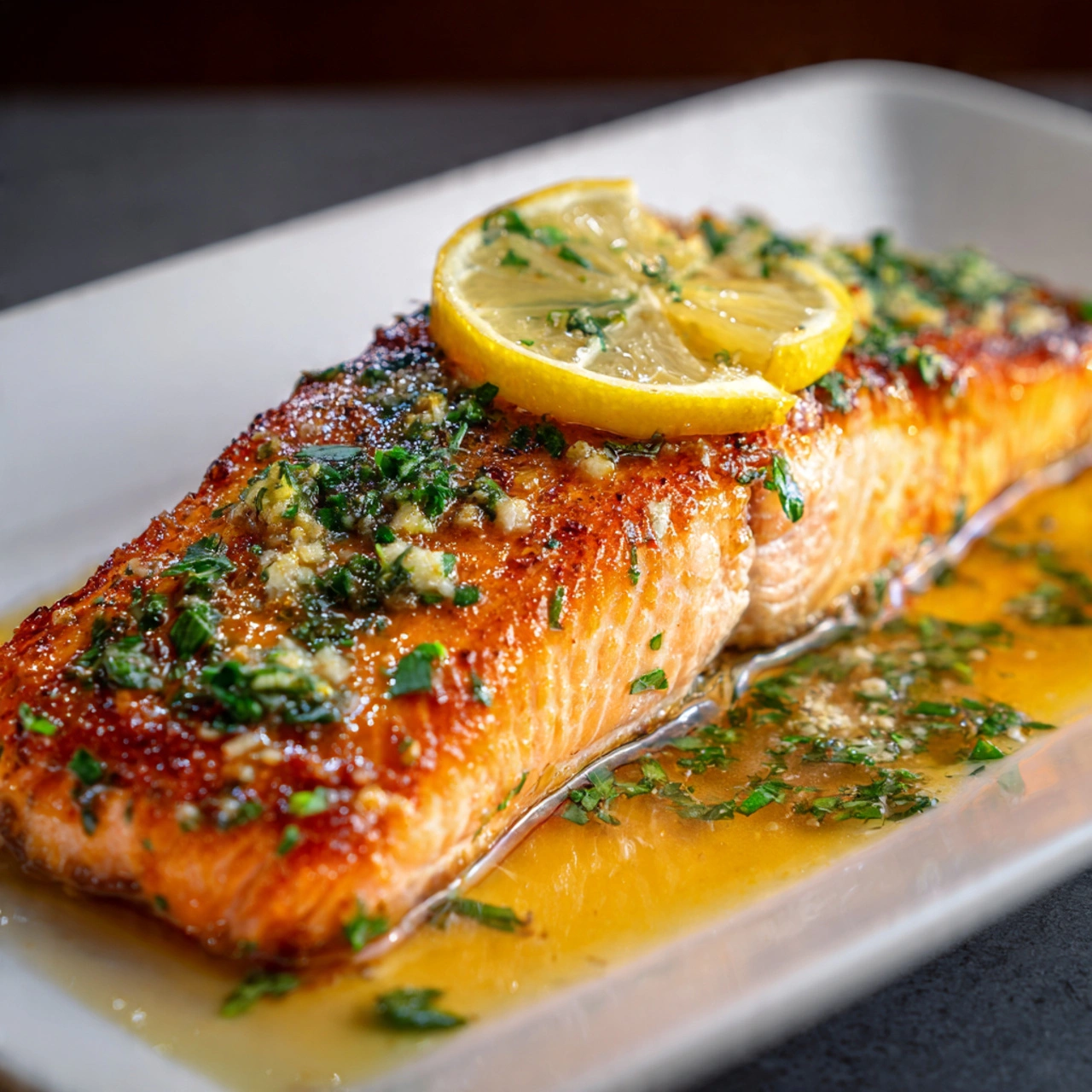
Baked salmon with lemon butter is hands-down one of the most elegant yet effortless dishes you can prepare for a weeknight dinner or a special occasion. Tender, flaky salmon fillets are paired with a bright, silky lemon butter sauce that enhances the fish’s natural richness without overpowering it. The result is a restaurant-quality meal that comes together in just 20 minutes and requires minimal cooking skills.
Why Salmon Is Easier Than You Think to Cook
After two decades of professional cooking and teaching home cooks how to prepare fish properly, one thing is clear: salmon is one of the most forgiving proteins to work with. Although many people feel intimidated by cooking fish, oven-baked salmon is surprisingly simple. In fact, gentle, even heat ensures consistent cooking, while at the same time the lemon butter sauce locks in moisture and prevents dryness.
A Recipe That Fits Any Occasion
Versatility is what truly sets this baked salmon with lemon butter recipe apart. It works just as well for a quick Tuesday-night dinner as it does for a romantic meal, a dinner party, or weekly meal prep. Thanks to its balanced flavor, it pairs beautifully with roasted vegetables, rice pilaf, fresh salads, or crusty bread for soaking up the sauce.
Healthy, Nutritious, and Satisfying
Beyond its incredible flavor, salmon is one of the healthiest proteins you can include in your diet. It’s rich in omega-3 fatty acids that support heart and brain health, high-quality protein for muscle maintenance, vitamin D for bone health, and essential B vitamins for energy. Combined with a quick cooking method and minimal added fat, this dish makes healthy eating both practical and enjoyable.
What You’ll Learn in This Guide
Perfecting baked salmon with lemon butter becomes easy with this comprehensive guide. You’ll discover how to choose quality salmon, achieve a tender, flaky texture, prepare a rich lemon butter sauce, and avoid common mistakes—so you can cook this impressive yet approachable dish with complete confidence.
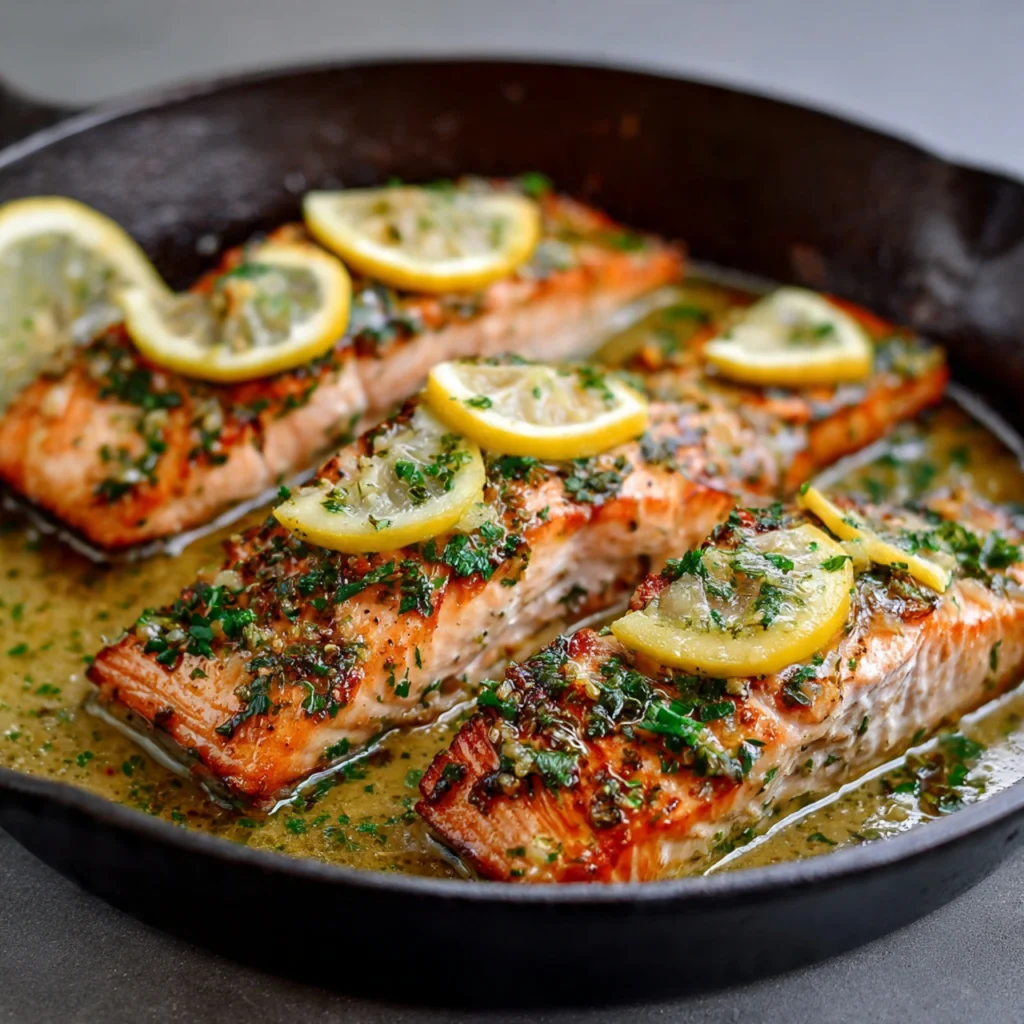
Ingredients to baked salmon with lemon butter
Salmon Ingredients List:
- 2 tablespoons olive oil (for brushing)
- 4 salmon fillets (6 ounces each, skin-on or skinless, about 1 inch thick)
- 1 teaspoon salt (kosher or sea salt)
- ½ teaspoon black pepper (freshly ground)
- ½ teaspoon garlic powder (optional)
- ¼ teaspoon paprika (optional, for color)
Ingredients for the Lemon Butter Sauce:
- 4 tablespoons unsalted butter (½ stick)
- 3 cloves garlic (minced)
- Juice of 1 large lemon (about 3 tablespoons)
- Zest of 1 lemon (about 1 teaspoon)
- 2 tablespoons fresh parsley (chopped, plus extra for garnish)
- 1 tablespoon fresh dill (optional but recommended)
- ¼ teaspoon red pepper flakes (optional, for gentle heat)
- Salt and pepper to taste
For Serving:
- Lemon wedges (for serving)
- Fresh herbs (parsley, dill, or chives)
- Capers (optional, for briny flavor)
Step-by-Step Instructions
Step 1: Prepare and Season the Salmon
To begin, remove your salmon from the refrigerator 15–20 minutes before cooking. This step matters because fish cooks more evenly when it starts at room temperature rather than going straight into the oven ice-cold. As a result, you’ll end up with a more tender, evenly cooked fillet.
Next, preheat your oven to 400°F (200°C). At this temperature, salmon cooks relatively quickly while still staying moist and tender.
Meanwhile, pat the salmon fillets completely dry with paper towels. This is an essential step because moisture on the surface prevents proper browning and can cause the fish to steam rather than bake.
After that, line a baking sheet with parchment paper or lightly grease it with cooking spray. Alternatively, you can use a baking dish if you prefer.
Then, place the salmon fillets on the prepared baking sheet, leaving space between each piece for even heat circulation. If your salmon has skin, place it skin-side down.
Next, brush each fillet with olive oil on all sides. This helps the seasonings stick and promotes even browning.
Finally, season generously with salt and pepper on both sides. If desired, sprinkle garlic powder and paprika evenly over the top. Don’t be shy with seasoning, because salmon can handle bold flavors.
Step 2: Bake the Salmon
Place the baking sheet in the preheated oven on the middle rack. Bake for 12-15 minutes, depending on thickness. The general rule is 4-6 minutes per half-inch of thickness.
Doneness indicators:
- To ensure perfect doneness, the internal temperature should reach 145°F (63°C) when measured with an instant-read thermometer in the thickest part.
- At this point, the flesh will be opaque and flake easily with a fork.
- However, it should still be slightly translucent in the very center for medium doneness (my preferred level).
- White protein (albumin) may appear on the surface—this is normal and harmless
Most importantly, resist the urge to flip or move the salmon during cooking; instead, let the oven do its work undisturbed.
Step 3: Make the Lemon Butter Sauce
While the salmon bakes, prepare your lemon butter sauce. This can be done on the stovetop or in the microwave.
Stovetop method (recommended): In a small saucepan over medium heat, melt the butter. Add the minced garlic and sauté for 30-60 seconds until fragrant but not browned. Garlic that’s too dark tastes bitter.
Remove from heat and immediately stir in the lemon juice, lemon zest, chopped parsley, dill (if using), and red pepper flakes (if using). The residual heat will warm these ingredients without cooking them, preserving their fresh, bright flavors.
Taste and adjust seasoning with salt and pepper as needed. The sauce should be tangy, buttery, and well-balanced.
Microwave method: Place butter in a microwave-safe bowl and melt for 30-40 seconds. Stir in all remaining sauce ingredients. This method works in a pinch but doesn’t develop quite the same depth of flavor.
Step 4: Sauce and Serve
When the salmon is done, remove it from the oven. Let it rest for 2-3 minutes—this allows the juices to redistribute throughout the fish.
Generously spoon the warm lemon butter sauce over each fillet, making sure to get some of the garlic and herbs on each piece.
Garnish with additional fresh parsley or dill, and serve with lemon wedges on the side for those who want extra citrus brightness.
Step 5: Optional Broiling Step
For an extra-crispy top, you can broil the salmon for the last 2 minutes of cooking. Switch your oven to broil (high setting), move the rack to the top position, and watch carefully to prevent burning. The surface should turn golden and slightly caramelized.
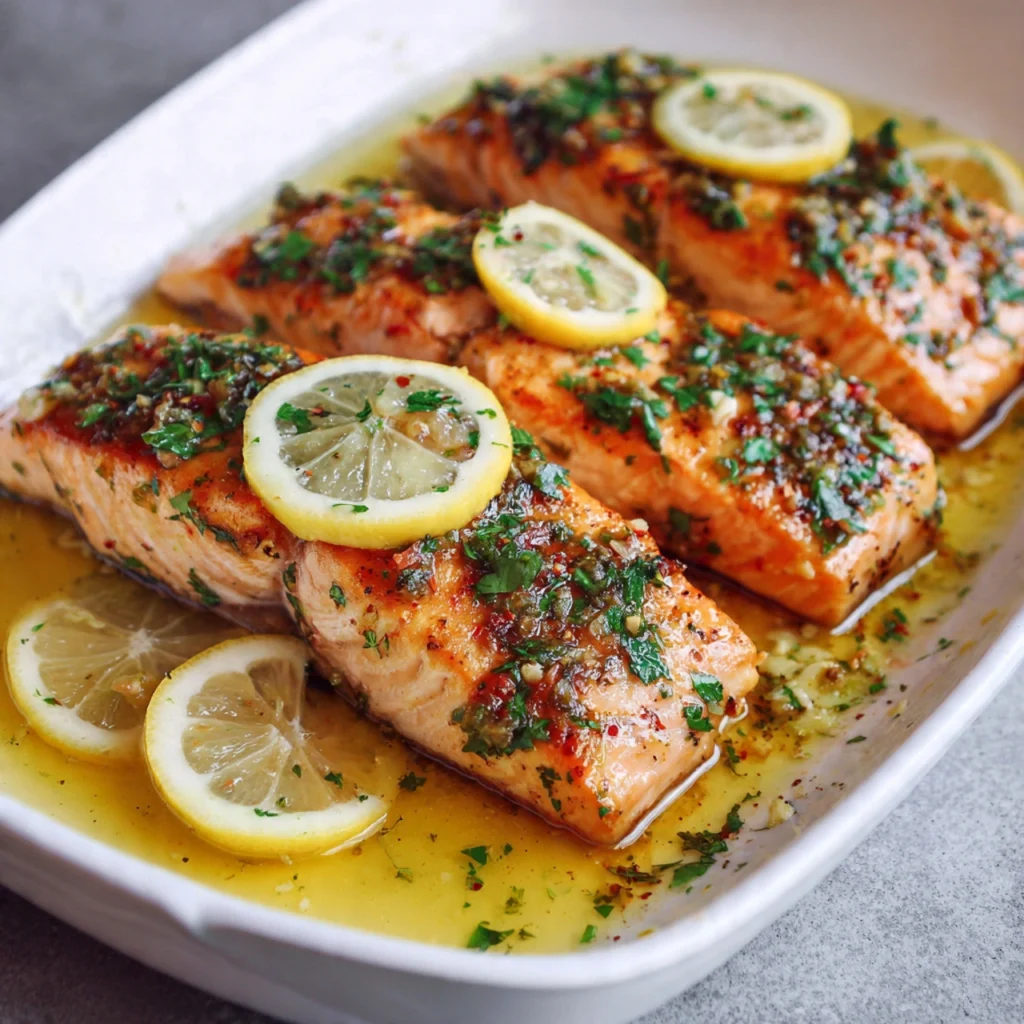
Baked Salmon with Lemon Butter
Pro Tips for Perfect Baked Salmon with Lemon Butter
1. Choose Quality Salmon
Wild-caught salmon (sockeye, coho, king) has more flavor and firmer texture than farmed Atlantic salmon, though farmed salmon is milder and often more affordable. Look for bright, firm flesh with no strong fishy odor. The fish should smell like the ocean—fresh and clean.
2. Thickness Matters
To begin, remove your salmon from the refrigerator 15–20 minutes before cooking. This step matters because fish cooks more evenly when it starts at room temperature rather than going straight into the oven ice-cold. As a result, you’ll end up with a more tender, evenly cooked fillet.
3. Don’t Overcook
Many home cooks make the same mistake when preparing salmon. As a result, overcooked salmon becomes dry, chalky, and not enjoyable. To avoid this, remove it from the oven while it’s still slightly pink in the center.
in the very center. At that point, residual heat (carryover cooking) will finish cooking the fish over the next few minutes.
4. Use Fresh Lemon
Bottled lemon juice simply cannot compare to fresh. Fresh lemon juice is brighter, more aromatic, and has better acidity balance. The zest adds essential oils that amplify the lemon flavor exponentially.
5. Temperature Control
An instant-read thermometer is your best friend for perfect salmon. Insert it into the thickest part at an angle. For medium doneness (ideal), aim for 125-130°F before resting. For well-done (USDA recommendation), cook to 145°F.
6. Skin-On vs. Skinless
In general, skin-on salmon is easier to cook because the skin acts as a protective barrier, which helps prevent the delicate flesh from drying out. If you don’t enjoy eating the skin, it peels away effortlessly after cooking. However, skinless salmon works too, although it requires more careful monitoring to avoid overcooking.
7. Make Extra Sauce
The lemon butter sauce is incredibly versatile. Double the recipe and save extra to drizzle over vegetables, toss with pasta, spread on bread, or use as a dip for crusty baguette.
8. Add Aromatics to Baking Sheet
Place lemon slices, fresh herbs, or garlic cloves on the baking sheet around (not on top of) the salmon. These aromatics infuse subtle flavor while the fish bakes.
9. Let It Rest
Just like meat, fish benefits from a short rest after cooking. This allows muscle fibers to relax and juices to redistribute, resulting in moister, more tender salmon.
10. Butter Temperature
Use room-temperature butter for the sauce if possible. It melts more evenly and combines more smoothly with the other ingredients, creating a silkier, more emulsified sauce.
Common Mistakes to Avoid to Baked Salmon with Lemon Butter
Mistake #1: Starting with Cold Salmon
Cold salmon straight from the refrigerator won’t cook evenly.As a result, the exterior can become overdone while the center remains underdone. For this reason, always let salmon sit at room temperature for 15–20 minutes before baking.
Mistake #2: Not Drying the Surface
Excess moisture prevents browning and creates steam instead of the gentle roast you want. Pat salmon thoroughly dry with paper towels—both the top and bottom surfaces.
Mistake #3: Overcrowding the Pan
For best results, leave at least 2 inches between fillets. Otherwise, crowding traps steam and moisture, which prevents proper cooking and browning. If needed, use two baking sheets to ensure enough space.
Mistake #4: Cooking at Too High Temperature
While 425°F or 450°F might seem like they would create better browning, they actually increase the risk of overcooking. Instead, the sweet spot for salmon is 375–400°F—hot enough for gentle light browning while still being forgiving enough to maintain moisture. As a result, the fish cooks evenly and stays tender.
Mistake #5: Using Salted Butter in the Sauce
Salted butter can make your sauce too salty, especially when combined with the seasoned salmon. Always use unsalted butter so you can control the salt level precisely.
Mistake #6: Burning the Garlic
Because garlic burns quickly and tastes bitter when overcooked, sauté it just until fragrant (30–60 seconds). Then, remove it from the heat before adding the lemon juice.
Mistake #7: Adding Lemon Juice Too Early
If you add lemon juice to hot butter and continue cooking, the acid can cause the butter to separate and look broken. Add lemon juice after removing from heat for a smooth, cohesive sauce.
Mistake #8: Not Using a Thermometer
Relying solely on visual cues or timing can lead to inconsistent results. Ovens vary, and so do fillet thicknesses. A thermometer removes all guesswork and guarantees perfect doneness.
Mistake #9: Flipping the Salmon
Unlike chicken or steak, salmon doesn’t need to be flipped. Baking it in one position ensures the presentation side stays beautiful, and there’s no risk of it falling apart during flipping.
Storage and Serving Suggestions to Baked Salmon with Lemon Butter
Storage Guidelines:
Refrigeration (3-4 Days): Allow cooked salmon to cool to room temperature (within 2 hours of cooking for food safety). Store in an airtight container with any remaining lemon butter sauce. Refrigerate promptly.
Reheating:
- Oven (best method): Preheat to 275°F, place salmon in a baking dish with a splash of water or extra lemon butter sauce, cover with foil, and heat for 10-12 minutes until warmed through
- Microwave: Heat in 30-second intervals at 50% power to avoid drying out
- Stovetop: Warm gently in a covered skillet over low heat with a bit of butter or olive oil
Freezing (Not Recommended): While you can freeze cooked salmon for up to 2 months, the texture often becomes worse after thawing. For this reason, freezing is generally not recommended. However, if you must freeze it, wrap the salmon tightly in plastic wrap and then in foil. Afterward, thaw it overnight in the refrigerator. Finally, reheat it gently to avoid drying it out.
Using Leftovers: Leftover baked salmon is incredibly versatile:
- Flake into salads (Caesar, mixed greens, grain bowls)
- Make salmon cakes or patties
- Toss with pasta and vegetables
- Add to omelets or frittatas
- Top bagels with cream cheese and salmon
- Mix into creamy soups or chowders
Serving Suggestions:
Classic Pairings:
- Vegetables: Roasted asparagus, green beans, Brussels sprouts, broccoli, or sautéed spinach
- Starches: Rice pilaf, quinoa, roasted potatoes, mashed cauliflower, or couscous
- Salads: Arugula salad, Caesar salad, Mediterranean salad, or simple mixed greens
Wine Pairings:
- White wines: Chardonnay, Sauvignon Blanc, Pinot Grigio, or Albariño
- Rosé: Dry Provence-style rosé
- Light reds: Pinot Noir (if you prefer red with fish)
Elegant Dinner Party Presentation: Serve salmon on individual plates with vegetables arranged artistically alongside. Drizzle extra lemon butter sauce in a swoosh across the plate. Garnish with fresh dill sprigs and a lemon wheel.
Family-Style Serving: Arrange salmon fillets on a large platter, pour sauce over the top, and surround with roasted vegetables and lemon wedges. Let everyone serve themselves.
Meal Prep Strategy: Bake a large batch on Sunday. Store portions individually with vegetables and grains. You’ll have healthy, ready-to-reheat lunches or dinners for the week.
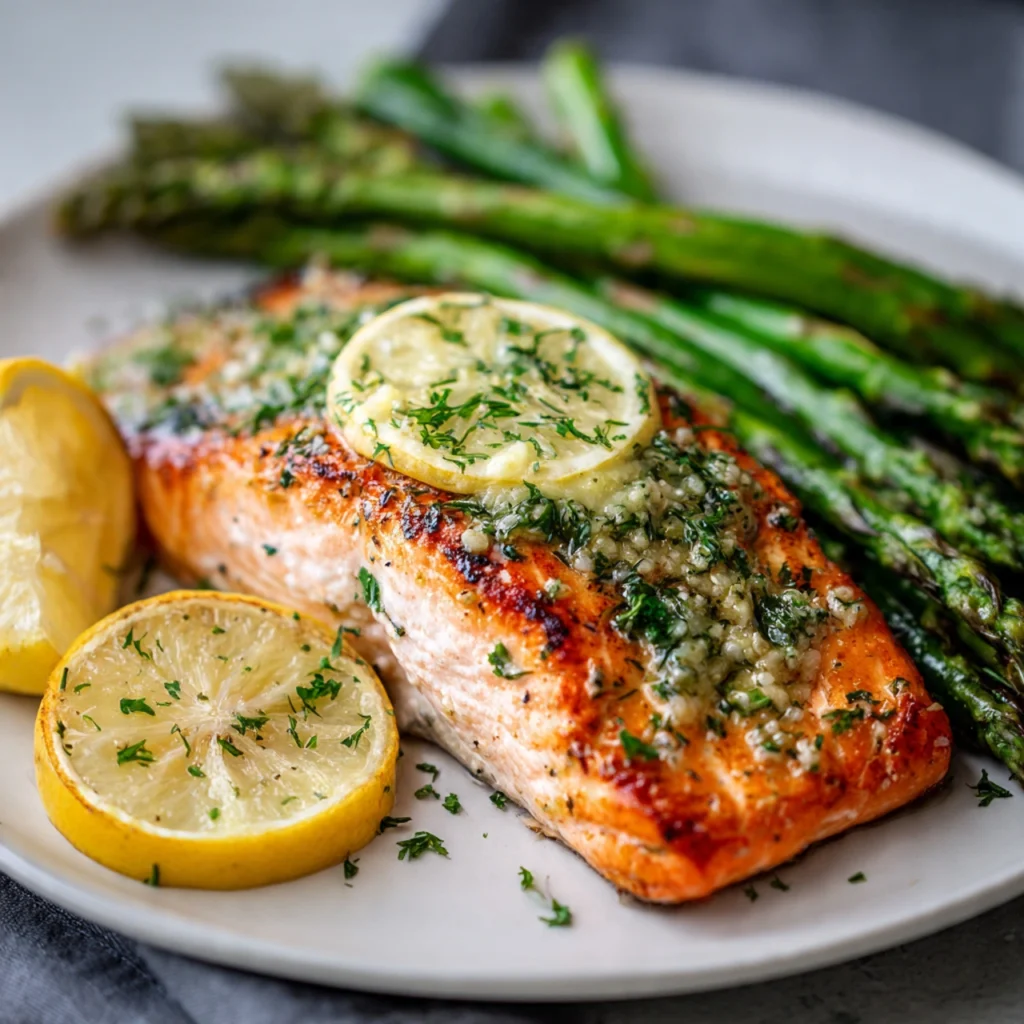
Frequently Asked Questions (FAQ) to baked salmon with lemon butter
1. How do I know when baked salmon is done?
The most reliable method is using an instant-read thermometer inserted into the thickest part of the fillet. For medium doneness (slightly translucent center), aim for 125-130°F before resting. For well-done (USDA recommendation), cook to 145°F. Visually, the salmon should be opaque and flake easily with a fork. You may see white protein (albumin) on the surface—this is normal and indicates the fish is nearing doneness. When in doubt, slightly undercook rather than overcook, as salmon continues cooking from residual heat after removing from the oven.
2. Should I remove the skin before or after baking?
For the best results, keep the skin on during baking. This is because the skin acts as a protective barrier that helps retain moisture and prevents the delicate flesh from drying out or sticking to the pan. After baking, the skin peels away effortlessly if you don’t want to eat it—simply slide a spatula between the flesh and the skin. However, baked salmon skin becomes crispy and delicious, especially if you brush it with oil before cooking. In fact, many people who think they don’t like salmon skin simply haven’t tried it properly prepared.
3. Can I use frozen salmon for this recipe?
Yes, but proper thawing is essential. Never cook salmon from frozen for this recipe—it won’t cook evenly. The best thawing method is overnight in the refrigerator on a plate to catch any liquid. If you’re short on time, place the sealed salmon in a bowl of cold water, changing the water every 30 minutes until thawed (usually 1-2 hours). Never thaw salmon in warm water or at room temperature, as this promotes bacterial growth. Once thawed, pat completely dry, bring to room temperature, and proceed with the recipe as written.
4. What if I don’t have fresh herbs?
While fresh herbs provide the best flavor and appearance, you can substitute dried herbs in a pinch. Use one-third the amount of dried herbs compared to fresh (dried herbs are more concentrated). For this recipe, that means 2 teaspoons dried parsley and 1 teaspoon dried dill. Add dried herbs to the butter while it’s melting so they have time to rehydrate and release their flavors. The sauce won’t be quite as bright and fresh-tasting, but it will still be delicious. You can also omit herbs entirely and rely on the lemon, garlic, and butter for flavor.
5. Can I make this recipe dairy-free?
Absolutely! Replace the butter with extra virgin olive oil or a plant-based butter alternative like Earth Balance or Miyoko’s.As a result, the sauce will be slightly different—olive oil creates a lighter, more Mediterranean-style sauce rather than the rich, velvety texture of butter. If you use olive oil, add it to the pan with the garlic, then remove it from the heat and stir in the lemon juice and herbs. Alternatively, you can use ghee (clarified butter) if you’re avoiding lactose but can tolerate milk proteins.
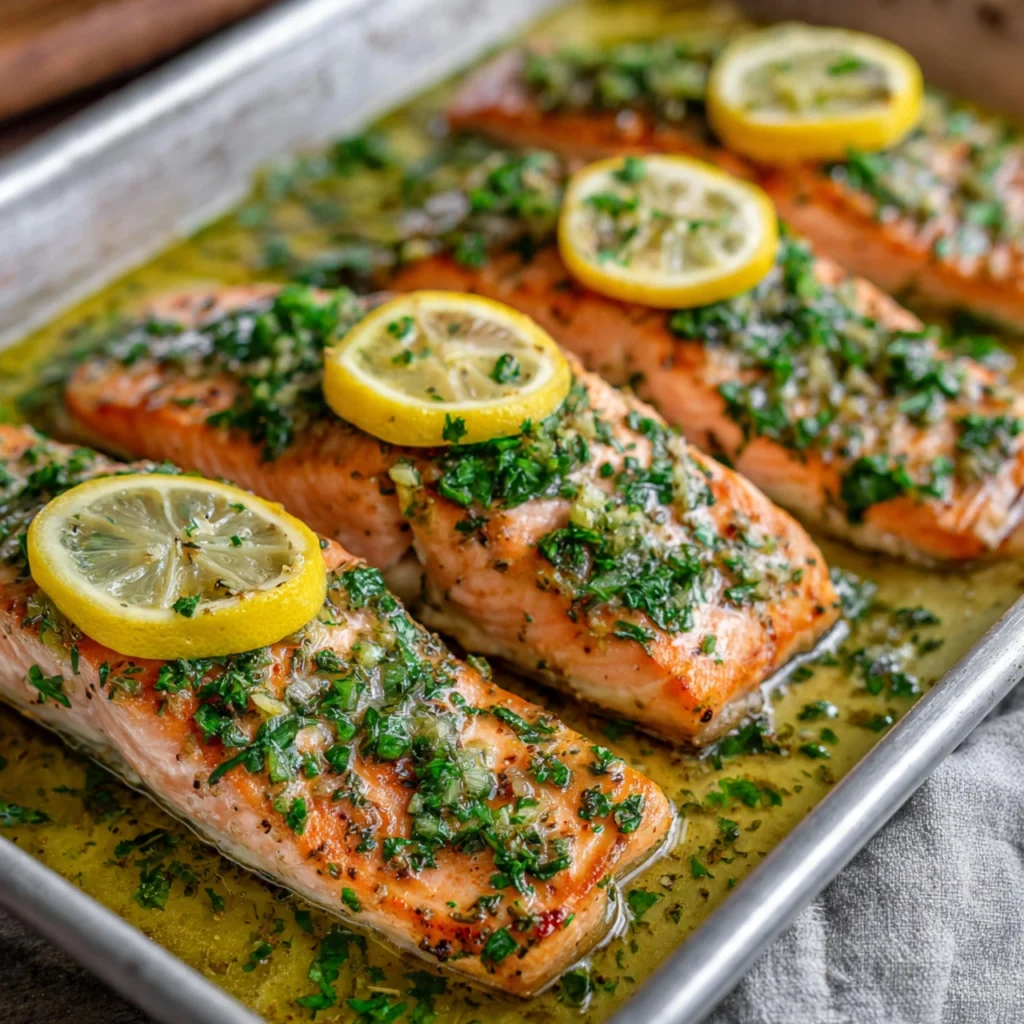
Baked Salmon with Lemon Butter
6. Why does white stuff come out of my salmon?
That white substance is called albumin, a protein found naturally in raw salmon. When salmon is heated, the muscle fibers contract and, as a result, push out this protein, which then coagulates into white or cream-colored deposits on the surface. Although it’s completely harmless and safe to eat, it’s not particularly attractive.
To minimize albumin, avoid cooking at very high temperatures and don’t overcook the fish. In addition, consider brining the salmon in a saltwater solution (1 tablespoon of salt per cup of water) for 10 minutes before cooking. Afterward, pat the salmon dry thoroughly. This step not only seasons the fish but also helps the proteins coagulate more slowly.
7. Can I add vegetables to the same pan?
Yes! This is a great time-saving strategy. Choose vegetables with similar cooking times to salmon (12-15 minutes at 400°F). Good options include asparagus, green beans, cherry tomatoes, bell peppers, zucchini, or broccoli florets. First, toss the vegetables with olive oil, salt, and pepper. Then, arrange them around (not covering) the salmon on the baking sheet. As a result, both the fish and vegetables will be ready at the same time, and the vegetables will absorb some of that delicious lemon butter sauce.
Nutrition Information (Approximate Values) to baked salmon with lemon butter
Serving Size: 1 salmon fillet (6 ounces) with lemon butter sauce
- Calories: 380-420
- Total Fat: 26g
- Saturated Fat: 9g
- Trans Fat: 0g
- Omega-3 Fatty Acids: 2.5g
- Cholesterol: 125mg
- Sodium: 480mg
- Total Carbohydrates: 2g
- Dietary Fiber: 0g
- Sugars: 0g
- Protein: 38g
- Vitamin D: 90% DV
- Vitamin B12: 80% DV
- Selenium: 85% DV
- Vitamin B6: 45% DV
- Niacin (B3): 55% DV
- Phosphorus: 40% DV
- Potassium: 18% DV
Note: Nutritional values are estimates based on wild-caught salmon. Farmed salmon has slightly higher fat content and calories. Values do not include side dishes. This recipe is naturally low in carbohydrates and high in heart-healthy omega-3 fatty acids and quality protein.
Conclusion
Why This Recipe Works Every Time
Baked salmon with lemon butter is one of those rare recipes that checks every box: it’s healthy, impressive-looking, incredibly delicious, beginner-friendly, and fast enough for busy weeknights. The combination of tender, omega-3-rich salmon with a bright, buttery lemon sauce creates a flavor harmony that never gets old, no matter how often you make it.
A Reliable, Foolproof Method
What makes this baked salmon with lemon butter recipe truly special is its reliability.Unlike fish dishes that require exact timing and advanced skills, this method is very forgiving. As a result, gentle oven heat and the lemon butter sauce help keep the salmon moist and evenly cooked, even if the timing or temperature isn’t perfect.
Make It Your Own
Once you’ve mastered the basic technique, customization becomes effortless. Fresh thyme can replace dill, capers add a briny punch, lime and cilantro create a Latin-inspired twist, or a splash of white wine brings extra elegance. Thanks to its solid foundation, this recipe welcomes endless creativity.
Key Takeaways for Perfect Salmon
For best results, remember the essentials: start with quality salmon, season it properly, use a moderate oven temperature, monitor doneness carefully, and don’t hold back on that rich lemon butter sauce. Mastering these fundamentals will give you a dependable signature dish that impresses guests and keeps healthy eating enjoyable.
Final Thoughts
Now, it’s time to preheat the oven, gather some fresh salmon fillets, and finally, enjoy a dinner that looks restaurant-worthy yet couldn’t be easier to prepare.
Once you experience how good homemade baked salmon with lemon butter can be, you’ll wonder why it wasn’t already part of your regular rotation.
Ultimately, this baked salmon with lemon butter recipe delivers consistent, restaurant-quality results every time.
PrintBaked Salmon with Lemon Butter: The Perfect 20-Minute Restaurant-Quality Dinner
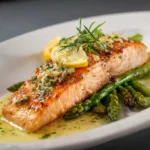
Tender, flaky salmon fillets baked to perfection and topped with a luxurious lemon butter sauce infused with garlic and fresh herbs. This restaurant-quality dish comes together in just 25 minutes for an impressive yet effortless dinner.
- Prep Time: 10 minutes
- Cook Time: 15 minutes
- Total Time: 25 minutes
- Yield: 4 servings
- Category: Main Course, Dinner, Seafood
- Method: Baking
- Cuisine: American, Mediterranean-inspired
- Diet: Diabetic
Ingredients
- 4 salmon fillets (6 oz each)
- 2 tbsp olive oil
- 1 tsp sea salt
- 1/2 tsp black pepper
- 1/2 tsp garlic powder
- 6 tbsp unsalted butter
- 4 cloves garlic, minced
- 3 tbsp fresh lemon juice
- 1 tbsp lemon zest
- 2 tbsp fresh parsley, chopped
- 1 tbsp fresh dill, chopped
- Lemon slices for garnish
Instructions
- Remove salmon from refrigerator 15-20 minutes before cooking. Preheat oven to 400°F.
- Pat salmon dry and brush with olive oil. Season with salt, pepper, and garlic powder.
- Melt butter in a saucepan, add garlic and cook 1 minute. Remove from heat and stir in lemon juice, zest, parsley, and dill.
- Place salmon on a parchment-lined baking sheet. Spoon half the lemon butter over the fillets.
- Bake 12-15 minutes until salmon reaches 145°F and flakes easily.
- Rest 2-3 minutes, then drizzle with remaining sauce and garnish with lemon slices.
Notes
- Use an instant-read thermometer for perfectly cooked salmon every time
- Don’t skip bringing salmon to room temperature—it ensures even cooking
- Make extra lemon butter sauce; it’s delicious on vegetables and rice too
- Salmon continues cooking after removal from oven, so don’t overcook